


InvertaCreator
-
Posts
3 -
Joined
-
Last visited
Reputation
35 Excellent
2 Followers


Recent Profile Visitors
647 profile views


-
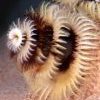 The Micro-Fauna of the Geyserlands A Study on Organisms in Harsh Environments •─────────────────•𖥠•─────────────────• •─────────────────•𖥠•─────────────────• W R I T T E N B Y LOCUST P U B L I S H E D B Y T H E N O R T H E R N G E O G R A P H I C A L S O C I E T Y O N T H E 7T H O F THE AMBER COLD , 2076 •─────────────────•𖥠•─────────────────• The Ecology of the Geyserlands History & Biology THE GEYSERLANDS ARE, AT FIRST glance, a hostile environment to life itself. Not only is its water toxic, with its flora desaturated, and its ground unstable, it is also surrounded by uniquely lifeless environments on its north and east side. However, it is precisely because of these conditions that life is able to adapt and thrive in this biome. To accurately describe the geyserlands, a theoretical explanation of how it formed is in order. The geyserlands can be reasonably assumed to have first been a forest comprising the flora of its adjacent southern and western biomes, the black forest and highlands. To explain why this can be inferred, the steps in which this forest became the geyserlands as it is known today must be described. At some point in time, the glacial ice of the boreal mountains began to melt, flooding the proto-geyserlands with water. Then, ash from the volcano region infused into this water, forming lye. This made the water highly basic and, combined with its already high saline content due to the glaciers of the boreal region being composed of frozen oceanwater, the caustic waters began to corrode the rocks and minerals around them, further increasing their salt content. SPECULATIVE ORIGINS OF THE GEYSERLANDS IT CAN BE THEORIZED THAT the high amounts of ash required to make the water toxic and corrosive was due to a volcanic eruption, not only because that would be the only event to create such a large amount of ash, but because the geological conditions that would cause an eruption are also shown in the formation of the biomes titular geysers. As the ground split open and water from beneath boiled onto the surface, the caustic waters began to circulate throughout the land, quite literally salting the earth. So, why can it be assumed that the geyserlands was a forest beforehand? Because of the simple fact that there are species of trees, grass, and other flora capable of withstanding the highly basic toxic waters, something that can only be explained by a gradual increase in salinity and lye in the water. Other than geological evidence for the geysers and volcanic eruption, there is also evidence that the geyserlands were previously a forest that can be found in the lake furthest east. This lake is, quite literally, a flooded forest recess. Trees grow from under the water, half-submerged yet still alive. This submerged glade could not possibly have occurred after the water, as the seeds would be unable to germinate in those conditions. Instead, the trees must have already been there, not only before the large amounts of water, but before the change in caustic waters and geological events. Because of the geyserlands gradual change into what it is today, both the plants and animals are highly adapted to their environment. However, the organisms that experienced the greatest change were the microfauna of the geyserlands; the small invertebrates and plants that help preserve their habitat. Perhaps it is because of their greater contact with the dangers of the geyserlands such as its toxic lakes, salty earth, and pools of boiling water that they, in turn, have changed to match it the most. THE SUB-BIOMES OF THE GEYSERLANDS THERE ARE FOUR MAIN SUB-BIOMES that form the geyserland ecosystem as a whole: the plateau, the pools, the lakes, and the cliffs. The plateau is the least hazardous of the sub-biomes, consisting of the grasses and forests that remain close to the ground. Other than its highly saline soil and mainly inedible plantlife, the plateau is generally a normal grassland. The pools host the namesake of the geyserlands, that being its titular geysers and raised basins of caustic boiling groundwater. Often found at the base of the cliffs along seams that highly suggest past geological activity, the pools seem the most hostile to life around them, however, that simply isn’t the case, as even along the very edge of their walls will plants and animals thrive. The lakes are more dangerous to the denizens of the geyserlands due to their larger quantity of caustic water. This additional mass of fluid makes the gasses passively emitted by the concoction of sulfur, salt, and lye much more problematic. It is for this reason that surrounding most of the lakes in the geyserlands is bare rock, as the plants and animals adapted to the corrosion and heat of the pools cannot bear the additional stress of prolonged exposure to toxic gasses. Finally, the cliffs themselves seem to be not too dissimilar to the plateau other than the fact that they are raised above the ground, however, it is because of this greater elevation that life can thrive more plentifully than the plateau. The increased distance from the toxic gasses of the lakes and decreased salinity of the soil make for a more lush environment, making it the safest sub-biome of the geyserlands. The importance of the sub-biomes lies in not only the unique micro-environments that surround them, but also in demonstrating the increasing severity of the adaptations for the organisms that live in them. There is a clear difference of hazardous factors between the sub-biomes, with the cliffs being the least dangerous, then the plateau’s, then the pools, and finally the lakes. However, while the severity of the changes that the organisms living within these environments are varied, the presence of life does not change. Life adapts to the harshest of environments, and has done so in every area of the geyserlands. THE GEYSERLAND CLIFFS THERE IS NO GREATER VISUAL example of the danger of the geyserlands sub-biomes than the transition from the plateau to the cliffs. As the distance from the ground increases, so too does the population of rupicolous (rock-dwelling) plants. This is mainly due to the salt content difference of the soil above the ground, versus the soil at ground level. As wind blows sediment, the sediment settles at the lowest points of land, naturally concentrating the salty sediment at the plateau. This, combined with the leaching of salt from the soil in the event of rain, makes a meaningful difference in salinity. The winds of the cliffs also affect how life dwells in them. For the purposes of this study, one key difference is the lack of flying insects. While dragonflies and butterflies litter the ground below, they are lacking in the cliffs above, mainly due to the stronger winds that impede their flight. This is shown in the greater presence of predatory beetles that make up the main predators of the micro-fauna in this sub-biome. These beetles, specifically the Spiny Basilisk Beetle (Belua acutilus), are not only smaller than their low-altitude cousins, but also lack the greater resistance to saline and caustic conditions as found in other organisms in the geyserlands. To make up for this, they steal the ability to do so from their prey, most commonly various springtails, moth larvae, and even different species of beetles. Their prey concentrate the salt and basic alchemical compounds in their exoskeleton due to their blood drawing it out and depositing it. So, the Spiny Basilisk Beetle takes advantage of this by exhibiting a form of hematophagy (blood-eating). They specifically consume the blood of their prey, leaving the organs and flesh alone, allowing them to harness its properties to a lesser extent. THE GEYSERLAND PLATEAUS ON THE SURFACE, THE PLATEAUS of the geyserlands seem the safest of all. However, as previously described, it is because of its lower elevation that it concentrates the salinity and, to a lesser extent, the caustic alchemical compounds found in its water. It is due to this that the plateaus retain a slightly higher level of danger to them as compared to the cliffs. Every organism that calls the plateaus their home must be adapted in some way shape or form to this combined alchemical offense. One organism that is not only adapted to these conditions but also significantly reduces the effect these conditions have on other organisms is the Ebony Planarian (Salesus aterii). This species of flatworm consumes the residual algae and detritus that is concentrated on the top-most layer of soil. This upper layer of soil, however, also naturally contains the greatest amount of salt. The Ebony Planarian has gained the ability to absorb salt at an extremely reduced rate, allowing for a majority of the salt consumed to be excreted. When this happens, the salt is deposited at a lower depth, decreasing the overall concentration of salt on the surface and making it more uniform. While this gradient of salt concentration is generally beneficial for all life in the plateaus, this is especially noticeable in the tall grasses that populate the lowlands. The forests of the geyserland plateaus can bypass the salt and caustic alchemical concentration by having roots that reach deeper into the soil, avoiding the higher concentrations of salt in the upper layers. However, the many species of grass in the plateaus do not have this luxury, as even their largest taproots do not reach far enough to bypass this layer. The Ebony Planarian plays a crucial role in the upkeep of these grasses, reducing the burden of expending energy to avoid reaching critical levels of internal salinity. Without these flatworms, the grasslands would not exist, and the menagerie of insects, molluscs, and rodents that occupy them would be unable to do so as well. THE GEYSERLAND POOLS UNLIKE THE REST OF THE sub-biomes, the fauna that surround the geyserland pools are more isolated from the rest. There are seamless transitions to the various organisms that inhabit the other sub-biomes, but it is because of the pool's shape and functionality that the ecology surrounding them differs so greatly. Most of the organisms that inhabit these pools are extremely small or are colonies of small organisms. Plants do not inhabit these pools, with most of their structure consisting of bare super-heated rock and near-boiling caustic water, however, there is another form of producer that actively thrives in these pools. Grey Rock Algae (Stoma atilus) make up the majority of producers found in pools, and are commonly mistaken for inanimate rock. This is because of their unique adaptation that allows them to survive in their extreme environment. Not only do the algae have a thick shell around each individual, the colonies of algae also move dead algae toward the outside of their congregations, forming rock-like layers. It is only by removing one of these colonies and breaking them open that the green, live algae can be observed. These algae serve as the base trophic level for the geyserland pools, feeding the other small organisms that live in these pools, the largest among which is the larvae of them being the Greater Tiger Mosquito (Aedes gilia). These mosquitos, other than having a base natural resistance to the heat and corrosion of the waters, not only consume the algae and other small organisms within the pools, but use the dead algae in the same way that its colonies do. In their infancy, the mosquito larvae exclusively consume the algae, layering the dead algae onto their adhesive skin. As they molt, they keep their discarded exoskeletons, adding them to the armor they form around themselves. Once they are nearing their adulthood, the larvae attach themselves near the surface of the water, bursting from their makeshift shells as fully grown mosquitos. THE GEYSERLAND LAKES THE LAKES ARE A DICHOTOMY of danger and life. The sheer amount of caustic water emits toxic gasses on the surface, which pose a danger to most descendants but, alternatively, many of the flora and fauna seem undeterred. There are plants around the perimeter of these lakes that can grow simply by not being directly above the water, avoiding growth on the sheer sides of the lake but growing on surfaces above and adjacent to them. However, there are plants that seem to defy this, growing directly above the surface of the water and in direct contact with these hazardous gasses, and these are the submerged trees of the far eastern lake as well as some species of grasses. It would be easy to explain that these plants simply keep their leaves above the short distance of the heavy toxic gasses, allowing them to respirate clean air, but that doesn’t seem to be the case as many have leaves almost directly above the water. Instead, the answer seems to lie in their roots. All of these toxic gas-breathing plants seem to have incredibly deep roots that reach depths at or above their height. This, along with the fact that lakes with large quantities of these plants seem to be constantly aerated, leads me to believe that they have some mechanism to not only separate the toxic alchemical compounds from the air, but also move those compounds downward, expelling them at the roots. This byproduct then floats back up in the form of small bubbles. There is one lake in which life seems to be the most plentiful, that being the furthest west lake. It is not only the lake with the greatest amount of life in it, but it is also the largest lake due to its water being directly fed from the boreal mountains. Perhaps because of this source of water, the boreal mountains having frozen saltwater from the ocean, that this lake functions more as an inland sea. It is the coral within this lake, the Stony Gas Coral (Anomastraea ignes) that make up the majority of life in it, growing in extremely large colonies beneath the water's surface. So, how do these coral grow in such large amounts? At first glance one might assume that they are feeding on the chemicals produced by the heat vents within this lake, however, their patterns of growth do not indicate this. In fact, it seems that the coral actively avoids the heat vents. Instead, the coral photosynthesize as any other species of hard coral, but have developed a way to not only concentrate the toxic alchemical compounds, but make use of them in a way that contributes to a majority of their diet. These corals have the ability to produce their own light, and I believe they do this by igniting the alchemical compounds naturally found in the water. By doing this, they not only get rid of a byproduct of their environment, but also feed themselves in doing so. CONCLUSION THE IMPORTANCE OF STUDYING THE geyserlands lies in the fact that life thrives in it. By researching these highly adapted wildlife, more can be understood about how organisms change and colonise actively hostile environments. They may also provide clues as to how descendants can adapt to these environments as well, not by somehow changing our bodies in accordance to the habitat, but instead by utilizing technology or techniques that mimic nature. Many of these adaptations are poorly understood, and require a greater understanding of not only the very nature of biology and science but of alchemy and the material world. The mechanisms in which these creatures isolate, concentrate, and disperse these toxic alchemical compounds is not yet understood, and the ways in which they formulate their own alchemical compounds to combat other hazardous conditions is even less understood. It seems that, as an environment becomes more and more hostile, its inhabitants utilize some sort of alchemy within their bodies to greater and greater degrees. •─────────────────•𖥠•─────────────────• SIGNED, LOCUST, AUTHOR AND RESEARCHER @invertacreator Her Ladyship, DAME MANON YVAINE VON VOLKRICH, SUPERVISOR @esotericas Dame of Arts, Lady of Deguise, Baroness of Guise and Distrugestadt, President of the Northern Geographical Society P U B L I S H E D U N D E R T H E A U T H O R I T Y O F T H E N G S “ A D T E R R A S N O V A S ” THE VIEWS AND INFORMATION CONTAINED WITHIN THIS DOCUMENT ARE THE SOLE RESPONSIBILITY OF ITS AUTHOR(S). THE NORTHERN GEOGRAPHICAL SOCIETY IS NOT RESPONSIBLE OR LIABLE FOR ANY CONTENTS. •─────────────────•𖥠•─────────────────•
 -
BLACK CAP PRIVATE INVESTIGATION Black Cap P.I Business Card (For In-Character Use) Do you have a cheating lover? Or is there a serial killer on the loose in your village? Well today is your lucky day. At Black Cap Private Investigation, client confidentiality and quality of work are our two top priorities. I say our but, this is a one man company. I swear I'm a really good detective though! HAZARD LEVELS To make payment fair and just, investigations are categorized into 5 hazard levels. Below are the following levels: Hazard Level 1 - These jobs don't have any risk of bodily harm. Things like cheating partners, accessible information, and other minor investigative practices fit into this hazard level. Hazard Level 2 - These jobs have a risk of minor bodily harm. Maybe the person being investigated is a drunkard, or perhaps a particularly scratchy lost cat. Either way, these investigations are far from being lethal. Hazard Level 3 - These jobs have a risk of bodily harm. If the location being investigated has a high activity of aggressive wildlife, or I have to duel a guy with a sword to get a piece of info, those investigations would fit in this hazard level. Hazard Level 4 - These jobs have a risk of major bodily harm. Investigation of serial killers, missing persons that may have been abducted by a psycho cult, or other situations that may greatly injure me, if not have a chance of killing me, fit here. Hazard Level 5 - These jobs will likely kill me. Stealing a scroll from a dragon, breaking into the mansion of an elder vampire, and other investigations that will probably lead to my death go in this hazard level. I'll still do them though, I need the money. So, if you have something you are dying to know and would rather put someone else in harms way, please send me a bird. Minecraft Username: InvertaCreator Discord: InvertaCreator

-
InvertaCreator joined the community
-
Guard Knight would stand up straight, with his hands to his side and simply blurts out in a deep voice for his age "Gaurd!" He says, the simply word spelling out his intentions clearly, and if no more questions are asked, he would just walk away and into the streets. . . .
