L_majer
-
Posts
4 -
Joined
-
Last visited
Reputation
13 Good
Recent Profile Visitors
86 profile views

.thumb.jpg.d900720693147c6ec17dcfeb947bb458.jpg)


-
╔════════════════════════════════════ † ════════════════════════════════════╗ . · : · . ‡ . · : · . On the Significance of Seven in Holy Scripture A Theological Examination of Order, Completion, and Moral Wholeness By Father Zechariah Published 272 SA, on the 13 of The Deep Cold · . : . · ‡ · . : . · ________________________________________________________________________________ 1. Introduction - Seven as Revelation We as the faithful must reject the errors of superstition. The number seven holds no power in itself. If seven bears significance, it does so not because of mystical property, but because the Creator has chosen to employ it within revelation. Seven must be understood as revealed structure rather than invented meaning. 2. The mark of Completion In the Holy Scriptures, the number seven most often accompanies completion. The number seven represents sufficiency. It reassures us that the Creator has not spoken incompletely, nor left humanity to guess at what remains hidden. What is marked by number seven is not infinite speculation, but finished articulation. In this way, seven does not glorify quantity, but integrity. It is not “many,” but “enough.” It is the form through which Scripture communicates that divine intention has reached its proper end. 3. The Seven Virtues and the Wholeness of the Soul We can see that the Scroll of Virtue presents moral law not as scattered instruction, but as a deliberate sevenfold articulation: Faith Charity Temperance Diligence Patience Fidelity Humility No single virtue is permitted to dominate the rest. Each stands alongside the others as part of a complete order. Charity without temperance decays into indulgence. Diligence without humility becomes pride. Fidelity without patience hardens into severity. It shows us that each virtue is not a one-time thing, but a guide for a whole life lived under God’s Word. It also shows us that the virtues are defined and complete. We are not called to invent new virtues, nor to select preferred ones, but to inhabit the full order given. 4. Seven Speaks to the Human Condition The recurrence of the number seven in Scripture does not only reveal divine order, but also answers a human need. We do not live well in abstraction. We require shape, boundary, and clarity. A moral law without limit becomes overwhelming for many. A narrow perspective becomes overwhelming. The sevenfold expression of virtue gives the faithful something that can be fulfilled. Not endless demands, but a comprehensive model and pattern. Number seven, not seventy. A simple structure, not an impossible infinity. It assures us that these seven virtues are necessary and demanding for a moral life, but they are neither chaotic nor impossible. 5. Boundary and Safeguard The number seven does not only complete, it also limits. When the Scripture presents the moral law in seven virtues, it quietly draws a line around what has been given to us. It tells us that the Creator has spoken sufficiently. We are not left to endlessly expand the law according to our needs and anxieties, nor to reduce it according to our comfort. Seven stands as a safeguard against both excess and our neglect. We are prone to distortion. Some of us multiply rules until faith becomes unbearable. Others simplify until nothing demanding remains. The sevenfold structure resists both tendencies. It prevents us from inventing new measures of righteousness. 6. The Refusal of Extremes The presence of number seven within the Scrolls also speaks to something fragile within us, specifically our tendency toward imbalance. We are creatures who cling to what feels strong and neglect what feels difficult. One virtue may come naturally, while another demands more effort. Left to ourselves alone, we would build our moral lives around preference, not around the Scripture. The sevenfold pattern refuses that comfort of ours. It does not allow us to choose only charity while ignoring fidelity, nor to cling to diligence while neglecting humility. The structure itself insists that the moral life is not selective. It is ordered. This has a demanding implication. To live within the seven virtues is to accept correction where we are weakest, not merely affirmation where we are strongest. The number seven disciplines us gently, but firmly. It reminds us that holiness is not intensity in one direction, but steadiness across many. 7. Conclusion - Seven as the Shape of Enough The significance of seven in Holy Scripture lies not in mysticism, but in sufficiency. It marks what is complete, what is given, and what is enough. In the Seven Virtues, the Creator has outlined a whole life. In the repetition of seven throughout revelation, He has signaled to us that His order is deliberate and bounded. It’s not a mystery to decode, but a structure to live within. Sources researched: Scroll of VIrtue Scroll of Gospel Scroll of Spirit ______________________________________________________ Signed, Father Zechariah Priest of the True Faith ╚════════════════════════════════════ † ════════════════════════════════════╝

-
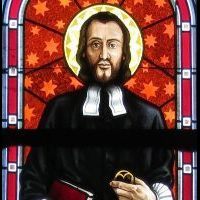
NAME: Zechariah Mayer VOCATION: Priest TRIBE / CULTURE: Tribe of Horen BIRTH YEAR: 238 SA ORDINATION DATE: 271 SA ORDINATOR: Magister Iudas CURRENT DIOCESE: Magistracy of Artifai ASSIGNMENT: scholarly work and dissemination of Scripture WRITTEN WORKS (please link): + In gave works OOC: USERNAME: L_Majer_ DISCORD: L_majer
-
╔════════════════════════════════════ † ════════════════════════════════════╗ . · : · . ‡ . · : · . To Be Made by the Light of the Blade On Judgment, Mercy, and the Cleansing of Edel By Zechariah Mayer Published 271 SA, on the 17 of The Deep Cold · . : . · ‡ · . : . · ________________________________________________________________________________ 1. Introduction - On the Fear of Light We are often troubled by images of light that wounds. In common thought, mercy is gentleness and judgment is thought to be cruelty. Yet the Scroll of the Gospel teaches us that the Creator’s methods do not need to be always so gentle and soft. Mercy may at times manifest in means that appear severe and cruel to mortal eyes. When God commissions an instrument, and that instrument illumines what it cuts, then we must focus not on spectacle, but on the purpose: the revelation and removal of corruption. The narrative of Owyn’s blade bestowed in the waters of Gamesh, turned against Harren’s corruption, and later spoken of as the means by which Owyn was “made again” presents a single, coherent image: that divine judgment, when all gentler measures fail, serves as mercy’s final boundary against corruption. 2. Owyn’s Vocation: Instrumentality, Obedience, and Penance The Scroll’s portrait of Owyn ensures we do not portray him as a wrathful autocrat, nor on the contrary as an instrumentless force of fate. In the waters of Gamesh, “GOD spoke to Owyn… Take hold of this blade, a symbol of holiness, and by it you shall cleanse mankind of sin,” (Scroll of Gospel 5:21-24) making the sword an authorized instrument and Owyn an obedient bearer rather than an original judge. After the deed is finished, he cries for forgiveness. He receives the Lord’s reprimand, demonstrating that even divinely commissioned instruments remain morally accountable. The text teaches us three points at the same time: The blade is an instrument of God The bearer is morally responsible The act may be grievous even when obedient This trinity ensures orthodoxy while allowing for the possibility of divinely ordained, agonizing correction. 3. Corruption and the Necessity of Cleansing In the Scroll, mainly in parts of Scattering and Book of Owyn, we can see how falsehood, once tolerated, becomes a habit, a serious matter, and becomes ingrained. The works of Iblees and the spread of mixed-blood lords are not mere mistakes. They become entrenched orders that resist reproach. The text shows us repeated opportunities for reform. Admonitions, prophetic calls to fast in Gamesh, and offers of vocation, which are refused until the entrenchment of sin renders gentler correction ineffective. Canonist theology distinguishes error, which is susceptible to teaching, from corruption, which is a habitual, self-sealing lie. Where the second option prevails, the Scroll implies, the Creator's mercy may lead to decisive cleansing in order to preserve the moral order of the community. 4. The Cleansing of Edel: Narrative and Norm In the Scroll of the Gospel, the cleansing of Edel is presented as both judicial and sacramental. Owyn’s entry into the city, the illumination of his blade, the blinding of Harren, and the death of the wicked are shown with a mixture of command and sorrow. The blade itself is named “a symbol of holiness,” yet its use is marked by grief, tears, and repentance rather than triumph. The Scroll does not allow divine authorization to dissolve moral weight. Owyn himself is shown to us in penitence. The Lord rebukes him for the spilling of kin-blood. Judgment, though commanded, still remains grievous. The pattern that emerges tells us that decisive force may be employed, but it is never separated from lament, confession, and correction within the faithful community. 5. What It Is To Be “Made by the Blade” From these parts of the scroll, we can see a clearer definition. To be made by the light of the blade is not to be formed by violence, but to be revealed through it. We must understand that the blade does not manufacture righteousness, it exposes what already stands in accord with truth and cuts away what does not. When we read that “Owyn was made again as the light of his blade,” it binds sanctification to obedience rather than destruction. The bearer and the instrument are sanctified only as they are rightly used. Only what endures the blade’s light is shown to be aligned with the Creator’s order. Purification must not be mistaken by us for annihilation. It is the painful removal of that which obstructs the flourishing of the faithful. 6. What It Continues to Represent The light of the blade endures not as a relic of violence, but as a boundary set within mercy. It reminds us that the Creator’s patience is not without limit, and that judgment may become necessary when corruption refuses correction. It is also a testimony to the price of obedience, because Owyn's task did not lead to celebration, but to sadness and remorse. As I stated in the previous chapter, everything that could not endure the blade’s light was revealed as already opposed to truth, confirming judgment as an act of preservation rather than domination. 7. Conclusion - Fear Not the Light That Reveals The Scroll of the Gospel teaches us that the Creator’s mercy may be exacting and costly. When corruption hardens and the truth is fading, GOD may entrust a mortal instrument to remove it. Such a calling, however, is never free of sorrow, accountability, or repentance. To be made by the light of the blade is to be returned painfully, yet faithfully to truth itself. The preservation of what is true through the removal of what would otherwise destroy it. We do not need to fear illumination, but we should fear the corruption that cannot endure it. Sources researched: Scroll of Gospel Scroll of Auspice ______________________________________________________ Signed, Zechariah Mayer Acolyte of the True Faith ╚════════════════════════════════════ † ════════════════════════════════════╝

-
 L_majer joined the community
 -
Your character has just arrived in a swampy, dim town. As they look around, their gaze is met with shacks and cabins. It smells of rotted wood and wet moss. They duck and step into a tattered tent, illuminated by a series of candles suspended in the air. At the back of the tent, an old hag raises her head, “What brings you to this dingy town? She begins, then pauses to study your face—”Ah, it’s you. I’ve been expecting you. Sit,” she gestures at a cushion, “Tell me your story.” ((How do you respond?)) "God bless you, Madam, I didn't know I've been expected, but it seems that the Devine Hand had guided our paths to this very spot," he replies with a welcoming tone, not judging the woman's appearance. He leans back in his seat and looks into the distance through the tent entrance. "My ‘story’ is a simple one, driven by faith and purpose. When I was a child, we were a family of little means. My brothers toiled hard, working the land or practicing their trades to ensure we had food on the table. I, however, was blessed with a mind keen for study. Seeing this, my parents made the considerable sacrifice of sending me to the Apostolic City, to be apprenticed under a man of letters and, more importantly, a man of profound faith." he glances back at the old women. She listens, looking straight into his eyes, not interupting a word he says. He continues: "Since receiving my humble education, I have taken to the open road. I am a traveler now, seeking to discern God's greater mission for me in this world. I seek to understand where my modest skills and knowledge can be best applied. I simply strive to lend a hand wherever it is needed, to bring a measure of comfort or clarity to those I encounter, and to fulfill the purpose the Almighty has laid before me, one step and one good deed at a time. I hope to find a peaceful place in these lands, where I can settle down for a while, spreading the one true faith, and help the local folk."