


Metamancy
-
Posts
333 -
Joined
-
Last visited
Content Type
Profiles
Personas
Wiki
Rules
War
Systems
Safety
Player Conduct
Roleplay Leadership Guidelines
- Roleplay Leadership Guidelines
- Roleplay Leadership Guidelines Comments
- Roleplay Leadership Guidelines Reviews
Forums
Everything posted by Metamancy
-
OOC: [!] The following missive can be seen, posted everywhere – from big cities to small towns. How did they even get there? The handwriting is… bubbly. Very bubbly. Hi! My name is Julia. I just became an adult, and I think the time has finally come to begin pursuing my dream of becoming a master chef! But… for that, I’m going to need ingredients. For my first dish, I want to make… pork loin! What does this mean for YOU, you ask? Well… I’m not going to use any NORMAL ingredients you can just buy at the store, obviously! So I need YOUR help in hunting a special species of boar that I heard exists only in the eastern black forests, near Caurost. Your reward? Getting to try Azuras’ next BIGGEST chef’s MASTERFUL pork loin before ANYONE else! RSVP below! Registration Form: Dates & Locations:


-
Records of the Won Court | ONE | Wongul and Won-Eo
Metamancy posted a topic in Characters & Cultures
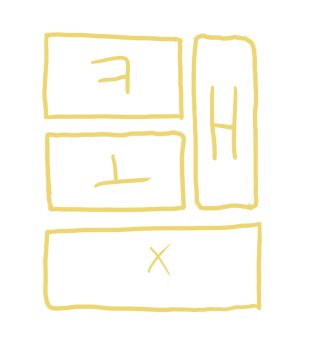
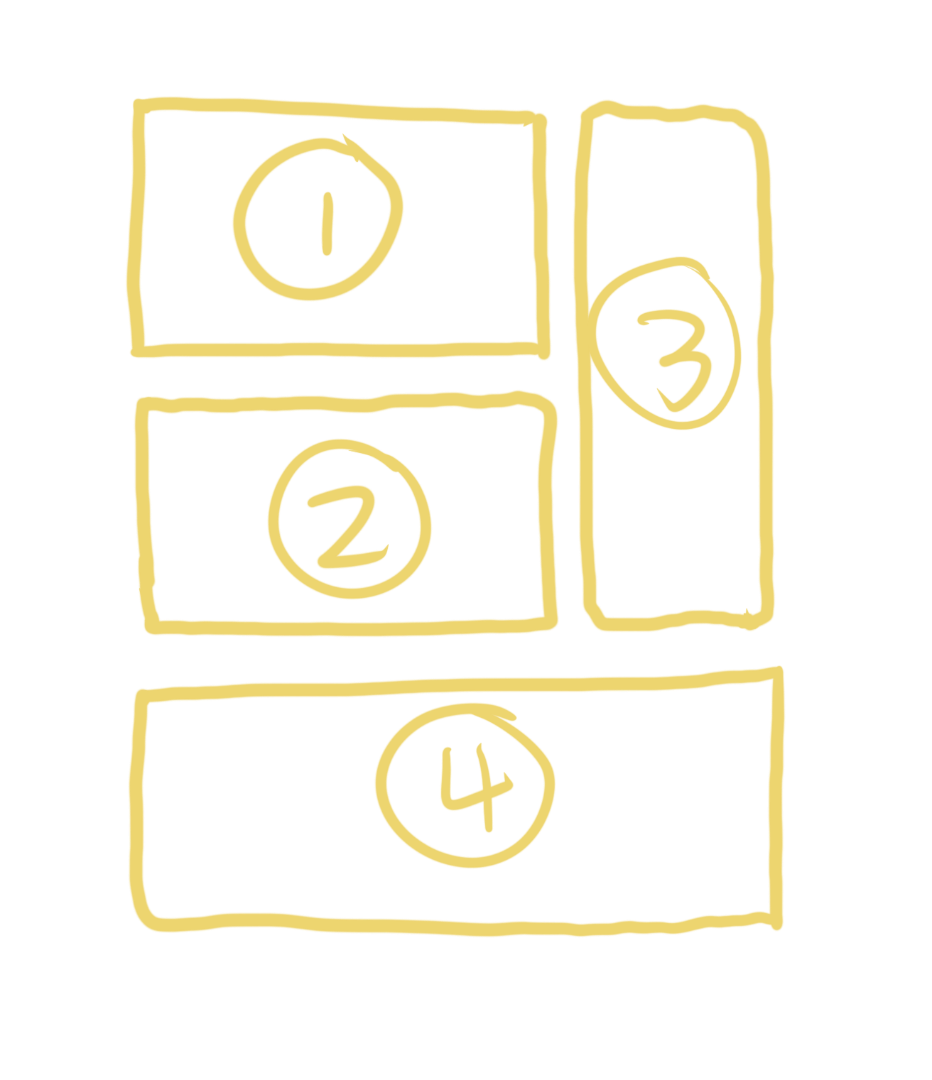
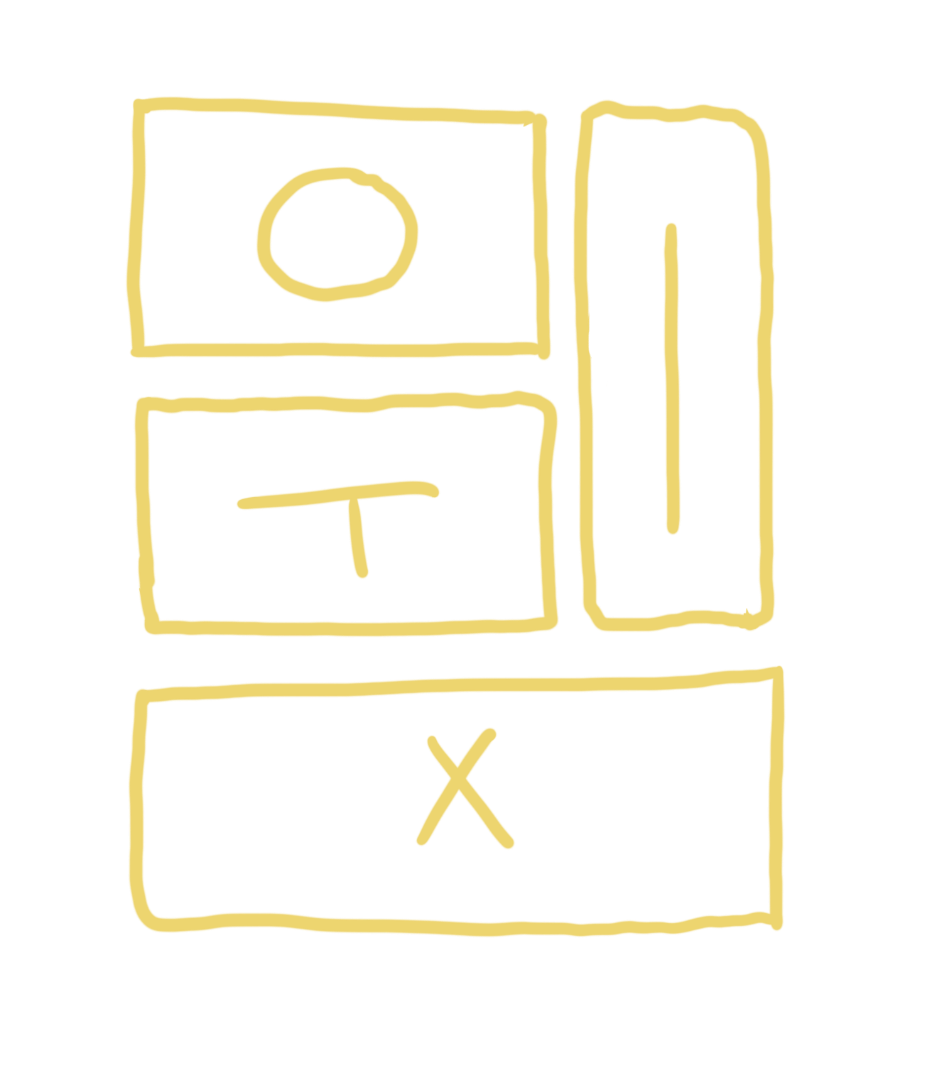
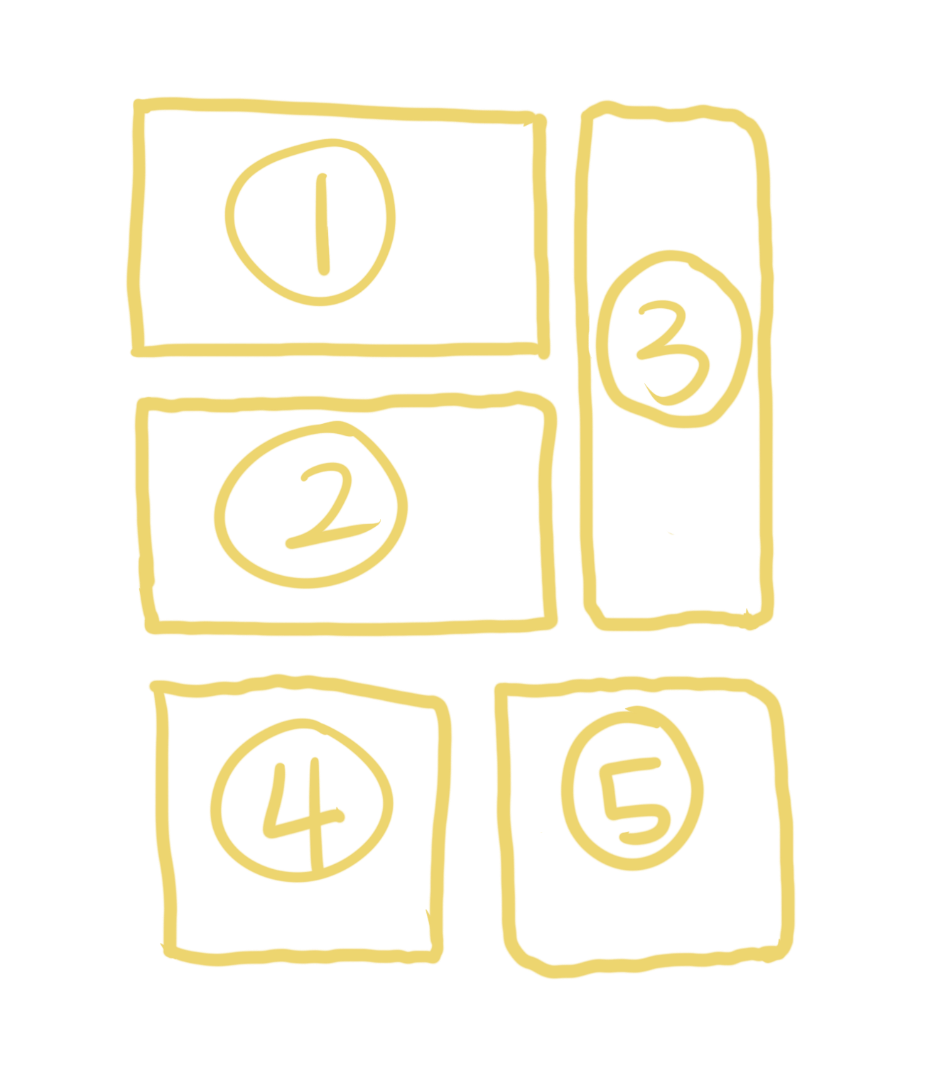
一 | 원글과 원어 [1. Wongul and Won-Eo] OOC: INTRODUCTION Won-Eo is an ancient language as old as the people of Won have existed, and it is the tongue of the Salamdeul, the chosen people of Chonwon. Many people find the difference between Wongul and Won-Eo baffling; in truth, it is simply that Wongul is the written language while Won-Eo is the spoken tongue. This tome was written for all the men and women of Won to read and learn how to speak and write their own language. One must take pride in one’s mother tongue. Wongul is a truly revolutionary script, as it was developed not by time and development, but by the ingenious hands of the Won court officials who dedicated their lives to creating a script that was easy to read and write, such that all the people of Won could do so. This first chapter of the Records of the Won Court shall detail how to read and write Wongul. CONSONANTS Much like in Common, Won-Eo consists of vowels and consonants. Below are listed the different consonants of Wongul, and their respective sounds. One must keep in mind, however, that many of these sounds are not comparable to the ones in Common; and thus, some sounds will be represented with two separate Common letters separated by a slash to denote that the sound lies somewhere in between those two Common sounds. If two Common letters are put together without a slash, it denotes that the two letters should be pronounced together to pronounce that Won character. ㄱ - g/k ㄲ - gg/kk (ㄱ, but stronger) ㄴ - n ㄷ - d ㄸ - dt (ㄷ, but stronger) ㄹ - r/l ㅁ - m ㅂ - b/p ㅃ - bp (ㅂ, but stronger) ㅅ - s/sh ㅆ - ss/ssh (ㅅ, but stronger) ㅇ - open vowel ㅈ - j ㅉ - jch (ㅈ, but stronger) ㅊ - ch ㅋ - kh ㅌ - t ㅍ - p ㅎ - h VOWELS As Won vowels can be harder to grasp from a Common perspective than consonants, examples of the sound in Common have been attached to each vowel. ㅏ - ah (as in spA) ㅐ - eh (as in wEnt) ㅑ - ya (as in YAard) ㅒ - yeh (as in YEt) ㅓ - eo (as in UP) ㅔ - eh (as in wEb, very similar to the point of little distinction to ㅐ) ㅕ - yeo (as in YUm) ㅖ - yeh (as in YEs - again, very similar to ㅒ) ㅗ - oh (as in gO) ㅛ - yoh (as in YOlk) ㅜ - ooh (as in mOOn) ㅠ - yooh (as in YOU) ㅡ - eu (as in EUgh) ㅣ- ee (as in sEE) HOW TO FORM CHARACTERS Having come this far, it is paramount to understand that Won words are not written the same way as Common words. The way to write “hyeon,” intuitively, would be ㅎㅕㄴ; but it is not. Refer to the helpful diagram below: This diagram illustrates how Won characters are formed. The characters are read in the order of 1-4; but oftentimes, steps 2, 3, or 4 are skipped. One and four are where consonants go, and two and three are where vowels go. One may notice, when reading the list of vowels, that some vowels appear to be "horizontal" and some to be “vertical.” Horizontal examples may include ㅡ, ㅠ or ㅗ, while vertical ones may be ㅣ, ㅒ or ㅓ. Horizontal vowels always go in slot number two, while vertical ones always go in slot number three. All, with the exception of one, consonants remain the same whether they are in slot one or four. This idea may still be hard to grasp. Below are detailed a few examples of this system in action. As one is able to see, slots two and four are excluded, marked by an “x” each: while slots one and three contain a consonant and vowel within them, respectively. With two and four excluded, the above character would be written like so: 마 And, by referring back to the list of vowels and consonants, one is able to see that this character is pronounced as “ma,” with the vowel in slot 1 (m) being pronounced first, 2 being skipped, 3 being pronounced as a consonant (ah) and 4 being ignored, as it is regarded last. Below is another example: This time, three and four are excluded, meaning we are able to ignore both and simply pronounce 1 and 2 in order. This character would be written as: 무 And would be pronounced as “moo.” Hopefully, it is becoming clear how the system of Wongul works. This system may take practice, as it can be difficult recognizing which slot each of the vowels and consonants are occupying; but with practice, identifying them becomes second nature. Below are four more examples. This case is slightly different, as only one of the four slots is excluded. Nevertheless, the order of pronunciation remains, from 1 to 2 to 3, which means the character is written as: 쾌 And is pronounced in the order of ㅋ -> ㅗ -> ㅐ, and is thus spoken as “kweh.” At last, the fourth slot is able to find a use. This is, again, slightly different as one must now deal with two consonants; however, the exact same rules apply. One (ㄱ) is pronounced first, then 2 (ㅗ), then 3 is skipped, and finally, 4 (ㅁ). This character is written as: 곰 And is pronounced as “gohm.” This character also happens to mean “bear!” This case is similar to the last one, with the only factor changed being the 2 slot exchanged for the 3 slot and a different vowel in its place. This is written as: 검 And is pronounced as “geom.” This character means “blade” – it can be shocking how such a small change drastically alters the meaning. At last, the ultimate challenge: all four slots used at once. If one has been following, however, this should prove quite easy. This is written as: 쉼 And is pronounced as “shwim” or “shuim.” Congratulations – any reader of this chapter of the Records of the Won Court now has an understanding of how to read Wongul. In truth, the hardest part of Wongul is memorizing the characters; for unlike languages such as Common, there are little to no exceptions to this system. WORDS So far, how to read characters have been covered in this chapter. And yet, how to read words? Words are, always, simply a combination of characters, just like in Common, and one need only read them in order. 사람들, which is pronounced Salamdeul (literally the name for the Won-In peoples,) is separated into three characters – sa, lam, and deul. Notably, each character is one syllable, and one will find that this also always holds true, with no exceptions; Wongul characters are always one syllable each. It is satisfying, to an extent, how little exceptions there are to Wongul. With that said: THE EXCEPTIONS The exceptions in reading Wongul are so few and far between that they are able to be listed here, in this chapter, all at once. Above, it was mentioned that there is only one consonant whose placement changes its pronunciation; and a perceptive reader may already have guessed it from the list of consonants at the beginning. It is none other than ㅇ, which cannot be read on its own. Above, ㅇ was said to be an “open vowel.” And yet, how is this possible, if it is a consonant? ㅇ is special in the sense that its sound changes based on its relationship to a consonant. For example: It should come to no surprise, at this point, that this character is written as: 위 However, its pronunciation can be misleading. If it does not have a sound on its own, then why does it exist? The answer is simple: A vowel, or two vowels, cannot be on its or their own, ever. The first slot must always be occupied – there are no exceptions to this in the entire language. Therefore, if one is attempting to pronounce a character which does not begin with a consonant – that is where ㅇ is used. It is almost an invisible consonant, when in the first slot as shown above; it is, in every sense, an open vowel sound. If one has not surmised already, the above character is pronounced “ooee,” or “oui.” ㅇ (invisible) -> ㅜ (oo) -> ㅣ(ee). ㅇ, however, changes its purpose when in the fourth slot. This character is written as: 방 It also happens to mean “room.” However, if one were to apply the previous logic and consider the ㅇ to be invisible, one would find that the pronunciation does not change at all - it is “ba,” and stays “ba” whether the ㅇ is there or not. Which, of course, cannot be the case. When ㅇ is in the fourth slot, it is no longer invisible; it is pronounced as “ng,” which means that the above character is pronounced as “bang.” With this, ninety-nine percent of the Won script is decoded. There lies, however, one last exception, which one will only see incredibly rarely. THE FIFTH SLOT This section was intentionally saved for last, for how rare it is to see the secret, hidden fifth slot. It is not an understatement to say that one could physically count the number of cases in which the fifth slot is used in, perhaps, five to ten minutes. The fifth slot is another consonant slot, and is seldom used at all. However, in the word/phrase 없다, which means “there is not,” it is clear to see that the first character of the word is nothing like the second. As written above, this character is written as: 없 And is actually used quite commonly in day-to-day language. It is, however, one of remarkably few. As usual, one skips the second slot and pronounces, in order: ㅇ (invisible) -> ㅓ (eo) -> ㅂ (b/p) -> ㅅ (s/sh). This may seem a baffling pronunciation, but is pronounced as “eobs.” This is an interesting case as, when alone, this character is pronounced as “eobp,” with the ㅅ being ignored; and when placed before a character that starts with most consonants, it also remains “eobp,” with the ㅅ still ignored. However, one very specific exception: when 없 is placed before a character that has ㅇ in the 1 slot (such as 어, making the entire word 없어), the ㅅ carries over, and it is pronounced the same as 업서 (eopseo), despite being written as 없어. This may seem confusing to many – why not simply write “eopseo” as 업서? – but to native Won-Eo speakers, it is comical to even entertain the idea that the word would be spelled as anything but 없어. It is a difficult concept to wrap one’s head around, and luckily, it is so rare that one virtually need not worry about it at all. The fifth slot, for the most part, does not exist. And, perhaps surprisingly, those are the only exceptions to reading Wongul (원글). Every other word, every last one, follows the rules detailed above. Below are some practice characters, words and phrases in case one may wish to practice reading. Refer back to the list of vowels and consonants for practice, of course. 글 차 누 관 안 명 안녕 없습니다 하늘 If any reader has made it this far, congratulations! All that is left is to memorize the different characters, and one may possess a full knowledge of how to read Wongul. May the light of Heaven preserve this script for all eternity.




-
Blades of Blight Reclaimed; A Letter To Marcus I
Metamancy replied to Magister214's topic in Empire of Man
-
Hi guys! In light of my return to LOTC and my dedication to the Won-In community, I will be hosting a hangul (한글, the script of Korean) reading crash course in the main LOTC discord tomorrow at 4:00PM EST! Come join in, have some fun, learn about Korea and how to read Korean! (I will be hosting another in the Kurai-Kuni discord for my buddies an hour and a half later, at 5:30PM EST.) I hope to see you there!
-
[geonsa | kʌnsa | 乾士] OOC: 一 | 광종대왕의 붕어와 전하의 특명 [1. The Passing of King Guangjong the Great and His Highness’ Mission] King Guangjong the Great. In Chonwon, the late king’s name is spoken with great and everlasting reverence. Bringing upon what is considered the “golden age” of Won history, he is one of incredibly few kings to receive the title of “the Great,” or “Daewang.” Following a series of Oyashiman attacks and invasions which Guangjong the Great’s father successfully repelled at the cost of his own life, King Guangjo the Great rose to the throne. With the Oyashi successfully driven out of Won lands and morale at an all-time low due to the attacks, Guangjong the Great implemented several policies that drove the economy of Chonwon to an all-time high. Taking money from the rich and giving to the poor as well as offering out jobs in the court to men who otherwise would not have had the opportunity, he was beloved by all the people – except the rich, who were unhappy that taxes had increased for them. However, throughout his reign, Chonwon prospered; foreign relations vastly improved, the economy boomed and, for the most part, everyone was happy. It all came to an abrupt end when Guangjong the Great was assassinated by a court official who was unhappy with the new policies that benefitted the poor. Following Guangjong the Great’s assassination, His Highness arose to the throne at the age of eleven. Turmoil in the nation sparked like an uncontrollable flame; news of Guangjong the Great’s death spread throughout the nation, and the court officials, selfish as ever, revoked all of the late king’s policies, and famine spread throughout Chonwon as farmers could no longer afford to pay their taxes. His Highness, needless to say, was given not a second thought, for he was a boy king; and many had forgotten that the king was appointed by Heaven itself, and that he was to be respected at all times. His Highness, the boy king, fell into a puppet rulership. He had little to no say over the noise of all the bickering of the court, and was told to keep quiet anytime he tried to speak. But he was a wise boy, that boy, and he refused to let his nation crumble. In the dead of the night, a single man was summoned. He was the most loyal, however young, personal guard of His Highness’ late father, and was one of the few that still believed in the king’s voice of Heaven. Seeing that hope for Chonwon was fast fading, His Highness ordered the man to form an honorbound order, to leave Aeldin and preserve the culture of the Salamdeul. High Highness gave the man a new name to go by, a ship, and enough texts regarding Salamdeul culture to last a lifetime. And thus, the Heaven Guard, or Geonsa, was formed. And though they did not know where they would go at first, they would soon find themselves landing on the shores of Azuras. 二 | 건(乾)의 명령 [2. The Cosmic Heaven’s Mandate] Driven by none other than Heaven itself, the Geonsa are inevitably honorbound, perhaps to a fault. They live by no code, other than the simple fact that the will of Heaven drives them to save the culture of their people. The will of Heaven is interpreted in many ways; often, it will appear through dreams or visions, but just as often it can be interpreted through wind patterns or constellations. Heaven speaks through nature. For this reason, the Geonsa can be arrogant, or even downright immoral. They believe that they are chosen by Heaven, and it can often show in their behavior, as they view others as below them. If Heaven mandates that they murder an innocent man, then they will do so. However, for the most part, Heaven seems to be quite reasonable; the Geonsa will always fight against the dark, and they will, for the most part, protect innocents. The Cosmic Heaven’s Mandate can often seem paradoxical. How can men still choose, if Heaven mandates all? These quizzical thoughts do not seem to cross the minds of the Geonsa; the will of 乾 always precedes the will of man. It is important here to recognize that 乾 is not a being, not a God. It is a cosmic entity that may be difficult to comprehend for one not raised around the concept. It is the ordering force of Heaven, the origin of all things. Therefore, it cannot command specific instructions in words; it merely reveals the path and the way that already exists. A “mandate” can be many things; but, specifically, it is a convergence of different signs. These signs may manifest as unnatural repetition or coincidence, or merely spiritual certainty. Spiritual certainty, however, can often be a dangerous thing, as Geonsa are often seen making impulsive or rash decisions in the face of threat in the name of Heaven. For them, however, it seems to be the only right thing to do. However, it is also important to understand that Heaven is not a clear thing to be seen. All signs are mere interpretations, and thus disagreements are bound to happen. Open discussions regarding the will of Heaven within the Geonsa are common, as all interpretations are fallible and temporary. It is for this reason that the Geonsa as a collective do not seem to be complete psychopaths; rather, they present themselves as, for the most part, rather honorable people. It is vital to note that the Geonsa believe the Salamdeul are a chosen people. They believe complete superiority over others, though this does often drive them to selfless acts in the mindset of “we must help those who are not chosen.” 三 | 건사의 구조 [3. The Structure of the Heaven Guard] The Geonsa consist of two main groups; the Guard, and the Artisans. The Guard is what comes to mind when mentioning the Geonsa; they are the warriors of the Heaven Guard, and fulfill Heaven’s duty through force. They don armor and wield blades, and are responsible for the safety of the Artisans. They are also the most honorbound and duty-driven, and thus also act as the de-facto priests of the Geonsa. They must be skilled in the bow and the blade, yet also with interpreting the will of Heaven and with the quill. The Artisans, meanwhile, are not all that different from common folk. Unlike the Guard, they were brought on the mission not bound by duty, but by practicality; they are the farmers, the builders, the experts that allow the Guard, and each other, to survive. Consequently, the Artisans are often seen to be less outwardly pious towards the mission; and each of them seem to have their own motives for coming to Azuras, although they are all united by their common belief in Heaven. Together, these two outwardly quite different groups form a cohesive mission to preserve Won culture. Artisans can, also, enter the Guard through an induction ceremony in which they relinquish their given name in exchange for their Heavenly name, which is chosen by the combination of one character representing a value and one character representing a natural element. Though the Geonsa miss home, they have a clear goal in sight: to reestablish Won culture on Azuras. With no means of communicating with Chonwon, they are left now to their own devices, with no knowledge of what fate awaits the unstable nation.


-
REJOICE GOD IS GOOD
-
maybe coming back to lotc throw personas at me some things you should know skin provided +7 points regular activity +20 points pre-established group +15 points know that i am still considering coming back at all so if you give me a persona there is no guarantee i will continue to play i'll play regularly if it interests me tho ok thanks lotc
-
The sky was clear, and the sun hung high in the sky. A certain figure marched down the streets of the Holy Imperium, khor blade dragging across the dirt. Light grew dimmer, being absorbed, around it, and plants withered and died. Somewhere in the distance, there was a clamor. The figure paused for a moment, a dandelion crushed beneath its feet. The dandelion screamed for help as its seeds struggled to break free from the armored foot, to fly free out into the wind – but its voice was silenced, and its lifeforce was taken. The figure, of course, did not notice the dandelion. It merely paused for a moment longer, before making its way over towards the gathering of what was made evident to be a gaggle of peasants. “What is happening here?” Asked the figure to no one in particular, hollow sockets for eyes scanning the scene, taking in the raised blades, armored horses and shouting peasants behind a white helm. White was a better disguise than black. “Rebellion!” Answered a peasant, roaring out in outrage. The darkstalker paused and sheathed its cursed blade. It was at that moment that it caught a peasant’s eye. “What’re ye doin’?” Demanded a peasant of the paramount undead in disguise. “Ye’re gonna need that blade! We fight for our rights! We fight for our families!” The being, which had long since felt any emotion, felt nothing still. And yet, there was something admirable about the words fight and family being used together; oppression, the darkstalker had noticed, was a recurring pattern in human history. “...of course,” The armor-clad figure chuckled, drawing the khor blade out of its sheathe once more. Its tip kissed the ground, and the ground screamed in agony. If the peasant noticed, he did not seem to care. “Hop on a horse! We head to the hills!” ⁺‧₊˚ ཐི⋆♱⋆ཋྀ ˚₊‧⁺ The darkstalker was, quite frankly, surprised that it had not been noticed to be darkspawn by the time they reached the battlefield. Perhaps it was the fact that they were peasants; perhaps they did not even know what darkspawn were. The being watched as the Alban knights rolled unto the scene, lances and blades in hand. Few words were exchanged. The darkstalker merely felt the tip of its blade with its armored hand, taking it all in. And thus, battle began. The being felt that familiar rush of battle, the closest thing it came to feeling – it felt its blade cleave through skin, felt lances against its armor, felt its bone creaking beneath the weight of steel – and yet, it still felt nothing. Its lack of feeling enraged it; if it could feel rage at all. It wanted to feel, wanted to feel the same bloodlust that the humans could feel. And so, in its vain attempts, it slashed and slashed and slashed, watched blood splatter the soil below. Alas, the darkstalker was left scanning the battlefield in the briefest of pauses only to find that most of the peasants had fallen. “Tch.” It clicked its nonexistent tongue, and made to sheathe its blade and run – only for an Alban knight’s blade to catch it in the back of the head. The undead paramount fell to the ground and felt its skull begin to crack. There was no pain; for feeling pain would be too much mercy. It only felt a dull sensation in its chest, the same sensation it always felt, as the blade came crashing down to sever head from body. It knew that it would be back. It always did; always came back to life, to suffer more. And as the roaring of the Alban victors grew louder, the paramount wished it could close its eyes, to meet death like so many of the peasants did. The darkstalker could not remember why it had decided to fight for the peasants in the first place. Why? That was its thought as it met death, once more.


-
-
ON THE DEMISE OF LORD FOLTEST RUDOLPH HELVETS, 2073
Metamancy replied to MunaZaldrizoti's topic in Archduchy of Alba
"Haah..." Somewhere deep within her damnation, a certain Zenag Krouzt suffered. "Haah..." She drew a deep breath in, and a deep breath out. Somewhere, somehow, she sensed the death of an enemy. However much an enemy a child of Susanna could be. "Haah... haha..." And thus she continued to burn. -
Somewhere in the Stargush, there was Thorn. But he was not Thorn; he was, and only ever was, Uzgk'Grizh, Blood of the Earth. It had been a long time since anything had disturbed him. And nothing disturbed him yet.
-
of COURSE only after i leave lotc
-
i am in tears
-
Metamancy/Metaphobia's Final Goodbye & AMA I knew this day would come eventually, but I didn't think it would be this soon. (This post is also to act as an AMA if you want to ask me any questions, and I will be sure to answer.) This is my "official" retirement post from LOTC. You've probably noticed recently that I've been less and less active, especially in the past 1-2 weeks. High school life has really started to pick up, and I really want to take the time to start focusing on my (potential) music career. I want to develop as a singer, as a musician, and as an artist, and on top of school life, I really don't have the time nor motivation to dedicate to LOTC anymore. On top of that, logging into LOTC has felt like more and more of a chore recently; I log on, jump around for a little bit, do nothing, then log off. The few moments of RP I've had in the last few weeks haven't felt the same, especially with my two favorite characters of all time - Cheong-Won and Avaline - now PK'd. Someone once said in a status update (I don't remember who) that everyone who puts up a "farewell" post like this one isn't actually leaving, and that they always come back. That's probably true in my case, too; there's a good chance I'll come back one day, and I'll probably log in once or twice a week just to see how things are going and maybe get a little bit of roleplay in. This post, I hope, simply acts as an explanation as to why I will be inactive, and as a thank you and appreciation for everything LOTC has done for me. Thank you to everyone on LOTC I have interacted with over the years - it's been one hell of a ride, and I would not be the creative person I am today without the presence of this amazing community. Despite everything that people say is a mess, LOTC really is a beautiful place where people come to have fun, and I truly hope that people don't forget that. Some people I really appreciate that I'd like to mention by name, though everyone I've interacted with ever deserves the same level of gratitude: @Cally and the Kurai-Kuni community @Lbunz120@ErosTeaand the Alba community @LobsterLarry @Javert and the Horde community @Kardikaand Salvo @Hawkeye_Goughand @xo31for being cool dudes @McSteveand the Celia'nor community (heh) @TaraJessfor bamboo And so many other people that I am sure I am forgetting, but if I were to list every one this post would be far too long. Thank you to everyone on LOTC for being with me through this journey, and I hope I was at least a little bit of a cool guy for you guys to interact with. I'm not gonna go into my whole life story, but I found LOTC when I was 15, and even though I was not the most mature person at the time, LOTC helped me through a move across the Pacific Ocean from South Korea to the US, a suicide attempt, a 2-month hospitalization, and a 6-month period of online schooling in which I had no friends. It is thanks to LOTC and its countless memories and experiences that I remained sane through that time. I am now 17, an avid musician, and am back in school with lots of friends, and it feels bittersweet to say goodbye now after all this time. But I am in so much of a better place now, and it is thanks to LOTC that I have arrived here; and it is here that I must leave it, to focus on keeping up this momentum and driving myself into my (hopefully) bright future. So once more, thank you; thank you to everyone, thank you to LOTC, and thanks for all the roleplay. I really hope to be back one day. Of course, this isn't a full goodbye; you'll see me around still. But thanks anyway :)
-
Alan Gray itched his head, mumbling to himself as he walked back to Saint Godwinsburg. "Dude. Like. What the hell."
-
hi im aether vip too and i have like 14 tokens a week i wonder what i'm gonna do with them!!!!
-
listen bro...
-
i've lost track of how many looking for group posts i've put up but this time it's DIFFERENT i SWEAR im gonna try to start up a pretty small nomad group itll be pretty small we can go to places and have fun we can use aesops architects i will be doing this on my boy kang jun who is a human won in 21 year old male but your character could be a wood elf druid or a dwarf voidal mage idgaf ok maybe not a voidal mage since the empire will slime you out reach out on discord (metaphobia.) if interested, you can use a persona you already have or make a new one idc i just want a group to rp with since finding rp as a stranger/adventurer is a chore thanks
-
I’m really starting to like this server
.thumb.jpeg.7a2a5c6fda5bc3b4e960a8645bb0ab98.jpeg)








.thumb.jpg.b4532571523968b4e3ffab54f21c13bf.jpg)