j0k3rf99
-
Posts
98 -
Joined
-
Last visited
Content Type
Profiles
Personas
Wiki
Rules
War
Systems
Safety
Player Conduct
Roleplay Leadership Guidelines
- Roleplay Leadership Guidelines
- Roleplay Leadership Guidelines Comments
- Roleplay Leadership Guidelines Reviews
Forums
Everything posted by j0k3rf99
-
Accepted yeet
-
A Game of Thrones Following this post, the roleplay will begin on the first day of the seventh month of the year 299. Posts will last one month as of the first post and will be modded (ideally) once a week on each Sunday. Please include an Actions section of your post where each thing which needs to be modded is summarized. House Stark Titles: King in the North, King of the Trident, Lord of Winterfell Primary Seat: Winterfell Significant Characters: King Robb Stark (The Crag), Bran Stark (Winterfell), Catelyn Stark (Riverrun), Sansa Stark (King’s Landing, hostage of the Iron Throne), Arya Stark (King’s Landing, hostage of the Iron Throne, rumored to be missing or dead), Rickon Stark (Winterfell), Theon Greyjoy (Iron Islands, envoy), Brienne of Tarth (Riverrun), Brynden “Blackfish” Tully (Riverrun) Estimated Manpower (Max Potential): 45,000 Recent History: As the War of Five Kings began, the North soon marched south to demand the release of their Lord Paramount, Eddard Stark from the Black Cells of King’s Landing. In Riverrun news reached Robb that rather than his father had been deemed a traitor and executed by the young king, Joffrey Baratheon. Outraged, the North made Robb Stark their King, with the Riverlands bending the knee as well. Now the North fought to avenge the death of their Lord who was wrongfully accused as a traitor by a suspected bastard. After capturing Jaime and proving his prowess in the Battle of the Whispering Wood, Robb now threatened Lannisport from the Crag where he and what is often reported as an army of wolves reak havoc on Tywin Lannister’s land. As the war began, Robb Stark sent envoys to those who would soon announce themselves as Kings. Catelyn Stark traveled south to Bitterbridge and then Storm’s End, where she met with and witnessed the death of Renly Baratheon at the hand of what she claims was Stannis’s shadow. Brienne of Tarth joined Catelyn as a sworn sword here after being accused of the murder and fled to Riverrun with her. Her children found themselves spread throughout Westeros, as Robb and Grey Wind fought in the Westerlands both Sansa and Arya remained imprisoned in King’s Landing, though no one had seen Arya since the day Eddard was arrested. Bran ruled as Prince of Winterfell while Rickon was still a young child whos wolf was continually running rampant through the castle, as wild as he was. Theon Greyjoy had also been sent to the Iron Islands where he met with his father, who declared himself a King. House Lannister Titles: Lord Paramount of the Westerlands, Warden of the West, Lord of Casterly Rock, Shield of Lannisport Primary Seat: Casterly Rock Significant Characters: Tywin Lannister (Near Harrenhal), Tyrion Lannister (King’s Landing), Jaime Lannister (Riverrun), Cersei Lannister (King’s Landing), Kevan Lannister (Harrenhal), Genna Lannister (Casterly Rock), Gerion Lannister (Missing), Gregor Clegane (Harrenhal) Estimated Manpower (Max Potential): 50,000 Recent History: Tywin Lannister had ruled his lands peacefully from Casterly Rock when his son Tyrion Lannister was imprisoned by the wife of Eddard Stark, Catelyn Tully. In response, Gregor Clegane or “the Mountain that Rides” began attacking the Riverlands though it was claimed without his support. Soon after the War of Five Kings would erupt when Robert Baratheon died and Ned Stark was arrested. His son, Jaime Lannister was sent to lay siege to Riverrun but was captured in the Battle in the Whispering Woods where Robb Stark proved his own military prowess. After Tywin’s grandson King Joffrey beheads Ned Stark, the North rebels as it’s own Kingdom and the two would face off in the Riverlands. Tywin spent much of the war up until Renly’s death at Harrenhal, where he commanded his armies. Recently at Oxcross, Stafford Lannister’s army was smashed and he was killed in battle by the army under Robb Stark. The Lannister family is scattered throughout Westeros, with Tywin and his brother Kevan recently departing from Harrenhal with their armies. Jaime was currently imprisoned in Riverrun by the King in the North, and his other son Tyrion acted as Hand of the King in King’s Landing alongside the Queen Regent, Cersei Lannister, Tywin’s daughter. House Baratheon of Dragonstone Titles: King of Westeros (Claimed), King of the Andals, the Rhoynar, and the First Men (Claimed), Lord of the Seven Kingdoms (Claimed), Protector of the Realm (Claimed), Lord of Dragonstone, Lord of Storm’s End, Ser Primary Seat: Dragonstone Significant Characters: Stannis Baratheon (Storm’s End), Davos Seaworth (Storm’s End), Melisandre (Storm’s End), Selyse Florent (Dragonstone), Shireen Baratheon (Dragonstone), Estimated Manpower (Max Potential): 30,000 Recent History: The Dragonstone branch of House Baratheon was formed when Robert Baratheon granted Stannis the island as a reward for his role in Robert’s Rebellion against the Targaryen as it was long the seat of the heir to the Iron Throne. Stannis had long taken this as an insult as Dragonstone was a castle on a rock just outside of Blackwater Bay, but when the time came to lay his claim on the Iron Throne against the pretender Joffrey, his command of the royal fleet proved to be vital. Now Stannis fights for his birthright against the bastard born of the supposed incestuous relationship between the Queen Cersei Lannister and her brother Jaime. All Baratheons had before then been born with hair and eyes the color of coal, yet Robert’s three children had golden curls. From this and the evidence found by Stannis, he sent his Hand, Davos Seaworth to spread the word throughout the Seven Kingdom and convince the houses to carry out their duty and bend the knee to the rightful King of the Seven Kingdoms. Most of Stannis’s family remained on Dragonstone where Queen Selyse led a cult of followers who supported the Lord of Light R’hllor and the Red Priestess, Melisandre. She is rumored to have strange abilities and claims to see the future in flames. It is rumored by some in Riverrun she and Stannis were involved in the death of Renly, not Brienne of Tarth. House Baratheon of King’s Landing Titles: King of Westeros, King of the Andals, the Rhoynar, and the First Men, Lord of the Seven Kingdoms, Protector of the Realm Primary Seat: King’s Landing Significant Characters: (All in King’s Landing) Joffrey Baratheon, Cersei Lannister, Tyrion Lannister, Myrcella Baratheon, Tommen Baratheon, Petyr Baelish, Varys, Grand Maester Pycelle, Sandor Clegane Estimated Manpower (Max Potential): 10,000-15,000 Recent History: Following the death of Robert Baratheon, King of the Seven Kingdoms, the realm soon fell into chaos. Cersei Lannister ensured she would become regent through the arrest of Eddard Stark, and when he was supposed to be sent north to the Wall, Joffrey instead saw him beheaded. This led to the realm becoming fractured, and soon after the claims of his illegitimacy would see Robert’s brothers and Joffrey’s uncles, Stannis and Renly laying their own claims. The North would rebel under the King in the North, Robb Stark, leaving the Crownlands to be defended by House Lannister. Following the death of Renly, Stannis had arrived at Storm’s End and Cersei Lannister had continuously requested her father bring an army to protect the city, but instead sent Tyrion Lannister to serve as Hand in his stead. The Grand Council was all that was left to hold King’s Landing together while hoping to raise Joffrey into becoming a decent King. House Tyrell Titles: Lord Paramount of the Mander, Lord of Highgarden, Defender of the Marches, High Marshal of the Reach, Warden of the South Primary Seat: Highgarden Significant Characters: Mace Tyrell (Highgarden), Willas Tyrell (Highgarden), Garlan Tyrell (Highgarden), Loras Tyrell (Near Fawnton), Margaery Tyrell (Bitterbridge), Olenna Tyrell (Highgarden) Estimated Manpower (Max Potential): 80,000-100,000 Recent History: At the onset of the War of Five Kings, House Tyrell had aligned with Renly Baratheon following a marriage between Renly and the daughter of Lord Mace Tyrell, Margaery. This alliance seemed to ensure Renly the Iron Throne, yet the hopes were soon put to an end on the eve of battle between Renly and his brother Stannis outside of Storm’s End. Renly had been killed seemingly by Brienne of Tarth, and now much of the Tyrell host lay in waiting in Bitterbridge. House Tully Titles: Lord Paramount of the Riverlands, Lord of Riverrun Primary Seat: Riverrun Significant Characters: Hoster Tully (Riverrun), Edmure Tully (Riverrun), Brynden “Blackfish” Tully (The Crag) Estimated Manpower (Max Potential): 45,000 Recent History: Following Robert’s Rebellion, House Tully found itself in an advantageous position within the Seven Kingdoms. An alliance with the North, Vale, and Stormlands created a powerful political block which allowed Hoster Tully to maintain his power and region through the Rebellion and the conflicts following then. As the War of Five Kings began, Edmure Tully had begun acting as regent for his bedridden father and was forced to defend the Riverlands against Gregor Clegane after his sister Catelyn Tully captured Tyrion Lannister in order to try him for the murder of Jon Arryn. As the war began to expand in scale, he bent the knee to the King in the North, Robb Stark and came to the defense of his sister when her husband was executed unjustly by Joffrey Baratheon and Cersei Lannister. Now Edmure found it in his hands to manage the Lords of Riverlands and keep them happy while they fought a war in the name of the Starks. House Bolton Titles: Lord of the Dreadfort Primary Seat: The Dreadfort Significant Characters: Roose Bolton (Near Harrenhal), Ramsay Bolton Estimated Manpower (Max Potential): 5,000 Recent History: House Bolton served House Stark loyally, though Roose aspired for more. House Bolton long felt it was not meant to be below the Starks, but nonetheless, the Starks remained their Lord. Roose Bolton had been Lord of the Dreadfort for some time and had a son Domeric Bolton, but when the bastard son he fathered off a miller’s daughter he raped came to the Dreadfort to serve his father, Domeric soon died and Ramsay Bolton became his primary heir and ruled the Dreadfort in his father’s stead while he fought in the south. Ramsay soon after married the widowed and heirless Lady Hornwood, hoping to gain their land for House Bolton. This would cause strife and soon after Rodrik Cassel, Winterfell’s Castellan would lead a host to the Dreadfort to free Lady Hornwood and capture Ramsay who was seemingly killed. Now, Roose Bolton remains in the south seemingly heirless. House Karstark Titles: Lord of Karlhold Primary Seat: Karlhold Significant Characters: Rickard Karstark (The Crag), Harrion Karstark (Harrenhal, hostage), Arnolf Karstark (Karlhold), Alys Karstark (Karlhold), Cregan Karstark (Karlhold), Estimated Manpower (Max Potential): 3,000 Recent History: House Karstark was formed from a cadet branch of House Stark and has been a loyal house since then. Situated in the far north, the Karstarks often aid the Night’s Watch and are one of House Stark’s principal bannermen. At the Battle in the Whispering Wood, Rickard Karstark and two of his sons fought alongside Robb Stark, though Eddard and Torrhen Karstark would be slain by Jaime Lannister as they defended Robb. His last surviving son, Harrion Karstark had been taken prisoner at the Battle on the Green Fork while under the command of Roose Bolton. Rickard Karstark would begin to have his revenge at the Battle of Oxcross where he killed Stafford Lannister and helped to smash the amassing Lannister host. House Reed Title: Lord of Greywater Watch Primary Seat: Greywater Watch Significant Characters: Howland Reed (Greywater Watch), Meera Reed (Winterfell), Jojen Reed (Winterfell), Jyana (Greywater Watch) Estimated Manpower (Max Potential): 2,500 Recent History: House Reed is an old and loyal house in the North, and is known for little more than their affinity for swamps and frogs. Despite this, they receive much respect in the North and Howland Reed is one of the few men who rode south with Eddard Stark to the Tower of Joy, where Lyanna Stark was being held. Now, Howland Reed continued to support the North, albeit in less of a way than most houses. They did not provide men, but the children of Howland Reed, Jojen and Meera, were sent to Winterfell where they provided advice, company, and protection for Bran and Rickon Stark. Little is known about the mysteries of Greywater Watch and even less is known about the Lords which rule the swamps of the Neck. House Crakehall Titles: Lord of Crakehall Primary Seat: Crakehall Significant Characters: Roland Crakehall, Burton Crakehall, Tybolt Crakehall, Lyle Crakehall, Merlon Crakehall Estimated Manpower (Max Potential): 5,000 Recent History: House Crakehall is a loyal vassal of House Lannister in the Westerlands. During the War of Five Kings, they have served under House Lannister in important battles, including the Battle on the Green Fork and the Battle of Oxcross, where Lord Roland Crakehall had been believed to be slain but it had been proven to be wrong. Now, the house continued their fight alongside Lord Tywin Lannister against the Northern threat who threatened the Westerlands itself. House Banefort Titles: Lord of Banefort Primary Seat: Banefort Estimated Manpower (Max Potential): 1,000 Significant Characters: Quenten Banefort (Riverrun, hostage) Recent History: (Due to their lack of information, I allowed Boney some freedom with the history of the house so here is what he has provided: here) Beyond the Wall Titles: King-Beyond-the-Wall Primary Seat: None Significant Characters: Mance Rayder (Milkwater)Tormund (Milkwater), Styr, Magnar of Thenn (Milkwater) Estimated Manpower (Max Potential): 10,000 Recent History: Mance Rayder was once a man of the Night’s Watch, but he soon abandoned his post following a demand to give up a cloak which was no longer black and spent years uniting the wildling clans. He gained their trust through a variety of means and became a King through proving his strength to the wildest men Westeros had to offer, but as he did this he learned of threats beyond the Wall long forgotten. With a host of wildlings, he sought to move south and make their way to the other side of the Wall where they too had protection from what was coming, something the Night’s Watch had pledged to prevent. Brotherhood Without Banners Titles: None Primary Seat: Hollow Hill and other various locations in the Riverlands Significant Characters: Lord Beric Dondarrion, Gendry, Lem Lemoncloak, Thoros of Myr, Harwin, Jack-Be-Lucky, Edric Dayne, Anguy the Archer, the Mad Huntsman Estimated Manpower (Max Potential): 300 Recent History: The Brotherhood Without Banners is a group of men who have bound together to defend the smallfolk of Westeros from the Lords who have continually abused them. They fight for King Robert Baratheon who was the King they had sworn to defend and fight for when Eddard Stark sent them to put an end to the terror of Gregor Clegane in the Riverlands. Although many have reported having killed him before, Beric Dondarrion seemingly cannot die and has returned to life through the will of the Red God. The true numbers of the Brotherhood are unknown and how large they could grow is also unknown, and similarly, their location much of the time is also unknown as they move in secrecy throughout the Riverlands defending the smallfolk from whoever may terrorize them.
-
Accepted
-
Indeed, so I will still consider your application though I can not accept or deny it until I can also review the other. I recommend providing a longer history and better detail as the minimum is intended to be 1-2 paragraphs, and it will be selected based on which is better done. Accepted Accepted!
-
As stated, this House has been reserved but many other interesting houses are still available. Accepted Accepted Accepted Accepted Accepted Accepted Accepted
-
Accepted Accepted
-
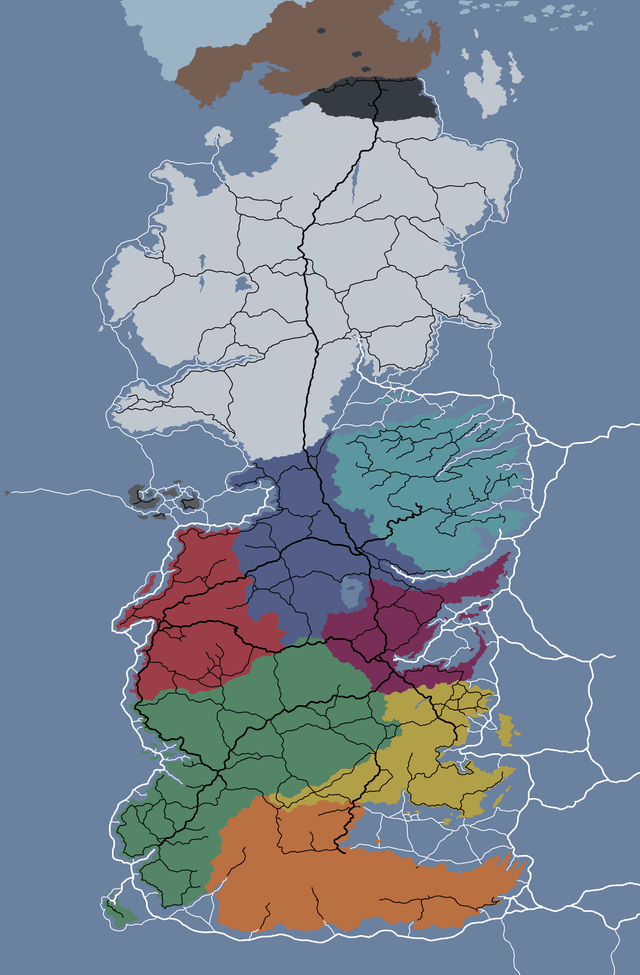
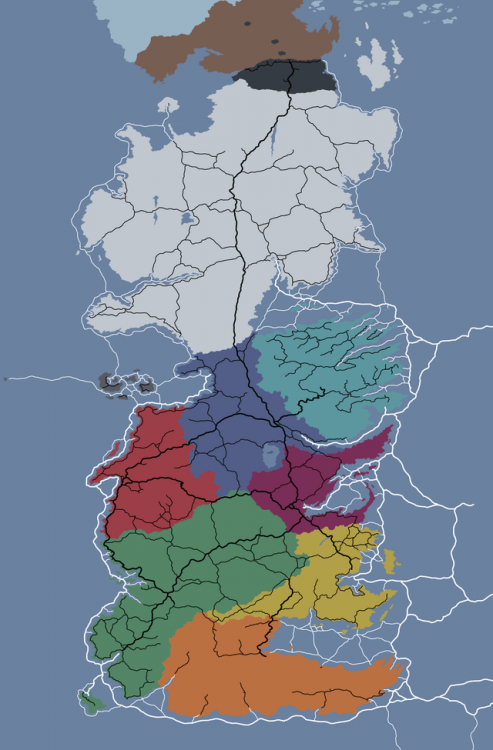
A Game of Thrones The year was 299 A.C. and the Seven Kingdoms of Westeros had fallen into civil war. The war erupted following the death of the King, Robert Baratheon. His Hand, Eddard Stark was arrested shortly after causing his son, Robb Stark to march south in order to free him. Shortly after his arrival in Riverrun, the seat of House Tully he learned of his father’s death by the young King Joffrey’s orders. Joffrey was the son of Robert Baratheon, though his mother Cersei Lannister ruled in his stead as Queen Regent. His actions would lead Robb to declare himself King in the North, with Riverrun declaring themselves a part of his new Kingdom. In the south Robert’s brothers, Renly and Stannis both laid their own claim to the throne, but shortly after they met Renly would die, leaving his young Queen Margaery Tyrell and her family to seek a new suitor. In the east, the Greyjoys of the Iron Islands claimed their old title of the Kings of the Iron Islands and began raiding in the north. The Martells of the south simply waited, putting men in place to defend the Prince’s Path. While the War of the Five Kings began to rage in Westeros, rumors of strange occurrences began to make their way east. A Targaryen girl gave birth to three dragons and was on her way to Westeros to make her own claim. With the word of dragons came other rumors, such as the return of magic to the world, but the Maesters of Old Town were quick to deny this. The Red Woman who serves Stannis is one of the few in Westeros who practiced this supposed magic. Even more troubling, traders from Yi Ti reported the invention of new deadly weapons, which shot iron instead of arrows. Brown: Beyond the Wall (Wildlings), Black: The Wall/The Gift (The Night’s Watch), Grey: the North (Stark), Dark Blue: the Riverlands (Tully/Stark), Light Blue: the Vale (Arryn), Red: the Westerlands (Lannister), Green: the Reach (Tyrell), Purple: the Crownlands (Baratheon), Yellow: the Stormlands (Baratheon), Orange: Dorne (Martell) OOC Players may choose from any of the Great or Major houses and are expected to roleplay not only their main holdings but also as their character. The Seven Kingdoms is a feudal society which is expected to operate as such, and thus these Great Houses do not hold absolute power over their domain. Losing a character does not mean you lose your House, as long as a viable heir remains then they can be used following the death of a character. Regents are replaced over time as well, such as the Queen Regent of the Iron Throne, Cersei Lannister. You can also roleplay certain characters under your control, but their primary goals and traits cannot be changed easily. You are also responsible for the development and upkeep of your holdings. The roleplay will be starting following the death of Renly Baratheon and will follow a combination of show and book storylines, allowing for players to mix between the two. Certain aspects from the show and books will likely be abandoned, such as the threat of White Walkers. Magic will be largely controlled by the Mod and employed only in certain situations. Technology in this FRP has also been slightly advanced, with the invention of firearms in the Essosi nation of Yi Ti, though none have yet to reach Westeros. Danyerys, Essos, and other characters introduced in the later seasons and books may become available as the RP progresses but cannot be played as of now. Under special request, I may allow for one of the more western free cities. Interesting Houses: House Greyjoy (No Leader Right Now) House Hightower (Leyton Hightower) House Tyrell (Mace Tyrell) House Manderly (Wyman Manderly) House Bracken (Jonos Bracken) House Blackwood (Tytos Blackwood) House Mallister (Jason Mallister) House Frey (Walder Frey) The Night’s Watch (Jeor Mormont) Almost any other Westerosi House can also be played! For information not included here, use https://awoiaf.westeros.org/index.php/Main_Page for information. Show information is also allowed, though it may not include all necessary information regarding a house.
-
The State of New York The Battle of Troy After nearly a year of folly and attempts at removing the New England Army from upstate New York, General Rickett’s Army successfully ran the occupying army from the city and hopefully, the state. While New York City still lay under siege by New Englanders and now Frenchmen, President Vanderbilt speaks in Albany which finally began its reconstruction, addressing the war. “Thousands have fallen in defense of our great state and it’s independence, in defense of your liberty, defending against those we once called our allies, our friends, our brothers. New England has betrayed us for their own gain, seeking to dismember our state out of false fear and the misbelief that New Jersey had been annexed into our state. Now they have invited the Frenchmen into the war, likely so they, once a friend of our own as well, may profit through the gain of our land! This war has raged on and I am heartbroken to say it must continue to do so until the invaders have been expelled and now it has become clear they can not maintain this war. While more men pour in to defend New York City, their own defense falters. Our brothers in Virginia, Pennsylvania, and now Maine will be avenged for the loss they have taken during our war.” President Vanderbilt would soon after return to New York City where he continued to lead the nation and aid in the war cause. The Fraudulent War Horace Greeley is requested to meet with President Vanderbilt to discuss the war, and write a piece on its origins and New England’s involvement. He calls for Greeley to discover the truth and make it known, as New England had all but abandoned New Jersey in the latest Peace Conference. It was clear with the invitation of foreign soldiers and disinterest in peace that New England had ulterior motives for this war rather than believing they were doing this for the independence of New Jersey as it had maintained its independence and New England seemed to even realize that. The piece written by Horace which is intended to criticize the New Englanders' cause for war would be published throughout America and Europe, hoping to show the world that New England and France were engaged in a war of imperialism in America, with no justification but their own gain and no reasonable end but the suffering of thousands of Americans. The Central Intelligence Division President Vanderbilt pushes for the passing of a bill to create an intelligence agency who could protect New York from such threats as New England in the future. They believe due to the close trade ties and existing relations the invasion should have been foreseeable and preventable with a proper intelligence agency and hope to prevent a similar situation from occurring in the future. The program enlists the aid of the Pinkerton Detective Agency to aid in the development of the Division, with a nice sum offered for such help. ACTIONS President Vanderbilt speaks in Albany proclaiming the liberation of upstate New York, and calling upon New Yorkers to remain hopeful and proud, for the enemy was on the defense. He also notes that France now had a stake in the war, and would likely attempt to establish a colony in their proud and free nation. Horace Greeley is requested to investigate and publish a piece on the Northern War, hoping to shed light on the false justification used by New England to brutalize New Yorkers and their land. Vanderbilt cites their disinterest in New Jersey’s independence as well as their lack of interest in peace which shows that this war is motivated by imperialistic, or worse causes. Mr. Greeley’s findings would be widely published throughout the United States and Europe, and hopefully within New England where freedom of speech was still expected to exist and the widely known journalist’s reputation should be untarnished. The Central Intelligence Division of New York is created in order to prevent surprise attacks such as the one which began the Northern War, as well as providing intelligence regarding enemy or potentially hostile nations and entities. An additional ironclad is ordered as well as upgrades to the design of the ironclad. New York uses the commandeered designs of Connecticut gunmakers to begin producing more weapons, as well as working to improve their own standard issue rifle. The Republic of Asbury is offered further investments and funding into the industrial expansion of their state. It is hoped this can begin to replace some of the lost income from New York. Work begins in Cape May, RA to begin improving the port. The hope is to divert New York City shipping to southern New Jersey for the duration of the war where cotton and other goods can begin being produced at newly opened factories in the state. Jobs are almost exclusively offered to residents of the Republic.
-
The Russian Union Beloye Voskresen'ye On the third Sunday of September of 1920, Vladivostok would finally collapse under the pressure of the Russian Army. After nearly nine years of warfare, peace had finally come to Russia. Millions would return home to their families, millions of men who found themselves hardened by war and left separated from society for decades. Men who had encountered the plague and faced the worst of conditions and fought to the end to secure their country from the threat of totalitarianism. In Moscow, every man in the military would be honored in a week-long celebration of their success. Democracy had been secured, and millions of men had fought and died for the freedom of tens of millions they will never even know. The Ruins Left Behind Following their return home, pensions would be guaranteed to the men for an additional three months until they could find work. Those who were deemed physically incapable of work would be offered pensions as well, enough for them to live off of in cities. Plague treatment would also begin for all those infected, and $100,000,000 is allocated to finding a plague for the cure which ravaged the veterans of the war. Many veterans are offered work in government programs which are set up to offer housing, education and work for generations to come in Eastern cities. The Russian Worker’s Program is expanded to begin building a network of railroads throughout Eastern Russia, as well as rebuilding the ruins of the many cities in the wake of the two Armies, especially Vladivostok. The Five Year Plan Over the next five years, President Purishkevich lays out a plan for the rapid industrialization and revitalization of the eastern territories. Unoccupied lands are to be sold off at cheaper rates to established companies who will open up essential industries in Siberia and the East, while land is also sold to families looking to settle the land. Those displaced by the war are offered similar rates, with the hope of Eastern Russia following the path of the Western United States, a rapid growth due to the wealth of raw resources in the region. The Five Year Plan would also aim to continue the industrialization of the west, with a focus on improved infrastructure. Research and Development Tank research continues, and twenty models of the Mark I are ordered to be built for testing. After testing, development would begin into the Mark II, hoping to work out flaws found in the design, as well as improving its versatility and effectiveness. Research begins into a Russian semi-auto, as the design is hoped to be more feasible now. Work with Poland continues on a standardized car model, while Russian engineers also begin to work on standardizing its truck model. Development into a doctrine based around the combined operations of the various aspects of the military begin, with a focus on the mobilization of the infantry, armored divisions, and the air force. ACTIONS Beloye Voskresen'ye is announced as a national holiday, also known as White Sunday, commemorating the peace in Russia and the fall of Vladivostok. The soldiers are paraded through Moscow where the Grand Assembly holds a Union-wide, weeklong celebration honoring those who fought and survived, as well as those who died. Pensions are granted to the veterans until they find work or for three months following them being discharged from the military. Those who are deemed too physically unfit to work are offered the pension indefinitely if nobody is there to care for them. The Duma allocates $100 million into cure research, hoping to alleviate the suffering of the veterans who suffer from the flu and swiftly eradicate it from the Union. The standing army is reduced to 1.5 million men, with the hope for it to be largely volunteers. ⅓ of it remains in Caucasia maintaining peace, while another 250,000 is in the east doing the same. The rest is garrisoned throughout Russia. The Russian Worker’s Program begins rebuilding eastern cities and constructing railways throughout the east hoping to connect the entirety of the Union together. Workers are offered housing and education for them and their families should they relocate to the east and work for the Program. Many veterans are targetted for this job as it is seen as a way to ensure they remain in the workforce and reintegrate with society. The Tsar and the Duma lend their support to the end of the Great Schism, as it would allow for the people of the Russian Union to largely be of one faith, and would end centuries of religious strife. A Five Year Plan is formed by the Nationalist Party hoping for rapid industrialization of the east through the sale of cheap land. Russian companies are offered discounts on land should they apply and agree to begin producing profitable resources. The plan would be improved from the one employed in Caucasia and a council would be set up within the lower house of the Duma to help allocate and determine who would receive land. Land without any strategic or resource value would be sold at cheap rates to Russians, particularly those displaced by the Civil War in an effort to populate Eastern Russia and hopefully begin rapidly expanding population, similar to the growth of Western America. In the west, similar In the West, the Five Year Plan would focus on improving the existing infrastructure of the region and bringing the cities to the modern standards of the western countries such as Britain, Germany, and pre-Great War France. Research into an improved Mark II tank model begins the following testing. The hope is to continually improve each design through new models over the next few years until an effective, reliable, and low-cost model is produced, starting with the Model II. The Fedorov Avtomat is ordered to be tested and potentially produced for the military should the semi-automatic prove to be a successful rifle. Russian engineers continue work on a standardized car model alongside Poland, as well as beginning work on a standardized truck model which Russian engineers focus on. Development into a combined arms doctrine begins.
-
Russia Election Day Elections are held on June 7th, 1920, marking the end of the years in which it seemed Russia may fall back into the totalitarianism of its past. President Vladimir Purishkevich was running for what would essentially be his second term, and many speculate will be his last as the Russian Civil War draws to a close. By March the new representatives for the Grand Assembly will be chosen by the dominant party in the Russian Duma and soon after the Grand Assembly can begin the work of repairing the Union. Rumors of a Polish Lithuania and a Ukrainian Caucasia would soon begin to spread throughout the Duma, and certain members of the Grand Assembly would speak to the other members about the divisions. Peace in Caucasia With the end of the Caucasian Rebellion, the Duma would swiftly enact new policies to ensure their reparation into a prominent Russian state. Much of the land where oil was suspected to be found would be granted to Russian citizens for very low prices so long as they agree to begin producing oil within a year. The FSB would also begin operations throughout Caucasia to located and suppress the remaining rebel and terrorist cells and would work in conjunction with the Grand Duke’s Army to stabilize the region. Funds to rebuild the region would also be provided immediately and the Duma would be sought to cover a large portion of the funding. Josef Stalin The Duma would send an offer to Josef Stalin in Vladivostok to meet, offering him one chance for the Soviet’s to meet, put down their arms and make peace, and to save his own life. Should he reject this offer, the Soviet forces would be eliminated and every man in the Communist Party or known to be involved with the Revolution would be hung. France The French and British governments would be invited to a conference in St. Petersburg to discuss funding to rebuild France following the devastation caused by their civil war, as well as the future of their diplomatic relationship. ACTIONS Elections for both the Presidency and Duma occur this turn, with the dominant party choosing new representatives to the Grand Assembly. Ideas would begin to float around Russia of a Polish Lithuania and portions of Caucasia being ceded to Ukraine. The FSB and the Grand Duke’s Army would maintain peace in Caucasia and attempt to root out the last of the rebel and terrorist cells. Caucasian land where oil is expected to be found is sold to Russians for very low prices as long as they agree to begin to, or attempt to produce oil within a year. A final offer for peace is made to the Soviets with the promise of some men such as Stalin himself being spared, should they reject the offer, it is made clear none of those responsible. would survive. France and Britain are invited to St. Petersburg to discuss aid for France and future relations. Research into a viable tank continues. Russia would request access to British designs in order to help develop their own model. Russian observers return from the Ford factories and begin to implement his assembly line production style, hoping to begin mass production of cars so they become more common. Russian Air Companies would be requested to begin attempting to produce an all-metal fighter. Throughout the east, construction of more railways begins hoping to connect more of rural Russia with the cities in the west.
-
The State of New York Northern Treachery Following the dishonorable and traitorous declaration of war by New England, President Vanderbilt openly denounces the action for what it was. An aggressive land grab based on the false believes that New Jersey had been annexed, despite the Republic of Asbury being a sovereign state who New York intended to protect and help industrialize. New Yorkers were being forced out of their homes by the approaching New England Armies, and Troy was being destroyed in their attempt to hold and take land for themselves. Considering the lack of advances made by New England, and their unwillingness to make peace, it seems they have no intention of ending this war unless New York hands over her rightful territory. The President ensures this will not occur, and if the war continues, the consequences for the New England Confederation would be harsh. The New York Central Railway The New York Central Railway would begin to negotiate a deal with the Erie Lackawanna Railroad for the purchase of their company, with the support of the New York government. The hope was to merge the two companies and allow the New York Central Railway to dominate trade within New York and the Republic of Asbury and prevent foreign competitors from interfering in their railroads. The Republic of Asbury President Vanderbilt would continue to promote and even contribute to the development of New Jersey, hoping to ensure their modernization and rise. They also hope to make those who had supported independence see that New York only wished to aid and protect them from foreign threats. The investments would be aimed at industrializing the agriculture of New Jersey, with the hope of keeping those who had dominated the state’s trade in power, but with the support of New York’s businessmen and investors. ACTIONS President Vanderbilt denounces the unjust declaration of war against New York and promises that the state will pay in full for the damage caused by the war. New York would defend itself from this new manifestation of the Union, attempting to force their ideals on sovereign states. It also acknowledges that the Republic of Asbury is a sovereign state, and not a state of New York, as contradicted by New England. The New York Central Railway negotiates a deal with the Erie Lackawanna Railway to merge their lines. The Republic of Asbury continues to receive investments and funding to help them expand their industry and modernize, while still supporting those who had been in the state before New York became involves. Robert Parker Parrott is commissioned to begin building Parrott Rifles for the New York Army. An additional 25,000 men are called forth by the Congress of New York to aid in the war against New England. Another new ironclad is commissioned to be laid down.
-
https://docs.google.com/document/d/13sewcPQcdenJImu3xZJ3g0H3wrQ8uH-OUbYPtB_X8nE/edit?usp=sharing
-
Response to New England Following the declaration of war against the state, President Vanderbilt spoke to the people of New York denouncing the aggression of New England. “In the past Maine was the victim of their aggression due to their own choices made to protect themselves, and within a year New England had supplied a minority in the former state of New Jersey who wasted thousands of lives on a war which never needed to occur. Now they seek to invade our own state, one which has been built by our forefathers years ago. Where men died fighting for independence nine decades ago, our ancestors. New York shall not stand down and will fight to the last inch of their land. As they will soon learn, New York is rising, and the remnants of the former Union shall not stand in our way.” ACTIONS President Vanderbilt calls the country to war, hoping men will contribute to the defense of their home by enlisting as well as for private war industries to produce as much as possible. An additional 50,000 soldiers are called forward to defend their homeland, whether it be through volunteers or conscription. The factories opened by Connecticut gun makers are seized and put under federal control. Should the designs be safely secured they would be swiftly reopened and operated by the New York Army for the war cause.
-
The State of New York The Commodore On April 30, 1863, Cornelius Vanderbilt is inaugurated as the First President of New York. He is quick to institute changes within the government and begins to work with the businessmen of New York City to ensure that New York would continue its rise into glory and strength without any threats to its future. The President makes frequent trips between Albany and the City, both of which seemed to begin to share the role of the capital of New York. In regards to the Republic of Asbury, President Vanderbilt promises the state will swiftly be industrialized and modernized in the way New York had been. Within days of entering office, arrangements with the more industrialized farmers would be made for them to aid in the growth of the Republic’s own agriculture industry. Foreign Affairs President Lee of Virginia is welcomed to New York City in a show of pride for the friendship between the two American powers. A military parade through the city would demonstrate the military might of the two states, and would be sent as a message to the north of the mutual respect for the North-South division. The City of New York relied on the south for many industries, and due to this, trade and goods must flow uninhibited by war or ambitions. The 3rd Infantry Corps and 1st Cavalry Corps would march in the parade due to their role in the war against New Jersey. The invitation to a conference hosted by Pennsylvania is accepted, though the notion of border disputes is concerning for a number of officials in the government. Secretary of State William H. Seward would attend the conference to represent the state. Ironclads Following the successful completion of the NYS Commodore, the New York Navy’s first ironclad, President Vanderbilt would order an additional two to be built should the first one prove successful. It is hoped that any design flaws can be removed and improvements can be made to the two new ones so that New York would maintain the edge over competing powers in the region. The New York Army With the end of the bloody and needless York-Jersey War, the New York Army would begin to learn from the Virginian soldiers and officers and hope to improve their own tactics and logistical abilities. Each of the campaigns in New Jersey would also be analyzed for potential mistakes and things to be improved upon should New York face a second war. Additionally, the military would begin to upgrade it armaments using the newly built arms factories. ACTIONS President Vanderbilt is inaugurated into office and begins to work with businessmen in New York to ensure the rapid growth of the state’s economy, as well as the industrial growth of the Republic of Asbury’s industrial sector. President Lee is welcomed to New York City and the parade is held in honor of the relationship between the two states. New York accepts Pennsylvania's invitation. The Brooklyn Naval Yard begins to work on improving the design of the ironclad and producing an additional two following a successful test of the NYS Commodore. The New York Army works to improve their tactics and logistics by analyzing the campaigns of the York-Jersey War and working with the Virginian Army.
-
The State of New York The Election of 1862 With Cornelius Vanderbilt sweeping the Republican nomination for the Presidency, he continues to campaign into the second half of the year for the upcoming elections in New York. He is expected to win by a large margin, and promises to ensure that the state exceeds where it was when in the Union. Railway expansions, a strong New York Military, and a rise in the New York dollar are all promised as his primary goals to ensure the success of the state in the coming years where more turmoil is easily expected. A primary focal point of his candidacy also includes the completion of a Trans-American Railway, allowing New York to connect with the western states who housed an abundance of raw material. The American Dollar New York continues to aim for the other states to adopt the American Dollar and reaches out to the governments of Tennessee, Kentucky, Vermont, New Hampshire, and Indiana to see if there is any interest in adopting the currency. It is backed by the banks of New York, Ohio, Pennsylvania, and Iowa who continue to contain some of the largest industries after the fall of the Union. In New Jersey, occupied regions would also be introduced to the currency as a means to spread its use more. Fort Jay The Fourth Infantry Corps are formed out the new recruits, consisting of 25,000 men. They are ordered to besiege Fort Jay and offer the federal soldiers the option to lay down their arms, walk out of the fort, and return home. Should they not accept, the soldiers would settle in and prepare to lay siege to the fort until the men surrendered it. Upon acquiring the fort, supplies and stocks for be quickly accounted for and transitioned into the existing army while the fort becomes occupied by a garrison as a fort controlled by the state. The New York Navy The navy doubles its prior order of ships from the Brooklyn Naval Yard, and orders four ships of the line, four frigates, and eight sloops of war begin to be laid down to bolster their own fleet. The New York Senate and presidential candidate Cornelius Vanderbilt both lead the push for the massive naval expansion as a way to protect shipping routes with the Confederation of Southern States and Virginia, as well as their connection to London. Continued Industrial Growth New York capitalists are encouraged to continue building and buying land throughout the state as well as in other states who upheld private ownership. Oilmen were encouraged to begin looking in other states, and a young man by the name of John D. Rockefeller is eyed as a man to begin searching in Ohio for possible sources of oil. Financiers such as J.P. Morgan are encouraged to and often begin to loan and finance new industries which seem exceptionally promising to aid in the foundations of the oil industry, and are also used to help propel growth in the occupied regions of New Jersey where it can be hoped the population can be quickly swayed to the side of New York. ACTIONS Mod for the Election of 1862. Vanderbilt runs on the platform of promising railway expansions within New York and a line to California, continued military growth and improvement, and a continued rise in the economy of New York. New York reaches out to the governments of Tennessee, Kentucky, Vermont, New Hampshire, and Indiana to see if there is any interest in adopting the American Dollar. New Jersey is also requested to use it following the end of their war. Fort Jay is besieged and the soldiers are granted the option to leave peacefully if they lay down their arms. The Fort would then be occupied and controlled as part of the New York Military. Four ships of the line, four frigates, and eight sloops of war are ordered for construction at the Brooklyn Naval Yard. Oilmen such as John D. Rockefeller are pushed to look in western states such as Ohio and Pennsylvania for oil, while financiers such as J.P. Morgan are encouraged to fund such ventures, as well as projects in New Jersey. New York investors would approach Smith and Wesson, Springfield Armory, and Volcanic Repeating Arms to offer them generous sums in order to open factories within the state.
-
https://docs.google.com/document/d/1sVbwLlMsvaVci0at8ptNs2blKVwJAGg13uV1LrDXICo/edit?usp=sharing
-
The State of New York The Battle of Newark Following a costly but successful battle in the city of Newark, the state of New York once again offers New Jersey a peaceful solution in which the two states unite without bloodshed. This war was not necessary, only the protection of New Jersey and New York’s assets in the state were. The New York Senate arranges for funerals and honors for the fallen and attempts to ensure the bodies of New Jersians reach their own families. Furthermore, New York would grant the First Army two months leave following their valiant efforts, and would attempt to raise more men to fill their ranks and reach the goal of 150,000 soldiers. The Navy The State of New York funds research into the design of armored ships. They would work off of reports from the Royal Navy of ships with hulls made of iron and would attempt to produce something of a similar capacity. The shipwrights at the Brooklyn Navy Yard are given what they need so they may build a workable prototype. Additionally, two ships of the line, two frigates, and four sloops fo war are commissioned. The Elections of 1962 With the upcoming elections, Cornelius Vanderbilt would continue his run for the Presidency. Formally announcing his intention to run, he would attempt to use his company’s aid in the Battle of Bergen to boost his own popularity. He would tour throughout the country and promote his cause, calling for the rise of the New York Central Railway and the continuation of the American Dollar. His entire campaign is centered around the growth of New York through trade and cooperation with the remains of the Union. West Point The New York Senate begins to refund the West Point Military Academy in hopes of greatly approving their own tactics and capabilities in warfare. They would continue to use the documents found in the building to promote these efforts, and would even go as far as to quietly offer some of the better officers from other states generous salaries should they teach in the Academy. ACTIONS [See Battle of Newark] A prototype ironclad begins development. Two ships of the line, two frigates, and four sloops of war begin to be laid down. Cornelius Vanderbilt continues his bid for the Presidency in November of 1962 as well as the continued expansion of the New York Central Line. The West Point Academy is reopened and money is put into developing a proper curriculum, as well as hiring renowned officers throughout the former Union.
-
Russia The Great Sham Following a brief conference with both Britain and France, Vladimir Purishkevich sat in his office in the Duma Building sipping a glass of vodka when a knock rings out from the door. He calls them in without looking up, before realizing it was Ivan Ilyin. The two men greet each other before sitting down at the desk when the Prime Minister hands him a report from the Federal Security Service with the words: The Bavarian Conspiracy. He reads the document slowly before looking up at the Prime Minister and saying in a low voice, “Millions of men, for what?” Ilyin responds bluntly, “Nothing.” The next day, the document would be circulated throughout Russia, and a speech is soon given on the steps of the Duma Building. “With the recent revelations made by the French Government, we question much of what the German Empire has done. Millions have died since that day, and Europe has still not recovered after nearly five years. Following the complete violation of the Treaty of Geneva with direct intervention in France, the Russian Union will be canceling the reparations due to Germany and the United Kingdoms of Greater Austria. Instead, the states of Poland and Ukraine are each to be allocated 25% of the fund, which will be granted over the next five years in order to improve their countries following their involvement in the war. Secondly, we no longer support the actions of either country in France and believe that their civil war should be allowed to continue as it was. The popular French movement is clear to us.” The Balkan Nuissance Following the knowledge of a Greek ultimatum to the Ottoman Empire, the Russian Duma would formally denounce their destabilizing actions and the leadership of Greece. The diplomats sent to meet were to be turned around before entering the country, sent home only with the threat of their embassy being closed if they continue with their plans for a submarine fleet or further pushed demands with the Ottoman Empire. Food for the East The Russian Duma would put a vote to the Grand Assembly to allocate enough food to keep the soldiers well fed and feed the Russians caught up in the war who were likely to be suffering in the barren east. With the railways being destroyed food had been low, and the Duma hoped to relieve the soldiers who had been through much in the last years. Such as when they called for workers, the Duma also calls for donations of food for the war and emphasize the need to ration their own food supply so that the country does not starve. The Russian Workers Project President Purishkevich would take the massive outpouring of workers to aid the soldiers in non-combative waves to push forward his early plans for massive workers’ rights reforms to help propel the capitalist economy. It demands all workers be over the age of 18, provides for a maximum of forty-five hours during the workweek, and aims to provide living accommodations for all workers. Brusilovo would receive the majority of the excess workers in order to aid in the rebuilding of the city. Families would be encouraged to relocate there as well, as the Duma immediately begins to attempt to set up the same education initiatives as done in the Union controlled cities. Men would also be sent to Poland and Ukraine, to aid in the building of defenses. Russian Industry Engineers are requested to continue working on developing a workable fighter design, hoping to get a prototype model in the air by 1920. The Union begins to emphasize the need for automotive industry and hopes to use the Trade Pact created with the United States to help build up their own. They encourage entrepreneurs to work with American companies in order to build their own domestic companies. ACTIONS [Read The Great Sham] The Greek diplomats are not allowed into the country and Russia demands they cease their aggressive actions at risk of losing their embassy. Extra food is allocated to the eastern front for both soldiers and peasants. The Russian Workers’ project is used to continue repairing the rails and begin rebuilding the city of Brusilovo, where the Duma would attempt to bring about the same initiatives as elsewhere. Poland and Ukraine are granted some workers as well to aid in any projects they may have. (Some other details which could be important are in there) Engineers are requested to continue working on developing a workable fighter design, hoping to get a prototype model in the air by 1920. The Union begins to emphasize the need for automotive industry and hopes to use the Trade Pact created with the United States to help build up their own. They encourage entrepreneurs to work with American companies in order to build their own domestic companies. The Duma calls for an additional 1-2 million volunteers, and if needed, conscripts to cycle out the battered men in the Eastern and Caucasian Fronts.
-
Russia The Legacy of the Great War Following the continuation of Austrian aggression in Romania, the President would once again publically speak out against the already burning world tensions, hoping to shed light onto Austria’s actions and bring about widespread condemnation. He states publically, “We call for all states of Europe and the world to condemn the actions of the United Kingdom of Greater Austria and end trade and diplomatic relations with the country until they cease their aggressive actions and withdraw their armies. Despite the devastation of the Great War which is still evident in France, the United Kingdom seeks to violate the fragile peace we have forged through a war with Romania in which Russia would need to join as a defender of her sovereign and rightfully independent neighbor, Romania. During the Great War, the United Kingdom had used Romania as a means to invade Russia despite their predeclared neutrality, which already displays the need for international action and backlash against these hostile and dangerous actions.” Following the speech, President Purishkevich would send public invitations to the German Empire and Great Britain to meet in St. Petersburg to discuss the futures of their companies and how peace can be maintained in Europe. The Railway Relief Project Displaced individuals throughout Russia would be offered work in repairing the rail lines damaged during the Civil War. A major emphasis would be put on ensuring the Russian Armies receive their supplies, and Prime Minister Ilyin begins a publicized campaign supporting such. The campaign would remind Russian citizens of their own duties in defending and protecting their country, calling for young and able-bodied men and women who would not fight in the war but could be at risk for harm. They would receive protection from the Russian Army and often work alongside and beneath them in this project. This project would be approved and thoroughly supported by the President with the hope that it becomes a national success, encouraging Russians who have lost their homes and livelihoods not only to work but to take jobs in roles which benefit the country. Russian Scientists With the rise of public education and literacy in Russia, the Duma and Russian Military would emphasize the need for students who accelerated in fields which benefit and help solidify the future of the country, such as science, mathematics, engineering, and other such fields. Those who show immense promise could apply directly to the Duma and Russian High Command, who would determine if the government should offer the student funds for higher education in return for their employment following the completion of their degree. ACTIONS [See the Legacy of the Great War] Displaced citizens would be prioritized for a relief programme designed to both provide incomes for those who are unemployed and repair the Russian railways. These men would be protected by the army and mostly kept out of the frontlines, but would also be at some risk due to their proximity to the frontlines. This would be touted as a national necessity, in order to ensure the men and women who are serving Russia are able to be fed and supplied. The Duma promotes college education in fields which can serve and help to improve Russian technology and the military. Redacted Research into fighter models would once again continue. An emphasis is once again put into protecting the borders of Russia and businessmen and entrepreneurs are called upon to aid in the war effort. The need for bombers and artillery has once again increased. In addition to this, with the exception of what was necessary for resupplying, new equipment would begin to be routed to Poland and Ukraine.
-
The State of New York The Constitution of New York The State of New York would reform its government upon the signing of a new Constitution. The entirety of the United States bill of rights would be carried over into the new one, as the state still relied heavily on the belief in democracy and free capitalist trade. Amongst this through, was the addition of the abolition of slavery throughout the state. The state would transition much of its existing government into the new one but would elevate many of the positions. The Governorship would now become the Presidency, with Edwin D. Morgan becoming the Acting President until the first state elections could be held in November of 1862. With news of these new elections, Cornelius Vanderbilt would quickly become a rising star in the Republican Party for a nomination for Governor as the man who was considered paramount in the seizing of property for the state following the dissolution of the Union. The Act of 1861 Released to the public shortly after its formation, the Act of 1861 would give the command for the New York Central Railway to be granted funds in order to begin building new railways throughout New York and in order to buy up stocks in companies of other states. Pennsylvanian and Massachusetts railways would be the primary goal of the New York Central Line, but as an independent company, it was given the liberty to build the rails as necessary. A primary point made when attempting to buy the rails from their own companies would be the need and promise for a Trans-Continent Railway through the northern states. Funds acquired from the federal government’s holdings would be used in part to fund this expansion. The New York Military Following the denial of New Jersey’s annexation by the Commonwealth of New York, the Army would be ordered to once again attempt to recruit more men, hoping to secure an additional 75,000 soldiers. Recruiters throughout the state would call for New Yorkers to defend their independence and economy by joining the Army, and many within the Army seemed to begin to consider New Jersey’s independence as a threat to the security of the state. The New York Navy would be formed and based out of the Brooklyn Navy Yard. It is ordered to take inventory of ships confiscated from other states and the former United States government. The new navy would be tasked with releasing ships owned by states who were on trading terms with New York, including ships owned by Virginia, Pennsylvania, Massachusetts, Louisiana, Mississippi, and Ohio. Ships owned by other states would be either commandeered by the New York Navy or sold to businessmen from the state. New Jersey The State of New York would declare war on New Jersey, citing their need to protect their holdings and trade interests within the state. New Yorkers would be called upon to enlist and aid in this necessary act, which ultimately would ensure New York’s security against the rising power of the southern states and England within the former United States of America. President Morgan still hoped for a peaceful resolution to the matter but has made it clear that he would not accept no as an answer to his request for the annexation of New Jersey. ACTIONS The New York Constitution transitions the existing state government into a new one, with Governor Edwin D. Morgan becoming Acting President until an official one can be elected in November of 1962. Cornelius Vanderbilt quickly becomes a major candidate for the Republican Party as President Morgan insists he does not intend to run for reelection. The Act of 1961 is passed granting the New York Central Line funds to not only expand their railways within New York but in other states as well through both the building of new lines and the purchasing of existing lines and companies within the Eastern Trade Pact. Funds formerly owned by the federal government are granted to the company for such an operation, and Cornelius Vanderbilt quickly becomes one of the men working alongside the existing owner of the company to help facilitate these deals. The New York Army would call for another 75,000 volunteers to secure New Jersey and New York from potential threats. The New York Navy would be based out of the Brooklyn Navy Yard and would immediately begin the construction of new ships. They would also be tasked with releasing ships owned by Virginia, Pennsylvania, Massachusetts, Louisiana, Mississippi, and Ohio. Ships owned by other states would be either commandeered by the New York Navy or sold to businessmen from the state. New York would declare war on New Jersey in order to secure her borders and economic interests. The Acting President would hope for a peaceful resolution to this but would accept nothing less than a merging of the two states. Shipments of cannons would be sent to Louisana to be sold.
-
The State of New York The Rise of the Empire Following the collapse of the Union and the secession of New York, Governor Edwin D. Morgan was said to have smiled upon hearing of the collapse of the Washington Government. In the days to come, it would be clear those tears showed no remorse for the end of the Union and quickly worked on his own plans for the State’s future. A deadline for six months would be set on the formation of the new government, while the existing state government maintained control until then. The next months would be a chaotic, yet calculated scramble for the resources of the state. In New York City, the Governor gave absolute control over the city during the crisis to a singular man, John Jacob Astor III, overtaking the existing Mayor, Fernando Wood. The businessman would be expected to run the city while the government in Albany wrote the new Constitution for the state, but he had other objectives. Astor would enlist the aid of Cornelius Vanderbilt in blocking off the New York Harbor by quickly amassing his ferry fleet and loading armed men aboard, as well as sending any US Naval ships which could be commandeered. Only ships controlled by New York, Virginia, Pennsylvania, Massachusetts, Louisiana, or Ohio would be allowed to leave for the time being. The militia would also be sent to seize the Brooklyn Navy Yard. Meanwhile, any assets controlled by states who did not use the currency of the Union; which most of the Eastern Trade Pact intended to keep using and would be backed by the New York banks until a formal agreement would be made, would be temporarily frozen until proper exchange rates could be determined. The upcoming financier, J.P. Morgan would be requested to enlist the aid of his father who operated out of London in determining the value of the American Dollar to the Pound, as well as the New England Dollar. Interstate Trade Any state which wished to continue interstate trade as it was would be invited to with New York, who hoped to ensure that trade would continue as it was. Despite this, New York City refuses to trade directly with Maine any longer, and instead ships it’s goods to Canada or Britain. Import tariffs would be raised significantly on goods shipped in from any non-former state or Maine. The New York Army In order to ensure the peaceful transition of power in New York City, the existing militia had been sent to aid in Astor’s transition of power from the Union to the State. West Point would be seized quickly as well, where the formation of the first New York Armies would begin. Governor Morgan to enlist at least 75,000 volunteers during the first months. The army would study the tactics the United States army used by going through documents at west point, and would also look largely into those used by the United States Army during the War of 1812 and what they had developed in the years since. Federal forts in the state would be besieged by a portion of the militia and the new recruits and would be given the option to leave their arms and return home without any harm being done to them. The Union was dead, there was no reason for soldiers to die for a cause which had fallen. New Jersey The state of New Jersey would be offered to be peacefully annexed by the State of New York, where it would have representation in the new government upon its formation at the end of the year. They hoped to ensure the business relationship between the state could continue safely, and that the region would not fall prey to European states looking to expand their influence. Should New Jersey decline, their funds would be frozen and goods from the northern ports would not be allowed to flow out of the New York Port. ACTIONS The State Government of New York would take temporary control of the state until a new Constitution could be written, which had a deadline of six months after the date of secession according to Governor Morgan. John Jacob Astor would be given control of New York, and would temporarily close the harbor. For more detail please see the second paragraph in The New York Empire. J.P. Morgan would be put in charge of determining an exchange rate between the American Dollar, the Pound, and the New England Dollar. Federal assets controlled by New York banks would also be seized. For more detail please read the third paragraph in The New York Empire. While free trade would continue with former members of the Union, tariffs would be raised significantly on good from non-American countries and Maine. An army of 75,000 volunteers would be called for by the government in Albany and would be based out of West Point where government tactics would be analyzed. The tactics of the War of 1812 would be strongly considered as well as more recently developed tactics. Federal forts would be besieged by portions of the militia and the new volunteers. Once all forts are vacated. Most volunteers would be put sent to training first. New Jersey is offered a peaceful annexation into New York and full representation in the New York State government upon its formation, as well as a say in its creation.
-
The Russian Union The Fall of Sverdlosk By the end of the year the Duma had celebrated the fall of the renamed city of Sverdlosk, and formally announced that Soviet rule in the city had ended, thus it had been taken at a high cost. Rather than change the name back to what it had been, the city was to be named to Brusilovo following his successful campaign in the city. Meanwhile, in Caucasia things had continued at a slower pace with the fall of Sochi and Cherkessk and a stalemate in the mountains, but this was not unexpected. Research into a true bomber model continues, and the Russian government begins the funding of potential prototypes. The Moscow Film Academy The Russian Duma would formally create and promote the Russian Film Academy in Moscow, hoping to encourage filmmaking throughout the country. The President believes film can unite and raise Russia to a new level on the world scale and hopes to begin creating movies for not only sale in Russia but eventually throughout the world. It would receive some funding from the Duma as well. Romania Russia would formally announce its support of the Romanian government and their continued independence, calling them not only a model of independence in a smaller country but a way to ensure that there is less of a threat from their former wartime enemies. ACTIONS Sverdlosk is renamed to Brusilovo after the hero of the Battle of the Railroads. Research a true bomber continues. The Duma creates and funds the Russian Film Academy in Moscow. Romania is guaranteed by the Russian Duma and a vote is initiated to make it Union-wide.
-
Application Desired State: New York History of said State’s history, leadership, and government: New York began as a Dutch colony on the island of Manhattan after the island was purchased by the Iroquois in 1609. Before long it would become the British colony of New York and was a major trade port for the country. The island itself is where New York City would develop, while the colony would stretch to the mainland to the north. After the United States achieved its independence in the American Revolution New York City would become the temporary capital, before the writing of the Constitution. Once a member of the Union, the state capital would become Albany and New York City a thriving economic center. Already businesses on Wall Street boomed under the hand of John Jacob Astor, and J.P. Morgan was a rising entrepreneur and banker at Duncan, Sherman, & Company, while Cornelius Vanderbilt led his country-wide railway empire from New York City. New York had already become a center of culture as well, being home to the Hudson River School and writers such as Washington Irving and the journalist Horace Greeley. In the darker sections of New York City, William “Boss” Tweed led Tammany Hall, often regarded as a corrupt way to gain the votes of immigrants. While the Union had fallen, the Empire State was had yet to even reach its peak. Nominal Leader/President/Governor/etc.: Governor Edwin D. Morgan Do you want a Custom Character? If so what’s their name and background? (Can only start in low level positions of power): Not yet
-
The Russian Union The Caucasus Question Shortly following Christmas and the relief the soldiers were given in Caucasus region during the holiday, Prime Minister Ilyin unveils the new strategy to be employed by the Russian military. In cities and areas where the population was opting for guerilla methods, the Grand Duke would be ordered to enact strict martial law. Families of suspected guerrilla fighters would be targetted and imprisoned. Civil rights were to also be suspended here, and none of the guarantees would be used for citizens of Caucasia. Though, Russians in the region were to be treated with respect and care, so long as they were not rebelling. In addition to this, any Socialist or Communist Party Headquarters found in cities would be searched thoroughly before being destroyed, and often burnt. The Future of Russia In another series of speeches, Vladimir Purishkevich and other leading members of the Russian Duma would plead to those not in the war cause to find somewhere to receive an education. They would again continue to push for people to bring their skills to the more rural regions of the country. Propaganda is spread throughout the country in support of education. After years of children in the cities receiving free education, the Duma hopes to encourage those who were near graduating and even those who were just starting school to not only see their education through university but to also return and share their knowledge with the country by teaching or working in research. Russian Aviation The research and development into fighter planes are significantly slowed down and instead, an increased effort is put into improving the existing bombers. Factories are ordered to lower the focus on armaments now that the Russian Army would not be growing any larger, instead, they would ramp up production of bombers. ACTIONS Martial Law is declared in the Caucasus regions, for full specifics please see [The Caucasus Question] The education initiative continues to receive Duma support as they push for those who had joined the program years before to move on and continue their education, as well as promoting teachers so education could be brought to rural regions. Fighter research and development is converted into improving bombers, while the production of guns is slowed down enough to increase bomber production while ensuring the army is still well armed. The Federal Security Service (FSB) is created in Russia and is primarily tasked with rooting out potential threats to the country. The initial doctrine of the FSB would center around internal operations and rooting out potential terrorists.
-
Russia 1916 January - June The February Revolution Vladimir Purishkevich would stand in front of the Grand Assembly building in Moscow, not only speaking to the members of the body but also the citizens of Russia. He calls upon them to watch as their home is threatened on all sides, and not to run in fear but instead to stand up and fight! Any man who believes he could aid the cause should enlist just to protect their freedom, for now, Stalin marched on them from the east, threatening to take their wealth, land, and freedom. He denounces communism again and condemns the entirety of the Soviet Union government as traitors for their breaking of the ceasefire and treaty. The Non-Combatants The Duma would order the establishment of a medical and engineer corps who would specialize in specific military roles. The names of each role are self-explanatory in what they would do, and while each corp would have basic training and some additional training, most would not be on the front-lines and rather operate as support for the men on the front-lines or in occupied regions. Positions were opened to educated women, largely from the cities. The Defense of Capitalism President Purishkevich, Prime Minister Ilyin, and a number of important politicians and business would give speeches to the Russian public in Moscow, hoping to rally support for not only the Duma but also capitalism. They promoted capitalist ideas and called for people to become entrepreneurs, and for existing businessmen to put everything on the line to defend their country from the foreign threats, especially communism which now threatened their very livelihoods and all they have worked for. Using this, the Duma would also push again for the production of fighter planes and proper synchronization technology. The Iron Beasts The Duma would commission the construction of three new heavy armored trains and two new light armored trains. For the light armored trains, a focus would be put on long-range attacks, with the hope that engineers can design something comparable to the railway guns. Inhumanity Gas masks were produced en masse for the military, and although the Russians were unwilling to be the first to use poison gas, they expected the Central Powers armies would not feel the same way. Thus they would begin to stockpile some gas when possible but would keep it located in cities where it could only be used if absolutely necessary. Food Rationing The Grand Assembly would vote on food rationing, and President Purishkevich would argue it was necessary to ensure the nation did not starve during the time of war. During the war and rationing, no food would be allowed to be exported out of the country. The Duma promises Russian farmers rewards upon the end of the war which will make up for rationing tenfold. July-December A Call for Peace The Duma would announce its support for the British propose Geneva Conference and again emphasized their belief that this war was futile and must end justly. “No more lives should be lost on this quest for what anymore? Justice? World socialism? Domination? Does either alliance agree on why they are fighting the war together or has it just come down to pride and ruthless bloodshed?” - Vladimir Purishkevich The Communist Threat While infuriated by the actions of the German government, the President instead directs that east, calling Josef Stalin dishonorable and a traitor to Russia, as well as the rest of the Council which ran the Soviets. He shows the treaty they presented to the Russians as yet another sign no nation should trust the Soviet Union. Propaganda throughout Russia displays the Red Menace as what it is, calling for its immediate end. Water Tanks The Duma would order research into the mobile “water” tanks the British were developing. They hoped to also create their own designs in order to protect “water” as it was brought to the front lines of the war. They would be designed with armor and armaments to defend the “water” from enemy threats and with permission from the British government, would be based somewhat off her own designs. The Socialist Compromise President Purishkevich and the entirety of the Russian Duma would make a formal apology for their past misclassifications of political ideologies as radical revolutionaries and the oppression of the socialist parties of Russia, Poland, Ukraine, and Finland, as well as to Leon Trotsky himself. With this announcement, socialist parties would no longer be banned throughout the Union and would be invited into the next round of public elections. The Grand Assembly even offers pardons for socialists who had rebelled during the Civil War and invites them back into the country to return home unmolested. The Duma would make clear though, Josef Stalin and Vladimir Lenin, and the radical revolutionary governments of the Soviet Union, who were considered violent, radical revolutionaries, would still be considered traitors and the war to end their Marxist regime would continue. The socialists in Caucausia would also not be recognized, as the independence of the region itself was not being seen as legitimate by the Russian government. Education Initiatives The Education Initiative in Russia would continue, hoping to expand the school system to the rural areas surrounding the cities which have seen education rise significantly over the last years. Teachers would be sought for and offered relatively high salaries in order to promote the field, though a requirement was made for teachers to have a verifiable education at a university. ACTIONS Early 1916 The Duma would call for more volunteers but would conscript nobody else following the end of World War I. Medical and engineer corps are created for the military and would allow women to enlist in non-combat roles. The Duma called for production of armored trains and guns to be increased, and Purishkevich alongside other invited leaders of industry gave speeches claiming how if Stalin and Trotsky reach Moscow Capitalism in Russia will end. They would also call for research of fighter planes and synchronization tech in order to better protect Russian airspace. Russia orders three more heavy trains and two light armored trains. Gas masks are put into production. Food rationing begins to ensure that Russia’s supply lasts the war. Late 1916 The Russian Union would echo Britain’s for a conference to discuss peace for all participants of the war. The threat of Communism is emphasized after this, reiterating the death of capitalism and freedom that will come at Stalin’s hands. Russia begins research into takes and with permission from the other members of the Entente, would work off of their designs. [See the Socialist Compromise] Education initiatives would begin to be extended into the rural regions surrounding the cities as well as larger towns, and the Duma hopes to encourage educated people from the schools to begin teaching elsewhere. Salaries for teaching positions are intentionally boosted to promote the field in its infancy, and the Duma immediately begins to work on workers protections for teachers.