


The Holy Orenian Empire
-
Posts
40 -
Joined
-
Last visited
Content Type
Profiles
Personas
Wiki
Rules
War
Systems
Safety
Player Conduct
Roleplay Leadership Guidelines
- Roleplay Leadership Guidelines
- Roleplay Leadership Guidelines Comments
- Roleplay Leadership Guidelines Reviews
Forums
Everything posted by The Holy Orenian Empire
-
@Dewper in my dying breath, i do hereby declare rumpo horen as the rightful holy oren emperor.
-
ah.........
-
The Court Dwarf Act, 1632 Issued and Confirmed by His Imperial Majesty, the Holy Emperor Peter II Sigismund, and Lord Verrick Grandaxe. Penned by the hand of His Excellency, the Lord Privy Seal, James II Augustus of the House of Windsor, 13th of the First Seed, 1632. By Order of the Imperial Crown, it is hereby decreed that the Office of Court Dwarf has been established, and headed by Verrick Grandaxe. In accord with the recent non-aggression alliance between the Grand Kingdom of Urguan and the Holy Orenian Empire, His Imperial Majesty sees if got to establish the Office of the Imperial Court Dwarf, to facilitate the discussions regarding matters of both nations. His Imperial Majesty hereby appoints Lord Verrick Grandaxe to be recognized as the Imperial Court Dwarf, who serves not one, but both respective nations with dignity and pride. This office serves primarily as an advisory role to His Imperial Majesty on Dwarven affairs, and as a liaison between the Emperor and the Grand King of Kingdom of Urguan. Henceforth, all matters regarding the two nations shall be brought forth to the Court Dwarf to be relayed to His Imperial Majesty and The Grand King. Furthermore, the role serves as nothing more than an advisory and does not represent the Holy Orenian Empire diplomatically or militarily. IN NOMINE DEI, HIS IMPERIAL MAJESTY, Peter II Sigismund of the House of Horen, by the Grace of God, Holy Orenian Emperor and rightful Emperor of Aeldin, Forever August, Apostolic King of Oren, of Renatus, Salvus, Seventis, Vandoria, Savoy, Mardon, and the Westerlands, Duke of the Crownlands, Cascadia, Avar, Frederica, Blackmarsh, and Marna, Count of Johannesburg, Alamar, Frederica, Krajia, Thesmer, Thelen, Lorath, and Cantal, Baron of Darkwood and Gravelhold, Defender of the Canonist Faith, Supreme Protector of Mankind, Master of the Lions of Man Lord Verrick Grandaxe of Urguan, Court Dwarf of the Holy Orenian Empire
-
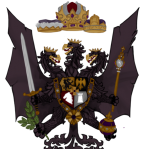
The Dominion Protectorate Act, 1631
The Holy Orenian Empire posted a topic in Axios Roleplay Archive
The Dominion Protectorate Act, 1631 Issued and Confirmed by His Imperial Majesty, the Holy Emperor Peter II Sigismund, and His Highness, the High Prince Aenor Calithil. Penned by the hand of His Excellency, the Archchancellor Theodore of the House of Gray, 12th of the Sun's Smile, 1631 The assurance of a stable and serene southern periphery is of the utmost import in the Empire of Oren, and therefore for the sake of all its denizens and the prosperity of elvenkind do we once again bind and absorb the sovereign Dominion of Malin within the ascendency of the Empire of Oren. Out of the four progenitors of the races, the two who share the closest of bonds with one another are that of Malin and Horen; their descendants are duly charged to renew that bond once more as two sovereign states conjoined into one. The Dominion will act as a protectorate state under the will of the Empire. The following terms shall be abided by and upheld without end; should either party break any term then the treaty is forthwith declared null and void: I. The complete recognition that the former Dominion of Malin is henceforth a protectorate state under the Empire of Oren. II. Retaining religious freedom and rights, the Dominion of Malin may praise and worship the Triumvirate of Aspects and hold unperturbed in their culture and traditions. III. Sovereignty preserved, the Dominion of Malin shall be favored with the Holy Orenian Empire’s protection of their sovereign rights to dictate the decision of their High Prince. IV. The agreement to draft provincial-specific laws with oversight from the High Magistrate and the Lord Great Viceroy. V. The agreement to make no foreign agreements, pacts, alliances, or otherwise without the express agreement from both parties. VI. The agreement to ensure the mutual protection and growth of both races of man and elf, providing for stability and relative peace throughout the realm. VII. The agreement to hold high in regard the duty of the Lord Great Viceroy to act as the chief liaison of the Empire in the Dominion. The following signatories hereby render this act agreeable and bind their respective nations under its even-handed terms. IN NOMINE DEI, HIS IMPERIAL MAJESTY, Peter II Sigismund of the House of Horen, by the Grace of God, Holy Orenian Emperor and rightful Emperor of Aeldin, Forever August, Apostolic King of Oren, of Renatus, Salvus, Seventis, Vandoria, Savoy, Mardon, and the Westerlands, Duke of the Crownlands, Cascadia, Avar, Frederica, Blackmarsh, and Marna, Count of Johannesburg, Alamar, Frederica, Krajia, Thesmer, Thelen, Lorath, and Cantal, Baron of Darkwood and Gravelhold, Defender of the Canonist Faith, Supreme Protector of Mankind, Master of the Lions of Man HIS HIGHNESS, Aenor Calithil, High Prince of the Dominion of Malin, the Chosen Son of Malin, Rightful Sovereign of Laureh’lin, Ker’nor and Norseth’onn, lord of the Ashen Kin and Forgotten Folk, Guardian of the Aspectist Rite -
The Pact of Steel, 1630 Issued and Confirmed by His Imperial Majesty, Peter Sigismund II and His Majesty, Zahrer Silverbeard, 13th of The First Seed, 1630. The agreement between the Holy Orenian Empire and the Grand Kingdom of Urguan is to be classified as a defensive alliance. The various clauses and additions of this pact are as follows: I. Should a Contracting Party come under threat, whether external or internal, the other Contracting Party will immediately step to its side as an ally and will support it with all its military might on land and sea to ensure Status Quo. II. Free travel and commerce between the Contracting Parties will be guaranteed at all times, with open borders to the citizens of each nation. III. The security and judiciary forces of the Contracting Parties will communicate freely and without boundaries, disclosing information on any potential threats to the integrity of their ally nation. IV. This Pact will not affect any allies of The Contracting Parties during a time of war. V. As an extension of friendship and the beginning of a new age of peace between The Holy Orenian Empire and The Grand Kingdom, the following items shall be completed as they apply to the pressing incursion of Frostbeard Rebels into the rightfully owned lands of The Grand Kingdom from the rightfully owned lands of The Holy Orenian Empire: A. The Holy Orenian Empire shall lend military aid in the event of an offensive incursion by The Grand Kingdom of Urguan into the holdings of the Frostbeard Rebels. B. The Grand Kingdom of Urguan shall cede the rightful pass between the southern realms and the northern valleys to The Holy Orenian Empire. C. The holding known as New Jornheim, currently held by Frostbeard Rebels, shall be turned over to The Holy Orenian Empire following the successful siege of its defenses. VI. The Pact comes into force upon signing, with a renewal date fifteen years from now, and on that date, the option to expand or solidify this alliance into a permanent feature will be introduced. IN NOMINE DEI, His Imperial Majesty, Peter II Sigismund of the House of Horen, by the Grace of God, Holy Orenian Emperor and rightful Emperor of Aeldin, Forever August, Apostolic King of Oren, Renatus, Salvus, Seventis, Vandoria, Savoy, Mardon, and the Westerlands, Duke of the Crownlands, Cascadia, Avar, Frederica, Blackmarsh, and Marna, Count of Auguston, Alamar, Frederica, Krajia, Thesmer, Thelen, Adelburg, and Cantal, Baron of Darkwood and Gravelhold, Defender of the Canonist Faith, Supreme Protector of Mankind, Master of the Lions of Man, etcetera. Zahrer Irongrinder, Grand King of The Grand Kingdom of Urguan and Tribune of the Urguani People, Sovereign of the Dwedmar and Vicar of The Brathmordakin, rightful King of all Urguan and her territories, bearer of the Relics of Urguan and Barradin, Lord of Kal’Omith, The Citadel of Arcadia, Jarnstrand, Kjellingrad, Khaz’Varekan, and the Westmarch, Arch-Runelord and Master of The Kal’Varak, Hero of The Brathmordakin, Arbiter of The Age of Industry, Slayer of Setherian and The Dharok.
-
THE OUTLAWING OF AERIAL, 1627 Issued and Confirmed by His Imperial Majesty, Peter II Sigismund, 16th of The First Seed, 1627 TO OUR BELOVED SUBJECTS, It has come to the attention of the Holy Orenian Empire the heinous crimes committed by the “Holy Order” known as the Ascended. This group often claims to look after humanity's best interest by taking the smug, high road of disregarding the needs of fellow men in the name of the “Greater Good”. The Imperial State has for decades remained idle and allowed this group of degenerates to mingle among themselves, left to their own devices. But no longer can the Imperium Sextus stand aside and watch this scourge ransack and terrify citizens of the Empire. For the nurture of a daemonic beast which has resulted in the countless slaughter of Imperial men, women, and children alike. All Ascended are hereby considered unnatural and illegal, clearly corrupted by a dark magic that destroys their capability for logic and reason. Therefore, the Holy Orenian Empire does henceforth forbid the Ascended from entering our borders. To ensure this the follow steps are to be taken: The Practice of Ascended magic is forbidden. The Worship of the Pagan God Aerial is forbidden. Membership of the group known as “The Ascended” is forbidden. Paraphernalia related to Aerial and “The Ascended” is forbidden. IN NOMINE DEI, His Imperial Majesty, Peter II Sigismund of the House of Horen, by the Grace of God, Holy Orenian Emperor and rightful Emperor of Aeldin, Forever August, Apostolic King of Oren, of Renatus, Salvus, Seventis, Vandoria, Savoy, Mardon, and the Westerlands, Duke of the Crownlands, Cascadia, Avar, Frederica, Blackmarsh, and Marna, Count of Adelburg, Alamar, Frederica, Krajia, Thesmer, Thelen, Auguston, and Cantal, Baron of Darkwood and Gravelhold, Defender of the Canonist Faith, Supreme Protector of Mankind, Master of the Lions of Man.
-
Codex Arcana, 1627 "Law and Order." Magic, while a useful tool for those who have it, is something that must be moderated and handled with precise care. Power must be put in check, else it will spiral out of control. It has the power to bend minds, destroy, create, and malform. A mage, or any seeking the arcane in the empire must read and acknowledge these laws, rules, and definitions - else they have the potential of becoming maleficar. Defining The Arcane To first practice magic in the empire, one must understand what is defined as magic. Magicka, or the Practice of Magic, is defined as the explicit use of voidal properties in order to manipulate the natural world, conjecture voidal energy into the natural world, or the manipulation of the natural mind and soul through the use of voidal energy (see Lexicon). Magicka encompasses all use of voidal energies, including the use of aengulic powers or druidic powers, and henceforth falls under the jurisdiction of the Lex Arcania. On Identifying Magicka and Its Use Where an individual deliberately creates fluid elemental objects or energies through the use of voidal energy, commonly conjectured through staves or other magical objects, this shall be defined as the Magic of Elemental Evocation. I. Further defined, where an individual uses Elemental Evocation for the production of fire, evoking fire or the creation of other inflammatory objects, this shall be defined as the Sect of Fire Evocation. II. Further defined, where an individual uses Elemental Evocation for the production of water, the production of ice, evoking water, evoking ice or the creation of other aquatic objects, this shall be defined as the Sect of Water Evocation. III. Further defined, where an individual uses Elemental Evocation for the production of earthen objects or the manipulation of earthen objects, this shall be defined as the Sect of Earth Evocation. IV. Further defined, where an individual uses Elemental Evocation for the production of wind or aerial objects, this shall be defined as the Sect of Air Evocation. V.Further defined, where an individual uses Elemental Evocation for the production of electric currents, the manipulation of electric currents, or the creation of charged electricity, this shall be defined as the Sect of Electric Evocation. Where an individual deliberately manipulates pure voidal energy in order to create tools, weapons, or other solids, this shall be defined as the Magic of Arcanism. VI. Further defined, where an individual uses Arcanism for the creation of projectiles, typically used in offensive measurements, this shall be defined as the Sect of Arcane Projectiles. VII. Further defined, where an individual uses Arcanism for the creation of solid shields, typically used as a defensive measurement against offensive actions done upon the individual, this shall be defined as the Sect of Arcane Shielding. VIII. Further defined, where an individual uses Arcanism for the creation of weaponry or tools, including such for both martial reasons and domestic reasons, this shall be defined as the Sect of Arcane Weaponry. IX. Further defined, where an individual uses Arcanism for the creation for artistic objects or the production of arcane fog, this shall be defined as the Sect of Arcane Art. X. Further defined, calling upon voidal entities and crafting odd magical stones shall be defined as the sect of Celestialism. Where an individual deliberately creates semi-sentient beings or other mimics of living creatures and things through the use of voidal energy, this shall be defined as the Magic of Conjuration. Where an individual deliberately manipulates voidal energy for the creation of solid elements for the use in domestic settings or the creation of new properties in pre-existing objects, this shall be defined as the Magic of Transfiguration. I. Further defined, where an individual uses Transfiguration for the creation of natural objects for use within domestic settings, this shall be defined as the Sect of Transmutation. II. Further defined, where an individual uses Transfiguration for the creation of magical devices via gem or otherwise, this shall be defined as the Sect of Enchanting. III. Further defined, where an individual uses Transfiguration for the creation of wards in order to deliberately halt spells or other magical entities, this shall be defined as the Sect of Abjuration. Where an individual deliberately manipulates the position of an object and creates unnatural movements with said object, this shall be defined as the Magic of Telekinesis. Where an individual deliberately manipulates voidal energy in order to translocate a natural object into the voidal plain and later return said natural object back into the natural world, this shall be defined as the Magic of Translocation. Where an individual deliberately manipulates the voidal plain in order to translocate themselves from one location to another location in the natural world, this shall be defined as the Magic of Voidal Shifting. Where an individual deliberately attempts to manipulate or influence the mind of an individual in order to fabricate sense or emotions, this shall be defined as the Magic of Sensory Illusion. Where an individual deliberately attempts to manipulate or influence the mind of themselves in order to increase thought processes or personal awareness, this shall be defined as the Magic of Cognatism. Where an individual deliberately attempts to manipulate or influence the mind of an individual in order to fabricate or change thoughts or memories or sending messages through telepathy, this shall be defined as the Magic of Mentalism. Where an individual deliberately creates symbols, letters, or words imbued with l energy in order to manipulate or enhance pre-existing worldly objects in the intent of increasing their potency or abilities, this shall be defined as the Magic of Runesmithing. Where an individual deliberately attempts to sever or remove the voidal connection of a magic user through the use of their own voidal powers and energies, this shall be defined as the Magic of Antiism, or Anti-Magic. Where an individual deliberately attempts to manipulate energy given or borrowed from a separate magical being, typically classified as lesser daemonic creatures, this shall be defined as the Magic of Deitism. I. Further defined, where an individual attempts to manipulate energy given or borrowed from the lesser voidal beings and spirits, this shall be defined as the Magic of Shamanism. II. Further defined, where an individual attempts to manipulate energy given or borrowed from the daemonic beings Cerridwen (High Imp. Ceridunius), Cernunnos (High Imp. Cernunnus), and Nemissae (High Imp. Nemisia), typically in use of manipulating natural entities in the world, this shall be defined as the Magic of Druidism. III. Further defined, where an individual attempts to manipulate energy given or borrowed from the daemonic being Tahariae (High Imp. Tahariae), typically in use of personal healing or otherwise, this shall be defined as the Magic of Clericism. IV. Further defined, where an individual attempts to manipulate energy given or borrowed from the daemonic being Metztli (High Imp. Metsilius), typically in use to manipulate time and space within the natural world, this shall be defined as the Magic of Munism. V. Further defined, where an individual attempts to manipulate energy given or borrowed from the daemonic being Xan (High Imp. Janus), typically in use to manipulate or remove corrupted voidal energies, this shall be defined as the Magic of Xanism. VI. Further defined, where an individual attempts to manipulate energy given or borrowed from the daemonic being Aerial (High Imp. Aeria), typically in use to manipulate or remove corrupted voidal energies, this shall be defined as the Magic of Ascendedism. VII. Further defined, where an individual attempts to manipulate energy given or borrowed from the daemonic beings Keldrith (High Imp. Keldrian), Rellenia (High Imp. Rellenia), and Tariel (High Imp. Tarius), typically in use to reanimate creatures or beings, this shall be defined as the Magic of Wilvenism. Where an individual deliberately attempts to manipulate energy given or borrowed from a separate magical being, however corrupted and powered through the use of occultism or other blasphemic details and typically classified as lesser or greater daemonic creatures, this shall de defined as the Magic of Dark Deitism, or called the Dark Arts. I. Further defined, where an individual attempts to manipulate dark energy given or borrowed from lesser voidal beings and spirits, this shall be defined as the Magic of Dark Shamanism. II. Further defined, where an individual attempts to manipulate dark energy through the sacrificial rituals using sangeious materials, typically blood, this shall be defined as Blood Magic. III. Further defined, where an individual attempts to manipulate dark energy in order to reanimate dead creatures or otherwise or draining the current force of life from a pre-existing creature of the natural world, this shall be defined as the Magic of Necromancy. IV. Further defined, where an individual attempts to manipulate dark energy in order to manipulate another individual and their current state typically through the use of a doll or other mundane object, this shall be defined as the Magic of Soul Puppetry. V. Further defined, where an individual attempts to manipulate dark energy given or borrowed from the daemonic being Setherien (High Imp. Setherius), typically in order to corrupt objects or creatures of the natural world, this shall be defined as the Magic of Draakarism. Where an Individualcrafts constructs through magical or runic means, it is known as mechalurgy. I. Further defined, using runic means to empower a stone statue and breathe life into it, will be known as Golemancy. II. Further defined, using arcane means to empower an inanimate frame with elements, strength, or otherwise and give it life will be known as Atronach forging Defining Maleficar A magic user who so defies the laws of magic, and who so deviates to dark and degenerate means. They are to be treated as highly dangerous criminals, and must be taken care of with caution. A Maleficar is not to be trusted, for they have become corrupted by the power they have. Defining Beings A being is a creature that is of not the descendant races. Beings, or creatures, may come at a variety within the empire, and some of which are barred from Imperial Settlements. If a creature possesses any of the following traits, they are hereby deemed an illegal being. I. Beings created through odd or necromantic rituals. II. Beings that require life to create or survive. III. Beings that are Fae like. IV. Beings that have their soul displaced. V. Beings that are spectral. VI. Beings that derive their powers from Aerial. VII. Beings that are half descendant. VIII. Beings that are naturally distressing. The Laws of Magic I. A mage cannot use their magic to unjustly inflict harm on others in the empire. II. A mage cannot use their magic to unjustly kill in the empire. III. A void mage cannot use magic or make magical items without an approved license. IV. A deity mage cannot practice or use their magic unless given express permission from the Arcane Specialist. V. The use of dark arts is disallowed within the empire and her realms. VI. A mage cannot probe or manipulate a man’s mind. VII. Experimentation of any kind must be sanctioned and detailed with the Arcane Specialist. VIII. A magi, must comply with the orders and demands of Imperial Officials. IX. Harboring maleficar is prohibited. X. All magic items must be documented via a submission to the Arcane Specialist. XI. Any establishment or fellow seeking to sell magical items must first register with the Arcane Specialist. XII. A mage cannot disguise themselves via magic. The Laws of Beings I. Archons cannot be seen in their arcane form unless great reason is given. II. Golems and Atronachs must be recorded, and such records must be submitted to the Arcane Specialist. III. Keepers must wear a specified patch on their clothing to signify what they are, alternatively, numbers or codes can be branded on them. Seek out the Arcane Specialist or a Regulator to acquire documentation. IV. Arcane Manifestations must remain masked and covered. They are disallowed from exposing their twisted forms. V. Using Dragonfire as an Azdrazi to melt or destroy structures is prohibited. VI. Any affiliates with the Ascended are disallowed. VII. All Ascended must be quartered and culled. VIII. Harboring any disallowed creature is strictly prohibited.
-
Imperial Letters for the Barony of Leeuwenhof, 1627 Issued and Confirmed by His Imperial Majesty the Holy Orenian Emperor Peter II Sigismund, 10th of The First Seed, 1627 TO OUR BELOVED SUBJECTS, It has pleased the Imperial Throne to reward the service of Our leal subject, Nicolas Rubens, with a tenure in fealty to Our Imperial Crown, beneath the House of Gromach. Accordingly, with this grace of God and the counsel of Our court, We do enfeoff Nicolas of the House of Rubens to the Barony of Leeuwenhof, a role they and their legitimate issue shall hold in trust to Our throne for the duration of their loyal service. They are enjoined to maintain the law of Our realm, to abide peacefully by Our rule, and to rise to Our defense when necessary. In return, and as a sign of Our august graciousness, We do privilege their head to levy law and taxes upon their vassals. IN NOMINE DEI, His Imperial Majesty, Peter II Sigismund of the House of Horen, by the Grace of God, Holy Orenian Emperor and rightful Emperor of Aeldin, Forever August, Apostolic King of Oren, of Renatus, Salvus, Seventis, Vandoria, Savoy, Mardon, and the Westerlands, Duke of the Crownlands, Cascadia, Avar, Frederica, Blackmarsh, and Marna, Count of Adelburg, Alamar, Frederica, Krajia, Thesmer, Thelen, Auguston, and Cantal, Baron of Darkwood and Gravelhold, Defender of the Canonist Faith, Supreme Protector of Mankind, Master of the Lions of Man.
-
Imperial Letters for the County of Cleves, 1627 Issued and Confirmed by His Imperial Majesty the Holy Orenian Emperor Peter II Sigismund, 10th of The First Seed, 1627 TO OUR BELOVED SUBJECTS, It has pleased the Imperial Throne to reward the service of Our leal subject, Theodore Gray, with a tenure in fealty to Our Imperial Crown, beneath the House of Gromach. Accordingly, with this grace of God and the counsel of Our court, We do enfeoff Theodore of the House of Gray to the County Cleves, a role they and their legitimate issue shall hold in trust to Our throne for the duration of their loyal service. They are enjoined to maintain the law of Our realm, to abide peacefully by Our rule, and to rise to Our defense when necessary. In return, and as a sign of Our august graciousness, We do privilege their head to levy law and taxes upon their vassals. IN NOMINE DEI, His Imperial Majesty, Peter II Sigismund of the House of Horen, by the Grace of God, Holy Orenian Emperor and rightful Emperor of Aeldin, Forever August, Apostolic King of Oren, of Renatus, Salvus, Seventis, Vandoria, Savoy, Mardon, and the Westerlands, Duke of the Crownlands, Cascadia, Avar, Frederica, Blackmarsh, and Marna, Count of Adelburg, Alamar, Frederica, Krajia, Thesmer, Thelen, Auguston, and Cantal, Baron of Darkwood and Gravelhold, Defender of the Canonist Faith, Supreme Protector of Mankind, Master of the Lions of Man.
-
Imperial Letters for the Duchy of Rosgar, 1627 Issued and Confirmed by His Imperial Majesty the Holy Orenian Emperor Peter II Sigismund, 10th of The First Seed, 1627 TO OUR BELOVED SUBJECTS, It has pleased the Imperial Throne to reward the service of Our leal subject, Callan Gromach, with a tenure in fealty to Our Imperial Crown, beneath the House of Horen. Accordingly, with this grace of God and the counsel of Our court, We do enfeoff Callan of the House of Gromach to the Duchy of Rosgar, a role they and their legitimate issue shall hold in trust to Our throne for the duration of their loyal service. They are enjoined to maintain the law of Our realm, to abide peacefully by Our rule, and to rise to Our defense when necessary. In return, and as a sign of Our august graciousness, We do privilege their head to levy law and taxes upon their vassals. IN NOMINE DEI, His Imperial Majesty, Peter II Sigismund of the House of Horen, by the Grace of God, Holy Orenian Emperor and rightful Emperor of Aeldin, Forever August, Apostolic King of Oren, of Renatus, Salvus, Seventis, Vandoria, Savoy, Mardon, and the Westerlands, Duke of the Crownlands, Cascadia, Avar, Frederica, Blackmarsh, and Marna, Count of Adelburg, Alamar, Frederica, Krajia, Thesmer, Thelen, Auguston, and Cantal, Baron of Darkwood and Gravelhold, Defender of the Canonist Faith, Supreme Protector of Mankind, Master of the Lions of Man.
-
Imperial Letters for the Barony of Senntisten, 1625 Issued and Confirmed by His Imperial Majesty the Holy Orenian Emperor Peter II Sigismund, 10th of The Deep Cold, 1625. TO OUR BELOVED SUBJECTS, It has pleased the Imperial Throne to reward the service of Our leal subject, Caius Sigismund, with a tenure in fealty to Our Imperial Crown, beneath His Imperial Majesty, Peter Sigismund.. Accordingly, with this grace of God and the counsel of Our court, We do enfeoff Caius Sigismund of the House of Horen to the Barony of Senntisten, a role they and their legitimate issue shall hold in trust to Our throne for the duration of their loyal service. They are enjoined to maintain the law of Our realm, to abide peacefully by Our rule, and to rise to Our defense when necessary. In return, and as a sign of Our august graciousness, We do privilege their head to levy law and taxes upon their vassals. IN NOMINE DEI, His Imperial Majesty, Peter II Sigismund of the House of Horen, by the Grace of God, Holy Orenian Emperor and rightful Emperor of Aeldin, Forever August, Apostolic King of Oren, Renatus, Salvus, Seventis, Vandoria, Savoy, Mardon, and the Westerlands, Duke of the Crownlands, Cascadia, Avar, Frederica, Blackmarsh, and Marna, Count of Auguston, Alamar, Frederica, Krajia, Thesmer, Thelen, Lorath, and Cantal, Baron of Darkwood and Gravelhold, Defender of the Canonist Faith, Supreme Protector of Mankind, Master of the Lions of Man, etcetera.
-
Imperial Letters for the County of Bar, 1625 Issued and Confirmed by His Imperial Majesty the Holy Orenian Emperor Peter II Sigismund, 10th of The Deep Cold, 1625. TO OUR BELOVED SUBJECTS, It has pleased the Imperial Throne to reward the service of Our leal subject, Pepin Ashford of Bar, with a tenure in fealty to Our Imperial Crown, beneath the Archduchy of Lorraine. Accordingly, with this grace of God and the counsel of Our court, We do enfeoff Pepin of the House Ashford de Bar to the County Bar, a role they and their legitimate issue shall hold in trust to Our throne for the duration of their loyal service. They are enjoined to maintain the law of Our realm, to abide peacefully by Our rule, and to rise to Our defense when necessary. In return, and as a sign of Our august graciousness, We do privilege their head to levy law and taxes upon their vassals. IN NOMINE DEI, His Imperial Majesty, Peter II Sigismund of the House of Horen, by the Grace of God, Holy Orenian Emperor and rightful Emperor of Aeldin, Forever August, Apostolic King of Oren, Renatus, Salvus, Seventis, Vandoria, Savoy, Mardon, and the Westerlands, Duke of the Crownlands, Cascadia, Avar, Frederica, Blackmarsh, and Marna, Count of Auguston, Alamar, Frederica, Krajia, Thesmer, Thelen, Lorath, and Cantal, Baron of Darkwood and Gravelhold, Defender of the Canonist Faith, Supreme Protector of Mankind, Master of the Lions of Man, etcetera.
-
THE IMPERIAL-DOMINION ACCORD, 1623 Issued and confirmed by His Imperial Majesty, the Holy Orenian Emperor, Peter II Sigismund, 20th of The Grand Harvest, 1623. The following pact is one of defence. A ‘defensive pact’ is defined as such: “A military alliance between all signatories below (should the signatures given be that of the respective nations’ leaders, or representatives given the personal approval of said leader) which guarantees defensive aid by all parties should the other party/parties come under threat. Should a rebellion commence in any of the signant’s respective lands where external forces become involved, the original signatories of this document, and not the rebel party, shall earn the support of their counterpart. This military alliance, otherwise, will afford no less than the full, armed support of alliance nations in times of trouble.” I. As stated prior, should the Dominion be aggressed on by any nations or hostile groups, the Holy Orenian Empire will be obliged to come to the aid of the Dominion. Likewise, should the Holy Orenian Empire find itself being aggressed upon by a group with ill intent, the Dominion of Malin will be obliged to come to the aid of Holy Orenian Empire. II. Also, as stated prior, should any rebellions arise in either respective nation of this pact, and external forces become involved, the Holy Orenian Empire and the Dominion of Malin will combine their efforts in order to quell said rebellion as quickly and succinctly as possible. As an example, such external forces may include the orcish horde aiding the rebels, et cetera et cetera. The Dominion of Malin will only aid the signatory of the Holy OrenianEmpire in this treaty, and likewise, the Holy Orenian Empire will only aid the signatory of the Dominion of Malin in this treaty. III. Free trade will be encouraged and allowed between both respective nations, in order to cement relations. IV. Likewise, free travel will be ensured between each nation to any law-abiding subjects and citizens. Reference the next term for explanations of conflicts that may arise. V. Should any minor disputes arise between Dominion of Malin and the Holy Orenian Empire (such as a subject, or citizen acting of their own volition in hostility to the other nation), both signatories will combine their efforts in order to ensure a peaceful end is met. The actions of one or few will not condemn the good intentions of many. a. Should a major crime occur, the offending individual(s) will be given trial in the respective nation that was wronged. If it is wished, an official from the opposite nation may be present as the citizen of their nation is tried.was b. Should an individual from either sovereign nation break the Orenian-Dominion Accord, the sovereign nations of The Holy Orenian Empire, and the Dominion of the Elves will be bequeathed a sum of two years to reconcile the transgression. Past the allotted time, the Orenian-Dominion Accord will be considered null and void. VI. In reference to the prior term, open communication between the differing officially recognized militaries and guard forces of the respective nations of this treaty will be ensured. This will allow for both parties to speak freely, with confidence, in order to better aid each other in the quelling of any threats that may arise internally within each nation. VII. In order to further ensure communication is as transparent as possible between the Holy Orenian Empire and the Dominion of Malin, all agreements (whether trade, military, or otherwise) will be made known to the other nation, at request of said nation’s leader. Such may also be given to officials of the respective nations, with the leader’s consent on the matter. IN NOMINE DEI, , Peter II Sigismund of the House of Horen, by the Grace of God, Holy Orenian Emperor and rightful Emperor of Aeldin, Forever August, Apostolic King of Oren, of Renatus, Salvus, HIS IMPERIAL MAJESTYSeventis, Vandoria, Savoy, Mardon, and the Westerlands, Duke of the Crownlands, Cascadia, Avar, Frederica, Blackmarsh, and Marna, Count of Johannesburg, Alamar, Frederica, Krajia, Thesmer, Thelen, Lorath, and Cantal, Baron of Darkwood and Gravelhold, Defender of the Canonist Faith, Supreme Protector of Mankind, Master of the Lions of Man Aenor Calithil High Prince of Malinor, Chosen Son of Malin, Rightful Sovereign of Laureh’lin, Ker’nor and Norseth’onn, Lord of the Ashen Kin and Forgotten Folk, Guardian of the Aspectist Rite, Patriarch of the Calithil Seed.
-
PANDECTARVM JOHANNES FREDERICVS IMPERATOR The Holy Orenian Empire’s Code of Laws, be they Civil, Criminal or Natural I. Exordium II. The Ten Tables III. Lex Lotharingium IV. Lex Aristocratia V. Lex Arcania VI. Amendments VII. Lexicon EXORDIUM ON IMPERIAL AUTHORITY The Carolinian Excerpt Upon the Nature of Imperial Authority It is the crown of piety that adorns the Emperor above all other ornaments of kingship. Wealth vanishes; glory perishes, but the gift of God-given government is eternal, and it sets its possessors beyond the reach of oblivion. By the hand of Holy Pontiffs, the Emperor is bestowed a dignity beyond all honors, for it is a dignity bestowed by God. His soul is rendered pure upon ascent and thenceforth reflects the state of his dominions; if sallow be his domain, his spirit languishes in its equal. He weighs the sins of man, and is thus burdened to toil towards a realm kin to the heavens. By the nature of his body, the Emperor is alike to other men--but by his authority, he is above all others, and no man can claim greater jurisdiction. The Imperial Office is that of the Lord’s viceregent in this world, and is wholly unbound by common or temporal law. He is inalienable and indomitable, as he must be so as to govern justly and fairly. In receiving this dignity, the Emperor is compelled to emulate He who granted it, for though all men serve him, he is servant to God. Earthly pomp degrades the majesty of his office, as do wickedness and laxity. To afford wisdom and mercy akin to the Lord’s is the Emperor’s greatest faculty; he is credited greater capacity than any other to work justice. Yet no man is his judge, and God his only confessor. The Emperor is eminent in all things; he is above the sun that retreats before darkness, and the seas which accede to the ravings of the stars. He is greater than the winds which toss without abandon, and the earth that lays indolent still despite calamity. The Emperor is Oren manifest: successor to its prophets and master to the world, the sovereign of all humanity who provides that esteemed folk with just governance. -Prince-Father Charles Polycarp, Metropolitan of Felsen, 1527 THE TEN TABLES On Defining the Tables The activity of the Ten Tables is to elucidate our wishes for the dispensation of justice within our realm. At our charge, its precepts are enacted, and in our absence, they shall service the state in contending against iniquity. We thus commit our servants to see to its righteous execution, in accordance with the three principles of law: to live virtuously, to trespass no one, and to give each his due. Thus we adjudge all crime as injury against the well being of one of seven parties, each the subject of an equal number of proceeding Tables: the individual, property, the state, the faith, the public morality, the public order, and the imperial office. Proximately, the ninth table concerns inchoate offenses, and the tenth legal defenses for mitigation of punishment. Of the offenses enumerated herein, with the exception of those intolerable crimes classed as high treason, each is classified according to its degree, of which there exist three, and upon which culpability and just punishment shall be evaluated. The applicable sanction for each crime and degree of injury are recorded within the table the crime is located. These degrees are: The third degree offense, of the least severity. The second degree offense, of middling severity. The first degree offense, of the greatest severity. Of the offenses enumerated herein, each is assigned specific punishment according to its severity, of which that exists four, and which the plaintiff evaluates and chooses the appropriate sentence. The applicable sanction for each crime is recorded within the table the crime is located. The assigned classes of punishments are: Infractions, of least severity, include the appropriated sentences: monetary fine up to two thousand mina, confinement to prison for up to two annum, designated service to state or faith for up to five annum, removal of up to two fingers to the second knuckle, removal of up to two teeth, removal of up to two toes of the same foot, removal of one quarter-inch of the ears if elven, partial removal of a tusk if orcish, removal of the beard if dwarven, removal of one inch of the tail if feline, or branding by hot iron on the chest or buttocks. Misdemeanors, of middling severity, include the appropriated sentences: monetary fine up to fifteen thousand mina, confinement to prison for up to ten annum, designated service to state or faith for up to twenty annum, removal of up to five fingers to the third knuckle, removal of up to four teeth, removal of one eye, removal of up to five toes on different feet, removal of one entire ear if elven, removal of one tusk if orcish, removal of the beard if dwarven, removal of up to three inches of the tail if feline, or branding by hot iron on a limb, chest or buttocks. Felonies, of great severity, include the appropriated sentences: monetary fine up to fifty thousand mina, confinement to prison for up to lifetime, designated service to state or faith up to lifetime, removal of up to an entire hand, removal of the entire bottom jaw, removal of both eyes, removal of the penis if male, removal of an entire foot, removal of both ears if elven, removal of both tusks if orcish, removal of the beard is dwarven, removal of the tail if feline, branding by hot iron on a limb, chest, buttocks, or face, execution by hanging, or execution by beheading. Treason, of intolerable severity, includes the appropriated sentences: execution by hanging, execution by beheading, execution by scalding tar, execution by scalding milk, execution by scalding water, execution by drowning, execution by burning stake, execution by flaying, execution by impaling, execution by brain wracking, execution by arbalest, crossbow, ballista, or other projectiles, execution by horse or oxen trampling, or execution by leeches. Customarily, the sentenced is dragged by horse on a wooden skid to the site of their execution. Where the victim of an injury is legally entitled to a trial, he may elect for a trial of civil remedy or criminal indictment. If he elects for a trial of civil remedy, it is the judge's duty to prescribe a financial penalty to allay the damage done. If he chooses a trial of criminal indictment, it is the judge’s duty to prescribe the harshest possible punishment upon the offender. Within each table, the method of selecting a trial’s plaintiff is defined. Injury against the Person Battery Where an individual intentionally commits upon another an act of violence which brings about no incapacitation or lasting injury, this shall be battery of the third degree, a misdemeanor. Where an individual intentionally commits upon another an act of violence which brings about lasting but not permanent injury, incapacitates for any length of time, or utilizes a dangerous weapon, this shall be battery of the second degree, a felony. Where an individual intentionally commits upon another an act of violence which brings about permanent injury, this shall be battery of the first degree, a felony. Murder Where an individual intentionally commits such an an act of violence upon another which brings about their death, with no premeditation of the act and under such circumstances as a reasonable person would be incited to fatal violence, this shall be murder of the third degree, a felony. Where an individual intentionally commits such an act of violence upon another which brings about their death, with no premeditation, this shall be a murder of the second degree, a felony. Where an individual intentionally and with premeditation causes the death of another, this shall be murder of the first degree, a felony. Manslaughter Where an individual unintentionally but negligently commits such an act that brings about the death of another, this shall be manslaughter, a misdemeanor. Mutilation Where an individual intentionally or negligently commits such an act as to bring about the superficial disfigurement of another, or the removal of a single digit, this shall be mutilation in the third degree, a misdemeanor. Where an individual intentionally or negligently commits such an act as to bring about the crippling disfigurement of another, or the removal of multiple digits, this shall be mutilation in the second degree, a felony. Where an individual intentionally or negligently commits such an act as to bring about the dismemberment of another, the destruction of an eye, castration, or other irreparable loss of an appendage or organ, this shall be mutilation in the first degree, a felony. Torture Where an individual, who is a not an official of the law, intentionally commits an act of violence which brings lasting or permanent injury with the purpose of gaining information from the inflicted individual, this shall be torture in the second degree, a felony. Where an individual intentionally commits an act of violence which brings incapacitating injury or mutilation of either second or first degree with the purpose of gaining information from the inflicted individual, this shall be torture in the first degree, a felony. Kidnapping Where an individual intentionally abducts, restrains, or confines another individual against their will without physical harm, sexual violation, or endangerment of the victim, this shall be kidnapping in the second degree, a misdemeanor. Where an individual intentionally abducts, restrains, or confines another individual against their will, and in the course of this brings about physical harm, sexual violation, or endangerment of the victim, this shall be kidnapping in the first degree, a felony. Defamation Where an individual knowingly disseminates false information about an individual, without intent to harm the reputation of that individual, this shall be defamation in the third degree, an infraction. Where an individual knowingly disseminates false information about an individual, with intent to harm the reputation of that individual, this shall be defamation in the second degree, an infraction. Where an individual knowingly disseminates false information about an individual, with intent to harm the reputation of that individual, in a public space or by distribution of printed materials, this shall be defamation in the first degree, a misdemeanor. Impersonation Where an individual intentionally assumes the identity of another individual for any purpose except the carrying out of high treason, this shall be impersonation in the second degree, an infraction. Where an individual intentionally assumes the identity of another individual in order to carry out high treason, this shall be impersonation in the first degree, a felony. Injury against Property Theft Where an individual intentionally deprives another of moveable property without the consent of its owner, and this property totals up to two hundred minas in value, this shall be theft in the third degree, an infraction. Where an individual intentionally deprives another of moveable property without the consent of its owner, and this property totals greater than two hundred but not less than one thousand five hundred minas in value, this shall be theft in the second degree, a misdemeanor. Where an individual intentionally deprives another of moveable property without the consent of its owner, and this property totals greater than one thousand five hundred minas in value, this shall be theft in the first degree, a felony. Burglary Where an individual unlawfully enters a property with intent to commit a nonviolent crime, this shall be burglary in the second degree, an infraction. Where an individual unlawfully enters a property with intent to commit a violent crime, this shall be burglary in the first degree, a misdemeanor. Robbery Where an individual intentionally deprives an owner of his moveable property through violence or threat of violence, and this property totals up to one hundred fifty minas in value, this shall be robbery in the third degree, an infraction. Where an individual intentionally deprives an owner of his moveable property through violence or threat of violence, and this property totals greater than one hundred fifty but not less than one thousand minas in value, this shall be robbery in the second degree, a misdemeanor. Where an individual intentionally deprives an owner of his moveable property through violence or threat of violence, and this property totals greater than one thousand minas in value, this shall be robbery in the first degree, a felony. Vandalism Where an individual intentionally or negligently damages or defaces the property of another, and this damage totals up to one hundred fifty minas in value, this shall be vandalism in the third degree, an infraction. Where an individual intentionally or negligently damages or defaces the property of another, and this damage totals greater than one hundred fifty but not less than three thousand minas in value, this shall be vandalism in the second degree, a misdemeanor. Where an individual intentionally or negligently damages or defaces the property of another, and this damage totals greater than three thousand minas in value, this shall be vandalism in the first degree, a felony. Arson Where an individual intentionally or negligently damages or defaces the property of another through fire, and this damage totals up to two hundred minas in value, this shall be arson in the third degree, an infraction. Where an individual intentionally or negligently damages or defaces the property of another through fire, and this damage totals greater than two hundred but not less than four thousand minas in value, this shall be arson in the second degree, a misdemeanor. Where an individual intentionally or negligently damages or defaces the property of another through fire, and this damage totals greater than four thousand minas in value, this shall be arson in the first degree, a felony. Fraud Where an individual intentionally or negligently fails to abide by the terms of a written or verbal contract, misleads regarding its terms, or provides insufficient consideration for its completion, and this damage totals greater than one hundred but not less than one thousand minas in value, this shall be fraud in the third degree, a misdemeanor. Where an individual intentionally or negligently fails to abide by the terms of a written or verbal contract, misleads regarding its terms, or provides insufficient consideration for its completion, to the detriment of another, and this detriment totals up to five thousand minas in value, this shall be fraud in the second degree, a misdemeanor. Where an individual intentionally or negligently fails to abide by the terms of a written or verbal contract, misleads regarding its terms, or provides insufficient consideration for its completion, to the detriment of another, and this damage totals greater than ten thousand minas in value, this shall be fraud in the first degree, a felony. Trespassing Where an individual intentionally enters the property of another which a reasonable person would consider to be restricted, this shall be trespassing, a misdemeanor. Poaching Where an individual intentionally or negligently hunts a beast or bird within the borders of a reserved wood, and the value of of these creatures totals up to five hundred minas in value, this shall be poaching in the second degree, a misdemeanor. Where an individual intentionally or negligently hunts a beast or bird within the borders of a reserved wood, and the value of these creatures exceeds five hundred minas in value, this shall be poaching in the first degree, a felony. Injury against the State Treason Where an individual knowingly carries out an act of criminal insubordination or disloyalty intended to subvert the authority of an agent of the state, or commits such an action with intention to harm the state, this shall be treason in the second degree or petty treason, a felony. Where an individual knowingly aids or abets enemies of the state, participates in armed conflict or espionage against the state, attempts or conspires to the usurpation of the government, or attempts or conspires to murder a member of the imperial government, this shall be treason in the first degree or high treason, punishable only by execution as listed. Sedition Where an individual intentionally commits conduct or speech inciting people to rebel against the authority of a state or Emperor, this shall be the crime of sedition, a felony. Contraband Where an individual knowingly possesses illegal substances, literature, or items, this shall be the crime of possession of contraband in the third degree, a misdemeanor. Where an individual knowingly sells, markets, purchases, or transfers ownership of illegal substances, literature, or items, this shall be the crime of possession of contraband in the second degree, a felony. Where an individual knowingly manufactures illegal substances, literature, or items, this shall be the crime of possession of contraband in the first degree, a felony. Obstruction Where an individual interferes with, obstructs the progress of, or otherwise hinders government officials and prosecutors during the apprehension or investigation of a criminal or criminal activity, this shall be the crime of obstruction, a felony. Tax Evasion Where an individual fails to render full payment in a timely manner for a lawfully enacted metropolitan, baronial, comital, or civil tax, this shall be the crime of tax evasion in the third degree, a misdemeanor. Where an individual fails to render full payment in a timely manner for a lawfully enacted imperial, principial, archducal, ducal, or gubernatorial tax, this shall be the crime of tax evasion in the second degree, a felony. Where an individual fails to render full payment in a timely manner for a lawfully enacted wartime tax or mandatory tithe, this shall be the crime of tax evasion in the first degree, a felony. Absconding Where an individual fails or intentionally avoids surrendering oneself to the custody of Imperial officials at the appropriate time, this shall be the crime of absconding, a felony, and in the case of the awaiting of trial immediately confirms guilt, dismissing the need for lawful hearing. Bribery Where an individual persuades another, to act dishonestly or otherwise, with the gift of money or other inducement, this shall be the crime of bribery, an infraction. Extortion Where an individual intentionally threatens another individual for obtaining money, titles, or other benefits for oneself, this shall be the crime of extortion, an infraction. Perjury Where an individual intentionally misleads, deceives, or withholds pertinent information from an interrogating agent of the law, this shall be perjury in the third degree, a misdemeanor. Where an individual intentionally misleads, deceives, or withholds pertinent information from an interrogating agent of the law during the course of a criminal or civil trial, this shall be perjury in the second degree, a felony. Where an individual intentionally misleads, deceives, or withholds pertinent information from an interrogating agent of the law during the course of a trial of high treason, this shall be perjury in the first degree, charged with the punishment of treason. Impersonating an Agent of the State Where an individual intentionally assumes the identity of a government official or noble lord, this shall be the crime of impersonation of an agent of state, a felony. Injury against the Faith Blasphemy Where an individual intentionally speaks sacrilegiously or in contrary to the teachings or dogma of God or the heavens, this shall be the crime of blasphemy, a felony. Apostasy Where an individual intentionally abandons or renunciates the teachings or dogma of God or the heavens, this shall be the crime of apostasy, a felony. Heresy Where an individual intentionally believes or partakes in false teachings or dogma of God or the heavens, this shall be the crime of heresy, a felony. Atheism Where an individual intentionally rejects the existence of God or the heavens, this shall be the crime of atheism, a felony. Evangelization of False Faiths Where an individual intentionally spreads and converts other individuals to the belief of a faith in contrary to that the Canonist faith, this shall be the crime of evangelization of false faiths, a felony. Evangelization of Heresy Where an individual intentionally spreads the false belief of unorthodox and untrue dogma or teachings to other individuals, this shall be the crime of evangelization of heresy or false doctrines, a felony. Devilry Where an individual intentionally and actively participates in the worship of demons and devils, evangelizes the worship of demons and devils, or encourages the growth of devilic cults, this shall be the crime of devilry, a felony. Injury against Morality Indecency Where an individual intentionally and deliberately dresses in an immoral or obscene fashion, usually in a sexual manner, this shall be the crime of indecency, an infraction. Gambling Where an individual intentionally partakes in unsanctioned betting in games or events, usually for the reward of money or property, this shall be the crime of gambling, an infraction. Deviancy Where an individual intentionally acts in unusual or accepted standards, especially in social or political behavior, this shall be the crime of deviancy, an infraction. Witchcraft Where an individual intentionally partakes and practices the dark arts, such as blood magic, or other sacrilegious activities, this shall be the crime of witchcraft, a felony. Fornication Where an unmarried individual intentionally fornicates another individual in a public or private location, this shall be the crime of fornication, a felony. Adultery Where a married individual intentionally fornicates with another who is not the spouse, this shall be the crime of adultery, a felony. Abomination Where an individual is directly descended from multiple races, namely kha’ or orc, or is the offspring and product of a close consanguineous fornication, such as inbreeding between siblings or between offspring, this shall be the crime of abomination, a felony. Consanguinity Where an individual intentionally fornicates or has immoral relationship with one’s close family, such as with father, with mother, with siblings, or with offspring, this shall be the crime of consanguinity, a misdemeanor. Miscegenation Where an individual intentionally fornicates with one not of his race, such as man and elf or man and dwarf, this shall be the crime of miscegenation, a felony. Injury against Order Vagrancy Where an individual intentionally lives the life of a vagrant, participating in improper begging, and illegally staying in residences and towns, this shall be the crime of vagrancy, a felony. Loitering Where an individual intentionally travels indolently and pauses frequently for socialization in order to disrupt trade, commerce, or business, this shall be the crime of loitering, an infraction. Concealment of Identity Where an individual intentionally conceals or hides oneself’s identity to an agent of the law, this shall be the crime of concealing one’s identity, a misdemeanor. Vigilantism Where an individual intentionally apprehends, convicts, or punishes another individual of a crime but is not an agent of the law or given permission by the Imperial Office, this shall be the crime of vigilantism, a misdemeanor. Disturbing the Peace Where an individual intentionally and deliberately hinders or interrupts the common peace by embellished performance or immoral behavior, this shall be the crime of disturbing the peace, an infraction. Spreading Propaganda Where an individual intentionally spreads information, ideas and rumours that deliberately seek to bring harm to or weaken the state, this shall be the crime of spreading propaganda, a misdemeanor. Injury against the Imperial Office Injured Majesty Where an individual intentionally and deliberately defames the Imperial Office or Imperial House, this shall be injured majesty, a felony. Harmed Majesty Where an individual unintentionally physically harms a member of the Imperial Office or Imperial House, this shall be harmed majesty in the second degree, a felony. Where an individual intentionally physically harms a member of the Imperial Office or Imperial House, this shall be harmed majesty in the first degree, charged with the punishment of treason. Imperial Homicide Where an individual intentionally or unintentionally murders a member of the Imperial Office or Imperial House, this shall be the crime of Imperial Homicide, charged with the punishment of treason. Inchoate Offenses Conspiracy Where an individual knowingly signals intent to commit a crime at a future time, this shall be the crime of conspiracy, a felony. Incitement Where an individual intentionally incites or encourages another individual into committing a crime, this shall be the crime of incitement, a felony. Attempt Where an individual actively attempts, but fails to commit, a crime, the individual shall be held liable with a mitigated punishment according to the crime which was attempted. Legal Defenses Ex turpi causa non oritur actio Where an individual accusing another of a crime where evidence was obtained through criminal means, the individual accused is not held liable. Volenti non fit injuria Where an individual consents or actively places oneself in a position of harm or danger, that individual may not bring claim against another party in tort or delict. In pari delicto Where the individual held liable for a crime and the party convicting the individual for a crime is deemed both at fault, whether for the same crime or similar, both the individual and the convicting party shall not be held liable. Duress Where an individual commits a crime intentionally, but under reasonably proximate threat of force equal to or lesser than the severity of the crime committed, that individual shall not be held liable. Rather, the individual responsible for the threat shall be held liable. Entrapment Where an individual is encouraged or compelled by an agent of the law to commit a crime they otherwise would not have intended to commit, that individual shall not be held liable. Infancy Where an individual is below the age of twelve years and commits a third degree or lesser crime, that individual shall not be held liable. If the individual commits a second degree or greater crime, the individual shall be held liable with mitigated punishment or lesser conviction. Necessity Where an individual is compelled by a circumstance beyond his control to, as a last resort, commit a crime in order to prevent a more injurious outcome, that individual shall not be held liable. Provocation Where an individual is invoked or compelled by another individual to act with a sudden or temporary loss of self control and commits a crime as a response, the individual shall be held liable with mitigated punishment or lesser conviction. Incapability Where an individual is physically or mentally unable to meet the requirements given by law for punishment or conviction, the individual shall not be held liable. Immunity Where an agent of the law, in the course of their duties and acting within the bounds assigned to them, is compelled to commit a violation of the law, that agent shall not be held liable. LEX LOTHARINGIUM Affinity and Consanguinity Consanguinity is defined as two or more persons being related through a common ancestor, commonly through the same parent or grandparent (see Lexicon). Any and all matrimonial or sexual affinity between two persons with first degree of consanguinity, that being brother and sister, daughter and father, son and mother, niece and uncle, or nephew and aunt, is prohibited within Imperial and Pontifical Law. Any and all matrimonial or sexual affinity between two persons with second degree of consanguinity, that being a first cousin and a first cousin, is lawfully permitted in most cases. Any and all matrimonial or sexual affinity between two persons with third degree or higher of consanguinity is allowed without reserved or special restriction. Marriage Marriage is defined as the sacred and legally recognized union between a male and female of the same race, irreversible and unbreakable unless under special petition by the High Pontiff (see Lexicon). All marriages require the consent of the man and the legal patriarch of the woman participating in matrimony. If this patriarchal prerogative is withheld and the marriage proceeds, it is to be considered unlawful and null. In the case of marriages of the princes, landed lords and their immediate male heirs, express permission to marry must be sought from and granted by the Crown. If this Imperial prerogative is withheld and the marriage proceeds, it is to be considered unlawful and null. Inheritance Inheritance is defined as receiving money, property, or title as heir from the death, abdication, or otherwise of the incumbent holder (see Lexicon). Inheritance within the Holy Orenian Empire, including all fiefdoms and lordly realm excluding dominions, provinces, and military commanderies, follows semi-absolute agnatic primogeniture. The firstborn son of a titleholder would inherit, followed by the sons of the firstborn, and so on and so forth. The secondborn would follow, followed by his male progeny, and continuing down the line of sons and their progeny of the titleholder. Succession would then fall to male siblings of the titleholder and their male progeny, to uncles and their male progeny, to great uncles and their male progeny, and so on and so forth. However, if no males of main paternal line of the titleholder’s house exist, succession would fall to the sons of females. If none exist, the title would revert to the liege. Line of Imperial Succession The Line of Imperial Succession is maintained separately by the Closed Council, which can be seen here. List of Reigning Holy Orenian Emperors Godfrey I the Great, Holy Orenian Emperor and Prophet of the Canon, of the House of Horen (r. 1378-1415) Claimant - Lord Throdo Therving as Throdorius I Horen I the Black, Holy Orenian Emperor, of the House of Horen (r. 1415-1420) William I the Weak, Holy Orenian Emperor, of the House of Horen (r. 1420-1423) Sigismund I Soothsayer, Holy Orenian Emperor and Prophet of the Canon, of the House of Carrion (r. 1431-1447) Claimant - Princess Sophia of Oren as Sophia I Claimant - Lord Charles Slade Tarus as Charles I Peter I the Kaedreni, Holy Orenian Emperor, of the House of Chivay (r. 1457-1463) Robert I the Quadroon, Holy Orenian Emperor, of the House of Chivay (r. 1463-1467) Boris I the Desired, Holy Orenian Emperor, of the House of Carrion (r. 1467) Tobias I Rosebud, Holy Orenian Emperor, of the House of Carrion (r. 1467-1480) Alexander I the Careless, Holy Orenian Emperor, of the House of Carrion (r. 1480-1482) Claimant - Lord Roy Rikovic Carrion as Roy I Claimant - King Varon of Akovia as Varon I John I the Relentless, Holy Orenian Emperor, of the House of Horen (r. 1526-1547) John II the Quarreler, Holy Orenian Emperor, of the House of Horen (r. 1547-1568) John III the Lion, Holy Orenian Emperor, of the House of Horen (r. 1568-1585) John IV the Young, Holy Orenian Emperor, of the House of Horen (r. 1585) Robert II the Monk, Holy Orenian Emperor, of the House of Horen (r. 1585) Philip I the Defiant, Holy Orenian Emperor, of the House of Horen (r. 1585-1595) John V Lackland, Holy Orenian Emperor, of the House of Horen (r. 1614-1619) Peter II, Holy Orenian Emperor, of the House of Horen (r. 1619-present) Provision and Regency Regency is defined as a person or persons chosen to administer an estate or office because of the incapacity of the current office holder, such as infancy, incapacitation or absence (see Lexicon). A designated regent is chosen by the capable lord, to administer and rule in the name of the lord or his heir in the case of incapability of the office holder. The person or persons designated to rule as regent is to be defined and listed with the will of the office holder. If no designated regent is chosen and an office holder becomes incapable to rule, a regent is chosen by the Imperial State, to administer the estates as seen fit by the Crown. Succession Crisis A succession crisis is defined as a person or persons challenging a current incumbent lord for his or her office, through proper sanguineous claim and support of fellow noblemen and noblewomen (see Lexicon). A succession crisis, if brought forth, is be first solved by the constituent parties through nonviolent and nonaggressive means. If the constituent parties cannot resolve their matters through nonviolent and nonaggressive means, the crisis is to be brought forth to the Imperial State, to be decided on and resolved. If any violent and aggressive actions occur between the constituent parties, it is to be considered a breach of the law of the Imperial State, to be seen as treason and the offending parties charged as seen fit by the Imperial State. Imperial Diet A diet is defined as an assembly of lords, gentry, and clergy gathered for a purpose, typically to solve an outstanding issue or crisis between the body members (see Lexicon). A diet may be called any lord, excluding gentry and clergy, and held at any location within the borders of the realm. A diet, to be considered such, must have the numbering of at least three different lords, gentry, or clergy of different affiliations. Inter-vassal Conflicts An inter-vassal conflict is defined as two or more direct vassals or fiefs sworn to the Imperial State entering a state of warfare and armed conflict, while maintaining loyalty to the sovereign and Imperial State (see Lexicon). All inter-vassal conflict is prohibited within the realm, unless by sanction by the sovereign and Imperial State through the signing of a Pacta Conventa. A Pacta Conventa is defined as a sanction given by the sovereign and Imperial State for allowance of an inter-vassal conflict, typically outlining specific restrictions and duties upon each party involved and swearing each party to uphold their loyalty and duties to the Imperial State (see Lexicon). LEX ARISTOCRATIA On the Estates and Nature of the Nobility, the Clergy, the Gentry, and the Bourgeoisie The Nobility is defined as the body of all individuals holding heredity or honorary noble or lordly titles, typically holding land in tenure to the Imperial Office or other lord (see Lexicon). Nobility rank is given to every direct member of the noble title holder’s house, to be called lord or lady respect, and henceforth passed between kin. Nobility rank includes the following sovereign positions and peerages: Emperor, defined as a sovereign or monarch of an empire, above the royal office of king, referred to as His or Her Imperial Majesty (fm. Empress) (see Lexicon). In relation to the monarch, siblings, offspring, and offspring of their male offspring carries the rank of Imperial Prince and is to be referred to as His or Her Imperial Highness. King, defined as a sovereign or monarch of a kingdom, above the princely office of prince and below the imperial office of emperor, referred to as His or Her Majesty (fm. Queen) (see Lexicon). In relation to the monarch, siblings, offspring, and offspring of their male offspring carries the rank of Prince and is to be referred to as His or Her Royal Highness. Grand Prince, defined as a sovereign of a principality or individuals of direct relation to an emperor or king, above the ducal office of duke and below the royal office of king, referred to as His or Her Serene Highness (fm. Grand Prince) (see Lexicon). In relation to the Grand Prince, siblings, offspring, and offspring of their male offspring carries the rank of Prince and is to be referred to as His or Her Serenity. Archduke, defined as a sovereign duke holding more than one ducal title, referred to as His or Her Grace (alt. Grand Duke; fm. Archduchess, Grand Duchess) (see Lexicon). Duke, defined as a sovereign lord of a duchy, above the comital office of count and below the princely office of prince, referred to as His or Her Grace (fm. Duchess) (see Lexicon). Count, defined as a sovereign lord of a county, above the vicecomital office of viscount and below the ducal office of duke, referred to as His or Her Right Honorable (fm. Countess) (see Lexicon). Viscount, defined as a sovereign lord of a viscounty, above the baronial office of baron and below the comital office of count, referred to as His or Her Honorable (fm. Viscountess) (see Lexicon). Baron, defined as a sovereign lord of a barony, above the gentry class and below the vicecomital office of viscount, referred to as His or Her Lordship (fm. Baroness) (see Lexicon). The Clergy is defined as the body of all ordained ministers of the Canonist Church, including the High Pontiff (see Lexicon). Clerical rank is only given to the officer holder, with successor chosen by the Pontifical Throne. Clerical rank includes the following: High Pontiff, defined as the elected head of the Canonist Church, Vicar of God, and leader of the faithful, referred to as His Holiness (see Lexicon). Pentarch, defined as one of the five members of the ecclesiastical synod which elects the High Pontiff, referred to as His Eminence (see Lexicon). Patriarch, defined as a senior member of the Canonist Church, given responsibility over an Patriarchate, an administrator that oversees the clerical dioceses within non-human regions, referred to as His Beatitude (see Lexicon. Archbishop, defined as a senior member of Canonist Church, given responsibility over an Archdiocese, a Bishop who reigns over multiple diocese, referred to as His Excellency (see Lexicon). Bishop, defined as a senior member of the Canonist Church, given responsibility over an entire diocese or ordained holy orders, referred to as His Grace (see Lexicon). Priest, defined as the ordained members of the Canonist Church, typically placed in parishes or members of ordained holy orders (see Lexicon). The Gentry is defined as the body of all ignoble knights, holding the non-hereditary title of Ser and typically holding land in tenure to the Imperial State or other lord (see Lexicon). Knightly rank is only given to the officer holder, and henceforth is only granted by the Imperial State, namely the Holy Orenian Emperor, the Grand Knight of the Empire, and the Imperial Archchancellor. Knightly rank of the ecclesiastical nature (Holy knights) granted by the Church of the Canon, while recognized as a form of gentry within the Empire, are typically landless and second in precedence to Imperial knights. The Bourgeoisie is defined as the body of ignoble free, property-owning citizenry not bounded by contract or tenure to a lord or sovereign, typically residing within a free imperial city (see Lexicon). The Bourgeoisie rank is given to all property-owning persons who do not hold noble, clerical, or knightly rank, excluding those persons bound to the soil of a fief or estate. Rights and Privileges of the Nobility The right to hold noble title within the Imperial State, regarded in high degree with both the title holder and the title holder’s family, to be known by their respective titles. The privilege to hold landed secular peerage appertaining to their estates within the Imperial State, the created nature of peerage conveyed through Imperial Letters, issued singularly by the discretion of the sovereign. The right to hold estates within the Imperial State, to manage and steward the allotted land as seen fit, and to pass forth their granted estates to their progeny and family. The right to organize a force of armed men within their estates, to train and fit their militia as seen fit, and to protect their estates with their militia. The right to call a diet of lords, gentry, and clergy within their estates, to call petition to the Imperial State, and to congregate with their fellow peers. The right to organize marriage between their houses with their peers, bounding lords together through the holy matrimony. Duties of the Nobility The duty to maintain their estates, manage them with good nature and uphold the law of the Imperial State within their estates, and to prohibit any estates’ decline into decadence and debauchery. The duty to maintain the faith of Canonism within their estates, to maintain orthodox views, and to uphold clerical teaching and law within their estates. The duty to never draw arms against the Imperial State, to maintain the peace and law of the Imperial State, and to hold utmost loyalty to their sovereign and the Imperial State. The duty to answer all calls to arm by the sovereign and Imperial State, to defend the Imperial State from all exterior and interior threats, and to combat all hostile forces in conflict with the Imperial State. The duty to maintain a force of five-hundred soldiers of foot if the baronial rank, a force of one thousand soldiers of foot if the comital rank, a force of two thousand soldiers of foot if the ducal rank, and a force of four thousand soldiers of foot if of the princely or royal rank. The duty to seek the permission of the sovereign for the case of the marriages of landed lords and their heirs. Rights and Privileges of the Clergy The right to hold clerical title within the Imperial State, regarded in high degree with the office holder, to be known by their respective titles. The privilege to hold landed clerical peerage appertaining to their estates within the Imperial State, the created nature of peerage conveyed through Imperial Letters, issued singularly by the discretion of the sovereign. The right to hold estates within the Imperial State and to manage and steward the allotted land as seen fit. The right to evangelize with the populace of the Imperial State and with any populace abroad, to travel the Imperial State as seen fit, and to be welcomed into any estate under the protection of the Imperial State. The right to congregate in a diet, to deliberate and converse within the diet, and to join in a petition to the Imperial State. Duties of the Clergy The duty to maintain their estates, manage them with good nature and uphold the law of the Imperial State within their estates, and to prohibit any estates’ decline into decadence and debauchery. The duty to maintain the faith of Canonism within their estates or their designated parish, to maintain orthodox views, and to uphold clerical teaching and law within their estates or designated parish. The duty to never draw arms against the Imperial State, to maintain the peace and law of the Imperial State, and to hold utmost loyalty to their sovereign and the Imperial State. Rights and Privileges of the Gentry The right to hold knightly title within the Imperial State, regarded in high degree with the office holder, to be known by their respective titles. The right to hold estates within the Imperial State and to manage and steward the allotted land as seen fit. The right to organize a force of armed men within their estates, to train and fit their militia as seen fit, and to protect their estates with their militia. The right to congregate in a diet, to deliberate and converse within the diet, and to join in a petition to the Imperial State. Duties of the Gentry The duty to maintain their estates, manage them with good nature and uphold the law of the Imperial State within their estates, and to prohibit any estates’ decline into decadence and debauchery. The duty to maintain the faith of Canonism within their estates, to maintain orthodox views, and to uphold clerical teaching and law within their estates. The duty to never draw arms against the Imperial State, to maintain the peace and law of the Imperial State, and to hold utmost loyalty to their sovereign and the Imperial State. The duty to answer all calls to arm by the sovereign and Imperial State, to defend the Imperial State from all exterior and interior threats, and to combat all hostile forces in conflict with the Imperial State. Rights and Privileges of the Bourgeoisie The right to hold burgher title within the Imperial State, regarded in high degree with the office holder, to be known by their respective titles. The right to not be bounded by estate or lordly vow, to be free men within their own right, and to travel the land of the Imperial State as seen fit. Duties of the Bourgeoisie The duty to maintain utmost loyalty to the Imperial State and sovereign, to never draw arms against the Imperial State and sovereign, and to uphold the law of the Imperial State. The duty to maintain their faith of Canonism, to never deviate from their faith, and to uphold clerical teaching and law. LEX ARCANIA On Defining the Lex Arcania Magicka, or the Practice of Magic, is defined as the explicit use of voidal properties in order to manipulate the natural world, conjecture voidal energy into the natural world, or the manipulation of the natural mind and soul through the use of voidal energy (see Lexicon). Magicka encompasses all use of voidal energies, including the use of aengulic powers or druidic powers, and henceforth falls under the jurisdiction of the Lex Arcania. On Identifying Magicka and Its Use Where an individual deliberately creates fluid elemental objects or energies through the use of voidal energy, commonly conjectured through staves or other magical objects, this shall be defined as the Magic of Elemental Evocation. Further defined, where an individual uses Elemental Evocation for the production of fire, evoking fire or the creation of other inflammatory objects, this shall be defined as the Sect of Fire Evocation. Further defined, where an individual uses Elemental Evocation for the production of water, the production of ice, evoking water, evoking ice or the creation of other aquatic objects, this shall be defined as the Sect of Water Evocation. Further defined, where an individual uses Elemental Evocation for the production of earthen objects or the manipulation of earthen objects, this shall be defined as the Sect of Earth Evocation. Further defined, where an individual uses Elemental Evocation for the production of wind or aerial objects, this shall be defined as the Sect of Air Evocation. Further defined, where an individual uses Elemental Evocation for the production of electric currents, the manipulation of electric currents, or the creation of charged electricity, this shall be defined as the Sect of Electric Evocation. Where an individual deliberately manipulates pure voidal energy in order to create tools, weapons, or other solids, this shall be defined as the Magic of Arcanism. Further defined, where an individual uses Arcanism for the creation of projectiles, typically used in offensive measurements, this shall be defined as the Sect of Arcane Projectiles. Further defined, where an individual uses Arcanism for the creation of solid shields, typically used as a defensive measurement against offensive actions done upon the individual, this shall be defined as the Sect of Arcane Shielding. Further defined, where an individual uses Arcanism for the creation of weaponry or tools, including such for both martial reasons and domestic reasons, this shall be defined as the Sect of Arcane Weaponry. Further defined, where an individual uses Arcanism for the creation for artistic objects or the production of arcane fog, this shall be defined as the Sect of Arcane Art. Where an individual deliberately creates semi-sentient beings or other mimics of living creatures through the use of voidal energy, this shall be defined as the Magic of Conjuration. Where an individual deliberately manipulates voidal energy for the creation of solid elements for the use in domestic settings or the creation of new properties in pre-existing objects, this shall be defined as the Magic of Transfiguration. Further defined, where an individual uses Transfiguration for the creation of natural objects for use within domestic settings, this shall be defined as the Sect of Transmutation. Further defined, where an individual uses Transfiguration for the creation of magical storages through the use of precious or semi-precious gems in order to manipulate the properties of a natural object, this shall be defined as the Sect of Enchanting. Further defined, where an individual uses Transfiguration for the creation of wards in order to deliberately halt spells or other magical entities, this shall be defined as the Sect of Abjuration. Where an individual deliberately manipulates the position of an object and creates unnatural movements with said object, this shall be defined as the Magic of Telekinesis. Where an individual deliberately manipulates voidal energy in order to translocate a natural object into the voidal plain and later return said natural object back into the natural world, this shall be defined as the Magic of Translocation. Where an individual deliberately manipulates the voidal plain in order to translocate themselves from one location to another location in the natural world, this shall be defined as the Magic of Voidal Shifting. Where an individual deliberately attempts to manipulate or influence the mind of an individual in order to fabricate sense or emotions, this shall be defined as the Magic of Sensory Illusion. Where an individual deliberately attempts to manipulate or influence the mind of themselves in order to increase intelligence or personal awareness, this shall be defined as the Magic of Cognatism. Where an individual deliberately attempts to manipulate or influence the mind of an individual in order to fabricate or change thoughts or memories or sending messages through telepathy, this shall be defined as the Magic of Mentalism. Where an individual deliberately creates symbols, letters, or words imbued with voidal energy in order to manipulate or enhance pre-existing worldly objects in the intent of increasing their potency or abilities, this shall be defined as the Magic of Runesmithing. Where an individual deliberately animates a pre-existing unanimate humanoid object with voidal energy in order to perform servial tasks in direct contract to its creator or otherwise, this shall be defined as the Magic of Golemancy. Where an individual deliberately attempts to sever or remove the voidal connection of a magic user through the use of their own voidal powers and energies, this shall be defined as the Magic of Antiism, or Anti-Magic. Where an individual deliberately attempts to manipulate energy given or borrowed from a separate magical being, typically classified as lesser daemonic creatures, this shall be defined as the Magic of Deitism. Further defined, where an individual attempts to manipulate energy given or borrowed from the lesser voidal beings and spirits, this shall be defined as the Magic of Shamanism. Further defined, where an individual attempts to manipulate energy given or borrowed from the daemonic beings Cerridwen (High Imp. Ceridunius), Cernunnos (High Imp. Cernunnus), and Nemissae (High Imp. Nemisia), typically in use of manipulating natural entities in the world, this shall be defined as the Magic of Druidism. Further defined, where an individual attempts to manipulate energy given or borrowed from the daemonic being Tahariae (High Imp. Tahariae), typically in use of personal healing or otherwise, this shall be defined as the Magic of Clericism. Further defined, where an individual attempts to manipulate energy given or borrowed from the daemonic being Metztli (High Imp. Metsilius), typically in use to manipulate time and space within the natural world, this shall be defined as the Magic of Munism. Further defined, where an individual attempts to manipulate energy given or borrowed from the daemonic being Xan (High Imp. Janus), typically in use to manipulate or remove corrupted voidal energies, this shall be defined as the Magic of Xanism. Further defined, where an individual attempts to manipulate energy given or borrowed from the daemonic being Aerial (High Imp. Aeria), typically in use to manipulate or remove corrupted voidal energies, this shall be defined as the Magic of Ascendedism. Further defined, where an individual attempts to manipulate energy given or borrowed from the daemonic beings Keldrith (High Imp. Keldrian), Rellenia (High Imp. Rellenia), and Tariel (High Imp. Tarius), typically in use to reanimate creatures or beings, this shall be defined as the Magic of Wilvenism. Where an individual deliberately attempts to manipulate energy given or borrowed from a separate magical being, however corrupted and powered through the use of occultism or other blasphemic details and typically classified as lesser or greater daemonic creatures, this shall de defined as the Magic of Dark Deitism, or called the Dark Arts. Further defined, where an individual attempts to manipulate dark energy given or borrowed from lesser voidal beings and spirits, this shall be defined as the Magic of Dark Shamanism. Further defined, where an individual attempts to manipulate dark energy through the sacrificial rituals using sangeious materials, typically blood, this shall be defined as Blood Magic. Further defined, where an individual attempts to manipulate dark energy in order to reanimate dead creatures or otherwise or draining the current force of life from a pre-existing creature of the natural world, this shall be defined as the Magic of Necromancy. Further defined, where an individual attempts to manipulate dark energy in order to manipulate another individual and their current state typically through the use of a doll or other mundane object, this shall be defined as the Magic of Soul Puppetry. Further defined, where an individual attempts to manipulate dark energy given or borrowed from the daemonic being Setherien (High Imp. Setherius), typically in order to corrupt objects or creatures of the natural world, this shall be defined as the Magic of Draakarism. On the Ten Laws of Magicka As determined by the congregation of mages pre-existing, all magicka and its use is subservient to the Ten Laws of Magicka, defining what is proper and what is considered unsuited within the Imperial State. Of the laws that ensure, the punishments are not categorized but rather determined through the judgement of the Imperial Arcane Specialist, and as such the severity and selection of said punishment is entirely determinate upon each specific case. The Imperial State may, however, constitute more regulation of magicka and its use by individual through acts and otherwise, but may not be defined with the Ten Laws of Magicka. The Ten Laws of Magicka ensues the following, The First Law of Magicka, where an individual is forbidden to kill another individual, unless through the defense of the individual from harm, with the use of magicka. The Second Law of Magicka, where an individual is forbidden to alter their own physical appearance where said individual is unrecognizable with the use of magicka. The Third Law of Magicka, where an individual is forbidden to alter the mind of another individual, unless through the use of sending messages between said individual with the use of magicka. The Fourth Law of Magicka, where an individual is forbidden to practice or perform any magicka defined under the Dark Arts. The Fifth Law of Magica, where an individual is forbidden to create unregistered magical objects not approved by the Imperial Arcane Specialist. The Sixth Law of Magicka, where an individual is forbidden to alter with permission another individual’s property with the use of magicka. The Seventh Law of Magicka, where an individual is forbidden to actively worship the daemonic being in contrarian to the Canonist Imperial State. The Eighth Law of Magicka, where an individual is forbidden to perform unregistered magical research no approved by the Imperial Arcane Specialist. The Ninth Law of Magicka, where an individual is forbidden to use of perform any reanimating magicka, specifically the Magic of Necromancy and the Magic of Wilvenism. The Tenth Law of Magicka, where an individual is forbidden to harbor unregistered magical entities not approved by the Imperial Arcane Specialist. LEXICON ABSTAIN - Formally declining to vote or partake in a motion, neither taking for or against; ARRAIGNMENT - The formal reading of criminal charges during a trial; ALEXANDER I - Alexander of House Carrion, referred to as Alexander the Careless, ninth reigning monarch of the Holy Orenian Empire; BARON - Sovereign lord of a barony, above the gentry class and below the comital office of count, referred to as His Lordship (fm. BARONESS); BISHOP - Senior member of the Canonist Church, given responsibility over an entire diocese or ordained holy orders, referred to as His Grace; ARCHBISHOP - Senior member of the Canonist Church, overseeing multiple bishops and dioceses; BORIS I - Boris of House Carrion, referred to as Boris the Desired, seventh reigning monarch of the Holy Orenian Empire; BOURGEOISIE - The body of ignoble, property-owning free citizenry not bounded by contract to a lord or sovereign; CLERGY - The body of all ordained ministers of the Canonist Church, including the High Pontiff; CONSANGUINITY - Two or more persons being related through a common ancestor, commonly through the same parent or grandparent; CONSORT - Spouse of a reigning lord or monarch, but does not hold direct claim to the noble, royal, or imperial title or any status equivocal to that title; COUNT - Sovereign lord of a county, above the baronial office of baron and below the ducal office of duke, referred to as His Right Honorable (fm. COUNTESS); COURTIER - The permanent members and residents of a court who typically works for, lives under the protection of, or advises the sovereign of the court; CROWN DOMAIN - Province or fief directly ruled and administered by the reigning monarch; DEACON - Ordained laity of the Church, subservient to the parish priest and has not taken full clerical vows; DEFENDER OF THE FAITH - Appointed by the High Pontiff, the chief Canonist lord given responsibility for the protection of all faithful, traditionally given to the holder of the office of Holy Orenian Emperor; DIET - An assembly of lords, gentry, and clergy gathered for a purpose, typically to solve an outstanding issue or crisis between the body members; DUKE - Sovereign lord of a duchy, above the comital office of count and below the princely office of prince, referred to as His Grace (fm. DUCHESS); ARCHDUKE - Sovereign duke holding more than one ducal title, referred to as His Grace (alt. GRAND DUKE; fm. ARCHDUCHESS, GRAND DUCHESS); EMPEROR - Sovereign or monarch of an empire, above the royal office of king (fm. EMPRESS); AELDIN IMPERATOR - Emperor of the Empire of Aeldin, referred to as His Divinity; HOLY ORENIAN EMPEROR - Emperor of the Holy Orenian Empire, referred to as His Imperial Majesty; GENTRY - The body of all ignoble knights, holding the nonheredity title of Ser and typically holding land in tenure to the Imperial Office; GODFREY I - Godfrey of House Horen, referred to as Godfrey the Great, first reigning monarch of the Holy Orenian Empire and Prophet of Faith; HIGH PONTIFF - Elected head of the Canonist Church, Vicar of God, and leader of the faithful, referred to as His Holiness; HOREN I - Horen of House Horen, referred to as Horen the Black, second reigning monarch of the Holy Orenian Empire; IMPERIAL DUKEDOM - A titular, non-hereditary ducal peerage not necessarily attached to governance of land, awarded by the sovereign exclusively to his relatives, and exempt from Imperial Letters. They convey all the rights and privileges of a landed duke, however are only extant for the life of titleholder, reverting to the sovereign on death; DUKE OF MARNA - Traditionally, the second legitimate son of the sovereign; DUKE OF FURNESTOCK - Traditionally, the third legitimate son of the sovereign; DUKE OF CORAZON - Traditionally, the fourth legitimate son of the sovereign; IMPERIAL FREE CITY - A city which is not bounded by aristocratic or feudal law, its populace not held in contract or tenure to the Imperial State or other lord, and has the power to elect by citizenry vote its executive and formal leader in the form of a mayor or other allocated title; IMPERIAL LETTERS - Writ by which a landed peerage is created for a secular or clerical estate, able to be issued singularly by the sovereign, without which a titleholder cannot be considered legitimate; IMPERIAL OFFICE - Emperor and direct bureaucracy composing the administration; INDICTMENT - A formal charge of a serious crime; INHERITANCE - Receiving money, property, or title as heir from the death, abdication, or otherwise of the incumbent holder; INTER-VASSAL CONFLICT - Two or more direct vassals or fiefs sworn to the Imperial State entering a state of warfare and armed conflict, while maintaining loyalty to the sovereign and Imperial State; JOHN I FREDERICK - John Frederick of House Horen, referred to as John the Relentless, tenth reigning monarch of the Holy Orenian Empire; JOHN II SIGISMUND - John Sigismund of House Horen, referred to as John the Quarreller, eleventh reigning monarch of the Holy Orenian Empire; JOHN III OWYN - John Owyn of House Horen, referred to as John the Lion, twelfth reigning monarch of the Holy Orenian Empire; JOHN IV AUGUSTUS - John Augustus of House Horen, referred to as John the Young, thirteenth reigning monarch of the Holy Orenian Empire; JOHN V FREDERICK - John Frederick of House Horen, referred to as John Lackland, sixteenth reigning monarch of the Holy Orenian Empire; KING - Sovereign or monarch of a kingdom, above the princely office of prince and below the imperial office of emperor, referred to as His Majesty (fm. QUEEN); TSAR OF URGUAN - Ruler of the Tsardom of Urguan; KNIGHT - An individual awarded a non hereditary title by the sovereign in recognition of merit or service, referred to as Ser. HOLY KNIGHT - A knight sworn to the Church, taking the vows of poverty and chastity as well as the normal servitude, referred to as Holy Ser. MAGICKA - The explicit use of voidal properties in order to manipulate the natural world, conjecture voidal energy into the natural world, or the manipulation of the natural mind and soul through the use of voidal energy; MARRIAGE - Sacred and legally recognized union between a male and female of the same race, irreversible and unbreakable unless under special petition by the High Pontiff; MAYOR - Elected or appointed head of a town or city, namely Imperial Free Cities, which can be from the nobility, clergy, gentry, or bourgeoisie and typically holds the position for a temporary amount of time (alt. MAER); NOBILITY - The body of all individuals holding heredity or honorary noble or lordly titles, typically holding land in tenure to the monarch; PACTA CONVENTA - - Sanction given by the sovereign and Imperial State for allowance of an inter-vassal conflict, typically outlining specific restrictions and duties upon each party involved and swearing each party to uphold their loyalty and duties to the Imperial State; PENTARCH - One of the five members of the ecclesiastical synod which elects the High Pontiff, referred to as His Eminence (alt. CARDINAL);- One of the five members of the ecclesiastical synod which elects the High Pontiff, referred to as His Eminence (alt. CARDINAL); PETER I - Peter of House Chivay, referred to as Peter of Kaedrin, fifth reigning monarch of the Holy Orenian Empire; PETER II SIGISMUND - Peter of House Sigismund, seventeenth and current reigning monarch of the Holy Orenian Empire; PHILIP I FREDERICK - Philip Frederick of House Horen, referred to as Philip the Defiant, fifteenth reigning monarch of the Holy Orenian Empire; PRIEST - Ordained members of the Canonist Church, typically placed in parishes or members of ordained holy orders; PRINCE - Sovereign of a principality or individuals of direct relation to an emperor or king, above the ducal office of duke and below the royal office of king, referred to as His Serene Highness (fm. PRINCESS); IMPERIAL PRINCE - Individuals of direct relation to an emperor (fm. IMPERIAL PRINCESS); CROWN PRINCE - Heir presumptive of a kingdom or empire (fm. CROWN PRINCESS); PRINCE OF ALSTION - The firstborn legitimate son or otherwise heir apparent of the reigning sovereign of the Holy Orenian Empire, replaces Crown Prince in the Holy Orenian Empire; REALM - Collection of all fiefs, crown domains, provinces, free cities, sworn vassals, dominions, and protectorates under a kingdom or empire; REGENCY - A person or persons chosen to administer an estate or office because of the incapacity of the current office holder, such as infancy, incapa or absence; ROBERT I - Robert of House Chivay, referred to as Robert the Quadroon, sixth reigning monarch of the Holy Orenian Empire; ROBERT II HENRY - Robert Henry of House Horen, referred to as Robert the Monk, fourteenth reigning monarch of the Holy Orenian Empire; SIGISMUND I - Sigismund of House Carrion, referred to as Sigismund Soothsayer, fourth reigning monarch of the Holy Orenian Empire and Prophet of Faith; SUCCESSION CRISIS - A person or persons challenging a current incumbent lord for his or her office, through proper sanguineous claim and support of fellow noblemen and noblewomen; TITULAR - ‘By Title’, a hereditary title not bounded by property, land, or wealth (ex. KING PATRICK I OF HOLM); TOBIAS I - Tobias of House Carrion, referred to as Tobias Rosebud, eighth reigning monarch of the Holy Orenian Empire; VETO - Power of the Imperial Office to repeal or deny any legislation; VISCOUNT - Sovereign lord of a viscounty, above the baronial office of baron and below the comital office of count, referred to as His or Her Honorable (fm. VISCOUNTESS); WILLIAM I - William of House Horen, referred to as William the Weak, third reigning monarch of the Holy Orenian Empire; WRIT OF ENNOBLEMENT - Writ by which an ignoble family may be elevated to a noble family, able to be issued singularly by the sovereign, without which a family may not be considered noble;
-
PACT OF THE EQUILIBRIUM Issued and Confirmed by His Imperial Majesty, Peter II Sigismund, and His Royal Majesty, the Grand King Gror Ireheart, 10th of the Grand Harvest, 1621. “We do come together, not in war, but in peace.” His Imperial Majesty, Peter II Sigismund. The Holy Orenian Empire and the Grand Kingdom of Urguan have since come together, in time of tumult, warfare, and treachery; to amend the wrongdoings between their respective nations, to bridge the gap between Man and Dwarf, do they agree to the following terms. In the event of any of the preceding stipulations being broken, the pact is then forth null and void, and once every sixteen years will the Holy Orenian Empire and the Grand Kingdom of Urguan come together in their efforts to re-establish the Pact of Equilibrium. The terms do go as followed, which must be upheld, and respected with the utmost priority to their respective sovereign nations: I. The Holy Orenian Empire and the Grand Kingdom of Urguan will combine their efforts to quell a rebellion to their respective sovereign state; wherein they will be permitted temporary military access through one another’s land to engage the domestic, rebellious threat. II. Once a rebellion has been quelled by the combined efforts of the Equilibrium Pact, the land within the respective sovereign border will henceforth return to its rightful claimant; the sovereign leader of the respective state. III. In times of political turmoil, during rebellious warfare, will either sovereign state protect the other to ensure the rightful line of succession passes; the Council of the Grand Kingdom does elect its sovereign leader, and the right of succession through the Imperial Majesty. As aforementioned, should either party break either term then the pact is then forth null and void; favouring disloyalty and dishonour, invoking shame upon their sovereign state. Come the passing of sixteen years, will both parties convene to reinstate the Pact of Equilibrium. IN NOMINE DEI, HIS IMPERIAL MAJESTY, Peter II Sigismund of the House of Horen, by the Grace of God, Holy Orenian Emperor and rightful Emperor of Aeldin, Forever August, Apostolic King of Oren, of Renatus, Salvus, Seventis, Vandoria, Savoy, Mardon, and the Westerlands, Duke of the Crownlands, Cascadia, Avar, Frederica, Blackmarsh, and Marna, Count of Johannesburg, Alamar, Frederica, Krajia, Thesmer, Thelen, and Cantal, Baron of Darkwood and Gravelhold, Defender of the Canonist Faith, Supreme Protector of Mankind, Master of the Lions of Man HIS ROYAL MAJESTY, Gror Ireheart, Grand King of the Grand Kingdom of Urguan, Tribune of the Urguani People, Sovereign of the Dwedmar, Vicar of The Brathmordakin, Lord of Kal'Omith, Protector of the Edict, and Protector of the Dwarves
-
Imperial Chivalric Census, 1620 All Knights of the Sixth Empire are required to submit to the Chivalric Census at the Office of the Grand Knight, failure to do so will mean any Knighthood earned will be unrecognized until submission to the Knightly census. Any information regarding the census may also be found below. Squires whose period of tutorage under a member of the Nobility or a Knight may also submit their request for elevation below. Reaffirmation of Knighthood If you are an existing Knight of the Holy Oren Empire, then fill out this form below and submit it to the Office of the Grand Knight. Be aware, Knights who do not meet the appropriate criteria demanded by His Imperial Majesty, the Emperor, shall have their former Knighthood revoked. If you do not meet the appropriate criteria, but have been knighted in the past, do all that you can do achieve such i.e. swear fealty to a titled Lord or acquire land etc. Form Reaffirmation of Knighthood [[MCName]]: Name: Knighted by: Reason for Knighting: Liege Lord: Lands: Are you willing to affirm/reaffirm your vows of chivalry and fealty to Emperor and Empire?: Coat of Arms: Example Form Reaffirmation of Knighthood [[MCName]]: TauFirewarrior Name: Ser Edmond Horen-Vimmark Knighted by: Peter II, Holy Orenian Emperor Reason for Knighting: Chivalrous Acts of Valor Liege Lord: Emperor John Siegismund Horen Lands: Random Field Are you willing to reaffirm your vows of chivalry and fealty to Emperor and Country?: Aye Coat of Arms: [insert picture or description of sigil] Squires seeking Knighthood If you are currently being squired to a titled Lord or landed Knight, your sire may decide that you are ready to be elevated to Knighthood. All intended Knights are expected to fulfill all the required criteria demanded by His Imperial Majesty, the Emperor. Should the form be accepted by His Imperial Majesty, the Emperor, the Grand Knight shall inspect the intended knight to see if they are indeed worthy of the rank of Knight. The Grand Knight and His Imperial Majesty, the Emperor, retain the right to reject any and all requests of Knighthood. Form Knighthood Request [[MCName]]: Name: Age: Squired to: Intended Liege Lord: Intended Lands Example Form Knighthood Request [[MCName]]: Example_Name Name: John Doe Age: 16 Squired to: Lord Insert Name Intended Liege Lord: Lord Insert Name Intended Lands: Pigeonwood, Kaydrun List of Legitimate Knights Ser Edmond Horen-Vimmark
-
Vimmark Chivalric Reform Edict http://i.imgur.com/SGPYuMs.png By order of His Imperial Majesty, Peter II Horen, sovereign Emperor of Men, the Privy Seat and Office of the Imperial Grand Knight and Master of Chivalry is hereby established. By order of His Imperial Majesty, the Emperor of Oren, the Privy Seat and Office of the Grand Knight and Master of Chivalry is hereby appointed to Edmond Henry Horen-Vimmark. By order of Ser Edmond Henry Horen-Vimmark, Grand Knight and Master of Chivalry, the laws of the Knights of Oren are hereby reformed and detailed herein. Contents Article I. Distribution of Knighthood Article II. Status & Conduct Article III. Master of Chivalry Article IV. The Knight’s Code Article I. Distribution of Knighthood Section I. Elevation to Knighthood -To become a Knight one must be either squired by a landed Knight or titled Lord of the Holy Oren Empire, or be granted Knighthood by the Grand Knight, Archchancellor or His Imperial Majesty Majesty, the Emperor of Oren for acts valour. -To become a squire, one must be selected by a landed Knight or titled Lord (Baron, Count, Duke, Prince or His Imperial Majesty the Emperor) of the Holy Oren Empire. A landed Knight or titled Lord may choose any citizen of Oren as they see fit to become their squire. -It is expected for a landed Knight or titled Lord to educate their squire on matters of chivalry, faith, combat, strategy, logic, history, equestrianism and any other subject they feel is necessary. -Upon the completion of the squire’s training and education, the landed Knight or titled Lord may recommend their squire to the Grand Knight, Archchancellor or His Imperial Majesty, the Emperor of Oren, to be granted Knighthood. Should a landed Knight or titled Lord wish for their squire to be granted Knighthood, the Knight or Lord must be prepared to grant their squire land upon their Knighting. -To be granted Knighthood by the Grand Knight, Archchancellor or His Imperial Majesty, the Emperor of Oren, the would-be Knight must show valour, courage or righteous action, proving themselves worthy of the Knight’s Code and the title of Knight of Oren. -A Duke of Oren may also recommend a man to His Imperial Majesty, the Emperor of Oren if he is worthy of the title of Knight. The Knighting Ceremony may only be carried out by the Grand Knight, Archchancellor or His Imperial Majesty, the Emperor of Oren (See Article I, Section III). -To be granted Knighthood by His Imperial Majesty, the Emperor of Oren, the would-be Knight must swear oaths of fealty to his would-be Liege Lord, be it His Majesty, the Emperor of Oren, a Duke or any lesser titled Lord or landed Knight. Section II. Criteria & Requirement -To become a squire of a landed Knight or a titled Lord of the Holy Oren Empire, the would-be squire must be a male of Orenian origin. Noble birth is preferable but not required. -A Squire must be between the age of twelve years and sixteen years of age. The period of squirehood lasts at least two years but can not exceed a period of four years. -A landed Knight or a titled Lord may choose whoever they wish to act as their squire, be it a commoner, a noble’s sibling or their own son. -To be granted Knighthood, the would-be Knight must be well versed in the Knight’s Code of Chivalry (as written by Ser Maric Varodyr, attached below) and well educated in matters of faith, combat, strategy, logic, history, equestrianism and any other subject of basic education. Knights are expected to uphold an elite standard within the Holy Oren Empire. -To be granted Knighthood, the would-be Knight must swear oaths of fealty to both His Imperial Majesty, the Emperor of Oren and the would-be Knight’s liege Lord. -To be granted Knighthood, the would-be Knight must be granted land by their would-be liege Lord and are thus subject to their Ducal laws. Section III. Knighting & Ceremonies -To become a Knight of the Holy Oren Empire, whether squired or not, the would-be Knight must be Knighted by the Grand Knight, Archchancellor or His Imperial Majesty, the Emperor of Oren himself and no other. -To be granted Knighthood, the would-be Knight must swear their Oath of Chivalry (attached below) and Oaths of Fealty, respectively to His Imperial Majesty, the Emperor of Oren and their would-be liege Lord, in sight of the Grand Knight, Archchancellor or His Imperial Majesty, the Emperor of Oren, their would-be liege Lord and at least one witness of trustworthy reputation. This is so there is no contestation as to the words and vows are taken by the would-be Knight. -A specific Knighting ceremony must take place prior to being granted Knighthood by the Grand Knight, Archchancellor or His Imperial Majesty, the Emperor of Oren. This ceremony shall be detailed elsewhere. Article II. Status & Conduct Section I. Gentry Status -As a landed Knight of Oren, a Knight is a member of the Gentry class of the nobility of the Holy Oren Empire. -The title of Knight of Oren is non hereditary and thus not passed on to any relations of the Knight. -The lands and holdings of the Knight of Oren are non hereditary and thus not passed on to any relations of the Knight. Upon the passing of the Knight, the lands and holdings are returned to their direct liege Lord to do with as he pleases. -As a landed Knight of Oren, a Knight is free and encouraged, to take on a squire. (Highlighted in Article I, Section I & II). -A Knight is to be styled and titled as Ser [Name] of [Knightly fief]. They are to be addressed as Ser and their first name only. Section II. Laws & Expectations -As a Knight of Oren, a Knight is bound by certain oaths and laws. A Knight is also expected to uphold certain standards, though this is not by law, disregarding these will bring shame to the Knight and his sire. -A Knight is expected to obey their Oaths of Fealty to their liege Lord, His Imperial Majesty the Emperor of Oren and all their respective laws. -A Knight is expected to care for their lands and pay their taxes to their respective liege Lord. -A Knight is expected to answer their liege Lord’s call to war with full force. -A Knight is bound by oath and expected to protect and defend the common people of the Realm, regardless of who’s standard they follow. -A Knight is bound by oath and law first and foremost, before all oaths, to obey the Knight’s Code of Chivalry (attached below). -A Knight is expected to set an example for the people of the Holy Oren Empire, to act as a beacon of justice, honour and goodness in the Realm. -A Knight is expected to be educated in matters of chivalry, faith, combat, strategy, logic, history and equestrianism at the very least. -A Knight is expected to be well mannered and polite towards the Nobility, Royalty and peasantry. -A Knight is expected to carry and maintain His Sword at all times. A Knight without His Sword is a man without a soul. -Impersonating an existing Knight is a violation of the Emperor’s law and warrants a Severe Punishment, by way of the Imperial Law. (This supersedes all Regional or Provincial Laws). -Falsifying Gentry and/or the title of Knight is a violation of the Imperial law and warrants a Severe Punishment, by way of the Imperial Law. (This supersedes all Regional or Provincial Laws). -Claiming false Knighthood without fulfilling the appropriate criteria is a violation of the Emperor’s Law and warrants a Major Punishment. (This supersedes all Regional or Provincial Laws). Section III. Revocation of Titles -His Imperial Majesty, the Emperor of Oren and the Grand Knight, retains the right to revoke any and all Knighthoods within his Empire at any given time. -A Knight may have his Knighthood revoked should he break any one of the oaths taken on the day of his Knighting. -A Knight may have his Knighthood revoked should he severely violate the Knight’s Code of Chivalry that he is bound by oath to uphold. -A Knight may have his Knighthood revoked should he severely violate any of the Laws of the Realm, be they Ducal or the Lexicon of Ashford. -Should a Knight have his Knighthood revoked by the Grand Knight or His Imperial Majesty, the Emperor of Oren, their liege Lord retains the right to allow the former Knight to retain their lands under a separate non-gentry title, should he so wish. -Should a Knight lose his lands through war, natural disaster or any other means, yet retain his life, the Knight shall be known as a Hedge Knight, until he regains his lands or any other under their liege Lord or another. Vagrant and vagabond Hedge Knights are liable to having their Knighthoods revoked. -A landed Knight or titled Lord may be placed under investigation should their former squire have his Knighthood revoked. -A liege Lord may be held accountable for the actions and crimes of the Knight oathed under them, should their Knighthood be revoked. Article III. Grand Knight and Master of Chivalry Section I. Appointment -The Grand Knight is a Privy Seat and Office of the Holy Oren Empire. -The Privy Seat and Office of the Grand Knight may only be granted by His Imperial Majesty, the Emperor of Oren to a Knight of exceptional valour and honour. -The Knight appointed to the Office of Grand Knight is expected to be well versed in the Knight’s Code and expectations of Knights of Oren and all appropriate laws. -The Knight appointed to the Privy Seat and Office of Grand Knight is expected to be the definition of a True Knight, acting as an example for all Knights to follow. -The Office of Grand Knight is not hereditary and may be revoked by His Imperial Majesty, the Emperor of Oren at any given time. Section II. Powers & Responsibilities -The Grand Knight is expected to keep up to date with the goings on and dealings of all Knights of Oren. -The Grand Knight is expected to bring would-be Knights to the attention of His Imperial Majesty, the Emperor of Oren, so that they may be Knighted appropriately. -The Grand Knight is expected to ensure all documents, patents of Nobility and Gentry, as well as any other matters regarding Knights and Knighthood are up to date. -The Grand Knight is expected to ensure all would-be Knights meet the appropriate criteria before being Knighted. -The Grand Knight is expected to oversee all Knighting ceremonies or appoint a representative if he is unavailable. -The Grand Knight is expected to be present at all legal trials regarding Knights and their alleged crimes. -The Grand Knight has the authority to place any existing Knight of Oren on trial. -The Grand Knight has the authority to place any existing Knight of Oren under investigation. -The Grand Knight has the authority to place a landed Knight or titled Lord under investigation, provided said Knight or Lord has squired a disgraced Knight. -The Grand Knight has the authority to approve squires to receive Knighthood, upon the approval of His Imperial Majesty, the Emperor of Oren. -The Grand Knight has the authority to strip a Knight of all titles and Gentry, upon the approval of His Imperial Majesty, the Emperor of Oren. -The Grand Knight has the authority to deny a squire the opportunity to be elevated to Knighthood. Article IV. The Knight’s Code -As revised on the 7th of The Amber Cold, 1470, by Ser Maric II Varodyr, the Winged Knight. A Knight shall live by honour, for glory, and guard the honour of fellow Knights. Honour The Creator and maintain His Temple. Keep faithful and act in righteousness. He shall serve his liege Lord with valour and conviction. Persevere to the end in any quest begun and never turn his back upon a foe. -=- A Knight shall not give wanton offense and shall despise monetary reward. Give succour to widows and orphans and regard the honor of women. He shall offer that which is not needed, to those who are needy. And safeguard the helpless and uphold the weak. -=- A Knight shall respect those in authority but fight for the welfare of all. Abstain from injustice, cruelty and deceit. He shall be vigilant and show courage, even in the face of evil. Resolve not with swords what can be with words. And at all times speak the truth, even if faced with death. In his blood the creator’s will shall be written.
-
IMPERIAL ETIQUETTE Issued and Confirmed by His Imperial Majesty, the Holy Orenian Emperor Peter II Sigismund. Penned by the hand of Her Imperial Highness, Princess Augusta Maria. 7th of the First Seed, 1620. CONTENTS I. ON FASHION AND PRESENTABILITY II. ON MANNERS, FORMALITY, CONVERSATION AND GENERAL ETIQUETTE III. ON THE IMPERIAL PRESENCE I. ON FASHION AND PRESENTABILITY In order to be a welcome presence at court, it is required for the subject to be both fashionable and at the very least presentable. Certain aspects of court fashion are constantly changing, with most such fashion imitating the emperor’s personal tastes, however other aspects remain the same. The expectations of men in regards to clothing are as follows: A man coming before the court must generally be clean shaven, with some exceptions. Full beards are not permitted, however, moustaches are. The most fashionable and always-acceptable style of facial hair is the pique-devant, which entails of a well-groomed moustache, accompanied by a short, manicured stemming from the chin, coming to a gentle point. Those violating this rule have been known to be compulsorily shaven by the imperial chamberlains. A man must never wear armour or weapons at court unless he is immediately returning from a battle in which he has fought or has been granted express permission from the emperor, such as his retainers are. A man’s hair must be neat and well-groomed. The expectation is that it is to be trimmed neatly in the cavalier style. Some courtiers may opt to wear a Lovelock, using ribbons and bows. A man must always be in possession of a hat in the Imperial fashion, wide-brimmed, felted and accented with a properly trimmed plume or buckle, however, he is expected to doff it when inside. Such hats are typically worn with one side of the brim pinned to the crown of the hat, though men must be wary of this, as a mal-pinned hat can look extremely misplaced and out of sorts. To look presentable in the current Imperial court, the male wardrobe must be composed of the doublet, now having high waistlines and a more billowy silhouette. Capes, matching both doublet and breeches are advised, as though sometimes it may be fashionable to have divergent hues, such is extremely rare and is often looked down upon. Breeches are worn with hose underneath, and boots had loose openings, and are adorned with latchets over the instep. Baldrics are also encouraged, onto which a sword scabbard is generally attached. If a man finds himself well-endowed in resources, investing in a buff coat is highly encouraged, worn both under armour or as a temporary replacement. Women’s attire should consist or the traditional low bodice sloped shoulders and covered bosom. Soft silhouettes are de rigueur. The female dress is comprised of the linen shift, bodice, underskirt, over which goes the second skirt, incorporating both the top and bottom halves of the body, the stomacher and lace sleeves. Mule shoes are the preferred footwear. Taffeta, lace, and satin are the preferred textiles of fashionable and well-bred women. A string of pearls high on the neck is absolutely mandatory for all cultivated women. II. ON MANNERS, FORMALITY, CONVERSATION AND GENERAL ETIQUETTE To live a prosperous and fruitful life at court and attain your ultimate objective, one must adopt the manners and demeanour required of any courtier. There are often complex rules and procedures for matters of courtesy, however, they are quickly learned by those who desire to understand the rules of good breeding, the customs of good society and to avoid incorrect and vulgar habits. When meeting and/or greeting an individual, one must employ both the proper form of verbal address as well as the correct physical gestures. In introducing a gentleman to a lady, address her first, thus: “Lady (Surname), permit me to present you to Lord (Surname).” If one lady is wed, you are to present the uncoupled woman to the matron. Upon greeting a woman of lower social standing, a man must merely bow his head whilst addressing her. No matter status, though, a well-bred man is to always kiss the hand of the lady in question, unless said lady is wed or otherwise engaged. Ladies no matter what status must always curtsy to the male in which they are greeting, as well as any women parallel or greater in status to her. When a man is greeting a man of higher or equal social status to him, he must bow to him and doff his hat when addressing him, with the proper procedure for bowing established later in this document. When greeting the hostess of a ball or salon, a curtsy and recognition of rank and title along with an appropriate remark is proper. When introduced to a woman a man should bow, and if he is not yet acquainted with the hostess, he should seek to express gratitude at her introduction. It is regarded a breach of etiquette to disregard the rank and title of any person with whom you are conversing, and all members of the party are to be addressed formally, and then semi-formally, lest they are in an intimate setting. No greater insult can be offered to polite society than to repeat the slang of barrooms and other places of lowly nature. To speak vulgarities in the presence of the gentler sex and refined men of court is considered boorish, and those who dally in such offences are to be removed from the host or hostess’ salon. It is considered uncouth to endeavour to shine in all companies. Leave room for your hearers to imagine something within you beyond what you have said. It is permissible for both sexes to attend a salon, however, it is the only social club where women are permitted to attend unless explicitly told otherwise under special circumstances. Ladies of the Gallery are to adopt a modest, graceful and measured gait and precise knowledge of the social graces and rules of decorum. Failure to do so will result in an expulsion from court, and is considered highly contemptible. While strolling, a lady should be reserved and demure, and a man is to be observant and civil. If (s)he passes a friend or relative during his/her promenade, a singular greeting is acceptable. If (s)he passes a member of the Imperial family, she/he is to bow and scrape or perform a simple curtsy. The doffing of a man’s hat is not necessary for such a circumstance, as to avoid the harsh ray of the sun. In ascending order, the titles of address among members of the court are as follows. In the case of an individual possessing multiple titles (As in an emperor’s second son, who is traditionally prince as well as Duke of Marna) the higher title takes precedence in address. Commoners devoid of a title are to be addressed as ‘Mr./Mrs. (Surname)’. Doctors with a doctorate, honorary or practical, awarded to them by an educational institution or the emperor are to be addressed as ‘Dr. (Surname)’. Knights are to be addressed as ‘Ser’. Barons and Baronesses are to be addressed as ‘My lord/lady’, ‘Lord/Lady (Firstname)’ or simply ‘sir/ma’am’. Viscounts and Viscountesses are to be addressed as ‘My lord/lady’, ‘Lord/Lady (Firstname)’ or simply ‘sir/ma’am’ Counts and Countesses (As well as earls) are to be addressed as ‘My lord/lady’, ‘Lord (Firstname)’ or simply ‘sir/ma’am’. Margraves and Margravines are to be addressed as ‘My lord/lady’, ‘Lord/Lady (Firstname)’ or simply ‘sir/ma’am’. Dukes and Duchesses, as well as Archdukes and Archduchesses, are to be addressed as ‘Your Grace’ first, however after the first address it is an option to address the person in question as either ‘Your Grace’, ‘My lord/lady’, ‘Lord/Lady (Firstname)’ or simply ‘sir/ma’am’. Privy councillors, as well as diplomats and other high-ranking civic officials, are to be addressed as ‘Your Excellency’ first, however after the first address, it is an option to address the person in question as either ‘Your Excellency’ or ‘sir’. Princes and Princesses are to be addressed as ‘Your Highness’, however, after the first address it is an option to address the person in question as either ‘Your Highness’ or simply ‘sire/ma’am’. Kings and Queens are to be addressed as ‘Your Majesty’, however after the first address it is an option to address the person in question as either, ‘Your Majesty’, ‘my lord/lady’ or simply ‘sire/ma’am’ Imperial Princes and Princesses are to be addressed as ‘Your Imperial Highness’, however after the first address it is an option to address the person in question as either ‘Your Imperial Highness’ or simply ‘sire/ma’am’. The Empress is to be addressed as ‘Your Imperial Majesty’, however, after the first address it is an option to address her as ‘Your Majesty’, ‘my lady’ or simply ‘ma’am’. The Emperor is to be addressed as ‘Your Imperial Majesty’ at all times. It is worth noting that in the case of the landed peerage, it is customary and an option to address them by the territory of which they rule over in the fashion of ‘Lord (Territory)’. For example, if a theoretical John Smith is entitled the Baron of Grenville, he may be addressed (Even preferably at times) as ‘Lord Grenville’. However, this is never done with members of the royalty or other titles above ducal level, such as for an archduke. For example, Prince Alexander, despite also being Duke of Marna, is never addressed as Lord Marna, however, the Roswell Dukes of Istria may be referred to as Lord Istria. This is an old custom originating from the reign of Godfrey the Exalted, returned to prominence under Emperors Peter and Robert however abolished once again after the latter’s deposition. With the restoration of the Empire in 1526, it has become codified into court etiquette yet again. It is also worth noting that while the address of familiar first names has been included in this lexicon, it is not customary to refer to a person using their first name unless that person is of lower or equal rank to you. For example, a duke may refer to a baron as Lord John, however, it is not recommended that a baron or commoner refer to a duke as Lord Charles. When referencing people in a speech to others, it is expected that you refer to them by formal title and not their personal name. In the public environment of the court, titles and formalities are expected to be used even between family members. For example, the Emperor will commonly refer to his brothers in a public setting as ‘sir’, and they will commonly refer to him as ‘Your Imperial Majesty’ or ‘sire’. III. ON THE IMPERIAL PRESENCE The Imperial presence is the phrase used to refer to the company of the Holy Orenian Emperor. If you were in a palace complex, and the emperor was in one of the chambers thereof, you would enter the Imperial presence if you entered that room. The Emperor may often be present in outdoor settings, or in single large halls without side-chambers. Therefore, the area ten feet around the emperor's person has been designated as his presence. By law and custom, no person may enter this presence without rendering courtesy to the Crown. ‘Rendering courtesy’ here means to acknowledge by a bow or curtsy that the person holds a position of honour. There is a proper way to either bow or curtsy when entering the imperial presence. In entering the Imperial presence, males are expected to bow and scrape. Scraping refers to the drawing back of the right leg as one bow, such that the right foot scrapes the floor or earth. While executing such a bow, the man's right hand is pressed horizontally across the abdomen while the left is held out from the body, often with a flourish. If the man holds a cane, it is always grasped in the hand held out from the body. In entering the Imperial presence, women are expected to perform a court curtsy, in which she extends her right foot behind the left, resting on the ball of the foot. Keeping her back straight and a lowered head, she must then bend her knees outward. She must lower herself down until her right knee is just barely grazing her surface of the terrain. Then, after a few moments have passed, she is to raise herself gracefully before His Majesty. This process is complicated when one enters the Imperial presence as the subject of the Emperor and/or the court’s attention, such as when entering a room where the emperor awaits you, for example for a priorly arranged formal audience. In such events, a bow or curtsy must be completed first at the entryway to that room and then again on entering the sovereign’s immediate presence. Kneeling before the emperor is not customary or required save in the circumstance that you are in the direct and explicit attention of the sovereign and are either: Pledging allegiance to him, such as in a swearing of fealty. Surrendering to him, such as when taken captive. Pleading for mercy or forgiveness. Asking the hand in marriage of one of his relatives. If you wish to speak with the Emperor and he is not busy, wait just outside the presence until you are bidden to approach. You might make yourself more obvious by bowing or curtsying. You must never stare. If you must speak to get the emperor's attention (although this isn't usually necessary) you might try ‘Forgive me, your Imperial Majesty, but…’ or ‘Your Imperial Majesty, may I approach?’ There may be times when one must speak with the emperor and you are unable to gracefully arrange it yourself. You might discreetly ask the Chamberlain or Archchancellor to approach the emperor on your behalf to arrange a time and place and ask them to have you sent for when the emperor has time to hear you (or linger around and see if they're able to get you in right away). There are several simple rules and conventions which one must never break when in the Imperial presence. One must always address the emperor as ‘Your Imperial Majesty’ first, however after the first address, it is an option to address the emperor as either ‘Your Imperial Majesty,’ ‘Majesty,’ ‘sir,’ or simply ‘sire’. One must never look directly at the Emperor. One must never touch the emperor or in any way violate his person, unless to do so would be to save him from mortal danger. One must always remove a hat, helm or other headwear in the Imperial presence. One must never turn one’s back upon the emperor, and must always exit the room backwards. One must never interrupt the emperor, or speak while he is speaking. One must not sit down in the imperial presence unless given leave by him to do so. One must stand up on the emperor’s entering of a room. One must, on entering the imperial presence and being addressed by the emperor, not exit his presence until leave is granted. If one must leave immediately or urgently, they must request, using the words, ‘By Your Imperial Majesty’s leave, I...’ One must never come before the emperor armed, except in certain circumstances, such as in the case of his retainers, highest officials, family or immediately following a battle in which one has fought. One must never refer to the emperor’s first name in the imperial presence. However, outside of the imperial presence, such as in some publications, documents or general conversation, it is acceptable to refer to the emperor as his given name and regnal number, provided his requisite titles are also applied. One must never refer to the emperor’s dynastic or familial name under any circumstances. One must never sit in the emperor’s throne or wear one of the emperor’s crowns under any circumstances. Exceptions are made for sitting on the throne in the event of the realm’s chief judicial officer giving a verdict.
-
THE NEW IMPERIAL BRIGADE SYSTEM Penned and approved by Lord High Constable David Adler 7th of the First Seed, 1620 It is the Constable’s understanding that many of the Empire’s noble and numerous vassal forces do, from time to time, find themselves in a place of struggle and failure, if not outright impoverishment. While the Empire has long sought to remedy this through a multitude of systems such as the unintuitive Legion system, little has it succeeded. The Constable has drafted the Brigade and Squadron provisions to provide a more permanent solution. THE RIGHTS AND EXPECTATIONS OF ENNOBLED MILITARIES It is the right of landed nobility to provide and maintain a levy It is the expectation of all landed nobility to provide at the least: Five-Hundred troops from a Barony (5 Troops average at any given rally) One-thousand troops from a County (10 Troops average at any given rally) Two-thousand troops from a Duchy (20 Troops average at any given rally) ((One-day alts will NOT be accepted for these requirements.)) These expectations are subject to change should the Closed Council deem the circumstances fit Failure to meet these expectations will result in a Noble Banner receiving a series of warnings before being designated as “Recommended for dismantling or integration” by the Lord High Constable, a designation suggesting to the Emperor that nobility be demoted or dismantled and liquidated entirely, or integrated into the Crownlands as the Closed Council feels fit. It is the rightful domain of the Johannic Crownlands Brigade to have exclusive recruitment rights within the Imperial Capital It is the right of forces risking designation for dismantling, as well as forces who cannot provide for themselves, to apply for Brigade Status BRIGADE AND SQUADRON STATUSES- Provincial forces Brigades and Squadrons are forces who have joined Imperial Ranks to avoid collapse and failure. They will receive different titles for their status. Protocols are as follows: Forces of more than one-thousand troops are Brigades. I.e: The Duchy of Frisia has integrated into the Brigade system with One-thousand, five-hundred troops. They are called: The Frisian Brigade. Forces with one-thousand troops or less are designated as Companies I.e: The County of Frisia has integrated with seven-hundred troops. They are called: The Frisian Company. Provincial forces have the right to request supplies from the Constabulary; Provincial forces are guaranteed to be supplied at the same rate as the Johannic Brigade. Provincial forces DO have the ability to recruit in the Imperial Capital. However, new recruits will have to be documented and officially assigned by the Constabulary. In rare situations (provincial investigations, war-time, etc.) The Constabulary may hold those recruits for training. Provincial forces are expected to rally and train with the Johannic Brigade and the Constabulary In extreme situations, this requirement will, of course, be bypassed. Provincial forces will operate according to the Lord Constable’s rulings. These include: The Constable’s Chain of Command The Constable’s direct orders The Brigade’s standard system of ranks In the event of collapsed or folded lords, their remaining peerage will be consolidated into a Brigade, overseen by the Constable and his assistants.
-
IMPERIAL LINE OF SUCCESSION Issued and Confirmed as of 7th of the First Seed, 1620. The succession of the Holy Orenian Empire aligns with that of a semi-absolute agnatic primogeniture system. It is thereby the right of the legitimate firstborn son of the Emperor to ascend to the throne, in preference to daughters, elder illegitimate sons, younger sons, and all relatives of collateral nature. The son of a deceased elder brother of the Emperor inherits before that of a living younger brother. So it is that the firstborn legitimate son of the Emperor would inherit, followed by the sons of the firstborn, and so on and so forth. The secondborn would follow, followed by his male progeny, and continuing down the line of sons and their progeny. In the absence of sons, the succession may pass to a line of daughters, however in accordance with the principle of Adriatic law daughters themselves cannot inherit the Crown in their own right, with their legitimate male sons placed in the succession in their stead. In the absence of daughters with legitimate male sons, the succession then passes to uncles, and great-uncles, etcetera. In accordance with this system, the moment an Emperor passes or abdicates, his heir - the first in the line of succession - is legally considered to be the sovereign Emperor, until his own passing or abdication, and so on and so forth; as a result the throne is never considered to be vacant, and a coronation is not necessary to validate the inheritance. The eldest legitimate son of the Emperor and heir apparent to the Imperial Crown is referred to as the Prince of Alstion, and cannot be displaced in the line of succession by births or deaths. Should there be no Prince of Alstion, the first in the line of succession is then referred to as the heir presumptive to the Imperial Crown. Regardless of age, legitimised bastard children - while their legitimization places them in the line of succession - come after all trueborn children regardless of gender. Succession is confined solely to the trueborn descendants of Prince John of Marna, second son of Horen I, Holy Orenian Emperor, successor to the Exalted Godfrey. Reigning Monarch: Peter II Sigismund, Holy Orenian Emperor I. His Imperial Highness, John Maximillian, heir apparent to the Imperial Crown (18th of the Amber Cold, 1625) II. His Imperial Highness, Jon Renault, second son of Peter Sigismund (2th of First Seed, 1626) III. His Imperial Highness, John Robert of the House of Horen, first son of Philip Owyn (14th of First Seed, 1621) IV. His Imperial Highness, Charles Henry of the House of Horen, second son of Philip Owyn (18th of First Seed, 1622) V.. His Imperial Highness, Caius Sigismund of the House of Horen, first son of Leopold VI. His Imperial Highness, John Elias of the House of Horen, first son of Caius VII. His Imperial Highness, Charles Augustus of the House of Horen-Marna, first son of Prince Philip Louis VIII. His Imperial Highness, Alexander Dragas of the House of Horen-Marna, second son of Prince Philip Louis IX.. His Imperial Highness, Peter Louis of the House of Horen-Marna, third son of Prince Philip Louis
-
THE CLOSED COUNCIL (1620) Emperor John III Owyn convenes his first cabinet, the newly branded Closed Council, on the day of his accession, 18th of the Deep Cold, 1568. The Imperial Closed Council is an administrative and advisory body of the highest authority within the Empire -- apart from the Emperor himself, from whom they derive power -- managing the realm’s day-to-day affairs. The Council consists of a company of decidedly capable advisors and private counselors appointed by their sovereign, each of whom hold direct authority over their respective and particular aspects of Imperial governance. Both the designation and rescindment of council positions lies within the sole power of the Emperor, each seat to be held by the citizen most qualified who has exhibited an unequivocal commitment and diligence to the well-being of the Imperial Orenian state. The council is composed of the Imperator-in-Council, Archchancellor, Seneschal of the Crown, Lord High Constable, Lord State Treasurer, Lord Great Viceroy, High Magistrate, High Chamberlain, Grand Knight, High Admiral, and Lord Privy Seal. REIGNING EMPEROR r. 1619 - present The Imperator-in-Council is the premier autocratic authority within the realm from which all council members attain their powers and has the final word on matters of the state. He may choose to create or terminate council seats at will, as well as appoint and dismiss eligible persons to council offices. His word is law. The reigning Emperor is HIS IMPERIAL MAJESTY, Peter II Sigismund of the House of Horen, by the Grace of God, Holy Orenian Emperor and rightful Emperor of Aeldin, Forever August, Apostolic King of Oren, of Renatus, Salvus, Seventis, Vandoria, Savoy, Mardon, and the Westerlands, Duke of the Crownlands, Cascadia, Avar, Frederica, Blackmarsh, and Marna, Count of Johannesburg, Alamar, Frederica, Krajia, Thesmer, Thelen, Lorath, and Cantal, Baron of Darkwood and Gravelhold, Defender of the Canonist Faith, Supreme Protector of Mankind, Master of the Lions of Man. THE CLOSED COUNCIL OF THE EMPIRE OF OREN The Closed Council advises and aids the monarch in rule. Archchancellor The Imperial Archchancellor is marked by the Signet of Saint Wilfriche. He charged to insure its stability and prosperity of the realm as its chief diplomat and minister. He wields penultimate authority in the Empire and is charged to preserve the crown and monarchy by all means possible, including in matters of succession. The powers and duties enumerated below are reserved solely for the sovereign-appointed Archchancellor of Oren: I. The Duty to ensure the continuing good relations of the Holy Emperor and Empire with the foreign nations of the world. II. The Power to organize meetings with foreign dignitaries, and to periodically travel to foreign lands in the Holy Emperor’s name, acting as his favored ambassador and negotiator. III. The Duty to provide a concise quarterly report on the relationships which the Empire maintains with the nations of the world. IV. The Power to negotiate and establish treaties on behalf of the Holy Empire, as the Emperor’s Peace may demand. V. The Duty to provide for the welfare of Orenian subjects who should travel abroad, negotiating peacefully with foreign states for their continued safety, and making such incidents known to the Privy Council as should be known. VI. The Duty and Power to administer the Imperial Embassy Service, appointing such subsidiary officers has may please him, and delegating such limited powers as they should require. VII. The Power to assume the duties of the Holy Emperor in his absence or incapacitation, meting out the Emperor’s justice in a manner consistent with the Emperor’s peace. VIII. The Duty to maintain the orderly structure of the Holy Empire of Oren, never innovating on policy but following the example of the Holy Emperor to the best of his ability. IX.The Power to assume control of the Imperial Household when the Holy Emperor and his chosen proxies are not available. The justly-appointed Imperial Archchancellor is His Excellency, Aeternius of Metterden [seannie]. Seneschal of the Crown The Seneschal of the Crown is marked by the Signet of Saint Daniel. He is charged as the keeper of the crownlands and the capital works, responsible for its civil projects, construction and defense. The powers and duties enumerated below are reserved solely for the sovereign-appointed Seneschal of the Crown of Oren: I. The Duty to ensure the welfare of the capital and crownlands of the Holy Empire of Oren, and its continued prosperity. II. The Power to establish regulations and taxes within the borders of his jurisdiction, concordant with the Emperor’s will. III. The Duty to preserve and expand the infrastructure of the capital and crownlands, and encourage its use as a market and residence. IV. The Power to order the construction of buildings, roads, and marketplaces as should please the Emperor, with funds disbursed by the Lord State Treasurer. V. The Duty to ensure that the residents of the capital should maintain their homes and promote commerce. VI. The Power to designate residences and evict tenants of homes in the capital, and to appoint such subsidiary officers with delegated powers as should befit his duties. The justly-appointed Seneschal of the Crown is His Excellency, Thomas Summerfield [Boiendl]. Lord High Constable The Lord High Constable is marked by the Signet of Saint Charles. He is charged with the protection of the realm from threats both foreign and domestic, responsible for marshaling His Imperial Majesty’s forces in battle as well as ensuring the proper upkeep and training of the Empire’s armies. The powers and duties enumerated below are reserved solely for the sovereign-appointed Lord High Constable of Oren: I. The Duty to command the armies of Oren in battle, representing the Imperial Crown as its chief-most liaison in martial affairs both near and abroad. II. The Power to raise or lower the Holy Emperor’s vassals’ levies. III. The Duty to strategically ensure the proper defense of the Imperial state, the Imperial family, and the Closed Council. IV.The Power to command the Armies of Oren in battle. Lord State Treasurer The Lord State Treasurer is marked by the Signet of Saint Tobias. He is charged as master of coin and coffer, responsible for managing the crown’s finances and allocating funding to public works. The powers and duties enumerated below are reserved solely for the sovereign-appointed Lord State Treasurer of Oren: I. The Duty to manage the crown budget and ensure the upkeep and positive cash flow of the Holy Emperor’s coffers, accounting for Imperial expenditures and revenues faithfully. II. The Power to establish such reasonable feudal taxes from His Imperial Majesty’s vassals as should be necessary to maintain the financial solvency of the Holy Empire of Oren. III. The Duty to allocate wealth to fund any Crown projects and bounties willed by the Holy Emperor. IV. The Power to charter and helm Imperial Trade companies to regulate fiscal policy and bolster commerce in the Empire. Lord Great Viceroy The Lord Great Viceroy is marked by the Signet of Saint Thomas. He is charged to oversee and insure the fealty of the Imperial provinces and overseas territories. The powers and duties enumerated below are reserved solely for the sovereign-appointed Lord Great Viceroy of Oren: I. The Duty to ensure the loyalty and stability of the Empire’s foreign holdings in a manner consistent with the Holy Emperor’s peace. II. The Power to act as the Holy Emperor’s representative in all foreign holdings, governing their affairs in his name, and assuring the welfare of its subjects. III. The Duty to act with measured mercy and tolerance, recognizing the strange and foreign cultures and practices which our vast Empire has acquired, while punishing such practices that are harmful to the Empire or her people. IV. The Power to establish tax and law within foreign vassal states and tributaries, and to retain funds where necessary to provide for their governance. V. The Duty to sustain the contentedness of foreign subjects and vassals, measuring their welfare against that of the Imperial State, and to never prejudice them to costly and weakening rebellion. VI. The Power to establish such institution of state as they may be necessary in the Empire’s foreign holdings, creating bureaus, councils, and court of laws for their continued loyalty. VII. The Duty to inform the Holy Emperor and his Closed Council of the customs of their subjects as so they may better administer them. VIII. The Power to enforce martial law upon seditious provinces and settlements. IX. The Duty to rally and drill the foreign legions of the Holy Orenian Empire. The justly-appointed Lord Great Viceroy is His Excellency, Oswald [Donchomirzakhan] High Magistrate The High Magistrate is marked by the Signet of Saint Lucien. He is charged to update and codify Imperial law and oversee Imperial courts, delivering just judgement to those convicted of capital offences. The powers and duties enumerated below are reserved solely for the sovereign-appointed High Magistrate of Oren: I. The Duty to ensure The Holy Oren Empire’s law is up-to-date and functions adequately, adhering to the Holy Canon Church on its stance against heresy. II. The Power to uphold and execute The Holy Oren Empire’s law through trial and court. III. The Power to trial nobility of The Holy Oren Empire, on the basis of treason, treachery, and heresy, with His Imperial Majesty’s approval. The justly-appointed High Magistrate is His Excellency, Thomas of the House of Staunton-Baden [GusanoArentonio]. High Chamberlain The High Chamberlain is marked by the Signet of Saint Godwein. He is charged to act as chief herald and keeper of the Emperor’s court and household, managing the palace as well as its audiences. The powers and duties enumerated below are reserved solely for the sovereign-appointed High Chamberlain of Oren: I. The Duty to ensure the Holy Emperor’s palace staff are obedient and of sound behavior. II. The Power to staff the Imperial Household as he sees fit. III. The Duty to maintain and preserve the security of the Imperial Palace. IV. The Power to banish commoners from court and to suspend access from peers of the realm. V. The Duty to account for all of the Holy Emperor’s guests and courtiers in the Imperial Palace and provide for their adequate lodgings and hospitality. VI. The Power to judge crime committed in the Holy Emperor’s Imperial Palace and post warrants upon those who commit crime in the palace. VII. The Duty to uphold courtly etiquette and ensure the same in others. VIII. The Power to hold jubilee, festivals, and hunts throughout the Crownlands province. IX. The Duty to keep accurate accounts of the Imperial Palace’s expenditures and traffic. X. The Power to bear the Imperial Passkey and manage the locks of the Imperial Palace. The justly-appointed High Chamberlain is His Excellency, Pepin of the House of Ashford de Bar [omnipotent_rage]. Grand Knight The Grand Knight is marked by the Signet of Saint Lothar. He is charged to oversee the Order of the Red Dragon and the Imperial Knights, accompanied by any operations pertaining. The powers and duties enumerated below are reserved solely for the sovereign-appointed Grand Knight of Oren: I. The Duty to maintain all documents in regards to Gentry and Knighthood, along with being present at any and all judicial happenings involving a Knight. II. The Power to hold judicial control over all Knights of the Empire. It is in the authority of the Grand Knight to revoke title, given the authority of the Holy Emperor, and may confirm or deny potential Sers. The justly-appointed Grand Knight is His Excellency, Edmond Henry Horen-Vimmark [TauFirewarrior]. High Admiral The High Admiral is marked by the Signet of St. Edmond. He is charged to oversee the Imperial navy and its naval operations. The powers and duties enumerated below are reserved solely for the sovereign-appointed High Admiral of Oren: I. The Duty to ensure that the Holy Emperor’s sea-faring vessels are pristine for sailing in times of both peace and war. II. The Power to mobilize the Empire’s fleets in time of peace and/or warfare. III. The Duty to mobilize and prepare the Empire’s fleets for war. The justly-appointed High Admiral is His Excellency, Callan of the House of Gromach [Dewper]. Lord Privy Seal The Lord Privy Seal is marked by the Signet of Saint Adrian. He is charged to keep the monarch’s wax seal and draft his legislation. The Seal’s powers and duties enumerated below are reserved solely for the sovereign-appointed Lord Privy Seal of Oren: I. The Duty to protect and administer the Holy Emperor’s privy seal. II. The Power to construct a body of scholars to assist in the publication of materials in the Crown’s interest. III. The Duty to maintain the traditions and culture of Oren through the scrivening of Imperial and conciliar decrees, as well as publication of cultural materials and chronicles of Imperial history. The justly-appointed Lord Privy Seal is His Excellency, Gawain ap Viktor [___Jacko_]. IN NOMINE DEI, SIGNED RESPECTFULLY, HIS IMPERIAL MAJESTY, Peter II Sigismund of the House of Horen, by the Grace of God, Holy Orenian Emperor and rightful Emperor of Aeldin, Forever August, Apostolic King of Oren, of Renatus, Salvus, Seventis, Vandoria, Savoy, Mardon, and the Westerlands, Duke of the Crownlands, Cascadia, Avar, Frederica, Blackmarsh, and Marna, Count of Johannesburg, Alamar, Frederica, Krajia, Thesmer, Thelen, Lorath, and Cantal, Baron of Darkwood and Gravelhold, Defender of the Canonist Faith, Supreme Protector of Mankind, Master of the Lions of Man.
-
THE HOLY ORENIAN EMPIRE “We were born from the very ashes of the Old Kingdom of Oren. We are the heirs to Horen and have continued Him by this Empire.” CONTENTS I. GOVERNMENT II. LISTS OF NOBILITY AND GENTRY III. IMPERIAL BUREAUCRACY AND FUNCTIONARIES IV. STYLES AND TITLE USAGE V. THE MEMOIR I. GOVERNMENT The government of Oren is an absolute autocratic monarchy with the monarch acting as the head of state with ultimate authority. Consequently, the laws of succession are those of agnatic primogeniture - the throne passes to the eldest male. REIGNING EMPEROR HIS IMPERIAL MAJESTY, Peter II Sigismund of the House of Horen, by the Grace of God, Holy Orenian Emperor and rightful Emperor of Aeldin, Forever August, Apostolic King of Oren, of Renatus, Salvus, Seventis, Vandoria, Savoy, Mardon, and the Westerlands, Duke of the Crownlands, Cascadia, Avar, Frederica, Blackmarsh, and Marna, Count of Johannesburg, Alamar, Frederica, Krajia, Thesmer, Thelen, Lorath, and Cantal, Baron of Darkwood and Gravelhold, Defender of the Canonist Faith, Supreme Protector of Mankind, Master of the Lions of Man. r. 1619 - present THE IMPERIAL PRIVY COUNCIL The Imperial Privy Council advises and aids the monarch in rule. Imperial Archchancellor: His Excellency, Aeternius of Metterden [seannie] The Imperial Archchancellor is marked by the Signet of Saint Wilfriche. He charged to insure its stability and prosperity of the realm as its chief diplomat and minister. He wields penultimate authority in the Empire and is charged to preserve the crown and monarchy by all means possible, including in matters of succession. Lord State Treasurer: His Excellency, Charles Augustus of the House of Horen [braybowski]. The Lord State Treasurer is marked by the Signet of St. Tobias. He is charged as master of coin and coffer, responsible for managing the crown’s finances and allocating funding to public works. Lord Great Viceroy: His Excellency, Doncho Mirza Khan [Donchomirzakhan] The Lord Great Viceroy is marked by the Signet of Saint Thomas. He is charged to oversee and insure the fealty of the Imperial provinces and overseas territories. High Magistrate: His Excellency, Thomas Staunton-Baden [GusanoArentonio] The High Magistrate is marked by the Signet of St. Lucien. He is charged to update and codify Imperial law and oversee Imperial courts, delivering just judgement to those convicted of capital offences. High Chamberlain: His Excellency, Pepin of the House of Ashford de Bar [omnipotent_rage] The High Chamberlain is marked by the Signet of St. Godwein. He is charged to act as chief herald and keeper of the King’s court and household, managing the palace as well as its audiences. Lord Privy Seal: His Excellency, Gawain ap Viktor. [___Jacko_] The Lord Privy Seal is marked by the Signet of St. Adrian. He is charged to keep the monarch’s wax seal and draft his legislation. Grand Knight: His Excellency, Edmond Henry Horen-Vimmark [TauFirewarrior] The Grand Knight is marked with the Signet of St. Lothar. He is charged to oversee the Order of the Red Dragon and the Imperial Knights. High Admiral: His Excellency, Callan of the House of Gromach [Dewper] The High Admiral is marked by the Signet of St. Edmond. He is charged to oversee the Imperial navy and its naval operations. Seneschal of the Crown: His Highness, Prince Philip Owyn of the House of Horen [Thatpyrodude] The Seneschal of the Crown is marked by the Signet of Saint Daniel. He is charged as the keeper of the crownlands and the capital works, responsible for its civil projects, construction and defense. Lord High Constable: His Excellency, David Adler [wealthypiano] The Lord High Constable is marked by the Signet of Saint Charles. He is charged with the protection of the realm from threats both foreign and domestic. II. LISTS OF NOBILITY AND GENTRY The nobility and gentry of the realm serve the Emperor in ministering his provinces and peoples. In turn for their able service to the Empire, they are recognized with great honors and titles. All nobility of the realm attain their titles solely by imperial assent. IMPERIAL ROYALTY The imperial family is the crux of the Empire as it provides monarchs of righteous birth. The Imperial Line of Horen acts as the Imperial House of the Empire. His Imperial Majesty the Holy Orenian Emperor Peter II Sigismund. Her Imperial Majesty the Holy Orenian Empress Zoey of the House of Horen. Her Imperial Highness the Princess Augusta Maria Horen. His Imperial Highness the Prince, Philip Owyn, Duke of Furnstock heir presumptive His Imperial Highness, the Prince, Charles Augustus His Imperial Highness, the Prince, Alexander Dragas His Imperial Highness, the Prince, Peter Louis ROYAL NOBILITY The royalty consists of those who reign over an entire kingdom, vassal only to the Emperor himself. The only royal subject within the empire is the King of Haense. His Majesty the King Stephen I of Hanseti and Ruska. Her Highness Victoria Catherine, Princess Royal, Duchess of Markev. His Highness the Prince Otto Henry, Duke of Greywyn. Her Highness the Princess-Consort, Catherine of Carnatia, Duchess of Greywyn. His Highness the Prince Otto George, Duke of Alban. Her Highness the Princess-Consort, Eleanor Alexandra of Metz, Duchess of Alban. His Highness the Prince Siguine Otto of Greywyn. Her Highness the Princess Isabella Teresa of Greywyn. His Highness the Prince Henry Otto, Count of Bihar. Her Highness the Princess Tatiana, Marchioness-Dowager of Vasiland. PRINCELY NOBILITY The princely nobility consists of those who lord over sovereign principalities alike. Though at this time none exist in such a manner. DUKES AND DUCHESSES The ducal nobility make up the great lords of the realms. They lord over vast swaths of land rife with lesser nobles sworn to their banner and are traditionally regarded to be the highest ranking peers to the emperor. The family of a duke is known as a great house. His Grace, the Archduke of Lorraine Leufroy Augustus His Grace the Duke of Carnatia, Sergius of the House of Kovachev His Grace, Duke of Ostland, Frederick Augustus of the House of Horen-Preussen [to be updated] COUNTS AND COUNTESSES The comital nobility lord over notable estates, though they often lack the extensive network of vassals and immediacy to the crown afforded to a duke. They intermediate between greater and lesser nobility and often provide various niches to the Empire. The family of a count is known as a noble house. The Right Honorable Count of Reims, Edmund of the House of Northbroek The Right Honorable Count of Blackfen, Henrik of the House of Amador The Right Honorable Count of Aven, Jacques of the House of Halcourt de Vasile The Honorable Viscount of Brabant, Ayldan of the House of Blaxton. The Honorable Viscount of Grauspin, Kristoff of the House of Stafyr. [to be updated] BARONS AND BARONESSES The baronial nobility consist of the lesser lords of the Empire, often in both pedigree and ability, possessing of a single holding. The family of a baron is known as a masterly house. His Lordship the Baron of Leeuwenhof, Nicolas of the House of Rubens His Lordship the Baron of Ostwick, Ian of the House of Highwind His Lordship the Baron of Rytsburg, Adolphus of the House of Vyronov [to be updated] KNIGHTS Soldiers of capability and chivalry can be annointed as landed knights and gentry in the Empire. Their positions are not hereditary and their sons must squire in order to stand to inherit their benefices. This listing does not include holy knights, who are granted their title solely by the High Pontiff. The family of a knight is known as gentry, however they are not regarded officially as nobility. Ser Maxwell Reeves Ser Cullen Kovasek Valerin Ser Anton Kyngeston Ser Frederick Augustus [to be updated] III. IMPERIAL BUREAUCRACY AND FUNCTIONARIES The Holy Orenian Empire is reliant on various state run institutions in order to sustain and empower itself. These bureaucracies and functionaries are sponsored by the Emperor and his councils in order to better govern the state. High Steward John Rogers, portrayed in Teutonic dress, 1555. THE CLOSED COUNCIL The Council of Imperial Authority is an administrative and advisory body of the highest authority within the Empire -- apart from the Emperor himself, from whom they derive power -- managing the realm’s day-to-day affairs. The Council consists of a company of decidedly capable advisors and private counselors appointed by their sovereign, each of whom hold direct authority over their respective and particular aspects of Imperial governance THE ORDER OF THE RED DRAGON The Order of the Red Dragon is the combined conglomerate of all Imperial Knights in the Holy Orenian Empire. Headed by the Grand Knight, it was formed in the First Empire under the Prophet Godfrey’s command, to which it continues to stand as the testament of chivalry and the defense of the Empire. They are often employed as emissaries, administrators, and commanders in direct service to the crown. THE IMPERIAL EMBASSY The Imperial Embassy refers to the diplomatic service of the Empire, chiefed by the Imperial Archchancellor. It consists of the handful of Imperial representatives and ambassadors sent to the various sovereign courts of the civilised world, where they are expected to negotiate and serve the Emperor’s interests through pen and spoken word. Imperial Ambassador to the Grand Kingdom of Urguan: Vacant Imperial Ambassador to the Dominion of Malin: Vacant Imperial Ambassador to the City-State of Sutica: Vacant Imperial Ambassador to the Orcish Warnation: Closed IV. STYLES AND TITLE USAGE Certain rules follow for each rank of nobility. These rules pertain to forms of address and proper use of titling and make up the backbone of formalised court protocol. In the Holy Orenian Empire there are certain honorific prefixes that are added to the front of a person’s formal title. The current honorific prefixes that can be attained are as follows and ranked in order of importance and magnitude: His Imperial Majesty/Her Imperial Majesty (HIM) - The reigning Emperor/Empress and their respective consort. His Imperial Highness/Her Imperial Highness (HIH) - The immediate bloodline (Siblings, children and grandchildren) of the Emperor, who style themselves Imperial Princes/Princesses. The consort of an Imperial Prince is entitled to style themselves Imperial Princess by virtue of her husband, however, the consort of an Imperial Princess is not entitled to style themselves Imperial Prince by virtue of his wife. His Serene Highness/Her Serene Highness (HSH) - The reigning Grand Prince of Savoy and their respective consort. His Serenity/Her Serenity (HS) - The immediate bloodline (Siblings, children and grandchildren) of the reigning Grand Prince of Savoy, who style themselves, Princes/Princesses. His Grace/Her Grace (HG) - A reigning duke/duchess within the Holy Orenian Empire and their consort. The Right Honorable (The Rt. Hon) - A reigning count/countess within the Holy Orenian Empire. The Honorable (The Hon) - A reigning viscount/viscountess within the Holy Orenian Empire, however the eldest male child and heir of a duke/duchess or count/countess is also entitled to this prefix. His Lordship/Her Ladyship - A reigning baron or baroness. Specific rules for each rank are noted as follows: IMPERIAL FAMILY AND GOVERNMENT Emperors Style: His Imperial Majesty (For full title, see beginning of this manuscript) Letter Salutation: Your Imperial Majesty Oral Address: Your Imperial Majesty, and thereafter as Majesty or Sire. Empresses Style: Her Imperial Majesty Letter Salutation: Your Imperial Majesty Oral Address: Your Imperial Majesty, and thereafter as Majesty or Ma’am Imperial Princes (A brother, son or grandson of the Emperor) Style: His Imperial Highness, the Prince Letter Salutation: Your Imperial Highness Oral Address: Your Imperial Highness, and thereafter as Sir Imperial Princesses (A sister, daughter or granddaughter of the Emperor and the consort of an Imperial Prince) Style: Her Imperial Highness, the Princess Letter Salutation: Your Imperial Highness Oral Address: Your Imperial Highness, and thereafter as Ma’am Imperial Privy Councillor (Precedes all other titles held) Style: His Imperial Excellency, the [Office] Letter Salutation: Your Excellency Oral Address: Your Excellency, and thereafter as My lord or Sir PRINCELY NOBILITY Grand Princes Style: His Serene Highness, the Grand Prince Letter Salutation: Your Serene Highness Oral Address: Your Serene Highness, and thereafter as Sir or My lord Grand Princesses Style: Her Serene Highness, the Grand Princess Letter Salutation: Your Serene Highness Oral Address: Your Serene Highness, and thereafter as Ma’am or My lady Prince (A brother, son or grandson of the Grand Prince) Style: His Serenity Letter Salutation: Your Serenity Oral Address: Your Serenity, and thereafter as My lord Princess (A sister, daughter or granddaughter of the Grand Prince and the consort of a Prince) Style: Her Serenity Letter Salutation: Your Serenity Oral Address: Your Serenity, and thereafter as My lady CLERGY Pentarch Style: His Eminence, the Pentarch [Surname] Letter Salutation: Your Eminence Oral Address: Your Eminence, and thereafter as Pentarch Archbishop/Metropolitan Style: The Most Reverend and Honorable, His Eminence, the Archbishop/Metropolitan of [Archbishopric/Metropolitanate] Letter Salutation: Your Eminence Oral Address: Your Eminence, and thereafter as My lord or Archbishop/Metropolitan Bishop Style: The Most Reverend, His Grace, the Bishop of [Bishopric] Letter Salutation: Your Grace Oral Address: Your Grace, and thereafter as My lord or Bishop NOBILITY Duke Style: His Grace, the Duke of [Location] Letter Salutation: My Lord Duke Oral Address: Your Grace or My lord Duchess Style: Her Grace, the Duchess of [Location] Letter Salutation: Madam Oral Address: Your Grace or My lady Count Style: The Right Honorable Count of [Location] Letter Salutation: My lord Oral Address: My lord Countess Style: The Right Honorable Countess of [Location] Letter Salutation: Madam Oral Address: My lady Viscount Style: The Honorable Viscount of [Location] Letter Salutation: My lord Oral Address: My lord Viscountess Style: The Honorable Viscountess of [Location] Letter Salutation: Madam Oral Address: My lady Baron Style: His Lordship the Baron of [Location] Letter Salutation: My lord Oral address: My lord Baroness Style: Her Ladyship the Baroness of [Location] Letter Salutation: My lady Oral address: My lady Knight Style: Ser [Full name] the Knight of [Location] Letter Salutation: Dear Ser Oral Address: Ser V. THE MEMOIR The Memoir addresses past sovereigns who have had significant historical impact in the Empire or its predecessor states from the Phoenix Rebellion onwards. THE MONARCHS OF AEGIS The kings of Aegis are characterized by their disunity and nascent reigns, petty and primitive, teetering on tribalism. HIS MAJESTY, GAIUS OF HOUSE MARIUS, KING OF HANSETI AND ALL EDEL The mystic founder of the Teutonic Order, King Gaius was fought against Iblees and human decadence, and his valor was so known that he was granted the crown of Oren by the decadent Sheffield dynasty. However, the local nobility of Oren were outraged at a foreigner being granted the title, and Oren split three-ways in the Pheonix Rebellion. He is a hero of Highlanders for his valor against the Undead and his restoration of Hansetic cultures. HIS MAJESTY, EZEKIEL OF HOUSE TARUS, KING OF RENATUS AND ALL AAUN A Harrenite lordling in the Sheffield Kingdom, Ezekiel was raised by the Orenian nobility to oppose Gaius’ claim as King of Oren. An inept Harrenite King, his blundering led to Renatian’s downfall and near-extinction. HER MAJESTY, DAWN OF HOUSE PEREA, QUEEN OF SALVUS A witch queen and rumored Saulician, Dawn and the old Sheffield and Perea royals took to exile from the bickering of Renatus and Hanseti to establish the kingdom of Salvus. A coalition led by Blessed Lorethos Basileus 'the Mage' succeeded in overthrowing her regime and delivering Salvus to the Prophet Godfrey in the realm of Asulon. THE MONARCHS OF ASULON AND ANTHOS, PRE-EXODUS It is by Godfrey’s hand that the realm was shaped into a righteous form of governance and where humanity began to establish itself as the dominant race among the descendents. HIS IMPERIAL MAJESTY, THE PROPHET GODFREY OF HOUSE HOREN, HOLY ORENIAN EMPEROR The third Prophet of the Canon, Emperor Godfrey’s reign was characterized by the formation of the feudal state and resurrection of matters spiritual. He is universally regarded as Oren’s greatest Emperor for the splendor and prosperity associated with his reign. HIS IMPERIAL MAJESTY, HOREN OF HOUSE HOREN, HOLY ORENIAN EMPEROR Godfrey’s firstborn, Horen was characterized by sociopathy and madness. A violent warrior-king whose most significant accomplishment was the annexation of the elven states, he lorded over humanity’s military apex but chose to abandon Oren to conquer the realm of Aeldin, leaving his thirdborn William to rule. HIS MAJESTY, MARK OF HOUSE DENUREM, KING OF HANSETI Whilst known by the heathen name of Mirtok by most, Canonist records have christened the vassal-king of Hanseti as Mark I. The last free king of Hanseti, Mark surrendered to Godfrey’s rule and became known as his primary military strategist. While a master of tactics, the Winter King was ill-suited for diplomacy with his noble peers, eventually entering a coalition war against House Flay, House Chivay, and House Carrion which spelled the demise of a legitimate Teutonic Order. He took to self-imposed exile in the midst of the war, ominously emerging multiple times to back pretenders and dissenters against the Oren throne. His last sighting was in 1477. HIS MAJESTY, JOHN OF HOUSE BLACK, KING OF HANSETI Mirtok’s successor, John ruled for a brief time after his King took to self-imposed exile. He suffered a crushing defeat in the Battle of the Dreadfort against House Flay and House Chivay and later died to the Black Scourge onslaught which took the Hansetian seat in the continent of Anthos, Castle Greywynn. HIS MAJESTY, JAMES OF HOUSE HIGHTOWER, KING OF SALVUS A wild hedonist, James was afforded the Kingdom of Salvus after Dawn’s usurpation and ruled for over fifty years. His excesses are steeped in legend and disturbed much of the nobility; it was only after he wed and copulated with a dark elf that he was forced to abdicate to his firstborn, Garth. THE MONARCHS OF ANTHOS, POST-EXODUS The Exodus, spearheaded by Emperor Horen, was a mass migration of Oren nobility eastward. The vast power vacuum led to absolute anarchy which split Oren five-ways; unity and restoration was only resolved by the hand of the prophet Sigismund. HIS IMPERIAL MAJESTY, WILLIAM OF HOUSE HOREN, HOLY ORENIAN EMPEROR The thirdborn son of Horen V, William was thrust into his throne during the Exodus, a period of utter anarchy. Political missteps and the betrayal of critical councillors left William forced to abdicate to Silus Horen. He later served the Second Empire as Spymaster, Chancellor, and a Count. HIS MAJESTY, SILUS OF HOUSE HOREN, KING OF RENATUS William’s cousin once-removed, Silus Horen, inherited the throne after his kindreds abdication. A known eccentric and dabbler in sorcery, he doled the crown to Ostromir Carrion, crowned Otto I, to continue his arcane pursuits. HIS MAJESTY, GARTH OF HOUSE HIGHTOWER, KING OF SALVUS The successor to James Hightower, Garth swore fealty to the Dwarven nation after the Exodus, causing all other human nations of the period to swear fealty as to avoid being isolated. He is known as an ill-ruler, managing his estates poorly to pursuit carnal pleasures. He yielded his titles to Aron Hightower. HIS MAJESTY, ARON OF HOUSE BEDEVERE, KING OF SALVUS A Harrenite King of Salvus, Aron was the last to rule over its capital, Kingston, as a great Orcish horde sacked the city whilst the dwarves turned a blind eye. After the fall of his capital, Aron swore to the Second Empire and yielded his titles to Ostromir Carrion, crowned Otto I. HIS MAJESTY, LACHLAN OF HOUSE ELENDIL, KING OF KAEDRIN As part of William’s peace deal with the dwarven nation, the Emperor was forced to yield the Kingdom of Kaedrin to Urguan, where its Adunian vassals established a feudal state. This Harrenite polity was destroyed by the Prophet Sigismund and Lachlan forced into exile in Kal’Barbok, a dwarven hold. HIS MAJESTY, MARCELLUS OF HOUSE FLAY, KING OF GALAHAR A common thug and opportunist, Marcellus abused the chaos of the period to establish a bandit kingdom across the Crimson Isles. However, by the holy word and command of the prophet Sigismund, Marcellus stood down his banners without a fight and surrendered his titles, taking to exile for his crimes against man. HIS IMPERIAL MAJESTY, THE PROPHET SIGISMUND OF HOUSE CARRION, HOLY ORENIAN EMPEROR The progenitor of the Carrion Vochna and sage of faith, the Prophet Sigismund was characterised by his blunt statesmanship and grit, his liberation of the faith, his adaptation of the Canon scrolls, his unification of the kingdoms and his defence against dwarven incursion. HIS MAJESTY, OTTO I OF HOUSE CARRION, KING OF RENATUS AND SALVUS The firstborn son of Sigismund, Otto was characterised by his cruelty and low cunning. Seizing titles by abusing William Horen and Aron Bedevere, the Prince managed to filch two crowns to his name, though would later be forced into hiding due to a multitude of assassins after him, unable to inherit his father’s imperial throne. HIS MAJESTY, OTTO II OF HOUSE CARRION, KING OF RENATUS AND SALVUS A junior vassal-king to Sigismund, Otto was little more than a boy of ten when he inherited and thus was unable to cope with the difficulty in governance. A taste of politic left him cynical and he took to the cloisters, abandoning his crown and forcing Sigismund to anoint his nephew as King. HIS MAJESTY, HENRY OF HOUSE CARRION, KING OF OREN The prophet’s nephew, the warrior king Henry was characterised by his bold martial nature. A conqueror who challenged and broke the dwarven spirit with victory after victory, Henry was well-loved by the people for his bravado. Yet he was ill-trained for statecraft, leaving much of his administration to corrupt bureaucrats who abused the state for personal advantage and failed to address the religious unrest at hand. When he ignited a world war due to a rash military assault on an elven nation and died in combat, he left behind a decrepit state doomed to collapse from religious and civil turmoil. HIS MAJESTY, FRANCIS OF HOUSE CARRION, KING OF OREN King Francis is the shortest ruling sovereign in the history of modern man, his reign a meagre six months. A pontiff later laicized to serve the realm, Francis inherited after his cousin’s death, skipping over Henry’s boy heir given the war demanding a man to rule. However, he was soon caught in the wave of religious turmoil which plagued the nation and was assassinated by his own state retinue at the behest of the Order of St. Lucien and Bishop John of Darfey. THE MONARCHS OF THE THIRD EMPIRE After the death of King Francis, the House Chivay on the backs of Aeldinic soldiers returned to the western realms, claiming the throne as their own by right of conquest. HIS IMPERIAL MAJESTY, PETER OF HOUSE CHIVAY, HOLY ORENIAN EMPEROR A baron who rose to King under Godfrey’s own reign, Peter Chivay was renowned for his intoxicating charisma and love for war. He accompanied Horen V in his Exodus but later turned back west at the age of eighty-nine to claim the now-vacant Oren throne. His reign was characterised by immense military victories and an uneasy peace; few would dare stir dissent against the ‘the Lion of Chivay.’ He passed too soon to consolidate the Chivay reign, however, leaving the throne to his nephew, Robert. HIS IMPERIAL MAJESTY, ROBERT OF HOUSE CHIVAY, HOLY ORENIAN EMPEROR Peter’s quarter elf successor, Robert was well-learned but lacked his predecessor's other-worldly charisma. Far more diplomatic, his negotiations with Oren’s enemies angered his military elite whilst his elven nature and tolerance of pagans stirred dissent among the Raevirs and Carrion scions of his realm. A military coup launched by his own marshal, Vibius de Sola, took him out of power and put onto the throne Francis’ nephew, Boris Tuvic Carrion. THE MONARCHS OF THE FOURTH EMPIRE Whilst the Fourth Empire aimed to replicate the success of the Second, it was doomed to fail due to ugly politics that would not be resolved by a Carrion ruling as sovereign. HIS IMPERIAL MAJESTY, BORIS OF HOUSE CARRION, HOLY ORENIAN EMPEROR The nephew to King Francis, Boris ruled for a year under a regency council due to a plague that incapacitated him. At the end of the year, however, his body was found missing from his sickbed and the lords were forced to find another king. They chose his father, Tuvya, crowned Tobias, as their Emperor. HIS IMPERIAL MAJESTY, TOBIAS OF HOUSE CARRION, HOLY ORENIAN EMPEROR Elected by the Imperial Diet, Tobias was granted the crown in his seventies. Well-loved by the common people but disdained by the nobility, Tobias’ ended up making an enemy of both of the recently subjugated Waldenians and his own knightly elite. He did not falter in face of them alongside the Undead threat, though, relieving the dwarven capital of Undead subjugation and besting his rebels in open skirmish. Yet when his youngest son, Yakov, turned corrupt and swore to Iblees, becoming a warlock, Tobias put aside his reign and sallied out with a band of his greatest warriors to slay the monster. He did not return his encounter with the Undead Sorcerer until twenty years later under the reign of Olivier, leaving his son Aleksandr to inherit. HIS MAJESTY, VORON OF HOUSE ROVIN, KING OF AESTERWALD After the usurpation of Emperor Robert, many pagans, Adunians, and Lucienists took north and established a freehold known as Aesterwald. The polity rapidly grew until a rogue priest crowned it a kingdom and its leader, Voron, King. However, Tobias could not tolerate an independent Aesterwald and immediately demanded its fealty. Voron, after months of deliberation, decided to pay homage to the Emperor, but as soon as the Renatian Rebellion commenced, Voron renegade on his oaths and rebelled against his Emperor. He passed mid-war, leaving his heir, Arn, to command. HIS MAJESTY, MARIC OF HOUSE VARODYR, KING OF RENATUS Grand Knight to Emperor Tobias, Maric grew disenfranchised with his regime which focused more on populism rather than of the nobility and culture. He longed for the throne himself, and for his ambitions which bordered on treachery, he was fired from his post. When he was confronted with angry mobs who condemned his beliefs, the knight convened with noble peers and took to the Angren mountains, where they formed a rebel kingdom in homage to the Renatus of old. Whilst the fate of Renatus seemed precarious given Tobias’ military successes, the Emperor’s disappearance soon gave Maric the influence to break down the weak-willed Alexander Carrion and destroy the 4th Empire. His Kingdom, however, lacked the competent administration to manage statecraft and thus was unable to cope and rally to defend itself from an Undead incursion on Angren. Maric was slain in the assault and his kingdom lost. HIS IMPERIAL MAJESTY, ALEXANDER OF HOUSE CARRION, HOLY ORENIAN EMPEROR The mild-mannered however craven heir to Emperor Tobias, Alexander was ill-fit to handle the intrigue that surrounded his court. Countless Carrion claimants and cadet branches coveted his throne and undermined his ability to rule. When his own lord marshal, Varon Kovachev, seized Alexander’s fief of Karovia and proclaimed his own petty kingdom, the young Emperor yielded to pressures internal and external and surrendered to Maric’s host, forced into exile. THE MONARCHS OF THE SCHISM AND SAVOY It was from the ruin of the Fourth Empire that humanity could unify once more, with common enemies and common objectives. HIS MAJESTY, ARN OF HOUSE ROVIN, KING OF AESTERWALD Whilst Voron was characterised as a moderate despite his virulent disdain for the Fourth Empire, Arn was regarded as pathologically cruel and genocidal in his hate against the Raevir people, putting him at odds with the High Pontiff Daniel, a bastard of House Carrion. He declared a schism from the Canonist Church because of the Pontiff’s blood but the war that ensued rapidly turned against him as mankind united in faith to crush his kingdom. His forces depleted in the senseless war, he was swift prey against the Undead and his kingdom lost to their unholy armies. HIS MAJESTY, VARON OF HOUSE KOVACHEV, KING OF AKOVIA Known as ‘the Mad King’, Varon’s rule over Akovia was tumultuous at best. His populace had no love for the traitor, but they could not resist him in fear of a Waldenian incursion. They chafed under his rule as he appointed robbers and criminals to staff his councils until the stewards of Karovia, the Vanirs, organised a faction that deposed ‘Mad King Kovachev’. HIS MAJESTY, ANDREW OF HOUSE VYDRA, KING OF AKOVIA AND OREN The Akovian Regents appointed Andrik Vydra to succeed the Mad King. A minor noble of little history, Andrik, crowned Andrew, miraculously united and marshalled the Canonist forces and destroyed the armies of the Waldenians and their non-human allies. However, he was slain in a high elven trap after attempting to enforce demands of subjugation upon them. HIS MAJESTY, OLIVIER OF HOUSE ASHFORD DE SAVOIE, KING OF OREN As Andrik left no issue, the lords of Oren gathered in a great council and chose among them Olivier Ashford de Savoie. A prominent Aeldinic nobleman and descendant of St. Lucien brought west by Emperor Peter, the mysterious figure rose through the chaos of the 4th Empire was poised to rule. He totally subjugated the elves and brought peace to Oren after Vydra’s long wars, ushering in a long age of relative domestic prosperity. However, nobles dissatisfied with his lax hand ignited the Duke’s War, a disastrous civil war for Oren. Whilst the crown claimed victory, it came at a heavy cost, leaving an Oren at a third of its military strength. The stress of war had also claimed the aged ruler’s life, leaving Oren without a secure successor. HIS MAJESTY, GUY OF HOUSE ASHFORD DE BAR, KING OF OREN By vote among the remaining lords of Oren, it was Guy de Bar who was to succeed the deceased King Olivier. A lord of low cunning, however, an immense sense of bravery, the consummate pride and hunger for glory that would define Guy’s reign found little support outside of his own soldiery, further narrowing his manpower. His reign was mostly characterised by gloom and apprehension, one achievement of note being the diplomatic annexation of the Kingdom of Salvus. Already a target of assassins due to the political enemies he made in his ascent to power, it was three years into his reign that he was slain by a mad bishop, rumoured to be under the employ of Metropolitan Charles-Francis. THE MONARCHS OF THE FIFTH EMPIRE; THE JOHANNIANS OF AELDIN HIS IMPERIAL MAJESTY, JOHN I FREDERICK, HOLY ORENIAN EMPEROR The founder of the Johannian dynasty and Horen absolutism is the first foreign born Emperor over the Orenian peoples. Stubborn, shrewd, autocratic, and unloved, John’s reign was rife with internal dissent and foreign threats aplenty. Predators from both inside and outside the Empire had sought to see it dismantled in the precarious post-Dukes’ War period, however, despite facing calamity after calamity, John I’s twenty-one years of rule managed to preserve his carefully forged empire and annex sizeable assets from dwarven aggressors in the Eighteen Years’ War. He would be unable to see his ambitions through in establishing imperial absolutism and subjugating the dwarves, however, due to an untimely demise in the Siege of Dunland. HIS IMPERIAL MAJESTY, JOHN II SIGISMUND, HOLY ORENIAN EMPEROR Responsible for the Anarchy, John II led the Empire through a period of rebellions and invasions, having to reign through an era of treachery and bloodshed; John II’s reign was mediocre, however, he, fortunately, gave way to John III’s reign. HIS IMPERIAL MAJESTY, JOHN III OWYN, HOLY ORENIAN EMPEROR Perhaps one of the strongest Emperor’s to date, John III reigned in the Holy Oren Empire and lead it into a glorious state. His reign was pious, harsh, but grandiose. For no conflict was too great, nor too minuscule, John III lead the Holy Oren Empire with an iron fist and ensured no one man, woman, or child was defiant to his rule. HIS IMPERIAL MAJESTY, JOHN IV AUGUSTUS, HOLY ORENIAN EMPEROR Whose reign was short, a maddened Emperor with a volatile state of mind. John IV was assassinated during court, by Andrik II King of Haense-Ruska in his aspiration for change throughout the Imperial dynasty. HIS IMPERIAL MAJESTY, ROBERT I HENRY, HOLY ORENIAN EMPEROR Whose reign was brief, like the Emperor before he, for he sat upon the throne a mere two weeks. Abdicating to his brother, Philip I Frederick. HIS IMPERIAL MAJESTY, PHILIP I FREDERICK, HOLY ORENIAN EMPEROR The last Emperor from the fifth Imperial dynasty, his reign was vicious, having declared war on the Dwarves of Urguan, with his advance upon their territories seemingly victorious. Which was until House de Savoie engaged in open rebellion for the execution of Jon Renault, who plotted to assassinate Philip Frederick. THE MONARCHS OF THE SIXTH EMPIRE From the ashes, does a Phoenix come forth; the sixth Empire, only time will foretell its existence. HIS IMPERIAL MAJESTY, JOHN V FREDERICK, HOLY ORENIAN EMPEROR The founder of the sixth Empire, with the backing of the three foremost Kingdoms which reigned over the divided lands of Man. Mardon, Lorraine, and Ruska, who came together at the behest of John V in his efforts to reunite humanity. While he was successful, his reign was unfulfilling, and in his absence, had the northern lords ventured southbound to demand his abdication.
-
https://www.youtube.com/watch?v=TLV4_xaYynY THE JOHANNIAN BRIGADE The Newly Formed Conciliary Army of Oren’s Crownlands I. THE BRIGADE Established in 1620 as the direct arm of the Constabulary and the Empire, The Brigade functions as a central force with the dissolution of the Legion system. Additionally, it functions as the father-force to all newly-founded members of the Imperial Brigade system. Brigadiers are expected to be high quality soldiers with excellent fitness and discipline. All initiated soldiers will be paid 200 mina per elven week before commissions. II. THE RANK AND FILE THE SENIOR COMMAND The Lord Constable The Autocratic Commander of the Brigade who doubles with service to the Closed Council The Deputy Constable The Constable’s right-hand men The Captains The Brigade’s Officer Corps THE RANKS OF FOOT The Sergeant The non-commissioned officer The Corporal The Shock Troops, the elite The Brigadier The Bulwark of the Order The Initiate The New Blood SPECIALIZED RANKS Chef Quartermaster Disciplinarian III. TRIBUTARY FORCES The Imperial Artillery Corps Soldiers and engineers with the utmost regard for, understanding of, and ability to use artillery, siege equipment, and defenses. Joining the Artillery Corps is difficult as it requires special education. The Imperial Surgeon Corps Men and women of the Empire with special experience and education in handling wounded or dying men, as well as being tasked with ensuring the general health of the Soldiery. Fit, younger men of the Surgeon Corps will often be expected to march with the Brigade as Field Surgeons. The Field Marshal’s Company A small grouping of men simply designated to be disciplinarians of the field; These men are known for their booming commands and understanding of tactics. They carry very little day to day command but prove to be of the utmost importance on the battlefield. IV. LAWS AND REGULATIONS OF THE BRIGADE The property of the Brigade is to be handled with extreme caution and kept in constant working condition. Upon the completion of your service, to secret away property of the Brigade is theft. Theft shall be punishable by death. Thieves will be strangled. Alcohol or ale made available to you in camp is property of the Brigade.. Property of the Brigade is not to be abused by those granted the privilege of making use of it. Unruly or inappropriate activity within the encampment or on the battlefield is considered abuse of property and abuse of person. Abuse of alcohol to the point of intoxication will result in flogging. Brawlers and drunkards will be flogged. Attempts to flee the battlefield and desert the army is in violation of the Oath of the Brigade. Informing the enemy of Imperial plans under the yoke of incentive or intimidation is also in violation of the Oath of the Brigade. To violate the Oath of the Brigade is to accept your own execution. Traitors and deserters will be crucified. V. STANDARDS OF TRAINING AND DISCIPLINE In order to keep the military constantly prepared for combat, wargames will be arranged frequently. Wargames are training sessions lasting several hours in which thousands of men practice real military exercises and manoeuvres and hone their skills with sparring weapons. The Constable and his Deputies will commonly oversee these. Additionally, Brigadiers will consistently engage in mock scenarios created by the Lord Constable to generate an understanding of tactics as well as how to apply them. Scenarios may involve quelling uprisings, insurgencies, clearing a house of enemies, and situations of such natures. The days of scattered nobility, of bickering leaguesmen are over. The time of the Empire is now, and with the skills, discipline and valor that the Disciplinarians will teach, the Orenian sons can once again march to destiny. VI. ENLISTING Full Name: Race: Prior Experience: Any Skills that may prove useful to the Brigade: Additional notes: OOC: MC Name: Skype name:


.thumb.gif.7044c6735fe4023ff00e7df83a985293.gif)

