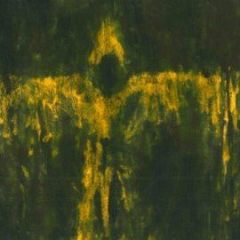
ChillDemonLad 170 Share Posted April 15, 2025 (edited) The Seeris family, a community of dark elves of Velulite descendancy. They are an impure breed of Velulite’s, denoted by their red pupils and white sclera. White hair sits upon their head, and blue skin rests on their body. They are known to be a highly religious sect of Velulites and one of many families. This document intends to be an outline of their habits, traditions, and all around a comprehensive guide to them. It may be expanded upon later in further posts. If you want to make a Seeris, please contact ChillDemonLad on discord! Feel free to use any of the traditions, though, for any dark elf family. Laenoa’ynx, Blessed Dance Probably the single thing that Seeris’ are known for would be their contribution to, and which Seeris’ would claim creation of, laenoa’ynx. Laenoa’ynxs are dances meant to teach the onlookers and praise the spirits. These dances, when participated in and not lead, are typically performed in garb referred to as keznaht-oulba. This most easily translates to open robe, though it is not robes as commonly thought of. The clothes are built to show off skin, or more specifically, the tattoos on said skin. Like all Velulites, tattoos are insanely important to the Seeris family, and will be expanded upon later in this document. It is not uncommon for tattoos to be earned during laenoa’ynxzh. These robes are made of two parts, the laesaetub and the ogaktub, and they are typically white or cream in color, with black fabric on the inside. Laesaetubzhs are single, long loops of cloth that are wrapped around the chest. Ogaktubs are pleated skirts. In Seeris culture, these are considered the bare minimum for either sex, and any less than a laesaetub or a ogaktub shorter than knee height would be considered indecent. It is common to wear silver jewelry with bells, known as navyettoule, around the ankles, neck, wrists, and ears. But, this is only the wear of the common folk, not those leading the ceremony. These ceremonies are usually led by 1 to 4 special roles, known as osyenzh-woadol, or Great Spirits. These osyenzh-woadol are known as lokaeyrel-velulaeya, the Moon Walker, lokaeyrel-a’kokur, the Dead Walker, lokaeyrel-a’lebat, the Changed Walker, and lokaeyrzhel, the Walkers. They each respectively represent Luara, Kor, Veluluai, and the Ancestors. Each of these osyenzh-woadol have a costume associated with them, much like how characters may have certain design elements through different iterations. To start, a black hood, known as a hessker, is draped over the face. Only on the lokaeyrel-velulaeya are there any ear holes, on the other three the ears are held next to the head so they don't show. Lokaeyrel-velulaeya is marked by a white wolf pelt draped over onto the head and back of the individual. The skull of the wolf has been reattached to the pelt, giving the face some structure when worn. White robes, actual robes not keznaht-oulba, and gloves are worn to cover all skin. For the lokaeyrel-a’kokur, the costume is a bit more defined. First, the skull of a gyr vulture must be worn over the hessker. Next, over top black robes and gloves, bones must be draped. This bone drape tends to rattle as the person moves, giving the lokaeyrel-a’kokur a distinct sound to it. Along with this, a staff with a lantern is held by the person. Lokaeyrel-a’lebat actually has two separate masks, with keznaht-oulba worn as well. In one mask, dove wings used to cover the face. In the other, raven wings are in the same pose while draped in gemstones. Finally, for lokaeyrzhel, they have a far less defined costume but one of the most complicated ones. They tend to be a black and white pelt, with skulls attached from a multitude of different animals to cover the head and hands. Jaws are usually attached to the skulls, and can either be moved by the person opening their actual jaw or squeezing their hand into a fist. Throughout the laenoa’ynx, it is common for wine to be drunk, songs to be sung, and dances to be had. While they have similar purposes to that of canonist mass, they have an entirely different atmosphere. They are meant to be inviting, celebratory events that anyone can join in on and have a fun time. During these ceremonies, it is most common for stories to be recounted. The most famous, of course, being the story of Kor, Luara, and Veluluai. This is actually where the two masks for the lokaeyrel-a’lebat come into play, as at the end of the story, the dove mask will be switched to the raven mask, symbolizing Luara and her follower’s transformation into maehr, or dark elves. Yet these are not the only stories that are told. Lyomzh’ynx, Blessed Stories Sorrzhel Written by an Unknown Seeris Lye ulyth yento lyomel aeth We all know the story of uhv’lye yetamy-relgoreth, our lunacy (yetamy-relor translates to lunatic or crazy person) aeth Veluluai’uhn vaexule, of Veluluai’s renewing uhv’lye osyenzh uhn yovule. our spirits new undeath. Aza nyrk laht a’roual der But have you heard yet aeth sorrzhel’uhn ashyer? of the ravens’ harp? sha aehg elhyael-lyeola, They make the gem song Syex rentu vullao-yla Not for a fair women Aza rentu uhv’lye xutha but for our lady myrz lye a’tom velul ytha. who we are her servant. Luara-a’ynx a’zuly Blessed Luara looked bo sorrzhel lu uhv’lye maly. at the ravens with our elf. Lu uhv’sha xornzh-labek-volul with their pretty white feathers, Vel a’ynx ulyth lu aeylul she blessed all with knowledge Zy a’gleour uhv’sha xornzh ker and painted their feathers black Dunr sha zob tom hru malyker. So they may be like dark elves. One of if not the oldest in the Seeris family. The story of sorrzhel, or in common terms, the story of the ravens. It is said that, when Veluluai was first blessed, she was not blessed alone. It was said that the original ravens, also known as the doves, were given an option. To either accept the blessing from Luara and gain the grace, and horror, of intelligence, or be doomed to be simple creatures. Some, not all, choose to accept the blessing that Luara gave Veluluai. Their skin was painted black as night sky so that they may better blend in, but this was not given alone. Just like how Velulites were blessed with gem-like eyes, so too were the ravens blessed with gem-like feathers. This story has actually sparked a bit of conflict occasionally, though. This is due to the fact doves are seen as impure by those of Seeris descent, due to them descending from the birds who choose to reject Luara’s blessing. It isn’t uncommon for them to be seen as bad luck, and some of the Seeris family might even purposefully target doves to be killed and burned out of pure superstition. Adding onto the story of the ravens, there is the story of the gyr vultures, or otelyr-a’kokuryr. It is important to note that it is otelyr-a’kokuryr for gyr vultures, as otelyr-ko are considered vultures as a whole. It is said that gyr vultures saw the blessing of the ravens, and grew jealous. So, to spare them the pain of being forgotten by the spirits, Kor decided to give the gyr vultures a job. They would be the guides for the dead, leading them to Kor’s hold. Not to steal away Luara’s job, but instead to ease the burden. They were brought to the deserts, given that as their domain. Kor had done this so that Luara would not need to dirty her feet with sand and burn her back with sun, the gyr vultures would take that duty for her. Another quite common story is that of maluanyzh-a’ynx-velulaeya, or moon blessed animals. It is said that Luara is a watchful spirit, one that prefers to keep tabs on her followers and the world at large. So, she blessed some animals to be her eyes. These animals are pure white in color when they would usually be darker, such as deer or, most blessed, wolves. These animals are to be left alone, to be allowed to be watchers of all. To hunt these animals is to commit a grave ‘sin’, even if the Seeris heritage does not have any clear lists of sins. The only acceptable time to use a pelt from a maluany-a’ynx-velulaeya is when the animal is found dead from natural causes. These pelts are incredibly sacred if collected, and are nearly always turned into a osyenzh-woadol costume. On the topic of osyenzh-woadol costumes, it's actually not uncommon for pelts to be dyed to white or black to properly fit the role they need to fill. This is especially important for the lokaeyrzhel and lokaeyrel-velulaeya, due to the aforementioned sacredness of white animals. Finally, there is the story mukagemokozhel, or in common, the bones or the rhythm bones. Not to be confused with gemokozh, bones as a whole, mukagemokozh are bones made into instruments. Most commonly the rib bones are used, and they are semi flattened to where there is only a slight curve, and cut down to be able to properly fit into hands. They are held between the fingers, curved side facing each other. One is held loose while the other is secure, and through moving the wrist, the loose mukagemoko will click against the still one. It was said that Luara herself taught the dark elves how to turn ribs into instruments. So, when they went to the Groth’Stroh, the elves there would be able to use the materials of the dead to play for Kor. Another gift between two lovers, with dark elves being the vessel to share it. Those of Seeris descent take this duty with pride, with most, if not all, learning to play mukagemokozhel. Okynkzh, Tattoos As previously mentioned, tattoos are of utmost importance to the Seeris family. They are markers of grand events, stories that must not be forgotten. There is an idea in the Seeris family, the idea of ghetverb, or skin history in common tongue. It is the idea that the skin is sacred, as it was blessed by Luara, and so, by writing important events into it, they are blessing those events. Much like how a man might be made into a saint after their death, stories may become blessed after they have concluded. These blessed stories, or lyoma’ynx are usually happy stories that deserve celebration, though there is also the variation of lyoma’yluunx, or blessed stories of woe. Either one marks important events that the person who is being tattooed that they want to remember. Lyoma’ynx are blessed for obvious reasons. The basic idea is that, through writing it into one’s skin, Luara can read it and see that the story that finished was greatly enjoyed, so that she may know to repeat it. Lyoma’yluunx, on the other hand, are written for the opposite reason. It is marked with a special symbol, an aretuko, an o with an x through it, to denote this as a sad story. It is said that when Luara sees aretuko symbols, she knows the story has concluded, and that good fortune should follow it. White ink is most commonly used for these tattoos. Dark elven skin seems to be very well suited to white ink, surprisingly enough. The specific tattoo style is different for each artist, though it tends to be flowing in shape. For incredibly skilled tattoo artists, there is actually a way to write Vel’luah in the design, with a whole other writing system developed for the art form. This tends to only be known by older Seeris family members. The sentences written in these tattoos tend to be short and few in number, focusing more on overall flow than the words. It’s considered bad faith to write tattoos onto skin wishing for something to come true, as it’s seen as demanding a spirit to do what you want. To clean the skin to prepare for the tattoo, obval-velulaeya, or moon water, is used. Obval-velulaeya is made by leaving water out on a full moon, usually in a jar. It is used to cleanse many objects, and so, is used to cleanse the skin before it is pierced. It is considered incredibly important to cleanse the skin beforehand, less one invites evil in through the wounds left on the flesh. Edited April 15, 2025 by ChillDemonLad 8 Link to post Share on other sites More sharing options...





.thumb.png.4e5370fc69f142d96a905e477cd5dd97.png)





Recommended Posts