Frisket
-
Posts
1380 -
Joined
-
Last visited
Reputation
4538 Divine
ByUniBearse.thumb.png.8234e33e898ba9d456ed28aeb519c1d9.png)





Recent Profile Visitors
27800 profile views


-
It was 2024….. will they deny this one too and release it after GTA6?
-
Those lands are taken by Kurai-kuni, also…you guys could have picked the other open islands….
-

CRP WAR | Ambush of the Valley [Narrative]
Frisket replied to DarkxWalker's topic in The Church of the True Faith
“Master… it’s begun.” letters were being made by Vivien (Merlin). Some uncertainty in her voice as she muttered inside Vidnyrs tent in Sternfell. -
For the first time…an amendment that people agree on…holy ******* shit oh my God nub wae
-
+10000 strike this bozo down and end the grand order… DO IT
-
The High Witch woke vaugely in the middle of the night. Groggy view and messy hair were all there way as she gazed out the window, hearing the laughter of the local homeless man....or darkspawn. As such she returned to bed, passing the night with sleep. "someone shut.... him....." -yawn- "u-zzzzzz"
-
“She’s dead…” ”is that so…” a cruel anwser came from the High Wizard. ”How….unfortunate” the pun was made…
-
Only me bro, the forums just truly hate me, I cannot post one thing without a grand mistake happening. Its so embarrasing....
-
Issued the 281st Year of the Second Age by the office of THE HIGH WIZARD T H E C U L T U R E F O R E W O R D Forged in the crucible of lived experience, shaped by generations of mages who struggled, failed, endured, and ultimately refined their craft and prowess of the arcane through centuries of dedication, was the culture of the Sanctum of Avalier established. Not built alone on doctrine, nor sustained by philosophy in isolation, the Sanctum succeeds generations of predecessors; a tempered formation that is built upon insight, innovation, and understanding that honours the foundation laid by Magi who came before. Every miscast spell, every act of hubris undone, every hard-won triumph of mastery is commemorated and remembered. They not only serve as warnings but also as living lessons, preserved as a collective memory that unites the Order of Mages. Apprentices echo the past from their mentors, teachers, and comrades, absorbing the wisdom and lessons of those who have walked the path before them. In this way, does the Sanctum emphasize itself as more than a school or guild; instead, it is a living continuum of knowledge, discipline, and shared purpose, where every mage contributes to an ever-evolving legacy of excellence and responsibility. Mages, however, differ widely across cultures, each shaped by distinct traditions and philosophies. And in this instance, within the sanctum, Idunian Magi differ: preserving a deep connection to their heritage, reflecting the Aduniac style of fashion and casting methods, creating a discipline and recognizable form of their arcanic practice. Beyond this, are these magi recognized individually, with no single culture or external influence that encompasses them in a single definition; each practitioner expressing their craft in ways that are personal, inventive, and often unique, making the world of magic a diverse and unpredictable tapestry. Thus, does the Sanctum of Avalier not only foster and nourish what is formed by the arcane in the present, but also honours and acknowledges the roots and innovation of mages past. . D A I L Y L I F E Life in the Sanctum is immersive, where mages and spellblades share workshops, libraries, and training halls, where study, experimentation, and mentorship are constant. Such a space is communal, fostering and encouraging the success of those who inhabit those spaces within their daily lives. Success is measured not by the raw power of these magi but through integrity, discipline, and wisdom. Mistakes are treated as lessons, and failure is embraced as an essential part of growth, where intention to strive for the better and improvement in craft is rewarded, and recklessness and overzealousness are punished. Every member participates in the cycle of learning and teaching, ensuring that knowledge is preserved, tested, and improved upon. In the Sanctum, Magic is not merely wielded; it is lived. Its culture emphasizes that in every action, spell, or decision, there is a weight that shapes both the individual and the growing world. Here, mastery is inseparable from responsibility, where growth is both personal and communal, forming a legacy that spans generations. Thus, do the mages of the Sanctum of Avalier adhere and follow in their four Creeds, not by law, but in lifestyle. The Creeds of the Sanctum of Avalier are not laws to be enforced nor are they to be spoken mindlessly: if anything, they are principles of a lifestyle that a mage follows whilst in their discipline of the arcane. They provide clarity, stability and responsibility to those who wield magic, encouraging mages to flourish should they choose to embrace the lifestyle with open arms and mind. Mages of the Sanctum who internalize these truths not only find greater control in their arcanic craft, but a solidified foundation of the charge of a mage. T H E C R E E D S I. FIRST CREED 🟆 THE BURDEN OF MERCY “Our magic is a burden, a tool, and an extension of ourselves. Let not this extension bring harm to the innocent or the unknowing.” II. SECOND CREED 🟆 THE HUMILITY OF ORIGIN “Our magic is a burden, a tool, and an extension of ourselves. We are not gods, nor ascended beings, we are humble seekers, children of GOD. Let us remember this in every step we take.” III. THIRD CREED 🟆 THE REVERENCE BEYOND MAGIC “Our magic is a burden, a tool, and an extension of ourselves. Let us not worship it, but see it for what it is a means, not an end. Revere the Creator above all, and seek repentance when magic is turned toward the enemies of Heaven.” IV. FOURTH CREED 🟆 THE DISCIPLINE OF RESTRAINT “Our magic is a burden, a tool, and an extension of ourselves. Let us not squander it in vanity or idleness, nor call upon it where simple means would suffice.” B E L I E F S & P H I L O S O P H Y Philosophically, does the Sanctum of Avalier stand firm in opposition to the anarchist magi who would wield magic free of structure, naive and arrogant, unthinking of consequence or accountability. To the Sanctum, the freedom of understanding the arcane is not without cost nor enlightenment; instead, it is but an erosion, the slow unravelling of both the self and world. Magic must exist within a framework, a structure, where with each spell cast, there is both intention and meaning. Their doctrine is guided by the Epistle of the Magi, drawn by the Holy Scrolls, which do not serve as law, but as a living compass, defending the moral, both the spiritual and existential responsibilities of every mage that resides under the banner of the High Kingdom of Idunia. These teachings emphasize that the practice of the arcane is an act of authorship upon reality itself, where each mage is accountable not only for their intent, but for the ripples that the will of their magic creates. To wield magic without reflection is to speak without understanding, and to become lost to one’s own voice. To live by this philosophy is to not wield magic as a tool, but a form of authorship and individual expression within reality itself. Every action is deliberate, considered, and never separated from consequence, creating a constant inner discipline and habit that shapes their internal thoughts. Impulse, arrogance, and naivety are treated as a danger. Restraint and control become instinct. Wielding such power echoes as a practitioner’s patience, to become more observant in nature, to not take pride in spectacle but to honour precision and necessity. It is not a rejection of such a power, but a respect for their craft. To study it, understand it, and the authority and right of being able to use it at their will. Their confidence does not hail from dominance but clarity and certainty. Magic becomes not a practice where one is limited. Instead, a responsibility and privilege, to know and control the arcane. O N T H E V O I D & M A G I The Void is a realm of nothingness, pure potential, from which magic is drawn, but it should be cautioned that it is dangerous and not meant for those of the Mortal Plane to disturb carelessly. In the beginning, there was nothing, and that nothingness is the Void, yet Aeradar, GOD, stood apart from it, yet in perfect relation to it, just as an artist is to a blank canvas. The Void was not GOD, nor equal to Him, but through Him, became the stage upon which existence could unfold. It is not merely emptiness, but the profound, endless, and vast multitude of possibilities, unshaped: a realm in which nothing exists, but from it, everything could. From this paradox, the Mortal Plane draws forth the arcanic practice of magic, the raw, untamed essence that magi have learned to wield: Voidal Magic. Voidal Magic is the art of reaching into the boundless absence and giving it shape, purpose, and will, fuelled by mana. It is the act of calling something from nothing and willing it into our plane. It is a tool and a BURDEN. . . I. FIRST 🟆 BODILY DETERIORATION It weakens the body. The mortal form was not designed to channel the strain of the Void. Flesh falters, bones tire, and vitality wanes not because the soul is harmed, but because the vessel is finite. We are merely mortal, and the harms do tax what is temporary, attempting to withstand the infinite. Furthermore, their minds are warped, making it challenging to seek their gaze beyond the unknown. Henceforth, mages are advised to seek advice and counsel, to learn how to navigate themselves and others. II. SECOND 🟆 TEARING THE VEIL It tears at the Veil, the sacred boundary set by GOD to shield the world from the formless abyss. Each act of Voidal Magic is a breach, a wound in reality, that must be carefully controlled, lest it widen beyond repair. Thus, by nature, it is the duty and responsibility of a mage to seal and heal what wounds GOD’s creation, lest it reap a greater consequence. The Sanctum teaches that the void is not an enemy, but neither is it a friend. It is a force to be understood, respected, and feared in equal measure. O N A V A L I E R Mercy. Humility. Reverence. Restraint. Legends speak softly, carried upon the wind, through forgotten halls, through mountains traversed by an Ancient Wizard who once walked the breadth of the lands, once known as Aegis and Vailor. Footsteps left no empire, no throne, no monument of stone; and yet, he exists in mere tales and stories, exchanged over eons through tongue. Whilst scarce, they scatter like embers through generation, kept alive not by certainty, but by reverence. Few claim to follow his path, and fewer understand it. To the common telling, he is remembered as the archetype of the arcane master: A figure cloaked in flowering robes, crowned with a pointed hat, bearing a tome and staff alike. A wielder of immense knowledge, a scholar whose quill danced across parchment, birthing tales of heroes, rising against darkness - not merely a participant of magic, but an embodiment. The Great Caster. The Wiseman. A myth shaped by the imagination of those who seek to define power through image. But these tellings are not false; instead, they are incomplete. A Master of the Arcane, but equally a Servant to Wisdom. Avalier is not a figure of worship, nor an icon to be exalted. Instead, he is an example: The Guide. A Scholar, not consumed by knowledge. He is remembered not for his dominion of the arcane, but for restraint, for intention. Where others seek grandeur, the greater power and dominance over the arcane, instead, he models balance, responsibility, and humility of the privilege of harnessing the void. He was a favoured idealist, embracing both the structure and wonder, and the idea of the ‘true mage’. Whimsical and mysterious, threads of the same tapestry, he understood that magic was not merely a force to command but a language through which creation beyond imagination whispered its presence. For many who believe in Avalier, whether as man, myth, or divine instrument of sorcery, many chase his image, but in truth, do they value the truth: A true mage is not measured by what they can do, but by what they choose to do. Mercy. Humility. Reverence. Restraint. R I T E S , C E R E M O N I E S & T R A I N I N G In past years, mages would stick to themselves, isolated in towers, researching and pondering about the future, where the world had accepted the practice of the arcane, a mere daydream, an intangible hope. However, the Sanctum take mind to their abilities, and believe that aside from what they learn, the practice of honing their magic and their comprehension of it. Like a knight training with his weapon to hone movement by muscle memory, a mage and practitioner of sorcery must take their time to understand their limits: mentally, physically, and magically. Thus, do the magi of the Sanctum of Avalier hold the following responsibilities and practices: (Warning some of these trainings are still in development) Below details the responsibilities of the Order of Magi, through the Sanctum of Avalier. . . M O R E O N T H E S A N C T U M O F A V A L I E R [LINK HERE SPOILER] Furthermore, do they take on the practice of wielding a conduit through which their will is manifested and refined into a given form; whether it takes shape through a grimoire, wand, stave, or more unorthodox instruments, mages use these ‘items’ as an extension of themselves, which elevates their control and intent, to materialize it into reality. The creation of these conduits is deeply unique and personal from mage to mage: beginning by gathering materials of significance, fragments that resonate their essence, studies, and life journey. These components are not chosen at random, but with careful consideration, where each face is a facet reflecting their individual identity and magical inclination. Once collected, it is then forged or assembled by the mage’s own hand or by a skilled artificer, where the Arcane Crystal, a rare construct, is formed from the mage’s own mana, serving as the core focus, binding to its wielder, a reflection of the mage itself. Not only does this Arcane Focus become a symbol of their discipline, understanding, and mastery, but a manifestation of the path they have walked, and the power they have learned to control. The Sanctum of Avalier’s Culture is steeped in Rituals, where each ceremony reinforces the values of Mercy, Humility, Reverence, and Restraint: V. ACTIVITIES 🟆 OF THE ARTS & CONTROL Mages find themselves not only in need to both train and master their art, but also, in lesser ideal forms, be capable of comforting and dazzling the public. Whilst spectacles of their magical feats are not for the likes of boasting, they can serve the purpose of lifting the spirits of many during periods of woe. Performers, much like bards and jesters, may use low or lesser spells to conjure a variety of spectacles. Though across it, the emphasis of control weighs heavily. In every celebration, ceremony, and event, the Sanctum of Avalier reinforces identity, as in everything, and each spell is another lesson in discipline, intention, and shared understanding - forming a unity between the communal strength of magi. Thus, are the following activities conducted culturally by the mages, witches and wizards of the Sanctum: SIGNED HER EXCELLENCY, Vivien Oláhún Aen Tarem, Elder of the Aelweni council, The Dreaming Witch, The Second Merlin






-
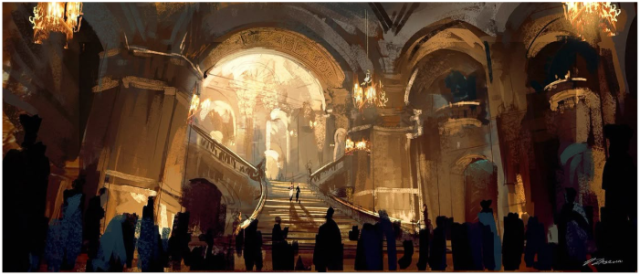
Issued the 281st Year of the Second Age by the office of THE HIGH WIZARD Throughout the descendants of our kind, God has revealed to us the great marvels of the outer realms. Through His boundless power, He has shaped beings of countless forms and species, each speaking and sounding in ways unique to themselves. In His design, He has woven diversity, wonder, and above all, us. Within the ancient scrolls, it is written that God created the world and, in that first moment of order, He separated our realm from the Void. Upon beholding His creation, He called it Good. Yet one mystery remains beyond our understanding: if the world is His work of light and life, then what place does the Void hold within it? What truth lies hidden in that endless darkness? In our pursuit to unravel such an enigma, we seek those rare individuals who, through extraordinary effort and brilliance, devote themselves to the study of these mysteries. They guide, instruct, and defend this land and educate the finest and most radiant of our lands and those beyond them. Thus was established the highest seat of wisdom and arcane mastery; the office of the High Wizard, known more simply by the ancient title: MERLIN. “A Mage does not command the arcane; they listen to it, question it, and bend it only when the world itself dares to be wrong.” -Aelthir Vaelion There exists no recorded history, nor any recollection in ancient archives, of a magician, seer, or mystic who has ever borne the title of High Wizard, Witch, or Mage. Yet now, as the whimsical forces of Idunia’s magical plane grow ever more vivid and tangible, the world itself seems to prepare for such a figure, an individual capable of perceiving and understanding the grand design that governs magic in all its forms. The High Mage of the Harren Court is not merely a wielder of arcane power, but a soul defined by humility and an unyielding hunger to comprehend the mysteries of existence. They hold a steadfast belief that all manifestations of magic, no matter how subtle or grand, fall within the scope of their responsibility. It is their solemn duty to seek knowledge, unravel truth, and offer wisdom in counsel to the High King of Idunia. Yet with such responsibility comes restraint. The High Wizard must move with grace and cordiality, never overstepping to the point of disruption, nor interfering with the natural unfolding of events. They are, above all, a listener; attentive, patient, and deliberate in both thought and action. In essence, the High Mage stands as the living embodiment of magic itself: a reflection of its balance, its wonder, and its discipline. They are not only a master of the arcane, but the very ideal of what it means to be an Idunian Mage. T H E H I G H W I Z A R D ’S D U T Y It is the solemn duty of the High Wizard to educate, guide, and safeguard the realm of Idunia from the perils of uncontrolled magic. Through their knowledge and vigilance, they stand as a bulwark against arcane catastrophe, ensuring that the forces of the unseen do not bring ruin upon the lands and their people. Among many shields and spears, the High King deploys against the ill-spawn upon the battlefield, the High Wizard stands apart. Though capable of wielding immense power in times of war, their foremost purpose lies not in conquest, but in counsel. The High Wizard must. . . 🟆. . . Swear fealty to and swear the Sacred Oath of Avalier and the Oath of Tar-Númenetar to the High Kingdom of Idunia. 🟆. . . Recite the Creeds of the Sanctum by memory. 🟆. . . Recall, recite, and adhere to the Epistle of the Magi. 🟆. . . Have a profound understanding of the paranormal and the arcane. 🟆. . . Utilize their gifts to provide insight into the mysteries that cannot be answered by mortals alone. 🟆. . . Be a scholar, to provide their knowledge to stand as a guardian of the High Kingdom of Idunia. 🟆. . . Stand and take the charge as the bulwark against the encroaching dangers of the void; whether in the form of Voidal Hollows, Tears, or other aberrations born of reckless or forbidden magic. 🟆. . . Stand in the preservation of Aeradar’s creation and will. They stand not only for the kingdom, but for the preservation of creation itself: the protection of the faithful, the safeguarding of mortal descendants, and the enduring will of God. In all things, the High Wizard is the balance between power and restraint, an unwavering protector against both the chaos of magic and the darkness beyond it. “The Sanctum does not shape those who enter, it reveals them, quietly stripping away pretence until only truth has the courage to remain.” — Caelis Thorne An institution of the High Kingdom of Idunia, with a commitment to mages disciplined with restraint and humility, The Sanctum of Avalier, with the High Wizard overseeing and presiding, cultivates practitioners of the arcane, who seek to understand and demonstrate true power rooted in control, wisdom, and purpose. Whether regarded as a guild, enclave, or sacred order of the High Kingdom, it is not defined by its size or number of magi; instead, it is defined to stand against the rise of anarchist magic, which wield the arcane without structure or accountability. Teachings derived from the Epistle of the Magi, drawn from the Holy Scrolls, those of the Sanctum of Avalier seek such as a compass and an ethos, a reminder of the moral and spiritual responsibility of every mage within the High Kingdom. Yet the culture of the Sanctum is not built on doctrine alone. It is shaped by generations of those who lived, experienced, and refined their magic through centuries of study, failure, and mastery. The Institution is, at its heart, a fellowship of teachers. Every member, from initiate to arch mage, is both student and mentor, contributing to a legacy of shared knowledge and disciplined growth. To embody the principles, just as the High Wizard does, is to hold themselves to the standards of integrity, wisdom, and mastery against those who corruptly wield it. M O R E O N T H E S A N C T U M O F A V A L I E R T H E A V A L I E R ‘S P A S S I N G "Pour ceux qui veindront après" In ages past, it was customary for students to inherit a spell or sacred artifact from their former master upon the completion of their training, most often at the moment of the master’s passing. In this act, the torch of knowledge was not merely handed down but ignited anew, symbolizing the continuation of wisdom through successive generations. This tradition endures across many orders and disciplines, and it remains a defining rite in the succession of the highest seat of Wizardry. Upon the death, removal, or honourable discharge of the High Wizard, a sacred rite known as the Availer’s Passing is performed. This ritual, rooted in the ancient example set by Availer for their descendants, serves as the conduit through which will, knowledge, and wisdom are entrusted to the next bearer of the mantle. Upon the death, removal, or honourable discharge of the High Wizard, Avalier’s Passing is performed in which . . . 🟆. . . The High Wizard, or the High King or Queen, selects a student or individual mage among the High Kingdom of Idunia to inherit the seat of the Chamber of Wizards. 🟆. . . They must have already sworn fealty to and sworn the Sacred Oath of Avalier and the Oath of Númenetar to the High Kingdom of Idunia. 🟆. . . Upon the selection of the individual, the ceremony begins in which a Hat is bestowed upon the mage and the Sacred Oath of Avalier is sworn, in completion; in such will the individual take the charge of the High Wizard and the title of MERLIN. In the instance that more than one is selected, a trial must be completed to filter and choose the best candidate for the position. T R I A L S O F A V A L I E R ' s P A S S I N G A small peek as to some trials done to mages who become the High Wizard Within this section lies the line of the High Wizard. It is predominantly used to keep track of the past individuals who hold the seat and charge of Merlin, as the seat is not easily given up; a high wizard may be removed or replaced with someone more capable upon the word of the High King, or even after they have lost their lives in service to the kingdom. THE HIGH WITCH OF THE HIGH KINGDOM OF IDUNIA Vivien Oláhún Aen Tarem, Elder of the Aelweni council, The Dreaming Witch, The Second Merlin. SIGNED, HIS ROYAL MAJESTY, Tar-Pharazôn Auranion Harren Arthalion, By the blessing of Aeradar, High King of Idunia, Chief of the Númenedain and the Tribe of Harren, Defender of the Númenaranyë, Sovereign of Alduun, Prince of Númendil, Templar of Saint Michael the Archangel, Knight of the Realm, Master of the Sharadûn, Protector of the Adunians, Ascendant of Orodaeglir, Trailbearer of Tar-Númenetar HER EXCELLENCY, Vivien Oláhún Aen Tarem, Elder of the Aelweni council, The Dreaming Witch, The Second Merlin.




-
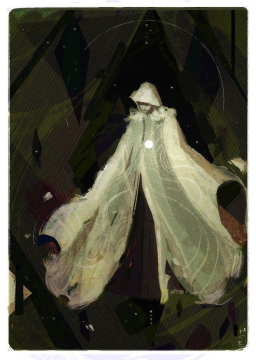
Issued the 281th Year of the Second Age by the office of THE HIGH WIZARD The Sanctum is an order of disciplined mages devoted to the mastery, understanding, and responsible use of magic. It exists to train those who possess not only talent, but the restraint and humility required to wield power with purpose/ This is not a place for reckless ambition or unchecked experimentation. The Sanctum stands for structure, accountability, and wisdom, shaping mages who seek control over chaos, and meaning over raw power/ Here, every member is both student and teacher, contributing to a living tradition built on shared knowledge, experience, and growth. Guided by sacred teachings and generations of practice, the Sanctum preserves the balance of magic and prepares those worthy to uphold it. In simple terms, the Sanctum exists to ensure that magic is not merely used, but understood, respected, and mastered. The Sanctum seeks only the most disciplined among aspiring mages, those who possess not only talent, but restraint and humility. It turns away any who would recklessly pursue the volatile and corrupting depths of the void, for such paths promise power without permanence, and strength without understanding. Instead, the Sanctum cultivates practitioners who recognize that true mastery is not found in excess, but in control; not in dominance, but in intention. To them, magic is not a force to be conquered, but a responsibility to be carried with clarity, wisdom, and purpose. In duty and responsibility, the Sanctum of Avalier, as an Order. . . 🟆. . . Stands against the rise of anarchist magi, who would wield magic free of structure, consequence, or accountability. 🟆. . . Serves as a fellowship of mentor and student, where knowledge, wisdom, skill, and prowess are exchanged. 🟆. . . Believes that magic must exist within a framework, following and guided by the doctrine, by the Epistle of the Magi. 🟆. . . Bears the privilege of being able to practice the arcane is an act of authorship, accountability, and great responsibility. 🟆. . . Believes that to wield magic without reflection is to speak without understanding, to eventually become lost to one’s own voice. 🟆. . . Aids in the Host of Idunia, through being the eyes through the infinite, the void. 🟆. . . Assists in the purging of magical corruption, cleansing the taint from the ailing world. 🟆. . . Must value above all, Mercy, Humility, Reverence, and Restraint. Yet the culture of the Sanctum is not built on doctrine alone, nor sustained by philosophy in isolation. It is shaped by generations of lived experience, by mages who struggled, failed, endured, and ultimately refined their craft through centuries of devotion. Tradition within the Sanctum is not rigid, but tempered. It evolves as each generation contributes its insight while honouring the foundation laid before it. Stories of miscast spells, of hubris undone, and of wisdom hard won are preserved not only as warnings but as essential teachings, forming a collective memory that binds the Order together. At its heart, the Institution is a fellowship of teachers. Every member, from the newest initiate to the most venerable arch-mage, exists in a dual role as both student and mentor. Knowledge is not hoarded, but circulated, tested through discourse, sharpened through critique, and strengthened through shared pursuit. Instruction is not simply given; it is lived, observed, and embodied. In this way, the Sanctum becomes more than a place of learning. It becomes a continuum of understanding where growth is both individual and communal. Like the High Wizard who leads them, they embody the enduring principle that the strength of magic is not measured by its magnitude, nor by the number who wield it, but by the integrity, wisdom, and mastery of those entrusted with its use. Admission into the Sanctum is neither common nor freely granted. The Order maintains a deliberate, carefully limited number of members, ensuring that its ranks are composed only of those who embody its principles with unwavering discipline, integrity, and loyalty to The High Kingdom of Idunia. As such, entry is by invitation alone, extended only after a candidate has undergone a rigorous series of assessments, evaluations, and formal interviews designed to measure not only their capability, but their character. Those who seek entry may first be recognized as associates, individuals permitted to work alongside the Sanctum and observe its practices. While not yet full members, these associates are considered prospective candidates, their actions and conduct closely regarded as they move, in time, toward possible inclusion within the Order. Formal assessments for membership are conducted every [2] OOC months. These evaluations may take place individually or in small groups, depending on the nature of the trials. Each assessment is designed to test not only magical proficiency, but discipline, judgment, and alignment with the Sanctum’s ethos. Acceptance is not decided lightly. A candidate must earn the approval of both the High Wizard and the Tar or Tari, ensuring that their admittance reflects both arcane mastery and trust in their responsibility. Those seeking to be Associates would find it easier to be claimed as an associate. Truly, the journey only begins there, whether it be a Mage or Spellblade seeking to take on their trials of membership, they must do the following. . . 🟆. . . They must undergo the Sacred Oath of Availer under the High Wizard of Idunia. 🟆. . . They must be a Citizen of Idunia who has sworn the Oath of Tar-Númenetar. 🟆. . . The Mage in question must recite the Creeds of the Sanctum by memory. 🟆. . . They must recall, recite, and adhere to the Epistle of the Magi. 🟆. . . Acquire three letters, accounting the arcane prowess and upstanding character of the mage, from: A Knight of the Host of Idunia, a Citizen of Idunia, and a sworn Numenedain of Idunia. 🟆. . . A member of high rank must administer a trial for the associate; finding their result either adequate or satisfactory will grant him the rank of member. For trials, High Rank members may refer to the Codex Regulae Sancti Interioris for trials. M O R E O N T H E S A N C T U M O F A V A L I E R’ S C U L T U R E SIGNED, HIS ROYAL MAJESTY, Tar-Pharazôn Auranion Harren Arthalion, By the blessing of Aeradar, High King of Idunia, Chief of the Númenedain and the Tribe of Harren, Defender of the Númenaranyë, Sovereign of Alduun, Prince of Númendil, Templar of Saint Michael the Archangel, Knight of the Realm, Master of the Sharadûn, Protector of the Adunians, Ascendant of Orodaeglir, Trailbearer of Tar-Númenetar HER EXCELLENCY, Vivien Oláhún Aen Tarem, Elder of the Aelweni council, The Dreaming Witch, The Second Merlin.


-
This was cinema… only a rare few true story driven evils in this server. Another Gem in the long lines of villans skelator would be proud!
-
Good attempt don’t give up, fizz and metamancy gave good critique and took the words out of my brain.
-
“Dread it, run from it, the truth always arrives…dear charlotte.” a small parchment was left in the front door of what ever inn or property she was staying in. only with a single signature left -Merlin