


CasualGhost
-
Posts
75 -
Joined
-
Last visited
Content Type
Profiles
Personas
Wiki
Rules
War
Systems
Safety
Player Conduct
Roleplay Leadership Guidelines
- Roleplay Leadership Guidelines
- Roleplay Leadership Guidelines Comments
- Roleplay Leadership Guidelines Reviews
Forums
Everything posted by CasualGhost
-
The weight of the ferula feels heavy in Thomas's hand as he rests it against the altar in the Cathedral of Saint Peter. It had seemed a short time ago since he took it up. He takes the ring from his hand, placing it likewise upon the altar, next to his miter. He is robbed of all vestments of the office of High Pontiff. He turns to the many clergymen sitting in the pews. "I am no longer High Patriarch Thomas I. The title of High Patriarch is abolished. Now we elect a High Pontiff. If I am reelected I will take up my old name, but for now, I am Cordal de Herendul, Bishop of Aanenburg. All ordained priests may now cast their votes. Speak loudly, so that the Creator himself may know of your decision." Cordal then steps down from the altar, giving a respectful nod to his opponent, Bishop Siguine of Abresi. The voting begins as each priest calls out their choice for the new High Pontiff.
-
A Golden Bull is proclaimed by the High Patriarch, Thomas I. It is spread throughout the lands, bearing the winds of change for the Church of the True Faith. It reads as such. "Deus Magnus, my children. This will be the final document issued by the High Patriarch. After this document has been written, the heretical and stained title will be renounced and be known as a reminder of darker times, when the Church was controlled by the state. I will not suffer the title any longer. Therefore, after this document is released, the clergy of the realm shall gather to elect a High Pontiff, whether it be myself or my esteemed opponent, Bishop Jan of the Barrow, or as otherwise known Siguine of Abresi. This Golden Bull will finally set right all the doctrinal changes set by the monarchy, and will at long last incorporate Raev and Heartland traditions into a unified doctrine. Section I: Upon the Rites of the Church of the True Faith. i. Upon the Rite of Baptism -Baptism will henceforth consist of the baptist pushing the blessed individual into water, either in a stream of moving water or stationary. -While being pushed, the individual will release a bird, which will therein signify his pact with the Creator as it flies up to the heavens. 1. A dove, if the individual wishes for peace. 2. A hawk, if the individual wishes for war. 3. A crow, if the individual wishes for a life free of bad luck. 4. A pigeon, if the individual wishes for a life full of good luck. -Seven years shall be the age at which an individual will be baptized. -Those children who die before the age of seven, regardless of their parentage by race or creed, will be wholeheartedly welcomed into the Seven Skies. ii. Upon the rite of Ordainment -Ordainment is the sacred vow taken by a Priest when he is raised from a Deacon. -Ordainment shall not be given to any who have not been a Deacon for at the least two Saint's Years. -After being Ordained, the Priest will disavow his family name, and all ties to his old family, and henceforth take the name of his birthplace in the manner of his culture. For instance, Cordal de Herendul, or Cordal von Herendul in the Hanseatic or Kaedreni fashion. -While being Ordained, a priest must take Vows of Clemency, Poverty, and Humility. They shall give up all their worldly possessions, as they have given up their name. iii. Upon the rite of Marriage -For a marriage to be legally binding, the man must bring to his beloved a ring and propose. -The marriage between two people of the same gender is strictly forbidden, and is utterly heretical. -At the wedding ceremony, the bride and groom must exchange wedding rings, different from the ring of engagement that the man previously gave the woman. -The site of the marriage ceremony does not have to be a church. -The priest will say binding words to the two, and they shall henceforth be married. -A secular witness must be present to attest to the marriage's legitimacy. -Marriage is a sacred bond, and in only the most dire circumstances, such as adultery, or one of the spouses engaging in heretical behavior, will a marriage be annulled. Section II: Upon the Hierarchy of the Church i. There are two groups within the church, monastic and secular. ii. The lowest and entry level rank of the secular church is the Acolyte. iii. The Acolyte will spend no less than one Saint's Week training in an Abbey. iv. The next level after Acolyte is Deacon. v. The Deacon will spend no less than two Saint's Weeks training to be a Priest alongside a practicing clergy member in a church. vi. Upon being ordained, the Deacon will be placed in a parish of his own as a Priest. There can be but one Priest per parish. vii. If the Priest is found to be pious and just, he may be raised to the level of Bishop and be given administration over a diocese. viii. The highest level of the church is the office of High Pontiff. ix. The High Pontiff's rank shall include the Papal Ferula, a staff topped with the Lorraine Cross, and a ring upon which is carved his Papal name, for instance Thomas I Pont Max. x. The High Pontiff will be inaugurated in a ceremony presided over by the longest serving Bishop, aside from the Bishop being raised to High Pontiff. xi. The High Pontiff has the power to create and split apart Dioceses. xii. The High Pontiff has the power to raise Bishops. xiii. The High Pontiff may only dismiss a Bishop if he is tried in a clerical court. xiv. The office of High Pontiff is only relinquished upon death, or in the case of the High Pontiff being missing for a long period of time. xv. The High Pontiff is elected by the College of Bishops, so long as there is at least three Bishops within the college. xvi. Lacking three Bishops within the college, all ordained clergy will vote upon the High Pontiff from the pool of Bishops. xvii. The High Pontiff is the head of both secular and monastic parts of the clergy. xviii. Members of the monastic clergy will live within an Abbey, and be known as Monks. xix. The head of an Abbey is known as the Abbot. Section III: Beliefs of the True Faith i. These are the final and solid beliefs of the True Faith. They cannot be changed, for they are only the pure truth. Any who change the dogma after this; may they be branded heretics. ii. All of the dogma of the old church remains true and needs no clarification, aside from the following. iii. Aenguls and Daemons are immortal beings with free will and free thought, not mere unthinking tools of the Creator. However, they are not to be worshipped, merely revered. iv. The Prophets, once known as Exalteds, are those who were liberators and unifiers of humanity, granted with vision and guidance from the Creator. They are: -Horen. -Owyn the Sword of Heaven, the Destroyer -Godfrey the Creator -Siegmund the Preserver v. Priests may marry, but can never ascend to the office of Bishop or High Pontiff, lest the positions become hereditary and given to unworthy men. Section IV: Clerical Courts i. The Church does now in good faith establish the Clerical Court of Aanenburg. ii. The Clerical Court is presided over by the High Pontiff. iii. The Clerical Court is reserved for those among the priesthood who gave grown sinful and twisted, and have committed crimes, or heretics. iv. A secular court may not render judgement to a Priest of the True Faith. v. Heretics may not be judged by a secular court, they must be brought before the Clerical Court of Aanenburg. vi. The College of Bishops will give judgement of guilty or not guilty to the crime. vii. The High Pontiff will then render punishment upon the heretic. viii. Punishments for heretics are at the least a session of lashings and for the most extreme heresy: burning at the stake. ix. Punishments for priests who have become twisted are at the least dismissal from office, and at the most, burning at the stake. x. Secular judges who attempt to judge Priests or heretics will be condemned as heretics themselves and defiers of the Church. xi. If the college of bishops has fewer than three Bishops within it, then judgement and sentencing falls to the High Pontiff. xii. The vote upon guilty or not guilty must be unanimous among the Bishops. Deus Magnus Penned by His Holiness, the High Patriarch, Thomas I, on the 10th of the First Seed, in the Year of Our Lord 1471."
-
High Patriarch Thomas I frowns. "Let not the Church have purchase or influence in this election. We wish not to meddle in the affairs of politics. Choose another for the fifth seat of the electoral council."
-
"You have much anger, and give idle threats in the place of reason. We are not separate from the Empire. We live to serve it and its people. I have seen no anger from anyone other than yourself. Tis not a scheme that I present to you today, tis the opposite! For if the Church is forever shackled to the state, then it is forever involved in politics when it should be concerned with the welfare of souls. Indeed, scheming and schisming is the furthest thought from our minds."
-
"To the esteemed writer of this letter, You seem to have some misconceptions about this document. Truly, twas Emperor Godfrey that set forth such a declaration, but this was when he was declared to be a Divine power. As this is proven not to be so, and no man can be Divine, is it not heresy to suggest that we place a mere man on the throne? Look at the example of this past Emperor Robert. He was guilty of many crimes that ended in his removal from the position of Emperor. He led the Church, as well. And so I ask you, should we allow such a man to rule over the Church? I will not repeat the mistakes of the past with allowing Church and State to be ruled by one man. Furthermore, we are not leaving the great Holy Empire of Humanity. We are not our own state. This Church is for Oren, and humanity. Deus Magnus."
-
BULL OF THE RESTORATION UNAM SANCTUM Lo! Let it be known that the Church of the True Faith, wishing to more accurately institute the laws of the Lord God, does commit into her records and the hearts of the faithful the following resolutions, to bind her in devotion and piety. RECTIFICATIONS So that our Church might reinforce her purity, and so that, by means of an immaculate and perfectly righteous history, we may be kept secure in holiness and Communion with the Lord, we present into the hearts of the faithful the following rectifications of recent events. CONCERNING THE AUTONOMY OF THE CHURCH Taking into account or divine responsibilities of piety and reverence for the Will of God, we do find that the subjugation of the transcendent and holy church to the secular institutions of the state wholly inappropriate, and furthermore find it spiritually impossible; it is therefore clarified that the ecclesiastical reign of the Kaedrini Interregnum occurred illegitimately and without lasting effect, and solely under the physical and spiritual coercion of the consecrated persons of the church. CONCERNING THE NATURE OF THE HIGH PONTIFICATE Taking into account the tradition of pontifical election, we do find that the election for Thomas Primus by the clergy of the Church to be fully legitimate, and decry the necessity of the then-Emperor’s approval in such matters; it is therefore clarified that Thomas Primus’ pontifical reign began with the close of the elections, regardless of enthronement by the secular ruler. CONCERNING THE INTEGRATION OF THE RAEVIR COMMUNIONS Taking into account the spiritual responsibility of the Church and her dedication to harmonious and virtuous unity in sight of the Lord God, we do find the unification of the liturgical traditions of the Raevir, Heartland, and other churches in communion with the scripture to be fully legitimate; it is therefore clarified that the adoption of the accidents of Raevirism to be a wholly acceptable and laudable choice. GOODWILL AND COOPERATION The Church of the True Faith does pledge her continued, support, favor, and loyalty to the Holy Empire of Oren and humanity as a whole. She furthermore does maintain the favored status of the Holy Empire of Oren and the singularity of the institution of Empire. May the Lord God ordain and defend this pledge for all eternity. ITA FIAT High Pontiff Thomas I
-
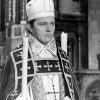 Thomas Primus goes to pray to the Creator in this time of strife, hoping for guidance.
 -
Heathens And Heretics, An Informational Paper
CasualGhost replied to CasualGhost's topic in Athera Roleplay Archive
Thomas overhears the comment. "Truly? My greatest apologies, good man." A reprint is immediately issued with the mistake corrected. -
https://www.lordofthecraft.net/topic/115503-heathens-and-heretics-an-informational-paper/ Educate yourselves, laymen!
-
From the desk of the High Patriarch, a pamphlet passes around the Human lands and the Imperial city of Petrus. They are handed out by various traveling monks, acolytes, and printed neatly in vast quantities at the Abbey of Veracruz. The pamphlet reads as follows: DENIAL OF THE LIGHT A paper to inform and educate about Heathens, Heretics, and their distinctions Penned by His Holiness, High Patriarch Thomas Primus, on the 12th of the Sun's Smile, in the year of our Lord 1469. Section I: The Heathen There are many Heathens that stalk the lands and roads of Athera. Many of them are harmless and should not be taken into account. Others are dangerous. We find it odd that the words Heathen and Heretic are so often blurred. It is a common misconception that we will rectify today. Heathens are those beings who were unfortunate enough to be born into an inferior and false faith. They are not to blame for their accursed state, for they did not choose it. We believe they have merely not found the True Faith yet, and the Creator. There are two types of Heathens. Godless Heathens, and Pagans. This delves into the very nature of our faith. Truly, we recognize the Aenguls and Daemons as the holy messengers of the word of the Creator, but they are not to be worshipped. Only revered. Aeriel was known to pay homage to the Creator. We therefore worship one God, who is all knowing, all seeing, and everlasting. This differs from Heathens. Godless Heathens are those that absurdly worship no god at all. Though there are vast quantities of proof from the conflicts with the Undead, even with Aenguls and Daemons on both sides testifying to the existence of the Creator (including the Wandering Wizard), they refuse to acknowledge even the possibility of a divine being that created all. Notable examples of Godless Heathens are the High Elves, and the occasional Wood Elf. This is not a common variety of Heathen. The far more common variety are Pagans. Pagans have a more reasonable perspective, in our opinion. They acknowledge that there are Divine powers at work. But Pagans seem to have gotten the number wrong. Pagans believe and worship many gods, instead of our Divine Creator. These gods are often false, with not even a smidgen of proof as to their existence. For example: the Adunian gods, or the gods of Clan Orvar. The Hansetian 'Celestia' is another notable instance. However, more often Pagans will worship beings mistakenly identified as gods. Druids and Shamans worship Aspects and Spirits, respectively. But these are no gods, they can be tricked and are imperfect. Still others worship the servants of the Creator, such as the Clerics of Tahariae. Pagans may be more reasonable when it comes to worship than Godless Heathens, but they are far more dangerous, as they will kill for their false beliefs. So the question is: how does one deal with a Heathen of any variety? The answer is to be pleasant to them, show them your good faith. Prove through your actions that the True Faith is indeed the greatest. If the Heathen seems amiable enough, attempt to convert them. However if they show aggression when talking about the True Faith, drop the subject. These poor souls have been blinded to the Divinity of the Holy Light. If a Heathen turns violent, they are to be eliminated. If Heathens attacked the church, certainly a Crusade would be called. So, in conclusion, convert the kindly heathen, avoid the aggressive one, and if aggression persists, destroy them. However it is written that Heathens too, if heroic enough, may ascend to the Second Sky. Section II: The Heretic Heretics are far more dangerous than any Heathen. Often they are evil, ill tempered, and violent. The only method available is execution, for they have committed a conscious crime against the Creator. A Heretic, unlike the Heathen, was born into the True Faith, and turned his face from the Creator's Divine Grace. He either converted to one of the Pagan faiths, or gave up belief in our Creator. Though, this is not the only type of Heretic. The second type is one who still claims to follow the True Faith, but in fact follows improper teachings. These include insisting that the Emperor is Divine. This is false, for while the Emperor is the leader of the Church, it is written by Basil of Sabris and Simon of Kavaz that no man can be Divine. This form of Traditionalism finally came to be called heresy during the Reformist movement. So how to deal with the Heretic? Well, do not go off recklessly! No common layman has the authority to judge whether a soul is pure or tainted with heresy. Any suspected heretic must be brought to a member of the clergy for him to judge. If the suspected passes all tests, then he or she is not a heretic and must be set free. If the suspected is convicted by the priest of heresy, then they must be assuredly burned alive at the stake. Note that this is in fact, an act of kindness, not cruelty. The purifying flames will burn away their sin, giving them up to the Creator for Him to judge in His court. Depending on their remorse for turning their back on Him, He will either welcome them with merciful love or condemn them for rejecting His grace. Furthermore, if the Heretic is falsely convicted, the Creator or one of His servants will certainly save the accused from the fiery blaze. And so, in conclusion, Heretics are dangerous creatures, who unlike the Heathen, cannot be shown mercy. We hope that this pamphlet has helped to clear away any confusion surrounding the two terms and their uses. Deus Magnus, Godani jest wielki, and may the Creator shine his Holy Light upon you.
-
The First Clerical Conclave Of Petrus
CasualGhost replied to CasualGhost's topic in Athera Roleplay Archive
"Then I will go to their superiors and ask them to encourage their men to do such, but it will remain a matter of choice." -
The First Clerical Conclave Of Petrus
CasualGhost replied to CasualGhost's topic in Athera Roleplay Archive
"It does indeed trouble me that the cries of Ave Oren and Ave Chivay have now far outweighed the immortal cries of praise to the Creator. But we do not thing this should be an obligation. For what meaning is there behind the words if they are forcibly said, repeated as a simple script? Instead, we should lead by example. Say it in greeting, and farewell. Hopefully such good habits will spread amongst the populace." -
Fixed.
-
I would if I knew when they occurred.
-
The First Clerical Conclave Of Petrus
CasualGhost replied to CasualGhost's topic in Athera Roleplay Archive
"A magnificent idea, one that I have been pondering myself. I concur with you, and will add this to the Golden Bull issued after this Conclave." -
The First Clerical Conclave Of Petrus
CasualGhost replied to CasualGhost's topic in Athera Roleplay Archive
"Very well then, the ranks of the church shall stay as Acolyte, then Deacon, then Priest, then Bishop, with my own post at the top. Acolytes shall have a short period of training within the abbey, perhaps a few months. After this period of time they will be sent back unto the secular church for training as a Deacon. Once finished with that training they will be ordained. Is this agreeable to everyone? "As to the academy- again, discussion on that must wait until more important matters are out of the way." -
The First Clerical Conclave Of Petrus
CasualGhost replied to CasualGhost's topic in Athera Roleplay Archive
Thomas inclines his head to Bishop Henry. "We thank you for your kind words, good Bishop. Our time in the chapel was some of the best. As to the ranks staying the same, there has been some discussion upon the matter, and we no longer believe such a thing would be convenient. Especially with the construction of abbeys. I too, share your confidence in our growing ranks once more." Thomas then strokes his beard slightly at the suggestion of the academy. "It would depend on what kind of academy you mean. We will ask you to expand on that idea later. But for now- we wish to hear more ideas about our organization." -
((Music)) The bells of Saint Peter's do not ring as the gathering of priests come to order. They have come from all across the land, of every rank within the grand True Faith. Deacons, Priests, Abbots, and Bishops. Presiding over the ceremony, standing at the altar, is the newly coronated High Patriarch, Thomas Primus. He awaits for the gathered priests to take their seats. When it appears everyone of note has arrived, he begins to speak. "We are pleased that you all have been able to make it to this, the First Clerical Conclave of Petrus. Certainly, many of you have just adjusted to this new land we have arrived in. There are dwellings and abbeys that still need built, such as the venerable abbey of Veracruz. But still, you have answered our summons. We thank you. I say that this is the First Clerical Conclave of Petrus. In reality, we pray and hope with all our might that it will be the last. We must set down an accord to last throughout the ages. One that will live on past our own lives. In this Conclave, we will discuss official ceremonies for rites, we will discuss how to organize our clergy in both abbeys and secular churches, and finally, we will set down our beliefs." "We will start with organization. Let us hear your thoughts, raise your voices. What are to be the monastic ranks? What are to be the ranks of the secular church? What shall be the procedures for their training?" The High Patriarch awaits for any that might speak.
-
Edited. Fixed.
-
Reasons for joining the Church. #1: Peaceful role-play without being a filthy heathen.
-
The Imperial Wedding
CasualGhost replied to Forkology/Sarah's topic in Thales and the Fringe Roleplay Archive
The High Patriarch is more than a little perturbed that he was not invited to perform the ceremony. Nevertheless he prays for the safety and health of the Emperor and his new wife.


