Jump to content

THE KORAVIAN PEOPLE

 Share


sarahbarah

Recommended Posts

AD_4nXePYzWV7jA8yWcUp5YbxcX-TpO2J84DAsVAU1mAufhesO1v_H_gXhiXmLys1xYL5pac2fSVsB8EC_x8nR2U0_1oGpjaO_rrV_tCO352n_gB6a4QK5tIiEhWnP3Eqd_G_7wUtrfgP3bjVrXo5DhhkYDXXB_1?key=zmVr46DRQDw5DHtBWJsifg

AD_4nXeJ4x2UBXZvec4JkC_vT9yBf7ef8MI4ZFpWEzq7ryzEiN28Ua7BUvN8FOLIWzdjtvelzWq4vesYp8xKZ8Z7y8w9vaPV1tE3C6nfAL51oreYEgbdiMMGr8lqBZCkra-ECuBcFZjstRCY-N_jztkMX8VEh4U6?key=zmVr46DRQDw5DHtBWJsifg

HOUSE KORTREVICH

AD_4nXeffQ9vp8tiARiaSW2UQ1v2mr7I_JBEkoPDgH02QUa7kZIj6mDP7DbvO6N2_OsVRmiYYcKk3LOQxn7SKKFTamfzzLiza1QviZObdBzB4-dvseVQYMyh_HJ6FZI9GdLIeCjLnHiE9SnMW6vpLGSG9NFdAS7w?key=zmVr46DRQDw5DHtBWJsifg


AD_4nXcxmU6kwuvcBfJzGTxi9RNYTH_rD9nDMjBGXfN1RDbyvh6DulgG8ml90s1TBCG5URKJmAsIp1KA___dFZvvMnIPyU-CxDHeQpSnYU61_8-IRV5m654il9Qqjm-Pv6nuKdxMUdvZqcoMBkfFHhH8GIRgEtTi?key=zmVr46DRQDw5DHtBWJsifg


AD_4nXf9R_wqPSLEMkOIxDvIvJPAvF5QW-nK99RH8ArjY1djtHJF7moTqnSlqHP12i0MgaZfAKMoIgOhVSd_7Jg49aCHsrJdobF_UM6b-IuLviE363keDbRxEkIVMgEw9leecz7jnA3FF5OJzewEPtaBPn5D6t-G?key=zmVr46DRQDw5DHtBWJsifgAD_4nXcv9eRE1JGBwyPxqLCMTxlxvxwJlar5wremCS3vfSkFJPntbxWu0_kPGWU6HufMqMSgE8V-wdPvkQ6AoOLcYVRaKt2T0-lg36YsrB7LyLXLI8q368lg3_OIhjPTjkt3wW0aU9mpOdKHJl5PCSW8SwPvKzD5?key=zmVr46DRQDw5DHtBWJsifg


The House of Kortrevich is one of the most enduring noble families of Hanseti-Ruska. Established over three centuries ago, the House has weathered the tests of time, maintaining their prominence and influence through numerous generations. 


The family is notably distinguished by a long lineage of influential figures who have played pivotal roles in shaping both local and broader historical events. Over the years, members of the House Kortrevich have been prominent in various domains, including politics, the military, diplomacy, and cultural patronage. Their leadership has often been critical in forging alliances, enacting reforms, and guiding Haense through periods of change and development.


In addition, the House’s common blooded roots uniquely position the family as a vital link between the common folk and the nobility of Haense. This heritage affords them an understanding of the everyday experiences, needs, and values of the general Haeseni populace. As a result, the Kortreviches are able to serve as an effective mediator, advocating for the interests of the common class while also upholding the responsibilities and traditions of the aristocracy.


Presented here is a comprehensive cultural study of the Koravian people that details their history, traditions, and customs. Through careful research and analysis, this study captures the essence of the Koravian way of life, offering insights and perspectives that are essential for both scholars and the general public. This work is intended to serve as a testament to the legacy of the Koravian people, preserving their cultural identity for the future generations to come.


TABLE OF CONTENTS

-x-

I. HISTORY

II. ATTIRE
III. TRAITS

IV. TRADITIONS

V. LANGUAGE


AD_4nXfAc279n0SsbcvRV7FVrk9SlhIxykk6W3buuyDA459QszD9UGh1aDwlV-VwzOL2ut9PF2TCWnxGoyanrBE571ztJfvvY8wLq_9wlTKYoqlBUv5R4rCXDhecoO-B6xWOaKEmlqHM8QpvoF6IX8inNBa16a8M?key=zmVr46DRQDw5DHtBWJsifg


⋅ ───────────────⊱༺I⠀༻⊰─────────────── ⋅


AD_4nXcincpY7kI45HvZiq4_Jz8O7KgkOfR-7EfrpNzyzVsxZDIJ-lVjZpUtHQJ-2eVVyzRnirlrDqsM1IZW8cFn7nh4QVQaM81BG4qmDhoTNsoXv2Cp1NrnrP_Jki0hgBY93fPZcwDFq9x3jtE5h9I3m_zt8E-s?key=zmVr46DRQDw5DHtBWJsifg

-x-


KORTREVICH is a Low Marian (or Karovian) subcultural line that is also distantly related to the Old Raevir and Hanseti settlers who established their foothold in the lower regions of Haense. Traditionally, the tribes of Koravia consisted of farmers, shepherds, and ranchers. Cattle, in particular, became a specialty of the Koravian people. However, it was not until the Haeseni reached Atlas that the commoner House of Haldor displayed their military prowess under the leadership of the war hero Ser Tilman and his sons, Lukas and Henrik.


AD_4nXcZ3zwbsdzEhrAqAH01NEMSPaN5QHX80oGrsRqmCynKMRAqP-b21aVPuyYy9Av3abEOthKNUqQelFTHTbDf2Duw7p1klJMpdQ8P2U0vSgVqqmPs6uXhIODiHp-bjGo-pPV-gces1FgBP9D9GjOBjMG7OXzD?key=zmVr46DRQDw5DHtBWJsifg


Prior to the conclusion of the Third Atlas Coalition War, the brothers settled in Markev and bore sons that would carry on the Haldor name. However, a split between the brothers occurred after the war, and Henrik abandoned his surname and took on the name of Blackwood, separating their sons for their entire childhood. The unification of the two branches wasn't achieved until the next generation, when Edmund, the youngest brother of Lukas and Henrik, and their sons brought it to fruition. Through ancient archives, they discovered that the lines of Haldor and Blackwood were not only related but had once been unified under a different name: the House of Kortrevich.


The House’s recognized founder is Otto Kortrevich, the first Baron of Koravia, who rose to peerage through cross-generation military service on Atlas and Arcas. After achieving nobility, the once fledgling family of craftsmen and soldiers swiftly transitioned into government service in numerous positions: the Palatinate, Marshalship, Speakership, the Knight Paramount, the Grand Lady, the Emissary, the Royal Curator, and the Grand Maer respectively. The common-blooded house would even integrate into the royal family, with Queen Emma "The Golden" and Queen Esfir "The Heir" both claiming lineage from Kortrevich lords.


Kortreviches have often pursued knighthood, producing many notable Sers and Dames; namely, Ser Tilman Kortrevich, the first known Kortrevich and progenitor of the Koravian line who was a renowned Haeseni bannerman during the late 1500s. He would earn the moniker 'The Valiant' for his role in the vanguard of all his engagements. Similarly, Ser Nikolaus Kortrevich, Knight Paramount of Haense, was a distinguished swordsman and bannerman during the War of Two Emperors and is regarded as the father of modern Haeseni knighthood. Conversely, Ser Rodrik Kortrevich, another Knight Paramount of Haense, was a respected swordsman and bannerman, though he is remembered as a turncloak during the same war.


AD_4nXdd1YA9_1H9TFAKAAJLs6FmHGcq6XuuITBWPfFtovreJBBGXa527MZNNzQuOJM4nSVrXSpwYzs-usuXwfNAm9y2Gfz0min0FgKz21klcXf0NLZDN-UoFn3drxSuPuu9Hd8sFCt2chKOlaPploYWrUYGROcr?key=zmVr46DRQDw5DHtBWJsifg


Ven. Dame Primrose Kortrevich, one of the first female knights in modern Haeseni history, was a champion for female representation within the military and is venerated by the Church of the Canon for her sacrifice during the Athera Expedition. Ser Ivan Kortrevich, additionally, was a renowned Haeseni bannerman during the mid to late 1700s, and would further cement the Koravian legacy in knighthood due to his service.


More closely-guarded history of the House often includes rumors of dabbling in magic. Several generations of Kortreviches saw sons plagued with strange ailments and natures, though these rumors have never, ever been publicly addressed, and are likely to die with those ancestors who know their origin. Otherwise Kortreviches often engage in housemagic to assist in overseeing the estate, and more recently, bardmancy, usually to enhance a proud tradition of storytelling (namely the legends of their ancestors).


AD_4nXclZ3yIcBodXY5Gqp9oMVcULgVrPdgjKD5bE7qDTMC8_5m6h_CLiNjEH9dYGNhWxiYwIpjmKBdQx3PvL6kL5zgGdAuuw3wpivjrUTixsQfa_E57OC3IpBm8vpxydUOsRYDkKBHPg02xRSkewqbhY6apbZ1h?key=zmVr46DRQDw5DHtBWJsifg


⋅ ───────────────⊱༺II༻⊰─────────────── ⋅


AD_4nXfIP31J-TpSLUt9qZxs5ILzOJrJF4JL_7Azo_9CNcuFyeu0dz3zk4Jwfs9CadS8W9dbJEl41LJx-tQpd8uVR5VJoDz6Ps9X5xpKC3hkc3CJKDWA2D4VvRZ6_tPoFCzIE2Oe2639QbAycNsNPIjBzrATCuU?key=zmVr46DRQDw5DHtBWJsifg

-x-


VE KORSIKT

Ve Korsikt, which translates to "the corset" in New Marian, is an elegant dress named for its intricately embroidered corset, adorned with vibrant beads or floral designs that reflect the wearer's personal preferences. The corset is available in two distinct styles: one features square lappets around the bottom edge at the waist, while the other is a single piece that flares out at the waist and integrates seamlessly with the chemise. The chemise is made of white linen and is often embellished with additional embroidery.


AD_4nXe6_icuKUYShLR3YhQmWwfVma5lKlAhoRUfFgy-wouRiV5kZzc4EQhBvg3GNefEH61gm6ga8Jv5-LECTAj6k4xJtPFBeYL4H_EOEA5JwKOckJZMpOhP_WqRz-aic0RBgelGB-GXQz_4HmlQMnyEVMxoYj8b?key=zmVr46DRQDw5DHtBWJsifg


The length of this gown varies between unmarried girls and married women, with the former wearing shorter variants. Unmarried girls frequently enhance their skirts by sewing a contrasting strip of color along the bottom edge, usually in the House colors of red, yellow, and black, to add variation to the garment. 


AD_4nXeYIYKNy4b9Sepba1CC9_KY8PdV0WHraZFqzZ7r6x3TEQVlDLIyScuAJ20ItPPM4b4SFNoT7I-lEU39u61141EaNTbqpIk3CcsY0_o_ABMD5vl1ud8OfFPJcWjp-VmvMFiI5i0gyUmHxS0NT84F77TfSR8?key=zmVr46DRQDw5DHtBWJsifg


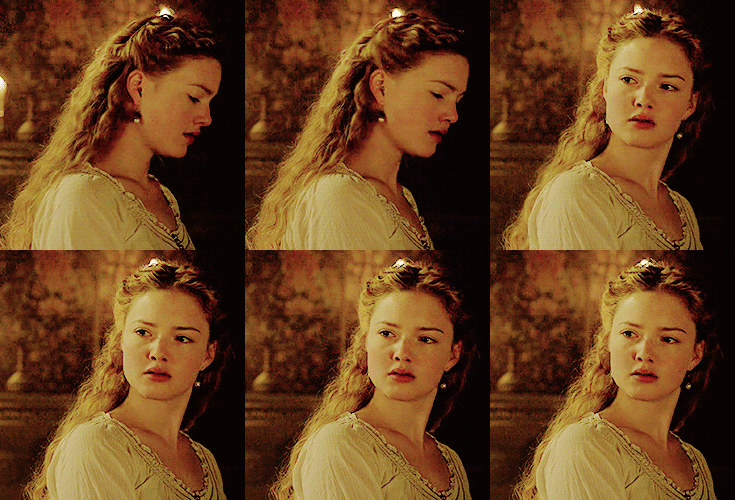
Ve Korsikt is a beautiful fusion of Raev and Hanseti fashions, with roots tracing back to the very conception of House Kortrevich, as seen in its ancestral homes of Haldor and Blackwood. In later years, the gown would more closely resemble a sarafan due to the influence of the Haeseni Queen, Emma of Jerovitz, who hailed from House Kortrevich. This rich historical background has allowed the garment to evolve over time, leading to shifts in the embroidery styles on the corset and the layering techniques of the skirts. Despite this evolution, the gown still holds a distinctive identity as a staple of Koravian culture.


AD_4nXeriTAkFs-9aqJgwwFo4sVybq4ayCVvawUewGfksT-NIi33AKQyVlO55KpfJhVKOTIzUSKvcHzboX-eCdVGM09LKlzd2E7qy_7ogQP_BxT1cJZNyor0XI0LqfsOIavQlZbAiUeEd6-cWTzO8wMm8UIz4i1-?key=zmVr46DRQDw5DHtBWJsifg

Queen Emma of Jerovitz


VE KRAWN I BLAUWMS

Alongside their distinctive attire, the women and girls of Krusev adorn themselves with flower crowns, a tradition deeply embedded in Koravian culture. Flowers have always held a significant place in their customs, particularly during the arrival of spring. Crocuses, snowdrops, and lily-of-the-valley flowers are most commonly collected and woven into crowns and wreaths.


In honor of Dame Primrose Kortrevich and the rose's tendency to bloom early in the spring, primroses symbolize grace, valor, and persistence; thus, primrose wreaths hold special significance for Kortrevich heirs. Following their debut, these wreaths are typically woven by their siblings as a gesture of devotion and respect during the first spring.


For weddings, a crown of white orchids and kaffir lilies is hung above the bride's head. The day after the wedding, the bride and her husband toss this crown into the hearth of their shared home for good luck.1


AD_4nXeZTD0NCdzl88MU_4cBTakFZxpqer6NzRA8mXRvmocXNG2kOLMXxJPyCT8oFvr9z7s3MOYYX0nhP0nMLnXIzwP272L8awge_a1LmnYVCbMYQwVArj6up0RaCKgQVAdCN7XZmMCv0yQOJxA7j-k_fRXuaDh1?key=zmVr46DRQDw5DHtBWJsifg


VE SOROCHKA

The traditional men's shirt, known as ve sorochka ("the shirt"), is a staple of Koravian fashion. These shirts are crafted from either linen or cotton, offering both comfort and durability. Ve sorochka is usually also adorned with beautiful embroidery, much like their feminine counterparts. These patterns are not just decorative but carry cultural significance, often reflecting local traditions and familial symbols.


A key component of the attire is the waist tie, which is most often crafted from finely tanned Koravian leather. In addition, this tie is embellished with brightly painted tassels, usually seen in shades of red, black, or yellow. The ensemble is completed with sturdy boots made from the same high-quality Koravian leather. Leather, in fact, is a predominant material in Koravian men's fashion.


AD_4nXePA1Jq0z-xfFJwfvoNkDj3pe6bPoX1wWQwa6bxt5RPJ3rZoy-Thl96oZi3-MQ0k91VFyOuR3ENz8S-SILb45MRqXoM98aCkL9eth_QFj5CasK0stB8DbNKEREluV-lFuSCQr-R1TDhb2gP31PcsP1FrIuI?key=zmVr46DRQDw5DHtBWJsifg


VE KAFTAN

For the colder seasons, the men don a kaftan, a piece of outer clothing that varies in length and fabric. These kaftans are typically made from leather or the skins and furs of animals native to the Haeseni region. The choice of material not only provides warmth but also pays homage to the region's rich natural resources. The kaftans are lined with soft furs for additional comfort and insulation, making them ideal for enduring the harsh winter months.


AD_4nXfCSoCUE18IOi6VsSoBvE9yAItK13ym5WBSr8QuRka9n1uRT4y7zgNJUMvgRxNLdPsPlpayZpYdEeELQzeZT1xvjs4A9GJgb8KvsiUyVLAenJsYWu1sW2JywXczRtxICblgabMSAs9u92IIvgCTy-DqFTU?key=zmVr46DRQDw5DHtBWJsifg


1] Fabian Otto Kortrevich, 469: The Flowers of Jerovitz [Link]


AD_4nXclZ3yIcBodXY5Gqp9oMVcULgVrPdgjKD5bE7qDTMC8_5m6h_CLiNjEH9dYGNhWxiYwIpjmKBdQx3PvL6kL5zgGdAuuw3wpivjrUTixsQfa_E57OC3IpBm8vpxydUOsRYDkKBHPg02xRSkewqbhY6apbZ1h?key=zmVr46DRQDw5DHtBWJsifg


⋅ ───────────────⊱༺III༻⊰─────────────── ⋅


AD_4nXdbqNhtpAgg9wGNRjP5e5mDt3Z1Z53xGAytYWPZ_vB9NHcJ5kdmc87srVHnzjNN_qt0OVF2lcp8WZHP5bqlTpLPRqx9GIsCubj7mNGdWb7UIYugdF8SKhadLjeVNO1KEBpBM8uckOoBceIsB3c2Nclr56F5?key=zmVr46DRQDw5DHtBWJsifg

-x-


HEADSTRONG

Koravians often take after their emblem, the Bull. They are steadfast in their beliefs and decisions, once they have made them, and can be difficult to dissuade. Whichever course they may choose for themselves - the military of yore, the knighthood of tradition, or the diplomacy and artisanry of recent years, a Koravian charges forth upon the path to which they are bound.


COMPASSIONATE

Perhaps a result of their common blooded roots, Kortreviches tend to be remarkably empathetic towards the commonfolk, affectionate with family (blood-related or chosen), and quick to make friends with Descendants of other races and nations. 


AD_4nXekAMeHKF3_tOTC_fCvfb-uJdoNtluHQjIdx-eJaz-lQyKpePxKoDUpREjHtIZe2GyUE_40tI9CDG3ore7EcCWDfHd-fqKZtLSKeWFmaa2HQ75vD6GHOqxar_kxPUI3swzonCAZy7JzUJUnsNcnD-1O8pS9?key=zmVr46DRQDw5DHtBWJsifg


NATURALISTIC 

As an agricultural seat, Kortreviches love hunting, and also enjoy animal husbandry, gardening, and otherwise connecting with nature. This has led Kortreviches past to forge unlikely alliances with Wood Elves and Orcish shamans alike, and Kortrevich women have proven particularly prone to leaving the noble life in favor of the untamed wilderness. Furthermore, furs are a staple of the Koravian wardrobe.


INDEPENDENT 

A history of dabbling in secret studies and unorthodox friendships has forged a culture of secrecy among the house, even from one another. Kortreviches can be wildly independent in their pursuit of duty, desperate to prove themselves in a family once stained by scandal -- or fiercely secretive, if in pursuit of something which conflicts with their familial obligations. 


AD_4nXfbiUPRVXfV9W7kVcVlFf-jaA31vmf3UsCJGxq206fzGh0bDlBYUfqroCprL_hkPHONQY8uVhThxg81E6K6kO5xAgQVAYwruKasKGlTo5PXaN70whklf16ilHJD7krgFexPzMqm_aCgqOiDjzYymAd5hErF?key=zmVr46DRQDw5DHtBWJsifg


ADVENTUROUS

Koravians possess a strong sense of adventure, often driven by a desire to explore and experience the unknown. Whether embarking on daring journeys, seeking new horizons, or undertaking bold endeavors, they embrace the thrill of discovery.


CHIVALROUS

Due to the long lineage of knights present in the Koravian line, a strong sense of chivalry permeates their values and actions. This tradition of knighthood instills a code of honor, bravery, and service within them. Many Kortreviches will even pursue the path of knighthood, embracing the ideals of protecting the weak, upholding justice, and exhibiting courtesy in all their endeavors.


AD_4nXfOb7g4LRdvGrrg5cnJyr-KqP7iOla2cx0lp8FPlz5XDMdPJOe9IFaqZpheyIQ8EFYrYE4p4-vF9t1GCsqhm9BHsNfBxQ11pimulzXPLlzM6QXoU3xmC_j6DyQN-uOG49y_hKPiXQCQuDM5R3MQtOvUu0Qj?key=zmVr46DRQDw5DHtBWJsifg


AD_4nXclZ3yIcBodXY5Gqp9oMVcULgVrPdgjKD5bE7qDTMC8_5m6h_CLiNjEH9dYGNhWxiYwIpjmKBdQx3PvL6kL5zgGdAuuw3wpivjrUTixsQfa_E57OC3IpBm8vpxydUOsRYDkKBHPg02xRSkewqbhY6apbZ1h?key=zmVr46DRQDw5DHtBWJsifg


⋅ ───────────────⊱༺IV༻⊰─────────────── ⋅


AD_4nXeMkqVX4Mxv2GPfiWCKxKVXpP0nXJpt8h-YuIZwPsbYWUNQGO0sRxbv411TBwG4q8JSBj_9jVuEQen7A_ldABcFSwf4a-4exbPbymtOyAaVcDKgjzIQbTuwNpC5kCuxjgim5jpu3WIw_kTboSWcMdLtWVo?key=zmVr46DRQDw5DHtBWJsifg

-x-


REARING OF THE BULL 

Upon their fifth birthday, Kortrevich children may, at any time, receive a calf to rear. This bond teaches them both the duty of servitude -- and the natural cycle of life, as they will, inevitably, outlive their bovine companion.


THE HEIR’S MANTLE 

Firstborn sons of the mainline have always carried the middle name Otto, after the first Lord Kortrevich. Firstborn daughters of the mainline carry the middle name Stefaniya, for the first Countess instated after the Karenina Accord.


AD_4nXfCDIp2wg-8C8KdjPwrwhUa-TDUyxQlgURZFxJfDVc5dO7f-epC_N3xGEmo4rN7cyEsuYDeNO8Y_fE1NcltKlFudcEF3dv1PRT7-pLQQop4k5ohHUXEYvbAzzSGMu1STBGM8Lf4gLBFZiuLgC8vdxl1rUL_?key=zmVr46DRQDw5DHtBWJsifg


KORAVIAN LEATHER 

First decreed by Countess Ileana Kortrevich. 

Koravian leather, named for the ancestry of the House, is the distinct leather worn by Kortreviches in boots, gloves, and belts, used in their crafts, and derived from the House’s own livestock. 


KEEPING THE HERD 

Kortreviches historically tend their own livestock, regardless of the other duties of their servantry and retainers. A connection to their cattle, particularly cows and bulls, is considered an essential skill to be a dutiful scion.


VE ASSERALA NUCHT

The Summer Night Celebration

Originating from the early Raev settlers and Koravian tribes who revered Asseran, the pagan god of the sun, The Summer Night (Ve Asserala Nucht) is a cherished tradition that has evolved over time. Initially a celebration dedicated to Asseran at the height of summer, it has transformed in the modern Koravian age into a festival that honors love, the Canonist faith, and the beauty of summertime.2


AD_4nXcwIWcmE5q0Hl8H2tpcNNi2X8MtWr1wfjhCSFqFn1cwvUvxpnSQ0SJQYK1Tc51zrUqzquYT0G1wTueQU8Cb-8Vrt62d5Gq00EGLIkpwZ314k5PbZDTq-6O1JgbzS02U27eNZas2RmPA1LCS1PT-IUyA9jQ?key=zmVr46DRQDw5DHtBWJsifg


The celebration includes several unique customs and rituals. Participants leap over bonfires to cleanse themselves and ward off evil spirits. Couples also partake in this ritual to test their relationships; a successful jump signifies a happy union, while a stumble is seen as a bad omen. 


Wreaths made from wildflowers and herbs significant to Koravians, such as snowdrops and crocuses, are worn. Unmarried women will throw these freshly made wreaths into the river, and the person who retrieves a wreath is believed to be the woman's destined partner for life. Fresh wreaths are also hung on doors after being blessed with prayers to ward off lingering spirits. 


At the conclusion of the celebration, Koravians gather around the bonfire and toast with finely carved bull's horns filled with Carrion Black, a traditional beverage beloved by the Koravian people.


VE ANDIYEK I BYKIN

The Birth of Bulls

In Koravian culture, the birth of a new child is celebrated with a deeply symbolic ceremony. This ancient tradition blends reverence for nature with the protective power of ancestral customs.


A central element of this tradition is the use of bull leather, which is prepared beforehand by the family. On the day of the ceremony, the bull leather is fashioned into a protective amulet, which is placed in the newborn’s crib or nearby. The bull leather amulet is passed through the flames, symbolizing purification and the removal of any negative influences. Afterward, the amulet is returned to the child’s crib, where it remains as a protective charm that the child will carry with them for life.


The ceremony concludes with a communal feast, wherein the family and guests share food and drink. During the feast, stories of ancestors and their blessings are recounted, reinforcing the connection between the newborn Kortrevich and their revered Koravian heritage.


VE SVYIEZ I BYKIN

The Bond of Bulls

In traditional Koravian courtship, the Bond of the Bull is a time-honored ritual that symbolizes the strength and commitment of a relationship. The ritual begins when a young man decides to formally court a young woman and seeks her family's blessing. The man prepares for the ceremony by crafting a decorative item from bull leather, often a belt or a finely carved pouch. 


AD_4nXfpslH2JVU7ePVxfqXSvozDLPnEYHusr-R_-WLidgIETkvnXH5pTAPZ1cWm1hJS3njwQKdOpYw22avqV3lM49ZUDjP1aUhNlaI2cCZnnx8virVeenAxzBSGM4o9uGxiXZpGWDAeLLPSUtYUkWf6ofBioxQ?key=zmVr46DRQDw5DHtBWJsifg


On the chosen day, the man presents this leather item to the woman in a formal gathering, which usually takes place in the presence of family and close friends. The presentation of the leather craft is accompanied by a declaration of his intentions with the young woman in question. 


To seal the bond, the woman accepts the gift and wears it as a symbol of their union. The leather is then blessed by a local priest.


VE RYIT I BYKIN

The Rite of Bulls

The Rite of the Bull is a significant Koravian tradition that celebrates the strength and vital role of bulls in Koravian life. This ritual is held annually during the early spring, marking the beginning of the farming season and the return of the herds to the pastures. The tradition involves bull herding, blessing ceremonies, and communal festivities.


On the day of the rite, herders gather their bulls at the edge of the village. The bulls are led in a grand procession through the village streets, accompanied by Koravian villagers playing their instruments. This procession leads to the chapel wherein a local priest conducts a blessing ceremony. The bulls are lined up, and the most senior Koravian present offers prayers to Godani and the saints for the continued prosperity of the herd. In addition, offerings of bread, salt, and water are placed on an altar within the chapel as tokens of gratitude and hope for a prosperous farming season.


At the conclusion of the ceremony, a communal feast is held. The meal includes dishes made from the season’s fresh produce, dairy products, and traditional Haeseni cuisine. Special treats, such as honey cakes and fruit preserves, are prepared for the children of the household. 


FORTUNE TELLING

Koravians have long cherished fortune-telling as a tradition, believing it to be a powerful way to gain insights into their lives. Among these traditions, one of the most beloved is celebrated during the peak of spring, a time when nature is in full bloom and the energy of renewal and growth is at its highest.


In the days leading up to the ceremony, villagers gather flowers from the nearby fields. The most commonly used flowers include camomile, crocuses, lily of the valley, snowdrops, and primroses, which all hold a particular significance to the Koravian people. Thereafter, the petals of each flower are collected and blessed by local priests prior to the ceremony.


AD_4nXcUIYofjiqLkxgcvPn6RZyIEQB_SgBFI6qZnhyz1uytwrOniKlT9JsEqnA_ENh60OiLEZIbsbzwhXih4XlNzZGmN56ANsqJDJeBivu1j7c-MKj2ZXklnZEYBrCknI_11RXpxPZ-vgHfa2ZOUCR84zDYkkE?key=zmVr46DRQDw5DHtBWJsifg


As dusk falls, Koravian villagers and lords alike will gather at a riverbank, where the water is clear and still. The designated priest will then lead a prayer, seeking guidance in the fortunes proffered by the petals. At the conclusion of the prayer, each participant takes a handful of petals from the baskets. They hold the petals close to their hearts, focusing on a specific question or desire. One by one, they toss the petals onto the surface of the water, watching how they float and interact. The designated fortune-teller will then interpret the patterns and movements of the petals. 


The following are some common interpretations:


I. FLOATING TOGETHER 

Petals that cluster together indicate strong bonds and harmonious relationships. If the petals of two different flowers (representing two people) float together, it is seen as a sign of a forthcoming union or a deepening of an existing relationship.

II. SPIRALING

Petals that spiral or move in circles suggest upcoming changes or cycles in the participant's life. This can indicate a period of personal growth or transformation.

III. STILLNESS

Petals that remain still on the water surface are interpreted as a sign of stability and peace. It suggests a period of calm and contentment.

IV. DRIFTING APART

Petals that drift away from each other symbolize separation or the need for independence. It can also indicate the resolution of a current conflict.

V. SINKING

Petals that sink quickly suggest challenges or obstacles ahead. The individual in question may need to prepare for difficulties but also recognize the opportunity to forge their inner resilience and strength.


2] Year and author unknown: Haeseni Mythologie [Link]


AD_4nXclZ3yIcBodXY5Gqp9oMVcULgVrPdgjKD5bE7qDTMC8_5m6h_CLiNjEH9dYGNhWxiYwIpjmKBdQx3PvL6kL5zgGdAuuw3wpivjrUTixsQfa_E57OC3IpBm8vpxydUOsRYDkKBHPg02xRSkewqbhY6apbZ1h?key=zmVr46DRQDw5DHtBWJsifg


⋅ ───────────────⊱༺V༻⊰─────────────── ⋅


AD_4nXeNG94OTlHGTH3sUDo7VtowwXZxyaC-9_HjZF1UTSVRTZET99M1J_gUIa9mcVwOXLpTk9kZUVUjJXxzf23hHNKMoRvqTpLgtkTodckWSUtPFA-xQjnVyp4yA0GOrbi43n8eqkFobpBwPJF3mySvoxITqrwV?key=zmVr46DRQDw5DHtBWJsifg

-x-


Language, like many aspects of Koravian heritage, has evolved significantly over time. In years past, particularly during periods of social engagement with the Elysian Auvergnian people, the Koravians would adopt elements from the Auvergnian dialect. Over the years of the House’s existence, however, Auvergnian influence in House Kortrevich dissipated; thus, Auvergnian elements would gradually fade from the culture. Despite this, remnants of the Auvergnian influence remain embedded in the language. 


During the reign of Ileana I, a significant period of linguistic fusion occurred. This blending of the New Marian dialect with the Auvergne dialect resulted in a distinctive linguistic development within Koravian culture. As a result, Northern Auvergne3 was born, and the result was a unique dialect that became characteristic of the House Kortrevich.


While Northern Auvergne is still preserved and utilized by distant Koravian lines, its use has become increasingly rare in everyday communication among the mainline Koravian population. The mainline Koravian speakers have thus adapted their language to include a blend of New Marian and Common phrases, much like their fellow Haensemen.4


COMMON PHRASES

Yes - Da

No - Nie

Not - Niet

You - Vy

Your - Vyr


Thank you, formal - Spasiba

Thank you, informal - Spasibo

Please - Balzym


Hello, formal - Prevja

Hello, informal - Eja

Goodbye, formal - Dravi

Goodbye, informal - Dravo


Spare me, God - Aide, Godani


3] Fabian Otto Kortrevich, year unknown: Northern Auvergnian [Link]

4] Fabian Otto Kortrevich, year unknown: Traveller’s Guide to Haeseni Conversation [Link]


AD_4nXewIeE-7HlS0c1_sOLpY9GDUB2YxmJhwPLJ_H6webkUQZPYmti_a4YhNeSAsY9_T8tOsyDOOP5OkzlG25vinDWq8JQAzz4bRGBjCH2MdBfGJ4NYZFRRtLt7nQlAoNohsmx_TuPzeTAtkhtye0SzmCoBIf6e?key=zmVr46DRQDw5DHtBWJsifg


AD_4nXcucWybzEUzsG_KI1PZMfQMiaeOK0r5ngrQJ2t40Z7QrdLUhE3dfuZ03-sWNlhYY6UHCwB0InHigR7VR86vxLaLC7ocvzInGkfNigGgMNP5X-jJqWQXbWoQTEsKYVvC_YwuPAH1lAc9Su7LxubNXfuPwwmm?key=zmVr46DRQDw5DHtBWJsifg

THE RIGHT HONORABLE, EMMA MARIYA KORTREVICH

Viscountess of Krusev, Baroness of Koravia, and Surgeon General of Hanseti-Ruska


HIS EXCELLENCY, ERIK OTTO KORTREIVCH

Lord Palatine of Hanseti-Ruska, Viscount of Krusev, and Baron of Koravia


With anecdotal writings and journal entries sourced from 

His Lordship, Fabian Otto Kortrevich.

Link to post
Share on other sites

 Share

  • Recently Browsing   0 members

    No registered users viewing this page.


×
×
  • Create New...