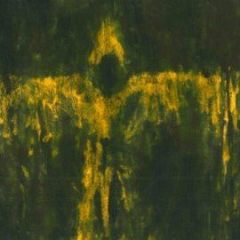
wardyn 159 Share Posted September 12, 2024 (edited) The Knowledge of Music Issued by On this 15th day of Wvyzar ag Byvca of 547 E.S. VA VE EDLERVIK, As culture and celebration grows to thrive within ve Nadziesk Kort, along with the recent unearthing of timeworn folk tradition, it is only fit for there to be a further exploration on the traditions of Haeseni folk music and the instruments that create it. Thus, in recent years, the Office of Cultural Arts has sought after these instruments which make up the familiar melodies that could as much be heard spilling out of any crowded tavern or street corner as they might be heard in weddings, funerals, or coronations, driving our hearts to rhythm and feet to dance. Music creates community within all branches and levels of our Kongzem, it draws the people together, and in hopes to spread knowledge to prospective musicians and further this sentiment, this compilation was created. ╠═════════════════════════════════════════════╣ VE ROGZHIVEL The Hornpipe Highlanders playing ve Rogzhivel. Ve Rogzhivel is the quintessential Haeseni folk instrument, found leading the melodies of many, many traditional Highlander tunes. It is a type of hornpipe known for its rich sound and sultry timbre, able to cut through any percussion or crowd with a full, colourful melody. Found in many shapes and sizes and heard in almost all ranges, this versatile instrument is composed of a pipe-like wooden body, with tone holes that one covers with their fingers to play notes. Typically affixed to the end of the pipe is the carved horn of a cattle animal, amplifying volume and grounding the instrument’s history in the Highland’s shepherding roots. A reed is nestled into the mouthpiece, creating ve Rogzhivel’s iconic tremulous sound. The instrument itself dates back to before the formation of Hanseti and Ruska, and has evolved from a traditional instrument of the native Highlander population to the many forms which we see today. It is said that the most common technique of playing ve Rogzhivel, called circular breathing, was a way to practice strengthening one’s lungs to survive the harsh, high altitudes and frigid thin air of the Highlands. ╠═════════════════════════════════════════════╣ VE LIRA The Violin Two Haeseni playing ve Lira together This instrument deemed ve Lira is constructed from a dried gourd or perhaps a piece of wood carved into a bowl-like shape. The neck varies in length and bow nocks rest between the three string which tunnel the chords. To change the pitch of ve Lira, one must press the base of their nail against the string and it will emit a higher tune. Ve Lira holds a deeply rooted connection to the Scyfling noble tradition, particularly through its association with the term Skaldr, which translates to "bard." In Scyfling culture, the Skaldr were revered poets, storytellers, and musicians, playing a vital role in preserving history, folklore, and the heroic deeds of their people. The Lira—a stringed instrument often used by these bards—became synonymous with the oral tradition of storytelling and song, making it an essential element of noble and cultural ceremonies. ╠═════════════════════════════════════════════╣ VE ULDSTAAL The Trumpet Haeseni playing ve Uldstaal The Uldstaal, or "loud steel," is a prestigious wind instrument known for its bold, metallic sound, created by pressing down metal valves to alter wind flow and produce different notes. It gained prominence in Raev military culture, used for announcements in battle and court, symbolizing nobility and power. Its origins likely trace back to the simpler hornpipe, which evolved over time into a more metallic form, reflecting advancements in metallurgy. Initially reserved for military and ceremonial use, the Uldstaal eventually trickled down into folk traditions. Skilled players were able to draw out melodic and expressive tunes, expanding its use beyond formal settings while maintaining its association with prestige. Today, the Uldstaal remains a symbol of both Raev cultural heritage and musical sophistication, blending its noble past with folk expression. ╠═════════════════════════════════════════════╣ VE STAALNOINLIRA The Steel Lap Guitar Depiction of ve Staalnoinlira The rather hefty instrument known as ve Staalnoinlira is an acoustic instrument similar to a zither or neckless guitar, played upon the lap or a table. Anywhere from 5 to 40 strings of gut or metal are stretched across the body, each tuned to and representing a different note. Though simple in inception, the Staalnoinlira has grown to be an incredibly complex instrument, with any number of tuning pegs, strings, and even fingerboards. Each Staalnoinlira is made with great care, often tailored to the player and passed down as heirloom. The instrument can often be seen painted with subtle, though carefully made illustrations depicting its local flora, and even representations of the instrument’s familial heritage. It is played in a variety of ways; one can pluck individual strings with multiple fingers, strum chords with the nail, or even– in later, steel-stringed iterations– strike individual strings with metal mallets to create a rather piercing resonant sound. Players also rap their knuckles against the body of the instrument as a sort of hollow percussion. The instrument can be played solely to accompany a song or hymn, or as a part of a full band. ╠═════════════════════════════════════════════╣ VE SUMKTRUBKA The Bagpipe Haeseni playing ve Sumktrubka Ve Sumktrubka is, most often, heard before it is seen. Though it has been found in varying forms across the Highlands, it is nowadays a distinctively Ayrian instrument, capable of volleying its sound across mountaintops. Historically a battlehorn, ve Sumktrubka’s piercing volume cuts through any encroaching crowd, and in wars past, Ayrians were known for bringing along a designated musician who would play their piercing instrument amidst battle, keeping morale and rhythm and striking fear into the opposition. Nowadays, ve Sumktrubka is seen just as often as a ceremonial instrument, used in announcements and openings of ceremony. Existing in many forms, the most common form of ve Sumktrubka is that of multiple reeded pipes (not dissimilar to ve Rogzhivel’s!) connecting to one main “lung” of animal skin, into which the player exhales air until it flows out through the pipes, creating music. There exist multiple drone pipes, through which uninterrupted airflow creates continuous chords, and one or two chanter pipes, which are played very similarly to a Rogzhivel, providing the instrument’s melody. Essentially, it is a one-man-band, as the Sumktrubka provides both melody and accompaniment, and with its powerful, singular presence, it is rare to find within a band. ╠═════════════════════════════════════════════╣ VE LAFZPIANKA The Accordion An archaic accordion or lafzpianka A more recent addition to the Haeseni musical scope, ve Lafzpianka, or “air piano”, culminated from a fortunate mishap. A clumsy smith's apprentice pierced a few holes in the forgeworker's bellows and attempted to cover them up. They soon discovered that the airflow of the bellows created very faint musical chords through these new valves, and that pressing down on some would create new notes. Thus, the Lafzpianka was born, and its surprising accessibility made it a staple of Haeseni commoner culture. Though initially of leather, commonplace Lafzpianki are now mostly crafted of paper, with a bellows-like lung that the player fills and compacts rhythmically. Some Lafzpianki are simply single chord drones, like ve Sumktrubka, and some have evolvolved with piano-like keys that the player presses down to create melody, and valve buttons that alter the chords. These instruments can vary in size from tiny handheld drones to large lap contraptions that often require a shoulder strap to hold. Ve Lafzpianka has become a staple of jaunty, melodic folk music, often found underlining rhythms of dance and joviality. GODANI JEST WIELKI, HER EXCELLENCY, Svetlana vas Ruthern-Colborn, Grand Lady of Hanseti-Ruska Royal Mistress of the Wardrobes THE HONOURABLE, Lady Gavrila Gianna Godunov, Baroness of Verskaya Cultural Arts Advisor of Haenseti-Ruska, Matriarch of House Godunov. Edited September 12, 2024 by wardyn 14 Link to post Share on other sites More sharing options...





.thumb.png.4e5370fc69f142d96a905e477cd5dd97.png)









Recommended Posts