


wealthypiano
-
Posts
421 -
Joined
-
Last visited
Content Type
Profiles
Personas
Wiki
Rules
War
Systems
Safety
Player Conduct
Roleplay Leadership Guidelines
- Roleplay Leadership Guidelines
- Roleplay Leadership Guidelines Comments
- Roleplay Leadership Guidelines Reviews
Forums
Everything posted by wealthypiano
-
ApplicationDiscord username: wealthypianoEver played a Discord/Forum rp before? YesFavorite Sci-fi book or story? Blade Runner / Do Androids Dream of Electric Sheep
-
Welcome to the Imperial World, a homebrew fantasy factions RP. The year is 1680. For the last several hundred years, the Calvum Empire has dominated the known world, taking fealty or conquering the entirety of the continent of the north, and briefly holding as much as half of the continent of the south. Now, as the age of sail and the spread of gunpowder weaponry have evened the field of battle and the wealth of the Empire has become tied up in maintaining its hold, many Imperial subjects have grown tired of brutal, often distant, rule, and bloody foreign wars. The Known World The Universalan Church, its blending of various human creation stories for the purpose of unity, and the Crownlander ethnic groups have long dominated the known world with the Empire. Recently, rumors of a "new" continent freshly found far over the seas to the west has sparked curiosity and intrigue of what lies beyond. The Southern continent and its deserts, grasslands, and many dry mountains have been dominated by the Kivan faith and their trust in a more local "demigod", Osher, who has now been dead for several hundred years. Though still, many local mages and alchemists claim to derive their power from Osher. Dwarves, Elves, Orcs, and various brutish and terrible creatures have been driven from the lands of men by virtually every Empire to come to be in this world. The world itself is still lacking many of its Counts, Dukes, Cities, and Kings, offering players the freedom to choose and design the region in which they play, though much of it is quickly being filled in. If you are interested in playing, add or message me on discord at wealthypiano#5651.
-
Start Date: December 1st, 2277 The Great War came to a screeching halt in the year 2077. Atomic weapons rained down on the Old World, destroying all that anyone ever knew. Two Hundred years later, a fractured America looks to one day rebuild. Late in the year 2277, America’s Old Capital, Washington, D.C, looks to finish a war before returning to what some may say resembles a pre-war nation-state—now including clean water. Philadelphia, Pittsburgh, and Boston remain locked in conflicts poised to be far more bloody and enduring. Excluding, of course, is New York City and the sea of radiation which now encompasses it. As the dust continues to settle following the first Battle for Hoover Dam, and purified water cleanses the Capitol, war remains just around the corner. In the Commonwealth, the Gunners and Minutemen settle along a frontline, marking what will likely be the bloodiest war in the Wasteland, for the time being. In the Capitol, the Enclave has fallen back to Adams Air Force Base and the coast. William Samuel Amos, the highest ranking Enclave officer remaining, has ordered all remaining soldiers to die before they surrender. Most oblige as they take up positions and provide cover for their roaming vertibirds. In the Chicago wastes, the reavers have launched a small guerrilla campaign against the Brotherhood, along with Paladin Lapam and his rogue Mutants. In Utah, the White Legs have closed off I-80 into New Canaan, beginning what looks like it may be a siege. Rumors say the Burned Man resides there, in his old home, ready to defend it. Caesar and his Legion bestow their wrath among many, though who exactly has not been clear. Most immediate neighbors are panicked, and maintain mobilized defense forces. The NCR contends with several tribes as they seek to colonize and control the New Vegas region; the Jackals, Vipers, and Great Khans. Rumors of NCR armor and rangers making their way for the raider tribes reveal that the odds may be overwhelming. The Midwestern United States are sparse, decentralized, dangerous, and lonely to many. Only one city stands tall: Chicago, home of the regional chapter of the Brotherhood of Steel. The Western United States has become dominated by tribal societies. Even Caesar’s Legion, a union of some 40-odd tribes conquered by the Mighty Caesar, maintains tribal divisions, tactics, but most particularly, a fierce brutality. Further North, the New Canaanites represent a religious and ancestral tradition unmatched by perhaps every single other tribe in the region. However, the Canaanites are stuck in fierce war with the White Legs tribe, severely limiting the moral and societal authority they could wield. The Southern Pecos Commune represents a new way of life, mostly rejecting the idea that they’re a nation-state, or even a tribe. However, their ideological revolution is severely threatened by the imposition of the Legion to the North. The Pacific West is overwhelmingly dominated by the New California Republic, a pseudo-democratic society. However, besides Caesar’s Legion, they’re also rivaled by high-tech societies in the Western Brotherhood, the Arroyo, and Shi. Conflict bubbles over control of the Hoover Dam and New Vegas, an oasis untouched by the bombs. OOC Section: 1. Virtually any faction you can think of is available to be played. While factions appearing in any of the Fallout games or DLCs are highly recommended, custom factions (along with the extra work necessary to play one) are available as well, given mod approval. 2. Supplies, manpower and other stats will all be available in a spreadsheet provided. 3. Mod has final say in all matters. 4. Both Meta and Power Gaming are of course banned. Application Discord name (or you can just add me: wealthypiano#5651): Desired faction:
-
 JUDICIAL REVIEW RESPONSE: DANGEROUS DRUGS ORDINANCE OF 1813 11th of Godfrey’s Triumph, 1815 THE CROWN, Represented by ELASAR ILLYID of THE MINISTRY OF JUSTICE, DESIRES TO RESPOND TO THE FOLLOWING JUDICIAL REVIEW; DANGEROUS DRUGS ORDINANCE OF 1813 Facts of the case and of relevant cases On the 5th of Godfrey’s Triumph, 1813, the Solicitor-General issued an ordinance dictating that dangerous, personality-altering drugs were to be considered contraband in accordance with 204.04 of the Orenian Revised Code. The ordinance was signed and approved by both His Excellency, the Solicitor-General, and His Imperial Excellency, the Archchancellor. The ordinance was met with some opposition, arguing that the edict was beyond the purview of executive actions and required legislation in the Diet. The Ministry of Justice spent time enforcing the Solicitor-General’s interpretation of the law, though in that time no cases were brought to trial, and not even a fine was issued. The interpretation itself primarily served a State interest in targeting organized crime and seedy vendors of unsavory goods. Mr. Puller and Mr. Turgon filed a request for the Court to review the Solicitor-General’s right to interpret law as part of his duties. The Court granted the request and began accepting Amicus briefs. In the case of THE CROWN v. VEIKKO HARJALAINEN, Mr. Harjalainen had defrauded, embezzled, and stolen 50,000 Marks from the State while in service of the Imperial Treasury. Harjalainen was charged with Fraud, Grand Theft, and Treason. The Circuit Court ruled that evidence proved Harjalainen had in fact committed this theft and stolen this incredibly serious amount worth 2,500 Marks today, and ruled guilty on the charges of theft of fraud. However, the Circuit Court also ruled that such significant theft from the State was not guilty on the charge of treason because the Circuit Justice was uncomfortable concluding such as it strayed from the specific text of treason, ORC 204.01. No appeal was filed due to practicality; Harjalainen had been banished from the Empire and the Ministry of Justice had accomplished its goal in the case. Issues Presented Is interpretation of the law part of the Solicitor-General’s authority? Yes. Was the dangerous drug ordinance a circumvention of legislature and judicial oversight? No. Was the Archchancellor’s signature a legitimization of the ordinance? No, the Archchancellor’s signature was not necessarily required. Arguments Is interpretation of the law part of the Solicitor-General’s authority? Yes, interpretation of the law is an inherent requirement of enforcing and upholding law. As soon as an agent of the State is given the authority to make arrests, they are also given the duty to interpret law and legal situations in order to do so. At its most minor, a Private of the Imperial State Army discovering a simple tavern fight must make a determination or interpretation of the infractions, compared with the law itself and seek out the execution of the law as necessary. Violation of the law may occur in such a situation, but in such a Private’s interpretation, it may not warrant charges or punishment. More relevant to the case at hand is the interpretation of law when prosecuting a case. The charge of treason in Harjalainen was itself an interpretation by the prosecution that significant theft and embezzlement from the state constituted treason. While the judge in that instance did not find the defendant guilty of treason, and we will later argue for the Court to reverse the precedent set by it, precedent was set that prosecuting law inherently requires interpretation of the law in establishing guilt of a given law. In that case, all parties involved were certainly aware that the crime was not in the specific text of treason, and yet the judge did not throw out the treason charge at the onset of trial, and certainly did not find the addition of the charge to have been an illegal action of the Ministry of Justice because it was not--it was a necessary and inherent function of prosecuting law. It is up to judges, appointed by the Crown and approved by the Commons, to make a final determination on the accuracy of the prosecution’s argument for their interpretation. We urge the Court to consider that interpreting law is an inherent task carried out when undertaking a proper and successful prosecution of crime. As the chief legal officer of the Empire, the Solicitor-General is the chief authority on these sorts of interpretations. Issuing the relevant ordinance was a fair and necessary notice to the Empire of how contraband, an ambiguous law, will be interpreted, with explicit approval of that interpretation from the Archchancellor. We motion the Court to instead consider further review of how ambiguous law can be prosecuted, rather than rule that the Ministry of Justice cannot prosecute beyond the specific text of the law as the Petitioners argue. We will expand on the argument that prosecution beyond the exact text of the law is a vital state interest in section IV. Was the dangerous drug ordinance a circumvention of legislature and judicial oversight? No, we urge the Court to consider that before finding a hypothetical defendant guilty of these contraband charges, such a charge must be firmly established in a court of law. The Commons had approved law creating a charge of contraband and had only established rudimentary definitions of contraband, without suggesting extent or limitations to the charge itself. By not creating a new criminal charge, the ordinance had hardly circumvented the legislature. The courts maintained an integral part of the system, directly and indirectly overseeing any potential contraband charges. The courts still maintain an integral part of the system; as we argue before the Court now, there is direct judicial oversight of the Solicitor-General’s interpretation of contraband. The argument required on this ordinance is whether the Court agrees with the Solicitor-General’s interpretation, not whether the Solicitor-General’s interpretation is legal; it most certainly is. Was the Archchancellor’s signature a legitimization of the ordinance? No, the Archchancellor’s signature was not necessarily required. The Archchancellor’s signature is not necessary on any other given prosecution of law. In this instance, it only offered a valuable approval notable to citizenry concerned about the ordinance, and wary of the Solicitor-General’s announced intention to prosecute an ambiguous portion of law that possessed a potential to affect a large portion of Orenians. Argument to reverse THE CROWN v. VEIKKO HARJALAINEN The Circuit Court very simply did not wish to make a decision potentially deemed “judicial activism” meant primarily for the Supreme Court when it found Mr. Harjalainen not guilty of treason. Furthermore, as already established, the Ministry of Justice did not appeal for the Court to consider this precedent for simple reasons of practicality. Instead, we now urge the Court to consider the circuit justice’s decision in that case and reverse it. It is imperative to legitimate state interests in prosecuting crime that crime may be prosecuted outside of the specific text of the law. The text of CH204.01, which Harjalainen had been charged with, includes “intent to compromise the integrity of the Crown and its constituent institutions by waging insurrection and seeking the destruction of the Imperial State by impugning the character and person of the Crown through subversive means such as collusion with enemy entities and actors against the State, this shall be the crime of treason.” The Ministry of Justice does not disagree that Harjalainen’s crime did not match the specific text listed here. However, the crimes absolutely compromised the integrity of the Crown and its treasury through subversive means, and only lists collusion with enemies of the state as one such example. It is clear that Mr. Harjalainen’s crime not only fit a significant portion of the specific text, but far more so the spirit and intent of this specific text. As the Court did well to note in Adler v. Non-Partisan Courts Act, “The creation of legislation is an act of compromise, a legislator works with other legislators to determine each and every word in a bill. The phrasing of bills often results from months of careful negotiation and painstaking discussions.” It is not infrequent that consideration of prosecution can indeed be forgotten as part of these negotiations and compromise, and further are written with a certain intent whilst the need for negotiation, timeliness, and generating consensus leaves out specific circumstances, regardless of how important they may be. This is how Mr. Harjlainen was able to avoid guilt of treason when he stole a grand sum from the state treasury. We urge the Court to overturn this textual approach to criminal law set in Harjalainen, and note, firstly, that crime may be committed outside of the specific text of law. Secondly, we urge the Court to consider a rule for how this interpretation and prosecution of crimes outside of specific text is to be conducted for the sake of clarifying the Petitioners' concerns. Conclusion We urge the Court to consider the following arguments raised by this brief: That the Dangerous Drugs Ordinance of 1813 was not an illegal circumvention, but a reasonable interpretation of law within the duty to uphold the law. That interpreting the law is an inherent duty in prosecuting the law, and that the Dangerous Drugs Ordinance of 1813 was a reasonable announcement of this interpretation and intent to enforce accordingly. That discussion of the Archchancellor’s role in this ordinance is irrelevant for the purpose of determining legality. That crimes may occur outside of the specific text of the law charted in a given text, and to overturn the precedent set by The Crown v. Harjlainen accordingly. That further hearing or review be conducted to determine how prosecution outside of the specific text of law ought to be conducted. YOURS HUMBLY, Inspector-General Elasar Ilyid on behalf of THE CROWN, MINISTRY OF JUSTICE, PROVIDENCE [[wealthypiano#5651]]
 -
REQUEST FOR JUDICIAL REVIEW JOSEPH D. ADLER As Represented by HIMSELF DESIRES TO SEE THE LEGAL CONTEXT OF THE FOLLOWING REVIEWED Section I Article I of the Non-Partisan Courts Act 1768: 'Court justices are hereby to be barred from running for or holding a seat within the House of Commons.' ON THE BASIS OF THE FOLLOWING PRINCIPLE(S), DOCTRINE(S), EDICT(S) OR ARTICLES OF LAW: 1. House of Commons elections are entirely under the purview of the Crown, notwithstanding power delegated to Civil Affairs by it, and therefore the House of Commons may not legislate regarding electoral processes or eligibility. Edict of Reform 1763: ‘The House of Commons, as the lower house of the Imperial Diet, shall be the chamber concerned with matters of active governance and shall sit when called to session by the Crown, through the expression of a national election, until such time as its dissolution by the Crown. It shall pass bills into acts by virtue of a simple majority. … The Crown, expressed in the person of His Imperial Majesty the Holy Orenian Emperor, is the linchpin of the reformed system. He shall call the Imperial Diet to session through a summons. In respect to the House of Commons, this is expressed through a national election.’ Ruling on the Request for Judicial Review: Election Cancellation and Ballot Nullification: 'It shall remain the right of the monarch, as denoted within the principles mentioned above, to rightfully summon, dissolve and cancel all forms of national elections...' Edict of Reform 1763: 'The Imperial Diet’s functions and legislation, as a whole, are prohibited from interaction with the following matters of state, which remain the exclusive purview of the Crown: ... The Crown, the succession, its authority, and the Imperial household.' It is the opinion of my party that the Edict of Reform and the interpretation by the Supreme Court thereof make it clear that elections, i.e the method by which the Diet is summoned by the Crown, are the sole prerogative of the Crown. Therefore, for the Diet to legislate regarding the manner by which elections may be run, which it has done by legislating eligibility for candidacy, is an attempt to limit the way the Crown may exercise its authority with regards to the summoning of the Diet. Per the Edict of Reform 1763, the Imperial Diet may not legislate regarding the Crown's authority, so it is the opinion of my party that their attempt to do so in barring the candidacies of justices was unlawful. 2. Elections are to be run by the Director of Civil Affairs, who is not responsible to them in the execution of his duties as Director. Therefore any legislation which attempts to compel him to run them in a certain manner is unlawful. Amendments to the Edict of Pompourelia, 1798: 'That the Director of the Department of Civil Affairs be appointed and dismissed solely at the prerogative of the Crown, subject to no confirmation or responsibility to the Imperial Diet, and be invested with tenure in their office.' The Director of Civil Affairs is not responsible to the Imperial Diet for the way in which he performs his duties, and it is the opinion of my party that this includes the manner in which he runs the elections. Therefore, in the opinion of my party, only the Crown may direct Civil Affairs in how it handles elections, and that any laws passed by the Diet seeking to do so are unconstitutional. 3. An unrestricted capability of the Diet to legislate who may be elected to it would place an undue burden on a citizen's right to vote. Orenian Revised Code: '301.041 - Citizens of the nation shall maintain the right to suffrage in national elections.' It is the opinion of my party that the right to vote not only grants the right to merely cast a ballot, but also to choose who to vote for. Obviously any legislation regarding candidate eligibility necessarily limits a citizen's right to choose who to vote for. Even if the Commons did have some authority to legislate on electoral processes, an assertion which my party contests, an unlimited capability to do so would allow them to limit a citizen's suffrage to such a degree as to render it non-existent, e.g if they passed an Act stating that only the twelve men named therein were eligible for candidacy. Therefore, even if the Commons did have some capability to legislate regarding these issues, there must be some constitutional limit on it to prevent an undue burden being placed on the right to vote. In which case, my party requests the Supreme Court clarify the limitations of this capability, and whether or not the article under review falls within them. My party seeks the offending article stricken from the law on the grounds of unconstitutionality. Furthermore, Mr. Adler would like to note that while this case has been deliberated upon by the Circuit Courts, the most recent ruling from the Court renders that ruling obsolete; Circuit Courts simply do not, and never should have had, the right of Judicial review. Additionally, Mr. Adler takes great issue with the crux of the prior ruling from the Circuit Court: that Imperial Assent serves as an adequate Constitutional check on legislation. This is not the case, and that ruling itself would have rendered the purpose of the Supreme Court nearly obsolete; if Imperial Assent implies inherent constitutionality then the Court would be entirely unable to make a ruling (whether that were to be on an appeal or a review) suggesting assented legislation is unconstitutional. If the Court is to rule in favor of upholding the Non-Partisan Courts act, then it cannot be on such a basis. YOURS HUMBLY, Joseph D. Adler
-
REQUEST FOR JUDICIAL REVIEW JOSEPH D. ADLER As Represented by HIMSELF DESIRES TO SEE THE LEGAL CONTEXT OF THE FOLLOWING REVIEWED Section I Article I of the Non-Partisan Courts Act 1768: 'Court justices are hereby to be barred from running for or holding a seat within the House of Commons.' ON THE BASIS OF THE FOLLOWING PRINCIPLE(S), DOCTRINE(S), EDICT(S) OR ARTICLES OF LAW: 1. House of Commons elections are entirely under the purview of the Crown, notwithstanding power delegated to Civil Affairs by it, and therefore the House of Commons may not legislate regarding electoral processes or eligibility. Edict of Reform 1763: ‘The House of Commons, as the lower house of the Imperial Diet, shall be the chamber concerned with matters of active governance and shall sit when called to session by the Crown, through the expression of a national election, until such time as its dissolution by the Crown. It shall pass bills into acts by virtue of a simple majority. … The Crown, expressed in the person of His Imperial Majesty the Holy Orenian Emperor, is the linchpin of the reformed system. He shall call the Imperial Diet to session through a summons. In respect to the House of Commons, this is expressed through a national election.’ Ruling on the Request for Judicial Review: Election Cancellation and Ballot Nullification: 'It shall remain the right of the monarch, as denoted within the principles mentioned above, to rightfully summon, dissolve and cancel all forms of national elections...' Edict of Reform 1763: 'The Imperial Diet’s functions and legislation, as a whole, are prohibited from interaction with the following matters of state, which remain the exclusive purview of the Crown: ... The Crown, the succession, its authority, and the Imperial household.' It is the opinion of my party that the Edict of Reform and the interpretation by the Supreme Court thereof make it clear that elections, i.e the method by which the Diet is summoned by the Crown, are the sole prerogative of the Crown. Therefore, for the Diet to legislate regarding the manner by which elections may be run, which it has done by legislating eligibility for candidacy, is an attempt to limit the way the Crown may exercise its authority with regards to the summoning of the Diet. Per the Edict of Reform 1763, the Imperial Diet may not legislate regarding the Crown's authority, so it is the opinion of my party that their attempt to do so in barring the candidacies of justices was unlawful. 2. Elections are to be run by the Director of Civil Affairs, who is not responsible to them in the execution of his duties as Director. Therefore any legislation which attempts to compel him to run them in a certain manner is unlawful. Amendments to the Edict of Pompourelia, 1798: 'That the Director of the Department of Civil Affairs be appointed and dismissed solely at the prerogative of the Crown, subject to no confirmation or responsibility to the Imperial Diet, and be invested with tenure in their office.' The Director of Civil Affairs is not responsible to the Imperial Diet for the way in which he performs his duties, and it is the opinion of my party that this includes the manner in which he runs the elections. Therefore, in the opinion of my party, only the Crown may direct Civil Affairs in how it handles elections, and that any laws passed by the Diet seeking to do so are unconstitutional. 3. An unrestricted capability of the Diet to legislate who may be elected to it would place an undue burden on a citizen's right to vote. Orenian Revised Code: '301.041 - Citizens of the nation shall maintain the right to suffrage in national elections.' It is the opinion of my party that the right to vote not only grants the right to merely cast a ballot, but also to choose who to vote for. Obviously any legislation regarding candidate eligibility necessarily limits a citizen's right to choose who to vote for. Even if the Commons did have some authority to legislate on electoral processes, an assertion which my party contests, an unlimited capability to do so would allow them to limit a citizen's suffrage to such a degree as to render it non-existent, e.g if they passed an Act stating that only the twelve men named therein were eligible for candidacy. Therefore, even if the Commons did have some capability to legislate regarding these issues, there must be some constitutional limit on it to prevent an undue burden being placed on the right to vote. In which case, my party requests the Supreme Court clarify the limitations of this capability, and whether or not the article under review falls within them. My party seeks the offending article stricken from the law on the grounds of unconstitutionality. YOURS HUMBLY, Joseph D. Adler
-
Candidacies for the House of Commons, 1794
wealthypiano replied to Office of the Registry's topic in Elections
SURNAME: Adler FIRST NAME: Joseph ADDRESS OF RESIDENCE: DATE OF BIRTH: 1722 Are you registered and eligible to vote in the Holy Orenian Empire? Yes. Do you have any other title, peerage or military service that may conflict with becoming a Member of the House of Commons, as per the Edict of Reform (1763)? Pending a resignation from the Supreme Court, no If yes, do you understand that you will be required to resign or abdicate from this position should you be elected to the House of Commons, and if this does not occur your seat shall be considered to be vacant?: Yes ((MC NAME)): wealthypiano -
Ruling on the Appeal in Crown v. Napier
wealthypiano replied to Thatpyrodude's topic in Rulings & Writs
Adler’s Assenting Opinion I’ve opted to pen this today, in full concurrence with the opinion penned by Justice Gray. However, I must restate two quarrels for the purpose of clarity and elevation. Firstly, to the House of Commons. A pork-barrel law, flashed through the Commons like cannon-shot, without proper consideration of the law in practice must now be considered and thusly allow a clear and dangerous criminal to go free. While it is no doubt, we could simply strike down parts of this law in order to serve a greater interest, we refuse to in order to maintain good, Republican process. Continue this course and I fear the Court would be forced into actions which would have to sacrifice this in order to protect Criminal Justice. You may see some further grievances in my complaint to the Solicitor-General below, but if you care not to read further, I beg of you to cease the useless pork barrel law and procedure forced upon our court systems. To the Solicitor-General: I may only hope you justify your Ministry’s surrender in this instance to a higher power than I. While it is true, Napier’s appeal was right in many instances, you had an opportunity yourself here to fight some of this pork-barrel procedure which so overly encumbers your DUTY to uphold the law. You opted not even to create a proper legal debate before the Court. One may have surrendered while maintaining some of your grip, some of your ability to properly manage justice in your jurisdiction, to bring justice unto an entire circle of fellows for whom neither you nor I should give an inch of our trust anymore. May God forgive you. -
THE RESPONSE OF THE SUPREME COURT As written by Chief Justice Adler "After careful consideration, the Supreme Court has decided to reject this motion outright, but offers a legal clarification on a variety of key-points presented before the Court in both the original motion and Commons' response. FIRSTLY, the Supreme Court makes very clear note to the House of Commons that motions to the presiding judiciary are a regular and necessary part of Orenian Legal Practice. Considering the flexible and broad usage of these motions in regular court proceedings, there is no required format, and few restrictions to how they can be used. We three Justices implore the Commons, or anyone seeking a career in law, to become familiar with these items. SECONDLY, that as stated in CH.602 the House of Commons has broad and clear right to issue a writ of impeachment. The Court states its concern over doing so without more detailed procedures, but notes the Commons remains well within this right. THIRDLY, that a Writ of Impeachment is simply that: an indictment of misconduct and a non-binding vote of no-confidence. It does not convict Mr. Galbraith, nor does it remove him from office, nor does it even offer a direct call to the Council of State to do such. LASTLY, in order to proceed to such a conviction of Mr. Galbraith, guidelines outlining such a conviction must be passed by the House of Commons and assented to by the Crown, as with any other piece of legislation.” J.D. Adler Chief Justice of the Supreme Court, on behalf of the Supreme Court ((wealthypiano#5651))
-
Justice J. Adler of the Circuit Courts will be hearing this case. The Justice asks letters be sent to his estate for setting a day in court. ((wealthypiano#5651))
-
Justice Joseph Adler announces he will be hearing the case on behalf of the Circuit Court.
-
15th Imperial Diet, House of Commons (1765)
wealthypiano replied to Office of the Registry's topic in Imperial Diet
Adler votes AYE on both counts. -
THE IMPERIAL CONSTABULARY EST. 1753 Justice, Integrity, Service The Imperial Constabulary is the arm of the Ministry of Justice, reaching into investigative affairs, prosecution, and even offering up public defenders when necessary. The Constabulary does not work into affairs of the Judiciary directly, only presenting cases before them, and only in the case of prosecution do they work into the affairs of the Solicitors. ROLES: SOLICITOR-GENERAL: The head of the Ministry of Justice. Even if not playing a direct day-to-day role in the Constabulary itself, he is its chief officer, staffing and supervising the affairs of the Ministry. INVESTIGATOR-GENERAL: The Solicitor’s deputy, he may often take a more direct role in the Constabulary and generally heads an investigation when the Solicitor-General is not present. SHERIFF: Very much the lieutenants of the entire Ministry. Sheriffs can lead entire offices, typically lead investigations, and ensure the proper training of the Ministry. CONSTABLE: The namesake of the department, Constables are tasked with both investigative work and handling some legal cases. The top men for handling law enforcement matters. SOLICITOR: Solicitors are state-appointed attorneys deputized by the Solicitor-General to prosecute Crown cases in a court of law, taking the majority of their workload in the circuits. While not explicitly members of the Constabulary, solicitors work directly with investigators in preparing a legal case. They are expected to have sharp legal minds in order to traverse the Courts. In addition, solicitors are at times allocated to legal defense for accused criminals. INVESTIGATOR: Junior law enforcement officials, they’re tasked with assisting investigations while receiving legal training. LAW-MEN: A variety of new hires, taking up work involving clerical matters, armed protection, and basic assistance. These boys-in-blue undergo training in combat, the law, and investigation. A Constable tends to an investigation THE COMMITTEE OF STATE SOLICITORS Solicitors, while not explicitly serving within the Constabulary, do serve the Ministry of Justice and form the backbone of Imperial efforts in court and in the workings of the law. Often these Solicitors require special interviews, appointments, and education. In order to receive a full appointment to the State Solicitors’ committee, applicants must conduct a complete project or study of Imperial Law. These can range from teaching legal courses to studying criminal statistics or philosophy. DUTIES “I do solemnly swear that I will ceaselessly uphold the laws, order, and peace of the Emperor. I do solemnly declare that I will faithfully and loyally carry out the responsibilities of the Ministry of Justice and its Constabulary. I do solemnly affirm that should I act with infidelity unto my Emperor or Ministry, or otherwise disgrace my uniform, then may God have mercy upon my soul.” -The Lawman’s oath The typical member of a Constabulary office can have a wide variety of duties, from clerical work in the intricacies of law and documentation, to investigating in the field, to undercover work amongst the worst the realm has to offer. Constables are encouraged to both follow the regulations and orders of its command, while also being able to think on their feet and direct an investigation on their own. TRAINING Constabulary officials are required to undergo an immense amount of training. Training may often depend on the expected assignment of the individual, but all are expected to undergo basic instruction in combat, law, politics, and investigation. The Inspector-General often oversees and develops Constabulary training as he sees fit. OFFICES: The Constabulary maintains a major office in Helena, as well as offices to oversee the Imperial territories of the North and Northeast, and a budding office in the province of Kaedrin. SALARIES Constabulary officials are properly compensated. In addition to yearly salaries, officials often receive bonuses and commissions for high-quality work and solved cases. Those interested in joining ought to seek out a member at its office at 8 Pontian Place. ((wealthypiano#5651))
-
[Bounty] Simo Mohammed - 800 Mina Reward
wealthypiano replied to LotsOfMuffins's topic in The Kingdom of Oren
A brief reply, along with a stamp are seemingly left in response. “The Ministry of Justice would like to note that citizens may not post their own individual bounties, particularly ones offering rewards for dead or alive. Please seek out a member of the Constabulary or Imperial State Army to see about a proper delivery of justice. Thank you.” Joseph D. Adler Solicitor-General ((wealthypiano#5651)) -
THE MINISTRY OF JUSTICE As issued the 16th of Harren’s Folly, 1763 As dictated by the Solicitor-General The Sheriff’s Department of the Northeastern Territories are seeking any information in regards to the disappearance of Sylvester Halcourt, previous Curonian Governor. He was last seen in Helena, during the court’s address to Curonian refugees. Any good information that leads to the finding of Sylvester Halcourt, will be paid for generously. Should you have information on Sylvester Halcourt and his whereabouts, please send a letter to Sheriff Hakon Erling ((Deadpaww#4381)). If unavailable or unwilling to send a letter, seek a member of the department at the Ministry of Justice in Helena. Joseph D. Adler Solicitor-General ((wealthypiano#5651))
-
SUBPOENA THE CROWN MINISTRY OF JUSTICE JOSEPH D. ADLER DESIRES TO SUMMON THE FOLLOWING PARTY BEFORE THE WESTERN CIRCUIT; ERIK OTHAMAN GODFRIC ALIMAR ON THE BASIS OF THE FOLLOWING PRINCIPLE(S), DOCTRINE(S), EDICT(S) OR ARTICLES OF LAW: 202.022 - Where an individual intentionally commits such an act of violence upon another which brings about their death, with no premeditation, this shall be a murder of the second degree. (Class V) The accused individuals found themselves in a situation in pursuit of a petty criminal. While in pursuit, the victim took an action which could be interpreted as aid to the criminal in his flight from the scene. The defendants, unable to pursue the criminal now on a horse, grabbed the victim, attempting to use them as leverage to ensure the fleeing criminal’s return. When these efforts failed, Mr. Othaman began violently dragging the victim towards New Reza, likely to be jailed. A Constabulary Sheriff objected to the violent manner of this as he reasonably felt it was cruel and unusual treatment. Mr. Othaman drew his sword, and impaled the victim through their side. An argument ensued, as well as an attempt by the Sheriff to free the victim from Mr. Othaman’s custody, ending in Mr. Alimar aiming a Crossbow at the Sheriff, defusing the situation before Mr. Alimar himself simply stepped forward, firing a bolt through the victim’s head. WITH THE PRESENCE OF THE FOLLOWING RELEVANT PARTY OR PARTIES: Joseph D. Adler, Solicitor-General Sheriff Hakon Erling, witness O. Silversteede, witness ON THE DESIRED DATE OF: ((To be arranged OOC)) YOURS HUMBLY, JOSEPH D. ADLER PONTIAN PLACE 8 wealthypiano#5651
-
Joseph Adler had of course caught news of the passing upon investigation. Seeing the grisly crime scene for himself, he’d struggled to feel anything. Perhaps he’d been in the business too long, seen a few too many scenes like it. In any case, he found himself pondering it for a long while, considering how to prosecute such a terrible act. This time, as a quiet nod to a former friend, foe, and associate.
-
THE MINISTRY OF JUSTICE As issued the 14th of the Owyn’s Flame, 1763 As dictated by the Solicitor-General IN CONNECTION with a recent murder, the Ministry of Justice seeks the apprehension of two individuals DEAD or ALIVE. Below, assistance from the Imperial State Army has provided sketches of the two individuals. INDIVIDUAL NUMBER ONE Donned in full armor and a great-helm, the Ministry knows little about this individual. Any information about this uniform, individual, or particular set of armor can be greatly rewarded. INDIVIDUAL NUMBER TWO Reportedly ginger hair, and facial hair as depicted, this individual was also donning some plate-mail, this time without a helm and successfully identified by a witness. Any information on this suspect can also be greatly rewarded. Both individuals are likely armed, and potentially trained. Approach with caution. The Ministry of Justice is offering a reward in an unspecified sum for their apprehension, once again, DEAD OR ALIVE. Bring these men, or their remains, to the Imperial State Army in Helena. GOD bless. Joseph D. Adler Solicitor-General ((wealthypiano#5651))
-
FALSTAFF v. ANDREW THE GRAVEDIGGER
wealthypiano replied to garentoft's topic in Suits, Appeals, & Requests
The Ministry of Justice endorses this subpoena as a criminal case.
-
THE MINISTRY OF JUSTICE As issued the 11th of the Tobias’ Bounty, 1761 As dictated by the Solicitor-General FOLLOWING the attempted assassination of His Majesty, Sigismund II, King of Hanseti-Ruska, the Ministry of Justice does wish to name suspects and place a bounty on their return to the City of Helena. A bounty of three-thousand marks is placed on the live return, each, of the goblins ‘Kub’ and ‘Gub’ to Helena and placed into the custody of the Ministry of Justice alongside the Imperial State Army. A bounty of one-thousand marks is placed on the return of the bodies of these goblins, pending confirmation of their identities. An additional penalty of five-hundred marks will be deducted if both goblins are returned dead. These green-skins are armed, dangerous, and almost certainly together. ‘Kub’ is known to wear a basket upon his head. Take extreme caution in bringing these beasts in for justice. GOD bless. Joseph D. Adler Solicitor-General ((wealthypiano#5651))
-
REQUEST FOR JUDICIAL REVIEW JOSEPH D. ADLER THE IMPERIAL CONSTABULARY, MINISTRY OF JUSTICE DESIRES TO SEE THE LEGAL CONTEXT OF THE FOLLOWING REVIEWED The legal status of: ‘Wonks’, ‘Wonkers’, ‘Frogmen’, ‘Froggers’, etc. All names denoting the recent appearance of giant frogs and toads across the Empire. ON THE BASIS OF THE FOLLOWING PRINCIPLE(S), DOCTRINE(S), EDICT(S) OR ARTICLES OF LAW: To determine the nature of these beings and their legal status in the Empire. As has been the primary practice in the last few months, these creatures have been required to have a guardian. This request is made on behalf of the Ministry of Justice as a whole so as to determine a. Whether this is the proper practice in handling these ‘wonkers’ going forward, and b. In practice, how is an unspoken-for ‘wonker’ to be treated? YOURS HUMBLY, JOSEPH D. ADLER Pontian Place 8, Helena
-
THE MINISTRY OF JUSTICE As issued the 13th of Sigismund's End, 1752 As dictated by the Solicitor-General FOLLOWING the gruesome murder of our Holy Pontiff, Pontian III, the Ministry of Justice does wish to name a suspect and place a bounty on his return to the City of Helena alive. A bounty of Ten-Thousand Livres is placed on the live return of Jasper Carrington to Helena and placed into the custody of the Ministry of Justice alongside the Imperial State Army. Jasper Carrington is likely armed, and potentially willing to fight. He is a veteran of the Imperial State Army, and has already escaped from incarceration once. GOD bless. Joseph D. Adler Solicitor-General ((wealthypiano#5651))
-
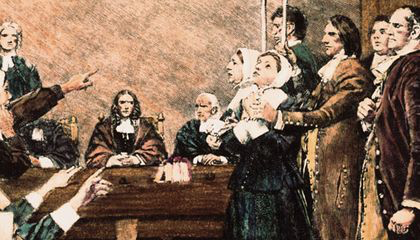
A SUMMARY OF EVENTS In the case of THE CROWN v. VYRONOV, 1746 CASE HEARD ON THE 1ST OF THE DEEP COLD, 1746 -The Trial began early in the morning on the 1st of the month in respect to harsh times traveling and a need for many to enjoy a swift return to their home province. The Honorable Tobias Merentel presided. -The Prosecution offered its opening arguments. In them, the charges of conspiracy and murder were cemented. Solicitor-General Joseph D. Adler asked to sentence the defense to a seizure of titles and assets on the count of conspiracy, and death by hanging in home province on the count of murder. -The Defense offered its opening rebuttal, cementing a ‘not guilty’ plea and maintaining Lord Robert’s innocence. -The prosecution called its first witness, the guard commander Malo, to the witness stand. Malo established the lacking evidence of the Vyronov family’s ‘Bandit’ story, as well as established a lack of reasoning for the Lord Karl to have traveled outside of the keep alone. -The defense cross-examined Malo, seeking to target the witness’ character as well as offered numerous alternative stories to the relationships amongst the Vyronov family. -The Prosecution called Investigator Joren Gant to the witness stand. Investigator Gant confirmed Malo’s testimony as well as entered the official investigation into evidence. -The defense and prosecution entered into an argument following a series of objections. A brief recess occurred as discussion occurred with the presiding Judge. The Solicitor-General stepped out for a moment. Fiske Petyr took the seat of the Prosecution for the remainder of trial. -The defense called Lord Robert Vyronov to the stand. -The prosecution cross-examined Lord Robert. -The Prosecution offered its closing arguments. -The Defense offered its closing rebuttal. -After some time of deliberation and review, The Honorable Tobias Merentel entered a verdict of ‘Guilty’ and followed the Ministry of Justice’s suggested sentencing. -Lord Robert Vyronov DID announce intent to appeal.
-
SUBPOENA THE CROWN OFFICE OF THE SOLICITOR-GENERAL JOSEPH D. ADLER DESIRES TO SUMMON THE FOLLOWING PARTY TO COURT; LORD ROBERT VYRONOV THE HOUSE OF VYRONOV ON THE BASIS OF THE FOLLOWING PRINCIPLE(S), DOCTRINE(S), EDICT(S) OR ARTICLES OF LAW: -Chapter I, Article II: Murder. -Chapter I, Article XIII: Committing Chapter I crime by way of proxy. -Chapter IV, Article II: Conspiracy to undermine state interests. Some time ago, Lord Karl Vyronov was murdered. Preliminary investigation by parties now considered Ministry of Justice Investigators has found the highly likely complicity of the Brothers Vyronov (the late Jan and Isaak, as well as Lord Robert). Lord Robert is therefore summoned for deposition and questioning by Imperial Ministry of Justice authorities and a subsequent trial. WITH THE PRESENCE OF THE FOLLOWING RELEVANT PARTY OR PARTIES: The Ministry of Justice seeks to maintain the anonymity of its witnesses at this time. ON THE DESIRED DATE OF: AT EARLIEST AVAILABILITY TO ARRIVE TO THE CITY OF HELENA ((Please add me on discord to discuss timing, wealthypiano#5651) YOURS HUMBLY, OFFICE OF THE SOLICITOR-GENERAL 2 ANPALAIS ROAD, HELENA ((wealthypiano#5651))

-
The Provisional Government of Sverige at Stockholm 1917- First came a declaration--one condemning the failures of the Swedish Crown to protect its own people in the face of protecting the Crown’s interest in the ongoing Great War. Then, the growth of the movement. As many of the people, particularly laborers and farmers in the South, who generally kept the Swedish economy afloat in this time of neutrality, began to finally feel it. Imports failed to flow inwards, and the Swedish economy didn’t have domestic capabilities to replace it. The entirety of the country became impoverished--besides, of course, the Monarchy and their closest allies. Gunnar Nykvist, a long argued defender of the people, and Swedish Chief of Navy, faced his removal and further conspiracy against him as tensions between the movement and the monarchy boiled early in 1917. However, he’d overplayed his hand. As Monarchist powers sought to eradicate him, it would put the Socialists in a tricky position: seize the opportunity, one which many movements in many countries might never have, or, pass on the chance, lose the widespread support of the entire Navy which they had then had, or ride it out with the political power gained until they could bide their time for a mutinous army in the face of starving families. But as the war ended, the Socialists had to seize the gap. The Navy began flying a new flag, workers got their rifles, and party members seized supplies, support, and the capital at Stockholm. Months would pass, and war would break out. Nykvist, now appointed Interim Secretary General, ordered his navy to blockade the Loyalist Forces, as he began to starve them out, using his control of the South and the Waterways. After a brief period of time stuck with a contested zone, rough borders, and questionable diplomacy, it seemed Nykvist finally had the government and military in the stable position he’d long known would be necessary for victory. Reaching this position of stability, several new policies developed: Men begin to entrench in their current positions. (Mod) A blockade of all goods entering Monarchist Sweden is enforced. This includes all Swedish ports, as well as Finnish roadways into Sweden in the South. Military goods stopped at the borders are seized. (Mod) Luxury, foreign goods swell into Sweden from Argentina and Mexico, along with food at levels not seen in years. The goods are quickly dispersed to the impoverished people and starving troops. (mod) A recruitment drive begins, and the Provisional government begins reorganizing citizenship in its territories. Military service is named mandatory for all citizens aged 18-24, with women serving non-combatant roles. (mod) A propoganda operation begins. All loyalists, particularly soldiers, are dropped fliers, offering clemency, food, and safety to surrender to the Socialists. Additionally, with total naval control, offers are made to workers and Socialist in the north that they will receive full support and several thousand soldiers, along with food and supplies, should any cities successfully rise up and flip to the Socialist cause. (mod). Operation: Swedish Fish commences (mod).
