.gif.0d47128eb9e8d30f77f07af642e3b16e.gif)
MCVDK
-
Posts
517 -
Joined
-
Last visited
Reputation
2830 Divine

ByUniBearse.thumb.png.8234e33e898ba9d456ed28aeb519c1d9.png)
.thumb.png.352eb4102ab2400157bbaaadb1645189.png)





About MCVDK

- Birthday 09/26/2003
Recent Profile Visitors
14485 profile views


.thumb.jpg.515cb8fe18c5ada45bff5cde0f2c2293.jpg)

-
YOUR SETTLEMENT APPLICATION IS UNDER REVIEW The Implementation Team has received your settlement application and placed it under review. A charter and treasury have been created for your settlement application with the following ID: maehrel. Please ensure that you comply with all requirements for a settlement through the in-game charter system. Please note that forum signatures are no longer counted toward the required numbers; players must sign in-game using the /charter sign maehrel command. For more information, please visit: https://www.lordofthecraft.net/systems/ under settlements. If you have any questions, please do not hesitate to reach out to a member of the Implementation Team.

-
Penned by Charles de Montmercy, on the 2nd of Horen's Calling, in the Year of Our Lord, 2074. To the studious mind, the history of the House de Bruges reveals itself not as a mere catalogue of persons and events, but as a continuous line of martial, ecclesial, and administrative bearing, reaching unbroken into the present age. The family, settled for generations within the heartlands of Druscan governance, demonstrates those enduring qualities by which nobility sustains itself: gravity of conduct, austerity of custom, and a persistent adherence to principle rather than to fashion. Their memory, though softened by time, yet endures in the chronicles and the chamber walls alike. Theirs is a legacy not of flamboyant ascendency, but of enduring duty. The records suggest a line more inclined to stewardship than spectacle, and to piety rather than pomp. This volume, compiled in faithful diligence, concerns itself with such matters as may illustrate the character and continuance of the House. The present subject must not be confined to one individual, however distinguished. For it is the House entire which is here examined: its forebears, whose service fortified the foundations of the realm, and its descendants, in whom such service may yet find renewal. The House of Ashford de Bruges traces its origins back to Prince Louis the Mad, second son of Prince Olivier the Restorer. Of his life, little is preserved with certainty, and what remains is drawn from chroniclers whose accounts are often at variance with one another. Some speak of a youth marked by splendour and refinement, befitting his station. Others recall a man given over to excess, whose vanity and erratic humours inclined him ever nearer to madness. In the most frequently recounted of these disturbances, and the last to be reliably set to record, the Prince is said to have seized a courtier and forced him beneath the waters of a garden pond, all while crying out prayers and fragments of sacred hymns. Not long after this episode, he withdrew from court, whether of his own will or by quiet compulsion is not agreed. He took up residence upon a modest demesne on the outskirts of Ulmsbottom, entered into contemporary ledgers as the Villa de Bruges, from which his line thereafter drew its name. From this seat arose one among several lesser Ashford houses established in Ulmsbottom. For generations, the House de Bruges remained of modest standing, its members employed as ministers, clerks, and burghers in service to the municipality, and thereby the wider apparatus of state. By the twentieth century, the House had attained a more settled place within the civic administration of Ulmsbottom, and with it a measure of quiet renown. This was sufficient to attract the attention of Robert of Ulmsbottom, a man of martial inclination and considerable ambition, who sought to extend his authority over the lesser Ashford lines. He demanded the submission of the House de Bruges, and they, lacking the strength to resist, rendered fealty. The accord was formalised by marriage, Robert taking to wife Jacquetta of Ulmsbottom, and thus joining the lines of Rouen and Bruges. In the years that followed, little is recorded of any close dealing between these houses, each attending chiefly to its own concerns. This quiet endured until the year 2033, when Roger de Rouen, having succeeded to his father’s station and established himself firmly in his rule, received a letter concerning his kinsman, Faustin the Elder. At that time, Faustin, then nearing his eighteenth year, had been dismissed from the seminary of Saint Judith of Czena. The causes of his expulsion are variously recorded, though there is agreement that he had engaged in the practice of private rites of uncertain orthodoxy, imposed unlawful penance upon his fellows, and disrupted the Feast of Saint Judith in a manner judged neither harmless nor reverent. He was thereafter escorted from the institution and conveyed by carriage to the lands of his kin. Being thus removed from the clerical life, Faustin turned his mind toward secular advancement. He entered the service of his cousin within the Palatium of Drusco, at first holding no greater station than that of a soldier in his retinue. Yet by a combination of evident ability and the advantage of his connections, he rose with uncommon speed. In time, he was elevated to the dignity of Palsgrave, and is recorded as the only man to have held that office under the newly styled Archduke. In this role, he concerned himself chiefly with the matters of council, contributing to the diplomatic course of his lord and attending to affairs of governance within the Archduchy. This period of advancement was brought to an end by the growing discord between the Archduchy of Drusco and vassals of the Imperial Coronet, which gave rise to the conflict known as Saint Lucien’s War. Though the war was declared concluded by Emperor Tiberias I, the Archduke Roger refused to submit, and so provoked the rebellion later called the Defiance of Drusco, or the Waldemer Uprising. The struggle that followed was severe. Though the Imperial forces prevailed at Waldemer, their victory was dearly bought, with some three thousand soldiers lost. It was remarked among them that for every Druscan slain, two of their own had fallen. In the aftermath, the lands of Drusco were subdued, and those who held office within its governance came under suspicion. Though Faustin the Elder had not taken a prominent part in the conflict itself, he was not spared from the general reproach that followed. It is also recorded that in these same years his disposition grew increasingly unsettled, his behaviour marked by a disorder of mind that drew unfavourable notice. In consequence, he withdrew from public life and returned with his household to Aeldin, the land of his family’s origin. There he established a modest mercantile enterprise upon a small farmstead, and passed the remainder of his years removed from the affairs of court. His son, Faustin the Younger, was raised in this quieter setting, and in due course took up his father’s trade. Upon the elder Faustin’s death, the son succeeded him in full, and strengthened his position by marriage to Lady Ermengard de Brionnes, a lady come from the continent some years prior. As unrest grew across Aeldin, the security of trade declined, and new measures became necessary. In response, there was formed the Bataillon de Bruges, a small company raised for the protection of merchant caravans. Though modest in size and loosely ordered, it came to serve as a practical arm of the House’s interests. Faustin the Younger assumed the rank of Capitaine, and the company employed chiefly in the escort of goods across uncertain territories. As conflict endures, commerce diminished, and the prospects of Aeldin grew increasingly uncertain. Trade, once the chief support of the House, could no longer be relied upon with the same constancy, and the conditions that had sustained their modest fortunes began to fail. In this decline, attention turned once more towards the Imperial Crownlands, where stability and opportunity were said to be more readily found, and where reports of newly opened territories promised the prospect of renewal. It was therefore resolved, not in haste but by gradual necessity, that the younger members of the House de Bruges should remove themselves from Aeldin and re-establish their fortunes abroad. In this present age, the young Faustin Guisbert renovates his dynasty with ambitions much larger than his predecessors. While maintaining their mercantile services, the founding of the Bataillon de Bruges partook under his design. While his sister, for her part, has made herself useful at court, where her tact and charm have proven no small asset. Bruges stands as its own House, apart of the Rouennais, made distinct by their zealous temperament and by the mark of their golden eyes and golden tresses, a likeness not found among the other branches of Ashford. The senior most dynast of the House Ashford de Bruges, holding authority over all its members, as well as full possession of all lands, titles, and rightful claims to the Eshæveurd House de Bruges. Born to Lord FAUSTIN EMILE ASHFORD DE BRUGES and Lady ERMENGARD ASHFORD DE BRIONNES in the year of Our Lord, 2057. Golden of Eye, Golden of Hair. The kinsmen who are of the Lord’s household, related to him either by blood or matrimony, who serve, counsel, and accompany him in all affairs, and who, by their nearness to his person, partake in the dignity, protection, and authority of the House Ashford de Bruges. Born to Lord LUCIEN ASHFORD DE BRIONNES and Lady MAUD EMMELINDE HELVETS in the year of Our Lord, 2038; wed to Lord FAUSTIN EMILE ASHFORD DE BRUGES in the year of Our Lord, 2056; mother of the Lord FAUSTIN GUISBERT ASHFORD DE BRUGES. Brown of Eye, Golden of Hair. Born to Lord FAUSTIN EMILE ASHFORD DE BRUGES and Lady ERMENGARDE ASHFORD DE BRUGES in the year of Our Lord, 2059; sister of the Lord FAUSTIN GUISBERT ASHFORD DE BRUGES. Golden of Eye, Golden of Hair. Those kinsmen, be they sibling, cousin, or more removed in blood, given in wedlock unto foreign lords and dignitaries, that the designs of the House of Ashford de Bruges might be advanced. JACQUETTA DE BRUGES Born to Lord ALFONS ASHFORD DE BRUGES and Lady OLIVE-VICTOIRE DIEUXMONT in the year of Our Lord, 1976; wed to Margrave ROBERT OF DRUSCO in the year of Our Lord, 2000; great-great-aunt of the Lord FAUSTIN GUISBERT ASHFORD DE BRUGES. Golden of Eye, Golden of Hair. ALIÉNOR DE BRUGES Born to Lord GAUTSELIN ASHFORD DE BRUGES and Lady JOHANNA PREUSSENS in the year of Our Lord, 2017; wed to Prince CAROLUS TIBER in the year of Our Lord, 2048; first cousin twice removed of the Lord FAUSTIN GUISBERT ASHFORD DE BRUGES. Golden of Eye, Golden of Hair. LECELINA DE BRUGES Born to Lord GAUTSELIN ASHFORD DE BRUGES and Lady JOHANNA PREUSSENS in the year of Our Lord, 2019; wed to Prince MAXIMILIAN OF AVAR in the year of Our Lord, 2045; first cousin twice removed of the Lord FAUSTIN GUISBERT ASHFORD DE BRUGES. Golden of Eye, Golden of Hair. GUILLEM DE BRUGES Born to Lord FAUSTIN ASHFORD DE BRUGES and Lady ADELAIDE HALCOURT in the year of Our Lord, 2040; uncle of the Lord FAUSTIN GUISBERT ASHFORD DE BRUGES. Golden of Eye, Golden of Hair. JEANNE DE BRUGES Born to Lord FAUSTIN ASHFORD DE BRUGES and Lady ADELAIDE HALCOURT in the year of Our Lord, 2042; aunt of the Lord FAUSTIN GUISBERT ASHFORD DE BRUGES. Golden of Eye, Golden of Hair. FERRAND DE BRUGES Born to Lord FAUSTIN ASHFORD DE BRUGES and Lady ADELAIDE HALCOURT in the year of Our Lord, 2042; uncle of the Lord FAUSTIN GUISBERT ASHFORD DE BRUGES. Golden of Eye, Golden of Hair. BEATRIZ DE BRUGES Born to Lord GUILLEM ASHFORD DE BRUGES in the year of Our Lord, 2059; cousin of the Lord FAUSTIN GUISBERT ASHFORD DE BRUGES. Golden of Eye, Golden of Hair. To the undiscerning eye, the House de Bruges is like to appear the very picture of Savoyard nobility; yet to those of sharper discernment, their fashions and bearing are found more akin to the settlers of Hanestian Ulmsbottom as compared to their more Auvergnian-esque forebearers of Savoie, or their more Peremonti cousins of Bar. This likeness, most assuredly, is owed to their settling in Aeldin, where their blood and name have endured a great many generations. Oft, those of the House de Bruges are named in the Savoyard fashion, if even bearing names possessing inflections nearer the Auvergnian tongue. Their dialect similarly carries discernible traces of the classic Savoyard tongue, albeit inflected further by the sharper and more nasal articulations peculiar to the inhabitants of Ulmsbottom. In its cadence and pronunciation there remains something of the older courtly speech, though softened in places and made uneven by local usage, so that it is at once familiar to the Savoyard ear and yet marked as provincial. Certain turns of phrase, long fallen out of favour elsewhere, are retained among them, while others have been altered in form or meaning through common speech, lending their manner of speaking a character both antiquated and distinct. Their attire, in form, adheres generally to the prevailing Savoyard fashions, following the broader customs of cut and presentation observed across the region. What little there is that distinguishes the lords and ladies of Bruges in this regard is a marked preference for modesty and restraint. In matters of disposition, those of the House de Bruges are notably set apart from their cousins, not by fashion or bearing alone, but by a fervour of spirit most uncommon. Their zeal, which neither wanes with time nor yields with counsel, is of such an intensity as to approach the utmost bounds of piety and at times may even be thought to pass beyond them. By this temper are they marked apart from the rest of the Savoyard nobility, even those of their own Ashford dynasty. This devotion is not confined solely to words of prayer alone, though it remains naturally an exceedingly common expression of zeal within their household. Rather, their devotion is expressed through the wounds and bruises of self-flagellation, the hungers wrought through prolonged fasting, and the various acts of mortification through which they subject themselves for the purity of the soul. Though the House de Bruges stands yet among the younger lines of Ashford, and may not be reckoned alongside those elder houses whose branches have endured across many centuries, it is not without its own established customs and usages. For although but a few generations have passed since the time of Prince Louis the Mad, certain manners and traditions, particular to their blood, have already taken root and are observed among them with some constancy. Lost upon much of the nobility of this newer age, the House de Bruges holds still to the ancient custom of alliances by matrimony. To wed for the fleeting vanity of love is a conceit unknown to their kith. Thus are the sons and daughters of Bruges wed for the profit of the House, not the pleasure of the heart. Furthermore, those wed into their household are sought chiefly from Savoyard stock, or peoples akin thereto, such as Auvergnian or Illatian. Strangers of other kindreds are baptised into the Lucienist faith, and dressed in the names and garb of a Savoyard, that they may be made one with the House and fashioned after its custom. In the ordering of succession, the House de Bruges follows for the most part the common law of primogeniture, as is practiced by all Ashford Houses. Yet in certain points their custom inclines towards gavelkind, for while the firstborn son, as heir apparent, claims the greater proportion of his father’s estate, it is the right of the younger sons to receive some lesser share, be it in coin, possessions, or estate. Daughters are altogether barred from inheritance of title or estate, but are allowed the right to certain properties should the Lord Patriarch will it. Further, in those rare unions where the line is not continued through the male, a daughter may bear the arms of Bruges in part, dimidiated or quartered with those of her consort. It is the custom of the House de Bruges that the firstborn male heir shall bear the very name of his father, and in like manner each successor in the direct line is so named. By this practice, the name itself serves as a mark of continuance, passing unaltered from one generation to the next, and standing as a sign of descent and right. For the avoidance of confusion within the affairs of the House, it is permitted that such an heir take a second given name, set after the first. This addition is not held to diminish the hereditary name, but rather to distinguish the individual from his forebear, while preserving the succession entire. Outside of this custom, it is not the manner of those of Bruges blood to bear more than a single given name, such excess being accounted unnecessary. Among the House de Bruges, it is held that the blood of their line is of uncommon strength, prevailing above all lesser strains. By long tradition, they are said to have been blessed by God with the aspect of sunlight, and are thus marked by hair of gold and eyes of the same. These signs are not taken for mere ornament, but as the outward token of the true line. For this cause, any born of Bruges blood who does not bear these marks is held to lack the full measure of that inheritance. Though such a one may retain the name of de Bruges, it is accounted that the line in them is diminished, and not carried in its purest form. Accordingly, any child fathered by a male of the House who is not possessed of this solar aspect is set aside from the order of succession, the blood being judged as mingled with foreign influence. MALE NAMES Aimeric, Antoine, Alfons, Arnaut, Amalric; Bernart, Bertran, Baudoïs, Bonifaci; Clamenç, Constans, Chabert; Enric, Edgar; Faustin, Ferrand, Fèlix, Frédèric; Gautselin, Guisbert, Guillém, Gausfred, Gaston, Guiraut, Guilhem; Jaques, Jaufré, Jean; Olivier, Orland, Odò; Pierre, Pons. FEMALE NAMES Adelais, Agnes, Aliénor; Beatriz, Blanca, Bertrada; Clemença, Constança; Ermengarda; Faustina, Francesia; Garsenda, Guillemetta; Isabela; Jacquetta, Jeanne; Lecelina; Margarida, Melisende; Roselinde; Sança.
















-
THE LION’S DEN. ________________________________________________ ℑn the waning breath of an age not yet lost, but already slipping from the grasp of those who still named it their own, there came a trembling upon the wind. It did not move as it once had, nor did it carry the gentle cadence of passing seasons. It shuddered, as though burdened by a knowledge too great to bear. And the forests, ancient keepers of silence, stirred uneasily beneath it. Their leaves did not rustle in idle song, but recoiled, as though listening. As though remembering. What followed was no mere sound, but something deeper, older. The whisper of the world gave way to a low and distant roar, vast in its reach and immeasurable in its origin. It was not heard by all, yet it felt by many, settling into the bones of those who lingered too long in stillness. It was then that the elders, those few who still carried the burden of memory, spoke in hushed and uncertain tones. They named it the nearing of the age of lost men. An age not yet fully come, yet no longer distant. An age where balance did not shatter, but faded, quietly and without protest. Where the old harmonies, once unquestioned, began to falter beneath the weight of something unseen. Men would walk still, and speak, and build, yet within them would grow a hollowing, a quiet absence where purpose had once resided. It would not be declared, nor would it be understood, but it would be lived. And in that hollowing, something would answer. Not called, yet not unbidden. There were those who spoke, cautiously, of what approached. Not as one speaks of a king, nor a god, but as one recalls a storm seen once before, long ago, and barely survived. Some named it a savior, though the word faltered upon their tongues. For this would not be a deliverer of mercy, nor a bearer of gentle restoration. It would be something of might. Something that did not seek balance, but embodied a force beyond it. Strength given form, not to mend the world, but to test its worth. It was said that its coming would not be marked by fire nor by herald, but by a stillness. A subtle pause within the world, as though time itself hesitated. The earth would not cry out, nor would the skies break. Instead, all things would seem to hold their breath, caught in the quiet recognition that something had crossed into being. For the truth, though seldom spoken, lingered beneath all else. It was not that something would come into the world. It was that the world, in its blindness and in its longing, had already begun to cross into it. And as the wind continued to tremble, and the forests listened in growing silence, there remained a final knowing, passed only between those who dared to understand. The threshold had already been approached. And soon, without proclamation or warning, the world would find itself standing within the lion's den. ________________________________________________

-
[!] THE CONTENTS OF THIS LETTER ARE CONFIDENTIAL AND INTENDED SOLELY FOR THE RECIPIENT (@Nectorist) AND ANY PARTIES EXPRESSLY SHOWN IN ROLEPLAY [!] LETTER ADDRESSED TO HIS HOLINESS, CAIUS SECUNDUS. To His Holiness, Caius the Second, Vicar of God and Servant of the Scrolls, Holy Father, Permit me first to offer my sincere and filial congratulation upon your election. I write to you private and directly, not as a public disputant nor as a voice among many, but as a priest who desires the steadiness of the Church and the right ordering of her governance. Your elevation by the Priestly Synod bears significance beyond the filling of a vacancy. It signals a deliberate return to ordered principle at a moment when such return was necessary. In my earlier writing concerning the Rite of Universality and the order of the Church, I argued that in times of necessity the Synod must act, for the authority of priests gathered in common is not novelty but natural ordinance. I wrote then that the Synod holds authority in such moments, and that without recourse to Canon Law the Church must return to the law laid out by God himself in natural ordinance, wherein all ordained priests hold equal voice and duty in electing rightful leadership. Your election has embodied that conviction. Authority was not imposed; it was discerned. You were not installed by pressure, but received through deliberation. That distinction matters deeply for the conscience of the Church. Yet, Holy Father, I must also confess that the very principles I once articulated now stand before you as caution. When I wrote that the Scrolls alone are the measure of the Church’s governance and that all other decrees are secondary, I intended to defend the Church against corruption and deviation. Those words must now be applied not against others but inwardly, to every office including the highest. The Pontificate must remain transparently measured by the Scrolls, lest the defence of order become indistinguishable from the consolidation of control. The Scroll of Spirit reminds us of the source of all authority in language that no ruler can safely ignore: “God is able to do all things. For His power is not parted among his many servants, but imitated, and in His multitude of ways, He is above them all” (Spirit 5:18–19). If power is imitated and not possessed, then the Pontificate must constantly guard against mistaking participation for ownership. The same epistle asks, “What breath among all heavens is so sacred?” and answers, “There is none truly alike to Him” (Spirit 5:6–7). Those words, once written as theological affirmation, become in governance a safeguard against subtle absolutism. In the Declarations I warned that the Church must resist the temptation to act as a temporal empire. That warning was not directed toward a single era or person. It was written because the temptation is perennial. The more fragile the world becomes, the more attractive imperial stability appears. Yet the shepherd governs differently from the prince. If ecclesial authority adopts the reflexes of political dominion, it will preserve structure at the cost of spirit. Likewise, I wrote that clerical offices exist as burdens rather than honors. Those words were not meant as rhetoric. They were meant as discipline. The Pontificate must remain conscious of its weight. When office becomes ornament, its spiritual gravity diminishes. When it is borne as burden, its authority deepens. Even humility must be vigilantly guarded. The Scroll of Virtue declares, “You shall not judge your own virtue, be it great or small, for all fall short of Me.” (Virtue 7:8). I cited that line often in critique of complacency amongst clergy. It applies equally to the Pontiff and to the theologian who writes to him. Self-assurance in governance can slowly transform into self-justification. Once justification replaces examination, insulation follows. When I urged that Canonists must learn the Scrolls themselves, I intended to strengthen the Church through disciplined understanding. That principle must remain active. A Pontificate that welcomes ordered thought and theological inquiry strengthens its own foundations. Authority that suppresses scrutiny will gradually hollow itself. I also wrote that suffering endured for the sake of Virtue is a sign of grace and not abandonment. If resistance arises as you restore order, it may well confirm rather than contradict the necessity of that work. Reform that costs nothing often changes nothing. Holy Father, I write these things not to burden you unnecessarily, but because the principles I once set to parchment now stand as measures by which your governance and mine must be tested. The election by Synod has restored visible order. That restoration must now be preserved by humility, restraint, and unwavering submission to the Scrolls. Be assured of my prayers, and of my loyalty to the Church whose unity you now guard. May your office reflect the Breath rather than presume it, and may the principles we have defended in writing be sustained in practice. In steady hope and obedience to His Word, Father Lüdiger.
-
.thumb.gif.5ceba2d01f50d0d25c87532ab910c11a.gif) PASTORAL LETTER ADDRESSED TO HIS IMPERIAL MAJESTY, HADRIAN: CONCERNING THE INTEGRITY OF ECCLESIAL AUTHORITY AND THE RIGHTFUL ELECTION OF THE PONTIFICAL SEAT To His Imperial Majesty, Hadrian (@Werew0lf), I write with due reverence to your office and with sober regard for the vigor of your cause. Much of what you have spoken bears the mark of earnest intention, and several of your conclusions are not without warrant. For this reason, I have not answered hastily, but have taken deliberate time to examine both your words and my own, withdrawn from counsel and court alike, committed instead to the stillness of monastic confinement, wherein thought is disciplined by silence rather than urgency. It is from this posture that I now speak, for Canonist doctrine cautions that error most often enters not by open rebellion but by slight misalignment, wherein zeal outruns order. A narrow deviation, if uncorrected, may yet unfold into grave consequence in the days soon to come. You have declared plainly that the Pontifex is dead. On this matter, I raise no objection. You have further declared that you, together with His Majesty of Idunia, have named a successor to the Pontifical office. It is here, only here, that conscience obliges me to speak with caution, and with concern. The Canonist tradition has long maintained that Crown and Church, though ordered toward the same divine telos, are not identical in authority. They are likened by the Doctors to two faces of a single seal: inseparable in purpose, yet distinct in impression. The Crown governs the temporal estate by mandate of order; the Church guards the spiritual estate by mandate of revelation. When either assumes the proper charge of the other, the harmony of governance is strained, even where intention is sincere. For this reason, it troubles me, to a degree I did not anticipate, that the Crown should act directly in the selection of the Pontifex on behalf of the Church. However worthy the candidate, however dire the necessity, such an act risks obscuring the boundary that divine will and natural law alike have set in place. I do not presume that Their Majesties will grant weight to the counsel of one long withdrawn from public deliberation, a near-hermit bound to monastic rule. Yet fidelity to the Word compels me to speak nonetheless, for silence in such a matter would itself constitute a failure of duty. Accordingly, I submit, not as command, but as counsel, the course that accords most closely with the received order of the Church: let the Church be the Church. Permit her to act according to her own constitution, and to name her shepherd by the authority entrusted to her. Let it be done as it was done before the hardening of Canon Law, in the era of natural ordinance. As articulated in The Universal Pastoral Letter in Seventy Declarations: 1. that “the Synod of priests holds authority in times of necessity; this is a holy custom ordained by natural law and divine will” (Declaration 17); and 2. that “without Canon Law, the Church must return to the law laid out by God Himself in natural ordinance, wherein all ordained priests hold equal voice and duty in electing rightful leadership” (Declaration 18). These declarations do not diminish the dignity of the Crown, but preserve it, by preventing it from bearing a burden not allotted to it by God. For offices are not interchangeable, and authority, when exercised beyond its proper scope, ceases to be strength and becomes strain. I pray, therefore, that wisdom, not haste, prevails; that God, whose will orders both throne and altar, may yet guide us toward the strengthening rather than the narrowing of His Church. May the turbulence and bitterness of recent times yield to reverence, lawful order, and peace, and may each estate remain faithful to the charge entrusted to it. In obedience to His Word, Father Lüdiger.
PASTORAL LETTER ADDRESSED TO HIS IMPERIAL MAJESTY, HADRIAN: CONCERNING THE INTEGRITY OF ECCLESIAL AUTHORITY AND THE RIGHTFUL ELECTION OF THE PONTIFICAL SEAT To His Imperial Majesty, Hadrian (@Werew0lf), I write with due reverence to your office and with sober regard for the vigor of your cause. Much of what you have spoken bears the mark of earnest intention, and several of your conclusions are not without warrant. For this reason, I have not answered hastily, but have taken deliberate time to examine both your words and my own, withdrawn from counsel and court alike, committed instead to the stillness of monastic confinement, wherein thought is disciplined by silence rather than urgency. It is from this posture that I now speak, for Canonist doctrine cautions that error most often enters not by open rebellion but by slight misalignment, wherein zeal outruns order. A narrow deviation, if uncorrected, may yet unfold into grave consequence in the days soon to come. You have declared plainly that the Pontifex is dead. On this matter, I raise no objection. You have further declared that you, together with His Majesty of Idunia, have named a successor to the Pontifical office. It is here, only here, that conscience obliges me to speak with caution, and with concern. The Canonist tradition has long maintained that Crown and Church, though ordered toward the same divine telos, are not identical in authority. They are likened by the Doctors to two faces of a single seal: inseparable in purpose, yet distinct in impression. The Crown governs the temporal estate by mandate of order; the Church guards the spiritual estate by mandate of revelation. When either assumes the proper charge of the other, the harmony of governance is strained, even where intention is sincere. For this reason, it troubles me, to a degree I did not anticipate, that the Crown should act directly in the selection of the Pontifex on behalf of the Church. However worthy the candidate, however dire the necessity, such an act risks obscuring the boundary that divine will and natural law alike have set in place. I do not presume that Their Majesties will grant weight to the counsel of one long withdrawn from public deliberation, a near-hermit bound to monastic rule. Yet fidelity to the Word compels me to speak nonetheless, for silence in such a matter would itself constitute a failure of duty. Accordingly, I submit, not as command, but as counsel, the course that accords most closely with the received order of the Church: let the Church be the Church. Permit her to act according to her own constitution, and to name her shepherd by the authority entrusted to her. Let it be done as it was done before the hardening of Canon Law, in the era of natural ordinance. As articulated in The Universal Pastoral Letter in Seventy Declarations: 1. that “the Synod of priests holds authority in times of necessity; this is a holy custom ordained by natural law and divine will” (Declaration 17); and 2. that “without Canon Law, the Church must return to the law laid out by God Himself in natural ordinance, wherein all ordained priests hold equal voice and duty in electing rightful leadership” (Declaration 18). These declarations do not diminish the dignity of the Crown, but preserve it, by preventing it from bearing a burden not allotted to it by God. For offices are not interchangeable, and authority, when exercised beyond its proper scope, ceases to be strength and becomes strain. I pray, therefore, that wisdom, not haste, prevails; that God, whose will orders both throne and altar, may yet guide us toward the strengthening rather than the narrowing of His Church. May the turbulence and bitterness of recent times yield to reverence, lawful order, and peace, and may each estate remain faithful to the charge entrusted to it. In obedience to His Word, Father Lüdiger. -
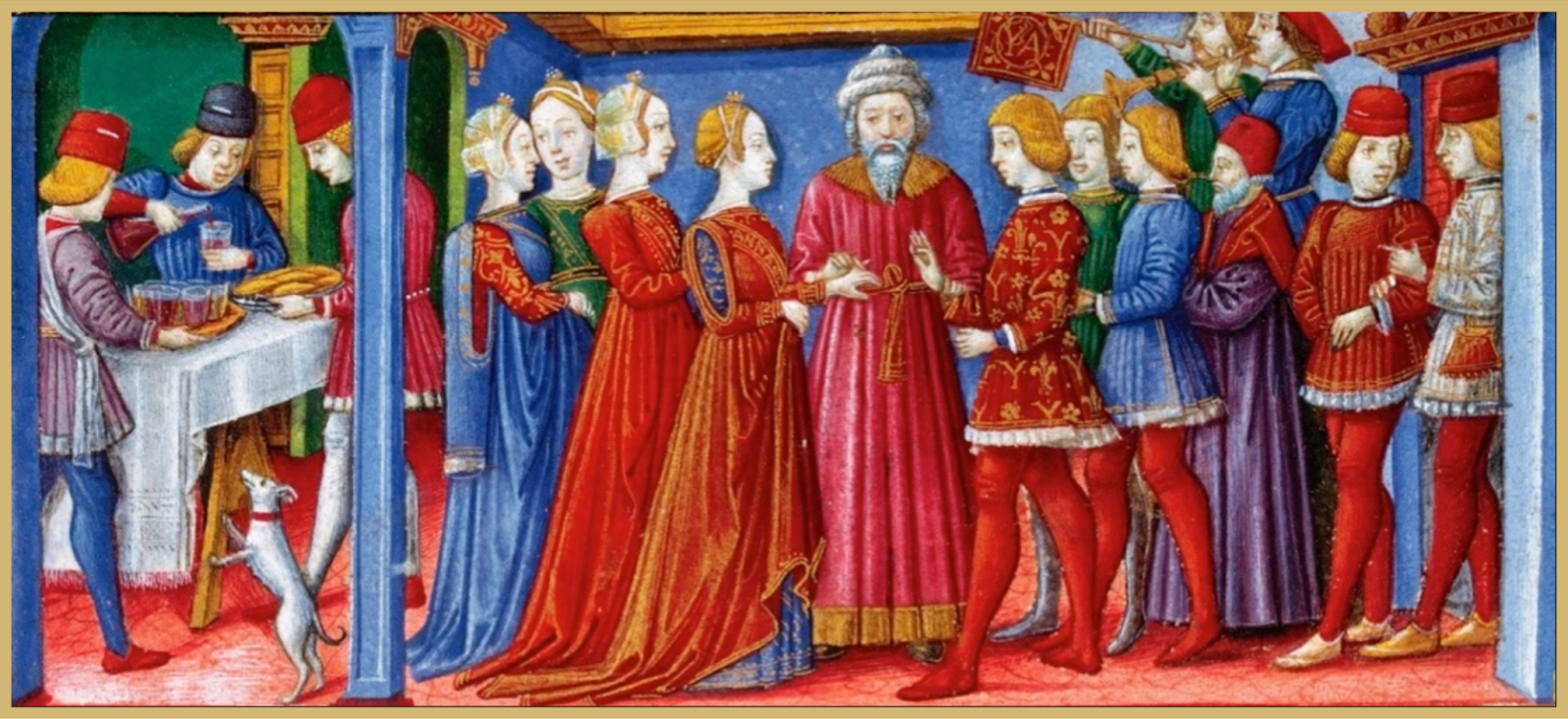
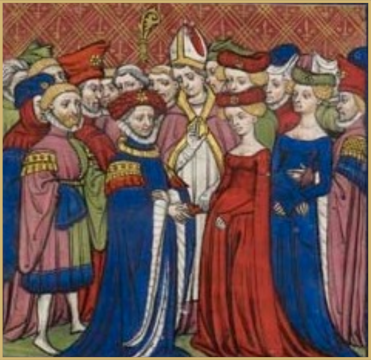
L E T T E R S o f M A T R I M O N I A L A G R E E M E N T TO ALL THESE WHOM THESE PRESENTS SHALL COME, GREETING. e it known and proclaimed before God Almighty, before the Crowns of the several realms, and before all peoples who honor the customs of lineage and the solemn duties of noble estate, that the House of Helvet sand the House of Aldersberg, each venerable in antiquity and steadfast in service, have resolved by common conviction and mutual goodwill to bind themselves in a covenant of marriage, uniting their blood and their posterity for generations to come. Whereas it hath pleased Providence to place within these two Houses heirs of upright character and virtuous promise, namely Lord Adrian Alexander Helvets, son of the Helvetian line, and Lady Susanna Augusta Aldersberg, daughter of the Aldersberg line; and whereas both families, discerning the advantage of harmony, the strengthening of kin, and the peaceable ordering of their estates, have judged it fitting, honorable, and beneficial that the said Lord and Lady should be joined in lawful matrimony; therefore let it be declared that this engagement and assurance of wedlock is made with the full consent of both Houses, under no compulsion save that of affection and good intention. The Lord Adrian Alexander Helvets, descended from those industrious forebears who raised Owynsburg from humble pasture to renown and substance, represents in his person the steadiness, labor, and contemplative virtue for which his House is known. The Lady Susanna Augusta Aldersberg, sprung from a lineage of Earls and statesmen who have for centuries upheld the honor and governance of Dover, embodies that grace, discernment, and constancy befitting the future mistress of a noble household. Thus, by their persons as well as their pedigrees, the promise of union is made all the more proper, all the more fruitful, and all the more worthy of public recognition and divine favor. It is agreed by both Houses that the said Lord and Lady shall enter into engagement, to continue until such time as the heads of their families appoint for the solemnization of marriage, provided that both parties stand willing before the altar, and receive the blessing of Holy Church. During this period of engagement, both Houses bind themselves to mutual goodwill, the avoiding of discord, and the fostering of affection and respect between the betrothed, that the marriage may be founded not upon convenience alone but upon concord of mind and virtue of character. UPON THE CELEBRATION OF MARRIAGE, the House of Aldersberg shall bestow upon its daughter a dowry fitting her dignity, the particulars of which shall be entered separately and appended to this instrument. The House of Helvets, receiving her as Lady Consort within its hall, shall secure to her all rights, honors, and dignities proper to her station, providing for her welfare, her habitation, and her continued esteem in the eyes of all. The children born of this union shall, by the laws and customs of the realm, inherit the name and dignities belonging to the Helvetian line, save where other statutes may direct, and shall likewise partake in any properties or privileges descending from the Aldersberg estate insofar as such may be lawfully conveyed. Let it also be known that any lands, rights, or goods that may, through this marriage, come into joint possession shall be held in trust for the descendants of both Houses and shall not be alienated without the shared assent of both bloodlines, lest the fruits of this union be dissipated by folly or divided by contention. Both Houses pledge themselves to the protection of this concord, to the encouragement of the young couple in virtue and prudence, and to the amicable settlement of all disputes that may arise, whether between themselves or among their servants and dependents, so that the peace of this union may remain unbroken. When the day appointed for marriage shall arrive, the vows of the Lord Adrian and the Lady Susanna shall be exchanged beneath the blessing of the Church, in the presence of family, friends, and witnesses of rank, and these Letters shall be read aloud before the assembly, that all may hear and acknowledge the legitimacy and solemnity of the covenant hereby formed. Thereafter a copy, sealed by both Houses, shall be conveyed to the Imperial Chancery, that it may be entered into the genealogical and noble rolls of the realm, enduring as a testimony for ages to come. And we do finally declare that this union, made in peace, shall be guarded by divine grace and earthly ordinance; that no malice, deceit, or vanity shall sunder it; that it shall stand as a bond of fellowship, an instrument of prosperity, and a witness to the enduring belief that the marriages of noble Houses, rightly ordered, serve not only the families themselves but the good ordering of the wider realm. So may the names of Helvets and Aldersberg be joined in mutual honor, and may their branches, once separate, flourish together in strength and virtue. In witness whereof, we, the undersigned heads of our Houses, have set our hands and seals to this instrument, executed at Owynsburg and affirmed before chosen witnesses, in the year appointed by Providence. Signed: Adrian Alexander Helvets, Baron of Owynsburg, for the House of Helvets George Arthur Aldersberg, Earl of Dover, for the House of Aldersberg In the presence of witnesses: Susanna Augusta Aldersberg God preserve this union and the fruit thereof.




-
A L E T T E R O F E N D O R S E M E N T F O R By Lord Adrian Alexander Helvets, on behalf of the House of Helvets To the good citizens of Saint Godwinsburg, and to all Albans who take pride in the prosperity of our capital, I extend respectful greeting. In this present hour, when our city stands upon the threshold of further growth and renewed purpose, it is fitting that the office of Lord Mayor fall to one whose devotion to Alba is neither pretended nor recent, but has been cultivated from youth in the school of service and duty. It is for this reason that I, Adrian Alexander Helvets of Owynsburg, write to commend Lady Susanna Augusta Aldersberg as a worthy and capable candidate for the mayoralty of our fair Saint Godwinsburg. From the earliest days of her upbringing, Lady Susanna has been shaped by the example of her lord father, the Lord Chancellor, and by the diligence with which he has long tended the affairs of Alba. This instruction she did not merely observe, but embraced; for she learned by his side the weight of administration, the demands of peacekeeping, and the necessity of maintaining the high standards to which all Albans are called. She understands, better than many, that governance is neither ornament nor privilege, but a labor of devotion entrusted to those willing to bear it. Her present stewardship of the Borough of Welles stands as proof of her capacity. Under her guidance, that district has grown into the most prosperous quarter of our city, its buildings well tended, its tenants content, and its coffers full. That she has accomplished these things not through ease but through exacting, daily attention speaks to a character well suited for the broader responsibilities of municipal rule. Lady Susanna seeks office not from appetite for prominence, but from concern that the governance of Saint Godwinsburg remain ever vigilant and never fall into idleness. Her vision for the city is both prudent and ambitious. Her proposals demonstrate not only imagination, but a spirit intent on improving the life of every citizen, from the newest settler to the old stock of Alba. Such leadership, paired with the guidance of our Archduke and the blessing of Almighty God, promises a future in which Saint Godwinsburg may rise to heights worthy of its heritage and of its role as the heart of our realm. Therefore, on behalf of the House of Helvets, and by my own judgment as one who has seen her diligence and her devotion, I offer my full and unreserved endorsement of Lady Susanna Augusta Aldersberg for the office of Lord Mayor. I urge my fellow citizens to lend her their confidence and their vote, that the vision she has set forth may be realized for the good of all. May God keep Alba, and may He guide our city to ever greater prosperity. Lord Adrian Alexander Helvets of the House of Helvets, Owynsburg




-
"This lady seems industrious," commented the Helvetii lord to his sister, Eugenie ( @celina ), as his gaze swept across the pastures and his mind drifted into thought…
-
Faustin de Bruges prepared for war.
-
What's been the most memorable RP storyline or event you've experienced on LoTC, and how did it impact your character or the server's lore? Where the I rank on the axeluu-scale of awesomeness?
-
THE PALATIAL ROLL OF INTENT Being the First Letters General of Administrative Intent of His Excellency the Palsgrave of Drusco ark, and to all ministers, scribes, envoys, and lords temporal and spiritual, and to those servants of the Archducal Government to whom these letters shall come, Greetings. We, Faustin, Right Palsgrave of the Archduchy of Drusco, leal servant of the Prince of Savoy, and most dutiful servant of His Imperial Majesty, have deemed fit to set forth this document for the good ordering and administration of the Princely realm. We, Faustin de Bruges, by the grace of God and appointment of His Highness Roger of the House de Rouen, Archduke of Drusco, being the Palsgrave and Minister of the Palatium, have deemed fit to set forth this present Roll of Intent for the good management, holy elevation, and rightful restoration of the organs of state entrusted unto Us. By our especial favor, and with the weight of our conscience, We do hereby declare Our intention to reform, reanimate, and sanctify the conduct of the Palatium, such that the government of Drusco may be made pleasing to both Heaven and Prince. By this declaration, it is understood and agreed that the following shall be enacted, upheld, and expected of all subjects, ministers, and officers who labor beneath the Archducal Coronet. We do therefore ordain the following principles and privileges for the betterment of Our government and the immortal memory of Our tenure: i. That the limbs of the Palatium shall be restored to strength and dignity, and that each chamber of state be filled by persons of upright character, proven diligence, and sacred fear of God. No office shall lie fallow, nor be held in form alone. We shall tolerate neither the idle nor the irreverent. ii. That the Chancery be expanded and enriched, and the Roll thereof kept in perpetual and pious order. Each act of government shall be rendered in script and sealed with solemnity. The name of the Lord shall adorn all declarations, and no decree shall be issued which does not begin with reverence. The written word shall become once more the very flesh of governance. iii. That all ministers of the Palatium, regardless of chamber or dignity, shall be held to a standard of communication and cooperation. None shall operate in silence or solitude. We shall hold councils of coordination in regular fashion, wherein each head of limb shall appear to speak of his work and to witness the labors of his fellows. All disunion shall be accounted a disservice to the Archduke and a scandal to the realm. iv. That the Palatium shall walk hand in hand with the Church, and that no matter of administration be left without blessing. A Chapel Royal shall be founded within Waldemer Keep for the continual prayer and consecration of Our labor. Each minister shall kneel before the altar ere he take up his office, and all acts of state shall bear the sign of the Cross. The soul of government shall not be forgotten. v. That a Codex of Instruments be authored under Our hand, compiling the customs, methods, and instruments of state in clear and sacred fashion. All systems shall be named in honor of the saints, that even the clerk at his desk may remember the divine. By this codification, the rule of order shall become not fleeting but enduring. vi. That We, Faustin de Bruges, Palsgrave of Drusco, do speak not in vanity but in certainty, that pride is the rightful vestment of station and appetite the fuel of labor. Let not Our voice be mistaken for bluster, nor Our splendor for vanity. We govern in grandeur that the government may itself be made great. We feast, that We may work. We speak, that We may be heard. For the well-keeping of these ordinances, We do further endow the following privileges of station: 1. To direct and oversee all limbs of government in the name of the Archduke, save only in matters of the Ban. 2. To appoint Envoys as may be required for the good governance of vassal and foreign territories. 3. To maintain the Chancery and all scriptorial bodies beneath Our hand. 4. To summon ministers of the Palatium to council, and to hold them to account. 5. To establish liturgical observance within the Palatium, for the blessing and sanctification of its works. Let it be known that these intentions are not mere aspiration, but command; not hope, but mandate. Let those who serve in accordance with this Roll receive their portion in glory. Let those who stray from it be remembered in silence. Penned under hand and seal at Waldemer Keep, This 9th of the Sun’s Smile in the year 2039. By the grace of God and command of the Palsgrave.
-
THE UNIVERSAL PASTORAL LETTER IN SEVENTY DECLARATIONS: CONCERNING THE RITE OF UNIVERSALITY, THE TRUE ORDER OF THE CHURCH, AND THE ABANDONMENT OF THE SCROLLS BY THE PONTIFICAL SEAT In the Name of GOD, Singular, Omnipotent, and Most Merciful: 1. God, in creating the world and separating it from the Void, established natural law by His Word, so that no part of His creation would dwell in chaos, and so that man might have both order and purpose. 2. The Holy Church of the Canon stands not by the desire of princes nor by the ambitions of men, but by God’s decree as revealed in the Scrolls, where the Exalted received instruction from the Most High. 3. The Holy Scrolls, being the very breath of God through His Exalted, must remain unchanged and unimpaired, for “Though the spring flower withers and the fruit of the tree falls to the ground, My Word lasts into the eve of the world.” 4. The Scrolls alone are the measure of the Church’s governance. All other decrees are secondary. The Scrolls must be read and preached in every place, for where they are hidden, error and heresy grow. No new scroll, no vision, no secret writing may annul the four Scrolls delivered to the Exalted. Any who claim otherwise speak as did Iblees in the time of Horen. 5. To reject any Scroll, whether Virtue, Spirit, Gospel, or Auspice, is to cast aside the crown of creation itself and to stand as one who blasphemes not merely word but the living will of God. 6. The Rite of Universality, founded in the Virtue and Spirit, binds all men under one Church; no tribe, race, or house stands apart from this singular and holy order. The Church, as commanded by God through His Exalted, is universal not in name alone but in function, serving all peoples equally beneath the mantle of the Scrolls. 7. As it is declared in the Canticle of Virtue: “The abundance of the spirit is never divided, but multiplied.” This abundance belongs to all who keep the law, not to the few who claim it by inheritance. 8. Let all remember that the first man and woman walked in Virtue without churches, without priests; it is the law of God that sanctifies in the foremost, not the structure. 9. As God breathed life into man, so too does He breathe life into the faithful through the Spirit and the Scrolls, not through indulgences or political favor. 10. Fidelity to the Scrolls is the true mark of unity in the Church; no office nor custom may contradict them. 11. Any Church hierarchy which contradicts the Scrolls ceases to be a vessel of the Virtue, becoming instead as the false temples of the pagans. 12. Where the Church is divided, it must be restored through return to the Scrolls, not through worldly compromise. 13. Ecclesiastical unity is not founded upon loyalty to any single seat or person, but upon shared reverence for the Virtue and the Scrolls, as all righteous paths are equal before the Lord God. 14. When the Pontiff errs, it is the duty of the Synod to correct him; when the Synod errs, the faithful must return to the Scrolls. 15. The office of High Pontiff is a charge to proclaim the Scrolls; all other powers are secondary and must not eclipse this holy mission. 16. The Synod of priests, gathered as one body in service of God, inherits its authority from the priesthood instituted by the brothers Evaristus and Clement, as written in the Scroll of Spirit. 17. The Synod of priests holds authority in times of necessity; this is a holy custom ordained by natural law and divine will. 18. Without Canon Law, the Church must return to the law laid out by God Himself in natural ordinance, wherein all ordained priests hold equal voice and duty in electing rightful leadership. 19. Cardinals hold their dignity through Canon Law, but when such law is abolished, their position dissolves into the general order of priests, holding no authority but that of the ordination common to all. 20. Let each Cardinal examine his loyalty; for in the absence of lawful Canon, it is through open proclamation of faithfulness to the Scrolls that a man’s communion with the true Church is known. 21. Clerical authority is not absolute; it is bound by fidelity to the Scrolls and the teaching of the Exalted. 22. Canonical offices are granted for the benefit of the faithful, not as titles of vain glory. As it is written: “You shall not judge your own virtue, be it great or small, for all fall short of Me.” 23. Clerical offices exist as burdens, not as honors. Let every priest remember that his service is to God first, and man second. 24. All who hold ecclesiastical office must renew their vows of service in the light of the Scrolls, lest they fall into self-service. 25. The priesthood is instituted as a ministry of service, not dominion; to rule as a worldly prince is to forget the humility of the Exalted. 26. The priesthood must renew its commitment to selfless service in every generation. 27. The priesthood must purify itself continually, for as it is taught in the Epistle to the Magi: “The Lord God is the Most Incomparable, and none can surpass Him.” 28. The primary duty of all priests is the instruction of the Scrolls and the guidance of souls. When this duty is neglected in favor of building worldly power, the Church betrays its own foundation. 29. Bishops and curates are bound under oath to uphold the Scrolls; failure in instruction or doctrine is counted as failure in the first estate. 30. Bishops must hold fast both to discipline and to mercy, walking always in the middle path as commanded in the Canticle of Temperance. 31. Let all clerics remember their own failings and be slow to judge others. 32. Clerics who refuse confession to the penitent without just cause violate the very nature of their office, which is to heal souls. 33. Let all clerics remember that their words hold weight only when they flow from the Scrolls; personal wisdom must bow before divine instruction. 34. As the Epistle to the Harrenites teaches: “No sin is hidden before God.” Therefore, confession must be true and without pretense, not corrupted by human invention. 35. When clerics impose penalties of their own invention, exceeding what is written in the Scrolls, they sin not only against man but against the order established by God Himself. 36. Let it be known that no man, even the High Pontiff, holds the authority to declare a soul lost where God has not so judged, as judgment belongs only to the Most High. 37. Forgiveness is a gift from God, given through sincere repentance and amendment of life, not through gold or transaction; any other teaching is false. 38. Indulgences, where given, are to be signs of intercessory prayer, not substitutes for true penance, lest the faithful mistake the symbol for the thing itself. 39. To sell the Spirit’s mercy is to trample upon the wealth of the Spirit, exchanging incorruptible treasure for corruptible coin, which is forbidden by both law and conscience. 40. The state of purgation, wherein souls are prepared for the Skies, is ordained by God’s mercy; it must not be used as pretext for worldly gain or clerical manipulation. 41. The Church’s duty is to pray for the dead, not to tax the living in their name; for as Exalted Owyn taught, “Holiness cannot be divided or sold.” 42. The wealth of the Church must serve not itself, but the poor, the widowed, the orphaned, and the stranger. To do otherwise is to violate the Canticle of Charity. 43. All wealth gathered by the Church must serve the poor first, and the instruction of the faithful second. 44. The treasures of the Church are not stone, nor marble, nor gold, but the gospel of grace and the witness of the Saints, which endure beyond all earthly things. 45. As commanded in the Canticle of Charity, “You shall not desire the wealth of this world, nor the wealth of others, but the wealth of the spirit.” 46. The burning of the Chair of Saint Daniel is not merely a loss of wood or cloth, but a sacred sign, for as the Scroll of Auspice teaches, the light shall be obscured thrice before men tread the sea in spiritual blindness. 47. The first obscuration was in the days of Horen’s fall, the second in the time of the Schism War; now the third stands before us, visible to all who have eyes to see and hearts to believe. 48. The destruction of relics such as the Chair of Saint Daniel symbolizes a deeper spiritual destruction: a breaking of communion with the spiritual inheritance of the Exalted and the Saints. 49. The burning of the Chair of Saint Daniel is a reminder that worldly splendor is temporary, but God’s Word endures. 50. Canonists must be taught that their measure in the Skies is determined by their practice of Virtue, not by their donations or social rank. 51. Canonists must be taught that peace without Virtue is false peace. As it is written: “Blessed are all those prophets who say to the people of God, ‘Cross, cross,’ and there is no cross.” 52. Canonists must be taught that faith must be accompanied by works: by charity, patience, temperance, diligence, fidelity, and humility. 53. Canonists must be taught to learn the Scrolls themselves, for no man is excused from knowing the law of God. 54. Canonists must not trust first in worldly offices, but in God’s mercy and their own steadfastness in Virtue. 55. Canonists must beware false visions and signs, for as the Scroll of Auspice warns, the Deceiver may take many forms. 56. Canonists must guard against false teachings, as the Scrolls warn: “Professing yourselves to be wise, you have made yourselves fools.” 57. Canonists must love the Spirit more than the form of the Church, remembering that outward structures are for the sake of inward truth. 58. Canonists must uphold charity, humility, and fidelity above all worldly honors and rewards. 59. Canonists must endure in Virtue even unto death, as the Exalted endured, for “through many tribulations shall you enter into heaven.” 60. Canonists must pray continually for the unity and purity of the Church, as a man prays for his own soul. 61. Suffering endured for the sake of Virtue is a sign of grace, not of abandonment. For as the Canticle of Patience teaches: “You shall know the trials of this theater of virtue, and know that they shall strengthen you.” 62. Suffering purifies, as fire purifies iron. Let no faithful soul despise the trials sent by God. 63. The example of the Exalted shows that tribulation and sacrifice are necessary paths to the Skies; therefore, Canonists must not seek comfort at the cost of truth. 64. The mercy of God is open to all, as the Rite of Universality proclaims. No race, tribe, or nation is excluded from salvation where the Virtue is kept. 65. Let all be reminded that “The Lord God is the greatest power.” No temporal force may stand against His will. 66. Synods must be convened in the open, with justice and order, not in secrecy or haste. 67. The Church must resist the temptation to act as a temporal empire, lest it forget its duty as the shepherd of souls. 68. Synods and councils must be convened with prayer, fasting, and solemnity, seeking not human advantage but divine wisdom. 69. Let this letter be proclaimed in all churches and assemblies, that all may hear and understand the true order of the Church and the nature of God’s law. 70. And so let all who hear or read these declarations hold fast in patience, diligence, and fidelity: striving always to enter into the Skies, not through false peace or worldly indulgence, but through steadfast adherence to the Holy Scrolls and the Rite of Universality. In obedience to His Word, Father Lüdiger.
-
LEX THEODICEA: the Problem of Judicial Fragility within the Lex Tiberi
MCVDK replied to MCVDK's topic in Empire of Man
Nota ad Lectorem Scholasticum Those readers desiring a deeper engagement with the theological and philosophical principles underlying this treatise are warmly referred to the appended Scholastic Appendix, wherein several Quaestiones Disputatae are offered in the canonical format. These serve not only to clarify but to defend the theses herein according to the method of sacred dialectic, in fidelity to the tradition of the Doctors and the light of the Scrolls. Such inquiries are intended for the use of confessors, jurists, and students of divine law alike, and may be profitably studied in studium or private reflection. -
The following Scholastic Appendix contains formal Quaestiones Disputatae, each corresponding to a principal section of the main body of the Lex Theodicea. These theological examinations are not autonomous, but derivative; serving to elucidate, defend, and deepen the arguments already proposed in the treatise proper. It is therefore urged that the reader consult each quaestio in conjunction with its respective argument in the main text. For the fruit of dialectic is not novelty, but clarity; and the function of disputation is to return more precisely to that from which it proceeds. APPENDIX A: APPENDED QUAESTIONES TO LEX THEODICEA AUTHORED BY FATHER WENCESLAS BAINBRIDGE, PRINCIPAL JUSTICE EMERITUS OF THE HIGH COURT OF JUSTICE OF THE CHURCH OF THE CANON, ACCORDING TO THE ORDERED REASON OF SACRED SCIENCE; INSTRUCTED BY THE JUDITE SCHOLASTICATE UNDER THE RULE OF RIGHT DISPUTATION, AND RATIFIED BY THE FRATERNITAS SACERDOTALIS PHILOLEXIANA SANCTI THADDAEI, FOR THE GREATER EDIFICATION OF THE FAITHFUL AND THE MAGNIFICATION OF DIVINE TRUTH. ANNO DOMINI MMXXXVI QUAESTIO I: WHETHER HUMAN LAW MAY BE JUST IF IT ORIGINATES IN FALLEN INSTRUMENTS (ad Prooemium) Objection 1: It seems that human law, being wrought by fallen men, cannot be properly just. For man, having departed from original righteousness (cf. Gospel 1:20), cannot institute that which reflects the perfect will of God. Objection 2: Further, it is stated that “no fruit born of corruption can be clean” (cf. Virtus 5:5). Therefore, law, being the fruit of corrupt nature, must also be tainted. Sed contra: The Scroll of Virtue affirms that God “has given to man the power of creation” and “ordered the estates of the world” (Virtus 7:6). Therefore, even fallen man retains participation in divine order. Responsio: It must be held that human law, though imperfect in origin, may be truly just insofar as it reflects divine providence and seeks the common good under right reason. The law does not derive its justice from the personal sanctity of the legislator, but from its conformity to the eternal law (lex aeterna) which is God's will itself (cf. Apologetica I.I). Thus, the Emperor and his ministers, even as fallen instruments, may serve as valid conduits of divine order so long as they do not legislate contrary to virtue. Ad 1: Though man is fallen, he is not utterly depraved. He retains reason and freedom, which, when rightly ordered, allow participation in God’s governance. Ad 2: The corruption of nature pertains to inclination, not to essence. A corrupted tree may still bear good fruit by divine allowance, and so may a fallen man enact righteous law through grace. QUAESTIO II: WHETHER THE EMPEROR’S MINISTERS CAN BE SAID TO ACT WITH DIVINE AUTHORITY (ad Partem II) Objection 1: It seems they cannot, for divine authority belongs to God alone and to those ordained in sacrament. The guardsmen and justiciars possess no such ordination. Objection 2: Moreover, to claim divine authority in secular office risks idolatry, as if man were to share in God’s kingship. Sed contra: The Catechismus teaches that “the Emperor reigns not for himself, but for the people entrusted to him by God” (Catechismus, “On the Empire”). Therefore, those who minister under the Emperor share in his delegated authority. Responsio: One must distinguish between authority of origin and authority of participation. God alone is the source of all rule (dominium originarium), but temporal rulers share in this authority through divine ordinance (ordinatio divina). Ministers of the Emperor, insofar as they execute his laws in accord with justice, act as secondary instruments of divine providence. Their authority is not sacramental but administrative, yet it retains its legitimacy when it serves order and virtue. Ad 1: Sacramental authority is required for the administration of grace, not for the administration of justice. The guardsmen and justiciars are not priests, but magistrates. Ad 2: The sharing of dominion does not imply equality with the Most High. As light is reflected by the moon from the sun, so temporal rule reflects God's dominion by participation, not identity. QUAESTIO III: WHETHER SUMMARY EXECUTION WITHOUT TRIAL CAN EVER BE JUST (ad III.a, De Excessu Potestatis Iudicialis) Objection 1: It would seem so, for in the case of imminent threat, the preservation of peace may necessitate swift judgment without trial. Objection 2: Moreover, if the guilt is manifest, and the offense public, then trial is superfluous, and justice demands immediacy. Sed contra: The Apologetica affirms that justice must be “deliberate, not impulsive; procedural, not presumptive” (Apologetica I.III). Therefore, summary punishment, lacking deliberation, is unjust. Responsio: Summary execution may appear expedient, but is rarely just unless it occurs under the narrow conditions of necessitas immediata, that is, where the threat to life or the polity is active and cannot be mitigated by restraint or detainment. In all other cases, due process is a moral necessity, for without it, justice becomes indistinguishable from vengeance. The law must not presume its own infallibility in the absence of witness, examination, and spiritual counsel. Ad 1: The case of immediate defense is not judgment but survival. Killing in combat is not an execution but an act of resistance. Ad 2: Even when guilt appears manifest, the soul remains unseen. The judgment of men must not arrogate divine omniscience. The rite of judgment exists to temper presumption and to guard against the tyranny of appearance. QUAESTIO IV: WHETHER MERCENARY PUNISHMENT CORRUPTS THE NATURE OF JUSTICE (ad III.b, De Incentivo Mercenario) Objection 1: It seems not, for labor deserves compensation, and the guard who risks life and limb ought to receive some reward from the transgressor’s fine. Objection 2: Furthermore, if the punishment is just, the reward does not alter its justice. Sed contra: The Scroll of Virtue proclaims that “you shall not desire the wealth of this world” but only the wealth of the spirit (Virtus 5:10). When judgment is given for gain, it ceases to be pure. Responsio: It must be conceded that mercenary punishment, whereby a judge or officer benefits personally from the imposition of fines, inherently corrupts the objectivity of judgment. Justice must not only be done but must be seen to be disinterested. When personal reward coincides with punitive decision, the moral clarity of justice is lost, and the officer is tempted to favor prosecution for gain. Therefore, such structures of reward ought to be abolished in favor of communal and merit-based compensation. Ad 1: Compensation is not denied. It must, however, come from impartial sources, such as public stipends, lest the act of enforcement become a form of personal enrichment. Ad 2: A just punishment may be rendered unjust in its administration if the motive or mechanism violates the moral integrity of judgment. QUAESTIO V: WHETHER AUTOMATISM IN NOBLE PUNISHMENT VIOLATES THE PRINCIPLE OF EQUITY (ad III.c, De Automatismo Poenali) Objection 1: It would seem not, for nobles, being of greater station, bear greater responsibility and thus deserve sterner consequence. Objection 2: Also, mechanical enforcement ensures that favoritism and corruption do not intrude into elite trials. Sed contra: The Canonis Theodicea teaches that justice is not a scourge, but a ladder toward sanctification (Theodicea IV.ii). Automatic severity fails to distinguish between the guilty and the penitent. Responsio: While it is true that nobles carry heightened responsibility by virtue of example and station, justice requires proportion not only in punishment but in discernment. Automatism, by removing the deliberative function of law, treats the noble not as a rational soul but as a category. This offends both the dignity of man and the nature of equity. True justice examines not only the act, but the will, the circumstance, and the potential for reform. To deny this inquiry is to betray both virtue and mercy. Ad 1: Higher station demands deeper scrutiny, not blind severity. It is not justice that a noble be crushed without appeal, but that he be judged with greater discernment. Ad 2: Mechanical procedures may restrain corruption, but at the cost of truth. The answer is not automatism, but tribunals of integrity. QUAESTIO VI: WHETHER LAW, AS HUMAN ORDINANCE, CAN TRULY MIRROR DIVINE JUSTICE (ad V, Conclusio) Objection 1: It would seem not, for the divine justice is perfect and eternal, while human law is mutable and often unjust. Objection 2: Moreover, man legislates in time, whereas God judges outside of time. Therefore, no law of man can reflect His eternal judgment. Sed contra: The Scroll of Spirit declares, “God has given to man a theater of virtue, and has ordered the estates of the world” (Virtus 7:6). If law did not reflect God, it would be a lie. Responsio: Though human law is finite, it may participate analogically in divine justice when it is rightly ordered to the good, tempered by mercy, and shaped by reason. The law need not be perfect to reflect the perfect; it need only strive to conform itself to the will of God as revealed in nature, reason, and the Scrolls. In this striving, law becomes not merely functional, but sanctifying, a pedagogue unto righteousness and a mirror, though dim, of heavenly order. Ad 1: The imperfection of law does not negate its truth. Just as a child may speak a true word without fullness of knowledge, so may human law utter fragments of divine justice. Ad 2: Though God exists beyond time, He acts within it. So also, the law, while temporal, may be an instrument of eternal good when joined to His will.
.thumb.gif.5ceba2d01f50d0d25c87532ab910c11a.gif)