Axelu
-
Posts
986 -
Joined
-
Last visited
Content Type
Profiles
Personas
Wiki
Rules
War
Systems
Safety
Player Conduct
Roleplay Leadership Guidelines
- Roleplay Leadership Guidelines
- Roleplay Leadership Guidelines Comments
- Roleplay Leadership Guidelines Reviews
Forums
Everything posted by Axelu
-
IMPERIAL PROCLAMATION THE OFFICE OF THE IMPERIAL SEAL Issued and averred by the office of, Her Highness, Princess Leanor de Asturias y Helena, Imperial Master Reeve 5th of Sun’s Smile, 656 AA ✠ HEED, LEAL SONS AND DAUGHTERS OF HOREN; As of this Saint’s Day, I have been appointed to serve as the new Imperial Master Reeve. It shall be my honor to serve the Crown and the people of the Empire by ensuring that the Office of the Imperial Seal operates with order, dignity, and renewed purpose. The Office of the Imperial Seal is charged with the administration of elections, the keeping of public records, the maintenance of the census, the publication of Imperial news, and aiding in the settlement and integration of newcomers into Imperial civic life. These duties require diligence, loyalty, discretion, and a sincere commitment to public service. Those who seek to serve the Empire in good faith are encouraged to make themselves known. Prior experience is welcome, but loyalty, competence, and willingness to learn shall be held in the highest regard. May the Office of the Imperial Seal serve the Crown faithfully, and may its work be carried out with clarity, discipline, and honor. -=- STRUCTURE OF THE OFFICE IMPERIAL MASTER REEVE The Imperial Master Reeve serves as the highest authority within the Office of the Imperial Seal, answering directly to the Archchancellor. Entrusted with the Empire’s internal administration, the Master Reeve oversees elections, public records, the realm’s census, civic integration, and the orderly functioning of domestic governance. In this capacity, they ensure that the offices under the Imperial Seal act in concord, discipline, and proper service to the Crown, standing as one of the Empire’s principal stewards of its internal realm. Imperial Master Reeve Her Highness, Princess Leanor de Asturias y Helena @Axelu DEPUTY OF ELECTIONS Current: Oliver Napier, Pending Re-Appointment @Hanrahan The Deputy of Elections assists in the administration and integrity of all Imperial elections. He is responsible for the organization and execution of electoral proceedings across the Empire, the maintenance of electoral standards and procedure, and the coordination of municipal and national voting structures in accordance with Imperial law. He works in concert with the census deputy to ensure fair and proper representation within the realm. DEPUTY OF NEWS Current: Vacant, inquire with the Master Reeve for an interview The Deputy Reeve of News is charged with the keeping, ordering, and publishing of all Imperial writings and proclamations concerning the affairs of the realm. He is responsible for maintaining the Imperial Gazette and preserving legislative and civic records. He ensures that the deeds and decisions of the Empire are duly recorded and made known to the people in proper form and measure. He is also charged with finding writers in the distinct spheres of relevance -- politics, economics, current affairs, society, etc. DEPUTY OF THE CENSUS Current: Justinian Koropoulos @Major Waffle The Deputy of the Census is charged with overseeing recordkeeping of the Azuran populace, from the lowborn to the highborn. He assists in conducting the Imperial Census across the Crownlands and Imperial demesne; thus, his primary function is to ensure the Crown maintains accurate knowledge of its people and their distribution across the realm. DEPUTY OF SETTLEMENT Current: Father James Vursur, Pending Re-Appointment @Malins Welcome The Deputy of Settlement is charged with welcoming and guiding new arrivals into the Imperial Capital. He is responsible for aiding newcomers in finding a place and purpose within the realm, assisting with lodging and employment. Moreover, he ensures that those who enter the Empire are properly received, instructed in its ways, and settled into its civic life under the protection of the Crown. IMPERIAL CLERKS The Imperial Clerks serve as attendants to the Deputies of the Office of the Imperial Seal, lending aid in matters of record, proclamation, census, settlement, and election as the needs of the realm require. He carries out such duties as are assigned in service to the Crown, assisting in the orderly governance of the Empire and the keeping of its civic affairs. Those who would seek entry into Imperial service are bidden to make themselves known to the Deputy of the relevant office. -=- JOB APPLICATION Those seeking office within the Office of the Imperial Seal are to submit the following form for consideration. All applicants should be prepared to interview during and throughout the next Saints’ Week. If not placed in the Office as a Deputy, applicants will be highly considered for clerk positions. AVE IMPERIUM H V M A N I T A S I N V I C T A HIS IMPERIAL EXCELLENCY, Ezra de Senna, Imperial Archchancellor and Regent, Count of Edessa. FORTVNA AVDACES IVVAT HER HIGHNESS, Leanor Catalina de Asturias y Helena, Imperial Master Reeve.





-
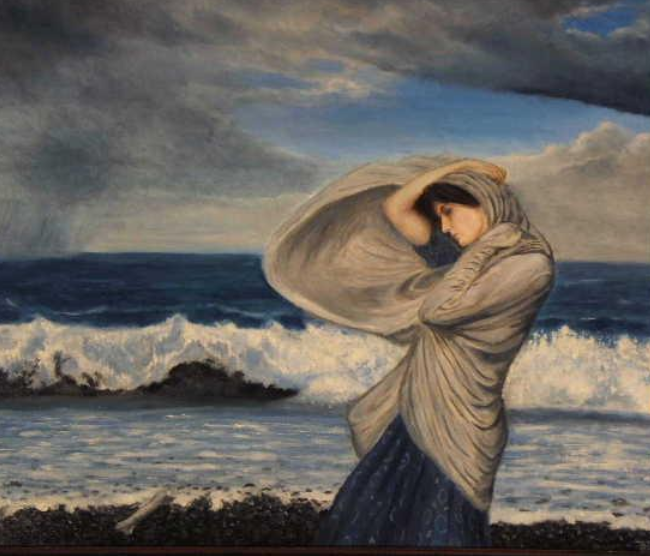
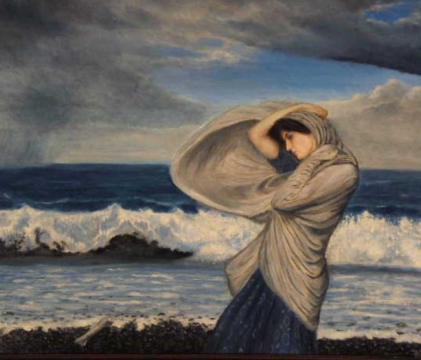
ENTRE LA TIERRA Y EL MAR From her earliest years, there had been in Leanor a restlessness that no chamber, however grand, could wholly contain. She bore herself with all the grace expected of her station, yet there remained within her a persistent sense that life must extend beyond halls, windows, and instruction. Even in childhood, she seemed to feel that the two great currents of her blood could not be understood from a distance. From her mother’s Horen line came the inheritance of land, of rule, of the realm of Man brought into order through law, judgment, and command. From House d’Asturia, that storied line hailing from distant lands, came the inheritance of waters, of horizons, of prows cleaving black waters and sails swollen beneath foreign winds. The Horens held dominion over what stood firm and governed; the d’Asturias carried their greatness over tide and distance. Leanor, born of both, had long felt that she must one day see the world and know the ocean for herself, if those two halves of her inheritance were ever to meet fully within her. Thus, at thirteen years of age, she departed by ship for the ancient homeland of House d’Asturia. To others, it may have appeared a princely journey, fitting for one of her birth. To Leanor, it answered something far older and more private. She had loved the sea for as long as memory allowed, from palace windows, from high terraces, from the shore where she had once knelt with solemn concentration to gather seashells into the folds of her skirts. Yet the sea she had cherished in imagination revealed itself differently once she stood upon it. Beneath her feet, the ship rose and fell with a force both thrilling and severe. The deck groaned, the ropes strained, and the wind moved through the sails with a voice no courtly life could imitate. Before her, the prow broke through dark waters with terrible certainty, and Leanor began to understand that the sea was not simply beautiful, but formative. It had shaped the very temper of her father’s line. When she reached the homeland of the d’Asturias, she was received with honors proper to her blood. Among them was a decorative trident necklace, finely wrought and rich in significance. She wore it as more than an ornament. It seemed to name a bond she had long felt without knowing how to speak of it. In that emblem, she saw some visible sign that her longing for the sea had never been mere fancy. Her time there was given to study as much as ceremony. She learned the disciplines of seafaring: the reading of winds and currents, the ordering of a vessel, the exacting habits by which men survive upon the deep. She was instructed as well in governance, in the conduct of rule, in the patience, restraint, and judgment expected of those born to authority. In those lessons, the two houses from which she sprang ceased to feel like separate worlds. The inheritance of Horen and that of d’Asturia began to settle together within her. One had taught mastery of land and men; the other, mastery of distance, motion, and uncertainty. Leanor came to understand that both would be required of her. For a season, this journey interrupted her wardship under the Archchancellor, Ezra de Senna. Yet his tutelage was never cast aside, only paused while another education, harsher and more expansive, took hold of her. She has since returned to his care, though not as the same girl who departed. When Leanor left, she still possessed the unmistakable air of early girlhood. She was bright, whimsical, and open in all her feelings. Wonder rose quickly in her and showed itself just as quickly. There was also something unusual in her cast of mind, something dreamy and singular that set her apart from other children. Those two years changed her. They softened some of that girlishness and drew her into a fuller, quieter grace. The elegance of blooming womanhood had been instilled in her. It showed in her bearing, in the greater composure of her speech, in the way her curiosity had become steadier and more inward. She remains bright, still keen of mind, still touched by wonder, but she carries these qualities differently now. They seem more deeply rooted in her. So too has her beauty grown more apparent. Her aunt, the Empress, had discerned it already when Leanor was twelve, when it still lived chiefly in promise. At fifteen, that promise has become visible to all. What once flickered now rests more securely upon her. Hers is no longer the delicate prettiness of a child alone, but the first clear flowering of young womanhood, touched by reserve, thoughtfulness, and self-possession. Perhaps this was always the end toward which her longing moved. She had felt from childhood that she must see the world and know the sea, not for diversion, but because some part of her could not ripen without it. In the Asturian realm, she encountered the living force of her father’s inheritance. In that encounter, her mother’s inheritance also deepened, for she returned with a firmer understanding of responsibility, discipline, and rule. Thus the child who went away in wonder came back with something more enduring. Wonder remains in her still, though it has taken on a quieter form. It no longer flutters about her as freely as it once did. It has settled into her character. At fifteen, Leanor stands in that tender threshold between girlhood and womanhood. The sea she once loved as a distant dream has become part of her memory, her education, and her inward life. She carries it with her now. And in carrying it, she seems at last more fully the daughter of both houses.
-
The late Archduchess of Alba, Cecily Amelia, watched the dragonblooded Duchess with quiet delight from the heavens. The stars and the angels seemed to favor her, for she would soon bear an heir to the Johannian dynasty.
-
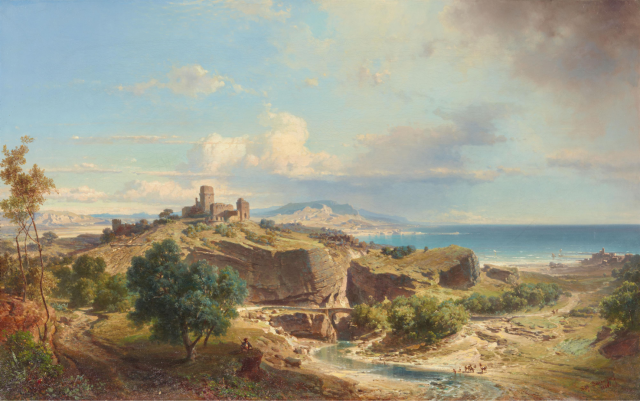
LA AÑORANZA DEL MAR Leanor had been born between two sovereignties, and though she was yet too young to name them fully, she felt their differing claims upon her all the same. From her father, Marlon’s, line, the storied House d’Asturia, came the inheritance of distant waters and old maritime glory, of a dynasty said not merely to have crossed the sea, but to have been fashioned by it, its memory preserved in prows cleaving black waters, in sails swollen beneath foreign winds, and in the hard-won splendor of horizons subdued by courage and command. Theirs was a greatness rooted wholly not in one land, nor bounded by the sight of one shore. It was carried abroad upon tide and tempest, and housed in the remoteness of foreign coasts. It was said of them that the sea had not only served them, but known them, and that in their blood there lingered something of its restlessness, its grandeur, and its terrible longing. Her mother’s kin, by contrast, were of the great Horen House, whose claim was not to wave or wind, but to the realm of Man. Where the d’Asturias had mastered distance, the Horens had mastered dominion. Theirs was the world of citadels, banners, fealty, and law, of fields measured, frontiers guarded, and men gathered into obedience beneath enduring stone. In Joan Mariana there abode all the still gravity of that lineage, the quiet authority of those who govern what lies before them rather than dream upon what lies beyond. If House d’Asturia belonged to departure, Horen belonged to possession. If one looked ever outward, to the uncertain horizon, the other looked inward, upon the ordering of the mortal world. Thus did Leanor grow, a child of wave and wall alike, though her heart inclined ever toward the elder and more mysterious inheritance. For the sea exerted upon her a fascination too deep and tender to be dismissed as childish whim. She loved the water not only for its beauty, though she found it beautiful beyond words, whether silver beneath the morning light or darkened under the evening's hush. She loved it because it seemed to her alive with memory. When she gazed upon it from the palace windows, where the salt gathered faintly upon the panes, she felt as though she looked upon something vast and knowing, something that had borne her father’s people from distant lands and still remembered the passage of their keels. Whenever she was permitted to go down to the shore, attended by nursemaids and ladies, and sometimes even her aunt Valentina, who watched her with indulgent caution, Leanor would at once busy herself in the singular occupations of her little heart. She wandered the tideline with her skirts gathered in her hands, pausing wherever the foam receded to leave behind its small and glimmering offerings. There she collected seashells with great seriousness, stooping to retrieve each one as though it were a jewel or relic rather than a trifling remnant cast ashore. The smooth white shells, the rose-hued ones, the broken spirals still wet with seawater, all delighted her alike. She kept them in a carved box within her chamber, and the prettiest among them were lined carefully upon her window ledge, where the sun might strike them in the morning and make them shine like pale treasures. At times she would press them to her ear, listening with all the solemnity of one receiving confession. The others smiled at this, as grown persons will smile at the earnest rites of children, but Leanor did not smile. She listened in truth, persuaded that the murmur within was not mere fancy, but the sea speaking softly through the hollowed bones of its own making. In that ceaseless sound she imagined distant coasts, forgotten voyages, her father and late grandfather riding beneath storm-dark skies, and the old grandeur of ships vanishing beyond the edge of the world. She could not say why such images stirred her so deeply, only that they did, and that with each shell she gathered, and each wave she watched unfurl and perish upon the sand, her love for the water grew only more profound. So it was that the young Infanta, though cradled in the ordered dominion of her mother’s people, belonged in some quieter and more sorrowful fashion to the sea. Others might have seen in it danger, distance, or the road by which men were taken from those who loved them; Leanor saw these things too, dimly, as children sometimes do, yet she loved it nonetheless. Perhaps it was because the sea seemed to her to contain all that was beautiful and mournful at once; it bore all that departed, all that returned, and all that remained forever just beyond one’s grasp. And thus, with seashells gathered in her small hands and the wind stirring her hair about her face, Leanor would stand at the water’s edge as though in the presence of something both ancestral and beloved, feeling within her breast that strange and wordless longing by which the sea had already claimed her for its own.
-
The Prince of Asturias's granddaughter, the young Infanta Leanor de Asturias y Helena, was in her quarters at the Imperial Palace, when the sobriety of her mother amidst the seafaring absences of her father signaled to her, even at such an early age, that something was amiss. She looked then outside her window, which presented an idyllic view of the sea -- that very sea that her paternal ancestors had assumed mastery of, in sharp contrast to the lands which she stood upon, so indubitably the demesne of her mother's Horen brood. She perched herself at the sill, and looked off - ideating upon what adventures her father and grandfather might be on, amidst her ignorance of the latter's grave condition. A discrete knock resonated against her oaken door, and in came her mother, Joan Mariana, and her aunt, Valentina. The child, ever shrewd and wide-eyed, queried, "Will they come back soon, tia, mama?" The silence that ensued was lost upon the princely daughter, and so she rose from her seat and pranced forward. "Won't they?" They ushered the girl to the coastal lands, where that Prince was housed in his final days. After seeing him, confined to bed, and bound to sickness, what little comfort she could find came from the sea; as waves churn, and sediments and treasures like are buried beneath their formidable weights, so too was her grandfather's life taken, as quickly as it had gone by. @trinn@kuerbis
-
i speak to them in my dreams
-
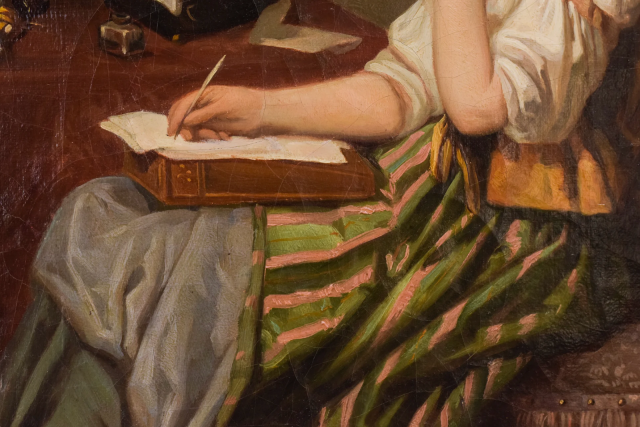
THE ROSEMOOR PAPERS Collected Correspondence of Elizabeth Anne Novellen, Princess Imperial of Oren Compiled by Madame Sibylla Ashford de Anjou Lady Secretary of the Imperial Court In Response to “To Uplift the Silent Majority: The Bill That Altered Orenian Succession” by Professor de Talleyrand-Perigold of Rosemoorist and Women’s Studies at Varbrand Academy, Novo Horos. Below is a series of essays, letters, and correspondence I have gathered from the archives of the Novellen Empire. Many of these were held in the personal records of my mother, the late Baroness of Cleves, who was distantly descended from Elisabeth, Countess of Dobrov -- a pioneer of the Rosemoor movement, and personal confidant of its founder. Each of these was authored by the Princess Imperial and Countess of Rosemoor, Elizabeth Anne (1755-1831), and exemplifies the philosophy she spearheaded: Rosemoor. The papers offer a unique perspective on how the Rosemoor philosophy was shaped throughout the Princess Imperial’s life - not as a fixed doctrine, but as an idea refined through grief, restraint, and relationships. The letters trace its evolution through her bonds with others in her life: her sister, daughter, brother, mother, close friend, and her successor in the titular dignity of Princess Imperial, revealing how private conviction became public reform. My interest in releasing these letters, which have collectively aroused much interest in me since the study released by Talleyrand-Perigold reached our shores, is derived not from blind devotion to Rosemoor itself. Rather, it stems from my earnest desire to encourage careful reflection on how ideals are formed, tested, and tempered over time. We live in an age far removed from that of the Princess Imperial, yet, as an academic, I can recognize that history consistently remains one of our most patient and dedicated teachers… if we are willing to listen. A Letter for Sisters A letter authored to Juliette Caroline, Elizabeth’s only sister, following the younger Princess’ voluntary departure from Oren in 1780. Upon her departure, Juliette left Elizabeth a private letter expressing feelings of jealousy and reflecting on the persistent comparisons drawn between them. The resulting correspondence should not be understood as a familial dispute alone; rather, it illuminates a broader structural dynamic in which women were routinely positioned in competition for limited authority, recognition, and legitimacy. The sisters never reconciled, nor did they correspond again after this exchange. In the years thereafter, Princess Juliette was stripped of her titles, rank, and Novellen name. A Letter for Mothers A letter authored to Helena Augusta, Elizabeth Anne’s only daughter. Although the exact date of the penmanship is unknown, it is assumed to have been composed sometime between 1810-1811 during the first Orenian Social Season. It is speculated that Helena received this letter following her scandalous debut into Imperial Society, during which she wore pants, in lieu of a dress, and where she jousted her future husband, Prince Robert, Count of Temesch. The letter details Elizabeth’s fond relationship with Helena, not dissimilar from her own relationship with her mother Anne I, but in the same describes how her joy is shadowed by a thankfulness that Helena was not her firstborn child as she would have been overlooked in succession for the County of Susa. A Letter for Wives The following letter, written to Elizabeth’s husband Iskander Basrid, Count of Susa, offers an insight into how her understanding of equality and partnership was shaped by her marriage. Assumed to have been authored shortly before the 1828 publication of Rosemoor, the letter describes how Elizabeth’s relationship with Iskander cultivated her idea that tradition could coexist with innovation, and that empowerment did not have to be an enemy to long-established customs such as marriage. The Princess Imperial and Count of Susa were faithfully married for forty-five years until Elizabeth’s death in 1831. Iskander died a year later in 1832. A Letter for Brothers The following is a private diary entry by Princess Elizabeth, dated in 1814 upon the coronation of her brother, John VIII. The entry, which is certainly among the most poignant, introduces Elizabeth’s written reflections on the imperial law of inheritance in Oren through her own position as Anne I and Joseph II’s eldest child. It observes the internal burden of a woman, inspired by her capacity for leadership, her admiration for tradition, and, too, the “crystallization” of her reflection on bygone opportunities that would not have passed her by were it not for her sex. A Letter for Daughters The following diary entry, dated in 1829 following the publication of the Rosemoor Convention, describes Princess Elizabeth’s response to criticism against her mother Anne I’s reign. Having adopted the late Empress as a key symbolic foundation of the Convention, Elizabeth found herself confronting renewed and often hostile assessment of her mother’s rule. The entry itself speaks not only of her personal grief, twenty-eight years after Anne’s death, but equally of her growing awareness of how history depicts women who govern - often unfavourably. Written not as a public defense, but as a private reckoning, the entry makes note of Anne’s regretful journal entries in her final years (now published by the NGS), the lack of support for Rosemoor by her brothers, and her attempt to reconcile love, inheritance, and the unequal standards to which power is remembered. A letter, From One Woman to Another The following letter, authored in 1825 during Elizabeth’s quiet campaign to gain support for Rosemoor, was sent from the Princess Imperial to her childhood friend and close confidante, Elisabeth Carrion-Tuvyic, Countess of Dobrov. Detailed herein are the very fabrics of the ideals that comprised the Rosemoor Movement, outlined with vigor and care by its composer. It speaks of many themes already underpinned in the various correspondence throughout her life: tradition versus innovation, the unfair standards to which history judges women, and a dismissal of Rosemoor as personal ambition or grievance. A Letter for Successors A letter authored to Princess Josephine Augusta, Duchess of Crestfall, Elizabeth’s future successor as Princess Imperial. Authored in 1831 following Elizabeth’s censure by the House of Lords and just prior to her death, the letter charges Princess Josephine with innovation, reframing the role of Princess Imperial from her former interpretation (as published in ‘The Nature of the Title of Princess Imperial’, 1818) as one of empowerment, rather than ornament. The letter stands as an instruction to future generations to carry the ideas of Rosemoor beyond Elizabeth’s death.
-
worst rp husband. great friend. see you at the club brotha
-
 Sibylla of Cleves, an academic herself, pored over Proventia’s work with curious eyes. There was an underlying sense of familiarity in her reception of the article, for a feeling wrought by a time that her contemporaries had not been privy to.
 -
Elsewhere, in the heavens, were titulage and blood bent before virtue, a father was welcomed by his daughter, and his siblings, and his ancestors. God would forgive, what had since been long ago repented for. There, they embraced.
-
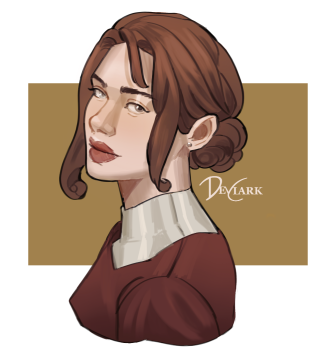
THE COIN-EYE Cecily Amelia of Alstion “Did you know, sweet Cecily - that we style, and bear iconography of the world’s most selfish, and prideful creatures? It is a strange ornament when you truly understand what it means to share in their blood.” - Alexander Caius “Cecily, come inside.” The girl sat cross-legged in the posterior gardens of The Hand of Horen, one eye hidden beneath her windswept hair as she sorted small stones into circles on the marble tiles. Her father’s voice carried from the archway, faint yet firm, and she turned, rising obediently. Her mother stood beside him, veiled yet boasting a vitality in her eyes that betrayed the modesty of her unshapely garments. Inside, the halls breathed of wax and smoke, the walls lined with banners of House Alstion, banners that, in time, would burn; an irony of dynastic proportions, for it was the dragon, a Harbinger of flame, that adorned it. She passed beneath their weight without thought, a child unaware of what awaited her. “You wander too far from your lessons,” her father chided softly, straightening the fall of her skirts. Her mother voiced, then, “You are a daughter of kings, Cecily. One day, people will look to you.” She laughed, bright and guileless. “No, Mama,” she whispered. “They’ll look to Godwin.” They smiled and said nothing. She would come to learn, in time, how silence can be the cruelest omen. The Daughter of Whitespire Cecily was born in a marble bastion that no longer stands, the second child of King Charles Reman of Aaun and Hedwig of Warsovia. She was an elder twin to Charlotte, elder sister to Marcus, and younger to Godwin, the brother destined to inherit Aaun and the ancient glories of their line. But destiny is brittle. When Cecily was still young, her father and mother conspired to slay her uncle, James of Whitespire. For their sin, war resumed with the state of Ravenmire, and many territories and lives were lost. Saint Raguel descended upon the city in wrath, and the once-shining jewel of the Heartlands was scorched black. The towers fell, the banners burned, and the Alstions were unmade in a night. Her family scattered. Cecily was spirited south, by the kith of her friend, Maude, to the wardship of the Prince of Valentin, while her siblings were sent into the Pontiff’s keeping at Lemon Hill. There, Charlotte shed her name like a skin, became Charlie, and later Charles, growing into piety and disillusionment. Cecily was instructed in statecraft by the reclusive Prince, and was treated as his daughter. When asked if she would like to join her siblings, by a pontifical courier, the youth expressed apprehension; apprehension to be surrounded by the stark reminders of what she had lost. Godwin remained with Charlie, albeit briefly. He bore the crown under pontifical regency, but when she was scarcely grown, he too was gone. It was meant to be his burden, his birthright. Instead, the weight of it fell upon Cecily’s shoulders, a yoke she had never sought, and would never escape. The One-Eyed Girl The mark of her bloodline was set upon her early. Cecily came into the world with one eye clouded, white as snow, bereft of sight. So too had her grandmother before her borne the pallid orb, and Lorelei of Enswerp, her cousin and dearest companion in childhood, carried the same affliction. The People of Middelan did not call it chance. They called it Curse. It was said to have begun with Johannes van Aert, Governor General of Veletz, and his fateful marriage to Klara Miray, others name her as Mariya Barbanov, whose dowry carried a legacy more weighted than royal blood. From that union issued a judgment: that every firstborn daughter of every son sprung from their line would be born marked, one eye turned to milk and darkness. Not merely a blemish of flesh, but a sign that Heaven’s gaze no longer rested kindly on Middelan. What began as a van Aert inheritance did not remain confined. When Amelya of Middelan wed into the House Alstion, the curse stretched its long fingers into the line of John I of Aaun. From then onward, even the high halls of Alstion were shadowed. The taint of Middelan passed quietly into that royal blood, reappearing with cold precision among daughters otherwise destined for glory. It became a generational burden woven into the fate of two houses, a mingling of northern heresy and imperial pride. Thus, with every girl-child born with a sightless eye, white as snow, the reminder was given anew: some unions are struck not in blessing, but in judgment. The curse lingered, etched in Cecily’s pallid eye, and mirrored in the elder Lorelei’s own. Yet if their blood bore heaven’s disfavor, their hearts knew none of it. The white eye was a mark of shame to their houses, but between them it was a secret emblem; proof that they were bound by something older and deeper than mere cousinship. As children, they were inseparable, the sun and the moon, running through Whitespire’s courts hand-in-hand, whispering secrets in the alcoves, and laughing until the night swallowed them whole. Their uncle, Alexander Caius, would refer to them as coin-eyed, a doting and affectionate declaration that reminded the youths of their individual worths, even in teasing. He passed in her youth, but in his final days, he gifted her, Charlie, and Lorelei a dragon plush toy, respectively. It smelt of him, and she embraced the final relic of her beloved uncle closely on the notice of his disappearance. It was an heirloom cradled with each of her children and the eldest among her grandchildren. Decades later, the scent of Alexander had faded, but it had not waned in significance for the matron, nor had it for Lorelei. Years after Whitespire had fallen, politics drove them apart. Lorelei remained where Cecily could not. And Cecily chose Alba. They met again, long after their parting, on the eve of Cecily’s daughter’s marriage. Neither spoke much of the years between them, for they hung too heavily in the air. They simply stood side by side, dimmed halves made whole again, if only for a moment, with hands held. The Crown Cecily observed the weight of the crown upon her father. Above the sleek golden band that circled Charles Reman’s brow, his hair was already turning grey; beneath it, his eyes were tired, and lines had begun to etch themselves into his face. Before councillors and courtiers his posture was impeccable, yet among family it collapsed, and the burden of sovereignty showed itself plainly. She had thought herself spared, as the second child, the one who would stand behind Godwin and simply be. Yet with Godwin gone, and Marcus thrust into illegitimate kingship above them both, Cecily was pulled into a legacy by legitimists that she neither sought nor claimed. When her distant cousin, Edward Caius, approached her with a marriage proposal, she initially delayed her response. He was a third-cousin of hers, a great-grandchild of Charles I of Aaun by his second son, Prince Emil, the Duke of Balamena. Yet, the young man’s removed distance from the Crown did not stifle his ambitions. He was no Prince in status, but his character and steadfast discipline kindled a flame in Cecily that would guide them to success in the years to come. Alba needed a hand to hold its banner. And Cecily, though she never bore a coronet, with Edward beside her, bore that weight nonetheless. Together, they became Princes of Alstion, Lords of Alba, and in time were granted ducal lands by the Holy Regency. Under Emperor Tiberias Horen, they rose further still, styled Archdukes of Alba and named Princes of Alstion once more. And yet, Cecily elected never to permit the archducal coronet to strain her brow. The Noble Diet of 2003, when President Levi Summers of Salvo attempted to assassinate the Johannian pairing and their nobles, altered her perspective forever. Often, she catastrophized over the blood nearly spilled that day; of her supporters, her blood; their legacy. “Crowns are for kings,” she once murmured to Edward, “But Alba is not ours. It was borrowed, as are our lives.” She ruled not as sovereign, but as servant. It was both her nature and her choice. In her later years, weakened by the cancer that had plagued her for two decades, she was given tinctures and remedies by Ana de Montcalm, the archducal alchemist, to ease her pain. One night, in the haze of those draughts, Cecily dreamed. And there, through the dim, came the familiar presence of her uncle, Alexander. They spoke much, as they often did, of her legacy. Cecily’s feet were always steadied on the ground, and spoke of herself with an acute sense of humility, of duty to what and who was lost before her. “Even what is bygone may leave vestiges, to value, to embrace.” “But - not every hand is so blessed as yours, or heart. All the little victories name you a winner in your courts, as well as heavens, you know,” The fallen Prince, inhibitor of the heavens, and all worlds betwixt them and earth, spoke to her, “Once but every-so-often is one like you born into our bloodline.” Alexander tilted his head, a faint smile in his eyes, a gesture so familiar that it pierced the dream with aching clarity. They lingered there, speaking softly as though time itself were suspended, until Cecily woke, and the vision dissolved like mist at dawn. Ghosts of her Blood Her siblings remained the unquiet ghosts of her life. Marcus, whose clai to kingship divided them, she loved still; fiercely, quietly, without demand r expectation. His crown had driven a gulf between their houses, but never diminished her affection. In her prayer, she did not ask for his triumph or his fall, only that he might be granted peace. Charles, her twin, had once been her other half, the echo of her every thought. Alba shattered what had bound them, and silence fell between them like a sea. For years, they lived estranged, their bond carried only in memory, and tempered by resentment coaxed by a crown that was no longer theirs. Yet in their late years, reconciliation came not through words but through presence: walking side by side beneath gray skies, seeking the sheep Charles tended. They said little, for little needed to be said. And Godwin… Godwin remained absent, unburied, yet eternal. Every decision Cecily made carried the weight of his shadow. Every title she bore was one he should have held. His name was a wound she never spoke aloud. . . . Her children, however, were no ghosts, but the substance of promise and hope: In Elizabeth, her daughter, ginger-haired and bright-eyed, the curse of Middelan broke. She bore no pallid eye, no mark of Heaven’s disfavour. She was an Empress-to-be, the successor to the motherhood of man, and already First Lady of the Empire of Man. Where Cecily’s sight faltered, Elizabeth’s gaze was whole, clear, and unclouded. Her son and successor of she and Edward the Elder, Edward the Younger, carried the weight of rule with gravity, yet not without gentleness and charisma. In his wife, Jane, Cecily found one she respected, and in whom she trusted the future of their house. From Edward sprang grandchildren, and in his eldest, Margaret Cecily, she beheld herself anew. The child bore her name, her curiosity, her fierce clarity of spirit. Cecily cherished this most, that her likeness might outlive her not as a curse, but as a strength. Her younger son, John, she loved no less, though his path diverged. Where Edward trod the road of duty, John strayed toward fulfillment, toward the quieter joys that crowns and councils could not gratify. She saw freedom of him. Whilst Edward embodied her burden, John embodied her yearning. The Last Vision Years before her passing, Cecily wandered beneath the quiet boughs of Adria where her grandmother Amelya had once walked. Once a bastion of the bygone League of Veletz, not a single soul meandered that day; it reminded her of Whitespire. Her ill humors had limited her mobility in advancing age, and she often succumbed to the same bouts of hallucinogenic daydreams that she had in youth. There, beneath the filtered green light, she dreamed and saw her uncle Alexander as he had been in youth. He smiled, his arms open. Over time, he welcomed her again and, beside him, Esfir d’Arkent beckoned with laughter in her eyes. Cecily joined them beneath canopies, at riversides, in distant planes and strange lands, and even the skies, where the sunlight turned gold upon their hair. When she woke, each time, she wept, for she thought him long dead. His memory felt like a whisper of what she had left behind in childhood: security, familial unity, privilege without burden. And so, when the end came, and she lay upon the settee of Castle Morvelyn’s hosting chamber, those who kept vigil swear they heard her murmur, faint and serene, as though to one unseen: “It has been so long,” she whispered, her breath a thread of wind. “Take me home.” Perhaps he did. Not then, but rather, as the great ship that took Cecily and her husband Edward, to the shores of Balldur, veered off course, and submitted to the thrashes waves of the island’s foreign seas. The waters rose in fury, striking against the timbers as though Heaven itself sought to reclaim what blood and burden had wandered too far from home. There, upon the unquiet deep, Cecily’s mortal course was ended, as the vessel that guided them settled at the cusp of lands just beyond Balldur, that descendants would one day come to know. No chapel bells tolled, no banners of Whitespire fluttered at half-mast. Only the sea bore witness, cloaking her in salt and storm. Yet even in that distant place, word of her passing drifted back across Man, carried on sailors’ tongues and chroniclers’ quills, until her name was spoken in hall and hearth alike. Thus the curse of Middelan, borne in her pallid eye, was at last stilled… not by healing, no, but by the hand of the sea. And yet in her children, and in their children’s children, her shadow walked still, tempered into strength, until the mark of her blood became not doom but remembrance. As the sea stilled, the sun's rays distorted the horizon, and from it rose a great magnificent beast, whose thrashing wings rippled air and water alike. It is a shame none aboard lived to witness it. Epitaph in the Capital of Alba to come: Here lies Cecily Amelya of Alstion, Princess of Alstion, Archduchess of Alba, Patriarch of the Johannians, Arbiter Draconis Daughter of Whitespire’s kings, one-eyed. She bore no coronet, Yet carried the weight of crowns long fallen. The sun and the moon set apart, The greenwood opens. She has gone where the lost are found.


-
One of nameless birth and shrouded beginnings, save for rumor of deserts vast and unending, rose from slumber that eve. A wonder it was, for never did she dream. Yet the stars of the southern firmament, unblemished by smoke or mortal stain, burned as though in summons. And lo, as their silent chorus pressed upon her spirit, it seemed she was chosen to answer.
-
Another laid in wait for her kith, sired by the same ilk of Aeldinic blood; but, he never came. Not after that battle. The blood moon had grown dim, until the moment when it would again eclipse all other stars.
-
“Twice have you born Man a son. Well done, my daughter. You have provided humanity its heir and its spare,” voiced the Archduchess of Alba to her bed-ridden daughter, coddling the young woman’s hand into her own. As the babe wept in the periphery of the room, as many a noblewoman tended to him, she craned her wrinkled countenance forth, and planted a ceremonious kiss upon the forehead of she who would become Mother of all Mankind.
-
“And so, the House of Horen has been united — in flesh and in blood, the lines of John and Pertinax coupled in perpetuity. Well done, dearest Lily,” intoned the Arbiter Draconis, and Princess of Alstion, to her daughter.
-
oooooh, I have to say that it was definitely around the time of the lord-protectorate, as well as during the empire just before. I think rp was so dynamic then, and a tad bit messy but in a very dynamic way. Top 3 human queens... I think I have to say Queen Maya, Queen Anna Sophia, and Empress man. All unique. When it comes to mine, in ranking order, I'd say Milena was the most interesting, altho OOC stuff impacted her story at the end, Venerable Queen Johanna was also epic, and was my first canonically recognized character, and, altho not a queen, Archduchess Cecily has been a really interesting character. When it comes to my characters, I'm equally inspired by history, media, and my own perceptions, but I try to breathe into them lives of their own as I develop their characters. As a result of that, I've also found myself deeply inspired by the characters I've played. Be that bc of their mistakes, or their successes! Thank you, my dear! I'd say the OOC toxicity that still exists. hopefully people can learn to just tell good stories together. politicking is fun, trust me, I've been there, but there's a way of doing it that's inclusive and healthy. I like the approach that the empire has taken recently, as they're all solid guys oocly. I'd love to do good some day. I'm really interested in doing aid work abroad, once I finish up school, and then continue my education. we'll see how it goes! i just want to give my most to those around me
-
hard to say....... fav rp group, hrm. I think that I always think back to the the Imperial palace crew, where I met people like ivorey, amyselia, trinn, dasdi, and eryane later on, but my favorites by far are definitely the ones that I've helped build from the ground up. Sutica, albeit short-lived, Savoy, the varg gang, Alba. Now, finding myself having quite a lot of fun in terms of what we're doing :) In terms of the server's quality... I think we're seeing what once were pockets of good rp dotting the server actually growing, and I do feel good rp coming back. It's what has kept me online. On that note, going out of order to answer this question (also thank you for the bday wishes) <3 I probably will take a break whenever I pk my Alstion, so that I can focus on the remainder of my time in uni, on academics and friends. but, i'll likely stick around on a more occasional basis. The most memorable thing that a character of mine did...When she was very young, I believe at 17, Queen Milena of the defunct Hanseti-Ruska created a harvest initiative where free bread was placed around the capital city in chests, for people to take, and the bread was replenished weekly. The rp reasoning for that was to curry favor, but also because she had been raised with a good heart, if not slightly oriented toward herself. That's an initiative that was adjusted and preserved for a long time after, and became a testament to her, even after being embroiled in controversies that still rock her image today. such a cool question! I think I would have loved for there to be another generation of Sutica, as I think it had so much potential to become an idyllic southern stronghold for humanity, with trading and ethical magic being practiced as the cool, esoteric arm of the Empire's defenses. Alas, the civil war at the time was long, and I was jaded and becoming busied with school, so it just couldn't happen for me to go on, and the circumstances weren't right for anyone, so that's when Savoy was formed, and I'm also proud in my involvement in that group. LOL i just cringe when, even now, i send a very lengthy emote into OOC chat by mistake. it's really just nightmare fuel... I also distinctly remember being killed by SOMEONE (you) when I was a noob. Great question, but I think this question would be better answered by telling you who shouldn't have one: 1. Therese Wick: Kind-hearted but lacked agency or a major arc. 2. Anabel of Rubern: inconsequential at the beginning, rather gruesome at the end... That would have been more of a horror movie, like Nosferatu, or any other Eggers film, and not so much a biopic. 3. Vivienne of Ardennes: Her influence is through her daughter; she may be a compelling mother figure but not the central protagonist of a biopic. 4. Mariya of Haense: She was a link between dynasties, and her story was relatively interesting but her life seems eclipsed by her husbands and sisters. love you my sweet eryane! i think my favorite color is yellow right now :) Elizaveta's favorite color... probably white, which is a shade, but it's important to her because her daughter, Milena, once wrote of white chrysanthemums. next up on the ranking for her would likely be red. :)
-
thank you! and these are all great questions, Kaiser :) I already mentioned Helena of Susa, so I think I'd say Catherine Barclay and Elizaveta vas Ruthern next. The former had such a unique personality, and psyche, and her life circumstances were really unique. i think that led to a particularly interesting storyline for me. Elizaveta has probably been my most fleshed out character to date, as the experiences she had in life were so formative and distinct... and crazy. what I love about her in particular is that she wasn't royalty, or a Head of State; she was a playwright and actress, and secondarily a countess. That liberty allowed me to craft out such a unique story for her. I will say, though, that I think i pigeonholed myself into noble rp very early on. consequently, I feel like there are so many stories that I could have told but didn't, or stories that felt altogether too alike to others I had told before. there might've been two reasons for that: I was playing two nobles or royals at a time, especially earlier on where player groups unfortunately did not give out opportunities to others as much, and that my writing ability was just weaker than it is now. Naturally, I'm in my twenties, and when I played my early "big" characters, I was in my early/mid teens. There were points where I had quit the server because my creative juices just weren't flowing anymore. on the other hand, I've enjoyed it -- helping grow communities and meeting the people that i have as a result of that very same noble rp. people (who know who they are) that have becoming years-long, and irl, friends of mine. those stories also were pretty special. moving forward, i hope to play characters that are unique, as I have been with Cecily and Ana, and not necessarily cut from the same cloth as the others. another great question! I think I, very early on, tried to detach myself from the notion that they were characters. instead, i try to look at them as I do when I write creatively: as people. they aren't charactures, they are embedded with life as people are with each interaction that you have with another player's character. let those experiences shape them, and think critically as their skygod about how an individual with their personality/background would react to what they've thus far experienced. also think of their future! I also like to think of how each strength of theirs can, in the lowest of circumstances, develop into a flaw. Extreme wealth --> greed, ignorance, hero complex? Intelligence --> withdrawn, arrogant, perhaps even psychopathy? creativity --> delusion, obsession, and so on.
-
great questions! to answer the latter first, you're an 11/10! my most memorable storyline... gosh, I think it has to be Helena Basrid. She was born as a morganic daughter of an imperial and rhenyar, who became a holy dame and vice-general within the papal army. A secondary feat of hers was becoming an imperial princess, and sire to the House of Temesch (the ruling House of Petra)! Her upbringing was very cool, as all her cousins played at that time, so we had loads of formative kid rp. When I was playing her, it was very difficult to play any of my other characters. She was so uniquely crafted, and i miss her dearly. lol I feel like old lotc was really funny, as people were just way more unhinged. you'd walk into cities and some insane sh*t was always going on - be that literal witchhunters burning people on a pyre, or ghosts/faeries flying around pestering noble rpers. people seemed less scared to offend, or mess up the paradigm of things. sometimes, i think rp would be more fun if that style of rp returned (in moderation)
-
Hi y'all! I've been playing on lotc for 8 years now, and a little over, but I didn't get a chance to do this earlier. It was my birthday yesterday, so I'm feeling a little nostalgic. I'd love to chat down below or answer any questions you may have. Cheers!! <3
-
THE HISTORIA PERTINAXI: Volume VII; The War of Two Emperors
Axelu replied to Nectorist's topic in Empire of Man
-
Luncheon Attendance Form Full Name (incl. title, if applicable): Cecily, Princess of Alstion Nation: Archduchy of Alba House: Alstion Age: 57 [[IGN: ]] Axeluu
-
“IN NOMINE DEI” Issued and Confirmed by His Imperial Majesty, Tiberias I of the House of Horen 8th of the Sun’s Smile, 2039 The Court of the Dragonbloods TABLE OF CONTENTS 𝕀 | ON CLAIMS AND HEIRS 𝕀𝕀 | RECOGNITION AND DEGREES OF SEPARATION 𝕀𝕀𝕀 | DIGNITARIES OF THE DRACONIS-ATRIUM I. ON CLAIMS AND HEIRS Primogeniture with Doctrinal Legitimacy It has been judged that neither blind seniority nor unchecked lateralism alone may safeguard the Crown of Man. Under the Tiberian Model, the Emperor’s legitimate firstborn son is the heir, but succession must be affirmed by the Emperor and a quorum of the Draconis-Atrium. Where the heir is absent or ineligible, succession reverts to the most senior legitimate scion of the main male line of Horen, with preference given to piety, virtue, and loyalty to Canon and Imperial Law, which are one. II. RECOGNITION AND DEGREES OF SEPARATION The Imperial Line The House of Horen, in modernity, is resigned solely to the person of the Emperor and his direct offspring, who alone may bear the name and arms of Horen unaltered. Those of the Emperor’s kith who are not his direct spawn, nor those born directly of his heir, will assume the name ‘Burgundie’. All others, though of the dragon’s blood, are styled under their respective branch names. And Sub-Lines After the dissolution of the House of Horen in 1721, all branches of the House of Horen adopted distinct names that honored their unique Horenic traditions and heritages, yet separated them from the imperial dignity that all Horens once shared. Although dragon-blooded and Horenic, dynasts of Sub-Lines are not entitled to use the Horen name nor Imperial stylings, as these honors are reserved for the Emperor’s immediate family. Recognized sublines include: HOUSE OF VILAC, OF THE PERTINAXI LINE HOUSE OF CASCADIA, OF THE PERTINAXI LINE (deemed extinct) HOUSE OF HELANE, OF THE PERTINAXI LINE (deemed extinct) HOUSE OF TIBER, OF THE PERTINAXI LINE HOUSE OF ALSTION, OF THE JOHANNIAN LINE Each descends patrilineally from the Horenic stock and is considered dragonblooded. They are permitted to bear modified arms of the dragon and may petition for matters of succession or confirmation before the Court. And Honors Inherent of the Blood of Horen The House of Horen, of the Tiberian Line, reserves the privilege of bearing Tiberian-purple, a shade of burgundy, on its sigils and banners exclusively. Moreover, only the Emperor, Empress, and children of the reigning Emperor shall bear the dignities of Imperial Royalty. The Emperor and Empress are styled as Imperial Majesties, and their children are styled as Princes and addressed as His/Her Imperial Highness. Titles beyond the second generation may only be retained if: ✷ The title is maintained by active right or grant ✷ The titles are borne by the children of the heir-apparent, whose succession is otherwise uncontested. ✷ The line remains in standing with the Emperor and Church Of the Branches of House Horen Cadet Houses are offshoots of named branches, whose founders were ennobled through service, adoption, or reward. They may bear dragon iconography only in a bastardized form, and not in the same magnificence of their parent house. Extinct cadet houses will not be listed in the documentation, unless the Draconis-Atrium otherwise affirms a line. Among these are: ✷ House van Aert, of the Pertinaxi Line ✷ House of Preussens, of the Johannian Line ✷ House of d’Anpalais, of the Johannian Line ✷ House of Marna, of the Johannian Line ✷ House of Joannes, of the Johannian Line ✷ House of Varoche, of the Pertinaxi Line ✷ House of Enswerp, of the Johannian Line Those born of Horenic ancestry through matrilineal lines or distant blood, as cadet branches of Horenic cadet branches, may be granted the status of Drakesblood, upon the mutual recognition of: ✷ The Emperor (or head of House Horen) ✷ The head of their primary line, those being of the Pertinaxi and Johannian Lines ✷ The Arbiter-Draconis …without such, their claim is null and legally without standing. Among these are: ✷ House d’Arkent, cadets of the House of Marna ✷ House of Ravensbourg, cadets of the House of Marna Non-Horenic Claimants Those who claim Horenic blood without documentation, or whose lines have been declared extinct, are considered Non-Horenic. Any attempts to use such claims in matters of law, inheritance, or noble bearing shall be punished at the discretion of the Courts. Marriages and Progeny Marriage among dragonblood must be officiated by a Canon priest and witnessed by at least one member of the Court or sub-line. Illegitimate children, or those born outside Canon Law, shall not inherit unless legitimized by the Emperor and the Courts. On the Return of Aeldenic Lines All claimants from Aeldin or beyond must present: ✷ Confirmed genealogies ✷ availability for an interview by the Draconis-Atrium ✷ Recognition by the Courts of the Dragon Absent these, they are presumed to be of non-Horenic status Of the Courts of the Dragons The Courts are hereby reconstituted to: ✷ Verify claims to Horenic and dragonblooded lineage ✷ Oversee succession and disputes among the houses ✷ Sanction coats of arms and heraldic styles ✷ Affirm or deny the revival of extinct lines Membership is restricted to confirmed dragonblood, with a majority drawn from the main and senior sublines. Membership in the Court enables leaders, upon Imperial assent, to: ✷ Confirm a tertiary claimant ✷ Legitimize a cadet line ✷ Sanction a newly-returned line from Aeldin ✷ Vote on succession in the absence of a clear heir III. THE DIGNITARIES OF THE DRACONIS ATRIUM The Arbiter of the Dragon (Arbiter Draconis) is the first among the Emperor’s proxies within the Draconis-Atrium. Chosen by the Emperor from among the confirmed dragonblooded of noble repute, the Arbiter serves as: ✷ President of the proceedings of the Draconis-Atrium in the Emperor’s absence; ✷ Recorder and enforcer of the Draconis-Atrium’s decisions; ✷ Guardian of genealogical law and Horenic dignity; ✷ The first to receive petitions of bloodline confirmation, heraldry, or marital approval. The Arbiter may not override the Emperor’s decrees, nor act unilaterally to admit new lines or elevate bastard houses. However, as the Emperor’s proxy, the Arbiter’s word shall carry binding authority in all regular matters, unless contested by direct Imperial command. In addition to the Arbiter Draconis-Atrium, the Court privileges aides with the standing of Officers Draconis. These officers serve at the Emperor’s pleasure and operate in the Arbiter’s confidence, executing specialized functions within the Draconis-Atrium. Their names, roles, and seals shall be recorded upon their appointment and held in the custody of the Arbiter Draconis. Officium Draconis I A senior aide to the Arbiter, charged with the oversight of records, heraldic law, or any task assigned by the Arbiter. Officium Draconis II An appointed servant of the Court, responsible for the execution of writs, ceremonial order, or matters of external communication. The Draconis-Atrium is not a body of common motion, nor a court summoned for triviality. It exists as a guardian of sacred inheritance, and its convening is an act of great solemnity. As such, the Court shall only be summoned under circumstances of great import to the integrity of the House of Horen and its bloodlines. The Court shall convene only at the behest of His Imperial Majesty or the Arbiter Draconis, and only when one or more of the following matters arise: ✷ Disputes concerning the confirmation or legitimacy of members of the Imperial Family; ✷ Conflicts among the named branches or cadet houses over succession, dignity, or precedence; ✷ Petitions for the elevation of a cadet house to sub-line status, or restoration of a line believed extinct; ✷ Appeals for the recognition of a tertiary house as Drakesblood; ✷ Judgments on the legitimacy of a dragonblooded claimant, particularly from Aeldin or foreign shores; ✷ Sanction or denial of proposed marriages, legitimizations, or adoptions that would affect succession or heraldry; ✷ Inquiries into the heretical misuse of the dragon sigil or unlawful styling as Horen; ✷ Deliberations concerning the reassignment of succession in the event of disinheritance, abdication, or extinction of the main line. ✷ In the absence of such causes, the Court remains in dormancy, its power latent and its presence silent. Of the Court under Tiberias I ✷ His Imperial Majesty, Tiberias I, of the House of Horen @Tide1 ✷ His Imperial Highness The Crown Prince Hadrian Tiberias, of the House of Horen @Werew0lf ✷ His Imperial Highness The Prince Maximilian Caius, of the House of Horen @sam33497 ✷ Her Imperial Highness The Princess Marcella Antonella, of the House of Horen @Rainalyn ✷ Her Royal Highness The Alban Archduchess Cecily Amelia, of the House of Alstion @Axelu ✷ His Royal Highness The Alban Archduke Edward Caius, of the House of Alstion @ErosTea ✷ The remainder of the House of Alstion. ✷ Charles of Verbant, of the House of Vilac @chaotikal ✷ The remainder of the House of Vilac ✷ His Princely Highness The Blackvalian Prince Coenrad, of the House van Aert @Vermy ✷ The remainder of the House van Aert. ✷ The unconfirmed Head of the House of Tiber. ✷ The Patriarchs of all Horenic Cadet Lines. Those unlisted are not recognized as dragon-blooded or of any standing in Horenic affairs until adjudicated by the Court. Let this document be made known across all realms of man, and let those who claim the blood of the dragon present themselves in humility, truth, and law. H V M A N I T A S I N V I C T A “Für Gott und Kaiser,” HIS IMPERIAL MAJESTY, Tiberias I of the House Horen, by the Grace of GOD, Emperor of Man, Holy Imperator, King of Burgundy, Seventis, Salvus, Renatus & Oren, Duke of Middelan, Helena, Lorraine, Sunholdt and Reutov, Protector of Grense, Protector of the Heartlanders, Patriarch of House Horen & the Tiberian Dynasty, Captain-General of the Church, Defender of the Faith. BVRGVNDIA IMPERIVM Her Royal Highness, Cecily of Alstion, Arbiter Draconis, Princess of Alstion and Aanen, Archduchess of Alba, Duchess of the Lowlands, Franklands, and Corazon, Countess of Whitespire, Enswerp, Thesmer, and Yves, Baroness of Placentia, and Virdain, Lady of Elizabeth, Defender of the Godwinites, Protector of the Franklands, Patriarch of the Johannian Dynasty, etcetera. TANDEM TRIUMPHANS
-
Cecily had been traveling home when the letters patents were initially delivered to her husband, but rejoiced alongside him once they returned home. “What joyous news,” decreed Cecily to her husband.
-
“To the future of Alba, and of the Lowlands,” so decreed Cecily of Alstion.