_Elrith_
-
Posts
1253 -
Joined
-
Last visited
Content Type
Profiles
Personas
Wiki
Rules
War
Systems
Safety
Player Conduct
Roleplay Leadership Guidelines
- Roleplay Leadership Guidelines
- Roleplay Leadership Guidelines Comments
- Roleplay Leadership Guidelines Reviews
Forums
Everything posted by _Elrith_
-
THE WEDDING OF ILSE HAAKONSDOTTIR AND DRAGOMIR RAUDRDRAKAR
_Elrith_ replied to Cryothane's topic in Royal Laws & Edicts
-
i would like for all haelunor haters to please message me details
-
why am i being mythologized as some nefarious force of nature. if you want to talk abt anything just msg me on discord or even ask questions here. discord name elennanore P.s. if your only question is going to be why my name is/was Elrith I was 13 when I changed my name to 'Elrith_Searith', because I thought it sounded really cool and elvish and I played a lot of Empire War, an lotr pvp server. JBighungry is what REAL oldheads from more than a decade know me by. Ofc, controversy is that my name is unfortunately an anagram, however i would be very humbled if people thought i was intelligent enough as a 13 yr old to know that elrith can be changed into hitler, which would make for a very weird hitler_searith ign
-
holy shit they removed my nl tag after nearly a year, can i get aether now, and forum pex?
-
Heiðrslög Rauðtrúar THE LAWS OF HONOR Issued by High Keeper Sissel Freysdóttir av Ruric, on the 4th of SVENSMÁNAÐR, IAÁ 594, AGE OF DRAGONFYRE PREAMBLE Long have the people of the Kingdom of Norland always strived towards the virtues of honor, as burdened by our Allfather unto us. Thus, the realm has always had distinct social cues & rules regarding the behavior of our people. However, such was never truly given permanence until the High Keeper Alisa Camian, now Paragon, dutifully wrote the ‘Codes of Honor’ into the Norlandic Code of Law during the reign of King Halvar. So it is that this work is truly inspired by the writings of a great Paragon of our past, who dedicated much of her life to scholarly works & the codification of many unwritten rules. This new, Heiðrslög Rauðtrúar, The Laws of Honor, had been primarily the work of the late High Keeper Ellenore Eiriksdóttir. However, like many of her writings & projects, such had remained unfinished & never publicized. Now, due to the works of High Warden Soren & the High Keeper Sissel, this document comes into being. AND SO IT SHALL BE, BY THE WILL OF THE FATHER, as Master of the Order of the First Flame, High Keeper of the Red Faith & the Flame Imperishable, I, Sissel Freysdóttir av Ruric, henceforth declare it is bid that any man’s or woman’s honor should only be judged by words spoken, deeds done, & duels taken, that judging anyone’s honor upon any other pretense is of folly & is, in of itself, dishonor upon one’s own person. That the rights of one considered in honor are above those of the considered in dishonor, & that to be in a state of dishonor is to lose the privileges those in-honor have. Thus it is that those in dishonor lose the following, & are named thus, thrall: The right to appeal to the High King or High Keeper during the Eldrhird. The right to invoke a duel. The loss of titles, claims, & any respect held by virtue of them. The loss of the rights afforded to freemen of the Realm. Should one find themselves struck into a place of dishonor, deemed by a Keeper, then it is paramount that they seek atonement for their crimes. Such atonement is held within the jurisdiction of a Keeper, & the task laid before the one in dishonor should be one which fits their crime. Those who repeatedly stain themselves in dishonor may further receive higher punishment by the High Hearth in accordance with their deeds Thus it is that the dishonorable may be punished as follows: Undertake a penitent deed. A singular action or ordeal that may take place in a moment or over the course of several days. Undertake a penitent quest. A journey or mission of atonement that may take the course of several months or years. Temporary expulsion from the city that hosts the High Hearth. Banishment from the realm of Norland. CONTENTS THE HONOR IN WORD THE HONOR IN DEED THE HONOR IN DUEL THE HONOR IN WORD Let it be known that the pursuit of honor in word is a virtuous endeavor, set by the principles of our Allfather & the traditions of the Norlandic peoples. It is by word which truth & righteousness may be conveyed. Thus, let it be scribed in this Law of Honor that: Verily, one must speak what is in his heart & let his words be a true reflection of his intentions. One shall deal in neither deceit nor fraud; have deception not shroud your true purpose. Honesty in word is more noble than feigned empathy; do not pass truthfulness for a facade of kindness. To this righteous end, one shall abide by the following: One shall never tempt nor commit himself to forgery, for such is deceit in nature. One shall never tempt nor commit himself to deception through a false visage. Cast away the cloak of deceit & walk proudly as one of our Allfather’s faithful. One shall never tempt nor commit himself to speaking falsities. It is declared that a spoken pledge is a sacred bond, and one’s word shall not be spoken lightly, for once uttered, it is by Faith you must endeavor to see such through. To speak & not act in accordance with one’s oaths is a transgression against our Allfather. THE HONOR IN DEED Let it be known that the pursuit of honor in deed is a virtuous endeavor, set by the principles of our Allfather & the traditions of the Norlandic peoples. It is by deed which character & righteousness may be shown. Thus, let it be scribed in this Law of Honor that: Verily, one must conduct himself in a manner befitting of his station, with integrity & self-respect. He shall keep his own dignity, & he must not commit himself to undermining the dignity of others. To this righteous end, one shall abide by the following: One shall always engage with his brethren on equal terms, for honor is found in fairness. One shall neither bow nor kneel to man or beast, nor shall he demand such submission of others. Only will we submit ourselves to our Allfather. One shall never bear his blade against any man unarmed, nor against any child or elder; unless otherwise directly provoked. For a sheathed blade is an act of trust, and give unto others the trust that you would ask of them. In dispute, provocation will be determined by the presiding Keeper or relevant authority. One shall live by his word. He will commit himself to any sacred oath & any vow he might profess & hold himself to the same values he would expect of others. Hypocrisy shall find no refuge in the hearts of the righteous. One shall not bring harm to any man he would invite into his home, nor to any man that had given him invitation. As to extend the hand of welcome & break such is the doing of a Heartlander. THE HONOR IN DUEL Let it be known that the pursuit of honor in duel is a virtuous endeavor, set by the principles of the Father and the traditions of the Norlandic peoples. It is by duel which we might rectify any slight upon one’s honor. Thus, let it be scribed in this Law of Honor that: Verily, should one feel as if he had his honor unjustly insulted or stripped from him, he may challenge the assailant to honorable combat. Such duels may only be invoked if discussion and legal proceedings cannot bring peace between the involved parties. The following proscriptions shall apply to every honorable duel, and any violation of these written orders shall be considered a breach of honor. To this righteous end, he shall abide by the following: One shall never invoke the honorable duel to settle common disputes. To purposefully maim a man in an honor duel shall be considered battery. One shall never kill a man in honorable combat, for such will be considered murder of intent. Our Allfather asks His children to settle their disputes in a manner befitting man, not beast. Duels to the death may only be invoked in the gravest circumstances, should both parties consent, & that a Keeper believes such appropriate. Verily, to deny a rightfully-made challenge is to accept defeat and the loss of the dispute, & one shall abide by the consequences of their own actions, & of such pertaining to said loss. Furthermore, there is no reason, apart from physical disability, that one may cite to justify denying a rightfully-made challenge. Championship may be declared by either party in a duel. However, declaring championship allows both parties to select at their choice, a champion. Thusly, championship may only be declared within reasonability that one party is incapable of properly accepting the challenge, at distinction of a Keeper, such as crippleness or being martially unfit. AND SO IT SHALL BE, BY THE WILL OF OUR ALLFATHER, HER EMINENCE, Sissel Freysdóttir av Ruric, Master of the Order of the First Flame, High Keeper of the Red Faith & the Flame Imperishable HIS MAJESTY, Haraldr Edvardsson av Ruric, High King of Norland & High Chieftain of the House of Ruric, Blood of the Herald & Lord of the Ashwood Throne, Jarl Verdrgrad & Prince of the Dreadlands, Protector of the Highlanders Scribed by, Acolyte Emaria Eldrsdóttir




-
Tunga Narvaukíana TONGUE OF THE NARVAUKIAANS Issued by Acolyte Emaria Eldrsdóttir, on the 14th of INN RÍKISMÁNAÐR, IAÁ 592, AGE OF DRAGONSFYRE PREAMBLE For much of the history of the Nordling, our peoples have been desolated by terrific wars of envy & conquest - pursuits of power & domination that only left the Narvaukiaan race cast to the wilds & hinterlands of the realms. Thus, it is with these terrible times that much of our history & lore would be lost. With that, it is the High Hearth's effort to look deep into the past & rediscover our lost legacy. Much of this requires ancient texts & oral histories to be recorded, as well as research into the records of foreign nations. To reignite the dimmed flame of our people, our past must become our present, & the lost history & culture of the Narvaukiaan race must be born again, anew. In the words of the High Keeper Ellenore: “Must frost claim all? Must fire ever fade?” CONTENTS COMMON PHRASES DICTIONARY OF WORDS COMMON PHRASES GREETINGS Heill! - Hail! / Be well! Heill ok sæll! - Hail and be blessed! (for addressing a male); Heill ok sæl! - Hail and be blessed! (for addressing a female) - note, these phrases would not sound different, but their spelling is used to infer gender in writing. Heill, útlendr! - Hail, outlander! Velkominn! - Welcome! (for addressing a male); Velkomin! - Welcome! (for addressing a female) - note, these phrases would not sound different, but their spelling is used to infer gender in writing. Góðan dag! - Good day! Góðan morgun! - Good morning! Góðan kveld! - Good evening! Logi með þér! - May the Flame be with you! (literally: flame with you) Sannleikr loga sé með þér! - May the Truth of Fire be with you! FARWELLS Heill! - Hail! / Be well! Far þú vel! - Go well! / Farewell Sjáumst! - We shall meet again! / To next time! Helgi Loginn varðveiti þik! - May the Holy Flame guard you! Standið gegn hinu Langa Myrkri! - Stand against the Long Dark! INTRODUCTIONS Mér er heiðr at hitta þik. - It is an honor to meet you. Heill, vinr. Hvat heitir þú? - Hail, friend. What is your name? Heill, Konungr minn. - Hail, my King. Heill, Dróttning mín. - Hail, my Queen. Heill, herra minn. - Hail, my lord. (for a male). Heill, frú mín. - Hail, my lady. (for a female). SOCIAL Skulum vér drekka saman? - Shall we share a drink? Hefir þú etit? - Have you eaten? Ert þú mettrw? - Are you full? Hvat heitir þú? - What is your name? (literally; what are you called?) Skulum vér leggja af stað. - Let us set off / depart. Já! - Yes! Svá er. - So it is. Sannliga. - Truly. Nei! - No! Alls eigi - Not at all. Þat er eigi svá. - That is not so. FORMAL Ek þarfnask fylgðar. - I require an escort. (literally; I need accompaniment) Ek ber tíðindi. - I bear news. Ek mun fylgja þér. - I will follow you. Ek mun fylgja þér, herra minn. - I will follow you, my liege. Vér munum sjá þetta til enda. - We will see this to the end. INSULTS Níðingr - Villain / Scoundrel / Coward (questioning the honor of the accused) Skræklingr - Weakling / Timid Keisarahundr - Imperial Dog Eitrstunga - Serpent Tongue(literally; poison-tongue) Svín - Pig Svikari - Traitor DICTIONARY OF WORDS THE RACES Fólk - People Kyn - Race Mannkyn - Mankind Maðr - Man; Menn - Men Kona - Woman; Konur - Women Hárlandsmenn - Highland Men; Hárlandsmaðr - Highland Man Fjallsmenn - Mountain Men; Fjallsmaðr - Mountain Man Norðrmenn - North Men; Norðrmaðr - North Man Miðlandsmenn - Midlands Men; Miðlandsmaðr - Midlands Man Heitlandsmenn - Hotlands Men; Heitlandsmaðr - Hotlands Man Suðrmenn - South Men; Suðrmaðr - South Man Fjarlandsmenn - Farland Men; Fjarlandsmaðr - Farland Man Sandlandsmenn - Sandland Men; Sandslandsmaðr - Sandland Man Austrmenn - East Men; Austrmaðr - East Man Álfakyn - Elfkind Álfar - Elves; Álfr - Elf Silfálfar - Silver Elves(typically high elves of Haelun’or); Silfálfr - Silver Elf Myrkálfar - Dark Elves(of a different Realm, Mori, in most cases); Myrkálfr - Dark Elf Svartálfar - Dark Elves(of darker tones such as black or gray); Svartálfr - Dark Elf Dökkálfar - Dark Elves(of lighter tones such as purple or blue); Dökkálfar - Dark Elf Bjorkálfar - Wood Elves(taller, lighter browns, literally: birch elves); Bjorkálfr - Wood Elf Eikálfar - Wood Elves(shorter, darker browns, literally: oak elves); Eikálfr - Wood Elf Dvergakyn - Dwarfkind Dvergar - Dwarves; Dvergr - Dwarf Fjallsdvergar - Mountain Dwarves; Fjallsdvergr - Mountain Dwarf Hellirdvergar - Cave Dwarves; Hellirdvergr - Cave Dwarf Eikdvergar - Forest Dwarves(literally: oak dwarf); Eikdvergr - Forest Dwarf Svartdvergar - Dark Dwarves(halfbreeds of dwarven & dark elven heritage); Svartdvergr - Dark Dwarf Orkkyn - Orckind Orkar - Orcs; Orkr - Orc Svínmenn - Goblins(literally: boar-men); Svínmaðr - Goblin(literally: boar-man) Trollar - Olog; Troll - Ologs THE COLORS Ljós - Light(masculine); Ljós - Light(feminine); Ljóst - Light(neuter); Fagr - Fair(masculine); Fögur - Fair(feminine); Fagrt - Fair(neuter); Dökkr - Dark(masculine); Dökk - Dark(feminine); Dökkt - Dark(neuter) Rauðr - Red(masculine); Rauð - Red(feminine); Rauðr - Red(neuter) Blár - Blue(masculine); Blá - Blue(feminine); Blátt - Blue(neuter) Svartr - Black(masculine); Svört - Black(feminine); Svart - Black(neuter) Hvítr - White(masculine); Hvít - White(feminine); Hvítt - White(neuter) Grárr - Gray(masculine); Grár - Gray(feminine); Grátt - Gray(neuter) Grœnn - Green(masculine); Græn - Green(feminine); Grœnt - Green(neuter) Bleikr - Yellow(masculine); Bleik - Yellow(feminine); Bleikt - Yellow(neuter) Brúnn - Brown(masculine); Brún - Brown(feminine); Brúnt - Brown(neuter) THE ANIMALS Úlfr - Wolf(male); Ylgr - Wolf(female, literally; she-wolf) Bjorn - Bear(male); Bera - Bear(female, literally; she-bear) Hundr - Dog(male, masculine) Hestr - Horse(male); Merr - Horse(female, literally; mare) Uxi - Ox(male); Kýr - Cow(female) Hjortr - Deer(male): Hind - Doe(female) Hafr - Goat(male, literally; he-goat); Geit - Goat(female) Sauðr - Sheep(male); Ær - Ewe(female) Goltr - Boar(male); Sýr - Sow(female) Refr - Fox(male) Hrafn - Raven(masculine) Orn - Eagle(masculine) Haukr - Hawk(masculine) Ugla - Owl(feminine) Svanr - Swan(masculine) Gás - Goose(feminine) Hani - Cock(male); Hæna - Hen(female) Ormr - Snake(maculine, general word for serpent, usually those of the larger variety) Naðr - Adder(maculine, specifically for venomous serpents) Froskr - Raven(masculine) THE MONSTERS Dreki - Dragon(masculine) Vargr - Wolf-monster(maculine, those who suffer from curse of lycanthropy or other wolf-kind) Jotunn - Giant(masculine); Gýgr - Giantess(feminine) Draugr - Undead(masculine) Aptrganga - Revenant(feminine) Hamrammr - Shapechanger/Skinwalker(masculine) Völva - Witch(feminine, a female conjurer) Saiðmaðr - Sorcerer(masculine, a male conjurer) THE NUMBERS One to Nine By the standards of the year Five-Ninety-Two IAÁ, the methods of which our Narvaukiaan ancestors reckoned are both primitive & complex. The first four numbers, Einn, Tveir, Þrír, & Fjórir are all gendered; masculine, feminine, & neuter variations of these words exist. This is due to the frequency with which these numbers were used in everyday speech, resulting in the words developing purely as adjectives & not as nouns. This would be carried further & when numbering was developed, these numbers would continue to remain as adjectives, despite all other numbers being nouns. This resulted in the reckoning system of our ancestors being somewhat convoluted for inconsistent reasons. For simplicity, the masculine & feminine variations of one, two, three, & four will be cut, but kept here as reference, respectively: Einn, Ein, Tveir, Tvær, Þrír, Þrjár, Fjórir, Fjórar. Eitt - One Tvau - Two Þrjú - Three Fjögur - Four Fimm - Five Sex - Six Sjau - Seven Átta - Eight Níu - Nine Eleven to Nineteen The compounds of numbers in Narvaukíana are complex & nuanced, with some changes being made to create logical consistency that otherwise was not present in the language of our ancestors. Particularly, changes to Eleven & Twelve, where words such as Ellefu & Tólf did not follow the rules of their companion numbers, due to the words being carried over from a distant past. Eintán & Tveitán are not truly authentic, but were created to maintain consistency. Eittán - Eleven(literally; one-ten) Tvaután - Twelve(literally; two-ten) Þrettán - Thirteen(literally; three-ten) Fjórtán - Fourteen(literally; four-ten) Fimmtán - Fifteen(literally; five-ten) Sextán - Sixteen(literally; six-ten) Sjaután - Seventeen(literally; seven-ten) Áttján - Eighteen(literally; eight-ten) Nítján - Nineteen(literally; nine-ten) The Base Tens & Large Numbers The continuing trend in Narvaukíana is the use of older methods to communicate ideas & intentions, often resulting in logical inconsistencies that arise organically. As our people began to develop both culturally & more as a society, larger & larger numbers were required to communicate amounts - hundreds, thousands, tens of thousands. Thus, one of the odd quirks of Narvaukíana is a rule that depends on whether a number is above or below one hundred. Traditionally, numbers below one hundred would be spoken as ‘unit and tens’, an example being fimm ok tvéutíu - five and twenty, literally; twenty-five. This is then inverted with numbers above one hundred & would be spoken as ‘tens and unit’, an example being tvau hundrað tvéutíu ok fimm - two hundred twenty and five, literally; two hundred twenty-five. For the modern Nordling, Narvaukíana will standardize the rule: ‘tens and units’, resulting in ten-thousand thousand hundred tens & units. Tíu - Ten(free, stressed); Tán - Ten(bound, unstressed) Tvéutíu - Twenty(literally; two tens) Þrjátíu - Thirty(literally; three tens) Fjörutíu - Fourty(literally; four tens) Fimmtíu - Fifty(literally; five tens) Sextíu - Sixty(literally; six tens) Sjautíu - Seventy(literally; seven tens) Áttatíu - Eighty(literally; eight tens) Níutíu - Ninety(literally; nine tens) Ok - And Hundrað - Hundred Þúsund - Thousand Tíutúsund - Ten-thousand AND SO IT SHALL BE, BY THE WILL OF OUR ALLFATHER, Acolyte Emaria Eldrsdóttir








-
What is your favorite VintageStory mechanic you would want to see actually implemented onto LotC?
-
I've heard that Werew0lf got Milenkhov banned so that he could become Lord of the Craft. What variety of 4d chess is Josh3738 playing?
-
Not gold, nor myrrh, nor even frankincense
would I have for you this season,
but simple gifts, the ones that are hardest to find,
the ones that are perfect,
even for those who have everything (if such there be).
I would (if I could)
have for you the gift of courage,
the strength to face the gauntlets
only you can name,
and the firmness in your heart to know
that you (yes, you!) can be a bearer of the quiet dignity
that is the human glorified.
I would (if by my intention I could make it happen)
have for you the gift of connection,
the sense of standing on the hinge of time,
touching past and future
standing with certainty that you (yes, you!)
are the point where it all comes together.
I would (if wishing could make it so)
have for you the gift of community,
a nucleus of love and challenge,
to convince you in your soul
that you (yes, you!) are a source of light
in a world too long believing in the dark.
Not gold, nor myrrh, nor even frankincense,
would I have for you this season,
but simple gifts, the ones that are hardest to find,
the ones that are perfect,
even for those who have everything (if such there be). -
Yes, we should give Necros chaos DC, however, have you heard about
FREEING MILENKHOV FROM ADMIN HELL -
Chaos DC is ideal and having Tenets that ST Managers can use to nuke belligerently braindead fleepers is good, however - FREE MILEN!!
-
Bro istg, stop trying to ruin my safe space. It’s unhealthy for the server to create a compelling story. I’m trying to do nothing in my city and running around in circles mechanically without any roleplay for the past 5 hours while I sit in my nation Discord VC and complain about you and the empire. Not to mention us seething over the multiple other nothing-burger issues on the server and not doing anything to fix it because I can’t separate OOC and IRP. So stop being an evil empire and let us do nothing in peace.
-
Nahhh -1
-
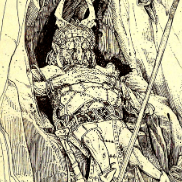
You will be written into the songs and sagas of our people.
















.thumb.jpeg.7a2a5c6fda5bc3b4e960a8645bb0ab98.jpeg)