Aehkaj
-
Posts
144 -
Joined
-
Last visited
Content Type
Profiles
Personas
Wiki
Rules
War
Systems
Safety
Player Conduct
Roleplay Leadership Guidelines
- Roleplay Leadership Guidelines
- Roleplay Leadership Guidelines Comments
- Roleplay Leadership Guidelines Reviews
Forums
Everything posted by Aehkaj
-
 I’ll leave reasoning and explanation with a change log under each individual planned change but the basic rundown is just some aesthetic addons and slight fixes to one of the goresmith aesthetics being useless due to its hamper on combat in exchange for a cool customization option. As per usual Bold is new strikethrough is deleted stuff. Sapping ADDITION [To be added under Sapping’s Mechanics right before the Redlines area] Sapping may also be employed noncombatively to an extent, the Necromancer reaching their Lifeforce out into an area of at most [5] meters in diameter around them as their dreaded presence draws the fickle life from flora and miniscule fauna. Plant life such as flowers, vines, and parts of trees would wither within this presence, only returning to their former levels once such a force vacated their locale. Creatures no larger than a squirrel in size would weaken and grow visibly more gaunt, and so on. This effect would hold no effect within combat, unable to truly drain away the life of anything involved within. Reasoning: A slight oversight, Cantrip sapping was never intended to be “Removed”, I accidentally operated under the assumption that people would assume it still existed as flavor to add to their Necromancer’s aura. :/ Goresmith Alterations OLD Help my flesh is melting or something » [Goresmithing Alterations] Over [4] emotes, a [2] Necromancers may consecrate lifeforce around a corporeal undead- be they a Peon, Ghoul, Darkstalker, Draugar, and their evolved forms, to alter and add to their physical forms in a litany of ways, listed out as follows: ❖ Vestigial rotting or skeletal limbs, incapable of being used in combat whatsoever, though may be used noncombatively for flavor roleplay. Alternatively, a litany of smaller limbs could be used to compose the greater ‘limbs’ of an undead. ❖ Rotting, visceral flesh to an undead- this cannot be used to conceal their state of undeath, though can be used to create varying degrees of physical depictions. These are still capable of being burnt away, and unless said undead bears immunity to flame, will count as a physical hit towards them. ❖ Addition of extra skulls, which must remain aloft on top of their shoulders OR be upon the forefront of their chest. It should be noted that destruction of any of these skulls counts as their skull being destroyed for the purpose of death, which kills the undead. ❖ Molding and reshaping of an undeads bone structure- a skull’s cranium may be warped upwards into a macabre facsimile of a crown, tugged into horns, and so on; so long as these do not bring any combative advantage, the structure of the bones may be altered and twisted. ❖ Stretched flesh and tendons draped between limbs and bones; these cannot create any advantage to the undead, but may still be snapped and torn. Draugars, which still rely upon tendons to move, will be inhibited by these as if they were necessary to them, whilst Darkstalkers would be unaffected. ❖ Supplanation and replacing the upper-portions of their arms (the elbow upwards) with a one-handed weaponry created of a Goresmithing Armament. This would need to be represented by an item created through the main form of Goresmithing above, which can be torn off from the limb and used by others like any Goresmithed Armament. Rᴇᴅʟɪɴᴇꜱ: ⬢ Goresmithing requires [2] Necromancers to perform a freeform ritual over [4] emotes, regardless of whether it is Goresmithing an Armament or Altering a greater cadaver. Goresmithing may utilize any cadaver be it from a played character or animal. ⬢ Goresmithed Armaments bear the durability of Ferrum, yet the weight of Argentum- that is to say, they will on average hit half as hard as objects forged of mundane Ferrum, but still bear a unique lightness associated to it. Goresmithed Armaments are fashioned primarily from bone, albeit can bear bloody, sinewy, or visceral material stretched between their hardened bones; they can further be inflicted with Necromantic Plagues as detailed under the Pestilence segment. ⬢ Goresmithed Armor is only able to be made in line with (Medium Armor) or (Heavy Armor)- albeit it is lighter, it still may not be utilized to circumvent a Necromancer’s own inability to wear armor, or any other lorepiece’s armor restrictions, still hampering their casting and mobility as per their weaknesses. ⬢ Goresmithed items may not be enchanted by ANY means bar Necromatic Pestilence and are Incompatible with Kani as they break resonance. ⬢ Goresmithing Alterations may be solely applied upon corporeal undead- be they [CA] Ghouls, Darkstalkers, Draugars, or the noncombative NPC Peons. These are listed as above, and will be detailed in the following redlines. ⬡ Extra limbs are vestigial and noncombative, and solely for flavor roleplay. ⬡ Rotting external flesh are visceral and do not grant any extra durability nor disguising purposes. ⬡ Extra skulls may be added to undead, either on top of their shoulders or in front of thier chest- however, these all bear shared durability, and if any of them are shattered the undead perishes. ⬡ The bone-structure, if altered, must still remain humanoid nor may it bring any combative advantage- it merely can create altered shapes from bones. ⬡ Replacing the elbow-upwards of a limb with a Goresmithed Armament is possible, attached directly unto their joint- however, this still requires a validly approved and signed Armament item in the inventory which can be torn off from the limb. Goresmith Alterations NEW I didn’t bother to paste the rest of the entire ability and it’s redlines because I’m lazy. ❖ Addition of extra skulls, which must remain aloft on top of their shoulders OR be upon the forefront of their chest albeit with their main head always obvious where it rests. It should be noted that destruction of any of these skulls counts as their skull being destroyed for the purpose of death, which kills the undead. ⬡ Extra skulls may be added to undead, either on top of their shoulders or in front of their chest- however, these all bear shared durability, and if any of them are shattered the undead perishes. the undead will always have their primary head where it would be anatomically. Additional heads are for aesthetic purposes only, and would not have any effects or uses such as legitimate sight or speech. The one true head will always be obvious. Reasoning: Removing some debuffs to relatively aesthetic things. I don’t think an undead should be punished by becoming an even easier target to bomb just because they want heads in their chest and all. I didn’t mess with the flesh and tendons with how they operate with Draugur since that limitation isn’t an added limitation to what already exists on a Draugur.
 -
Preface W R A I T H D O M ʜᴀʀʙɪɴɢᴇʀꜱ ᴏꜰ ᴛʜᴇ ᴏʟᴅ ᴅᴀʀᴋ ✦•━•⊰✼⊱•━•✦ ✦•━•⊰✼⊱•━•✦ “They were once Men. Men, blinded by the want for power; lusting after dark forces to escape the curse of old age. They were Lords, once, though blind ones. Greedy as Dwarves, violent as Orcs though lacking the nigh-eternal patience of one of Malin’s brood. Human Lords with a dark cause, willing to strip themselves of the moral boundaries that Oren’s nobility would cling close to. They dabbled in dark things in the First Age; disregarding the tarrying of the mortal races and their wars with disgruntled Daemons. They dabbled and they studied. They practiced dark things in dark places; they tricked death and bent it’s will in their hands, guided by one lesson: If the weak court death, they seek it.” Wraithlord Nimdravur, Herald of Strife, Inquisitor of Devirad, Former Lord of Ashes. RITE OF SACRILEGE ʀᴇꜱᴏɴᴀɴᴛ ᴏʀᴅᴀɪɴᴍᴇɴᴛ First dredged by the Five Lords of Anthos, perfected by the Old Lords and appropriated by the King Beneath, the Rite of Sacrilege is the act of enwraithing oneself by a ritual of rebirth through death, transcension through abyssal consumption. The Rite of Sacrilege is a three-stepped descent into the most primeval echelons of mortal darkness - the creation, localization and ultimately, consumption, of an Abyss. [I] - A unique variation of the Ritual of Desecration, henceforth known as Sacreligious Land, must first be performed over [6] emotes wherein a [Tɪᴇʀ V] Necromancer possessing a TA and knowledge of Sacrilege collaborates with [4] other necromancers of the same tier to seal an aurum relic within its lifeforce-saturated epicenter. The aurum relic begins its fueling with a hefty fragment of the intended Necromancer’s own lifeforce, thus creating a meager tether to their own soul. This tainted land must be left unpurged and nurtured for at least [2] OOC weeks, allowing the region to stagnate and the aurum relic to undergo a process of eventual darkening. [II] - The penultimate ritual may be performed over [4] emotes, where [4] Necromancers at [Tɪᴇʀ V] led by the intended Necromancer, saturate the aureate relic with abyssal lifeforce. The epicenter becomes a lesser nexus of its profane influence, transposing from a sickly appearance of bones and gore to an eerie, peerless monolith that drinks the light. A lesser reflection of the true Aegisian Abyss, through the aid of the gathered Necromancers its excess and stagnant power is consolidated and consecrated, warping the aurum relic temporarily into an object of Morion. [III] - The Necromancer who seeks to ascend thus, must perform an act of blasphemous suicide as they impale the now-Morion Curio within themselves- yet via the aide of the others and the distant manipulation of the Abyss’ influence, bind the Necromancer’s soul and lifeforce within it, causing their once-mortal vessel to reincarnate as a [Wraith], consuming all [5] magic slots as their soul is completely and irrevocably darkened. Their curio, now fueled by a vast surplus of lifeforce and a receptacle to their soul, becomes their Morion Reliquary, an object key to them and their newfound rites. Necromancers can only partake in the Rite of Sacrilege [1] time per [1] OOC months. [Draconic Sacrilege] The Rh’thorean forebears of necromancy once prized and coveted bones of dragonkin in the forging of their crude archliches, a ritual that has since been refined as the modern rite of Sacrilege. Yet despite its obsolescence, there was profound truth to be found in the old ways, now appropriated as a rarer, more esoteric variation of the ritual for Wraithdom - Draconic Sacrilege. The use of dragonbones may wholly supplant the need for [5] counts of lifeforce in the Rite of Sacrilege, or [3] Remnants of Lifeforce within Fathoms, catalyzing the process so that only [1] chunk is necessary. A wraith birthed of Draconic Sacrilege is an unliving mockery of the dragonkin it is derivative of, a twisted parody and emblem of mortal power reclaimed by that necromancer. Vestiges of the subsumed dragonkin’s hue may bleed into the wraith’s aura as byproduct, as its innate nature undergoes a metaphysical melding with the wraith’s own psyche. Physically, a wraith who has undergone Draconic Sacrilege may gain some added aesthetics relating to the draconic such as horns, decayed scales, and so on. These aesthetics may not supersede that of Wraithdom to disguise as another [CA] such as Azdrazi. Rᴇᴅʟɪɴᴇꜱ: RELIQUARIES ᴠᴇꜱᴛɪɢᴇꜱ ᴏꜰ ʀᴀɴᴄᴏʀ Intrinsic to their nature, Wraiths wield a morion-craft armament or curio further imbued with the soul and lifeforce ripped from their predecessor as they ascend to the pinnacle of their craft. These items act as Reliquaries - a functional phylactery - to the Wraith, the true embodiment of their fiendish forms and an object of coveting. These phylacteries are created in the rite of Sacrilege, and may take nigh-any shape and form provided it is at most [4] ingots worth of material should it take the form of a weapon, or [2] ingots worth of material should it not be a weapon. Reliquaries carry the bulk of a Wraith’s Lifeforce, soul, and function as liaison to their greater spells and necromantic arts. Reliquaries which manifest as a worn trinket, bauble or similar non-weapon allow the wraith to manifest a chosen armament of their Lifeforce which bears the qualities of a Reliquary armament. Any Reliquary may effectively be ‘sheathed’ by the Wraith, drawn into their Penumbratic Form either partially or entirely in a form of aesthetic stowing. Such would be the only time a Wraith might be able to wield an Armament not accursed through Necromantic Rites, albeit a foolish decision as it would weaken their Necromantic Prowess. Once every [3] every OOC Months a Wraith may go through a freeform ritual of at least [3] emotes in which they submerge their Reliquary into a Monolith of Desecrated Land, reforming it. Differing from regular Morion items, these Reliquaries reflect their station as Phylactery to the Wraith allowing differing aesthetics in line with Wraith’s tells. An armament might reflect the cadaver of the once-necromancer, seeth with whispers of blackspeech, or flicker more aggressively with the abundant lifeforce corrupting the material. These aesthetics are up to the Wraith bound to them and the LT who approves such. Tied to their lifeforce and almost an extension of their form, a Wraith may recall their Reliquary to their physical vessel, bringing their dear Reliquary within their fleshless palms once more to reenact fury upon them all. Over [2] emotes, a Wraith may conjure forth the latent lifeforce within their physical form as they reach out to the Reliquary. The armament will begin to dissipate in any form applicable to Wraith and its tells before returning to the Wraith it is bound to. Rᴇᴅʟɪɴᴇꜱ: PHYSICALITY Wraiths are the shadow of the mortal who came before, a remnant of necrotic decay in entropy that has subsumed their soul and mortal coil to an eternity. An unlife everlasting that bears no flesh or bone, they are reduced forever to an abyssal spectre forced to roam the lands with little joy or splendor. With forms trapped in lightless grayscale or other, darker, shades of lifeforce, wraiths are forged purely of abyssal lifeforce anchored to a reliquary which houses the seat of their will. Forsaking any anima in their transcension, they are magical creatures completely devoid of their former descendant lives. » Penumbratic Form Unlike the osseous archlich and darkstalker, or the fleshy ghouls and draugars of necromancy, wraiths are but pure lifeforce, clouds of abyssal stagnation who have forsaken their physical tethers. They are as intangible as the wind, with mundane attacks phasing through their forms with minimal reaction. Yet, just as the wind, they may be swept away by the very cycles of life and death, urging them to tether their lifeforce to more stable anchors. Unlike ghosts which may retain the shape of their soul through soul-saturated ectoplasm, lifeforce is an innately free-flowing substance that will lead to immediate unravelling of a wraith without a vessel in which to contain them. A wraith may bind their form to a deceased cadaver, tattered robes, or directly into a suit of armor, fusing its lifeforce over [2] emotes to pilot the vessel as though it were its own body. In the days of yore there rode Harbingers, forged first from the Five Lords, who scourged the realm in cloaks of black upon skeletal steeds. Armor is a hollow, shadowy murk within, making it hard to decipher what is beneath a helm should one peer in. Alternatively, in the act of expending their own energy within a body, the cadaver is given faux-life as eyes blink open and close, muscles are cured of rigor mortis, and wounds are healed in grotesque scars akin to cauterization. However this does not mean organs once more return to function, nor that blood would begin to pump - as these are akin to marionettes that are piloted by invisible strings from within. Blood would be near blackened and act almost as a viscous solid, while bodily functions such as breathing would be nonexistent. Furthermore, the dysfunctional nature of their vessel means that they gain no benefit from alchemical alterations or concoctions upon them. Should a wraith don any vessel greater than [Light Armor] in techlock ruling, they are unable to cast any form of combative necromancy spells, though are able to utilise their innate Invocations and Fathoms, cast cantrip/noncombative spells and partake in noncombative rituals. It should be noted that they remain susceptible to all their innate weaknesses such as holy magic, fire, thanhium, and aurum, in addition to any weaknesses their vessel may possess, such as injuries, tangible alchemical side effects, and death when falling from great heights. As they are immaterial and intangible beings, their only sole advantage lies against weapons of a fully mundane nature, which inflict little damage to their abyssal constitution. The durability and resilience of a wraith is further quantified in the [Durability] section. Rᴇᴅʟɪɴᴇꜱ: » Strength of the Abyss As masters of undeath wraiths are granted greater strength than their former selves, allowing them to wield two-handed weapons. Should they wish to cast combative necromancy spells, however, they may only wield a single one-handed weapon unless they are wielding their own Reliquary. As creatures lacking muscle they are unable to be exhausted. So too, they have no organs to process poisons, no lungs which to breathe, no skin that is harmed from either extreme cold or heat, and otherwise have no means by which to ‘starve.’ They feel no pain granting them a muted existence, save for in the presence of aurum, various forms of flame, and holy magics. When struck by such, a burning, near intolerable pain wracks their body as though their insides are being set aflame. When husked, the wraith is susceptible to physical forms of alchemy, capable of being petrified, frozen, burned, etc. This applies to a wraith that would attempt to sit in a volcano, or venture to the bottom of a frozen lake. The vessel is still a vessel, and the exact durability of their vessels is uniform and quantified in the [Durability] section. Rᴇᴅʟɪɴᴇꜱ: » Dark Presence The very presence of a wraith brings an aura that darkens the light of the world. The great saturation of lifeforce that clings to their accursed souls stains pure aurum with blackened taint as it acts akin to a pylon, coating itself in abyssal energies. Fires diminish and falter, still alive, yet they bear no light beyond their own flickering contours. Divinely blessed metals have their light halved in distance, yet remain defiant to the scourge of a wraith. A wraith may choose to make their muted existence known to their surroundings and flood their ambience with diffuse lifeforce, jettisoning it throughout to the minds of all lifeforce-bearing entities which experience a mounting sense of fear. Bearing no combative ability nor enhancement, this extension only inflicts a sense of metaphysical weight upon those within a [20] meter range, evidently centered upon the wraith itself. This ambient lifeforce may be manifested in a concentrated fashion in the form of a flooding influx, wherein the wraith’s abundant lifeforce causes an organic, lesser-souled creature no larger than a horse to twist and warp into a necrotic form, slain and dominated. This bears no combative utility whatsoever, and used only as a means of creating necromantic familiars, mounts, or shows of ruinous power. Rᴇᴅʟɪɴᴇꜱ: » Misery of Gold As ethereal beings composed entirely of excess lifeforce aurum serves as a weakness far more grievous than their ectoplasmic counterparts. A singular strike or cleave from an aurum weapon that penetrates a wraith’s abyssal form is devastating, causing them to writhe in searing, red-hot pain as they are stunned for the next [1] emote. Aurum, of enough quantity, striking a wraith is supernaturally reinforced by the lifeforce it conducts in the moment, preventing any loss of durability or bluntness you would expect from an armament composed of gold; this is to say an aurum blade or spear penetrating a wraith’s form retains its sharpness when being used against a wraith. As an equal-measured consequence, the abundant lifeforce that comes into contact with this striking aurum causes it to be blackened upon dealing its damage, rendering them saturated and unusable for [3] emotes afterwards. Beyond this, an original weakness of the wraiths resurfacing oncemore aurum attacks may cause what is known as “Ethereal Rending”, an inexplicable ‘reflection’ and resultant Aurum Effect treats the Limbs of the Wraith as one in a form of ‘perfect symmetry’ thus doubling of wounds inflicted upon them. For instance, a deep, debilitating slash upon their left arm would manifest as an equally excruciating slash upon their right just as an Aurum Bludgeon to their Right leg would manifest the same blow to their Left. Slayersteel’s watered down effects will only allow a weapon made of the material to benefit from “Ethereal Rending”, lacking enough purity for the whole breadth of Aurum’s effects. Rᴇᴅʟɪɴᴇꜱ: » Lightsbane Heralds of the Old Dark as they are, light in all its forms serves as their natural anathema and antithesis. Holy-blessed metals such as Argentum and cleric-blessed weapons, and notably thanhium due to its absolute, antimagical nature, inflict greater degrees of damage to a wraith as specified in the [Durability] section. Woefully abyssal in nature, though Wraiths experience no tangible harm from fire in both its natural and voidal variations, they experience a primeval aversion to its radiance which causes them to fathom a sensation indistinguishable from real pain. Additionally, the sun’s rays dampen a wraith’s undivine nature and suppress their Abyssal and Wraith arts so they are fully incapable of drawing upon it in its entirety. Sudden and sporadic sources of light such as bright alchemical ‘flashbangs’ shined directly upon the wraith’s visage without shielding causes them to instinctively recoil, limiting them to defensive actions. Though their forms are predominantly lifeforce, malflame is still capable of adhering to the minute anima that informs a wraith of the humanoid ‘shape’ of their soul. All spells composed of malflame, as such, latch to a wraith like any other mundane individual, this faux flame causing them the same, spiritual pain is faux flame is muted and numbed. It is not debilitating to a wraith as fire is, but may disable limb functionality or cause demanifestation if left unchecked. And finally, dragonsflame, as a union of light, fire, and divinity, may easily and unconditionally, immolate a wraith. Believed to be Mordring’s prime advantage in his conquest to become King Beneath, upon direct contact with a wraith, dragonsflame instantly ignites them, irrespective of their vessel or form. Resulting in an excruciating pain akin to holy magic, a wraith is driven into a fight-or-flight response as it becomes their foremost priority to snuff out the dragonsflame assailing their being. Rᴇᴅʟɪɴᴇꜱ: MENTALITY [ Ruinous Mind ] With the entropic, stagnant powers of the abyss cleaving flesh and soul, the mind of a wraith is both refined, and plagued. With no sensations of touch, taste, nor smell, the undead quickly becomes cold to mortal emotions such as love, empathy, and joy. To never again feel the embrace of a loved one, to never again smell their mother’s home cooking, to never again stop, for just a moment, on the beauty of life itself. Those lost emotions are replaced with a fleshless clarity, honed like shards of a broken mirror with twisted view, the shattered mind holds dear two objectives - the proliferation of the Dark, and the coming of Ruin. Nestled in their psyche is a mental fortitude unseen in most undead, allowing for them to plan and ponder, to respond without ire when strategic planning necessitates it. This love of ruin and darkness urges them to live amongst those of similar banes; undead, both corporeal and incorporeal, demons, and otherwise. To share in pain and sorrow is to lessen it. This drive to seed ruin into the world and to taint it places wraiths as a complete antithesis to holy mages and their works. While most undead may fear or falter before holy magics, wraiths are instead emboldened and enraged by the sight of blessed things. The heightened emotions that surround such a sight are honed to an edge by their cunning and clarity. This manifests as tactical cool, with wraiths scheming not only to defeat their blessed enemies, but to darken and corrupt as they may. This does not mean that a wraith cannot be goaded, as even the pinnacle of undeath holds an ego, one which has its own faults. A dead cleric may no longer bless the world, but a corrupted one may darken the world further. Wraiths seek to corrupt, torture, and break the tools of the gods. There are no greater joys to a wraith than witnessing the downfall of a hero, or the burning of a village. Pain and death and dread brings about a cyclical nature that begets itself, in this cycle wraiths thrive. [ The Darkened Ego ] The mortal that once lived is now but an echo of the past. Some wraiths look upon their former years with somber melancholy, whilst others only remember their mortal lives as foolish wastes of time. Memories may haunt them or embolden them in their conquest, decided solely by the fractured mind of the wraith. The ego of the once-living necromancer may also become emboldened, a super-ego emerging from the shattered mind and forming into a new psyche altogether. Conquest and power become centermost in the abyssal mind, urging the undead with sourceless whispers to scheme, garnering whatever sparse knowledge they may. It is not uncommon for mental maladies to arise, for some wraiths hear the whispers of the abyss in their mind, whilst others perceive visual hallucinations that are not truly there. Emotions may swing swift and often, somber one moment and wroth the next. Mental maladies may arise, or even be carried over from their mortal lives, not the least of which is egoism. The hunger to amass power is never ending, with every victory urging the wraith to continue onwards to the next. This wish for more is never satisfied or quenched, a constant gnaw upon the edges of their mind. As consumption is the only currency they have known throughout their ascension, they are powerseekers. Wraiths are driven by a never-ending desire to amass lifeforce and pursue personal ambitions, likely twisted by the sacrileges they have committed [ Ageless Tempering ] The immortal mind changes, becoming more resolute as years go by. When first arisen, wraiths are assaulted by a change in both emotion and physical form, their mind splintering from their profane rite. As centuries pass, wraiths settle more into their newfound psyche, growing more wise and stoic as years pass. Elder wraiths are often seen as cold and calculating, whilst youthful wraiths may be more brash, acting out. Yet, even wraiths are fallible, and their minds may easily scatter. In times tumultuous, or after a great victory, their psyche may undergo change. Ruin begets them, and even the eldest and wisest of their kind fall to it. Wraiths may be as unchanging or fluctuating as both their ego and environment dictate. Rᴇᴅʟɪɴᴇꜱ: DURABILITY 𑁍 Wraiths have a uniform durability system where they may endure [5 Minor] / [3 Major] / [2 Devastating] upon each of their limbs, head or torso before the respective section of their vessel is destroyed. Damage is considered shared across the entire section of their body. 𑁍 Should their torso, head or any TWO limbs be destroyed, a Wraith is defeated and DEMANIFESTED as their form haplessly bleeds lifeforce and they lose their physical anchor upon the world. Only their worn, hollow vessel and Reliquary remain. 𑁍 Should a Wraith utilize Heavy Armor as defined by techlock, they may endure a further [+1] [Devastating] strike upon their torso and head as they compromise their use of Necromancy for physical resilience. The aforementioned strikes are defined as follows: ❉ [Minor Blow] 𑁍 Weaker Projectiles (Shortbows, Hand Crossbows, Slings, Throwing Knives) 𑁍 Mundane Blades (Shortswords, Longswords, Hatchets, Glaives, Spears) 𑁍 Diminutive Magics (Non-Concussive Voidal Spells, Heraldry Spells, Mysticism Spells) ❉ [Major Blow] 𑁍 Heavier Projectiles (Longbows, Crank Crossbows, Javelins) 𑁍 Thannic, High-Density Boomsteel, & Carbarum Blades (Shortswords, Longswords, Hatchets, Glaives, Spears) 𑁍 Mundane Bludgeons (Warhammers, Maces, Greatswords, Battleaxes) 𑁍 Calamitous Gold and Holy Weapons (Pure Aurum or Holy Enchanted blades of 1 Ingots) 𑁍 Calamitous Magics (Non-Tangible Dragonsflame, Malflame, Tangible & Concussive Voidal Spells, Necromantic Maledictions) ❉ [Devastating Blow] 𑁍 Devastating Projectiles (Ballistae, Trebutchets, Cannons) 𑁍 Thannic, High-Density Boomsteel, & Carbarum Bludgeons (Warhammers, Maces, Greatswords, Battleaxes) 𑁍 Ruinous Gold and Holy Weapons (Pure Aurum or Holy-Enchanted blades of 2 or more Ingots) 𑁍 Ruinous Magics (Tangible Dragonsflame) Rᴇᴅʟɪɴᴇꜱ: ✦•━•⊰✼⊱•━•✦ ABILITIES ɢᴏᴅʟᴇꜱꜱ ɢɪꜰᴛꜱ CORPSE COURIER - [3 Emotes] [Non-Combative] A Wraith may choose to use the long deceased as an act of communing with those who happen to be leagues and miles away. Whether it be via an old crumbling skull, or the carcass of a recently slain beast, or even through the mindless husk of one of their fallen soldiers. Mᴇᴄʜᴀɴɪᴄꜱ: HUMANITY - [2 Emotes] [Non-Combative] Wraithdom allows for far finer manipulation of Lifeforce - for one, to transfer stores of life from a healthy victim to themselves. This rush of Lifeforce allows them to weave a necromantic illusion of healthiness about themselves, either for vanity or for more nefarious purposes. Mᴇᴄʜᴀɴɪᴄꜱ: DARKENING - [5 Emotes] [Combative] Forever insatiable in their hunger for Lifeforce, necrotic abilities of yore still find use in the repertoire of the Wraith's lifebanks. An old application of such, Darkening stands as a brutalistic way to rip lifeforce from a living being, drawn in and devoured by the Wraith’s form whilst the victim becomes weakened. Mᴇᴄʜᴀɴɪᴄꜱ: NEEDLEWYRM - [3 Emotes] [Combative] Masters of their vast swathes of Lifeforce, a Wraith may formulate their own application of the volatile art known as Needlewyrm. By conjuring their Lifeforce and condensing it to the point of instability, a Wraith may send out a directed, pin-like current of their foreign lifeforce to wrack at an enemy’s flesh to open up an opportunity in combat. Unlike how a Draugur might utilize the spell, for a Wraith this tormenting art acts as a tool for their prowess in physical combat. Mᴇᴄʜᴀɴɪᴄꜱ: DRACONIC SACRILEGE - [3 Emotes] [Combative] / [Non-Combative] A tangible boon wrought from the insatiable consumption of Draconic Remains, the Wraith’s form containing the vestiges of the lordly beast would be able to weave such a presence into their innate Darkened Presence. The emotion and personality which would normally flow from dralachite now flows through the Wraith’s damnable aura enhancing the pressure they exert onto others. Mᴇᴄʜᴀɴɪᴄꜱ: ✦•━•⊰✼⊱•━•✦ FATHOMS ʀɪᴛᴇꜱ ᴏꜰ ᴄᴏɴꜱᴜᴍᴘᴛɪᴏɴ Wraiths are evermarching, undying paragons of the abyss - seeds which may sprout to bring further ruin and desolation. They are successors to the Old Lords, and carry in them faux-imitations of the scattered Black Nexus, urging them into consumptions of power. Through conquest they take what is rightfully theirs, feeding their entropic souls with the lifeforce of the living to advance their eternal forms and the reliquary which binds it. To grow strong, to blot out the sun, the gifts of the abyss are granted only to those who will take it, and plant the ruinous seed that may blossom in their heartless domain. These gifts are fathoms, to which all Wraiths shall climb and clamber, or fail and fall. Wraiths may grow their strengths. As inheritors of consumption, they do this by feeding upon the lifeforce of their victims to fuel their reliquaries and further darken their spirit. This process of consumption either involves the Wraith SUCCESSFULLY casting Darkening upon a target to its full extent, slaying a target with their reliquary which gathers their lost lifeforce to it, or in rarer cases, a freeform ritual involving the consumption of dragonbone - dralachite - over [3] uninterrupted emotes. As these abilities directly draw upon their abyssal origin, as a common tell all Fathoms manifest as the Wraith’s passive lifeforce darkening into peerlessly dark conjurations of black, stagnant magic. As they grow their stores of lifeforce through fathoms, a Wraith may find the ability to formulate new Thaumaturgucal practices within their coven to suit their goals or something [3] Remnants of Lifeforce; 1 OOC Month Post-Connection လ Engorge [6] Remnants of Lifeforce; 2 OOC Months Post-Connection လ Eclipse & [MArt Creation] [9] Remnants of Lifeforce; 3 OOC Months Post-Connection လ Domain [12] Remnants of Lifeforce; 4+ OOC Months Post-Connection လ ET Handoff ENGORGING - [2 Emotes] [Combative] As dreaded harbingers of necrotic energy, the strength of the abyss arises in the very form of a wraith. By channeling and focusing their lifeforce is a wraith able to strike with greater force, assaulting with brute strength in a single bout. Mᴇᴄʜᴀɴɪᴄꜱ: ECLIPSE - [2-5 Emotes] [Combative] Standing as antithesis to that of Light and Deific influence, their wretched swathes of lifeforce may be woven in defiance of that which seeks to snuff the Abyss’s consumption. To weave lifeforce into a tangible shadow, a Wraith gains respite from the sun or from the bearing attacks of Deific followers. Mᴇᴄʜᴀɴɪᴄꜱ: DOMAIN - [3 Emotes] [Combative] A grandiose technique in which a Wraith brings forth the darkening presence of the Abyss from within their reliquary enhancing the presence which seeped from their form to cast wrathful shadow on all that is considered Deific and Holy. Mᴇᴄʜᴀɴɪᴄꜱ: ✦•━•⊰✼⊱•━•✦ EVERDEATH ʀᴇꜱᴜʀʀᴇᴄᴛɪᴏɴ & ᴅɪꜱᴄᴏɴɴᴇᴄᴛɪᴏɴ Dᴇᴀᴛʜ: Wraiths, akin to their lesser undead-kith, are afflicted with the Infallible Curse- an endless punishment-benediction that constantly wrings themself back to the mortal plane upon death. When the undying are disposed of, their soulbound lifeforce lingers in the world, unable to find peace beyond in the soulstream or the certainty of Ebrietas. Doomed to the fate of the mortal plane, this energy coalesces over [1] OOC day within their Morion Phylactery-Armament before it finds a new host to inhabit- forcing their soul to reinhabit a random corpse or cadaver, the residual energies of their undying forms morphing and altering the vessel to look akin to how it was before. Upon death, their Morion Phylactery-Armament does not disappear with them- it remains wherever it had last been, be it thrown across a battlefield or held by the Wraith as it perishes. Due to the fact that during death, the Wraith is constrained within their armament and cannot control it, the object can be held by anyone and moved about, as the item is an (Unbound Roleplay Item) that cannot be soulbound. This in turn allows the Wraith’s will to attempt to intrude forth into the psyche of its bearer as the dormant consciousness of the decrepit being attempts to bend their will. This takes form in whispers or concepts which pressure the mind of those who bear the Reliquary, likely poisonous to the mind as they are filled with the ruinous ambitions of the Abyssal being. Critically, that proves to be its largest weakness- these armaments are susceptible to the rite of Everdraining, a ritual of inherent knowledge to all Wraiths which can permanently PK a Wraith upon draining their phylactery during this day-span of death. Rᴇᴅʟɪɴᴇꜱ: EVERDRAINING - [7 Emotes] [Severance] [1 Wraith & 2 Necromancers] Enwreathed in shrouds of lifeforce, one’s Reliquary is a tether for their corporeal form to linger upon the mortal plane- binding a portion of their soul as well as copious stashes of miasma within. Even though it is resilient, it is not indestructible- for it can be drained by another Wraith with the aid of their acolytes. Mᴇᴄʜᴀɴɪᴄꜱ: ✦•━•⊰✼⊱•━•✦ [ C ʀ ᴇ ᴅ ɪ ᴛ ꜱ ] 𝒪𝓁𝒹 𝒟𝒶𝓇𝓀 𝐹𝒶𝓃𝒸𝓁𝓊𝒷 𝐼𝓃𝒸. 𝓋𝟣 [ᵢ ₜₕᵢₙₖ ᵢₜₛ ᵥₑᵣₛᵢₒₙ ₁] ᴀᴇʜᴋᴀᴊ, ᴊᴏʜᴀɴɴ, ᴀɴᴅ ꜱᴇᴄᴜʀɪᴛʏ ꜱᴄʜɪᴢᴏᴘʜʀᴇɴɪᴀ ɪɴᴄ. ᴠ2 ꜰʀᴏᴍ ᴛʜᴇ ꜱᴇʟꜰ-ᴅᴇɴɪᴇᴅ ᴡʀᴀɪᴛʜ ᴡʀɪᴛᴇ ᴜᴘ ꜱᴘᴇᴄɪᴀʟ ᴛʜᴀɴᴋꜱ ᴛᴏ ᴍᴏᴜᴍɪɴꜱ ꜰᴏʀ ᴇᴘɪᴄ ꜰᴏʀᴍᴀᴛᴛɪɴɢ ᴡᴏʀᴋ ʀᴇQᴜɪʀᴇᴅ ᴍᴇᴍᴇ ꜱᴏɴɢ ᴏꜰ ᴛʜᴇ ɴɪɢʜᴛ:


-
I don't disagree with the goal of this amendment; however, I do disagree with the execution. Replacing whole limbs would be too strong especially if the casting limit is increased thus allowing you to replace multiple as well as revive them as a peon for some times with Revivify in combat. Right now the scaling of wounds and healing is fine, even with undead involved, and I don't believe pain or short negative movement debuff should be removed from undead so it fits in that evil vile necromatic niche. Make your undead suffer for deciding to get hit or something. I believe it'd be best to just raise the number of uses per day to around [3-5] (separating in combat and out of combat casting can also work), to account for useability, while adding a single line in Petty Moulding stating that Simulacra gain [X] number strikes worth of damage healed per use of Moulding (with my general thought being [2] minor or [1] moderate but not a greater strike). If [2] emotes unable to move is considered too debilitating, perhaps change that to halved movement speed or something similar. In general, we should keep reattaching limbs and so on for out of combat use as already listed as Necromancy has multiple tools to support their undead even if they die while still remaining a [3] slot magic. There really doesn't need to be a higher more buff version for undead over regular descendants and mouldifiable peoples to keep it as a support option that's viable seeing as if your guy does die you can use revivify [3] times in a day (15 total emotes where a formerly slain character can continue to operate). As for major organ fixes that's more up in the air as to what LT as a whole views on healing what is 9 times out of 10 a fatal wound. I don't personally think that it should be altered to the brain only.
-
Reasoning: Necromancy no longer has noncombative summons, but use case for conduits should still exist. As usual bold is the changes I chose not to mark up a bunch of slashthrough since it’s just 1 chunk of plain text and 1 redline being changed. Old Lore: Lich-wights, or atzumenro in Al’tahrn-Durngo, are entities who shed their mortal coil twice over and live as unions of the necromancies, necrotic and ectoplasmic, are masters of both realms of death. The atzumenro Mordring, an undead dragaar, may tap into morion in a way none other can and not only shape it but galvanize it. Such empowered morion items are known as conduits, items just as varied as the material: weapons, armor, jewelry, objects, etc. A conduit possesses all the previous properties of morion in addition to acting as a bolstering font to necromancers and mystics who wield them. Conduits used by necromancers allow their wielder the ability to extend morion’s unsummoning and summoning quality onto dead organic material. Thus the necromancer can unsummon corpses and summon them from the ether again. This requires 3 emotes. Conduits used by mystics allow them to tap the font for more energy and bolster soul collection. This is expressed as the wielding mystic being able to restore two spent liturgy slots in a glowing drain: this requires 3 emotes in-combat or 2 emotes out-of-combat. As well, they reap an additional 1 Soul Fragment / Count of Essence from the Rite of Harvest. Red lines: -Morion conduits may only be created by ST and therefore can only be acquired through events. It requires the same ST managerial approval to be distributed. -Necromancers can only unsummon and summon dead organic material, they can only unsummon what they’re capable of animating at their tier, and summoned corpses do not appear already animated. -Mystics cannot exceed their liturgy slot limit by restoring slots i.e. if limited at 5 slots they cannot have 6. New Lore: Lich-wights, or atzumenro in Al’tahrn-Durngo, are entities who shed their mortal coil twice over and live as unions of the necromancies, necrotic and ectoplasmic, are masters of both realms of death. The atzumenro Mordring, an undead dragaar, may tap into morion in a way none other can and not only shape it but galvanize it. Such empowered morion items are known as conduits, items just as varied as the material: weapons, armor, jewelry, objects, etc. A conduit possesses all the previous properties of morion in addition to acting as a bolstering font to necromancers and mystics who wield them. Conduits used by necromancers allow their wielder the ability to extend into morion’s capabilities with lifeforce, amplifying their own at a level at which they may weave and extend their lifeforce-laden art. Spells cast by a necromancer will have the range (but not the area of effect) of their spells extended another [4] blocks. Conduits used by mystics allow them to tap the font for more energy and bolster soul collection. This is expressed as the wielding mystic being able to restore two spent liturgy slots in a glowing drain: this requires 3 emotes in-combat or 2 emotes out-of-combat. As well, they reap an additional 1 Soul Fragment / Count of Essence from the Rite of Harvest. Red lines: -Morion conduits may only be created by ST and therefore can only be acquired through events. It requires the same ST managerial approval to be distributed. -Necromancers can only extend the range of their spells, not the area of effect. While a spell like Brackenwave might reach farther ahead, a spell like Abyssflame Wall would only be able to be placed farther from the Necromancer: retaining the maximum size of the spell itself. -Morion Conduits; however, do NOT increase the range of the innate abilities to Simulacra -Mystics cannot exceed their liturgy slot limit by restoring slots i.e. if limited at 5 slots they cannot have 6.
-
As per usual, strikethrough is removed lines and such and bold is for any changes made. OLD Lore: [T2] Zekul - [Summon] [Combative] A Naztherak may call forth a bound Zekul - a beast - assuming they possess one. The number of Zekul that may be conjured at once ranges due to the size of them, up to two the size of a housecat or dog, two the size of a wolf, warhorse, or big cat, or one the size of a grizzly bear. They will last for up to [6] emotes after the initial summoning, though may remain longer should the Prince spend an additional [10] maleus, unless they are killed or dismissed prior to their maximum duration. The quantity of Maleus and emotes used varies upon the size of the Beast, with larger Zekul requiring more bribery and coaxing. A beast up to the size of a dog may be summoned in [2] emotes, at the cost of [10] Maleus; a wolf, big cat, or horse-sized Beast, may be summoned in [3] emotes, costing [15] Maleus; finally, a Zekul up to the size of a grizzly bear requires [4] emotes to conjure, and costs [20] Maleus. Redlines: - The roleplay of binding the NPC Beast should be present for one to summon it later on. - Zekul summons follow their respective behaviors, redlines, mechanics, and abilities listed in the Infernal Compendium unless explicitly stated otherwise. - The [6] emote timer only begins once combat has begun, out of combat they may remain with the user indefinitely or until death. - Zekul between the size of a house cat and dog require [2] emotes after a grimoire has been opened and costs [10] Maleus. Up to two may be summoned in combat. A dog-sized Zekul will require [2] emotes after a grimoire has been opened. - Those between the size of a wolf and a horse require [3] emotes after a grimoire has been opened and costs [15] Maleus. Up to two may be summoned in combat. - Larger Beasts up to the size of a grizzly bear require [4] emotes after a grimoire has been opened and costs [20] Maleus. Only one may be summond at time. - A Naztherak may possess up to four under their command in non-combat scenarios. - Up to two dogs or large cat sized beasts may be summoned at once, but only one may be brought into combat. - Demons that resemble horses are reskinned horses and cannot be used to terrorize combat in ways a horse could not. - Should a Naztherak enter combat with Beasts that were summoned out of combat, only one the size of a horse or smaller will be allowed to join. The beast must have been clearly emoted prior to combat. - One may not enter combat with both imps and beasts, either imps or the beast may be chosen to enter the conflict. - Zekul may only be within #rp distance of the caster if they are summoned. - If two beasts are in combat, only one may use their malflame abilities. - If a Bear sized zekul is in combat, the Naztherak cannot cast spells of their own and must focus on controlling the beast. They are limited to half-movement during this time. - Beasts summoned cannot attack in the same emote they are summoned. NEW Lore: [T2] Zekul - [Summon] [Combative] A Naztherak may call forth a bound Zekul - a beast - assuming they possess one. The number of Zekul that may be conjured at once ranges due to the size of them, up to two the size of a housecat or dog, two the size of a wolf, warhorse, or big cat, or one the size of a grizzly bear. They will last for up to [6] emotes after the initial summoning, though may remain longer should the Prince spend an additional [10] maleus, unless they take the form of a warhorse or are killed or dismissed prior to their maximum duration. The quantity of Maleus and emotes used varies upon the size of the Beast, with larger Zekul requiring more bribery and coaxing. A beast up to the size of a dog may be summoned in [2] emotes, at the cost of [10] Maleus; a wolf, big cat, or horse-sized Beast, may be summoned in [3] emotes, costing [15] Maleus; finally, a Zekul up to the size of a grizzly bear requires [4] emotes to conjure, and costs [20] Maleus. Redlines: - The roleplay of binding the NPC Beast should be present for one to summon it later on. - Zekul summons follow their respective behaviors, redlines, mechanics, and abilities listed in the Infernal Compendium unless explicitly stated otherwise. - The [6] emote timer only begins once combat has begun, out of combat they may remain with the user indefinitely or until death. - Zekul between the size of a house cat and dog require [2] emotes after a grimoire has been opened and costs [10] Maleus. Up to two may be summoned in combat. A dog-sized Zekul will require [2] emotes after a grimoire has been opened. - Those between the size of a wolf and a horse require [3] emotes after a grimoire has been opened and costs [15] Maleus. Up to two may be summoned in combat. -Demons resembling a Warhorse may only act within combat in ways a regular mount could in combat. They can not trample opponents, cast Malflame, and effects such as Boomsteel will still cause fear and or dismount the individual riding them. They do not cost Maleus when summoned, given their Aesthetic nature as a Demonic Mount. -A Warhorse Zekul will still count as [1] of the [2] medium sized Zekul for the purpose of summoning. - Larger Beasts up to the size of a grizzly bear require [4] emotes after a grimoire has been opened and costs [20] Maleus. Only one may be summond at time. - A Naztherak may possess up to four under their command in non-combat scenarios. - Up to two dogs or large cat sized beasts may be summoned at once, but only one may be brought into combat. - Demons that resemble horses are reskinned horses and cannot be used to terrorize combat in ways a horse could not. - Should a Naztherak enter combat with Beasts that were summoned out of combat, only one the size of a horse or smaller will be allowed to join. The beast must have been clearly emoted prior to combat. - One may not enter combat with both imps and beasts, either imps or the beast may be chosen to enter the conflict. - Zekul may only be within #rp distance of the caster if they are summoned. - If two beasts are in combat, only one may use their malflame abilities. - If a Bear sized zekul is in combat, the Naztherak cannot cast spells of their own and must focus on controlling the beast. They are limited to half-movement during this time. - Beasts summoned cannot attack in the same emote they are summoned. Summary/Reasoning: Despite the ability for a Naztherak to, in current lore, have an Aesthetic demon mount which is a cool ability it costs Maleus which I believe is a little silly. The change is simply allowing the cool Aesthetic demon horse without the cost, while also not bending the number of active Zekul available to the False Prince since I still hate combat summons.
-
[Amendment] List of grievances towards abysmal slop
Aehkaj replied to Mestvin's topic in Recently Outdated Lore
I don't believe the changes I just posted right before you chose to sling this out were looked at, given I proposed Abyssflame Bolt being useable 5 times over just 2 with Wall having it's own 2 uses. I suggest actually taking time to read an outbound amendment for your magic before slinging more out to avoid LT confusion in voting and possibly causing to just axe everything in favor of LT doing all changes as what happened with Shamanism. For Brackenwave if you want to add an alternate version to Casting it you should make a standalone Amend/Addition post for it where you include all of it's mechanics with the added casting version. I don't mind increasing Bolt's damage and range in general, but part of the reason why I held back on range and only buffed the uptick of the damage was because of other proposed Morion alterations for how Conduits will operate + allowing it to be learnable at Tier 3 thus giving Necromancy a better suited Progression than it currently has. As for casting numbers as I said above this would conflict with the changes I posted in a really weird and silly way that just seems like a weak count. Fortification and Lightening specifically I don't really care for; however, I will say when we originally posted this lore and obtained a Necromancy compile the general consensus as we understood it from LT was not allowing any ghouls to have these effects. While the original intent was a yes on that, LT differed so I have no real opinion. I do actually wish those bolsterments worked for Ghouls as originally intended but LT viewpoints are LT viewpoints. Revivify, while in its current state is generally a very mid and weak spell that being said I do NOT agree with this proposed change for NPC revived summon. Even with a time limit and general weak form for a NPC summon, the whole point of Abyssal Necromancy in it's passing was to replace NPC summons for necromancy in turn focusing that towards played CA's. Prima also has a point above this comment, the OOC consent's intent is so you don't waste casting Revivify on a enemy player for no benefit. The general intent is to give your Ghouls and such, or a willing enemy slain, some extra time to further your side in those moments. Sapping I don't care either way. While Necromancy could adopt a different tier different number of use system for the spells listed I think that should just be focused into a separate amendpack that doesn't also mess with combative mechanics. -
Reasonings for any changes listed above: Now that Necromancy has been active for a moment obvious weaknesses and annoyances with its Tier Progression and Spell Usage has become apparent. The Magic was passed with the ‘Zhulikian Mindset’ of pass weak and buff to make stronger, and this Amendpack seeks to bring said progress and usage to a better state for overall use in general. All changes will be listed within a summary written right below the New Spell changes. Most changes should fit with BOLD text but the formatting might put some of this in view. OLD Lore: Tɪᴇʀ Pʀᴏɢʀᴇꜱꜱɪᴏɴ ᴀʟʟ ᴡɪᴛʜᴇʀꜱ ᴀᴡᴀʏ Abyssal Necromancy is the physical installation and harnessing of lifeforce in a manner sourced from the Abyss- the remnants of Aegis which fester with this essence. Necromancy is a [3] slot Dark Magic, bearing a classic [5] tiered progression which is slowly summited through over the course of [3] OOC months. Tɪᴇʀ I: [Immediate] လ Mᴀʟᴇᴅɪᴄᴛɪᴏɴ: Moulding, Asthenia Tɪᴇʀ II: [2 OOC Weeks Post-Connection] လ Mᴀʟᴇᴅɪᴄᴛɪᴏɴ: Gravecall လ Pᴇꜱᴛɪʟᴇɴᴄᴇ: Plaguecraft လ Tʜᴀᴜᴍᴀᴛᴜʀɢʏ: Transcension Tɪᴇʀ III: [1 OOC Month Post-Connection] လ Mᴀʟᴇᴅɪᴄᴛɪᴏɴ: Sapping, Harrow လ Bᴏʟꜱᴛᴇʀᴍᴇɴᴛ: Fortification, Lightening လ Tʜᴀᴜᴍᴀᴛᴜʀɢʏ: Goresmithing, Horderaising Tɪᴇʀ IV: [2 OOC Months Post-Connection] လ Mᴀʟᴇᴅɪᴄᴛɪᴏɴ: Dredgelock, Vassalize လ Pᴇꜱᴛɪʟᴇɴᴄᴇ: Contagion လ Tʜᴀᴜᴍᴀᴛᴜʀɢʏ: Desecration Tɪᴇʀ V: [3 OOC Months Post-Connection] လ Mᴀʟᴇᴅɪᴄᴛɪᴏɴ: Brackenwave, Abyssflame လ Bᴏʟꜱᴛᴇʀᴍᴇɴᴛ: Revivify လ Tʜᴀᴜᴍᴀᴛᴜʀɢʏ: Blossoming, Sundering [Tɪᴇʀ III] Sapping - [3+ Emotes] [Combative] A diminutive, twisted form of the seeping drains of lifeforce that their predecessors once performed en masse- a Necromancer may congeal lifeforce within their palms and lash forwards a draining tether to weaken their foes upon a sustained sapping of one’s energies. Mᴇᴄʜᴀɴɪᴄꜱ: [Tɪᴇʀ V] Brackenwave - [4 Emotes] [Combative] By forcing open a myriad of Lifeforce-laden rifts just under the surface of the ground, an expert Necromancer may beckon forth a thrusting hedge of bones straight ahead of themselves, lacking piercing power in favor of stunning collective force. It was theorized that performing this spell in a graveyard or similarly bone-laden area would make the casting of this spell easier, but all attempts proved that moving the bones present bore the same toll as creating them. Mᴇᴄʜᴀɴɪᴄꜱ: [Tɪᴇʀ V] Abyssflame - [3 Emotes] [Combative] / [Non-Combative] A form of set-aflame Lifeforce, Abyssflame is the mark of a mastered Necromancer - a potent, variegated weapon to cut down foes or to assist one’s minions in breaking even the strongest of opponents. It may also be conjured up to assist unholy theatrics, or to provide a modicum of comfort to the undead. Mᴇᴄʜᴀɴɪᴄꜱ: NEW Lore: Tɪᴇʀ Pʀᴏɢʀᴇꜱꜱɪᴏɴ ᴀʟʟ ᴡɪᴛʜᴇʀꜱ ᴀᴡᴀʏ Abyssal Necromancy is the physical installation and harnessing of lifeforce in a manner sourced from the Abyss- the remnants of Aegis which fester with this essence. Necromancy is a [3] slot Dark Magic, bearing a classic [5] tiered progression which is slowly summited through over the course of [3] OOC months. Tɪᴇʀ I: [Immediate] လ Mᴀʟᴇᴅɪᴄᴛɪᴏɴ: Moulding, Asthenia Tɪᴇʀ II: [2 OOC Weeks Post-Connection] လ Mᴀʟᴇᴅɪᴄᴛɪᴏɴ: Gravecall, Sapping လ Pᴇꜱᴛɪʟᴇɴᴄᴇ: Plaguecraft လ Tʜᴀᴜᴍᴀᴛᴜʀɢʏ: Transcension, Draining Tɪᴇʀ III: [1 OOC Month Post-Connection] လ Mᴀʟᴇᴅɪᴄᴛɪᴏɴ: Harrow, Abyssflame- Bolt လ Bᴏʟꜱᴛᴇʀᴍᴇɴᴛ: Fortification, Lightening လ Tʜᴀᴜᴍᴀᴛᴜʀɢʏ: Goresmithing, Horderaising Tɪᴇʀ IV: [2 OOC Months Post-Connection] လ Mᴀʟᴇᴅɪᴄᴛɪᴏɴ: Dredgelock, Vassalize လ Pᴇꜱᴛɪʟᴇɴᴄᴇ: Contagion လ Tʜᴀᴜᴍᴀᴛᴜʀɢʏ: Desecration Tɪᴇʀ V: [3 OOC Months Post-Connection] လ Mᴀʟᴇᴅɪᴄᴛɪᴏɴ: Brackenwave, Abyssflame- Wall လ Bᴏʟꜱᴛᴇʀᴍᴇɴᴛ: Revivify လ Tʜᴀᴜᴍᴀᴛᴜʀɢʏ: Blossoming, Sundering Summary: With Tier progression on the current lore post Draining was Missing from Thautamurgy. As well, this will be updated for spell alterations above being Sapping moved DOWN to Tier II and Abyssflame Bolt being separated to a lower tier from Wall. [Tɪᴇʀ II] Sapping - [3+ Emotes] [Combative] A diminutive, twisted form of the seeping drains of lifeforce that their predecessors once performed en masse- a Necromancer may congeal lifeforce within their palms and lash forwards a draining tether to weaken their foes upon a sustained sapping of one’s energies. Mᴇᴄʜᴀɴɪᴄꜱ: Summary: Sapping has been moved DOWN to Tier II. Draining as a ritual already exists in tier II and it makes sense giving Necromancy something combatively castable earlier on to aid with progression. [Tɪᴇʀ V] Brackenwave - [4 Emotes] [Combative] By forcing open a myriad of Lifeforce-laden rifts just under the surface of the ground, an expert Necromancer may beckon forth a thrusting hedge of bones straight ahead of themselves, lacking piercing power in favor of stunning collective force. It was theorized that performing this spell in a graveyard or similarly bone-laden area would make the casting of this spell easier, but all attempts proved that moving the bones present bore the same toll as creating them. Mᴇᴄʜᴀɴɪᴄꜱ: Summary: Brackenwave’s knockback feels semi worthless, and the Number of Uses per OOC day seemed too low. The changes here are specifically to these two values, Upping range from [4] to [6] blocks and use # from [1] to [3] [Tɪᴇʀ III-V] Abyssflame - [3 Emotes] [Combative] / [Non-Combative] A form of set-aflame Lifeforce, Abyssflame is the mark of a mastered Necromancer - a potent, variegated weapon to cut down foes or to assist one’s minions in breaking even the strongest of opponents. It may also be conjured up to assist unholy theatrics, or to provide a modicum of comfort to the undead. Mᴇᴄʜᴀɴɪᴄꜱ: Summary: Abyssflame has the most changes so far starting with its Tier. Abyssflame Bolt should be given to Necromancers at Tier III, making progression combatively and aesthetically with Abyssflame more interesting for the Necromancer so they aren’t stuck waiting all the way to Tier V for a regular Projectile. Furthermore, Bolt’s range and Damage has been Modified. While formerly [1-6] Meters Warhammer Strike [7-12] being a Human-Strength Punch the Range has been enhanced to [1-8] Meters Warhammer Strike with [9-12] Meters being a Sling’s Bullet. Abyssflame Wall has one minor tweak in terms of how Holy Magic shearing through the wall operates. I sought to make it so Templar’s Passive Aurum-Weapon effect is specifically listed as unable to easily Cleave through the wall, requiring an Actively Cast spell from Holy Magic to shear through it thus nullifying its ability to strike the Casting Necromancer. As for the # of uses per day, I believe Splitting Bolt’s Cast numbers from Wall’s and providing their own separate casts removes some of the chokehold on casting options for a Necromancer giving them [5] Bolts and [2] Walls to be able to cast.
-
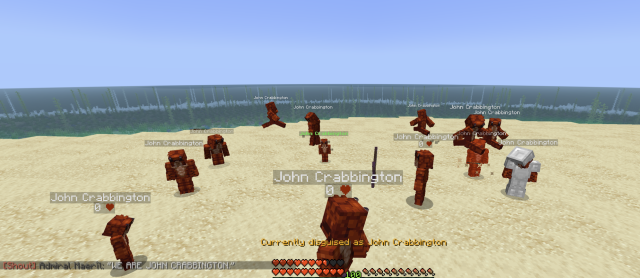
John Crabbington prepares his vast legions of Gnome eating Crustaceans
-
Hi chat, what's your go-to plate at a BBQ joint?
-
[Alchemy Lore] Black Alchemy - 2026 Necro Fixxerupper Sloppost
Aehkaj replied to Aehkaj's topic in Recently Outdated Lore
Yes they would, and the latter is because I’ve done nothing to touch mechanics at all, this is more of a formatted copy and paste with some grammatical changes not a rework of how the potions work in their entirety. -
Pʀᴇꜰᴀᴄᴇ “Heat the cauldron and make it squeal, Pry the bones from toe to heel, Have it burn and char the meats, Baste its writhing tongue in beets; Holy heart of man most young; Silver of a stilleborne’s lung; Blood of virgin who claims it pure, Pierce her veins and make good sure. Harrowed medley makes it green, Add the hemlock for its sheen. With the skull of firstborne son, Ichor glows and now we’re done.” -Apocryphynuiyum, Adage of the Black Witch, Ezra ʙʟᴀᴄᴋ ᴀʟᴄʜᴇᴍʏ ᴛɪɴᴄᴛᴜʀᴇꜱ ᴏꜰ ᴛʜᴇ ᴀʙʏꜱꜱ ✦•━•⊰✼⊱•━•✦ When dark arts began to succumb and collapse in the years following 1700, former Necromancers and their Aspirants searched for new ways to achieve dominion over the nature of Life and Death. What began as ways to recreate Necromancy soon spiraled into darker shapes: experiments on the living and dead. The Apocryphynium catalogues the rituals and unorthodox reagents that, when combined, branch off into forbidden types of alchemy that uses essence stolen from the living. ✦•━•⊰✼⊱•━•✦ Philters, Draughts, and Ichors As unpredictable as they are dangerous, instruments of Black Alchemy are rooted in the duplicity of their usefulness. What some may have bargained for as means to extend their life might very well be the device of its undoing… Liquid Lifeforce Raw lifeforce itself; reaped from the dead or living in the form of mutilated appendages, blood, and otherwise salvaged parts, is utilized in varying ways by Necromancers: notably so in their alchemic craft. This substance is extracted by adept Necromancers and congealed into smooth, colored fluid ranging in colors scaling black and white, sickly greens, and deepened purples retaining a consistency of coagulated blood. The use of liquified lifeforce, typically stolen from unsuspecting victims through Draining, is what has given Black Alchemy its taboo nature. [Tɪᴇʀ I] Ichor of Life - [Rare] Originally devised by cowardly court alchemists attempting to stave off the death of kings through youth, the Ichor of Life falls short of its intended task. By having liquid lifeforce in the concoction react with the appropriate alchemical symbols, lifeforce is able to return to the body after it is imbibed and rejuvenate it by a handful of extra years. Though it lacks any meaningful way to stave off immediate danger, it can extend the life of the elderly or afflicted from the loom of impending doom. The imbiber will stay the same age they were when drinking it, the duration of its effects usually lasting around ten years, diminishing each time it is imbibed. This substance creates and immediate dependency upon it, causing the body to crave it or face a series of withdrawal effects for its duration: notably rapid aging. [Tɪᴇʀ II] Draught of Incite - [Rare] First born of the Darkstalker Vor’kalan in his quest to find sensation, the return of the Draught of Incite came through years of study and dedication albeit never truly perfected. The Draught allows fallen undead and decrepit, corpse-like Necromancers, to feign a temporary appearance of life. The culminated reagents within the draught will react with decaying or deadend bodies and restore vitality to flesh, making it seem as if it were once again living. The mind, too, becomes restored with how it was in life, allowing those who have long passed dead to experience life, pain, and mortality as if they were once again alive. This often leaves the undead in a perpetual state of addiction and dependency for using it, though the effects of this imperfect Draught of Incite are far more temporary. [Tɪᴇʀ I] Philter of Enlightenment - [Rare] Originating from the Red Priests of Rh’thor, the Philter of Enlightenment was meant as a way to open the mind to the possibilities of the afterlife. Imbibing the substance allows the drinker to enter a pseudo-state of death where they come face to face with the lifebanks. The body itself experiences a true death, succumbing lifeless onto the ground while the soul undergoes an involuntary journey through the limbo of the far-spanning lifebanks, experiencing unnatural and chilling hallucinations. After the philter degrades in the body, the soul is whisked back into the lifeless husk and life is returned to how it previously was. [Tɪᴇʀ II] Deadman’s Cure - [Rare] The practice of toying with plague and decay is not without its toll on mortal men. Created by the Black Witch Ezra to prevent any more of her disciples from perishing, the Devil’s Cure exists as a necromancer’s tool in curing their own nefarious plaguecraft. Alchemically crafted oil is placed into a handheld censer and then burned slowly, requiring one to breathe the odd, green fumes that are produced. Inhaling the fumes causes a person to enter a hellacious coughing fit, spewing up black bile for a day’s length in order to purge oneself crudely of the malady. [Tɪᴇʀ III] Abyssal Blight - [Rare] Developed by the first necromancers of Rh’thor as a means to coup the Red Priests, Abyssal Blight is a highly volatile gas that acts as a mimicry of the air afflicting the remnants of Aegis, the Abyss. First made by lifeforce being vaporized condensed and funneled carefully into airtight flasks, this gaseous substance can cause terrible disease to afflict the land if unsealed. The black gas clings to lifeforce and corrupts it, spreading voraciously across landscapes if unabated. Impossible to see through by the dead and the living, it often acts as a helpful deterrent when an unsuspecting necromancer is caught off guard. Though creatures of weaker constitutions such as flora and fauna are slowly killed by this substance, descendants who inhale the blight are instead inflicted with painful tumors and debilitating, though nonlethal, flu-like symptoms involving producing excess black bile. [Tɪᴇʀ III] Further Development - [MArt] Through experimenting with liquid lifeforce, the field of Black Alchemy possesses a surplus of untapped potential. Those who become adept in Black Alchemy can further experiment and expand the trade, so long as they possess the means to do so. Rᴇᴅʟɪɴᴇꜱ: ⬢ Black Alchemy is only performable by an individual who possesses a valid Feat: Alchemy App. Individual recipes are all considered Rare knowledge and must be taught directly by one who understands them. ⬢ It is not required to hold an MA for Abyssal Necromancy to create or use Black Alchemy potions. ⬢ Liquid Lifeforce is only obtained through Draining (See Abyssal Necromancy- Thaumaturgy- Draining. ✦•━•⊰✼⊱•━•✦ [ C ʀ ᴇ ᴅ ɪ ᴛ ꜱ ] The abyssal necro team and so on https://www.lordofthecraft.net/forums/topic/186819-alchemic-lore-black-alchemy/
-
[!] A splitting migraine followed within one who received such a decrepit prophecy. Skeletons woven of black ink danced and played fiddles circling the static of that consciousness filled with a whimsy jolly as their instruments roared with laughter. Hands gripped the mind inside, arguing with the careless chaos of the dancing figures as it sought out adjusted orientation. The static thrummed with the splitting words of that Prophecy and the figures drew their bows across the strings one last time. An agreement was struck in that moment, a choice to answer that which called the damned.
-
Patch Notes: Removed the letter "u" from every usage of the word Flavor since I'm not British.
-
No now nerf everything into oblivion because it's funny
-
-
but can it conjure John Crabbington, reaver of player limbs and devourer of many a french fry?
-
Another edit chat, Flem gave a better better option that's more logical The explanation for the final purposed version is that the corrupted areas aren't even combative to begin with, and instead of them acting as some combat defensive barrier spell nerf mumbo jumbo it makes more sense to apply over long periods of time given a Nephilim is living consistently amongst darkspawn. Rp wins yay
-
Gamma gave a better mechanic for it, I just updated the amend
-
Reasoning: The latest corruption patch for Azdrazi effectively kills conflict between the Azdrazi community and spook communities making it illogical and frankly unfun to attempt bringing a fight to a spook lair. 4 units just for standing in a corrupt area is insane, effectively just making it impossible for an Azdrazi to have any casting potential if they're shot once or twice by spells or similar. Basically what im saying here chat is on a server where give and take rp is supposed to be standard, it's silly nuking a CA just for walking into or near your base that's probably filled with multiple redstone doors to hide behind anyways. Current Write: Thaumaturgy - Areas effected by a Sacrament of Heith-Hedran or the Ritual of Malediction will corrupt [4] units upon entry and for as long as they remain within. After departure, this drops to [2] units which need to be cleansed. - Objects affected by the Ritual of Malediction will corrupt [2] units upon consumption. - Being subjected to the Ritual of Draining will corrupt [4] units. Zar’akal - Areas effected by Ra’Ilkgarokk will corrupt [4] units upon entry and for as long as they remain within. After departure, this drops to [2] units which need to be cleansed. - Devour corrupts [4] units per use. - Crunch corrupts [1] unit per hit. - Krimth’vuthrith corrupts [2] units, which cannot be cleansed until the totem is destroyed. Changes: Thaumaturgy - Areas affected by a Sacrament of Heith-Hedran or the Ritual of Malediction will corrupt Nephilim if they spend extended periods of time in them. If a Nephilim lives in an area affected by a Sacrament of Heith-Hedran or the Ritual of Malediction, they will gain [1] unit of corruption per month as the environment slowly warps them, up to [4] units. - Objects affected by the Ritual of Malediction will corrupt [2] units upon consumption. - Being subjected to the Ritual of Draining will corrupt [4] units. Zar’akal - Areas affected by a Ra’Ilkgarokk will corrupt Nephilim if they spend extended periods of time in them. If a Nephilim lives in an area affected by a Ra’Ilkgarokk, they will gain [1] unit of corruption per month as the environment slowly warps them, up to [4] units. - Crunch corrupts [1] unit per hit. - Krimth’vuthrith corrupts [2] units, which cannot be cleansed until the totem is destroyed.
-
Doesn't matter what I think on that end, I'm an Event Team member not a Lore Team member It's just up to them with how it works. In my opinion thought, almost everyone should be nuked with a fresh start of players LT trusts to actually be good for teaching the magic to possibly lessen a possible improper teaching crisis. It is the nuclear option and unlikely to be how it'd actually go down if accepted, but is still what I think is best.
-
id rather risk a fresh group then just give the magic flat out to all current necros. It's just my subjective opinion, but as I've seen so far I'd prefer not to just flat out drop a fresh magic on the current community. Even in recent history I see items made that just blatantly contradict obvious redlines in their lore and hear of generally just poor interractions.
-
I'm not gonna lie I am not sure why this redline would particularly be required, seeing as shaman rituals are never absolutely going to work. You could for any reason just say it'd fail whether it be you character having peak hatred towards the shaman spirits or just in general.
-
Yo pallo when are we making our Lockheed Martin lore