thesmellypocket 1859 Share Posted September 2, 2019 ‘My soul doth magnify the Lord; and my spirit hath rejoiced in God my saviour.’ (Saint Julia) [!] A statement is released by the Judite Press, the printer and publisher of the Order of Saint Jude. Friends, I regret to be the one to tell you that our humble Slave in God, Father Humbert, O.S.J., died of a stroke in Curon a few days ago. However, he told us to let this be no cause for grief: instead, it shall be the cause of rejoicing, for we are sure that he is united with Saint Jude in the Skies. With this conviction in mind, we shall relate the manner of his death, and his final days. A month before his death, he practically locked himself in his chamber, not stopping once to eat nor to sleep, nor stopping even to piss, but finishing his final great work, the publication we are to complete after his death. One day, he emerged, his face utterly exhausted, yet blissful and contented all the same, saying ‘I saw waters coming from the temple, from its right side. Alleluia! And all those who came to this water were saved. And they shall say: alleluia! Alleluia!’ We have never seen such happiness in a man. He leapt onto the street with such a sweetness of heart that could only have been the Divine touch, saying that the hour of his death was near (With an unwavering contentment - not sorrow), and that he wished to spend his last days in total servitude to others. Finding the first man he could, a certain DARIUS the TAVERN-KEEP, he told this total stranger that he loved him entirely, and wanted to serve him perfectly. Humbert stooped down to wash his feet tenderly, having to insist to do so, before being filled with blissful laughter, his face streaked with joyous tears, and saying unto him 'DO THOU IN LIKE MANNER.' Seeing Ves empty of people, he set out onto the road. Meeting there a certain busy and worldly woman, he told her that he loved her with his whole heart, mind and soul. The woman replied: 'get in line with the rest of the men.' But Humbert, entirely unoffended said: 'I do not mean this kind of love: I mean True Love, perfect Charity - love of your heart and soul!' He related unto her a parable from his own life, saying 'Years ago, I was left for dead on these roads. A total stranger saved me. I do not know how, or why, or who he was. But I can say this: DO THOU IN LIKE MANNER, this is the SUM of the SAINTS and PROPHETS.' The woman, impatient to receive of Humbert's Charity, cursed our Abbott for wasting her time, and stormed off. Humbert replied by begging God to bless her. Now next he met a certain couple of women, and he told him of his love for them in the same manner as before. They asked him to escort them to the Cloud Temple due to the dangers of the night. Humbert did so without a thought, and, noticing one of the women to be bereaved over a loss, gave unto her all he was carrying, including all his food and water. He said: ‘GENEROSITY to WIDOWS is OBEDIENCE to GOD.’ She replied that she was not a widow at all: it had only been a pet she had lost. But Humbert insisted she keep his things in any case, in order that he might say: ‘DO THOU IN LIKE MANNER.’ Humbert, putting total Faith in God, without any provision, possession or ration, set out from the Cloud Temple. There he met two Elven ladies, and begged them for alms. One of the women was sceptical and hostile unto him, the other was very generous, instantly giving him a bag of carrots. Now the two were arguing when Humbert spoke, pointing onto the generous one: ‘DO THOU IN MANNER LIKE TO WHAT SHE HAS DONE.’ Humbert assured this charitable woman that her generosity was the cause of great rejoicing in Heaven, by the sum of all the Angels and of the Saints. At the same time did another woman arrive, an Human. The Elves left, the sceptical woman dragging the other away, and Humbert blessed them happily, before confessing also his love for the arriving human. Now this woman turned out to be an Harlot. For as soon as Humbert had told her of his wish for total servitude to others as the Slave of God, she said that Humbert should kiss her. Humbert firmly denied her request, saying that not only did we have a Vow of Celibacy, but that he could not lead those he loved into the black chasm of Substantial Sin. ‘I am sin,’ she replied ‘And I care not for your GOD who did take my loved ones away from me.’ When she went to leave in outrage, Humbert told her to wait. Sweetly, and with compassion, Humbert asked if she had lost her husband and children. She said that her children were dead, and that her husband had left her without a word. Humbert assured the woman that her children were in the Skies, before handing her all of the alms he had just received from the Elf. ‘No!’ The woman cried ‘Do not starve this day – you will surely die without food.’ ’My dear lady,’ Humbert said, placing the food gently in her hands. ‘Give unto the poor in spirit, that their lives may be enriched in loving kindness. If you wish to be re-united with your children, DO THOU IN LIKE MANNER. Pray also for your husband, as to pray for those who wrong you creates a joy in Heaven immeasurable to us down here, on earth!’ The woman, accepting the food, did assure Humbert that he would do all of what he said. When Humbert blessed her radiantly, the woman smiled for the first time. But it seems God preserved Humbert so that he might live long enough to Confess his sins, and thus achieve the contrition necessary for the Skies. For he did not die on the road that day. Instead, through the night, he stumbled his way to Helena, and there met His Eminence, Cardinal Ernst of Curon. The Cardinal, taking compassion on him, gave him fresh bread, but despaired at Humbert’s conviction that the hour of his death was near. Humbert assured him of his total Faith and Servitude to God, and washed the Cardinal’s feet. The, in the terms of the most endearing friendship, pledged to go and ‘DO LIKEWISE unto others.’ Now they helped a certain Mister Percival to Curon, who was wounded in many places, Humbert telling once more the Parable of the stranger, and telling him to ‘DO THOU LIKEWISE’ as he had told the others. He then sang ‘Ite Missa Est’ with a stunning beauty. It was upon reaching Curon that Father Humbert suffered certain contortions, and it seemed that he might die, but, by a miracle, he remained alive and in perfect order, that Cardinal Ernst might hear his Confession before he died. And so the Cardinal tearfully did; assuring Humbert that others would recognise his holiness. Humbert simply pronounced his Act of Contrition so that all might hear, asking all to pray for him, and, grasping the Cardinal, did say unto him ‘Do thou likewise as I have done in these, my final hours, and feed my sheep.’ He commended his soul into the arms of his beloved Saint Catherine. His last words were: ‘Glory to God in the Highest, and on earth peace to all men of goodwill.’ He then suffered a stroke. Thus died Father Humbert, O.S.J (1696-1731): Cardinal, preacher, essayist, missionary, monk, composer, linguist, Confessor and Abbott. Father Humbert was born Frederick Kristoff, and lived a debauched life until his dramatic conversion to God, in which he consecrated himself entirely to the Divine will as a Slave of God, recognising that he longer belonged to himself, but to the Lord. During his nine years as a priest, Father Humbert was known to offer regular and effective Confessions, even rebuking princes in order to make them go to Confession; converting many sinners through the Sacrament. He also preached in foreign lands and debated heathens, as well as preaching powerfully at home, visited the contagious sick, lived strictly according to the Judite rule, in which he lived on a few slices of bread a day, and educated Novices. He advocated peace in all matters, carrying no weapon with him at any time, even during rampant banditry and wartime, and despite often travelling alone on the roads. His contribution to scholarship includes the most comprehensive book of prayers ever written for the Church, his spiritual autobiography, The Confessions, which won a literary award in Haense, the entire Judite Rite with the ceremonies of Mass, Baptism, etc., 6 Theses, including Litanies and devotions to SS. Kristoff and Catherine, more than a dozen letters and writs, the translation and publication of the Chronicle of Savoy, and the translation of the Proverbs of Godfrey, which shall be posthumously printed. He was an advocate of great liturgical music, and a student of Chant, some of which he himself composed. He died in a state of utter contentment, bliss and servitude to his fellow man. He also is the author of the Breviary, the universal prayer of the Church. This monumental effort ranks Fr. Humbert in the same category as St. Jude himself. I would that we would ‘do in like manner’ to what Humbert did. For in doing so, we imitate the virtues of this beloved priest: his angelic sweetness, his lively faith, his profound humility, his blind obedience, his continual state of mental prayer, his mortification in all things, his ardent charity, his heroic patience, his divine wisdom and his surpassing piety. Son of Saint Jude. The Slave of God and of Man. ’And at the last word, my life is a proof and glory of God: therefore, when I do die, sing not ‘Requiem Aeternam’, but ‘Gloria in Excelsis Deo!’-Father Humbert ,O.S.J., Confessions, 4.5. ’DO THOU IN LIKE MANNER.’ This was written by Mr. Philip Pius Coppinger, Judite Publisher. Link to post Share on other sites More sharing options...
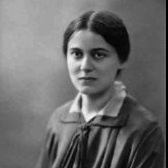
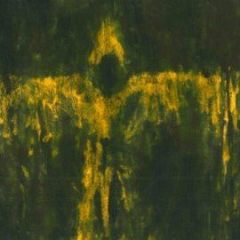
Froschli 838 Share Posted September 3, 2019 Cardinal Ernst Cries for his Lost friend Link to post Share on other sites More sharing options...




.thumb.png.4e5370fc69f142d96a905e477cd5dd97.png)












Recommended Posts
Archived
This topic is now archived and is closed to further replies.