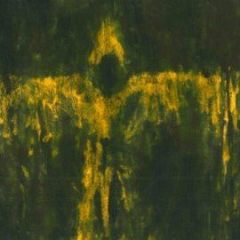
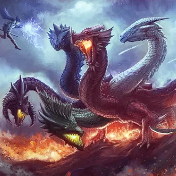
cruzazul 2815 Share Posted April 12, 2020 A Varendozian Guide on Relevant Combat Information Armed Melee Instruction Using a weapon, such as a sword, mace, or spear, is an art that is mastered over time. Being diligent about practice, and practicing often, will hastily turn the most clumsy of aspiring fighters into professional killing machines. Although the art of weapons handling cannot be fully compressed into this book, a few basic mechanisms can be explained fluently through well-written literature. Every guild member worth his salt should know three basic combative stances— the Highguard, Midguard, and Lowguard— and should know how to move, to push offensively and hold defensively. Highguard In the Highguard stance, the combatant’s core form is leaned inwards, requiring his knees to be slightly bent. His arms are arced above his head, wound up and ready to spring downwards with a weapon-in-hand. This stance is generally referred to as the “counter” stance, as it is used to match efforts from the Midguard stance and other stanceless efforts. Midguard In the Midguard stance, also known as the assaulting stance, the core form is more relaxed. Think about this stance in terms of swordplay. The combatant’s blade is essentially perpendicular to his waist and raised either at shoulder or torso height. Whether-or-not the combatant stabs or slashes is dependant on the situation. This stance is used often in conjunction with a shield, and against foes such as untrained peasants, shieldbearers, and opponents in a Lowguard. Lowguard In the Lowguard stance, the combatant’s overall form is closer to the ground. The combatant’s knees are bent and his body is leaned inwards towards the opponent. The combatant’s weapon will start in his lower torso or groin, and attack upwards at an angle. This stance is used to counteract the Highguard stance and cavalry, and is especially used with two-handed weaponry and in the front of pike formations. Movement When in combat, keep the foe in your direct line of sight. Movements are circular in nature, and there are not to be steps taken backwards unless in a dodging motion. When assaulting, natural instinct may tell a combatant to rush a target head on. Instead of this, aim to anticipate the target’s movements and meet them with your weapon. Strike on the flank or at the rear of the target. Know the range of the opponent’s weapon and keep out of distance until ready to engage. In summary, one might think of the three combat stances as a game of rock-paper-scissors. When on even ground, the Highguard is like the rock, Midguard like a pair of scissors, and Lowguard like paper. Do remember that, when switching stances, try to time it with a parrying motion or a side-step in a direction away from the opponent. Crossbow Instruction The arbalest is the most common ranged weapon used by the modern guild member. In conjunction with a stirrup and belt claw, the arbalest becomes a very fast and easy weapon to use. Although expensive, its motions and maintenance are easy to master. To operate the standard-issue arbalest, one will bend over slightly to attach the crossbow’s string to the claw. He will then raise his foot, plant it in the crossbow’s stirrup (always located at the head of the crossbow), and press down. This will bring the string into tension. He will then place a bolt in the arbalest’s groove, shoulder the weapon and find a target, expel his breath and pull back the tension pin. This will let loose a powerful projectile with the ability to pierce the heaviest of armours. Modern adventuring field doctrine dictates that crossbows are to be used by everyday men as a primary weapon for distance warfare. Every soldier is a crossbowman, and will be expected to be able to fire no less than five bolts in a minute’s time. When in unit use, crossbowmen are to act as support to other adventurers. A volley of bolts can swiftly bring down the first ranks of an enemy line or force a flanking party to flee. Basic Combat Maneuvers Soldiers are expected to be able to perform basic maneuvers on the battlefield in organized fashion, following their commanding officers and maintaining rank and file. Understanding the basics maneuvers and practicing their art will lead to quick execution and greater success in combat. False Retreat (Bait and Kite) Bait and Ambush Pincer Movement Hammer and Anvil It is a relatively simple maneuver. It begins with two infantry forces of varying strengths engaging in a frontal assault. While the infantry lines are fixed in the engagement, a second force maneuvers around the enemy and attacks from behind, sandwiching it into the friendly infantry. Generally, the force attempting the maneuver needs to have a superior amount of soldiers to be successful. Cross Fire Concentrated Fire On the battlefield, it is common for guild officers to order direct fire on specifics objects, individuals, or positions in formation. This is known as concentrated fire, and it required strict organization and discipline for proper coordination for maximum effect. The officer would call out the position for all to aim and fire upon, for which all soldiers will respond with the same position. Harassing Fire Combat Instruction against Beasts and Undead Creatures Countering Specters and Ghosts The guide for countering spirits and their ilk has been hidden in the guild archives. The information is reserved solely for Aurum adventurers and those above. Common Beasts and Monsters of the World While the Adventurer’s Guild focuses upon combat with its fellow peers and man, many threats still lurk within the world at-large. From time to time, members of the guild will come across one of these monstrosities, and must be prepared to face them when that time comes. Below is a current list of all creatures, beasts, and monsters in the wild which pose a threat to the guild and its members. Auvergian Brown Bear A solitary, territorial bear making its home in the caves around the Vesian mountains. They are highly aggressive and are large in size, ranging from eight to nine feet in length. Because of their size, they need lots of territory for themselves which makes their numbers fairly low in the rocky hills. Cockatrices A comedic looking creature. Standing at the height of a small building with the width to match. They’re a damned terrifying thing to fight up-close and even more horrid when attacked from a distance. They exhale an ash-like smog known to turn those encased in its influence to stone. The skin, is unholy in strength. Aurum weaponry renders the skin useless. The creature’s bones are that of stone and they’ve the strength to topple a stone tower with ease. Cyclops Apart from having only a single eye they are large and bestial creatures. Their place in the realm has formed them to become beast like creatures. Their average height would stand at about 3-6 meters tall, with a wide and strong build. Clothing would consist of rags or in some cases leather padding. Typically, they carry makeshift weapons, such as broken trunks used as clubs, and lack most sophisticated technology. Drakes or Wyrms Creatures with bat-like wings, the ability to exhale flames, scaly hides and complete with muscular legs and tail-- truly majestic beasts that have captured the awe of men for centuries. Despite this, magical perversion has lead to the Drake species to undergo various mutations and become nearly extinct. It is expected that combat with a Drake be avoided and alternative methods to killing be used to neutralise the threat such a beast poses. A Drake’s main weakness is its wings, eyes and mouth, however this beast will continue fighting until the last drop of blood runs from it’s veins. Decapitation and Siege weaponry is suggested. ADDENDUM: Basilisks Giant draconic serpents, type of Wyrm. Different from their kin, their scales are mostly soft and snakelike, with a hard layer of tough scales across their backs. They have no claws (of course), but have great horns and spines across their back and covering their tails, often using it to pummel large landborne victims. Their teeth are very sharp, however their snouts and noses are strangely tough and hardened, often using their faces to hammer into large creatures. ADDENDUM: Pygmy Dragons Pygmy dragons (or dwarf dragons) are the smallest draconic beings ever recorded, usually no bigger than a cat or a small dog. They will almost always travel in packs or even swarms, overwhelming their prey with savage strikes and bites, tearing into their enemies viciously. Similar to Wyverns, their bodies are quite similar to their dragon counterparts, sometimes having four legs, other times having two like wyverns. Always a pair of leathery wings, scaly hides, long tails (often dotted with spines), sharp short teeth and vicious claws. Unlike Wyverns and most other Wyrms, Pygmy Dragons cannot breathe fire or much else other than air. ADDENDUM: Wyverns Wyverns are generally the most common and well known type of Wyrm. Their features greatly resemble that of their dragon counterparts, taking on most of the typical draconic traits such as the razor sharp teeth, spined backs, leathery wings, scaly bodies and often horns sprouting from their heads. They only ever have two legs and are lesser, feral dragons, almost raptor-like in their physique. Krummavisurs The common Raven, though staggering in size. These beasts have awe-inspiring wing spans and considerable strength. They’ve a tendency to scoop up targets and toss them immeasurable distances. The creatures are not to be fought alone. They can kick up dust with density to block of sight for yards. When effort is applied they can shove an armored figure to knee with the wind conjured by the flapping of their wings. Harpies Harpies are known for picking up and dropping their targets from great heights. Their nests are filled with human skulls. Blunt weapons best handle the brittle bodies of the harpy. Harpies are known to be very ugly with oily skin. This does not affect flight however. Their feathers can be used to make arrows. They have a lethal screech known to rupture eardrums. Golems The result of powerful runes and enchantment, Golems can take many forms- from colossal lumbering humanoid to slithering metal snake, all Golems have an ‘Impera’ who dictates their every action-- Golems will attempt to protect their Impera at all costs. Golems are often the result of a soul being bound to the mage gold core, destroying the core will likely neutralise the threat. Ways to destroy the core depend on a number of factors including the material the Golem is made of. Golems made of stronger materials may need to be cast from great heights, thrown into watery depths or toppled into a substance heated enough to melt metal. Greymane or Leuvian Boar Greymane or Leuvian Boars travel together in a group known as ‘a sounder’. They have thick skin and furs and follow an alpha boar who is by far the biggest of the sounder. The alpha boars are a rare sight though as they are few sounders in the Vesian Mountains. The Leuvian Boar reaches lengths of five feet in length but the alpha boar reaches seven feet in length and towers over the rest of the sounder. Domestication of the Leuvian Boar has been attempted but researchers are unsure of how the alpha boar reaches its size. The alpha boar is also difficult to kill because of the protection generally provided by the sounder. They are known to leave the Vesian Mountains to nearby regions in search of food. Hydrae The best tactic when meeting a Hydra is to pray to all the gods with no exceptions. Atheists should run - they can thus extend their lives for a few heartbeats. It must be stressed that any of these choices would end in death when made by an amateur. One fighting a Hydra should watch out for it's fire above all else - the breath is lethal, momentarily ending the fight and can come from three angles. Hydrae can also fly, albeit a little clumsy at maneuvering, so they use the advantage of brute force and magic in combat. A hunter should climb high buildings to surprise the reptile flying by, and to use walls as protection as well as a loaded ballista. The beast's three jaws are even worse than its paws - unless one wears strong armor, they each bring instant death and can cook their prey within. Leshens Leshens dwell in dense, primeval woods. Fiercely territorial creatures, they hunt with stealth and cunning as their only companions. They use their inborn magic to control the plants and animals within their territory and so when stalking them, half the battle is merely getting near enough to strike. When attempting to find Leshens, it is recommended to find and destroy the Leshen's "totem". These totems represent deer skulls on sticks or tall rocks with other adornments such as flowers. paint etc. Leshens hold these totems very dear to them as it marks their territory and destroying them will provoke the creature. Most of the time when a Leshen is present it is either because the forest is primeval and uninhabited since the dawn of time or someone has summoned it using sacrifices and other dark rituals. Usually the Leshen takes the bodies of its victims and wedges them in magical roots it summoned as a warning to others. The Leshen is able to transform into a murder of crows at times, though this ability takes great power and is normally only used in order to escape a battle it could not win. Magnus Araneae Arachnids are lone hunters - they patiently wait for their prey to kill it with one swift strike when it appears. The same is true for their enlarged counterparts, Magnus Aranea, huge creatures that took a liking to caves and big trees, becoming their undisputed kings. Rulers who do not tolerate other hunters in their territory. Aranea are large, slow and protected by a durable armor. The carapace is especially tough from the front, so it is much easier to wound the creature from the side or the back. The araneas' charges make an excellent for that - one has to evade the charge at all costs by stepping out the beast's way, and then make one's blow. Without doubt it's the best to use Highguard coupled with pirouettes. The arachas has no fear of poison, and not much fear of fire. It's primitive nervous system barely reacts to wounds, and it's incredible vitality allows it to take even great wounds. The beast will heal them after the fight anyway, all the while digesting its prey. Minotaurs Large beasts, not unlike a bull who walk on two feet and have opposable thumbs. Minotaurs are excellent hunters who kill for sport but do not tend to stray far from their hunting grounds, which they select based on how maze-like they are. Minotaurs are able to wield weapons with great efficiency and power and are extremely proficient at recognizing and memorizing patterns, making them excellent mathematicians and engineers. They use these natural talents to create elaborate traps in their habitats in order to ensnare their prey. Necrophages These creatures come in two variations, fleshed and skeletal. Flesh, typically maintain a slumped lacking nature. They’ve considerable strength and and immunity to pain. Skeletal, unlike flesh, move in a hastened speed. They are lacking in strength but are irregularly agile. Aurum and ferrum weaponry is recommended for these creatures. Alone, their presence is a joke, but when amassed it’s often best to simply route. The method of reanimation is unknown but they’ve a distinct weakness to fire and silver. ADDENDUM: Boggens Boggens are deceptive pack hunters, alluring lost travelers in the fogs they can create. They separate and try and lure you to follow the eerie illumination they form within their chest cavity towards their pack. They bare claws sharp as steel, though normally never care to utilize them, driving their victims mad and lost within the foggy illusions they create. Quick thickening fogs are an alarming calling card of these creatures, there is also rumor their illusionary prowess could out do an illusionary mage, but that is merely a tale. ADDENDUM: Fleugals Fleugals, a beast that always hungers; dispose of these creatures while they’re small and young, for a mature Fleugal is a nuisance. The Fleugal is hideous and bares many rows of teeth within its maw, the larger they grow, the bigger reach they attain with their tentacles to consume anything living. A monster that can live predominantly near or within settlements, they normally favor sewers, waste dumps; anywhere with an overabundance of filth and corpses. ADDENDUM: Rotters Rotters are the aftermath of a decomposing body left out to hang just too long. Their occurrence is considered due to poor treatment of corpses. The overwhelming aroma of rotting flesh follows these creatures and are their usual calling card. They spend most of their time feasting on other rotting bodies though won’t allow the living to go unnoticed. They’re faster then most Necrophages, but in agility they lack strength, normally being cut down very simply. When you thought it couldn’t get any worse, in death or a critical state they begin to choke up, the rotting muscles constricting as the decomposing body fills up, and soon hazardly releases a poisonous gas in which the Rotter explodes into a mess. ADDENDUM: Vodniks Thought to have been zombies, they are dead corpses that had drowned and been made hosts to a specific parasite. Vodniks have sharp claws and knife like teeth and carry several sets of these teeth. Vodniks are blind but have very good sense of smell, touch, and hearing. They do not speak, they have gurgled howls. Upon death they hack up the parasite which swims back into the water in search of another host. The Vodnik can ignore severe injuries such as the loss of limbs, bleeding, poisoning, and falling from high places. Rats, or Plague Bearers The common rat. These creatures are the messengers of impending doom. Their presence tells a story or filth and ill-doing. They’ve the standard qualities expected of small rodents. Extended interaction with the creatures often leads to sickness earning them their nickname, “Plague Bearer.” ADDENDUM: Winged Plagues Bearers These creatures look remarkably like rats, though winged and lacking tails. They’re generally nocturnal creatures and go about hunting with their voices. As stupid as that may sound, the creatures have the vision of an elderly book-nun. They’ve spiked hearing to take place of their sight. The creatures bite’s have been known to induce sickness. Sand Lizards A common sight within the deserts of the deep southern Heartlands. These creatures are surprisingly fast and can topple a target with precious little effort. Their skin is nothing of note. Their bones, are decent in density and genuinely sturdy. Their strength is staggering. Not a beast to be toyed with but their removal is a job fit for an experienced hunter. Scaled Tunnelers Large, scaled beasts which rely on their sense of smell, and perhaps movement to detect their prey. Since of their habitat being underground, they share the same characteristics as a mole, seeming to pride themselves in their ability to tunnel through various materials. Their hides appear to be akin to stone, aurum is not effective here, normal steel shall suffice. Appear to be about 12-15 feet tall, and about 6-7 feet wide, large monstrosities recommended for two or more men to take on. Proportion of the body and head seemed irregular, spine was protruding implying their tunnelling habits would seem to be their main goal of survival. Combat behaviour of the creature seems to be quite primitive, relies on its brute tactics and speed to overwhelm the opponent. Sirens The upper body of a siren is known to be a beautiful lady. The lower body however is completely bird like. Their legs and waist are covered in feathers. Their feet are large talons. They have extremely sharp teeth. Sirens lure passing by sailors to crash on the rocks near their islands. They do this with their enchanting voices. Those who have heard the Siren's song and have lived to tell the tale, have described the voices as the most beautiful sound in the world. Some sailors have even jumped over board to get to the source of the song. Those who do this are eaten by the Sirens. It is said that if you survive hearing the Siren's song, you will become much wiser and smarter. Slatons Bloated sea creatures of humanoid appearance, sharp teeth with wide jaws capable of swallowing a man’s head whole. They seem to enjoy feeding on farm animals such as horses, cows and sheep. Highly aggressive towards humans but possible to intimidate with a show of force and aggressive demeanor. The two things that sticks out the most about the Slaton is its ability to generate electricity through some natural process and use it as a weapon, direct contact with a Slaton will cause an electric shock that will paralyse a man for up to thirty seconds and send him to the ground. A dangerous problem when facing a Slaton is its layers of blubber- which is very hard to pierce using any handheld weapon apart from a crossbow or a longbow. During a first encounter with the beast by a guild-man in an act of desperation to save an initiate threw his aurum sword into the back of one of the beasts, causing its natural electrical generation to malfunction and shock itself, in turn causing it to explode. Other weaknesses including fire are known but it is advised one uses ranged weaponry when engaging one of these beasts. The Slaton appears capable of very basic communication through a series of howls, roars and grunts. Slimes, Oozes, and Blobs Non sentient creatures made of gelatinous substances, these three creatures are mainly spotted by locals, and are rarely aggressive though there are stories of these creatures attacking travelers. Fire is known to deter and kill the beasts, and is the suggest weapon against them if faced by a horde of slimes. Specters Spirits without bodies, these creatures can be benevolent, neutral or malevolent just like in their previous lives. They can only be harmed by aurum and steel will have no effect against them, contrary to popular belief. Specters have the ability to wield enchanted weapons and don enchanted armor, some have the ability to fly and cast spells, they use this power to deadly effect. It is suggested that aurum weaponry is used combined with a Highguard stance. Specters are vulnerable to salt and it is suggested that the perimeter in which the Spirit was manifesting be cordoned off with lines of pure sea salt or aurum dust. ADDENDUM: Mania Ghostly apparitions with an inborn distaste of the living, they are completely insane and think differently from other spectrals. In the long run, mana only intend to stir fear and chaos in the world of the descendants; they are susceptible to holy magic and also weak to metal which disrupts their ethereal form. They are known manipulators of kinetic energy and can in order to purge one you must use holy magic. ADDENDUM: Wraiths Wraiths are known for haunting cemeteries and crypts. They hover just above the ground and can appear and disappear at will. The wraiths are always connected to the sites of their demise. They may protect their former homes, or they may seek vengeance. Wraiths do not bleed, and common poisons cannot harm them. Not unlike Liches in their ability to cast powerful magic, Wraiths are able to summon minions to their aid, normally dead foes or nearby corpses and normally use this tactic to weaken their foes before taking them head on. Wraiths are susceptible to aurum weaponry, light and holy magic. Wraiths are generally known to stick to the shadows but recent reports suggest they have started roaming during the day. Trolls Usually found lurking in caves or forests, these beasts can at times be helpful and friendly-- at other times they are forces to be reckoned with. Trolls are generally rather intelligent creatures capable of speech, emotion and co-operation. The best method of slaying a Troll is to use aurum and to disable its method of movement, Trolls are known to carry enormous amounts of fat and are unable to get up if two or more of their limbs are crippled. It is suggested that the body is burnt. Vourukhs Giant birds of prey commonly living in hot climates. They are commonly mistaken by dragons or drakes for their leathery skin that resembles the scales of a dragon. They are a surprisingly social creature that live in a strict hierarchy akin to that of a wolf pack. When outstretched the Vourukhs powerful wings reach a length of 5 meters long. They are a predatory creature, and if they spot a good meal in their territories, they tend to attack with a mighty swoop. Waldenian Walrus The Waldenian Walrus is surprisingly a very passive animal. It is rather slow on land and oblivious to children playing on their backs. Despite being peaceful, they are highly defensive when attacked by whales and hunters. Wolves Considered feral dogs by most. The creatures have normal quality pelts, somewhat brittle bones and aren’t generally considered a threat when fought alone. Unlike their tempered counterparts, wolves are generally pack hunters and intelligent ones at that. Their strength lies in numbers and minor strategy reliant upon speed to induce confusion upon prey. Combat Instruction against Sorcerers and Magick The Basics of Evocation In order for Sorcerers to put into use their craft, they must have a deep attunement with and knowledge of their element. A caster must know that fire begins with friction and the many stones that make up the earth. A common rule of thumb is: “If the Sorcerer does not know how something functions, he cannot make it work himself.” This simply dictates that a mage MUST know how water flows and how wind gusts, just as much as they must know how fire feels to the touch. Due to this, sorcerers often spend a great deal of time in study, on a deep spiritual level, of their respective element(s). Despite this rigorous training, their spells may still deal them harm, just as much as it may harm their opponent. Evocation is often quite physically and mentally taxing on the Sorcerer- as it takes a great deal of mana to cast. The larger the object one wishes to bring forth, the more mana is required of him to cast it. And just as any other magical branch of the Arcane tree, the mage must be capable of envisioning where he is casting his spell, and at what- that he must first visualize the spell itself, in his own mind, in order to bring forth its full fury. Therefore, a mage cannot simply conjure a fireball behind a wall, nor can he cause a wave of water to appear in an area so distant- so beyond the caster’s field of vision. Due to this law, Sorcerers are limited in some regard- hindered by the reaches of their sight. Despite the seemingly passive nature that any one mage may seem to possess, they however remain filthy abominations- dangerous and unholy grotesqueries- who must be taught that such profane powers can bring no good, and must be wholly forgotten, for the sake of every man, woman, and child- for all who walk upon God’s blessed earth. Mana: The Lifeblood of Magic To the ignorant and uninitiated, this energy is mistaken simply for something they name ‘stamina.’ The beings that have been found to carry the most amount of Mana around them are those dubbed “the magic users.” Gleaned from common research, mages learn to gather mana around them as they progress in their art. As they grow further in skill, they become able to carry more mana about them- enhancing the speed at which a mage casts, thus allowing the release of more spells within a smaller period of time. Much like a fire, if the fuel or mana has been completely consumed, the user will perish or, at the very least, find himself close to the gates of death. Such is why Mages must be sure to take the necessary precautions- planning their every move, every attack, carefully, mindful of their limitations and current state. An improperly-timed spell may cause adverse effects for the caster- perhaps even bring his ruin in a hectic environment and situation. From this, the origin and conception of the old “Wihun” strategy can be glimpsed. The “Baiting” technique which the ancient group of witch-hunters once used involved the continued application of pressure upon the caster. The witch-hunter would harass the mage into expending his mana until exhaustion- frightening the caster enough to incite a barrage or volley of magical offense. And when the time had come, the most opportune moment finally revealing itself, the clever hunter would spring forth- fangs bared at the worn down mage, closing in for the deathly blow. Sorcerers: the Various Varieties Amongst those who possess distinctly closer bonds to the void, a few different kinds have been recognised. This short excerpt will attempt to bring the reader through these varied distinctions, and hopefully provide aid in attaining some small measure of enlightenment in the subject matter. The Common Robed Mage Sorcerer(ess)/Magician/Conjurer/Wizard/Robe The typical conjurer, often accompanied by a staff- draped in long cloaks, adorned in all manner of strange runes and odd colours, is often depicted as an old man with long, grand beards and a vast reservoir of knowledge esoteric. There is no doubt that this variety is the most renowned and favored. The common Mage is often the most well-versed in the forbidden art of magical combat- with stronger spells and hexes, and (depending on the proficiency of the caster) all the more perilous. However, with these strengths, come weaknesses, for the common Mage is often, by tradition, frail and lacking in physical prowess- endurance, hardiness and such- due to the almost fanatical obsession that they so often possess with the search and acquisition of more knowledge, and in turn, more power of origins profane. The Household Mage Witch Maid/Mage of Cleaning The common Mage’s humbler counterpart of lesser renown, the Household Mage could very well be the lowly servant a small measure too efficient at the task of cleaning, or the unassuming cook who heats the furnace a moment too quickly. The subtlety of the magic these beings possess and put into practice makes them quite difficult to discern. One could, perhaps rightly, assume that such beings might hardly pose any considerable amount of threat, due to their lack of experience and utility in the field of combat. Household Mages can be either shunned members of the secluded Mage’s Guild or apprentices who, having acknowledged their inferior ability or lack of talent, had decided to follow an entirely different path, and seek a livelihood in a different environment. Their spells are most often simple and pose little to no danger- these sorcerers are seen as more benevolent than the common Mage, and physically more robust; though such things are quite difficult to confirm, given the elusive and subtle nature of the Mages in question. The Battle Mage Warrior-Witch/Spellblade/Witchman/Mystic Knight The rarest and least liked of the known types- The Battle Mage is seen as the bane of chivalry and honorable duels, with little care for learning more of their art. The Battle Mage is most often spotted in places where war and conflict are as commonplace as frost on a cold winter’s morn. He is often the result of a fighter who, through rigorous and excruciating training, had learnt both the way of the sword and the art of magic- applying both theories and practices in harmonious synergy. The existence of this being suggests the existence of some clandestine groups or orders that have handpicked and set aside some select candidates for the rigors required to achieve this balance. The training of a Battle Mage is the stuff of tales and legends- often known to be one of, if not the most dangerous path to the art of the arcane. Apprentices that were found to have been fit candidates were often heard to have died of various accidents- including, but not limited to: Death by fire and cinders, of spell failures and eternal sleep, of ice and water, and of broken shards of marble or glass. The fortunate few- if one could call them such- that did manage to live through the horrors of their training and ire of the common folk, quite often found themselves unable to resume the lives they once led, now bent purely on suffering and death as heralds of doom and ruin. Battle Mages are often not as proficient in the art of magic as their more focused counterpart: the common Sorcerer. However, their skill with and mastery of the blade may, at times, more than compensate for this lack of further magical prowess and potency. Hence, it would be most unwise for the regular mage to step within range of the Battle Mage, for the Battle Mage, neither frail nor unfit, could quite as easily close the distance, and deal a devastating blow. The Magical versus the Mundane - Sorcerers against the Common Soldier Through the ages, mankind has faced countless threats, both mundane and magical. The wars against the undead have taught us techniques and countermeasures that can be- with ample experience, skill, and prayer- successfully utilized against the unholy and the profane. What is recommended: -Numbers. -Ranged weaponry. -Light armor. -Spears. The Baiting Technique Often used by the “Wihuns”, or ancient witchhunters, this technique is focused on the mana usage of the sorcerer. Much like the regular hunting technique of exhausting one’s prey, the knight would wait for the sorcerer to exhaust their mana until exhaustion or sometimes death. Preferably, in grouped shieldwalls, the knight and his party would defend with mild to no injury from the mage, allowing them quick access once he is tired and unable to cast. Spears and arbalest are preferred for this task, as it allows soldiers to get into range of the mage easily without getting too close- sometimes, despite low mana reserves, they will still be able to cast short-distance spells in a limited capacity. ((All the information here would only be available to members of the guild. Huge credit to seannie, niccum, and many others for their help with it)) Link to post Share on other sites More sharing options...
ApplePieKathy 561 Share Posted April 12, 2020 Elanaril the Slothful reads the guide by a pond near the Mother Tree! Link to post Share on other sites More sharing options...
Aetosion 2062 Share Posted April 12, 2020 Alaric M. Vladov II reads the guide nervously, thinking to himself, “This world sure has a lot of killer monsters.” Great doc, +1 Link to post Share on other sites More sharing options...
cruzazul 2815 Author Share Posted May 12, 2020 ((images fixed and new creatures added to registry as per Guild’s findings!)) Link to post Share on other sites More sharing options...




.thumb.jpeg.7a2a5c6fda5bc3b4e960a8645bb0ab98.jpeg)
.thumb.gif.5a805d258de5309474a27096e6dd35c0.gif)


.thumb.png.4e5370fc69f142d96a905e477cd5dd97.png)
.thumb.gif.f363e1e24ec35c023d600bb13f6d2f03.gif)
.thumb.gif.c4804540109a430a35eb0021ce7df945.gif)


Recommended Posts
Archived
This topic is now archived and is closed to further replies.