Jump to content

[✗] [CA Race Lore] Nezumin - Musin Subrace

 Share


Recommended Posts

image.thumb.png.ce2759983cdc62a1af7ab3729e8f0632.png

image.thumb.png.005acb97bf5221820f6a4afcafb70fde.png

Nezumin_monks.thumb.png.af16cca9512547dd738a7ad4ed65c30d.png
image.thumb.png.50a4d7b7ebc84c48cdb1a06cf7f8831b.png

Spoiler

This document presents the Nezumin as an optional Musin subrace framework designed to bridge continuity between Musin and Ratiki lore where shared ancestry is implied but long-form cultural progression remains underdefined.
 

This submission is additive. It does not replace, retcon, or compete with accepted Musin canon. It provides a darker, ancestral, subterranean interpretation for players who want that niche while preserving mainline Musin identity.

Before this is shot down, and told to just be a musin culture - the redlines for musin specifically say you can't be a rat, so I've had to go this route. Which in all fairness, is much less intrusive than a musin rewrite. So barring a musin rewrite, or the opening of Ratiki CA's this is all I'm left with.

This document was intentionally written to be more open-ended in terms of broader cultural flavour - where I may enjoy playing my samurai rat, I don't want to enforce this style on others - and so given the underground sits below all nations, cultures and creeds, I offer the freedom to those who wish it to take this information and play it as they wish; as in my eyes - culture is made by those who play the characters, not by those who force it (within the cultural guidelines outlined in this text.)

MANDATORY LISTENING: 


Short Synopsis

The Nezumin are a subterranean rodentfolk, often considered 'lesser ratfolk', defined by ancestral memory, sacred labor, and preservation of the dead. They are not inherently evil. Their culture openly acknowledges inherited urges from ancient forebears and later Ratiki lines, including hoarding, paranoia, territoriality, and fear-driven domination. Nezumin virtue is the disciplined restraint of those urges through ritual, duty, and communal accountability.


The name Nezumin first entered recorded tradition upon their emergence on the isles of Oyashima, though later records describe similar emergences elsewhere.

They revere the Thirteen Great Rats as ancestral exemplars, with some held in deific regard through perceived blessings. Nezumin theology teaches that the soul remains anchored to the body after death, making bodily integrity and funerary practice spiritually central. Their society values stewardship over conquest, continuity over spectacle, and caution over naivete; all lessons learned from the failings of their ancestors.

I. Overview

The Nezumin are a subterranean people shaped by ancestral memory, sacred labor, and a theology of permanence. Their worldview rests on a single principle: the soul anchors to the body, and community endures through preservation across generations.


At the center of Nezumin culture is the myth cycle of the Thirteen Great Rats. These stories vary by warren but remain consistent in moral function: survival, balance, and duty.

Nezumin are not inherently evil. However, many acknowledge inherited impulses toward hoarding, territoriality, paranoia, and fear-driven control. Their ethics are built around mastery of those impulses, not denial.

Some Great Rats are also venerated in deific terms and are believed to grant favor through devotion, labor, and right conduct.

II. Historical Foundations

Nezumin origin traditions differ by warren. Some claim descent from injured ratiki footsoldiers left behind after ancient conflict. Others claim descent from deserters who rejected Ratiki hierarchy and violence. 

Across traditions, three lessons are constant:

  • Scarcity and hoarding will destabilize society if unchecked.
  • Communal survival will outweigh individual appetite.
  • Space and stability shall be preserved across generations.
     

From these principles arose Eternal Nest doctrine and the moral framework of the Great Rats. In Nezumin teaching, predatory instinct is a burden of history, not a destiny.

III. The Thirteen Great Rats

The Great Rats are ancestral exemplars. Several are also venerated as sacred patrons through perceived gifts and blessings. They are not usually framed as distant creator gods, but as figures whose favor is sought through ritual, labor, and conduct.

The First Great Rat - The Penitent Builder, and the first rat

<link to story>


The First dug refuge when greed and famine threatened collapse.

Space breeds peace.


He is said to choose successors among the Great Rats, teaching that elevation is earned through worthy action.
 

The Second Great Rat - The World-Turner

<link to story>


The Second runs upon the world's wheel, sustaining motion and season.

His lessons:

  • Motion prevents stagnation.
  • Effort maintains balance.
  • Endurance requires participation.
     

Her blessing is associated with resolve in communal labor and steadiness under social strain.

The Third Great Rat - Gira-Gira, She Who Returned the Light

Gira-Gira is remembered as the argent-furred restorer who returned the last celestial ember to the heavens, becoming the moon, and her burning tail the sun after the world stagnated. Her myth teaches that renewal will require sacrifice and action.

She is invoked for guidance in darkness, restoration of hope, and courage against spiritual decay.

The Thirteenth Great Rat - Kikurage

Kikurage is remembered as the first recognized Nezumin among the Great Rats:

Sworn Protector of the Eternal Nest.

He represents living continuity and defense of warrens, tunnels, and sanctuaries. He is petitioned for vigilance, protection, and safe return when venturing above the topsoil.

Nezumin tradition contrasts true elevation through service with false ascension through ambition, often citing Chulk Blackhide as caution; with his grab at power through demonic pact and sacrifice of his children.


Spoiler
  • [Redline] Nezumin theology, cosmology, and religious claims are treated as in-character belief by default.
  • [Redline] No Nezumin religious narrative will be treated as objective world-fact unless explicitly confirmed by Story Team canon.
  • [Redline] Players may roleplay faith, visions, omens, blessings, and oral tradition, but these do not constitute canon proof on their own.
  • [Redline] Any claim that Nezumin myth has literal, setting-wide truth requires event/ST backing or accepted canon documentation.


IV. Theology of the Anchored Soul

Nezumin doctrine holds that the soul remains anchored to the body after death. Through preservation rites, the dead enter the Shared Dream within the Eternal Nest.

Family shrines maintain generations in mummified repose, expressing continuity between living and dead. Bodily integrity is spiritually significant.

Core principles:

  • Remains shall be preserved by rite.
  • Lost limbs shall be reunited when possible.
  • Mutilation is taboo.
  • Shrine-keepers are to be protected and revered.

V. Doctrine of Wholeness

The body is the vessel of identity. Fragmentation through violence or decay is believed to destabilise the soul's anchor.

Obligations include:

  • Recovering fallen kin.
  • Preserving severed remains.
  • Using symbolic replacements where recovery fails.
  • Acknowledging permanent loss through ritual.

Execution is spiritually less severe than mutilation: death preserves anchoring, while dismemberment threatens it.

VI. Cultural Values and Personality

Nezumin society prioritizes:

  • Communal survival.
  • Responsible use of space.
  • Preservation of ancestry.
  • Labor as sacred continuity.
  • Protection of subterranean sanctity.
     

Nezumin view the underground as more than habitat. It is regarded as inherited trust, shrine-ground, and sacred home. Warrens, tunnels, burial vaults, and cistern routes are treated as communal sanctum tied to both living duty and ancestral rest. Because of this, territorial behavior is culturally normative: boundaries are mapped, access is monitored, and intrusion is treated as a serious social and spiritual concern.

This territoriality is defensive rather than expansionist. Nezumin doctrine favors stewardship, maintenance, and controlled access over conquest. To claim, damage, or exploit subterranean space without consent is understood as a violation against both community and memory.
 

Nezumin are often wary of surface life, which they view as exposed, transient, politically unstable, and spiritually careless in treatment of death. They are especially suspicious of powers that reward conquest, spectacle, or extraction; especially of earthen materials such as metals - due to their associations with their subterranean home.
 

They are generally guarded with outsiders, pragmatic in speech, and slow to grant trust. Hospitality exists, but is conditional on reciprocity and respect for warren boundaries, funerary sites, and ritual space.

Ancestral urges, including hoarding and territorial aggression, are openly recognized and restrained through ritual, duty, and communal accountability.

VII. Physical and Social Characteristics

Nezumin are small, agile rodentfolk adapted for subterranean life. While they retain visible kinship with Musin, they identify more strongly with their Ratiki forebears and describe themselves as rats rather than mice.

Common traits:

  • Dark-adapted eyes.
  • Sensitive whiskers.
  • Strong claws for digging.
  • Fur in earthen tones, with rare silver coats.

Ratlike Morphology

Nezumin physiology is distinctly ratlike in build and profile. Their heads are longer and more wedge-shaped than most Musin counterparts, with pronounced muzzles, heavier incisors, and broad-set ears tuned for tunnel acoustics. Their bodies are lean and sinewed for narrow passage movement, with low-center balance suited to climbing rubble, bracing in confined spaces, and sudden directional changes underground. Tails are typically long, expressive, and functional for balance and signaling within tight warrens. Their mannerisms also reinforce this identity: frequent scent-checking, whisker-led orientation, rapid stillness before movement, and close-proximity social clustering in enclosed spaces.


Fur color may hold symbolic superstition in some warrens, but holds no real power or social standing; For example, silver fur may carry resonance through Gira-Gira, the third great rat, but it does not grant automatic rank, authority or mystical function, as is the same with black fur; notably held by the first great rat, and inherited by Chulk Blackhide, the demon rat-king of Luciensberg. Scars and deformities are treated with solemn respect; ritual markings and practical prosthetics are common.


Nezumin sight reflects subterranean adaptation. Their vision prioritizes forward detail and close-threat tracking over broad surface-field scanning, though side-set eyes, on account of their ratlike heads, retain partial environmental awareness. Under bright-surface conditions, vision is significantly hindered, with detail strongest directly ahead and weaker to flank and rear. In low-light environments, visual performance improves and effective range extends, especially in tunnels and caverns. Above ground, Nezumin often rely more heavily on whisker sensitivity, hearing, and spatial memory, particularly under bright or flashing light.

VIII. Nezumin and Their Musin Cousins

Nezumin and Musin share distant ratfolk ancestry but diverged in ecology, theology, and social adaptation.

Key differences in Nezumin tradition:

  • Sacred orientation: Nezumin center the Eternal Nest, Anchored Soul, and shrine continuity; Musin are more surface-assimilative.
  • Habitat instinct: Nezumin are subterranean preservers; Musin are generally mobile and surface-integrated.
  • Conflict posture: Nezumin favor defensive stewardship; Musin more often favor avoidance and accommodation.
  • Instinct profile: Nezumin discipline hoarding and aggression through social ritual; Musin are more associated with scavenging-reclamation and grooming norms.
  • Social style: Nezumin favor austere utility and continuity; Musin often embrace bright, improvised expression.

Nezumin are often perturbed by Musin behavior but do not universally hate them. Many still regard Musin as kin: frustrating, vulnerable, and worthy of guarded concern.

IX. Conclusion

The Nezumin are a people of memory, discipline, and endurance.

Their exemplars teach:

  • The First creates space and sanctuary.
  • The Second sustains motion through sacrifice.
  • The Third restores light in the dark.

Their identity is not innocence or corruption, but vigilance: to inherit hunger and still choose stewardship.

Death is transition, not erasure. Through the Shared Dream and the Eternal Nest, memory persists across generations.

Beneath the world, the Nezumin endure as keepers of the Nest.
 

PLAYER-FACING RP GUIDELINES

Spoiler
  • Nezumin are communal, preservation-focused, and duty-driven; ambition is judged by its impact on the Nest.
  • Suspicion of outsiders is normal; indiscriminate hostility is not.
  • Reverence toward Great Rats is valid through prayer, offerings, vows, and perceived blessings.
  • Inherited urges are internal conflict tools, not permission for OOC disruption.
  • Death and injury RP should reflect Anchored Soul doctrine: remains recovery, funerary rite, and wholeness practices matter.
  • Nezumin-Musin friction should remain cultural and philosophical, not mandatory blood-feud.
  • Fur colour is symbolic flavor, not automatic authority.
  • Culturally deviant Nezumin are valid but should face believable in-character social consequences.


REDLINES


Spoiler
  • [Redline] Nezumin are not auto-evil, auto-feral, or auto-hostile by racial default.

  • [Redline] "Ancestral urge" will not be used to bypass consent, force extreme scenes, or ignore server conduct standards.

  • [Redline] Do not powerplay divine certainty or guaranteed miracles; blessings remain perceived faith experiences unless event/staff confirmed.

  • [Redline] Do not self-appoint Great Rat status, miracle authority, or prophetic supremacy without narrative approval.

  • [Redline] Do not use fur color as automatic social rank, magical privilege, or immunity from criticism/consequence.

  • [Redline] Suspicion of surface dwellers will not become blanket refusal to RP, random attacks, or grief behavior.

  • [Redline] Nezumin-Musin differences will not be used to justify genocide narratives or dehumanizing raceplay.

  • [Redline] Anchored Soul doctrine must be respected in tone; desecration and mutilation are severe taboos, not casual flavor.

  • [Redline] Nezumin are not comedic meme-rats by default; baseline tone is stewardship, memory, and disciplined survival.

  • [Redline] If portraying a culturally deviant Nezumin, acknowledge that deviation in-character and play social consequence.

  • [Redline] Above-ground brightness imposes reduced functional eyesight compared to subterranean or dim environments.

  • [Redline] Nezumin eyesight is directionally constrained by eye placement: baseline functional range is approximately 20 blocks forward and 5 blocks to each side/rear in bright-surface conditions; beyond this, only vague outlines and broad color shapes are reliably perceived.

  • [Redline] In low light, Nezumin vision extends beyond bright-surface baseline to approximately 40 blocks forward and 10 blocks to each side/rear.

  • [Redline] Bright or flashing light will reduce visual reliability and shall be roleplayed as sensory strain.

  • [Redline] Visual constraints are RP limits and will not be used to force outcomes, deny valid emotes, or bypass consent/consequence standards.

  • [Redline] Outside outward appearance and constraints in eyesight, mechanically Musin and Nezumin are identical, and as such, PVE and CRP rules that apply to Musin also apply to Nezumin. 


Link to post
Share on other sites

Question: Are they the same height as musin? And if this were to be accepted, could existing musin have nezumin traits or?

Link to post
Share on other sites

Nice post but why do yall gotta use AI for everything?

Link to post
Share on other sites

Quote

Nice post but why do yall gotta use AI for everything?


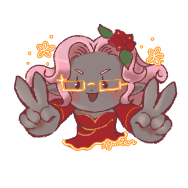
for a none-AI alternative, please insert this clip-art rat in place of the header image
Rat Clipart Images | Free Download | PNG Transparent ...

Link to post
Share on other sites

Spoiler

afsafaaa.thumb.png.5d87f0ae0db76daad2717b7cd506d229.png


Link to post
Share on other sites

Spoiler

hey man that art portrays your idea very well, i imagine paying for art or scouring pinterest for 5 hours isnt for everyone.


keep doing you champ ignore these haters that only focus on the ai art and not the great human writing


Link to post
Share on other sites

Pretty cool lore piece I feel like this would work better as a culture post but working as CA could also be pretty sick as the lore you made for your musin is pretty cool 

I would recommend eventually changing out the art to not be ai but I understand if that's not an option for you. so you do you man

+1

Link to post
Share on other sites

This lore has been denied.


Heyo, this sadly aligns more with a culture post rather than an addition/subrace to a lorepiece. I highly recommend posting this as a cultural post rather than trying to append it into approved lore- though if you'd like, we'd be open to offer a bit of an olive branch and let you link the culture post to the main Musin page under that culture section.

Link to post
Share on other sites

Guest
This topic is now closed to further replies.
 Share

  • Recently Browsing   0 members

    No registered users viewing this page.


×
×
  • Create New...