.gif.e9cad0a3e57838245170ff18625301ea.gif)
woke
-
Posts
204 -
Joined
-
Last visited
Content Type
Profiles
Personas
Wiki
Rules
War
Systems
Safety
Player Conduct
Roleplay Leadership Guidelines
- Roleplay Leadership Guidelines
- Roleplay Leadership Guidelines Comments
- Roleplay Leadership Guidelines Reviews
Forums
Everything posted by woke
-

-
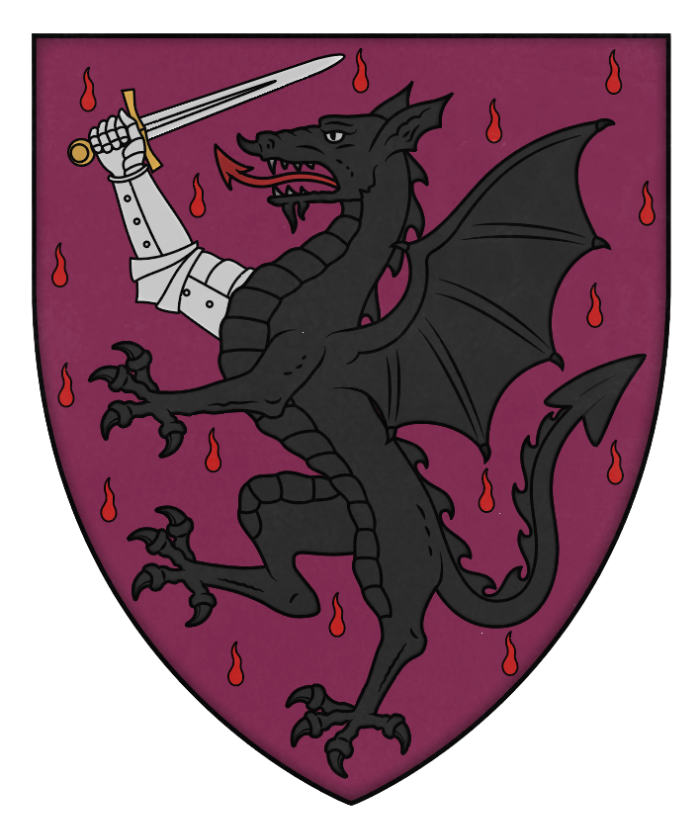
The north face of Fort Adelhil. With the ever growing need in the Imperium for land to be settled, the pioneers of the Heartlands have been faced with a thicket of beast and brush to their north. Long known, and long unsettleable, the Emperor Tiberias first chartered the formation of the Administratum Trostinum, and set about the Legio II ‘Vander’ to clear the lands upstream from Rittersburg of the Metzlite menace under the watchful eye of the Legate Aetius, employing Foederati and penal legionaries en masse. Their initial successes have warranted the necessity of a keep defending the pass over the river Rhône (H. Imp. Rhodanus) to protect the gains into the marches so far, and Daemonic incursions into the Heartlands. The valiant and leal service of the Lord Antonius Helane has earned him the recognition of his Dragonsblood, and the entrusting, with great importance, of defense of this new frontier. Within a decade of his recognition, was his keep constructed, to stand for eons and to shepherd a wave of great Imperial patriots throughout Azuras and all the Hadrianic Conquests. This new land is populated by a hardy and soldier-descended people, used to long travels on the road as well as other assorted colonisers from the Heartlands. Composed of a mix of mercenaries of various backgrounds, most recently Savoyard and Santegian, Les Valliards are a most hardy people dotting the banks of the river Rhône, standing as a testament to Horenic determination. Diverged from Burgundian in the year 2059 ✢ W A R R I O R C A S T E - The Valliards derive their values from many groups as a confluence-born peoples. That being said, their ethos is inextricable from the bellicose and war-ready state that the Blackwyrm Company had imposed upon its constituent armsmen. The main recruitment grounds for the Blackwyrm Company have then had tremendous impact on the eventual makeup of those soldiers’ descendants, and the landed peasantry or house servants dragged along with them. An elite warrior caste dominates any settlement of Valliards, with a strict adherence to a manor lord ideology de facto set in stone through the nature of a mercenary company. The landing of Lord Commander Antonius Helane has carried this tradition into law, ingraining it into the everyday life of a Valliard. ✢ S P I R I T U S O R E N I S - The House of Helane was born at the split of the House of Horen, though their line originates from Camilius Helane. The exploits of the Blackwyrm and the loyalty of the House of Helane to an emperor, and the very idea of empire, is one mirrored in their gentry and home life. The success of the people Valliard has, traditionally, and continues to be, directly tethered to the success and existence of a united Man. They are a trusting and loyal people to Lord Commander and Imperator, and the loyalty to the former almost always coincides with that to the latter. ✢ P R A C T I C E D R H E T O R I C - Valliard social life was for eons centered around the campfire, and the cooking pot. Shared evenings are spent in common spaces, and every evening in a free company is shared; the Old Valliard men and soldiers would gather around boiling stew and fizzing kegs as they were handed out. These gatherings have long fostered a performer’s culture: chroniclers, troubadours, poets, and singers all found their place among the Blackwyrm Company, raising spirits in place of swords. This has long carried forth. The further the Valliard people become distanced from their martial beginnings, the more the social aspects of a soldiering past are solidified and abstracted from their origins. Family chronicles of storied service to the company, victories and triumphs in battle, bloodlines, and cultural heritage are all of extreme importance to the Valliard. ✢ P R A G M A T I S M - The loyalty of the men of the Blackwyrm company, although hard forged and strongly bound, does not originate from respect of titles. The loyalty, initially, of any mercenary, is purely contractual. Much of Valliard life and service revolves around an exchange of services. Loyalty is earned, codified, and inherited across generations. Shunned stories tell of ‘fragging’ in the fledgling days of the company, where the legionnaires pruned themselves of unworthy leadership. Service to the House of Helane, and from the House of Helane, has long legitimised and justified the loyalty of a Valliard to their Lord Commander. The continuity of service of the enlisted to their commanders, and vice versa, is the sole foundation of the contemporary rule of the Wyrmlords in Valmont. ✢ M E R C A N T A L I S M - A storied history of gold and plunder has long rooted itself in the inner entrepreneur of every Valliard. They are not a greedy people, but they are a laborious and corporate one. Upon the company’s arrival onto Azuras, they were quickly put to work by Antonius Helane extracting the resources to prop up the burgeoning Rittersburg and Imperium. Valliards occupy a vast variety of trades, though most orbit around warfare and the logistics surrounding it. With the Pax Orenia, many of these interests were shifted back towards civilian life, transforming the innate industriousness of the Valliards into a corporate machine that sees many men of Helane serve the Imperial Treasury, and fatten the pockets of their superiors and themselves, contributing greatly towards an outside perception of slyness in any talks of business. ✢ F A I H I T H A - Honor among sellswords is oft the topic of quips and jests, but this derives more from a misunderstanding of a sellsword’s honor, rather than a wholesale lack of honor. To men of the Blackwyrm Company, honor centers around service, insofar as being wronged in the line of service, or inappropriately compensated, is a grave offense. From these quarrels was the term ‘faihitha’ born, a word of Old Marian origin that encapsulates all matters of feuds and combat; vendetta. Just as service and loyalty is inherited, so too are these vendettas. These held slights on honor, person, or coin, alike in sincerity to the Dwarven Book of Grudges, are tethered to blood and honor, often ending in total obliteration or obsolescence over minor slights, even generations later. This, though bloody, is a sellsword’s honor; to do right to their kin. ✢ D A Y O F E X . O W Y N - Traditionally undertaken during the summer solstice, or rather, begun, given the long winded affair of the Path of Owyn, the Day of Ex. Owyn is both a second baptism, festival, and coming of age ritual. Beginning with familial and communal festivities, the Valliards gather around their newly grown adults in one grand huzzah before they are set on their new lives, both spiritually, and physically. Before setting off on any pilgrimage, items of childhood importance - toys, plushies - are cast into a bonfire surrounded by village people carrying torches. Following the bonfire and feast comes a night of singing and feasting, quickly followed by a sobering journey to visit any and all temples to give succor to the needy, pray with the saints, and worship in all the houses of the Lord. Though a dramatic entry into the reality of adulthood, the newly grown are accompanied by their village in the procession, a communal rally of support for their own. ✢ J O C S F L O R A L - A festival to mark the turning of spring, the Jocs Floral is a hallmark pillar of Valliard cultural traditions, exemplifying and bringing to light the very best of the creative artisanry of their people. Judged by the Consistory of Three Troubadours, composed of the most highly recognised scribes and literati of contemporary literary art. Here, poets, troubadours, and chroniclers - sponsored by families - compete in artistic bouts of verse and rhyme for the glory of their own work, but also of their sponsors. The victors are lauded with flowers and favor, and granted entry to judge the next year’s festival, where the cycle repeats once more. Songs of history, triumphs, and familial victories ring out in the blooming forests by the banks of the Rhône, and all the pieces are preserved in the annals of the Consistory as a testament to the work and efforts invested in their productions by competitors, permanently etching them in the histories of literary art. ✢ L ’ O S T E G U E R R A - Harvest fairs puncture through the blurry lines that distinguish culture from culture as a celebration of popular labour. A long season of work, tilling, planting, tending and harvesting culminates in meal sharing, the end of one shift of the year before the inevitable call to the next. To a group of sellswords on the road, though, there is little use for harvests, let alone festivals celebrating them, other than the abundance of goods in local burhs. In this abundance, the captains and lieutenants among the Valliards take to feasting with their men with all the spares of their pantry, leading to absurd, unseen dishes. Local markets serve as the base for fried chicken, pickled quail, and anything else that can be made of what remains. ✢ T R O U B A D O U R S A N D T R O U P E S - Mercenaries and roadfolk are not hugely distinct from each other, and in many ways, hold more similarities than differences. Wandering peoples who live upon the road, and whatever work they can find, who eat and sleep ‘pon ancient kingsroads. For minstrels, actors, musicians, they find nary better companions than sellswords, grizzled by what they witness, and eager for a tale or a laugh. Eventually, captains took to incorporating those bards and balladeers into their own ranks in ‘troupes’, from which new material would develop: bawdy comedies of old captains, glorified retellings of crude warfare, anything to lift the spirits of their men. Certain troupes, or their makeup of troubadours, became favored by whatever captain they pleased most, becoming staples of units and war camps flying the Blackwyrm banner. With the settling of the Valliards, and the tumults of time, the tradition of immortalising one’s lineage in song, laughter, and verse has kept the peoples of the Lord Valmont together from hearth to hearth. ✢ F A M I L Y C H R O N I C L I N G - Although not originally a practice based in hereditary lineage keeping, and rather simply a corporate manner of cataloging, regiment chronicling, and later family chronicling has been a staple of Blackwyrm's organisation, and proud history. The Black Book serves as a basis from which many of these captains began their family chronicles, giving a wide tree of interconnected heroes and champions of every station under the banner of Helane. With the lack of many other written records, these chronicles became the principal material from which troubadours would compose their works, transforming rather banal lists of feats, births and death dates, and names into illustrious displays of verse and rhetoric, recited aloud during feasts and receptions that only amplify the significance of sacraments, or major familial events. Marriages, oaths, and reconciliations are all sung of, combining an oral and written history to never let family stray far from the mind. The resurgence of a Pertinaxi empire has led to an equal re-emergence of interest in Flexio based names. Although original company names, save the ruling Helane family, drew from a variety of backgrounds, now there is more of an overt Flexian and High Imperial influence on naming traditions, though typically reserved for second names, newly ennobled Valliards who have no surname, and for the aristocratically inclined. The everyman of the Blackwyrm Company drew from Valliard dialects of many more mainstream naming conventions, such as Auvergnian, Santegian, Savoyard, etcetera. Names of both types include: Ponc Francesa Ives Beneseta Ivon Camila Baltasar Catarina Bernat Catin Benedit Cecilia Guilhem Celestina Emilian Celina Esteve Emiliana Evarist Ermengarda Teuchus Esclarmondea Trajanx Estela Josep Ester Jaufre Eva Maxenc Estevenata Jacme Jausepa Polidor Ludivina Patric Menon Pere Mirelha Raimond Patricia Renat Sancia Sanc Renada Sergi Zoe Horen Rosalina from the hand of Horen Remus Helane, signed by… P E R F I D E M I M P E R I I THE RIGHT HONORABLE, Antonius Lucien of the House Helane, by the Grace of GOD, Count of Valmont, Knight Captain of the Imperial Order of the Red Dragon, Grand Inquisitor, Patriarch of House Helane, Lord Commander of the Blackwyrm Company. HIS LORDSHIP, Horen Remus of the House Helane, by the Grace of GOD, Baron of Adelhil, Heir-Apparent to the House Helane, Minister of the Consistory of the Three Troubadours.





-
A letter bearing the Blackwyrm sigil was delivered to the headquarters of A-ELI, Inc., and within it was declared the favor of House Helane toward Taelarios Sunwatcher.
-
werewolf is evil. he gave me hush money to keep quiet but i cant stay hold it anymore. DM me about it.
-
Bambang

-
A letter bearing the Blackwyrm sigil arrived at the central office, its message short: "Aye, from House of Helane."
-
yo
-
"Yup." Sir Antonius muttered
-
Sir Antonius, the one who ordered Father Anselm's death, let a low chuckle escape him at what he heard.
-
Sir Antonius stood
-
.thumb.gif.5a805d258de5309474a27096e6dd35c0.gif)
Imperial Appointments of the Treasury, 640 AA
woke replied to CharmingCavalier's topic in Privy Appointments
"AVE IMPERIUM! AVE VALMONT!" cheered the newly appointed Warden of the Imperial Exchange's brother, Sir Antonius. -
MC Name: WokeTheNoob Discord: 1trs Image: Description of Image: Lord and Lady Helane Dimensions: 2x3
-
"Eventful day, Big Red." remarked Antonius to his best friend, Kruz'Ahlyz, who acquired two new titles, Red Terror and Prince of the Stars. @SmackSmack

-
hi wowj :D
-
FREE MY BOY GREEN HES GREEN
-
Issued and averred by the office of the GRAND INQUISITOR ✠ I: MANDATED TESTING With the seizure and arrest of loathsome Daemonia and the successful protections through investigation conducted by the Office of the High Justiciary and the Inquisitorium, His Imperial Highness Marcus Tiberias has seen it fit to mandate that ALL members of EVERY Imperial Office or station, including but not limited to: ✢ The Imperial Bureaucracy ✢ The Imperial Guard ✢ The Order of the Red Dragon ✢ The Celosian Courts Must seek aurum and salt testing by the Inquisition, among any other form of test deemed necessary for the purposes of keeping His Majesty’s Imperium clean of ANATHEMA. ✠ II: ACQUIRING INQUISITORIAL NOTE Any individual of the Imperial Office is required and expected to submit to testing by the Inquisition at any time. Once cleared, an Inquisitorial note will be issued to the individual, clearing the individual to perform their duties. Any Imperial official who refuses such testing will be considered guilty. AVE IMPERIUM! H V M A N I T A S I N V I C T A “Für Gott und Kaiser,” HIS IMPERIAL MAJESTY, Hadrian I of the House Horen, by the Grace of GOD, Emperor of Man, Holy Imperator, King of Seventis, Salvus, Renatus & Oren, Duke of Middelan, Helena, Lorraine, Sunholdt, and Reutov, Baron of Pestilles, Protector of Grense, Protector of the Heartlanders, Patriarch of House Horen & the Tiberian Dynasty, Captain-General of the Church, Defender of the Faith. ALEA IACTA EST P E R F I D E M I M P E R I I HIS LORDSHIP, Antonius of the House Helane, by the Grace of GOD, Baron of Valmont, Knight Captain of the Imperial Order of the Red Dragon, Grand Inquisitor, Patriarch of House Helane, Lord Commander of the Blackwyrm Company.


.thumb.gif.5a805d258de5309474a27096e6dd35c0.gif)


.thumb.gif.4284906d3788a322c219fc4b2911a67d.gif)