Jump to content

[Guide] Heralds of Azdromoth


Kalehart

Recommended Posts

(ALL PRE-EXISTING HERALDS START AT FEAT LEVEL.
CONTACT THE ST IF YOU WISH TO DROP THE MAGIC.)

Heralds of Azdromoth: Guide

_PCaBKI3hs1h1YnyqW6RkZ7gCKGL_G8khuKxtlJL1CzLystCpnvc4tsJ4hk0oK-PYZaIV6w8VdjpEJxLP1pumxRrFmYL-Vf6CdY6zDepW0ckxL4cLQvonFdbHI1iBuo4UDoy_VPW

You will regret your transgressions against my liege, fool. Your aengul cannot protect you.

-A Herald marching upon a foe of the Titan.


Introduction:

In this guide I will primarily be laying out emote examples for various aspects of the magic including the exhaustion system and spells, as well as providing some general advice and ideas on how spells are intended to be used, and what one might do to leverage this lore to its fullest storytelling extent.


Summary:

Heraldry and Ordained Heraldry are a Feat and 1-slot magic both oriented primarily towards utility and flavor, with only modest combative uses. They utilize a resource known as draan, sourced from Azdromoth himself, and channeled through either a singular mark or, for the 1-slot Ordained version, a set of tattoos. The original lore can be found here:


https://www.lordofthecraft.net/forums/topic/194951-feat-magic-lore-heralds-of-azdromoth/


Exhaustion:

To reiterate only briefly, Heraldry uses a non-standard variety of exhaustion that is represented not as weariness or strain, but rather pain inflicted by the perceived heating of a Herald’s mark or marks. At its lowest limit this would be no more than a slight tingle or a sunburn like sensation where the marks are present, but at its highest extreme could incapacitate a Herald through sheer, intolerable agony, with every marked part of their body feeling as if it is actively being branded by a hot iron- though this causes no actual damage to their skin.


The scaling of this effect is organized through a system of how many spells of certain emote counts one may perform before reaching this incapacitating upper limit. The closer you get to the maximum number, the more painful the marks will become. These limits are as follows:


5 spells of 2 or less emotes.

3 spells of 3 to 4 emotes.

1 spell of 5 or more emotes.


This perceived heat persists for a single narrative hour or the length of the combat encounter, regardless of what level it has reached. Even a mild discomfort will persist for the full period of time.


A number of abilities, however, are exempt from causing this effect- these being those with no combative utility. They are Mindoraan, Zil Kresh, Bharoh, Dratho Nar, Dratho Zha and Dratho Rihk.


We’ll now take a look at a few examples of how one might roleplay reacting to varying levels of exhaustion.


Spoiler


Minor Exhaustion:

(Example for 2 spells of 2 or less emotes)

Celiasil’s fingers close around the open air as his weapon returns to his hand in a flourish of ash and smoke, finding them curling about its hilt. His brow knits in mild discomfort as the marks upon his skin glower, a subtle discomfort causing him to shift about uneasily.


Medium Exhaustion:

(Example for 2 spells of 3 to 4 emotes)

Celiasil’s jaw clenches and his teeth grit, saved from the inferno that had come his way, but left feeling burned all the same as his spell’s effect ends. The ‘aheral’s muscles twitch from the scalding pain that branches over his arms, quiet curses seeping from his lips and leaving him shaking his hands out in some effort to cool their marks, to no avail.


Maximum Exhaustion:

(Example for 1 spell of 5 emotes)

Celiasil’s body trembles and quakes as he finally reaches the end of his effort to seal his fellow’s gaping wound, unwelcome tears streaming from his eyes as he staggers back and topples to the ground, curling in on himself as the marks feel to brand his skin. Withholding for as long as he can, an agonized bellow soon rips from his throat, the man writhing in mind-numbing pain he can do nothing to abate, unable to so much as stand.


Tells:

Heraldry is very flexible in the representation of its tells, with a number of standardized examples set out in lore, but with the ability for individuals to propose their own concepts to the ST for use, provided that they fit the same themes of ash, smoke, and heat, but not flame.


These tells are delivered prior to the speaking of any words of power, for Vocal abilities, as they are the result of one harnessing their draan, not of them giving it specific purpose. 


As with exhaustion, several abilities do not require a tell, these being Mindoraan, Zil Kresh, Dratho Nar and Dratho Rihk.


The standardized examples are as follows:

  • Exhalation of smoke.

  • Glowing of mark or marks through armor, clothing, etc.

  • Ash falling or seeming to be blown off of their person.

  • Harmless embers igniting somewhere on their person.

  • Heat-like distortions around their eyes or hands.


We’ll now see a few example emotes utilizing each of these, in order.


Spoiler


Celiasil’s eyes narrow as he draws a breath through his nose, teeth grit as he feels the draan flowing through the many tattoos that cover his arms. With the breath escapes, it comes in a ploom of smoke that wafts from his nostrils and the corners of his mouth, signalling that the energies had been brought to the ready.

-

Celiasil closes his eyes momentarily as he focuses upon the flow of draan stemming from his Azdromothian mark. As the Herald draws in a measured breath, a fire-like light can be seen flourishing from beneath his armored arms, escaping through crevices of the plate and mail.

-

Celiasil extends his hands out to his sides, focusing inward as he feels the energy infusing his many Heraldic marks. As his fingers curl inwards, a thin layer of ash appears to fall from his form, flaking like snow from his skin and clothes and drifting to the ground, though vanishing before it ever makes contact.

-

Celiasil rolls his shoulders and dips his head, eyes set on the ground as he works to harness the draan he wields. As it is brought to the ready, embers seem to come alight on him, the hems of his grabs taking to subtle glowering form, and fragments of flickering emberlight peppering his hair.

-

Celiasil halts in place with his eyes focused dead ahead, brow knitting in concentration as he draws upon the energies he has been bestowed. Hands outstretching and eyes narrowed, the air about both begins to warble and distort with heat-like waves, rippling subtly as his draan is brought to the ready.


Abilities:

Herald abilities come in two core varieties, vocal and non-vocal. 


Non-vocal abilities are those usable by unordained Heralds with the feat-level version of the magic, and are named as such because their effects can be brought about without any need for their corresponding words of power to be spoken.


Vocal abilities are those usable by Ordained Heralds with the 1-slot variant of the magic, and are named as such because their corresponding words of power must be spoken out loud at sufficient volume to be heard by others nearby, for the effect to be made manifest.


Non-Vocal:

Bel Zahkrii

 A Herald may summon and dismiss two draan-bound items at will. This requires 1 emote for both summoning and dismissal, or 2 emotes for retrieval when disarmed or thrown.

Spoiler


-By willing it so, a Herald may summon and dismiss a pair of weapons or tools which have been interwoven with the draan they are gifted with. The act of binding such a weapon is simple but impossible to undo without destroying the weapon or tool after the fact. It is performed by the Herald taking hold of their as yet unbound weapon and focusing upon it, allowing themselves to feel the draan with which they have been imbued, and guiding it into the weapon; represented as a haze of smoke appearing around it, and then being absorbed into the armament.

-The act of summoning a draan-bound weapon is represented as the weapon appearing, constructing, or otherwise manifesting in a visual display always involving ash, smoke, or both. Dismissal follows the same rough aesthetic guidelines, and retrieval is displayed as the weapon being dismissed wherever it is, and then summoned in-hand.

-Bel Zahkrii requires a minimum of conscious effort, and thus may be performed whilst already in combat or on the move, though not alongside other abilities or in the same emote as an attack.


-Outside of combat, summoning, dismissal and retrieval of draan-bound items takes 1 emote, consisting of a tell followed by the effect.

-In combat, both summoning and dismissal still only require 1 emote each, but retrieval requires 2. These retrieval emotes consist of 1 of a tell, followed by the weapon dissolving wherever it currently is, then by 1 of it reappearing in the Herald’s hand. This is effectively a dismissal and summoning done back-to-back. 

-These emotes may be worked into other action emotes, to permit Heralds to defend themselves whilst also working to retrieve or summon their weapon. You cannot, however, strike with a weapon in the same emote as it appears in your hand.


-Only weapons, tools, or individual pieces of armor may be draan-bound.

-The act of Draan-binding an enchanted item does not require an MArt be created unless otherwise stated by an ST.

-Removal of a draan-bind will unbind the item without destruction. This must be done by absorbing what draan has been implanted into the weapon through one emote, effectively reversing the process used in originally binding the item.

-Cannot be used while restrained.

-Armor cannot be summoned as a means to avoid a blow at the last moment.

-Summoning a weapon follows server rules pertaining to unsheathing weaponry.

-Only two specific items may be draan-bound.

-Only one item at a time may be summoned in combat, requiring 2 emotes to bring forth both or 4 to retrieve them.

-Ammunition such as arrows or bolts cannot be draan-bound, nor can things such as bombs, relics, etc. If there is any doubt about the legitimacy of what one wants to bind, the ST will assess this before signing the item.

-Weapons that could not be carried for a prolonged period by the Herald alone cannot be draan-bound. This includes things like siege equipment, oversized weaponry, etc.

-Thanhium items of any kind may not be draan bound.

-Any item enchanted through a deific magic EXCEPT Heralds of Azdromoth may not be draan bound.

-If a draan-bound item is destroyed before it can be banished, it will lose its draan-bound properties. This means that if a shield is shattered, or a spear’s haft is snapped, the item cannot be summoned, dismissed or retrieved.

-No damage done to draan-bound items is ‘healed’ upon their banishment and summoning, they are still subject to damage and repair, possessing a continuous physical state like any other weapon. Draan-bound blades must still be sharpened if they go dull, armor must be repaired if dented, etc.

-Draan-bound weapons will turn to ash upon death and are returned to the soul.


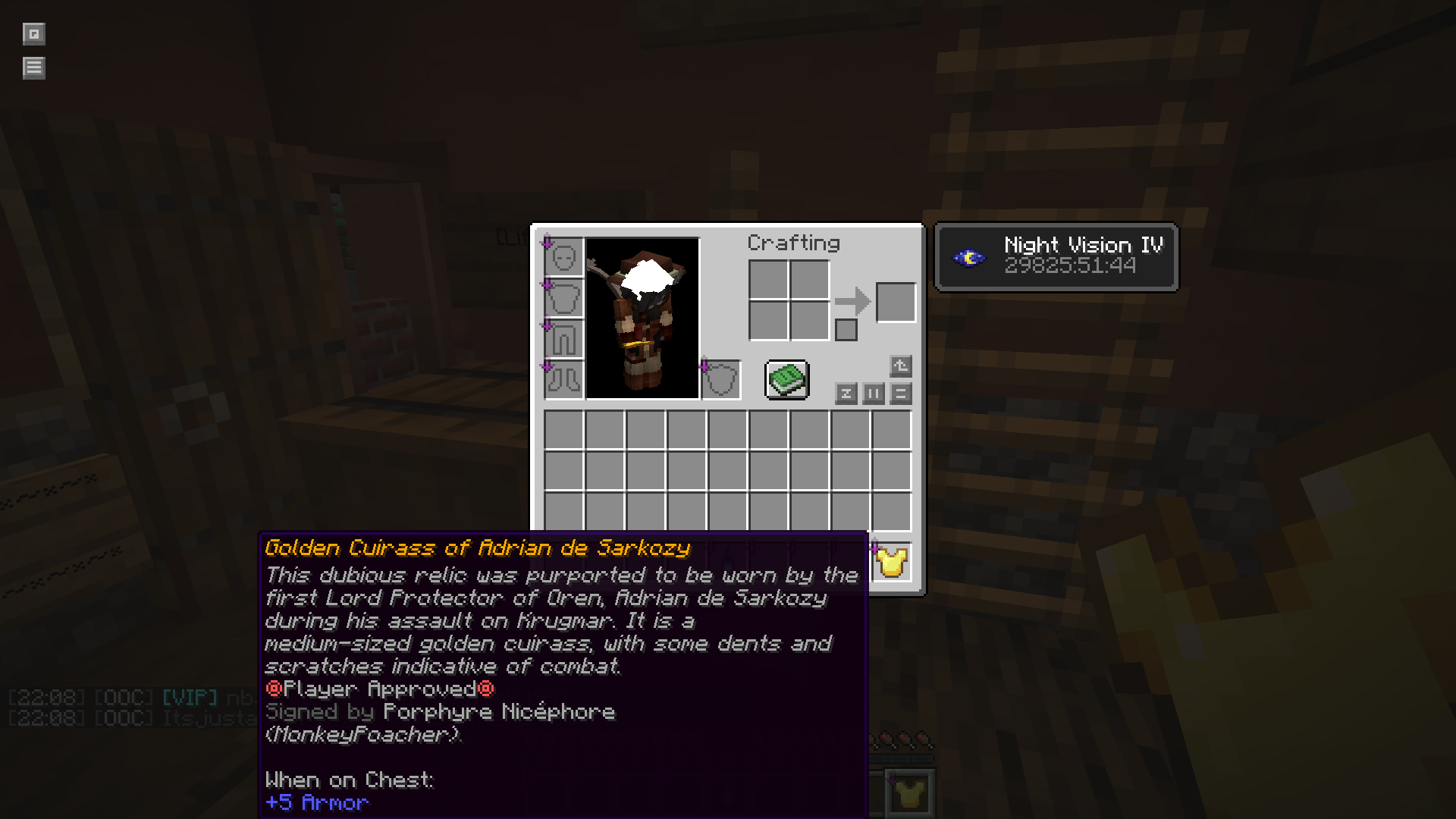
-Draan-bound items should wherever possible be mechanically soulbound, and must be represented with an in-game item. Their description must also be edited to include the fact that they are draan-bound, and who they are draan-bound to. These items must be ST signed.

-Draan-bound weapons cannot be looted or stolen. If one is acquired, it must be returned OOC to the player listed in its description. Willful possession of another player’s draan-bound item is grounds for an infraction. If the player cannot be contacted, it should be handed over to the ST via an sreq.


Purpose:

Bel Zahkrii is a simple (if necessarily heavily redlined and intricately defined) skill, primarily intended for convenience and aesthetic benefit, but with some functional utility in the ability to retrieve weapons that are disarmed or thrown. It is intentionally lacking in any movement limitations save for the inability to attack, allowing one to defend and evade in the midst of combat whilst still making use of it.


Part of this retrieval ability is that it is meant to enable a Herald to utilize their choice of thrown weapon, for example a javelin, and recall it in order to be thrown again, enabling a style of ranged combat somewhat unique to Heralds. It is of course important to remember, however, that one cannot attack with a weapon the same emote that it is retrieved, meaning there is a minimum of two emotes between each throw.


The appropriate item description format for noting the draan-bound properties of an item is:

Spoiler

This item is draan-bound to [character name | mcname] and must be returned to the player or the ST if acquired.


Emote Examples:

Spoiler


(Outside of Combat)

Celiasil peers ahead at the scuffle occurring before him, standing off to the sidelines as he lets out a quiet sigh and extends his hand out to the right. Distortions of heat briefly play about his fingers before they close around open air, an eruption of ash and smoke heralding the arrival of his weapon, summoned to his will.


(Retrieval in Combat)

Celiasil looks to where his javelin had landed just shy of its mark, a curse escaping his lips as he reels about to bring his shield forth and block an oncoming blow. Extending a hand in the javelin’s direction, smoke billows from his nostrils as the weapon rapidly crumbles to ash where it lays.


Celiasil is forced back by the next strike to his shield, feet skitting against the mud. Fingers of his free hand curling, the javelin reappears to his call, fragments of ash drawn from thin air to rapidly reconstruct the weapon for his grip to find it.


Mindoraan

 A Herald may speak and understand Low Draconic, though their mortal nature lacks the capacity for a flawless recreation. This is a passive ability and has no emote requirement.

Spoiler


-Speaking Low Draconic comes naturally to Heralds, but it is still a taxing and uncomfortable affair. Their mortal bodies lack the capacity for a flawless recreation, so speech will always be somewhat stilted and imperfect.

-Speaking more than a few sentences of Low Draconic will leave a Herald hoarse with a sore throat. Carrying out an entire conversation in the tongue will in most cases lead to the temporary loss of one’s voice.

-This ability does not create the same ‘heating’ effect on a Herald’s marks that others may, meaning it is essentially free to utilize

-Mindoraan is an inherent passive skill, and is acquired as soon as one is given their initial mark.


-Mindoraan does not require a tell.

-Mindoraan requires no emotes to use, as it is a passive ability.


-Mindoraan grants access to only Low Draconic, not High Draconic.

-Mortals are incapable of perfectly recreating the language, leaving it always somewhat flawed. The consequences of extended use of Low Draconic must be emoted.


Purpose:

Mindoraan is an entirely flavor-based ability that allows Heralds to communicate privately amongst themselves and with Azdrazi, in ways that others will not be able to comprehend, as well as simply for aesthetics involving prayers, curses, etc. It utilizes a translator that I won’t be linking here for the sake of avoiding people using it to translate without actually having the ability to do so IC, but it will be provided to every Herald upon their initial marking.


I personally suggest integrating Low Draconic into your roleplay wherever it feels suitable. This could be them defaulting to it when particularly angry, or simply using it in battle cries or anything of the sort. This ability should be treated, in roleplay, as a language which comes as naturally to the Herald as their first. Though they cannot speak it without strain, it is nonetheless second-nature to them.


Emote Examples:

Spoiler

Celiasil peers up towards the smouldering shrine ahead, his lips parting as a language most unnatural seeps from between them, a grating, serpentine rasp. “Shio vinult, Irralkitril, Majakar di Ominaki, Opsola di Vemcini, Trothar di wer Quellaric di Mali vur Sthyri. Drong nishka qe Jacida keari.“ The Herald stifles a few coughs for the strain it puts on him, keeping his gaze pinned to the shrine after uttering his low draconic prayer.


Zil Kresh

 A Herald may exert their will upon flame to harmless effect. Ignite or extinguish man-made fires, as well as warp the shapes of flames to create displays. This requires 1+ emotes.

Spoiler


-A Herald may utilize Zil Kresh for convenience and for displays. Controlled sources of fire such as candles, fireplaces, campfires, torches, and so forth can be ignited and extinguished at will, though not in the midst of combat. Additionally, they may bend flames to their whim to create images and shapes, often as means to compliment their preaching of Azdromoth or to intimidate foes.

-Fires larger than a 7x7x7 block area cannot be manipulated to create images, though Heralds may work together to create grander displays, each contributing an additional 7x7x7 blocks to what can be manipulated. In this case, a single leading Herald dictates the shapes formed.

-This ability does not create the same ‘heating’ effect on a Herald’s marks that others may, meaning it is essentially free to utilize.


-Zil Kresh does not require a tell, though one can be optionally displayed.

-The emotes for this spell can vary widely depending on use. A Herald may extinguish or light flames with a simple wave of their hand or a glance, in 1 emote, or create crude shapes with similar ease. More complex or large-scale displays will take more emotes, at player discretion.


-Flames cannot be manipulated to harm anyone, or to ignite anything the fire would not already catch alight, nor to avoid it igniting something that the fire otherwise would.

-Cannot be used in combat for any kind of advantage.

-Only controlled sources of flame can be ignited or extinguished, such as torches, bonfires, candles, etc. Environmental fires cannot be started, nor out of control ones extinguished.

-Shapes made with Zil Kresh can be movable and detailed, scaled to the size of whatever fire is being manipulated, but it will never make the fire more or less destructive. 

-A single Herald cannot influence fires larger than 7x7x7 blocks.


Purpose:

Zil Kresh is designed with the intention to aid Heralds in their preaching, allowing them to use fire as a means to create displays that compliment their sermon, or indeed to intimidate (but not harm) foes if circumstances permit. Beyond this, it is simply meant to provide a bit of utility and aesthetic benefit in being able to casually ignite or extinguish things like candles, torches, campfires, or even cigarettes or pipes.


Due to the extensive redlining of the ability, making it entirely useless in any combat scenario beyond simply distracting or threatening, it is quite free for creative use as long as the size limits on what fires can be manipulated are abided. Players are encouraged to be creative in how they apply it.


Emote Examples:

Spoiler


(Simple Use)

Celiasil lets out a slight grunt as he shoulders closed the door to his home, eyes casting briefly about the dim space as he goes to pace further inside. Raising his right hand with fingers poised, a singular snap causes the fireplace to erupt in flame, alongside a number of candles strewn about the foyer.


(Complex Use)

Celiasil peers upon the large bonfire ahead of him, watching as the flames dance and flicker through the chilled night air. Hands rising up before him, the fire appears to respond, its flames slowing in their lashing motions and becoming strangely still as the Herald exerts his influence upon them.


Celiasil’s hands gesture in broad motions that appear to usher the flames into his preferred shape, finding them swirling, condensing and contorting themselves until they manifest into the discernible image of a city atop a great mountain, elegant towers rising high over its walls.


Celiasil draws one hand upwards, the image seeming to quake and warble, before a jet of flame shoots upwards from the center of this image, from within the walls, appearing to sunder its structure, until the fire is released, and returns to its natural rhythms.


Vocal:

Yol Zahkrii

 An Ordained Herald may invoke these words to set their weapon aflame and imbue upon it an edge of dracanium. This requires 1 emote.

Spoiler


-With the use of this ability, an Ordained Herald converts the portion of their weapon meant to make contact (edge, head, point, etc.) to dracanium which is then set ablaze. This can be used on up to 2 weapons at once, should the Herald wish to dual-wield.


-Yol Zahkrii does not require a tell, though one can be optionally displayed.

-The emote required for this spell is 1 of the Ordained Herald concentrating and providing a tell, then speaking the words, followed by their weapon’s striking surface changing composition to black dracanium, and igniting.


-This effect lasts only for the duration of a combat encounter, and is not permanent.

-The fire created by Yol Zahkrii is mundane, possessing no special qualities.

-You cannot attack with a weapon in the same emote that it is set ablaze.

-No functional benefit is given by the dracanium edge that is created, it only allows the weapon to withstand the flame set upon it.

-Any special properties of the weapon’s metal aside from weight, aesthetics and durability are lost when Yol Zahkrii is activated.

-Can only take effect upon the metal striking portions of a weapon. Weapons made entirely of wood, etc. would not be affected.


Purpose:

Yol Zahkrii is one of the few deliberately combat-focused abilities available to Ordained Heralds, and warrants little explanation. It is used to set a weapon alight with mundane flame, behaving precisely as one might expect a flaming weapon to. 


The Ordained Herald is not immune to being burned by their own weapon if they are not careful, and it may be extinguished by anything that would normally extinguish fire, such as intense wind, water, etc. necessitating a re-cast. 


Emote Examples:

Spoiler

Celiasil’s hand grips tighter to his blade as he advances on the group of undesirables before him, his brows knit in concentration as ash seems to be cast off of his body by the breeze. Speaking up in a biting tone somehow reminiscent of clashing metal, he thunders, “Yol Zahkrii!” As his weapon bursts to flame, its edge darkening as flame licks from its surface.


Bharoh

 An Ordained Herald may invoke these words to exude an aura of significant warmth, suitable for protecting themselves and others from frigid temperatures. This requires 2 emotes.

Spoiler


-Drawing upon the latent power of the Azdromothian draan they are imbued with, an Ordained Herald may allow it to exude with intent outwards into the air around them and generate a significant amount of passive heat.

-The aura of warmth created by Bharoh extends in a 3 block radius around the Herald.

-The warmth provided by this aura is sufficient to keep the Herald and those within the effective radius safe in temperatures of down to -30C or -22F.

-This aura may be invisible, or manifest as intangible fragments of ash lingering in the air, a thin haze of equally intangible smoke, or heat-like distortions.

-This ability does not create the same ‘heating’ effect on a Herald’s marks that others may, meaning it is essentially free to utilize.


-The emotes required for Bharoh are 1 emote of the Herald concentrating and displaying a tell, and 1 emote of the words being spoken and the heat manifesting. 


-This aura is incapable of causing harm, it will never cause someone to overheat to any dangerous or distracting extent, though can be mildly uncomfortable.

-Regardless of visual effect, this aura cannot impair vision in any way, and has no impact beyond simply generating heat.

-Bharoh cannot be used alongside any other ability, it requires consistent and dedicated focus.


Purpose:

Bharoh is one of the most niche abilities included in Heraldry, functioning pretty much exclusively as a way for Ordained Heralds to make themselves useful to a party in harsh, cold environments. Whilst this is a rare circumstance, it can also be used for more minor occasions such as simply a cold night, or even to provide a sense of comfort in the same way that a hearth might- though to be clear, it has no actual emotional impact, it exclusively generates heat or warmth which may be a source of comfort.


The relative intensity of this heat is up to the Ordained Herald to decide, it would need to be intense for the lowest temperatures that they’re capable of contesting, but could also be subtler if the situation calls for it.


Emote Examples:

Spoiler


Celiasil’s form shudders and quakes against the biting arctic wind that he and those around him endure, listening as it howls over the mountaintops. Gritting his teeth, he closes his eyes and brings his hands together, interlocking his fingers as he focuses inwards on his draan, causing the marks hidden beneath his clothes to shine bright enough to cast their light even through those thick layers.


Celiasil’s eyes snap open as his chapped lips part in a barked, thundering word, “Bharoh!” Which instantly causes ripples of heat to distort the air surrounding him, steam rising from his clothes and that of those within its three meter radius. The heat is ample to stave off the cold, for now, but the Herald visibly works to maintain his focus as they trudge on.


Dovra-kul

 An Ordained Herald may invoke these words to utilize their draan upon a fellow Herald, allowing them to mend most types of flesh wound. This requires 3+ emotes.

Spoiler


-By leveraging one's own flow of Azdromothian draan, an Ordained Herald may take advantage of their fellows' ability to receive the energy in order to use it to provide limited healing capabilities. This functions only upon Heralds, Ordained or otherwise, for it is only through the mark or marks with which they are bestowed that their mortal forms are made receptive and responsive to the intent imbued into this draan.

-This process appears akin to a peculiar sort of reverse-burn, where open wounds will find their edges caught to painful embers. As if it were paper caught alight, and rewound, this flesh and muscle will seal itself in what is visually equivalent to a backwards process of incineration, ultimately closing with a permanent burn scar over the effected area. Due to the limited nature of this effect, it is useful only for closing external wounds, and can do nothing to aid in the repair of bones, innards, or anything beyond the skin and muscle itself.


-The emotes required for the use of Dovra-kul are 1 of the Ordained Herald focusing upon their target's wound and displaying a tell, 1 of the words being spoken and the characteristic embers catching alight upon the edges of the wound, and 1-3 of them gesturing in order to conduct their draan and begin mending the injury, dependent upon severity.

-Minor wounds such as small cuts, abrasions, first degree burns etc. which do not denote any immediate risk to one's life may be treated in the minimum of 3 emotes. Middling wounds such as stabs, arterial punctures, larger cuts and gashes capable of inflicting dangerous blood-loss, second degree burns etc. may be treated with 4. Grievous wounds that require immediate attention to avoid death such as a full abdominal incision, third degree burns etc. must be attended as quickly as possible, as they will require the maximum of 5 emotes to fully tend.


-Cannot heal anything aside from flesh and muscle wounds. This means it cannot mend any variety of bone or organ damage, halt internal bleeding, nor cleanse infection, reattach limbs, or anything else of the sort.

-Any wound that covers more than a quarter of the body is outside of this spell's capability to heal in any capacity.

-Can be interrupted by any form of unwelcome or unexpected physical contact, meaning that one must either be defended while performing it in combat, or exit the fray before performing the ability. A thrown stone, shove, or anything of the sort is sufficient to halt this effect instantly.

-Cannot be used upon anyone other than Heralds and Ordained Heralds.


Purpose:

Dovra-kul is arguably one of the strongest abilities given to Ordained Heralds, but it is also a rather niche one only particularly functional for those working in congregations or, at least, alongside another Herald. Its healing capabilities are extreme in that more-or-less any flesh wound can be sealed over, but also quite limited in that they can do nothing beyond that. Broken bones, damaged organs, internal bleeding, illness, infection, or anything outside the bounds of simply sealing or repairing damaged skin and underlying muscle is outside the bounds of this ability.


The process of healing is intended to be rather painful, though not quite as painful as cauterizing such a wound outright. The scar left is that of a burn, but generally not an intense one, likely to leave a slight discoloration or texture, but not to tighten or severely disfigure the flesh as extreme burns might.


Emote Examples:

Spoiler


(Minor Use)

Celiasil peers down towards the short gash inflicted upon his ally’s arm, his brow knit in concentration as his hands rise forwards to linger in the air above it. As his fingers curl, heat-like distortions ripple about them, his breathing slowing to a controlled pace.


Celiasil holds his breath for a moment as his fingers weave patterns above the wound, his lips then parting to invoke the words in resonant muse, “Dovra-kul!” At which moment the borders of his ally’s wound suddenly seem to catch alight in glowering embers, a distinct burning sensation brought alongside them.


Celiasil’s hands move out and in, back and forth as he manipulates his draan to begin sealing the wound, flesh starting to spread from those glowering borders, at first blackened and paper-like but swiftly rejuvenating to healthy tissue. Within moments the cut is sealed, leaving only a subtle burn scar where it once was. He huffs and grimaces, marks subtly feeling to singe his flesh for the exertion.


(Major Use)

Celiasil rushes to his fellow Herald and falls to his knees at their side, eyes wide as he sees the terrible wound shorn across his midsection. By sheer luck his ally’s innards remain where they ought to be, undamaged by the blow, but blood flows at an alarming rate. Wasting no time, Celiasil closest his eyes and raises his hands, his next breath escaping as a ploom of smoke.


Celiasil’s eyes open and he urgently barks the words in that throaty draconic rasp, “Dovra-kul!” As the long borders of the abdominal wound smoulder and spark with fragments of emberlight, afflicting the poor fellow with even further pain as it feels to burn his already shorn flesh.


Celiasil’s hands begin their conducting motions, the embers flickering and wavering as ashen flesh begins to spread from the edges of the wound, inflicting even further pain as the burned skin heals itself in progression, nerves objecting as they are brought back into being.


Celiasil bites his tongue and tenses his muscles as the pain inflicted upon his own marks increases rapidly, his gesturing hands beginning to quake as they further direct the sealing of this grievous wound, the flow of blood slowing as its vessels are sealed off; none sourced internally, as luck has it.


Celiasil groans and gasps, his muscles jolting and his vision swimming from the pain which now reaches a peak upon his body, both tattooed arms left to violently tremble as he wills them to continue their work, an agonized bellow leaving him as he struggles to maintain his focus to finish sealing the wound. Finally as the last bit of regrown flesh turns from black to pink, and the wound is closed with an elongated burn scar, Celiasil topples to the side and curls his arms inwards, struggling not to hyperventilate through the debilitating pain.


Adrolazh

 An Ordained Herald may invoke this word to bring forth their affinity for flame, avoiding its touch and ensuring that they aren’t burned. This requires 2 emotes and lasts for 3 emotes.

Spoiler


-This ability allows an Ordained Herald to escape the touch and heat of mundane, draconic or voidal flames. While in effect, flames will naturally divert themselves around the Ordained Herald, never redirecting but simply passing around them and continuing on their course.


-The emotes required for this ability are 1 of the Ordained Herald focusing and displaying a tell, and 1 of the words being spoken and a smoke-like distortion appearing around their body. From here the Ordained Herald is protected for 3 emote rounds, and after the 3rd emote of its protective effects, this distortion vanishes and they may once more be burned.


-Cannot be used to shield anyone except the Ordained Herald themselves. Fire arcs tightly around them so even hiding behind an Ordained Herald using Adrolazh would be ineffective.

-Does not make a Herald immune to all heat, nor any hot substance other than fire, including steam, molten materials, etc.

-Does not function against Malflame or any variety of holy flame. It will negate exclusively mundane fire, voidal fire, and dragonfire.


Purpose:

Adrolazh is the core defensive ability of Ordained Heralds, and grants them immunity to all types of fire save for those that are holy or unholy- this meaning voidal, natural, and even dragonflame can be eluded by use of the ability. 


Due to the short duration and non-instant cast time, this ability cannot be used for things like walking into a house fire to save people, unless they are extremely nearby, and it is intended primarily to evade fire-based attacks sent at the Ordained Herald. 


That said, nothing would prevent a Herald from making a display with the ability by walking through a bonfire, or anything to that effect to make an impression and perhaps aid in their preaching. Heralds may even work together to pair Zil Kresh and Adrolazh for visual flair.


Emote Examples:

Spoiler


Celiasil’s eyes widen as the mage begins to gather his spell, a quiet curse escaping his lips as he brings his blade to both hands, holding it upright before him as his eyes flit closed momentarily, smoke wisping from between his lips as is draan is brought to bear.


Celiasil’s eyes open just in time to see the fireball about to be cast, grip tightening as he shouts to the heavens, “Adrolazh!” Which, as soon as it is spoken, causes a smoke-like haze to swarm about his body, the Herald’s lips curling into a smile as he peers ahead at the mage and simply waits.


Celiasil doesn’t flinch as the fireball hurls towards him, chin raised in defiance as it makes contact with his blade, and parts, simply passing around him and continuing on its course without so much as a hair on his head being singed by its heat or impact. Only the scalding of his own marks causes his features to twist into a subtle grimace.


Virolah

 An Ordained Herald may invoke this word to draw forth the fumes of Az’Uznath, muddling the minds of those who breathe in the fragrant incense. This requires 3-5 emotes.

Spoiler


-Through this ability, Ordained Heralds may call upon the incense present at Azdromoth’s great Ziggurat, drawing it through paracausal means to permeate a location with its center point anywhere within an 6 block radius of the Ordained Herald, filling it with a dense smoky haze and spiced aroma.

-The effects of the incense conjured by Virolah are mildly hallucinatory. They will begin to take effect if the cloud of smoke is not escaped within 1 emote of its appearance or of reaching them, causing those impacted to begin experiencing minor but frightful hallucinations; a feeling of being observed, the dull roar of nearby flame, and fleeting images somehow relating to dragons at the corners of their vision. It will also inspire a subtle inebriation. 

-By nature, Virolah causes a significant amount of vision impairment within its area, though causes no irritation to the lungs or eyes. Within a cloud of incense generated by Virolah, sight range is limited to a 1 block radius around the affected party. This means that if it is used on a 1x1 space to affect an individual, it will do nothing except potentially afflict them with the relevant hallucinations if they do not move on the next emote.

-The incense will naturally disperse quite gradually unless wind speeds up the process, generally sufficient to linger in an area until the end of an encounter. Ultimately, it can linger for around half a narrative hour before becoming too dilute to have a meaningful effect, be it inside or out. In no case will the obscuring or hallucinogenic properties of the smoke spread outside of the starting range.

-Outside of combat, for recreational use, the effects of Virolah can become much more potent and debilitating, able to impact mortals and Azdrazi alike. Notably, Azdrazi will find the experience far more pleasant than a mortal, verging on an enlightening experience.


-Virolah allows Ordained Heralds to conjure a drugged smoke that will permeate an area ranging from a single 1x1 block space for an individual, up to a 5x5 space for multiple, increasing only in increments of 2 and requiring 1 additional emote per 2 added blocks of range. This means that to target an 1x1 space will require 3 emotes, to cover a 3x3 space will require 4,  and a 5x5 space will require 5.

-The emotes required for Virolah are 1 of the Ordained Herald concentrating and displaying a tell, 1 for them to speak the words and begin gesturing to call forth the incense from the air above their target location, and 1 for it to begin falling in dense plumes from the target location. Additional emotes to increase range simply involve this incense spreading out beyond the initial 1x1 range. The center point of this ability can be located anywhere within line of sight and within a 6 block radius of the Ordained Herald.

-If the range of Virolah is escaped but not in time to avoid its effects, the hallucinations will continue for 6 emote rounds or up to half a narrative day. Due to the mental impact of this incense, the initial onset is capable of interrupting spellcasting, but will not prevent it afterward.


-The hallucinatory impacts of Virolah are up to the affected party to decide and work with, though should not be ignored or treated as inconsequential.

-The hallucinatory effects of Virolah will last no more than 6 emotes once its range has been escaped, unless the effected party wishes to roleplay it for longer.

-The hallucinatory effects of Virolah do not stop someone from fighting effectively, though it should make them less focused and quite uneasy.

-The incense obscures vision within its range, but does not impair the ability to hear external sounds, nor any other sense aside from smell. It may, however, be hard to distinguish what is genuinely heard or seen from what is hallucinated.

-Virolah causes no discomfort when its fumes are inhaled or reach the eyes.

-The fumes generated by Virolah do not rise as regular smoke might, but can be dispersed by wind as easily as mundane smoke would be.


-It is up to the Ordained Herald to explain in OOC the effects of this incense, but they require OOC consent in order to emote the hallucinations themselves; otherwise, it is up to the affected party.


Purpose:

Virolah is perhaps the strangest ability in the magic, functioning both as a smokescreen and as an interrupt for spellcasting, as well as an ability useful for their preaching or rituals. The combative potential of this spell is, by concept, secondary to its other applications.


Ordained Heralds may utilize this on Azdrazi to, essentially, just give them a very pleasant high. On others, it may be used to induce hallucinations that may aid in their sermons, causing non-Azdrazi individuals to experience often frightful draconic hallucinations, which to the faithful, could still be a welcome experience. This may even be used on a congregation of other Heralds, for any number of ritualistic practices. 


By way of combat, it is important to have the right mindset when using this ability. The visual impairment within its effective radius is the important part, alongside the initial spellcasting interrupt, but it is vital to leave the hallucinatory aspects of this in the hands of those affected by it, beyond simply explaining the theme that it follows. 


The goal with the hallucinatory portion of its effects is not to disable anyone, but rather to provide further intrigue, and if a player prefers not to engage too strongly with that aspect, particularly in the midst of combat, it is not something to be faulted.


Emote Examples:

Spoiler


(Minor Use)

Celiasil eyes the Azdrazi before him with a slightly irritable stare, arms folded over his chest. After several moments of consideration, he heaves a sigh of resignation, and extends one hand outward to the air just above the towering dragonkin. Head tilting slightly to one side, embers spark upon the hems of his attire and throughout his hair, smouldering harmlessly.


Celiasil’s hand gestures and contorts, making a downward gesture as he speaks his intent in a serpentine seethe, “Virolah!” To which the air over the Azdrazi’s head begins to fester with subtle clouds of fragrant smoke.


Celiasil’s fingers splay, and the subtle wafts of incense suddenly bloom into a downpour of dense, scented smoke. It rolls over the dragonkin’s scales and permeates their immediate vicinity, and as it may be breathed in, should they linger, a distinct sense of euphoria would swiftly overtake their draconic mind, the strange substance potentially going so far as to induce a hallucinatory trance in one so well suited to its nature.


(Major Use)

Celiasil gazes towards the congregation of Heralds before him, one hand moving from behind his back as he silently gazes to the air over their heads, features set into a grim stoicism for the pain he knows he is about to endure for the ritual ahead. Palm turning upwards, the air around his eyes begins to ripple and distort.


Celiasil’s voice rises to echo in its baritone through the hall, accenting the crackling of various sconces within, “Virolah!” As thin wisps of smoke begin to dance in the air where his hand appears to point, a few meters ahead. 


Celiasil’s hand sweeps downwards, and the incense begins to fall, causing his marks to tingle and itch with a subtle burn, apprehension written on his face as the narrow downpour of incense reaches the central Herald.


Celiasil’s jaw tightens as his marks begin to burn more intensely, rapidly growing more painful as he continues to usher forth the sacred smoke, its downpour seeming to grow more liberal as it spreads out an additional two meters in every direction, consuming more of the waiting congregation in its dense plooms, their vision impaired by its presence, unable to see further than a meter around themselves. The first Herald reached now begins to experience the incense’s hallucinatory effects.


Celiasil’s marks begin to overheat to greater extremes as he trembles and shakes, knees threatening to buckle from the pain, but he holds silence, unwilling to break his composure in the hallowed hall, even as his arms feel as if they are aflame. Only once the incense had reached those gathered on the outermost of the five by five meter area does he allow himself to fall to his knees, shouting an agonized prayer as he draws his arms towards his chest, heaving for breath while the congregation. Those reached after the first now find their minds distorting, accosted by draconic visions.


[!] Those last to be reached with the spreading incense, should they have remained unmoved, would now begin to feel the same impacts weighing upon their minds.


Dratho Nar

 An Ordained Herald may invoke these words to inscribe, carve, or scorch a surface with words in any language that they know. This requires 1 emote.

Spoiler


-A common method for Ordained Heralds to leave calling cards, messages, or instructions, Dratho Nar will damage a surface by way of scorching, engraving, or scratching to leave a sequence of letters in any known language. This could be code or words. Optionally, these marks may carry a fiery glow; though produce no heat.

-This ability does not create the same ‘heating’ effect on a Herald’s marks that others may, meaning it is essentially free to utilize.


-Dratho Nar does not require a tell.

-The emote required for Dratho Nar consists of the Ordained Herald speaking the words, and their target surface being marked in one of the aforementioned manners with whatever message or code they intend to leave.


-This cannot be used to harm a character without OOC consent, and cannot be used in combat.

-Inscriptions left by Dratho Nar cannot take up more than 1x3 blocks of space, though may be as small as desired.

-Cannot be erased or removed without manual repair.


-Requires RO consent for any meaningful damage to be done, such as defacing of an important display, etc.


Purpose:

Dratho Nar is effectively just an aesthetic tool meant to allow Ordained Heralds to leave messages for themselves or others, to deface deific shrines, etc. It may also, if one wishes to use it as such, be a tool used in teaching other Heralds new abilities, etching the written form of the words of power onto a surface to be learned.


It is stated that this ability cannot be used to harm a character without OOC consent. This means that you cannot use Dratho Nar to brand or cut a message into another character’s skin, unless they specifically tell you OOCly that it is acceptable to do so. If this freedom is given, you are able to do as you please within the relevant guidelines, but wounds made will take the form of either cuts or burn marks, and nothing else. The aesthetic glowering effect one may apply when using it on surfaces CAN NOT be applied to skin.


Emote Examples:

Spoiler

Celiasil peers upon the crumbling wall of the aged, unholy fortress, his lips downturned in a distasteful scowl as he surveys the surface. With a sneer, the Herald’s lips part to speak a pair of harsh draconic words, “Dratho Nar!” Immediately after which, the stone can be seen to be rapidly scored with a series of subtly glowering marks, reading boldly and simply, ‘Turn back.’


Dratho Zha

 An Ordained Herald may invoke these words to imbue upon an item of their choosing a defensive enchantment, granting it an extremely threatening aura. This requires 4 emotes.

Spoiler


-Those entering the vicinity (within 6 blocks) of an item marked by Dratho Zha on its designated surface will experience an extreme hesitance to go anywhere near it, feeling about the item approximately the same way one might feel about an explosive that could go off at any moment. Though it imbues no actual physical properties, approaching such an item requires a great deal of mental fortitude, for by the time one is within range to reach it, they may well feel that their very life is in imminent danger, enough to inspire a flight response from most. The closer one gets, the stronger the sensation is, only alleviated by departing or successfully moving the item.

-The effect generated by Dratho Zha is presumed to be a result of drawing forth the presence of the Titan through the use of His draan, essentially imbuing the item, when properly placed, with a similar if far weaker aura to what Azdromoth might be capable of exuding in His ire. It is, essentially, the sensation one might experience when being stared down by a very hostile dragon.

-Heralds and Azdrazi are immune to the effect created by Dratho Zha.

-This ability does not create the same ‘heating’ effect on a Herald’s marks that others may, meaning it is essentially free to utilize.


-The emotes required for Dratho Zha are 1 of focusing and providing a tell, then speaking the words towards the chosen surface, 1 of the sigil appearing there, 1 of maintaining that tell and speaking the words towards the relevant item, and 1 of a matching sigil appearing upon it. It may then be placed down for the effects to be activated, at which point both sigils ignite in a fire-like glow.


-Once an item has been moved off of its matching sigil, the effect ceases instantly until it is placed back upon it.

-The surface used in Dratho Zha must be stationary. You cannot mark a portable surface and carry a marked item on it to have a moveable fear aura.

-The effect created by Dratho Zha does not depend on line of sight and will be felt within the 6 block radius of the item’s effect regardless of whether it is visible or not. This, however, does not allow it to penetrate solid, unbroken walls.

-It is not impossible to overcome the aura created by Dratho Zha, though it generally requires someone with significant motivation to take the item in question. Anyone tangentially interested or simply greedy would be unlikely to resist the feeling of encroaching doom it exudes.

-Should either sigil be damaged, the effect will cease to function. The sigils may also be purged and deactivated via relevant spells in Paladinism, Shamanism, etc.

-As the fear aura is sensed specifically from the item in question, it is considered legitimate RP to try and disrupt it from outside of the radius after this has been perceived.


-Dratho Zha altars are considered lore structures and do not require region owner permission to be destroyed.

-Dratho Zha is to be represented by signs on the border of the 6 block radius of the effect, stating that the item feels exceptionally dangerous, and that nearing it feels nigh suicidal, alongside the account name of the person who placed the effect and that it is a usage of Dratho Zha. This however does NOT incur any manner of suicide PK clause, under any circumstances.

-A ST must be present to handle interactions with these areas. If the legitimacy of an individual's motivation to resist the effect is in question, a roll out of 20 can be requested, with 13+ sufficient to overcome the effect.

-Standard theft rules apply, and if any thievery of any valuable items is involved a GM must also oversee the interaction. Valuable items qualifies any unique item with purpose beyond simply enabling the enchantment.


Purpose:

Dratho Zha is another slightly peculiar ability, with its primary conceptual purpose being for the protection of relics or Azdrazi hoards. As there is no actual danger imposed by this ability beyond the IC perception that there is, conflict may arise through players questioning if one character is motivated enough to resist that or not, and as laid out in the moderation guidelines portion of the spell, this is always to be resolved by a GM-requested roll to avoid unnecessary arguments. If the roll is passed, they are welcome to interact with the relevant item, period.


This ability is never intended for any combative use what-so-ever, save perhaps for a Herald or Azdrazi being able to retreat into the vicinity of such an item to make opponents less willing to attack them. Ultimately it would behoove a competent Herald or Azdrazi to ensure that there are additional measures taken to guard such items, as Dratho Zha on its own is not especially reliable.


An example of appropriate signage is as follows. Signs on the borders of the rest of the radius may simply redirect to the primary ones.

Spoiler

jYzHwokbVQtb6rsO8jSyauDyYAAXRQ_c0W5NtVf3nGVvp4YgoxF81cPS-niKgHTVz49P1tQl-Oi8TPn5q85O5-5_wAPV-Kmnn0qLf4dR5v7GG7qchRNL7R8e4kCz_Hb3tL0fJL_X


Emote Examples:

Spoiler

Celiasil paces down the temple's aisle with a blackened dracanium chalice in-hand, approaching the altar as he holds the sacred item aloft. Reaching the altar, his eyes set down upon it and his next breath escapes as a gust of ashen smoke, his lips parting to speak in a familiar guttural rasp, "Dratho Zha!"


Celiasil observes as the altar is etched with a few draconic letters, indented to its ebon surface. His gaze then turns to the chalice in-hand, turning it over between his fingers.


Celiasil exhales yet another gust of smoke as he repeats, "Dratho Zha!" Towards the item, eyes narrowed expectantly.


Celiasil nods in satisfaction once a matching insignia has been marked upon the black metal, visible within its basin. Stepping forwards, he moves to set the item down upon the marked space at the center of the altar. As the chalice meets the surface, both of the sigils ignite in a firelike glow, and the frightful effect is enacted, awaiting those not touched by the Titan to try and approach.

Dratho Rihk

 An Ordained Herald or Azdrazi may invoke these words to mark an inheritor of their bond, granting a willing mortal the feat-level version of Heraldry. This requires 2 emotes.

Spoiler


-The most sacred and well-guarded ability available to Ordained Heralds, and usable as well by Azdrazi, Dratho Rihk allows one to split the tether to Azdromoth that was at one time gifted, or is inherent, to them. Through the use of these words one may imbue upon a mortal a mark to grant them the feat level version of Heraldry, connecting them by proxy to Azdromoth and thus giving them access to His infinite draan.

-In addition to granting the magic, this ability also enables one to rescind a Herald's bond and thus disconnect them from the magic. Even Ordained Heralds may have their power stolen in this manner, as it is this first mark that serves as the basis for all of their power. Doing so causes all signs of the heraldic tattoos to fade, leaving only the branded scar of an eye wreathed in flame where the first mark was placed.

-Notably, it is possible for an Ordained Herald to willingly use Dratho Rihk upon themselves, as a means to voluntarily and independently drop the magic. Albeit, it takes significant endurance and conviction to withstand the pain necessary to complete this process.

-One can only split their bond so many times, meaning that no more than 3 Heralds can be bound to an Ordained Herald or Azdrazi.

-This ability does not create the same ‘heating’ effect on a Herald’s marks that others may, meaning it is essentially free to utilize.


-Both the placement and removal of Azdromoth’s mark are emoted the same way, requiring 1 emote of the Ordained Herald or Azdrazi placing their palm to the location where it is to be left or removed from, 1 of them displaying a tell and speaking the words as a tingling sensation begins, and 1 emote of that tingling turning to searing pain being as the mark is both branded and tattooed onto the target, or erased from them alongside any Ordainment tattoos.


-Only willing mortals can be marked with Dratho Rihk.

-The use of Dratho Rihk for disconnection has no prerequisites, and Tenets exist only as a guideline for when it should be done.


-One’s bond to Azdromoth can only be split 3 times, meaning that no Ordained Herald or Azdrazi may mark more than 3 individuals as Heralds. If one wishes to mark a new Herald but has used all 3 of these slots, one of their previous Heralds would need to have their mark taken back. This is tracked on the CA or MA of the individual making the mark.

-Ordainment does not remove a Herald from the slots of the person who initially granted them a mark.

-Knowledge of Dratho Rihk is noted on the application of the person who it has been taught to, alongside this list of connected Heralds.


Purpose:

Dratho Rihk’s purpose is relatively straight-forward, as it is both the connection and disconnection spell of the magic. Thematically speaking, it is the extension of a tether to Azdromoth onto a Herald, granting them access to his draan.


Choosing the placement of this mark is an important detail for new Heralds, as even if they are eventually disconnected, it will remain as a permanent scar unless they find some means to remove it.


Due to its importance, knowledge of this spell is tracked upon the relevant application of the person who has learned it, alongside a list of any Heralds they have connected with it, up to a maximum of 3.


This should be posted as a new comment on the app, and simply be formatted as:

Spoiler


Dratho Rihk enabled.

X/3 Marked.

(link to apps of those connected by the Ordained Herald or Azdrazi)


Emote Examples:

Spoiler


Celiasil peers upon the would-be Herald with a stoic leer, pondering them for several moments as he reaches out to place his palm flat to their exposed back, between their shoulder blades. “Brace yourself.” The ‘aheral simply advises.


Celiasil’s eyes linger half-closed as he concentrates on his own bond to the Firstborn, feeling the draan flow as smoke wisps from between his lips and his fingers curl subtly in place. “Dratho Rihk!” He proclaims in grating muse, a strange tingling sensation beginning to settle onto the aspirant’s flesh beneath his palm.


Celiasil keeps his hand in place as this tingling rapidly evolves into a searing, scorching pain entirely comparable to being branded by a hot iron, his free hand reaching out to grip one of the aspirant’s shoulders to keep them in place as the process proceeds. After but a few seconds, a light flickers from between his fingers, and the ‘aheral withdraws his hand to admire the newly placed mark on the aspirant’s flesh, an eye wreathed in flame.


Teaching:

Teaching Heraldry is a simple affair, as any Ordained Herald knowledgeable in an ability is capable of passing it on to any other Herald. This is done simply through providing an in-depth explanation of the spell’s effects, and sharing the word or words of power.


Spells cannot be learned simply by witnessing them, and can only be passed on through intentional tutelage from one Ordained Herald (feat-level unordained Heralds cannot teach) to any other Herald. 


Notably, Azdrazi possessing Dratho Rihk are also considered to have inherent knowledge of all relevant abilities, and are thus able to teach them, but not use them.

Link to post
Share on other sites

Archived

This topic is now archived and is closed to further replies.

  • Recently Browsing   0 members

    No registered users viewing this page.


×
×
  • Create New...