Jump to content

The Northern Middenlandic Culture

 Share


Pegleg_Bob

Recommended Posts


AD_4nXeI-LbFt5bPLf8OLr1jz-sD_vXDMQnIl3NfCU2BzJ5zqHzfWIe_BfKGeMwckiIRhx4Tz47DKKn-zg5SZmBgelrdz-0JOVQHhU-rwRF0alMRtzkL2jQ6wK1vHHQ6USTyEygvUOV70A?key=G9yF1qFZNS67PnsdthEvODRl


AD_4nXfd20uvIjZOSlr2ngCoxtNAzZLcPHXexETjfGOXfi5vOZ2YMvuaCGcBM_JnrnJ74dIy_YD85LOmJZtM3xAl4ilou4abzNdwMF6G0UMbwOdBUiiuOb3FubpJs74JG0kv2b3KwDKa0w?key=G9yF1qFZNS67PnsdthEvODRl


AD_4nXcrg0VvxePLex8uGKXHP57kWP_UzMgvZ_YEDJegp2rQ0-OsNsdmmg8DoRGju-hdzk4TP8zPdBzlNpalxBsugOmsuZbqVbcG7AjM1IivU2iUjFTYp5RVu5iS778borQVuc5bsRfT?key=G9yF1qFZNS67PnsdthEvODRl


The Preface on the Northern Middenlandic Culture

After the end of the Aevos Coalition War, the people of the Middenlands were expelled and forced into a widespread diaspora. Most sought refuge in the neighboring kingdoms of Numendal, Petra, and Aaun, but a large number found a new home in the northern reaches of Aevos, in what was then the Duchy of Ravenmire. Over time, these Middenlandic exiles began to diverge from their southern kin, gradually adopting cultural practices from the Sedanians of the Duchy of Blackworth and the Norlanders found around the borders of Ravenmire. 


These newly developed cultural practices helped the settlers of Ravenmire survive in the harsh northern climate. One significant shift was the transition from the land-based martial traditions of the Middenlands to a stronger emphasis on naval warfare. Yet, beyond military adaptations, many other traditions took root during their time in the North, traditions that remained with them even as the significant diaspora ended and brought them to the Kingdom of Burgundy. This document aims to catalogue and preserve the cultural practices of the North Middenlanders.

AD_4nXccIvHHwDQIOF8b98gS0s7vT-s3mKWna4cnImL0EUP3jhxk603eKuOh_-bmp1dhtaND3jYt674p04uQYgDmQAwDkbXLrFTyF4Q_mPVPo1T0nm_e7UVCFoKP0_QZFERcJTHGEPEgxw?key=G9yF1qFZNS67PnsdthEvODRl

Cultural Practices

The North Middenlanders have a diverse range of unique practices, exclusive to them, as well as many customs borrowed from other cultures. The following is a list of cultural practices observed by the Northern Middenlanders. 


TO BE BORN OF MIDDENBLOOD

AD_4nXdJMuBzm_QVgbCFhx1gv1anJ16CH-MBm1NBgm0lTWep6xKbUQaU0g52MikQzpcFWJLnzPzBgqD0Tavl7V4pbCWFtha_tVrdHDpYnh0CgRZsEibYhawr0W4LZ119VXt3LZZFFeWbuA?key=G9yF1qFZNS67PnsdthEvODRl

When a new child is born into a Northern Middenlandic family, or adopted and given a new name, it is customary to name them after a great hero of the past or a revered ancestor, honoring the legacy of those who came before. Baptism typically follows within a week of birth, serving as both a spiritual rite and a formal welcome into the community. However, due to the remoteness of many settlements from the Mother Church, a priest is not always available to perform the ritual. In such cases, the baptism is postponed, becoming a personal rite of passage for the child, who will later seek out a priest and receive the sacrament upon venturing into the wider world. Yet such journeys have become less common in recent times, as many North Middenlanders have begun to migrate south, leaving behind the isolated traditions of the north.


A YOUNG MIDDENLANDER AND THE WILDS

AD_4nXfKLK1B1PTmzVyze7fTKdZXKDhw9olJH50twmmg5s6ZYX8gdwKbJaN9axA6JkvtmmOGbuv7746BwjWRUOIR6nORxWb8MFM7U5SVLQsEFDZ5Kmx-u7ofOahdx_i-M3ukU-4m7kJo2g?key=G9yF1qFZNS67PnsdthEvODRl

Around the age of Fifteen, all Northern Middenlandic children are expected to spend at least three months away from home to learn how to fend for themselves. The length and nature of this rite of passage can vary between families. In some households, young adults are sent into the woods; in others, they are encouraged to venture into the wider world. A few families even send their young adults to spend the three months at sea. Though the details differ, the purpose remains the same: to teach resilience, independence, and the skills necessary to survive beyond the safety of home.


THE FEAST OF RETURN

AD_4nXf3BJDJSkRvyU98_i38y8GM8NHe1CoCozPtaAlNVNAlMK5iCKT4XxH2EWp5hgJvnK4MmOo5onQljab4LlDiX4Bu4bywRNZIM4zwBX089lgoEsVjIq-EYKfrMN8KD7QCzCyIweQmDA?key=G9yF1qFZNS67PnsdthEvODRl

Once a young adult returns home from the wilds, a feast is held in their honor to celebrate their survival and mark the beginning of their adult life. This event serves as both a rite of passage and a moment of communal pride. Following the feast, most young adults are given a choice: to join the army and serve their people, or to forge their path in life, guided by the skills and wisdom gained during their time away.


BATTLEFIELD ADOPTIONS

AD_4nXflm_zb2UEsI5Fn_q1KSWZIGGJojllVlW-PpeqTeyrNvsEibs9S1gnYlQ44E5ACFAgxeJYnYtnBrq-9HGzycUKYVFTx0faam8i83oV3c3tDFe5JHxhQT63iUeFfIPmCt6n_duTi?key=G9yF1qFZNS67PnsdthEvODRl

One of the most common ways for Northern Middenlandic families to grow is through the adoption of children. Whether orphans left behind by tragedy or young ones found in cities during raids, many children from outside the culture are taken in and raised as one of their own practice not only strengthens the bonds within the community but also reflects the Northern Middenlanders’ belief in resilience, redemption, and the importance of giving every child a place to call home.


THE REVERENCE OF HEROES

AD_4nXfy58qheWeUzXdeDKaUobzewrCrZoGAygMJKgur98-E2lxoALwtglFKd4ofJJxwE0bMfaHFwmpepMCxxB664IQNfG1rbjrVwHdjChfvq7NVNh12j-DXEJUn5mPNoeJglH56PrvaKw?key=G9yF1qFZNS67PnsdthEvODRl

It is said that from a young age, every Northern Middenlander is taught the tales of humanity's greatest heroes from the Dragon Knights of the First Empire of Oren to the knights who helped found the realm of Ravenmire. Most Northern Middenlandic children grow up learning these stories by heart. It is not uncommon to find shrines, much like those dedicated to saints, honoring obscure historical figures revered as local heroes. Statues of both ancient and more recent heroes are a common sight in Northern Middenlandic settlements, often adorned with the colors of their respective realms.


A HISTORY OF LOWBORN KNIGHTS

AD_4nXeD0pV2bNIgmsOdBlnseSHjESzHzi3GWQ9GfPiS6I7o5k8rZnzTZiEzk7lcKT33zy426K67aoLcBf3J0eEhDDWl38hPR19QH299MZs0xwggmVk9o6ZTRLJxwrKJewsA-UTho5lO_A?key=G9yF1qFZNS67PnsdthEvODRl

Since the elevation of Sir Magnus by Sir Gaspard Van Aert from a humble smallfolk to a knight, the Northern Middenlandic people have embraced a proud tradition of knighting those of common birth. This practice has become a cornerstone of their culture, symbolizing honor earned through merit rather than birthright. Many of the most revered knights in Northern Middenlandic history, such as Sir Aleksander, Sir Illatius, and Sir Magnus himself, began their lives as smallfolk. Today, they are celebrated as heroes, their stories inspiring countless children who dream of rising to greatness through courage, loyalty, and skill.


FIGHT OR BE FORGOTTEN 

AD_4nXcJ_4lXjXly3ITUplj0Nqushnymvxn-o-ych968a4DNT088TTfTROqrANYjr4jqsvq-3Bv5OV_rpd72TrJkY2HdIbylHWexCMt3uNrG7lQ2nOZ-g7lZHSKoTXUdYzl_4IuNd_gENg?key=G9yF1qFZNS67PnsdthEvODRl

Since the days of Veletz, the Middenlandic people have lived by the words "Fight or be Forgotten" a motto that has long symbolized their resilience and pride. In the northern lands of Ravenmire, this phrase evolved into something closer to a prayer, spoken often in the face of hardship. The Northern Middenlanders were forced to contend with relentless challenges: darkspawn threats, frequent Skanarri raids, and the harsh realities of survival. These constant dangers forged a culture of unwavering defiance, where fighting to the last became tradition. Even in the face of overwhelming odds, if a retreat was called, it was often the Northern Middenlanders who held the line until the very end.


SHOUTS OF THE LOYAL

AD_4nXfdsXZMEp8iISiKG12DN-Si9xHcDN3H-CsWUvmXyp6feXLzVsVTyoQy3KiFUnyAqMUa3iCfkdHpLqdFZc1wNmIRxrflpRadJ0IYWyxYlJPC8apq5Lwg8i1qCOmpctTj2tDOCE1aUA?key=G9yF1qFZNS67PnsdthEvODRl

A common way to distinguish a Northern Middenlandic soldier on the battlefield is by the sheer volume and fervor of their battle cries, often referred to, half-jokingly and half-reverently, as “war crimes” for their raw intensity and lack of restraint. Known for being loud, boisterous, and unapologetically aggressive in the thick of combat, Northern Middenlandic warriors fight not only with steel but with their voices, shouting oaths of loyalty to their king and realm. They are relentless, refusing to rest until their enemies know, beyond any doubt, who they fight for and why.


SACRED DUELING RIGHTS

AD_4nXcjzyUoZiCiMNMzw5yIEA4-iLpbJAeoZFEy-TR-KSnsFtrytKHf-rGEBUPJW0mULutZfGa6tdN8NA89dQGe0naPwurWI7Oau4P3Ra-vt8mEd6LSQW1TK20wzfBY3rWmyyplEfsdsw?key=G9yF1qFZNS67PnsdthEvODRl

The death of Sir Illatius the Martyr left an enduring scar on the hearts of many, and ever since, the breaking of dueling laws has become one of the gravest taboos a Northern Middenlander can commit. A duel, once agreed upon, is seen not merely as a personal pact but as a sacred covenant before God. Any violation of that agreement by either party is considered a profound insult to both the individual and the community. Such betrayals are rarely forgiven, and it is not uncommon for the offending party to meet a swift and brutal end at the hands of an enraged Middenlandic mob.


BLOOD AND WAVES

AD_4nXdET8y9hr0NY6PRD7j50r1TNDTIJ8UBapSsd9lBMvF--Oa8iw2YtRpd9wYYyNZWVIGHegzs43st3gJ3zI6kC34SCl2Xmd6le9rQqTxToDkPvKkngTpaaJwRisgkfZkyU992n1cNCQ?key=G9yF1qFZNS67PnsdthEvODRl

During the settlement of Ravenmire, many Middenlander settlers established their homes in the coastal regions, a stark contrast to the vast plains of their former homeland. Over time, and with the guidance of Sir Magnus, the Admiral of Ravenmire and later by his son Gaspard, operating from his base on the Isles, the Northern Middenlanders developed a formidable naval martial culture. Embracing their new environment, these sailors grew skilled in navigating the treacherous waters of the North Sea, where they not only battled the relentless elements but also defended their shores against sea raiders that prowled the coasts of Aevos. 


NORTHERN PRAGMATISTS 

AD_4nXf_EJCkHe7H8MgKJ0kHOUr44Qj4FwsAgqx-bsaIwUabwm4E8Q_xQJloUZxWKn0EpGogf3AK03oIhPpRy1EWF4bvrH-H-xYrjY4DFpPN0_E_j6IkDEc9daUVXxRObHyju4obKKoksA?key=G9yF1qFZNS67PnsdthEvODRl

A common saying among the North Middenlandic people is, "Any port in a storm." This reflects their deeply pragmatic outlook in the face of constant struggle and survival. In their ongoing war against the harshness of the world, be it nature, darkspawn, or invading forces, the Northern Middenlanders have learned to value allies wherever they may be found. Uruks can rise to positions of leadership, druids are often counted among their most trusted companions, and shamans are respected as vital resources in the battles to come. In the North, survival takes precedence over old prejudices. The only powers most Northern Middenlanders refuse to align with are darkspawn and voidal mages, both seen as threats too dangerous and corrupting to be tolerated, no matter the cost.


DUMACRACY TRIUMPHS

AD_4nXfuy_kJs4lovQ3hI3XfOXyubwC_w8PpjG_yZS29zCePSz7crQFfJJa6VQuH-U97G2PTJ-QSCVgGwKGUz-PYV6Dq08jgpjUtpmDnIGc_5I46gRwvrUQlYQRufuj3yoHwsfDsyTy1?key=G9yF1qFZNS67PnsdthEvODRl

Unlike most cultures, the Northern Middenlanders have a tradition of Dumacracy, inspired by the Adrian League of Veletz. While nobles still hold titles, many local roles, particularly those of mayor, are filled through elections. In Northern Middenlandic society, mayors hold significantly more authority than in other realms, overseeing key aspects of daily life and governance while still remaining under the authority of their local noble lord.


TO BE SENT OUT TO SEA

AD_4nXcFgR7Li_euVZVm24kI75Ipu2Nx1Gr9X7hJcAxHKN1c-nNq05sLjwZGGQkMbHcN9OhkAZAXVUJvQXQCM0dsRJhZ1KoPM6AJrjHmruQJRhrXbzwaqqh71qxPn5l8LHtyVHl6-sn7?key=G9yF1qFZNS67PnsdthEvODRl

The most common way for a Northern Middenlander to meet their end is in battle—whether against darkspawn, raiders, or the many other foes they face in their harsh world. As a result, funerals are a frequent and solemn part of life in the North. Often held by a body of water, these ceremonies are deeply symbolic. The fallen are typically laid to rest on a great pyre, sometimes atop a boat, which is then set aflame and sent drifting into the water. 


AD_4nXccIvHHwDQIOF8b98gS0s7vT-s3mKWna4cnImL0EUP3jhxk603eKuOh_-bmp1dhtaND3jYt674p04uQYgDmQAwDkbXLrFTyF4Q_mPVPo1T0nm_e7UVCFoKP0_QZFERcJTHGEPEgxw?key=G9yF1qFZNS67PnsdthEvODRl

Religion

AD_4nXdhMezyF66iRCi-q_1dBrjRpEuj8wGDWH1M-PzVlL8S27JNehqbG393K8Z0fc_oMMhKIqdAqdhr8f5JRtwL11nOampdJMvsgHL3vVTH3cynJ3byelYiYOBPWex-aoNAbYTaWALyUw?key=G9yF1qFZNS67PnsdthEvODRl

Religion is a tricky topic among the Northern Middenlanders. While most readily identify as Owynists, their devotion often appears more cultural than deeply devout, rooted in tradition rather than strict observance. In practice, the faith of Northern Middenlanders is best described as Canonism with a northern twist, lending the core teachings of the Church with local customs, the veneration of heroes, and a rugged, pragmatic spirituality shaped by generations of hardship and survival.

During the time of the diaspora, when priests were scarce, it was not uncommon for Northern Middenlanders to go without proper weddings, and many had children outside of formal wedlock. Even after the great migration south to the Kingdom of Burgundy, most Northern Middenlanders rarely attend regular church services. While this has led some outsiders to view them as lacking in faith, the truth is more nuanced. Most Northern Middenlanders prefer private prayer and only attend church for major occasions, such as holidays, weddings, and funerals, believing that faith is something lived and felt, not simply performed.


AD_4nXccIvHHwDQIOF8b98gS0s7vT-s3mKWna4cnImL0EUP3jhxk603eKuOh_-bmp1dhtaND3jYt674p04uQYgDmQAwDkbXLrFTyF4Q_mPVPo1T0nm_e7UVCFoKP0_QZFERcJTHGEPEgxw?key=G9yF1qFZNS67PnsdthEvODRl

Holidays and Festivals 

AD_4nXcrgwYddaHediGKokhR0_DY9znSIxZj_UsYV8pRXWO7LYEw4PaES-lB3MMDUPFedzs44dQgxPj3wpA5ZrWwH5pal6X_QUjKpUD4jiRPGu7fYr8qVV-hu06WeG2VYd-1vRzZLe24KQ?key=G9yF1qFZNS67PnsdthEvODRl

There are certain times of the year that every Northern Middenlander looks forward to, and those are the holidays. From the Feastives of Eight Days to the Great Ship Race, these celebrations are more than just tradition; they’re lifelines. In the unforgiving cold and constant struggle of the North, such festivals bring warmth, joy, and a sense of unity. They offer a break from hardship, a chance to honor heritage, and a moment to live simply. For many, these holidays are what keep the spirit alive through the harshest of seasons.


THE GREAT SHIP RACE
AD_4nXcZrfWfrLBScBP9_-BU6Cp61TkbSD4aAgu2JsKw6JoUdYU0Osu3vzNmJGF6xCBd_guhx4xWCG385mwk_o4G0r13zCTveXeoyoJ29zcI6ai0zjuBoRcLbC_BNHjNeccDrd3eY-SKVw?key=G9yF1qFZNS67PnsdthEvODRl

At the height of summer, the Baron of the Isles hosts the celebrated Great Boat Race, a cherished tradition among the Northern Middenlanders. Each year, the course of the race changes, winding through unpredictable waters and challenging even the most seasoned sailors. The winner earns the honorary title of Knight of the Waves and is crowned with a finely carved wooden crown, symbolizing mastery over the sea and the respect of their peers. More than just a competition, the race is a lively celebration of seafaring skill, camaraderie, and the enduring spirit of the Isles.


THE DAY OF KNIGHTS
AD_4nXc7YbZEcAMdv0rP5M63hOgbwqbcNsHnou5FSEGoCv2XNWLGKHux8Pnp6m1Wiu3Ix6Dc3RSqZKd3hJeTnGzAHjoD5JfY65G82YnbQp8Nvdo9CPov_HE5SiKc4ot8SYXnUEwX6IJ0Vw?key=G9yF1qFZNS67PnsdthEvODRl

The Day of Knights is one of the most eagerly anticipated days for young men across the Northern Middenlandic communities. It is a day steeped in tradition and valor, where aspiring youths have the rare opportunity to challenge seasoned knights in hopes of proving themselves worthy of becoming squires. These challenges often take the form of jousts, sparring duels, and tests of strength or wit against fellow hopefuls. By sundown, those who have impressed the knights are formally taken on as squires. The day concludes with a grand feast, where the newly appointed squires serve their new masters, a symbolic gesture marking the beginning of their journey on the path to knighthood.


THE RUNNING OF THE GOATS

AD_4nXelP_j4uBRla0fz1eNsmQmpPu8Y9fJeHhcIusuQBAbCDTMFY6HTNxLhTXg91FSRiU0TQz9rcZApOU-zgRcyLt1Q3a1W3Q_H_yKljVWCO54eAGRXpFxEsA8hr7h3tuqhPLt5nLClNA?key=G9yF1qFZNS67PnsdthEvODRl

On the day before the start of the fall harvest, the Northern Middenlanders celebrate a chaotic and beloved tradition known as The Running of the Goat. At the heart of the town, a herd of goats is released all at once, charging down a designated path through the streets. Brave participants attempt to outrun the stampede, dodging horns and hooves as they race toward the finish line. 


THE FEAST OF HEROES
AD_4nXdJGkZcNji3P58iMuHopuXii0vITXWL82OLGbk58Dqqb0e9UCxFJz2TUoWEjUQDfccEnuAxx_OnNxmxBVgSXhY9MLAX0N56kaOLwq3eJqKsqx2LXft1qIVgVrTiMctnXM0KivN1ag?key=G9yF1qFZNS67PnsdthEvODRl

Every child in the Northern Middenlands dreams of that one special time of year: the Feast of Heroes. Held at the end of the fall harvest, this beloved holiday celebrates legendary deeds and the heroes of the past. Communities come alive with storytelling, music, and laughter as children and adults alike dress up as their favorite historical figures, knights, warriors, saints, and long-gone champions.


THE FESTIVAL OF EIGHT NIGHTS

AD_4nXdJXwAFuDbh9rYwdd3jkufCQ6-d0dJVUnMvZIqpqCu3YyTpqvGXmfHu46BIpo0iBP_PKCxWnTeTJmBLblMGOehUTs6Lc4hKAohbfGQ2hGko1sN5f8dV4d64476ESuuw1oMqbyVf_w?key=G9yF1qFZNS67PnsdthEvODRl

While most across the realm celebrate Krugmas, the Northern Middenlandic people observe a tradition of their own, the Festival of Eight Nights. This cherished holiday is a time of joy, storytelling, and deep familial bonds. Each night, a candle is lit on a traditional Middenlandic candle holder, with one additional flame added each evening until all nine candle holes are filled, the final candle representing the enduring spirit of the people.

Every night is marked by feasting, drinking, and the warm, savory comfort of potato latkes, a dish long associated with survival and togetherness. Families gather to share stories, sing old songs, and reflect on the long march north from the Middenlands, a journey that shaped their identity and unity.


AD_4nXccIvHHwDQIOF8b98gS0s7vT-s3mKWna4cnImL0EUP3jhxk603eKuOh_-bmp1dhtaND3jYt674p04uQYgDmQAwDkbXLrFTyF4Q_mPVPo1T0nm_e7UVCFoKP0_QZFERcJTHGEPEgxw?key=G9yF1qFZNS67PnsdthEvODRl

Fashion

AD_4nXfyeYYfPD-6WaJKO9FhVk6g7ARilEuQISRlhQjiWDu5N61MiCws6UZ2uTwPVGQU20is_33UWEDQ067St9IJCyF9nHQzMmadtaw2UuSCs9ySGjOuFdiuTJwMJ1Kn3APTbQX-LORUww?key=G9yF1qFZNS67PnsdthEvODRl

Most Northern Middenlanders have little interest in the concept of fashion as it is understood in the southern realms. Instead, their clothing is chosen for its function over form, featuring simple and sturdy garments made to endure the elements. Furs and heavy wools are common, not as a statement of style, but as a necessity for survival in the unforgiving northern climate. 

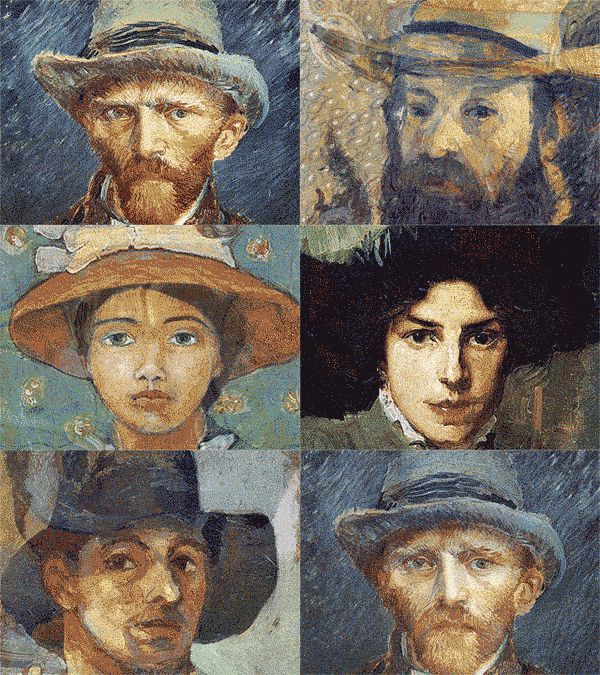
But for the few Northern Middenlanders who do care about fashion, their tastes stand out sharply against the practical norm. Among these individuals, often merchants or those who’ve spent time in the cities, men are frequently seen wearing the garb of traders: wide-brimmed hats adorned with feathers, layered coats, and decorative sashes. Women who embrace fashion tend to favor imported dresses from distant lands, often rich in color and embellishment, reflecting a worldly flair uncommon in the rugged North. These fashion-forward few add a splash of flair and personality to an otherwise utilitarian culture, turning heads wherever they go.

However, fashion has undergone a shift in recent times. Since the end of the diaspora and the resettlement in the Kingdom of Burgundy, most Northern Middenlanders have adopted the simple, modest clothing typical of the local smallfolk.


AD_4nXccIvHHwDQIOF8b98gS0s7vT-s3mKWna4cnImL0EUP3jhxk603eKuOh_-bmp1dhtaND3jYt674p04uQYgDmQAwDkbXLrFTyF4Q_mPVPo1T0nm_e7UVCFoKP0_QZFERcJTHGEPEgxw?key=G9yF1qFZNS67PnsdthEvODRl

Appearance

AD_4nXdZZY_vXNf-WtbXa3ZZAnLv89xxhle8qc-lte9z8h2YSgIM0zfobekWZ_hmQF-5ImFsmoG8LzmH3ZETaY_iNp1jravFz5cQn_1GuFnhRAWPouQ_sfXST2x6SB37xtfcSN1FCCQRbA?key=G9yF1qFZNS67PnsdthEvODRl

Though most Northern Middenlanders hate to admit it, their appearance more closely resembles that of Highlandic peoples, such as Norlanders, Raevers, and Waldenians, than that of their southern heartland cousins. This is largely due to generations of interbreeding with Highlandic communities, which are more prevalent in the northern regions.

Most Northern Middenlanders tend to be shorter than the average human, often stocky and broad-shouldered. They typically have fair to ruddy complexions, with hair ranging from deep browns to sandy blondes, and occasionally red. Their eyes are most often blue or brown. These traits, combined with their practical clothing, usually make their Northern Middenlandic heritage easy to spot.


Spoiler

OOC
Hey, I just wanted to thank @DeadraSlayer, @ImmortalShadowZ, @FireAGN, and everyone else who helped write this culture with me. I've wanted to make this post about the culture we created for Ravenmire for a long time. We had a lot of ideas but never really took the time to write them down, and now felt like the right moment. And if you want to play a Northern Middenlander please feel free too.


Link to post
Share on other sites

 Share

  • Recently Browsing   0 members

    No registered users viewing this page.


×
×
  • Create New...