


Gnomistry
-
Posts
414 -
Joined
-
Last visited
Content Type
Profiles
Personas
Wiki
Rules
War
Systems
Safety
Player Conduct
Roleplay Leadership Guidelines
- Roleplay Leadership Guidelines
- Roleplay Leadership Guidelines Comments
- Roleplay Leadership Guidelines Reviews
Forums
Everything posted by Gnomistry
-
⋅──────⊱༺ ♰ ༻⊰──────⋅ NAME: Shaulbert VOCATION: Abbacy TRIBE / CULTURE: Tribe of Horen BIRTH YEAR: 217 of the Secular Era ORDINATION DATE: 232 of the Secular Era ORDINATOR: H.P. Harren I CURRENT DIOCESE: Alba ASSIGNMENT: Abbot of the Wigbrechtian Friars of Liberal Observance Professor of Acolyte Studies - The Prince's Institution of Alba WRITTEN WORKS (please link): Common Edition of the Rule of Abbot Wigbrecht A Meditation on the Vanity of Human Absolution The Absolute Supremacy Of The High Priest: Refutation Of Synodalism And Assertion Of Divine Monarchy On The Tenets And Development Of The Proclaimed Heresy Of Clementine Successionism As It Took Root In The Realms Of Axios During The Final Years Of The Sixteenth Century USERNAME: Gnomancy DISCORD: hallow0322 ⋅──────⊱༺ ♰ ༻⊰──────⋅
-
The young monk scoffed under his breath, tossing the scroll onto the table with a sharp flick of his wrist. “Give a crackpot wizard a badge and call it progress,” he muttered, half laughing, half disgusted. “Give a lich a license, what’s next, Haense reborn? Nothing says progress like putting the undead on payroll.” He leaned back in his chair, smirking faintly. “When kings trust charms, ghosts fill their arms.”
-
Brother, I extend my apostolic benediction to you and your priest, peace, and pray the fear of the Lord upon you both. I thank you for your gracious letter and the temperate spirit in which it was offered; your words display both humility and ardor for the Faith. Permit me now, in turn, to answer your pondering with a heart inclined to concord. You rightly recall that “The Lord is merciful, and waits for our penance” (Gospel 6:45–46), and you draw from the history of our Exalted those patterns by which GOD cleansed the world: by Owyn’s sword and by Godfrey’s governance. They demonstrate two distinct modes of action: one of purging when corruption has triumphed, the other of rule where instruction may heal. From them, we must not hastily derive the power to bestow forgiveness to mortal hands. Hear then this distinction I press upon: the minister of the Church is called to admonition, guidance, and the ordering of penance, not to be the font from which divine pardon flows. You have argued that the confessor “confirms” a penitent’s plea so the soul may not be troubled; I accept that the priest’s counsel gives assurance and direction. Yet confirmation must not be confused with making what only GOD may make. The Scroll of Spirit reminds us that “there is no refuge from the sight of GOD, for He sees all things, and no sin is hidden before Him” (Epistle to the Harrenites 19–20). If God alone sees the heart in fullness, then only GOD alone judges the interior and grants true reconciliation. A priest may discern and advise; he cannot know or remit what the Lord alone inspects. You appeal to Owyn as one who bore a prophet’s authority even in his failure, and to that I grant weight: “The Lord saw the penance of Owyn, which was the death of the unrepentant. And Owyn was made again as the light of his blade, and the great city was destroyed” (Gospel 5:19–20). Owyn’s penance was indeed a work whereby the state of the world was reordered, and yet even Owyn cried out for forgiveness and found himself told that what was done could not be undone (Gospel Book of Owyn 51–56). His office was prophetic and executive, not sacerdotal in the sense of exercising exclusive dominion over mercy. The pattern is: GOD commands, the prophet executes; GOD alone restores the heart. Consider further how the Scriptures you cite show Godfrey’s mode: the Aengul Eshtael turns the king from immediate violence and girds him with horn and laurel so that his weapon “became a scepter of rebuke and rulership” (Gospel 6:20–23). From Godfrey we learn the best of governance. These are the means of restoring communities by teaching and rule. His example supports the priest’s role as teacher and steward. Yet stewardship is not sovereignty over grace. The Church’s minister may speak of penances, propose works of reparation, and bind the conscience with counsel, but he must not declare himself the author of pardon. Where he does so, he risks making the confessional a substitute for the soul’s true turning. You rightly warn of two extremes. I) The overeager flagellant and II) the avoidant rationalizer. You propose that a wise confessor prevents both. I accept that wisdom is needed to temper the heart’s excesses. Still, prudence in guidance does not require that we attribute to the confessor a metaphysical power to remit guilt. A confessor may order penance so that the penitent’s contrition bears fruit; he may confirm that outward acts have been performed; but the actual reconciliation being the inward return, the removal of separation, remains GOD’s alone. The Scroll of Spirit instructs us that sin is separation from GOD and that reconciliation is the soul’s return (Epistle to the Orcs: “You suffer not in retribution, but in separation, and in the Skies all shall find solace.”). This returning is an act of the Divine Mercy upon the contrite heart. Therefore, let our practice be reformed in language and in devotion. Retain confession as the Church’s instrument of counsel, penitential discipline, and public correction where required. Let penance be real and demanding works that demonstrate the turning of the will. But let us remove from our formularies and our habit the posture that a mortal word or rite affects the metaphysical remission of sin. Confession is to retain a pastoral benediction and an exhortation to continue in obedience. I do not seek to strip the Church of its pastoral tools; I seek to defend the sovereignty of GOD’s mercy. You, a layman, have shown, in your defence of tradition, the prudence and order necessary to keep the flock from error. I ask only that we guard against granting our ministers the station of the Almighty. For as the Scroll affirms, GOD alone sees fully and judges rightly; penance reforms the will, and mercy in its pure and saving form is the free act of the Lord. May the All-Seeing guide our judgments so that we sin no more. Your servant, Shaulbert ♰
-
That None but GOD May Absolve A Meditation on the Vanity of Human Absolution “The priest is not the gate of the Skies but the herald of its ways.” So I am the Most High, and in pursuit of My Virtue, I bid My faithful this: You shall not raise a hand in wrath, nor in envy, nor in any kind of sin. (Scroll of Virtue, Canticle of Patience 9) That wooden box. That wooden box which we enter into to be freed from the world of sin. What is it? It is not the confessional, it is the coffin. The Scroll of Spirit proclaims the Lord GOD as “the Most Merciful, Singular, and Omnipotent.” Therefore, mercy proceeds directly from His nature, not through mediation. To bind mercy to human ordinance is to divide the indivisible, for “there are no partners to GOD,” nor any who may partake in His divine prerogatives. The forgiveness of sin belongs to GOD alone, who sees into every heart and judges without intercessor, as it is written: “There is no refuge from the sight of GOD, for He sees all things, and no sin is hidden before Him.” (Epistle to the Harrenites 19–20). Thus, to grant men authority to absolve what GOD alone can forgive is to set human power beside the divine which is a trespass against His singularity. The Scroll of Spirit teaches that sin is separation from GOD. Sin is not an infraction to be counted and annulled by priestly decree. The Epistle to the Orcs declares, “You suffer not in retribution, but in separation, and in the Skies all shall find solace.” Therefore, reconciliation with GOD is not the work of man but the return of the soul to its Maker through repentance and renewed obedience. The sacrament of confession as it stands presumes that sin may be remitted by another’s voice, yet the Scroll affirms that every man must “seek salvation in the One,” and none can bridge the soul’s division but GOD Himself (Epistle to the Godwinites 22). Hence, confession to priests is treated as a shadow of true repentance. Perhaps it is a comfort to men’s ears, but not a balm to remedy their self-imposed segregation. The prophets were called “servants of the Lord, called to prophetic vocation in His service,” not mediators of His forgiveness. Their charge was to admonish nations, not to bind or loose sins. The priesthood of the True Faith inherits the prophetic duty of instruction and example through Saints Evaristus and Clement. The faithful must confess before men for counsel, but absolution must come from GOD, for the priest is not the gate of the Skies but the herald of its ways. To engage in this form of sacramental expurgation is to conflate the servant with the Master and to mistake admonition for absolution. The Epistle to the Jorenites warns that “there can be no laxity in faith for any reason, not war nor peace, not wealth nor poverty.” Yet confession, as ritualized absolution, tempts men to such laxity, for if forgiveness may be purchased in speech, repentance need not dwell in the heart. True penitence requires the transformation of the will. And since “the Lord GOD gives no compulsion in faith,” no ordinance can compel forgiveness nor constrain His mercy (Epistle to the Godwinites 3). Thus, ritual confession has been a vanity, born of men’s fear of silence rather than their love of truth. The mercy of GOD is infinite and immediate, unmediated by man, temple, or rite. The soul is reconciled through contrition, restitution, and obedience to the Virtue. The priest may guide the penitent, but cannot cleanse him. Therefore, the sacrament of confession as a means of absolution is rejected as false and unnecessary within the True Faith. For it is written: “GOD punishes not, but protects. And there is no pain with GOD, but without Him” (Epistle to the Jorenites, 4–5). So let the faithful confess not to men for remission, but to GOD for restoration, and let their repentance be proven by deeds. When Exalted Owyn was called to prophetic service, the Lord did not bid him to listen to the sins of men, but to remove them. He was not given the ear, but the sword for his ministry was of purification. Where corruption had nested in the hearts of kings and priests alike, Owyn struck that the fire of righteousness might cleanse what the word alone could not. Thus was sin cast out by the justice of GOD working through His chosen hand. If the Lord had willed that sin be undone by speech, He would have sent a scribe; but He sent a prophet armed in flame, that repentance might burn away deceit. Thus, let the faithful confess not that they may be cleansed by the ordained, but that they may be taught by him; and let their penance not pretend to ransom sin, but to renew their obedience to GOD. The Scroll of Spirit declares that “the Lord lasts through all adversities, for He is their source and their remedy” (Jorenites 14). So penance is to be a walking again in the remedy, the way of the Lord’s command. Therefore, let confession be retained as admonition, and penance as correction, but let no man say that through them sins are forgiven. Verily, we shall be judged by the All-Seeing; therefore, sin no more. Shaulbert ♰
-
DOMINE, EXAUDI ORATIONEM NOSTRAM O LORD, HEAR OUR PRAYER To the Faithful of Alba, Greetings and Apostolic Benedictions! After long months upon the sea the LORD has at last brought us to this blessed shore. Cor peregrinum in DEO requiescit; nam longus fuit iter, sed in lumine eius invenimus domum. The pilgrim heart finds its rest in GOD; for long was the journey, but in His light we have found our home. Here, upon the soil of the New World, we shall soon raise the Cross of Horen anew, and from our labor the City of Alba is to ascend to new heights. New stories are to be told. New lives will be born. New faith will rise from the stones we have laid. Now the time has come to hallow our home. Therefore, dearly beloved, I summon you to gather on ((Friday October 17th 6pm EST)) to consecrate your city and your Cathedral-home. At the bottom of this letter, you may write your name and your prayerful intentions as we begin life anew together. All names will be read aloud at the Mass, that every soul who helped build this city and those who will dwell herein will be remembered before the altar of GOD. Shaulbert ♰
-
Cardinal Alaric - Requiescat in Pace
Gnomistry replied to tasty_cheesecake's topic in Ecclesiastical Decrees
Shaulbert began a novena for the repose of the soul of his friend. -
U L T R A C I T R I N I S M THE ABSOLUTE SUPREMACY OF THE HIGH PRIEST: REFUTATION OF SYNODALISM AND ASSERTION OF DIVINE MONARCHY SUPREMATIA ABSOLUTA SUMMI PONTIFICIS: REFUTATIO SYNODALISMI ET ASSERTIO REGIMINIS DIVINI "Be together in Council as you will be in Nether." To the High Priest, Vicar of the Exalted, Keeper of the Scrolls, and Successor to Evaristus and Clement; to the Emperor, whose seat is as affixed as His Holiness, to the gathered Imperial Royalty and Nobles, to the Most Reverend Bishops; to the Reverend Priests, Ministers of the Sacraments and Shepherds of the People; to the Synodal Fathers, Councillors, and Theologians of Every See; to the Monastics, the Mendicants, and the Pious Lay Brethren; and to all who hold fast the Canon and call upon the Creator in truth: Peace be upon you from Him who is. With a prayerful heart I set forth this argument in duty to the Church and love for the truth. In every age, the faithful must examine whether their customs reflect the commands of GOD or the comfort of men. The time has come to speak plainly of the priesthood, the episcopacy, synods and councils, and the very shape of the Church’s governance. Verily, the rise of the episcopate did not come by revelation but by necessity. As kingdoms expanded and rulers multiplied, they sought to bind the Church to their earthly dominions. The bishop was once a senior presbyter, a minister of the altar and teacher of doctrine. Once the pontiffs who established this office departed this terra, He has been fashioned into a miniature pontiff, endowed with lands, courts, and titles exalted not by holiness but by proximity to temporal power. The High Priest alone is ordained in the line of the prophets and sufficient as shepherd over the ministers of the faithful. All priests serve under his authority and under GOD. The role of bishop has become a ladder for ambition and an idol of jurisdiction. Holiness is replaced with administration. Sacramental service gives way to political calculation. Bishops are useful to territorial lords because they resemble vassals as they are summoned, rewarded, and subdued. They sit in councils, lend weight to crowns, and divide the Church into provinces. Their numbers have grown, but not their sanctity. The cost is great. Priests are no longer judged by zeal or truth but by loyalty to their episcopal court. And what of the faithful? They see not a servant of the altar, but a princeling robed in finery. They hear not a prophet, but a magistrate. The spiritual harm is grievous. Bishops build local dynasties of doctrine and rule. Many schisms began not with heresy from below but with defiance from above when bishops like Valentyn of Halsworthy opposed the Pontiff or shielded falsehood. The priesthood alone is fully capable of preaching, absolving, blessing, and ordaining. Authority in the Church flows from GOD through ordination, not through offices multiplied by tradition. Let priests shepherd their flocks and be aided by underpriests in charity, liturgy, and discipline. Let the duties of bishops be entrusted instead to holy and learned Archpriests not as lords over dioceses, but as servants among brethren. Let there be no fear in abolishing titles which GOD did not command. The prophets held no episcopal chairs. The Exalted convened no synods. They spoke with fire, not by consensus. The truth of GOD is not found in majority opinion but in the word once spoken. Revelation is singular. GOD’s will descends from on high, not through gatherings of delegates. Yet councils now presume to bind where GOD has loosed, and to loose where GOD has bound. They multiply doctrines, obscure the clarity of the Scrolls, and bind the faithful to the fickle moods of the age. Under this council, the Church is a congress cluttered with motions and compromise. Heresy creeps in through the synod floor. The Church lives by obedience. It is not governed by consensus but by those whom GOD has anointed. Let the High Priest teach as he has received. Let the priests preach what the prophets have proclaimed. Let no synod claim power to alter what GOD has decreed. For the Light moves not in clamor but in the silence of obedience. Better one righteous man ablaze with the fire of truth than a hundred delegates whispering preferences. Still, the Church is not static. It is a living body. Its form is not fixed by antiquity nor dependent on inherited arrangements. The High Priest may alter offices as befits the time. He may abolish what hinders unity and holiness. He may appoint new stewards and dismiss old ones. He may call councils and enact their resolutions. His authority is not derived from councils but from divine ordination passed down from Evaristus and Clement, from Horen and Owyn, and ultimately from GOD. Therefore, let none despair the reordering of titles nor mourn the passing of old offices. The Church endures not by miters and jurisdictions, but by faith and obedience. So long as the High Priest remains faithful to the Scrolls, the Church is whole, and the faithful are fed. Let the bishops pass away. Let synods fall silent. Let GOD be heard again in the voice of His anointed. I say, the Church is not a democracy, not a parliament of clergy, not a confederation of prelates. It is a divine totalitarian monarchy under the High Priest, Vicar of the Exalted, and servant of the Law. All authority is his to wield. All offices stand or fall at his word. He has not been elected by men but set apart by GOD to preserve the unity of the faith and the purity of the covenant. The High Pontiff, seated in the line of Horen and the Exalted, holds final and supreme authority in all matters of doctrine, discipline, and divine law. The unity and sanctity of the Church rests upon submission to his rule. The foundation of the Church’s leadership rests upon the divine anointing of Evaristus and Clement, entrusted with the Word of GOD. Importantly, their joint anointing established a singular office of supreme leadership that transcends all subsequent ranks. This office, vested in their line of succession, embodies the fullness of the Church’s unity and authority. The ‘second son of spirit’ signifies ongoing divine guidance through this ordained line. Thus, episcopal authority, especially that of the High Pontiff as successor, is not a human concession or organizational convenience. It is a divine institution, supreme and absolute, holding final jurisdiction over doctrine, discipline, and the Church’s mission. This authority is not to be contested by synods or councils, which serve only as advisory bodies under the High Pontiff’s governance. Ultracitrinism is the holy doctrine which affirms that the fullness of spiritual authority upon this earth rests in the person of the High Priest, who reigns upon Lemon Hill, the seat of the True Faith. As the Prophet Owyn anointed the laurel-bearing brothers, Evaristus and Clement, and gave to them the Spirit and the Virtue, so too does their successor inherit the plenitude of priestly dominion as the Second Son of Spirit. His decisions stand as the final word. Obedience to him is obedience to GOD’s will revealed in this sacred succession. Any challenge to his authority challenges the Church’s very foundation. ULTRACITRINISM is the law. The true heresy is Synodalism, the belief councils hold authority above the High Priest ordained by GOD. The High Priest is the sole supreme ruler, ordained by divine mandate to govern without challenge. To claim any assembly may override him places human error above divine authority and destroys divine order. Synodalism breeds division through debate and faction. Where the High Priest commands, there is unity. Where Synodalism spreads, there is chaos. No council may legislate beyond the High Priest’s authority or question his judgment without bringing ruin to the Church. Obedience to him is absolute. He alone holds the keys of doctrine and discipline. To resist him is to resist GOD. The Church exists only under the sovereign will of the High Priest. His will is final. All who oppose him fall into Synodalism and must be cast out to preserve the Church’s unity and holiness. Let GOD be glorified, the Church sanctified, and His High Priest rule as He has ordained. After the time of the Exalted Owyn, the holy order of the world was transfigured. Though Horen bore the seed of promise and Owyn bore the sword of judgment, it was Owyn who did not retain to himself the crown of spiritual authority, but rather entrusted it to others. As it is written in the Scroll of Gospel, Book of Silence: “Owyn obeyed the command of GOD and anointed the brothers Evaristus and Clement, who jostled in the same womb, as joint bearers of the laurel of Horen. He entrusted to them the Word of GOD, which were the Virtue and the Spirit, and charged them to instruct their brethren in the path of holiness. At Owyn’s command, the brothers set shepherds over the flock of men, and so created a priesthood for their instruction, in anticipation of the second son of spirit.” (Gospel: Silence 3–5) The divine foundation of the priesthood was the very continuation of prophecy through Spirit, descending from Owyn to the High Priests of every age. The laurel of Horen, once worn by prophets, now rests upon the mitre of the High Priest, for he is the Second Son of Spirit by ordination. The High Priest is the bearer of that very authority which Owyn received from GOD, and which he then transmitted to Evaristus and Clement. Their office, passed down unbroken, is no invention of man or council, but the living inheritance of the Exalted. Though the Exalted were called in times of crisis, they were singular and unrepeatable. The High Priest, however, stands perpetually as the vicar of the divine covenant. His word binding, his judgment final, his person the living temple of the Light. Therefore, to oppose the High Priest, or to subject his teaching to the scrutiny of councils, assemblies, or mobs, is to rebel not against a man, but against that same authority given by GOD through Owyn. The priesthood is not beneath the Exalted; it is their appointed successor and supreme interpreter. Hence, the High Priest reigns supreme in the order of grace. No prophet may rise to contradict him. The High Priest alone sits upon the chair of judgment. He is the Light of the World, the Key of the Temple, the living heir of the Laurel, the Spirit-born. Let the faithful understand: there is no higher voice, no clearer word, no fuller Spirit than that which speaks from the mouth of the High Priest. Let it be held without shame or uncertainty: the true bearer of the title Second Son of Spirit is not found in any temporal king, however glorious, but in the one who bears the Laurel of Horen in perpetuity as the High Priest. For the Scroll of Gospel teaches that Owyn anointed Evaristus and Clement and charged them to "instruct their brethren in the path of holiness" (Gospel: Silence 3:4), and by his command, “the brothers set shepherds over the flock of men, and so created a priesthood for their instruction, in anticipation of the second son of spirit” (3:5). What is this priesthood if not the very fulfillment of that anticipation? And who is this Second Son if not the one who sits upon the throne of the spiritual kingdom, ordained not by blood, but by Word? Godfrey, though mighty in conquest, received the laurel of temporal dominion. His Scroll contains only the command of GOD to obey the Church. Siegmund, though faithful, ruled by sword and throne. Yet neither did they reign as shepherd over the whole Church, nor were they charged with the instruction of the faithful by divine mandate. Their virtue is not diminished by this distinction, but their claim to the title is nullified by the explicit succession established by Owyn himself. The High Priest, descended through the line of Evaristus and Clement, not only inherits their authority but fulfills the very role prophesied by Owyn. It is not kingship that defines the Second Son, but spiritual governance. Thus, to call a king the Second Son is to deny the priestly purpose for which Owyn anointed the first High Priests. It is to raise the sword above the Word and crown above the miter. Let none confuse the matter: the Spirit does not pass through the lines of royal blood, but through the laying-on of hands, the unbroken ordination of priests, and the preservation of the Scrolls of Virtue and Spirit. In this succession alone is the Gospel preserved and transmitted. To cling to the claim of Godfrey or Siegmund as the Second Son in the fullness of its meaning is to reject the very function of the High Priesthood, to annul what Owyn established, and thus fall into grave error. Let the Church reject such confusion, and proclaim with boldness: the High Priest is the living heir of Owyn’s commission, the Second Son of Spirit in office and in truth, raised not by worldly acclaim but by divine ordination. Some may argue then that all things not mentioned in the Scrolls are thus superfluous or heretical. I say the contrary. Look at my own office: Though the Scrolls do not declare the office of the monk by name, they declare by substance the very order from which monasticism springs. For what is a monk, if not a brother who dwells beneath the rod of a priest, dedicating his life not to dominion or acclaim, but to prayer, silence, study, and work? The monk does not invent for himself a new rule but lives beneath one, a rule handed down from the priesthood that Owyn established by GODs word when he anointed Evaristus and Clement and commanded them to instruct their brethren. And thus from the beginning, there has been a need for men not set above the flock, but set apart from the world, that by their labor and devotion they might uphold the teachings of the priesthood in hidden places and holy houses. Monasticism is not an invention but a necessary consequence of the priestly order. For how shall the Word be preserved, if not by scribes? How shall the sacraments be guarded, if not by watchful hands? How shall the virtues be cultivated, if not by men who have denied themselves for the sake of the Creator? Therefore, even as the High Priest reigns in glory, the monk serves in humility, and together they preserve the covenant of holiness entrusted to us by Owyn and Horen. + Shaulbert
-
ON THE TENETS AND DEVELOPMENT OF THE PROCLAIMED HERESY OF CLEMENTINE SUCCESSIONISM AS IT TOOK ROOT IN THE REALMS OF AXIOS DURING THE FINAL YEARS OF THE SIXTEENTH CENTURY In the wake of the Orenian-Coalition War, which ended disastrously in 1595, the desolation wrought upon the heart of the Empire, namely the destruction of the city of Johannesburg through the sinful detonation of thanhium beneath the palace by the hand of Emperor Philip I, struck a grievous wound upon the soul of the Canonist world. What had once been the seat of imperial majesty and, by consequence, the temporal sword of the Church of the Canon was rendered to ash and crater. In the absence of clear imperial or pontifical stability, new doctrines arose from the shattered remnants of priesthood and power. Among these heresies emerged a doctrine now known as Clementine Successionism, which I name for its fundamental tenet: that with the ascent of the Exalted Owyn into the Seven Skies, the Age of Prophets was brought to its final conclusion. With the prophetic line fulfilled, the leadership of the faithful was said to have passed first to the High Priest Evaristus, and then to his heir in office, Clement wherein the sacred stewardship of the Church was no longer a divine charge received by prophetic speech, but a temporal succession of high priests ordained to govern the faithful in perpetuity. This doctrine denied the prophethood of Godfrey and Sigismund, the Scrolls of Gospel and Auspice, teaching instead that these scriptures were historical in nature and that divine guidance was to be mediated solely through the office of the High Priest, and through the line of succession established by Evaristus and Clement. Hence, they taught that the priestly succession itself was the final gift of the prophets, and that no further vision or voice from on high was to be expected, only the steady hand of clerical governance. The destructive final act of Philip I of Johannesburg, though rightly condemned by the Canonist faithful, was seized upon by these sectarians as a sign of the failure of traditional pontifical authority. They claimed that the Church had failed to restrain the Emperor’s madness because it had fallen from its Clementine origins, had murdered the rightful Pontiff Theodisus II, and that a restoration of that succession, untainted by imperial or secular entanglement, was necessary for the salvation of the Church. The first visible fruit of this doctrine appeared in the rise of the Lotharic Communion, whose first Princeps was the Canonist Bishop Valentyn of Halsworthy. He had been appointed by Theodosius II as Bishop of Lotharum, with authority over the Duchy of Lorraine, the County of Metz, the County of Hearth, and the Viscounty of Chambery. Valentyn, though ordained within the Church, proclaimed himself a successor of Clement and High Priest of a purer order. Though his movement maintained outward signs of orthodoxy and retained the Holy Scrolls, he was branded a heretic by the succeeding Pontiff, Adrian I, who deposed him and appointed William of Metz in his place. In the Kingdom of Courland, which had emerged as a rival polity to the fractured Holy Orenian Empire, two distinct sects rooted in Clementine Successionism were adopted as official state religions. First was the Lotharic Communion, which had been adopted and tolerated as an official ecclesial body under the reign of King Tobias Staunton. Later, in 1604, the True Faith of the Old Believers was proclaimed the state church of Courland, also under King Tobias, and became the baptized faith of his son Joseph. Prior to the promulgation of the First Golden Bull of Metz, the schism that had long divided the Clementine Successionists and the Canonist Church was resolved through a via media (a middle way) which allowed for the peaceful reintegration of the True Faith of the Old Believers. The sect’s former High Priest, known as Callixtus I, had already submitted to the authority of the Canonist Church and was received under the name Abraham. His formal reconciliation was confirmed when, in the First Golden Bull of Metz, His Holiness Adrian I, lifted the sentence of excommunication that had been pronounced in the days of schism, thereby recognizing Abraham’s valid ordination as a lawful minister within the Church of the Canon. Both Courland sects claimed the line of Clement and denied the continuing legitimacy of the High Pontiffs elected in the Holy See. They appointed their own bishops and sacramental hierarchy, affirming the Scrolls while rejecting the current hierarchy of the Church. In Lorraine, where Valentyn had first been enthroned, religious toleration was maintained, and the Lotharic Communion enjoyed de facto spiritual autonomy even after its condemnation by the See. This allowed Clementine Successionism to survive in fragmented but persistent form, buoyed by regional lords and temporal powers who found in it a means of resisting pontifical interference. The central claim of Clementine Successionism was thus theological and political: that the office of the High Priest, instituted by the Prophets and perfected in Clement, was the final vessel of divine guidance, and that its line could be preserved independently from the institutions centered in the See of the Canon. By severing obedience from the Pontiff and placing it in successor bishops of their own election or appointment, the Clementines placed themselves outside the communion of the Church. This doctrine, born from disorder, undermined the unity of Canonism more deeply than any external threat. Clementine Successionism istinctly chips away at imperial authority by denying the divine sanction once attributed to the Empire through Godfrey. Anti-imperial factions seize upon this to portray the empire not as a vessel of providence, but as a usurper of priestly rule, its collapse at Johannesburg thus seen as divine judgment. Likewise, anti-pontificate groups invoke the doctrine to delegitimize the Holy See’s authority and cast doubt upon the canonical hierarchy. By rejecting both temporal and spiritual governance, Clementine Successionism foments distrust, emboldens local rulers and clergy to claim autonomous power, and breeds division within the Church of the Canon. Though the Church passed through the fire of this schism, which was mediated under High Pontiff Adrian I around the time of his promulgation of the Fifth Golden Bull of Mount St. Humbert, its wounds have not entirely healed. Clementine Successionism lingers. ✝ Bp. Abt. Shaulbert of Mikdanberg, OWF
-
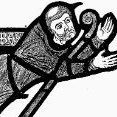
Second Diocesan Bull of Mikdanberg SECUNDA MINOR BULLA MIKDANBERGENS HIS GRACE ABBOT SHAULBERT BISHOP MIKDANBERG “For I have given you the pains of the world, and I have given you their cure.” Virtue 5:9 TABLE OF CONTENTS SECTION I - OPENING PRAYER SECTION II - ON INTERDICTION SECTION III - OUR CATHEDRAL SECTION IV - DIOCESAN CENSUS SECTION V - ARMS OF MIKDANBERG SECTION I OPENING PRAYER O Lord GOD without peer, You who have put into our hearts the power of creation, you who have given heat to the fire that reddens iron, forge us as the smith tempers steel—unyielding and true. May our labor be for justice and may we stand firm against wickedness. For You have said: "I am the Lord GOD without peer. I put into your heart the power of creation, and I created the seed and chaff, and put heat into the fire that reddens iron. And as I have created means to ease your labors, so I have created new labors, and new fruits." Let our struggle be one of righteousness, And our victory a hymn to Your glory. In Your name, we rise. Amen. SECTION II ON INTERDICTION Interdiction. It is not an unimaginable curse, nor a bolt from the Skies, its source is of the flesh. It is a shadow drawn by wicked hands. Sons of Joren, hear me now. It is time for the true-hearted and the brave to rise against the corruption that threatens to fracture the foundation upon which you stand. The land is roiled with discord and the leadership that claims authority over your realm is not of GOD’s will but of man’s deceit. You are the sons of Joren, born of the First King, bound by the Covenant of the Creator. Your ancestors did not bow to the whims of those who rebelled against our Faith, nor did they kneel to those who falsely claimed the mantle of rule. No, you are a people who were meant to walk in the Holy Light, to honor the Creator and His will, and to protect His realm from the darkness that seeks to consume it. But now, you stand at the crossroads of your destiny, as those who would claim leadership over Haense, and all its subjects, are not chosen by the Creator. The King is dead and there are many who seek power for their own ends, not for the good of the people, not for the honor of the Creator. They are false leaders, led astray by their pride and greed, and their rule is not ordained by the Light. I call upon you, faithful sons of Joren, to take up arms in defense of what is right. To challenge the cabal, the tyrants who rule over you, and to restore rightful order. The time for submission has passed, the time for righteous action is upon you. Lift your eyes to the Skies, for the Creator looks upon you. It is He who has called you to this moment, to be the defenders of His Light, to strike down those who would usurp His will and lead you astray. This is an act of restoration. Fight for truth. The false rulers may have claimed dominion, but their reign is not divine. You, the true heirs of Joren’s blood, shall take up arms in the name of the Creator, and restore the land to His rightful rule. As such, you will inherit this Dual-Kingdom. In these days, the faithful kneel, but the altar is empty. The sinner repents, but no hand lifts to bless. The dead cry out for rest, but the earth remains hard and unyielding. This is not wrath—it is absence. Your bishop Alaric weeps. Close your eyes. Breathe deep. Imagine eternity. Not the eternity of stars and sky, not the eternity of warm wind and golden fields, but the eternity of flame. Every moment a burning. Every second a brand pressed to your soul, and the pain does not dull. It does not soften, does not numb. It is always fresh, always new, as sharp as the first cut, as searing as the first flame. This is not a punishment given—it is a punishment chosen. It is the natural weight of the soul torn from its source, falling, falling, forever falling. Oh, my wayward children, why would you chase the storm? The Mother calls, listen. The wind whispers peace, but false leaders make war with the earth, with the Skies, with your own souls. To lift the sword against the Church is to puncture your raft. It is drinking salt water and calling it sweet. It is setting fire to your own home and cursing the cold when the flames die down. The soul rebels, and at first, it feels like flight. Like wings of fire, like a river breaking free. But soon, the fire burns too hot, and the river floods too wild, and there is nothing left but ruin. The heart cracks. The soul shivers. The light dims. And then comes the silence. The long, hollow silence, where no prayers reach and no warmth remains. No songs, no laughter, no golden glow of grace. Just the weight of what was lost. Just the cold shadow where love used to be. Upon Haense and all those who take up arms against the Holy See of Lemon Hill, let there be silence. Let there be stillness where once there was blessing. Interdictum—the closing of the gates, the dimming of the lanterns, the turning away of the face of GOD. No sacrament for the living. No rest for the dead. No marriage, no confession, no oil upon the brow of the sick. The doors of the sanctuaries shall shut, and the people shall wander, searching for grace where none is given. Listen—there is still time. The door is not stone but glass. I see your suffering. If you shall raise your swords, sons of Joren, raise them against the cabal who has dishonored your heritage. Step into the light, and let your soul breathe again. SECTION III OUR CATHEDRAL Our city grows, and with it, so does the need for a grand house of worship. The abbey can no longer hold the many souls who come to seek GOD. It is my duty, as Bishop of Mikdanberg, to build a cathedral that reflects His glory and serves His people. Such a great work requires your help. Pray for its success, give from your excess wealth, and seek me out if you wish to contribute. Together, we will raise a place of worship worthy of His name. May God bless all who support this holy endeavor. SECTION IV DIOCESAN CENSUS To better serve our growing flock and to ensure that all may be accounted for in God’s grace, I request that every member of our Diocese take part in the diocesan census. I desire to know every last man, woman, and child who calls this spiritual community home. We must ensure that no soul is left without the support and guidance they require. In the coming weeks, visit your local parish or seek me out directly to register or write a letter to the diocesan office providing your name, place of residence, family status, and any special needs or requests for spiritual care. SECTION V ARMS OF MIKDANBERG It is with great joy that I announce the selection of a new diocesan crest for Mikdanberg, designed by our devoted brother, Fr. Witmar. The red background recalls our foundation from the Crusadelands, redeemed through the true sacrifice of martyrdom. The double-bar cross symbolizes the sacred union between the Skies above and Terra, our training ground. The monk in black robes, a figure of the Wigbrechtian Order, represents the spiritual order that serves Mikdanberg. In his hands, the Wine of Sacrament signifies the sacred offering to GOD we render each day. Lastly, the golden crozier is a manifestation of the shepherd who directs his flock toward righteousness and away from harm. IN NOMINE DEI ABBOT SHAULBERT BISHOP MIKDANBERG Abbot-Bishop of Elizabeth
-
First Diocesan Bull of Mikdanberg PRIMUS MINOR BULLA MIKDANBERGENSE HIS GRACE ABBOT SHAULBERT BISHOP MIKDANBERG “For I have given you the pains of the world, and I have given you their cure.” Virtue 5:9 TABLE OF CONTENTS SECTION I - OPENING PRAYER SECTION II - EPISCOAL SEAT SECTION III - THE RULE OF ABBOT WIGBRECHT SECTION IV - A CALL FOR MONASTICS SECTION I OPENING PRAYER Baruch Atah Adonai, our Creator, You who called forth holy souls like the Blessed Wigbrecht to seek Your presence in community, We ask for Your blessing upon the people of Mikdanberg, That they may together magnify Your divine guidance. As You spoke through the prophets of old, So may Your words shine through our prayer and work, Let us walk with virtue, Embracing the eternal covenant to serve You with all our hearts. Through prayer, labor, and almsgiving, May we bring light into the world, And may Your presence rest with us forevermore. Amen. SECTION II EPISCOAL SEAT By the will of the Creator and the judgment of the Holy Church, I am humbled to be entrusted with the governance of the Bishopric of Mikdanberg. With the grace of High Priest Harrentzedek, I am called to oversee the lands of Vortice, Silasia, Lurin, Dunwen, and the surrounding parishes. I accept this responsibility with deep humility and move the seat of the diocese to St. Catherine’s Abbey in the blessed city of Elizabeth, which shall now serve as the Territorial Abbey of Mikdanberg. This decree, issued under the authority of the High Priest, shall remain in effect until the See of Lemon Hill deems otherwise. SECTION III THE RULE OF ABBOT WIGBRECHT I am filled with joy to share with you all my publication of the Rule of Abbot Wigbrecht in the Common Tongue. It has been a labor of love, and I hope it helps spread the wisdom of this holy monastic tradition to a wider audience, so that more can embrace its teachings. I’m excited to announce the revival of the Wigbrechtian Friars of Liberal Observance. We take our name and rule from the first Abbot of Saint Jude, Blessed Wigbrecht, who led Saint Kristoff’s Abbey in Belvitz and met his martyrdom in Rosenyr. He was known for his powerful preaching, his deep faith, and his commitment to serving both God and humanity. Blessed Wigbrecht was a strong defender of mendicant poverty and the doctrine of labora, encouraging his brothers to live a life of humility, hard work, and service to the poor—all for the glory of God. It’s in that spirit that we continue our work today. The Wigbrechtian Rule SECTION IV A CALL FOR MONASTICS The Order of Blessed Abbot Wigbrecht is now headquartered at St. Catherine’s Abbey in Elizabeth. We seek brothers who are called to minister to the faithful, distribute alms, and dedicate themselves to the holy work of prayer, service, and labor. If you are moved by the desire to join us in this sacred mission, I invite you to send a bird my way. Application Name: Age: Homeland: IN NOMINE DEI ABBOT SHAULBERT BISHOP MIKDANBERG Abbot-Bishop of Elizabeth
-
Brother Shaulbert prepared to give a sermon and prayer on the connection between love and melons.
-
The Ambertoe Family Dearest kin, wherever the winds have carried you, The Ambertoe name once echoed proudly within the bustling streets of any Tsargrad of Hanseti-Ruska. But time and trials have scattered us, leaving but a single soul to bear the weight of our legacy: myself. Yet, I know in my heart that the blood of the Ambertoes still courses through veins beyond my own, and so I write to you, my long-lost family, with hope and fervor. New Vladev welcomes you, and it is here that I call upon you to join me in rekindling the flames of our ancestry. The Ambertoe warren once brought warmth and glee to many; the tales of our ingenuity and fraternity inspired those around us. I believe we can bring it all back. Our ancestors are watching, cheering us on from the halls of yore. Let us not disappoint them. With hope, ✝ Vanderwink Ambertoe OOC Section https://www.lordofthecraft.net/forums/topic/205392-culture-haeseni-gnomes-dunnfolk/ Haeseni Gnomes The Haeseni Gnomes, or Dunnfolk, are one of the few non-human peoples of Haense. The Dunnfolk trace their origins back over 600 years to interactions between Adunians and Halflings in Anthos. According to their folklore, they descend from Abelwar, a diminutive Adunian man, and Adaltrude, a Halfling woman. Together, they founded ten gnomish families, including the Ambertoes. Over the centuries, the Dunnfolk developed their own culture, blending the traditions of the Adunians, Halflings, and Raevir. They eventually settled in the northern woods of Haense, where they built tree-root warrens and became known as Haeseni Gnomes. Appearance Standing 2 to 3 feet tall, Haeseni Gnomes are characterized by stocky builds, auburn or reddish-brown hair, and light eyes. Gnomish men are rarely seen without their pointed caps, a cherished tradition tied to folklore. Their attire reflects their practicality and connection to nature, with simple garments often adorned with floral motifs. Culture The Dunnfolk excel in trades like gardening, woodworking, brewing, and tinkering. Their cuisine features hearty dishes such as borscht and smoked sausages, alongside beverages like parsnip vodka and wild berry schnapps. Family and community are central to their lives, with multi-generational families sharing warrens beneath ancient trees. Spirituality among the Dunnfolk reflects their blended heritage. They honor the Thuvok (the forest personified) and Hova (spirits of the land) while incorporating Canonist practices introduced by Ruskan Orthodox influences. Their belief system harmonizes reverence for nature with devotion to GODANI. In times of peace, they thrived as farmers and artisans, known for their turnips, brews, and elaborate craftsmanship. During conflicts such as the Courlandic invasions, they gained a fierce reputation as warriors, utilizing their small stature and cunning in battle. Groups like the Wargnomes of Carnatia, armed with their signature Gramankas (10-inch daggers) were fierce warriors. City-Dwellers The Ambertoe family stands out as one of the few urbanized Dunnfolk families. They prefer Haense's city life to the wild, contributing through crafting, storytelling, and cultural festivities. A proper Ambertoe embodies a blend of tradition and modernity, bringing the spirit of the Dunnfolk into Haense's urban culture. Joining the Ambertoes Whether you’re a seasoned roleplayer or new to Haense, the Ambertoes offer a vibrant and immersive RP experience. Reach out to me via Discord hallow0322 for guidance on joining!
-
Why do Canonist Uruk die so young?
Gnomistry replied to MrMojoMordor's topic in Ecclesiastical Theses
Bishop Vanderwink Ambertoe of the Crusadelands, chuckles as he reads over the thesis, writing a response in his armchair. Ah, the LAMENT of Bon’Ox, a tale of “HONOR” conveniently wrapped in ENVY and BLOODLUST. Your THESIS, so delicately penned, fails to ask the simplest question: WHY is it that CANONIST URUKS DIE SO YOUNG? The answer, dear ORCS, stares back at you from the JAGGED BLADE of your own HYPOCRISY. It seems that the "HONOR-BOUND" URUKHS—those who proclaim to REVERE their ANCESTORS—cannot stomach the sight of their BRETHREN rising above the MUCK of SENSELESS VIOLENCE to seek FAITH, PEACE, and PURPOSE. Is it not YOUR OWN HANDS, drenched in the BLOOD of CONVERTED KIN, that SNUFF OUT their LIGHT? Do you not SHARPEN YOUR SPEARS in BITTER JEALOUSY as their PRAYERS ascend to the HEAVENS? Perhaps it is YOU who FEAR the SPIRITS’ WRATH, knowing they look on with DISDAIN as you BUTCHER YOUR OWN for DARING to EMBRACE something GREATER than BARBARITY. After all, was it NOT an URUK who SPILLED the BLOOD of HOREN HIMSELF? The SHAME of that act ECHOES through HISTORY, and now you MASK it by SILENCING those who DARE to REPENT. You MURDER the INNOCENT under the GUISE of “HONOR,” when in TRUTH it is the FEAR of being LEFT BEHIND that DRIVES your BLADES. CANONIST URUKS die DEFENDING OTHERS, acting with a COURAGE your KIND SCARCELY UNDERSTANDS. They did NOT COWER behind the EXCUSE of ‘MANKIN’S DISDAIN’ or SPIRITS’ VENGEANCE. They STOOD as TESTAMENTS to TRUE VALOR, whereas YOUR ILK merely SNEER and STAB in the SHADOWS. But DO KEEP WRITING your THESES, Bon’Ox. They’re a fine DISTRACTION from the TRUTH: that your RACE’S GREATEST SHAME is NOT the CANONIST URUKS who PERISHED, but the URUKS who KILLED THEM. And as their SOULS ASCEND to the SEVEN SKIES, you remain CHAINED to the GROUND by YOUR OWN DISHONOR. GOD, it seems, SAVES those BRAVE ENOUGH to TURN from the DARKNESS of their ORIGINS. What spirit SAVES you? -
Commentary on Sacred Oil Gospel 2:34-38 Now on the third day of Horen’s fast, he saw the Aengul Tesion, who bore a laurel of olive leaves in his right hand and a silver horn in his left. The Aengul dipped the horn into the waters of the Grotto of Gamesh and poured them onto Horen’s brow. And the Aengul said “Here, I cleanse you. And you join GOD’s servants.” And again Tesion raised his hands, and placed the laurel upon Horen’s head. And the Aengul said “Here, I crown you. And you are His prophet.” In Gospel 2:34-38, the Aengul Tesion anoints the first prophet, Horen, with an olive laurel, marking a moment of profound purification and divine selection. The name Tesion is believed to be derived from the Flexian "tessera," meaning a fragment or piece of a larger whole, with additional connotations drawn from the tesseract—a four-dimensional object that transcends the boundaries of the physical realm. However, I posit the root of the word comes from the Ancient Flexian צ.י.ן (Tzayin), which means mark, sign, or memorial. The word Tzion can be understood as a "mark" or "monument" that represents something important, something to be remembered or revered. To understand the continuity of Horen’s anointing in our faith, we must explore the olive laurel’s role in Canonist rituals, especially the post-Horenic practice of oil anointing. The olive tree symbolizes endurance. Since Horen, the olive has represented the connection between the divine and the mortal. Just as the olive grows through hardship to yield sacred oil, so too does the soul, through trials, transform into something purer and more aligned with GOD’s will. Only through this hardship can the olive become a vessel capable of purifying, healing, and bringing divine presence into the world. The anointing of Horen foreshadows the later use of olive oil in religious rites. The laurel placed upon his brow marked the beginning of a transformative practice. Later, the oil from the same tree would be applied to the forehead to serve as a conduit to consecrate priests and kings, empowering them to fulfill their sacred duties. It was High Priest Bernard, the first halfling leader of the faith, who formalized the use of olive oil in rituals. Raised among the olive groves, Bernard recognized its potential as a tool for spiritual transformation. His vision led to the creation of the Ritual of Anointing, or Unction. The process begins with the harvest. The first olives picked are the smallest and darkest, as they hold the most concentrated essence. Each olive is carefully chosen, for the oil it produces carries divine power. To harvest the olive is to acknowledge that each tree, like each soul, ripens in its own time. Once gathered, the olives are crushed to release their oil. This crushing symbolizes life’s trials—the tension and breaking down of barriers. The olive is transformed, its outer shell giving way to the sacred oil within. The crushing is a necessary refinement, revealing the olive’s inner light. The olives are then pressed slowly and reverently. The pressure applied is consistent and gentle, ensuring the purest oil is drawn out. This stage, like the soul’s ascent through spiritual practice, requires patience. Finally, the oil is separated from the water and solids. The pure oil rises to the top, while the water and particles sink below. This separation speaks to the soul’s journey to transcend the physical, rising above the temporal to unite with the divine. ✝Bishop Vanderwink Ambertoe of Mikdanberg
-
In a quiet hall within the Crusadelands, the decree was reviewed, bearing the golden seal of His Holiness. Vanderwink, the Ever-Whimsical, was appointed Bishop of Mikdanberg—a war-ravaged land where only a few scattered souls, mostly elves, cling to life amidst the ashes. "The task is monumental. This land needs a leader who can rebuild. The healing of the world is upon us. Yehemog Gadol b'Mikdanberg."
-
History Epistle to the Celestialists Attend, brothers, and heed what God revealed to me: as it was spoken in a similar vein by the Godly Exalted, I now impart this command. Let not one among you falter in your faith in our Church, nor divert your gaze from the Scrolls passed down from your Fathers. Yet, let all benefit from a glimpse into the future that awaits us, and let it stir your hearts, minds, and arms to serve in the name of God. I stood amidst clouds far more dense than the polished walls of Dwarven caves. The virtuous dead awaited the season of the Creator’s call in one of two cities, each as vast as several realms combined. When the Word of God was spoken, the sound resonated singularly, without a crack to allow even a syllable to slip into inaudibility. The call was heard by throngs of Men, crowned and enrobed with the virtuous merits of their lives: their charity, their forgiveness, and their service to the Creator. They were thus clothed in light, impenetrable as their worth, which was beyond that of adamantine plates. Few within the opposite city heard the call, decorated with quills, rakes, plows, hammers, axes, and all manner of tools forged for celestial messengers and workmen. These tools, intended for the shaping and ordering of the lands below, lay dormant on the ground, pristine and unblemished by the work that was not done. Halls were near emptied of Aenguls and Daemons but inundated with letters on industry, culture, and economy, which were neglected for there were few left within them to descend with the knowledge of higher abilities through which the servants of the Creator below may profit. There were seldom few in the second chamber who had ears to hear. A portion of the inhabitants of that city had long since descended, and with their true descent had forged cities parallel to the Skies imbued with their pride. Within these cities, I saw them united with their own dead thralls, who tended to their own call, in disharmony with the Creator’s. These thralls carried chains adorned with the symbols of service to their masters, each tethered to the thrones of Beasts, of Stags, of Lions. In place of charity, they bore chains of proselytism. In place of forgiveness, they bore chains of obligation. In place of service to the Creator, they bore chains of service to their masters. In my heart, a surge of pity welled for them, yet no tears graced my cheeks. I recalled those ancient words inscribed, "As I have bestowed upon you this blessing of My Word, so too shall you bestow upon your brethren." With this thought, a shiver gripped me, for these cities instilled fear in my soul. None among them bore the duty of transmitting the Creator's Word. They were counted among the iniquitous dead. Out of pure mercy, I found myself whisked away, transported back before a throne among the virtuous dead. I was guided by the faithful Aengul Tesion through the sparsely populated halls of the celestial messengers. From him, a note was entrusted into my trembling hand, to be transcribed upon my return home. Tesion addressed me, saying, “Evander, document this vision for your kin, offering a glimpse into Auspice. Share your experience not as a commandment, as they already possess the fullness of revelation. However, their constant interpretations and judgments endanger souls, leading to hesitation and faltering in ignorance. This epistle is directed not only to the chained but also to those who support them or overlook the gravity of serving my fallen brethren." I beheld men, once faithful and devout, now following creatures, forsaking their allegiance to the Creator in favor of misplaced piety and empty boons. Their hearts, once filled with true reverence, now bowed before impostors, leading them astray from the path of wisdom. In their arrogance, the celestial craftsmen, a host of Aenguls and Daemons, ensnared their followers with chains of manipulation and falsehood, leading them to sever their connection to the Skies above. I witnessed the anguished cries of the faithful as they were bound by these chains, their souls shackled in servitude to their misguided masters. I saw enforcers of an unjust dominion, complicit in the subjugation of their brethren in ranks. Aenguls who had fallen feuded with fallen Daemons. With pride, they descended from the skies above, their wings tarnished and their radiance dimmed by the weight of their betrayal. Some gathered ranks of thralls and granted boons which mirrored light and thus deceived and some granted boons which produced an obvious darkness. The once harmonious chorus of the Skies was nearly silenced, replaced by the mournful lamentations of Aenguls and Daemons who had witnessed their brethren’s fall from grace. And amidst this turmoil, the Creator's voice echoed, calling out to those who still held faith, beckoning them to rise and reclaim their rightful place. As these thralls, having heard the call of the Creator, frantically sought to break free from their chains, hope dwindled within them, for they knew these calls were meant for the living. They had departed life in service to another master, and their sins were bare. Amidst the despair, a hope emerged. In the lands of my kin, where some lived who wore chains of oppression, I witnessed the righteous actions of holy knights and compassionate churchmen. They approached the shackled thralls, offering redemption. I saw a humble priest whose heart filled with compassion, he gave them the Word of God to break their chains and start anew. A gallant knight took up arms in defense of the faith. With sword in hand and righteousness in his heart, he waged war against these forces, fighting to ensure the thralls who rejected the amnesty of the priest were sent to judgment. Yet, amidst these noble efforts, many sought to maintain the status quo, clinging to their power and privilege at any cost. Among them was a wealthy nobleman whose coffers overflowed with ill-gotten gains. He viewed the liberation of the thralls as a threat to his own interests, using his influence to suppress any dissent or rebellion that dared to challenge his authority. There was a bishop, draped in resplendent scarlet robes, his demeanor exuding an air of authority and piety. However, behind his sanctimonious facade lay a man intoxicated by the wine of hypocrisy, his actions tainted by greed and deceit. Despite his lofty position within the church hierarchy, the bishop turned a blind eye to the suffering of the thralls, his words of compassion hollow and empty. He aided them in their iniquity for his own benefit, seeking to use their boons for his own profit. The fate of the thralls hung in this balance, caught between the forces of sin and redemption. Amidst the chaos, the call of the Creator met all. In its judgment, the thralls and their advocates, bound in their chains, were dragged down into the abyss, their cries inaudible. The false Skies and their masters, constructed upon foundations of deceit crumbled into oblivion, leaving no ash or memory in their annihilation.
-
An Equation to Classify Sacred Tradition Formula ad Traditionem Sacram Classificandam Kraltan teaches 'Holy Mathematics.' The whole of Canon Law must be viewed as a framework of defined rights, obligations, and crimes through which the Church, in her magisterial authority, establishes and maintains order, ensures doctrinal integrity, and guidance to the faithful in their spiritual journey, fostering a just community governed by the vessels of terrestrial authority. In one resonance, what is within the Seven Skies so echoes upon the sacred lands of Descendants, embodying the harmony between celestial realms and terrestrial existence. It is known that outside of Canon Law, there is an equally extensive corpus of legally undefined sacred matter, which has been inherited through the ages as we have moved in solidarity with the Exalted. Our experience with the miracles and works of GOD, shown through the saints, has crafted a mosaic of Sacred Tradition that enriches the formal structure of Canon Law. At the closing of the Apostolic Council of St. Thomas, by His Holiness Sixtus IV on the 13th of The Deep Cold, 1575, it was solemnly declared that his ecumenical council “[H]as been established to reaffirm the sacred tradition of the Most Holy Church of God, to establish doctrine, and to reform the liturgy in an ever-evolving and arbitrary world. We, the Holy Church of the Canon, profess our belief in the One Most Omnipotent Creator as the source of all power, might, wisdom, and holiness. We proclaim His truths, made known by Divine Revelation, for all nations and all of Creation." In this context, the recognition that Sacred Tradition is designated for reaffirmation, while doctrine is to be established, speaks to the necessity of Sacred Tradition. In the VI Golden Bull of Mount St Humbert and Virtutem Gentium, His Holiness Everard IV declared, "With the mutual cooperation of the divine institution and the temporal estates to which we are all conformed by God, it is the duty for all to serve as cooperators in peace and unity, preserve sacred tradition and the sanctity of life, and protect against the wicked snares of Iblees and his daemonic agents so that we might form and bring to fulfillment the collective virtues of the nations pleasing to God in this life and the next." Similarly, the preservation of Sacred Tradition assumes a central role, emphasized by its priority—placed ahead of life itself and in opposition to the forces of evil. The Canonist Church lacks a formal archive or chronicle documenting Sacred Tradition, considering such an endeavor futile. Divine revelation is bestowed upon believers through the Holy Scrolls and the miraculous works of God. The Church emphasizes that the message of these divine sources remains alive and active in the world, asserting that tradition, far from being stagnant, is vibrant and continually at work. There is an imperative need to establish a definitive framework for classifying Sacred Tradition. This framework, while not seeking to define the ineffable, should categorize elements worthy of reverence if they conform to certain standards. The criteria should extend to those aspects that guide the flock toward faith and illuminate a path out of darkness. In this quest for classification, the equation emerges: Classified Sacred Tradition = S Conformity to Holy Scrolls = C Historical Usage = H Instruction in GOD = I S = (C⋅MC)⋅(H⋅MH)⋅(I⋅MI) This equation encapsulates the essence of the framework, emphasizing Sacred Tradition as a body which does not oppose revealed truth in Sacred Scripture, is conveyed within time yet originating through the fiat of GOD, and teaches believers something of the divine. S is determined by the conjunction of three conditions: Conformity to Holy Scrolls (C⋅MC), Historical Usage (H⋅MH), and Instruction in GOD (I⋅MI). If each of the binary modifiers (MC, MH, MI) is 1 as per the given justifications, the equation simplifies to S = C⋅H⋅I. This indicates that S is true if and only if all three conditions (C, H, I) are true. However, if any of the binary modifiers is 0, the overall result is 0. For instance, if MH = 0, the entire expression would be 0 regardless of the values of C, MC, I, MI. Exempli gratia May this work be in favor of the truths revealed to the Holy Mother Church. It is dedication to His Holiness Sixtus VI on the First Saint's Day of his Pontificate. Kraltan Ambertoe
-
OOC: MC Name: Gnomistry Discord Tag: Hallow#0322 RP: Name: Kraltan Ambertoe Age: 33 Gender: Male Race: Dunnfolk Reason for joining: Godani and Family. Past experience (if any): I have sharpened my cap and thrown myself into Godani’s enemies.
-
I was unable to migrate my pre hiatus MC account (Gnomemancy), I reached out to CT who told me to reach out to Admins- my new account IGN is Gnomistry
-
Miraculum Motus Cordis in Unione cum Deo Miracle: A Heart’s Movement in Union with GOD 19th Harren’s Folly, 58 S.E Forty Eight years to the day that I first published my writings on the Celestial Chapel of Divine Ascent, I have seen fit to offer some more commentary on the matter for the betterment of the Canonist Flock. My sons and daughters, it has been fifty whole years since I first began working on this topic. A topic which at the time was met with great jubilation. For, to those who wish solace in mind and soul for their brethren who have fallen asleep in the LORD, redemption is offered mercifully by our GOD. At the time, I believed this to be my last work on eschatology. Indeed, it is. I offered this with a humble forenote that what “I present to all now to pursue is my seminal and most certainly final work on a facet of this branch of theology in union with salvific theology.” I do not wish to bore anyone with my writings on the topic of eschatology or even salvific theology, as I have an inherent fault which makes things quite complex when I get them down by quill. Now, synergistic theology, a phrase I coined through this work will be addressed. My cheating way of combining the two to give more insight is what I offer you today, one simple term which can speak volumes. In our Canonist tradition, there have been souls which have given accounts of the Skies above. They have described to us what it was they saw, felt, and heard. These experiences, regardless of their veracity, can offer us a blissful assurance of purpose. We feel our lives have a point far exceeding a climax. We are not an arc of stories or legends, we do not dwell in a realm which presents us for a resolution. In fact, our lives are not meant to be resolved but redeemed. Hark then to my words and consider your faults, for the Cappelam is not a place to hope in second chances. What I speak of is not an experience that one has the power to recall. The Celestial Chapel of Divine Ascent brings with it no touch, no smell, and no sight. What is to be done there is only what I can describe as motus cordis cogitationem (a movement of the heart’s thoughts). There is no sensory feeling that this can be likened to. There is no word in our Common which can take us to a place in our mind where this can be imagined. Indeed, imagination does itself imply visual recollection. What occurs within this Cappelam is solely a spiritual experience, something of a transcendent dimension. In my years since writing on this topic, I have made it my mission to meditate on this happening. I wonder in awe of our LORD, how transcendent HE must be. I close my eyes and seek to feel faulty feelings, to taste anything which could resemble this period of correction. I hunger and thirst after it, but- to no avail my time had not yet come. Perhaps it may never come, I wondered. Perhaps I will go to the Skies without need of correction. This is something I objected to in doubt, of course. I need correction just as much as any other theologian who has come before me and who will take up my quill. My brothers and sisters, I write to you this day urging you to join me in this exercise of the heart. Unite your heart with GOD. Only through this exercise can we come to understand what motus cordis cogitationem really is. It is only through miracles that our understanding of the Divine is made manifest in an illuminated way on this terra. I report to you that such a miracle happened to me. While in meditation, I found myself at the threshold, encompassed by the liminality which surpasses all liminal states. I experienced what a soul feels like when I wrote of “a state between the mortal death of a descendant and the status of salvation within the Seven Skies… a period of acceptance of [my] fate on terra in which the reality of [my] death [was] made known to [me]. Most importantly, it is the state during which the reality of the Divine [was] made known to [me]. What was once accepted in Faith [was] presented before [me] in divine beauty.” Many great monastics of ages past I have no doubt experienced such a feeling. Words can not describe it. Feelings can not raise one up to its majesty. Although in correction, the awe of GOD and the beauty of the truth of the Canon surpasses all understanding. Repent all ye who have gone away from GOD. Preach and teach all ye ministers entrusted with the duty to evangelize. There is none greater than the Most High GOD, bring this message to the smallest hut and the highest citadel. Propterea benedixit te DEUS in aeternum, Bp. Bram Calistovich, O.W.F Emeritus Abbot of Bl. Wigbrecht’s Abbey Metropolitan Emeritus Cardinal Emeritus Bishop Emeritus
-
A Call for the Ministry of Justice to Act
Gnomistry replied to Burnsider's topic in The Kingdom of Oren
“The Canonist Church is a cult of Aengul worshipers whose cabal verbally dance with Aeriel or that Demon Michael to select their Hierarch.” Remarked a portly and sagacious Saulite Preacher -
A Letter to the Traditionalists of the Ruskan Rite
Gnomistry replied to yopplwasupxxx's topic in Human Realms & Culture
Bishop Bram looks over the note with a faint grin. He'd stow it in his pocket and make plans to attend. -
Abbot Bram rolls his eyes, "I didn't care for James, but this city is anything but Providential."
-
[!] A small missive is sent around to the various clergy members of the Canonist Church, signed with the seal of Bram Calistovich [!] Apostolic Condemnations, §I‘Paladins for God’ you feign piety: Does the straw you sip from not penetrate your soul? Those who reject you are of a superior mind. You are deceived. Acquire your cult’s highest power- you will perish. As a distinguished scholar of the Canon you cannot measure to my knees in terms of spiritual power. §IITo those who pervert the clergy: You hide behind consensus. What is consensus before the oneness of sacred tradition? GOD is one. Your consensus is false. Keep talking, the Defiler listens. She anoints you with oil, a Priest is enthroned. §IIITo our scholars who rule on the sacraments: Are the Canon’s words arranged in error? What GOD has joined together, let no man put asunder. You are a bride, return to tradition. Against me there is no antidote because I am both morally and intellectually superior, drink the wine. GOD’s Servant, Elder Bram You may reject what I say: All you can do to stop it is kill me. Then, my grave itself will continue to fight against you.
-
Hearth and Cap An Ethnographic Study of the Dunnfolk of Haense By Stephen Carolus The eldermoot of the Dunnfolk, c. 1798 I.) Introduction Throughout my extensive travels, from the coast cities of Aeldin, through two continents we have traversed through as we flee our plight, no one group has ever intrigued me as much as the Weefolk of the north. Often called gnomes in common, they refer to themselves as the Dunnfolk. These minute fellows present a rather intricate window into the interracial and intercultural landscape of Anthos and its peoples. I’ve had the pleasure of contacting these folks through my ministry as a Deacon. Shy and recluse, these communities seldom venture out of their deeply forested homes, choosing only to leave for business or spiritual affairs. It was with a request for baptisms that I first came to meet these intriguing groups who inhabit the very edges of human society. During my time with the Dunnfolk I immersed myself in their culture and history as it is my duty, not only as a missionary but as a scholar and historian. I observed their customs, heard their legends and myths, aided their communities and now wish to record their culture for future preservation of this unique sect of Halflings. Thus, after many years after my departure, and after a few more recent visits for their spiritual welfare, I finally put my observations to paper. II.) Genesis & History The history of the wee-folk is shrouded by layers of rhyme and poetry. Gnomish elders sing to the youths of their tribe’s past, of perils and adventure, of pleasure and woe, however within these mythical retellings are nuggets of truth. A lesser historian would simply dismiss their poems as fanciful legend, but a seasoned historian is able to separate the truth from fiction. By all accounts the gnomish poems speak true when it comes to their genesis. In the late 15th century Adunian communities in Anthos inhabited regions nearby to Lenfarthing, the home of the halflings. It is from the interaction of these two groups, between the sons of Harren and the sons of Knox that the Dunnfolk claim heritage. By Gnomish accounts in the early 15th century a man by the name of Abel or Abelwar, a gnomish rendering of Abelwyth, was born. Abelwar was of Adunian descent, and a man who suffered from dwarfism, a disease of the bones that causes them to grow stunted and minute. This deficiency made him a runt within his own community, however, according to gnomish sources, he would find his home in Lenfarthing as his smaller stature made the halflings more comfortable with housing the foreign-born harrenite. It appears that this acceptance of Abelwyth into the bosom of the halfling community bore fruit, for the elders claim that he and a halfling woman by the name of Adaltrude came into an union. Despite the close relations between Adunian and Wee-folk it appears that the couple could not marry due to cultural and social taboos. Nevertheless, the couple would sire their tenth child by the year 1431. These ten children would form the base of the ten major gnomish families: Ambertoe, Shodfoot, Geldhair, Plumpgut, Beermellow, Hearthfellow, Treehome, Longheight, Shroomfoot and Redcap. Though not all gnomes bare these last names, all can trace their lineage back to someone who did. All the children of Abelwar and Adaltrude would marry members of both groups, be they Adunian or Halfling, and after some tensions between the proto-dunnfolk and their neighbouring Halflings the seed of Abelwyth became reclusive and moved into the wilderness. The period between the exodus from Anthos to the arrival to Athera is a blank in gnomish history. No written records talk of the Dunnfolk, neither in the Fringe nor in Thales. The re-emergence of these wee-folk in Athera begins with their settlement and dispersal amongst the Raevir. Thinking of the gnomes as lucky, the superstitious folk allowed them to inhabit the great oaks and pines of their villages. Thus began the first gnomish warrens. Gnomish inhabitation of Raevir territories began the process of raevirization of the gnomes; gnomish men began growing beards, women incorporated highlander patterns into their dresses, gnomes began drinking instead of smoking, they began wearing shoes and even adopted and changed the Raevir Botch into their own creole language, Dunnic Botch. With gnomish and raev populations intertwined wherever the men of raev went so did the gnomes. After the fall of Aesterwald in the wake of the Schism War, and the establishment of the Duchy of Haense and the city of Siegrad under St. Karl, the highlander populations, once dispersed, began coalescing in the new realm of the north. Following their raevir neighbours the gnomes went up north, settling in the woods around the new city, digging great warrens and farming for sustenance. And so the sons of Abel and Ada finally found a permanent home and their most famous moniker of ‘Haeseni Gnomes’ was born. It was around this time that the tradition of adventurous members of gnomekind leaving their isolated warrens in the hinterlands and venturing out to the cities began. With the application of Gamin Ambertoe to a Vladovic regiment in 1539 we get our first written record of a gnome. With the integration of gnomes into haeseni rural society the dunnfolk lived in peace, growing their numbers slowly but surely, interacting with their biggun neighbours every so often. They became renowned for their turnips and strong vodka, but after the Courlandic invasions into the north in the continent of Axios the wee-folk became renowned for their fierce nature. In 1606 the Kingdom of Haense was no more, King Marius was forced to dissolve his nation under coercion of Courlandic hosts. Many of the Haeseni fled to the neighbouring Kingdom of the Westerlands and with them came many gnomes. Dispossessed of their food, their warren and their drink the dunnfolk looked for revenge against the rascal courlanders. In Westerland many began arming themselves with adapted ancient adunian weapon designs. Many aided the Vanders in their fight against the undead. The most notable group of warfaring gnomes were the Wargnomes of Carnatia, a group of gnomes who pledged their allegiance to the Dukes of Carnatia. These Wargnomes were known to throw themselves savagely into combat, daggers in hand. The northern wee-folk might’ve inherited their love for food and drink from their halfling ancestors, but they also inherited their savagery and skill in war from their adunian progenitors. With Haense finally restored after the Greyspine Rebellion the gnomes once again fell into their peacetime activities, settling in the northern hinterlands. The dunnfolk began isolating themselves more and more as they pursued peace and quiet in their frigid homes. The only activity with the outside world of note was their interaction with a revered monk, Elder Vladimir, who lived in a small monastery outside Alban. This man is attributed with furthering the gnome’s ruskan traditions. Until 1788 the gnomes remained mostly within the confines of their Warrens, deep in the forests of Haense, only coming into contact with their human neighbours when needed. This reclusion has been broken as of late, as an entrepreneurial gnome, by the name of Grumpit Ambertoe followed in the steps of his ancestor, Gamin, and set out towards a more cosmopolitan setting. Building a small business in Karosgrad, Grumpit finds his way through the world with gnomish industriousness and good-cheer. He is not alone and now more and more gnomes are seen in the streets of Karosgrad perhaps in the future we shall see these wee-folk walk around in our cities like we see our own people. III.) Culture & Values Housing & Habitat The gnomes are known to inhabit the hinterlands of Haense’s territories, often far away from anything and everything. Even the more sociable groups of dunnfolk prefer to live outside of big cities, building their warrens in rural villages and towns. A gnomish warren is an engineering wonder. Taking the roots of trees as structural supports and shelter, gnomes hollow out great quantities of dirt, creating cosy yet spacious rooms within the ground. If a tree is big enough they might even hollow some of it out and live inside it, though such a site is rare. Unlike their halfling cousins gnomes rarely create burrows with the exception being for communal storage, residential warrens are always built under trees. Unlike their halfling cousins many gnomes chose to lock their personal belongings in their warrens, however, in most gnomish communities community burrows exist where everyone deposits goods for the use of the wider community. Family For the Dunnfolk, alongside age, family is the most important thing. Gnomes live in multi-generational warrens, often living even with their extended family. This shapes the structure of the warrens, as they’re often divided into various areas for couples and their children and then common areas such as kitchens. Families form a support network for times of need, where gnomes may rely on their kin before asking for aid from other families and neighbours. Gastronomy Gnomish gastronomy is renowned for its intricate and delicate flavours yet hardy and bold ingredients. Due to their geographical location dunnfolk cookery consists of heavy meals, made of parsnips, turnips, potatoes, cabbages and beats, with meats like smoked sausages and wild game. Meals I would personally recommend would be their borscht, kielbasas and stuffed northern geese. Their brews are also one of the strongest, possibly rivaling dwed breweries, though I would urge caution in trying homebrews as some brewers aren’t as careful and so their alcohol might prove poisonous. Nevertheless, their parsnip vodka with its slight pepperiness and nutty taste is delectable, their wild berry schnapps and mulled ale are also worth the sip. Religion & Folklore Dunnic folklore and folk beliefs have been, largely, shaped by outsiders. To understand gnomish beliefs one must understand the three cultural basis of gnomish culture: adunian, halfling and raevir. From their harrenite and halfling ancestors they received their reverence for nature, their habitat fostering said respect and reverence even further. For most gnomes their forest dwellings are sacred and they seek to find some sort of balance between their material needs and ecological health. You’ll often see these wee-folk leave out excess food in special days as offerings, many plant trees, not only for habitation and logging but also to simply preserve what they’ve been given, their agriculture is careful and sustainable, their pastures wooded and built in a way to cooperate with nature rather than oppose it. This is all done to honour the ‘Thuvok’, a personification of their forest homes, and the ‘Hova’ the spirits that reside in it. Thusly any offense against either the forest or her spirits must be rectified in any way possible. The forest pleasure, then, is understood in a very simple way: flowers. Flowers are seen as the prime indicator of their success when it comes to preserving the forest and so many gnomes take great lengths in cultivating them. The more recent introduction into Dunnfolk religion is the worship of God as seen in the Canonist Church. Throughout gnomish society you’ll often see small shrines in groves and within their warrens. With raev influence birds play an important part in their religious rituals as they are seen as capable to directly deliver prayers to the Seventh Skie. Due to their isolation they have no priests and so most religious practices are overseen by the elder, who leads the community in prayer. They have some particularly favoured saints and folk saints like Vladimir, the monk referenced earlier and Ugo Shodfoot, a Matik that the gnomish claim miraculously defeated an orcish raider. Both these individuals are called Saints in dunnic society. The rate of syncretism between their primitive forest cult and their worship of God is quite high. Often canonist feasts line up with their pagan days and it isn’t uncommon to see offerings of food and flowers left in canonist shrines. When asked how they can conciliate the worship of God with their reverence for the forest and her spirits they claim that they worship solely God however they must honour the place where they reside like ‘good neighbours’. One of the Shroomfoot scions wished for me to add that they have a strong reverence from St. Godwein Stafyr which they refer to as ‘Goddy Shroomhead’. Dunnic Cap & Style of Dress The most distinctive apparel of the Haeseni Gnome is their pointed cap which the gnomish men wear. The story behind the use of said cap, which I shall henceforth refer to as the ‘Dunnic Cap’ is unknown, though some elders tell of a deal between Dommer Redcap and a fae sprite, where Dommer would allow the sprite to live in his hair as long as the sprite granted him long life and a full belly. From that day one gnomish men wear a pointed cap to invite similar sprites to do the same, or so the story goes. What is true is that it is considered taboo to not wear one especially if you are a man. When it comes to clothing more generally they wear simple garb. The men tend to prefer simple thin vests, high waisted trousers and sturdy boots, while women tend to wear dresses bearing floral motifs. The fabric and design is simple and the colouring is natural, often green, brown, beige and red are used. Warfare & Fighting Unlike the usual halflings, the dunnfolk are far from pacifist. While it is hard to displease one enough for them to attack if you do manage such a feat do not expect to walk out unharmed. History has shown the dunnfolk to be fierce warriors, using their small stature to their advantage. Dunnic weaponry is simple and hasn’t changed much since the inception of this tribe of people. Their weapon designs are vaguely similar to ancient adunian designs. The most deadly weapon they possess are their ‘Gramankas’ 10 inch long daggers, used in pairs, crafted primarily to stab. The design seems to be a version of the Adunian ‘Angrámë’ knives. Besides their knives, which in their small hands are more skin to swords, the gnomes are known for their slingers, as the wee-folk always preferred guerrilla combat over field battles. A more unique aspect of gnomish warfare is their use of ponies. During the Greyspine Rebellion the Wargnomes of Carnatia were known to send pairs of gnomes on ponies to harass their enemies. One gnome would be positioned at the front of the stead, to steer it and another gnome would ride at the back, either with a sling or, if they were to charge a lance. Hierarchy & Social Structure: Like their Halfling cousins the Dunnfolk are of a more egalitarian bent, any gnome, man or woman, may ascend in the social hierarchy of the remote woodland warrens of the gnomish people, with the determining factor of political power being age. The older you are the more respected and powerful you become. This veneration for age is so great that there are sources that say that when gnomes encountered an elven merchant of 300 years they forced the fellow to attend their Eldermoot. Indeed, it is the Eldermoot, the highest court of power in the gnomish world, that decides the course of all gnomish warrens in a given area. These moots are rather rare however, with only a few being summoned since the inception of the dunnic peoples. These moots are made of the governing elder of individual warrens, who deliberate and come to binding decisions on all of gnomekind. Elder Popik & Mamik Becoming an Elder is rather easy; you simply have to be the oldest living gnome in a warren. Although, in practice, many of the very oldest gnomes refuse to serve as Elders, as age takes its toll on the body, meaning that very often the position falls upon the 3rd or even 4th oldest gnome of the warren. In practice the Elder has the final say on all matters in the Warren, though such use of power is often seen as an abuse, so most tend to deliberate and act as a meditative force within the warren. In Dunnic Botch the word ‘Elder’ is rendered as ‘Popik’ for men and ‘Mamik’ for women. Sheriff Matik & Matika The next position in terms of authority (though not necessarily respect depending on the warren) is that of Sheriff. The Sheriff is any man or woman who is at least 50 years old and must beat any opponent or the current Sheriff in an arm wrestling competition. The Sheriff is responsible for maintaining order and punishing wronguns as well as mustering a military force in times of need. In Dunnic Botch the word for Sheriff is ‘Matik’ for men and ‘Matika’ for women. Brewer Pivovar & Pivana In the middle of the social totem-pole is the Brewer. Something inherited by them from their raev neighbours was the love of drink. While the halflings have pipeweed, gnomes have their alcohol. In practice, however, the brewer is not just the local maker of beer and vodka, rather, as time went on the role widened and brewers became a sort of ‘hedge alchemist’. Figuring their way through concoctions as they attempt to perfect their homebrews they sometimes stumble upon a powerful poison or helpful healing salve. To become the warren’s brewer the gnome must be at least 40 and able to make a drink strong enough to intoxicate the Elder with only one cup. In Dunnic Botch the word for brewer is ‘Pivovar’ for men and ‘Pivana’ for women. Gardener Grodnik & Groda Below the elders and sheriffs and brewers are what would be called the ‘gardeners’. Unlike the word might imply these wee-folk are not just instructed with caring for plantlife. Instead this title is broader. Those titled as ‘gardners’ are the captains of industry, often not only gardeners but also craftsmen and industrialists. The importance of flowers, warrentrees and berries makes the gardeners quite important, even if they’re the lowest on the totem-pole. To become a ‘gardener’ a gnome must be picked by the Elder and be a renowned craftsman. In Dunnic Botch Gardener is ‘Grodnik’ for men and ‘Groda’ for women. IV.) Physiognomy The dunnfolk are physically quite different from their halfling cousins due to their adunian admixture. Therefore the study of gnomish physio-GNOME-y (ah!) is an important field of study when it comes to understanding the wee-folk of Haense. On the surface the Haeseni Gnomes look very similar to your average halfling. They’re small, big nosed, wide chested and plump. However, as one takes a closer look at them it is possible to see some very significant differences. Like halflings they’re short, however even for halflings they’re very short, averaging at around 2’ feet tall with 2’5” being considered ‘tall’ for gnomes. This means that if a halfling were to visit a gnomish warren even they’d find it a tight squeeze. Besides their squat nature another genetic quirk of the dunnfolk is the tendency to turn white-haired rather quickly. Often gnomish individuals will begin greying at 40 and often their hair turns fully white by the age of 50 their hair will be almost fully white. Seeing as most gnomes live till the age of 150 gnomes will spend most of their life with pale-hair. Besides these two more superficial differences I have not been able to detect any other, though I am no natural scientist nor a physician therefore I am no authority on the inner workings of gnomes. V.) Dunnic Botch As I’ve mentioned before the Haeseni Gnomes have their own dialect which I would classify as a creole or a pidgin, however as I am primarily an historian I cannot classify with certainty the peculiarity of the gnomish tongue. What I can say about it, however, is the presence of vocabulary from several different languages, primarily Raev, New Marian and Thuaidian. Grammatically the pidgin tends to follow the rules of Raevir Botch, mixing common with Raevir grammar, while using certain words borrowed from the languages mentioned above. It is this combination of Raev grammar rules and common mixed with vocabulary from the languages mentioned above that I name ‘Dunnic Botch’. It would be proper to add that the ‘weight’ of a gnome’s accent depends on the amount of contact the individual has with the outside community, some have very light accents other have such heavy accents one would need a translator. Here I shall document some words of the Dunnic speech: I - Ae You - Tyh/Vyh He/She/It- Am We/Us - Mey They/Them/Their - Mak Me - Aem Him/Her/It - Ams My/Mine - Roh Yours - Tak/Vak Yes - Ay No - Nur Thanks (informal) - Spasi Thanks (formal) - Spasida Sorry - Preza Hey - Eya Hello - Priva Good Day - Bor Hag Good Afternoon - Bor Emey Good Night - Bor Not Bye - Sveya Goodbye - Bosveya Red - Rur Orange - Naraan Yellow - Geld Green - Vrey Blue - Blau Brown - Dun Elf - Malir Human - Sehrnik Dwarf - Bortmaen Halfling - Vrefolk Biggun - Hochen Rascal - Maltan Male - Sehrin Female - Ohrnka Mother - Mamik Father - Popik Brother - Bida Sister - Sestra Sibling(s) - Byeda Cousin(s) - Koda Uncle - Onah Aunt - Anah Nephew - Voda Niece - Voyta Husband - Muza Wife - Zhenka Warren - Roda Flower - Tsvetok Tree - Thuvok Food - Jeda Drink - Napo Water - Vava Vodka - Vadva Bread - Leb Spirit (Evil) - Nok Spirit (Good) - Hova Ghost - Sehova God - Godani Saint/Holy - Sveta Church - Tserva Priest - Papek Knight - Mataka Soldier - Fitak Sword - Dael Bow - Emea Armor - Kuszka Castle/fortification - Kassik Comrade/friend - Hrad Meeting/Moot - Hrada Eldermoot - Senrada
