Minuvas
-
Posts
586 -
Joined
-
Last visited
Content Type
Profiles
Personas
Wiki
Rules
War
Systems
Safety
Player Conduct
Roleplay Leadership Guidelines
- Roleplay Leadership Guidelines
- Roleplay Leadership Guidelines Comments
- Roleplay Leadership Guidelines Reviews
Forums
Everything posted by Minuvas
-
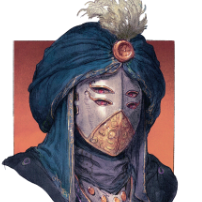 OOC: Wrong character, you're thinking of RAZAD.
 -
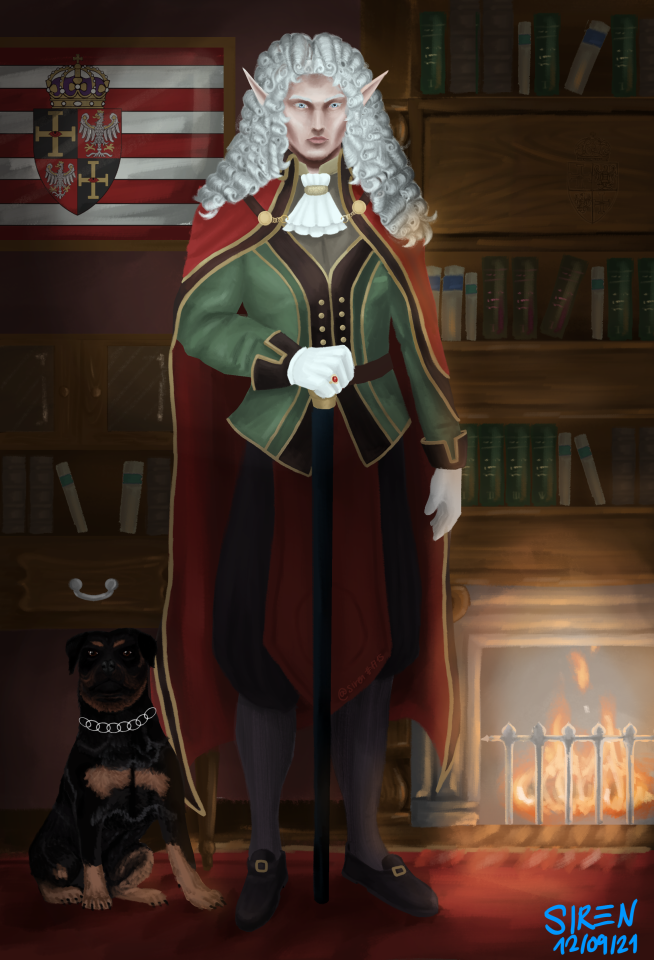
ARCHITECT OF ORDER: How Princeps-Archchancellor Minuvas Melphestaus Forged the Modern Imperial State From the Archives of the Interregnum. Composed by N. Melphestaus with the aid of C.W. Hemmington Reforging the Imperial Nobility: The Melphestaen Order Long before the ascendancy of Minuvas Melphestaus as a titan of state, the high nobility of the Eighth Empire had grown swollen with privilege yet lean in virtue, like a great estate long untended whose granaries stand full while its fields lie fallow. Rank had become an inheritance without labor and a dominion without stewardship. Provinces languished beneath lords who held their titles as ornaments rather than as solemn trusts bestowed by Crown and Providence. The poor and unlanded languished without labor and talent. At the pivotal hour of his elevation to the Vice Chancellery, Melphestaus began the stern correction of this decay. He did not seek the ruin of the noble estate — for such upheaval would have undone the realm — but its renewal, binding authority once more to service. Governors were compelled to govern, peers to attend to the burdens of state, and the dignity of rank to be proven through continual duty. Nor did his reforms halt at civil authority alone. He perceived that a realm cannot be secure when command of its armies is confined to lineage rather than competence. Thus was the path to officership in the Imperial State Army opened beyond the hereditary nobility, so that command might be entrusted to those formed by discipline, study, and experience rather than by wealth of birth. Officership became a profession of learning and obligation, not a privilege purchased by pedigree. By this measure the sword of the Empire was placed more firmly in competent hands, and the nobility themselves were reminded that honor lay in service, not merely in descent. The present order — wherein noble houses and officers alike serve as instruments of the Emperor rather than as independent powers — springs from this reformation of the ruling class into a true governing elite. This system of governance, The Melphestaen Order, remains expressed in expectations of Imperial Governance today: a civil state based on merit, a ruling peerage that is enlightened and educated, and duty to Emperor above all. Building the Civil State Having restored vigor to the noble estate, Melphestaus turned his attention to the instruments of governance. Ministries that had long stood as ceremonial courts were compelled to labor in unity, as parts of one body directed by the sovereign will.. Yet he judged rightly that no state may endure without learned servants trained in letters, law, and administration. Not even the Imperial Household was untouched, he would purge its offices from incompetent tutors and instructors and fill it with the brightest minds of the Empire. He further established the Imperial Academy, providing elite education to all citizens and opening the path of service not only to noble scions but to all persons of ability and diligence. From this institution arose a new order of bureaucrats who governed by knowledge rather than by inheritance. Learned societies were encouraged to flourish within the cities of men, spreading literacy and disciplined inquiry throughout the realm. It is no small testament to this design that the Empire now abounds in subjects capable of reading the law, keeping accounts, and maintaining correspondence across great distances. Nor should it be forgotten that under his patronage the Rosemoor reforms were advanced, admitting women of education and virtue into the structures of leadership and noble obligation. In this he enlarged the reservoir of wisdom available to the state, strengthening society itself as the foundation of governance. It is no wonder in this era that institutions that promoted the sciences and the arts flourished, such as the Northern Geographic Society and the Yuliya Stern Theater. The Empire’s most effective immigration programme in its history was born in this era, ensuring every citizen was made a savant of the state through land and labor. Establishing the Supremacy and Effectiveness of Law Yet a vigorous nobility and learned administration would avail little if law itself were weak. In earlier days the Houses of Lords and Commons were too often theaters of intrigue wherein justice yielded to advantage. Melphestaus, fortified by the resolute example of Emperor John II, labored to restore the sovereignty of law so that it might stand above all persons, high or low. Corruption was curtailed through procedure, statutes were framed with care, and enforcement extended across the breadth of the Empire. Law ceased to be a mere proclamation and became instead the bond uniting ruler and subject alike. Thus was established a political order in which governance derived its strength not from whim but from consistency, and the Emperor’s authority was made manifest through justice rather than fear. The Empire’s present stability rests upon this foundation, laid in an age when law was reforged as the supreme instrument of order. An Enduring Legacy Imperial Princeps-Archchancellor Minuvas Melphestaus was not an individual, he was an instrument of the Emperor’s Chancery. A true son of the Empire. The principles he espoused found their fullest expression in his later life as a Noble, fulfilling his vision of the Melphestaen Order of state governance. Learned in letters, tireless in writing, faithful in rendering taxes and levies for the Emperor’s wars, he lived as the exemplar of what an Imperial noble ought to be. That he alone among Elves was elevated to the dignity of Imperial Prince, though not in line of succession to the throne, stands as testimony that service surpasses birth in the esteem of a wise sovereign. By his example was established the vassal bond that endures to this day, replacing the ineffective charters that had left many provinces stagnant and unproductive. It is unimaginable to comprehend how the old system functioned, that today’s relationship between Emperor and His subjects is so natural is but another testament to this enduring creation of what was then called the Ebonwood Compact. Melphestaus demonstrated that loyalty, education, and duty could bind the Empire more securely than privileges ever had. Thus the modern Empire of Man in its disciplined nobility, learned institutions, professional officer corps, sovereign law, and reciprocal bonds of service bears the unmistakable imprint of Minuvas Melphestaus. He did not merely advise rulers or administer offices; he gave enduring structure to the state itself. Like a master architect who brings harmony from chaos, he forged an order capable not only of dominion, but of governance, whose foundations remain firm long after the passing of his era. That he remains the Empire’s only Elf to ascend to such status has afforded him a peculiar, often obscured, history that many scholars have hoped to simply ignore. Yet his legacy lives on in the Empire, and for this - it is assured he is proud.











-
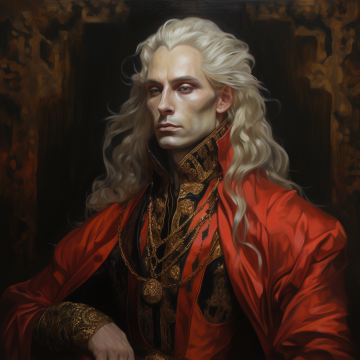
There is but one King and his name is Lhindir. Thanks for helping to solidify the Sons of Malin, the cult still lives on and promotes the Way of Malin. Large lore pulls from our conservations. Good luck and cheers in your private life.
-
Looking for an Elf Ghost player in the EU timezone looking for some long term roleplay with the Temple of Malin. Short version, Malinists consider Elven Ghosts as minor deities - in a transition between leaving the mortal realm and ascending to Malin'or. We are looking for one (maybe two) players who might find this interesting for their apparition. The player can expect some long term, but not time consuming RP (After all, we don't want our minor deities just floating around all the time!). You can expect Malinists to build temples, invoke rituals, interact with event sites in the belief of being granted boons and rituals. Interacting with these spirits should be an impactful story driven moment both for the living and deceased Malinist alike! There is also room for spirits who become Malevolent, as the Temple has the sacred mission of hunting wayward elven souls down. If you have a dead elf ghost (or are making one) who you think would have been a Malinist in death, this would be the small group RP you're looking for. If that's something you're interested in, DM me on discord. #Minuvas You can read the deep lore here:
-
GRAND OPENING: THE MOTHERLODE CASINO
Minuvas replied to Murdervish's topic in Dwarven Realms & Culture
(ooc: Love it. Glad to see the magic hat casino love coming to fruition, given how beautiful it was on the build server. Congrats my friend!) -
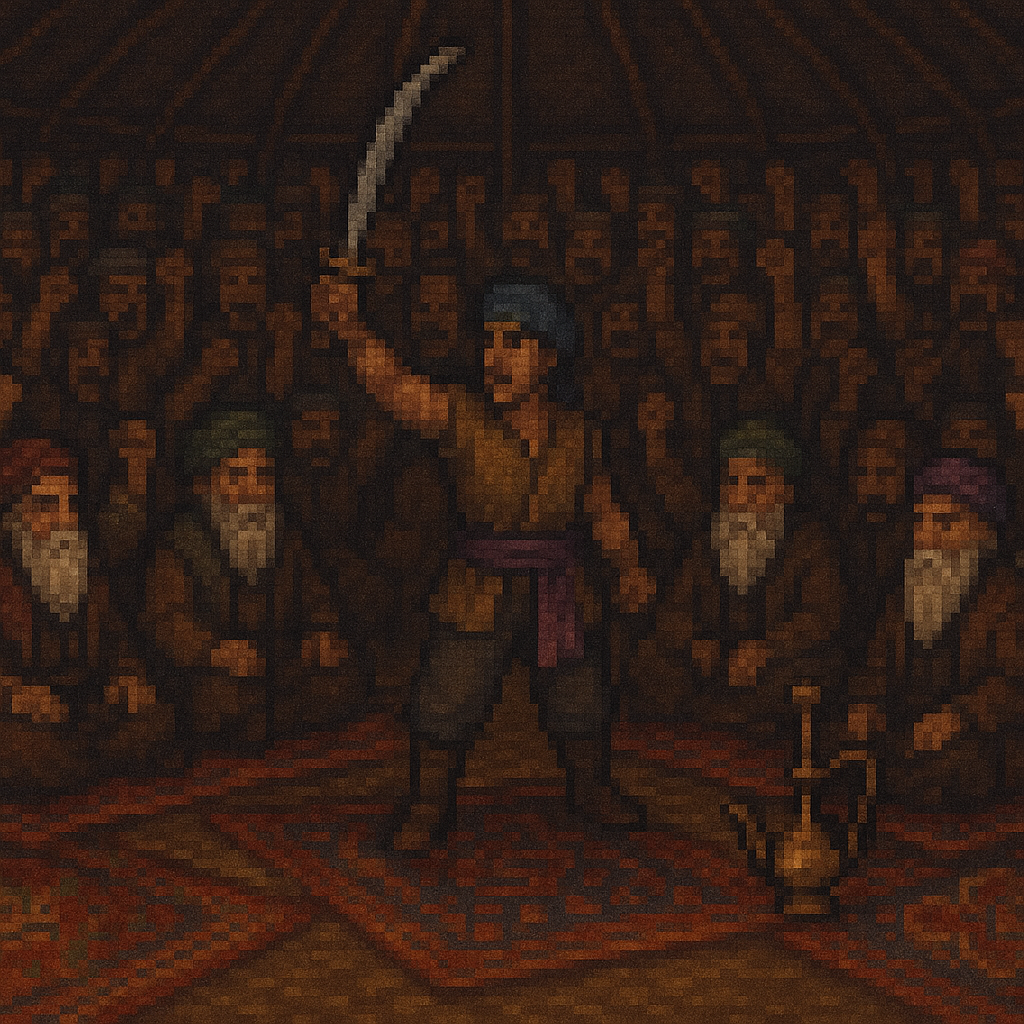
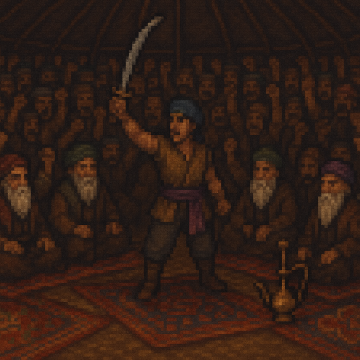
The sound of thudding feet, echo’d within the yurt as the voices of many shouted , “Hohk-mat!……. Hohk-mat!......Hohk-mat!” After some time, a man with thick curly grey hair and beard lifted his hand. As he silenced the group, he furrowed his brow - thick with the lines of the sun before demanding of the crowd “What is this? What foolishness do you young ones have, knowing nothing, seeing nothing, earning nothing?” He said, taking a long draw of smoke from a hookah, blowing smoke at them in disdain. “I come to take what is mine” said one amongst many, stepping forth, with shamshir in hand. The other Elders laughed before one flicked a wrist at the warrior saying“You have no right, whelp….and you have no claim here. Escort this rabble out” Two men at the door, reached for their shamshir blades behind their back, the distinct sound of hissing steel as the curved blades emerged from their sheathes. As they took two steps towards the men, they began to clench at their hearts, before collapsing to the ground, spasming on the floor. The Elders now rose, pointing at the man “What is this!? Apostasy!?” The young warrior thudded his foot towards them, defiantly stating “No! I am Hakad! I take what is mine, and earn what I take. I have earned my voice to speak, and you will hear me! Do any challenge my claim!?” He snarled, like a feral animal, his teeth bare as he looked about the room. Again the young tribesmen in the room began to thud their hands against their chest, pounding their fists, joining in a cacophony in support of the warrior “Hohk….mat!....Hohk…..mat!.......Hohk…..mat!” The sound became louder and louder. The Elders unable to deny his claim cast fingers towards him “Silence this riot! The Mage-Lords are not ready, the sorcerers are a shadow of themselves. They cannot claim the tribe!” He confidently said“A sign has been sent, that we might exact justice on those of the wicked Church of Canon for their breaking of oaths to our Lords” The warrior lifted his own sabre, silencing the whole room, having now gained the full attention from even those who were merely indulging in drinks and sweets. All heads did swivel to hear the man’s words “Razad’s Yisar has been seen in the Godsrend. It attacks the tribe, it tests us. It demands Kaggath” The Elders now look between themselves, the news clearly having stunned them “How can you be so sure it is Razad’s beast?” The Sanfi Warrior was undeterred by doubt, saying with confidence“The beast demands Kaggath, it has been hunting only the Hakad. It is imprinted with its Master’s ways - it is probing us for strength, as the Fatebinder taught it. You say the Mage-Lords are not ready, but what if one is? What if there is one ready to lead the tribe, in our greater war for freedom.” The Elders looked amongst each other once more, as they each sipped on the hookah. The smokey spiced smell filled the room, each in deep thought before the clan elder said “Enough, youngling. You have said your peace and earned your right to speak it. Leave us to think, before we find your boasts a sign of defiance” The young warrior did then depart with the other Sanfi, offering the elders a formal bow, and began waiting by the campsite fire outside the yurt. Within the yurt, the sound of shouting, the clashing of steel, duels and debate occurred for hours. Finally, an elder emerges. He is different from the one from earlier, but the tattoos of the clan chief had been etched on his face. His turban and silken robes were coated lightly in blood, and as he steps out into the open the old clan leader is seen lifeless, carried respectfully from the yurt. Finally, he speaks, addressing the young warrior “Send out the message to any Magi who thinks they might claim their worth. They must kill Razad’s Yissar in ritual Kaggath, and bring its head as proof. Then…and only then….shall the tribe follow their command” The Hakad tribesmen howled, hooted, and jeered. They shouted into the night, the Godsrend Canyon echo’d the sound off its walls. “Hohk-mat!......Hohk-mat!.....Hohk-mat!”






-
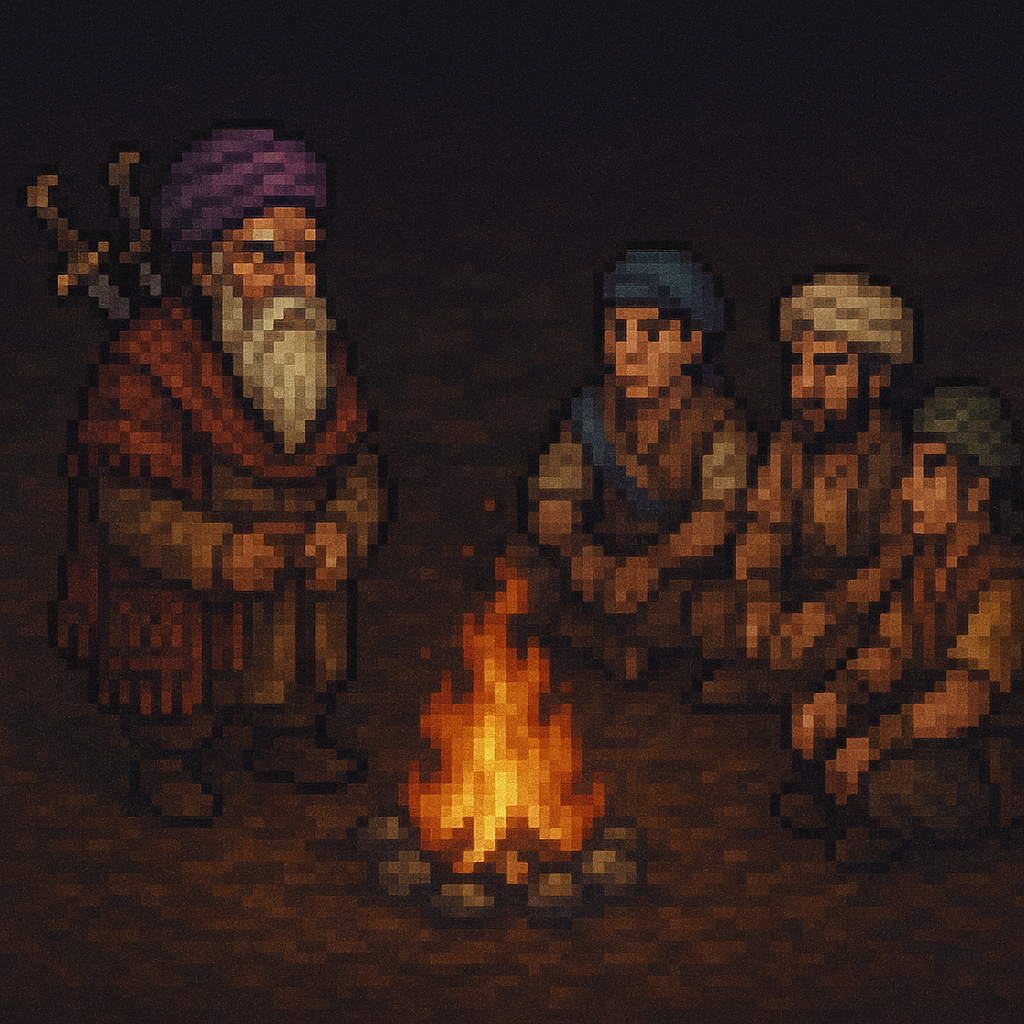
The Lords of Sorcerery: Misery in the Desert The dark-skinned Farfolk man hoisted another bucket of water from the cool Oasis, pouring it over his forehead, drinking in the life saving liquid. He thrust the bucket towards a boy, pressing it to his chest. “Drink” The man exclaimed The boy guzzled the water, tired from their labours - sweating glistening from his brow. “Will all days be as difficult as this?” said the young man. The man paused, “Boy. You know nothing of hardship. Our people lived under the yolk of Warlords, enslaved for centuries - until Fahrazad. These times are troublesome, but our labors allow us to survive. Our Lords will return once again” The boy took another sip, “It is true than, Father. The great Lords of Sorcerery shall save us?” The man let out a loud laugh “Hah! Save us!? Hamazad, have I taught you nothing. The Sorcerer-Lords do not save us, they rule us. There will be battle, great Kaggath amongst powerful houses. Unimaginable struggles of power, and even more spectacular displays of sorcerous power - and we shall serve in their retinues, fight in their name, bleed for their causes. Then….then we will know misery…but we shall also know more….” The boy Hamazad, looking confused said “I do not understand Father….we seek misery?” Amused, the Father unsheathed his scimitar, it was marked and etched, saying ‘Fahrazad’. “That misery is what forged us, breaking our shackles, allowing us to seek something beyond suffering. It hardened us, purged us of weakness. It brought us glory, but ultimately it brought us freedom and liberty. Our family fought as Sanfi, honored mercenaries, for House Fahrazad - and no greater joy in life did I have than drawing the blood of our enemies. The Mage-Lords demand much, but their pursuits unlock more. When you are older I shall tell you when the last of Hohkmat's spires did rise on the horizon. When the name sorcerer inspired fear and awe, when Orc and men did quiver at the thought. Imagine, a city powered by magic - the water was always warm, hell’s….the streets had magic brooms that swept the floors. We fought and we killed many demons and apostates. When the Magi rule, our tribe once more had power, and honor…” The boy interrupted, saying “But what of the Mage’s Gui…” He spit, “Boy! The Mage-Lords must prove their power, sipping tea and reading books is not enough to earn the respect of the tribe of Hakad.” Again, curious, the boy scratches his chin and says “And what of the Imperial Ma….” This time, he drew a backhand from his Father, the pommel of his scimitar striking the boys chin “You insult the Mage-Lords. They do not submit themselves to servitude, no King of Sorcerers wears an Imperial yolk. We cannot understand their schemes, we await….eagerly….the sorcerous-lords cannot be contained. Our rebellion begins when they take what they are owed, and we will follow. Until then....pick up your bucket of water and tend to the camels”



-
The King of all Sorcerers, dead beyond the grave, even his spirit was tempted to return from eternal Kaggath to partake in magical struggles of power- for Fatebinder knew that in the arena, displays of power are tools of coercion and diplomacy. His tribal people, the Hakad, yearned for a leader once more....great sorcerer lords who could command respect. Or would these magi show themselves as simple buffoons?
-
Edict of Banishment & Travel Advisory, 257 S.A.
Minuvas replied to deviouschungus's topic in Law & Legislature
"With respect to the Aheral of the silver city, purity is a path that brings neither perfection nor deterrence from stagnation. This belief was never practiced by our Father Malin, and has brought nothing but ruin to Malin'onn that believe it. This is not His way, nor The Way. The Mali people will never know unity under the umbrella of such thinking. We must instead pursue progress and industriousness - not purity. Let us no longer emulate that which has brought us failure, servitude to Valah masters, let us emulate what brought us 1,000 years of Providence and glory - The Way of Malin" remarked the Elven prophet, the saneyir. -
"This is a wise law" remarks the saneyir
-
The King of all sorcerers did wage his eternal battles in the world beyond, marching on another rival fortress ...but we're he here in this plane, in this timeline, he would certainly approve of this endeavor...
-
The author wrote well, remarked Minuvas. "Yet somehow, the author failed to account for the actions of Orens largest vassal, not Mannfred and his farmlands which neighbored mine, but the Imperial levy raised under the banner of the Princeps of Ebonwood. The author should note that the Imperial Princedom and it's levy of over 1800 Soldiers was rallied to the Loyalist cause after learning of Royalist intent to purge Elves from the Empire. This levy, and it's critical arrival to the Loyalists, was stymied by Elvenesse - which sent out assassin's to kill the Imperial Prince, the former ArchChancellor Melphestaus at the head of this Army. Debilitating the Prince and ambushing the Army, Elvenesse managed to contribute to the defeat of Loyalist forces. Despite the rumors, King Frederick did not bother to destroy the Principality of Ebonwood nor place it into abeyance. The Imperial Elves were left leaderless and scattered at this time. I do wish these authors did not forget the contributions of the entirety of the Empire and it's citizens, I was there at the death of both the Empress Anastasia and Philip, practically clutching their hands before they departed this world...and I knew both their sons when they were babes. The matter of who was supposed to succeed Anastasia and Phillip was a settled matter from a legal standpoint. Their wishes were made clear on their death beds. I would be obliged to answer the question would the author ever offer to sit for an interview to clear the record. For it is an answer that deserves face to face attention. I hope that in the future records the author shall not forget the 8th Empires largest and wealthiest vassal. A legacy of Imperial Even loyalty which has its roots since the time or Godfrey and Johannesberg.
-
An old Imperial, the last living ArchChancellor, would stroke his chin at the events of men. He wondered what his ambitious son was up to and if he had a hand at all in the new age of Oren.
-
Seeking Disciples: The Way of Malin
Minuvas replied to The Order of Malin's topic in Elven Realms & Culture
sirame ito kae'leh, nae oroment, llir’Malinor, Malin'onn who lives among the Valah, when we last spoke - we did so as Ilir, but now we do with me as your saneyir. When I lived my years among the Valah I did come to know the true hearts of the Valah and the lonely path to walk as Malin did even amongst our own kind. I will teach of the richness of the Mali soul, to be a venerable immortal amongst the descendants races. Should you come prepared to not only to hear, but also to listen, you will discover divinity amongst Malin'or and find our kind's sacred purpose. I sense the need of Community. I task you to read the Chord's of Malin's Will as it relates to these instructions, begin to absorb his way and think on what it shall mean to pursue this instruction. When you have thought on this enough, bring only enough food for 72 hours, simple robes, and a weapon fashioned of bronze - and arrange for us to meet. The Saneyir @Bird5k -
Seeking Disciples: The Way of Malin
Minuvas replied to The Order of Malin's topic in Elven Realms & Culture
sirame ito kae'leh, nae oroment, llir’Malinor, Malin'onn who is of the blood of Elverhilin. For you see I sense the need of Industriousness, instruction kulin . To you I give a task of reading the Litany of the Numen, and you shall see there is no litany on the Cult of Laurir Sirame. Long has the veneration of one of Malin's daughters gone without and Malin'or's Princely Court suffers without her empowered. You shall meditate on The Way and come prepared for us to explore the soul and the beyond - though if you come without truth in your heart, this journey may prove perilous. When you are ready, come with 72 hours of rations, a simple robe, and a weapon fashioned of bronze. The Saneyir @Hiccup392 sirame ito kae'leh, nae oroment, llir’Malinor, Malin'onn who carries the discordant soul of Laurir Velulaei, for you I sense the need of Temperance, instruction vailu. When the Laurir did descend into her madness, it was our Father who wept greatest of them all - it was duty that did bind our Father, and lamentation that followed. For in the spiritual stros, I have walked and felt the tears of the weight of Velulaei on my soul - and then joy at the hope of reconciliation. Sit and pray and honor our ancestors, pray to Velulaei and our Father. You are to read the Song of First Light, and come prepared to tell me of what you can of the soul fragments. When you are ready, bring rations only for 72 hours, a simple robe, and a weapon made of bronze. The Saneyir @Mamimiux -
Seeking Disciples: The Way of Malin
Minuvas replied to The Order of Malin's topic in Elven Realms & Culture
sirame ito kae'leh, nae oroment, llir’Malinor, Malin'onn who lives among the Valah, for you see I sense the need of Community and Temperance, instruction niut and vailu. I task you to read the Chord's of Malin's Will as it relates to these instructions, begin to absorb his way and think on what it shall mean to pursue this instruction. When you have thought on this enough, bring only enough food for 72 hours, simple robes, and a weapon fashioned of bronze - and arrange for us to meet. The Saneyir @HyperGN sirame ito kae'leh, nae oroment, llir’Malinor, Malin'onn of the blood of Elverhilin - to which carries the name of the Saneyir before me. For you see I sense the need of Humility, instruction hael. I also sense in you great Industry, - to which we stay bronze. I task you to read the Chord's of Malin's Will, at our first gathering you shall have a surprise test - to which I will tell you only that it may involve the mind or the body - a Malin'onn must be prepared for many challenges. When you have thought on this enough, bring only enough food for 72 hours, simple robes, and a weapon fashioned of bronze - and arrange for us to meet. The Saneyir @JuztLizzy -
The Saneyir had chosen an interesting time to return from his meditations.
-
Seeking Disciples: The Way of Malin
Minuvas replied to The Order of Malin's topic in Elven Realms & Culture
@Mamimiux@Hiccup392 @JuztLizzy @HyperGN A simple note is penned in return. "I have received your noted interest, and will respond personally to each of you in due time" The Saneyir -
ELVEN JEWELCRAFT II: Gemstone Properties
Minuvas replied to Toffee's topic in Elven Realms & Culture
The Saneyir would remark "This is an excellent work" taking time to pour over the well researched tome. -
Razad, locked in the eternal Kaggath of a far off existence...would pause a moment. An echo rippling through time back into a plain of reality long forgotten. "Hm"... The King of Sorcerers did ponder, "I feel as if something has been lost. A trinket? No, one of my generals? No...a friend...did I have friends?" Before the thought could complete, a screeching Yissar charged from behind Razad, mounted by one of his sorcerers as a a contingent of enemy knights charged at Razads Royal guard "Onward, Sorcerers...a mage takes what he is owed!"
-
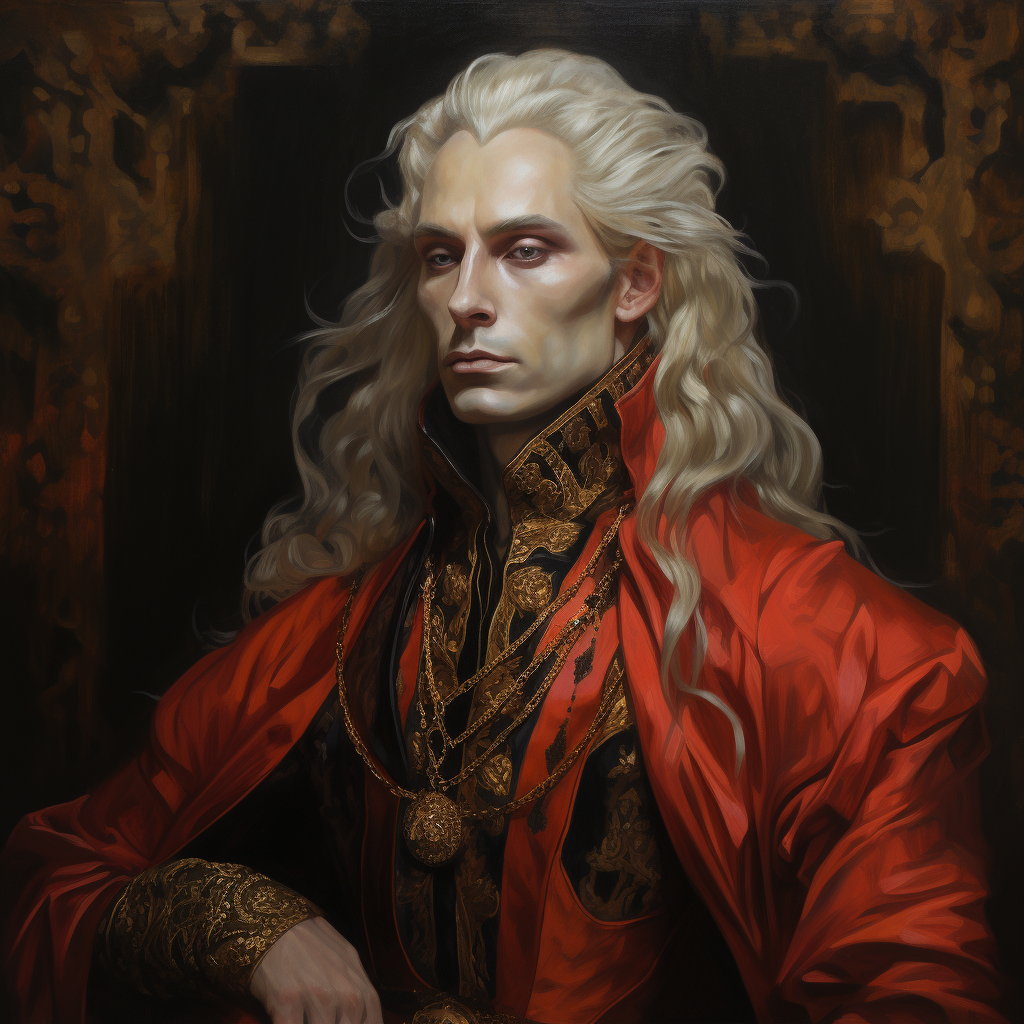
Razad was busy fighting a thousand wars in the afterlife, cloaked in the glory of eternal Kaggath - knowing that the magi would only ever be safe when they had the teeth to resist tyranny and ignorance. No longer able to discern in his memory what occured when he was alive, from what was occuring in his current plane of existence, he lived for the struggle, the climb of power, in order to dominate and bring stability to the chaos that are the Magi. In this world and the next he has reigned as King of all Sorcerers, and perhaps he might be summoned from beyond the grave to once more to rally the void.....but right now in front of him he had a different challenge for his generals. For he had another keep on the horizon to siege, for in his current plane of existence: the Kaggath was eternal.
-
Also, I encourage you to unite and build a community. There was a Huge interest during Hohkmat and I would argue that in the absence of both Lurin and Hohkmat a HUGE interest remains. All I did was harness what I saw was a very and very obviously unfulfilled niche on the server. And I maintain a mage society remains the only opportunity for mages to sort of enjoy a central place to refine their RP and then go out and interact with the rest of the map. A vision that I wasn't able to fulfill with the full construction of our academy due to the player politics - but I bet you can!
-
Ran an entire society of void mages that had a year long run in 2024. My general assessment is that void magic and mages offer some of the best RP on the server. Their RP is caged from reaching it's full enjoyment potential by a few factors, some player controlled but mostly by server mechanics. On the player side, the dominant human factions have made magic culturally evil or bad. It's ingrained in Canonism. This is one contributing factor that very few above ground magic societies can exist, even more so as humans. Until human groups generally tolerate magic lore, void magic will largely remain an elven affair. Normal tropes like court mages are almost never tolerated, and we've robbed the server of this element of fantasy RP. For those of you who say magic should be exclusive, why? Being a Knight, Being a Duke or a Count, or an elite archer/swordsmen require no staff applications and more widespread on the server. There are good RPers in any clique, promote those ones to interact with your people just as you would your "Duma Leader" or "Chancellor" or whatever. Second, players collect their magic like pokemon cards and are highly defensive about it. At Hohkmat I made a concerted effort to expand access, and we were largely successful in getting magic into more people's hands. I am no stranger to the fact that this upset some hardcore's who play 10,000 year old elves and horde magics and lore pieces. Players should take on more students, and teaching students should be an obligation in order to keep ones MA - my opinion. Third, the story team has a compounding advantage in playing magics. Not their fault but they know the lore the best, they can get their artifacts and lore approved faster and have access to decision makers. CRPing against story team members, and you will undoubtedly find the are likely to be leagues better than their non staff peers. Recommendation should be that ST members get a portfolio and should not interact in RP with that portfolio at all other than as an observer. On the mechanics side, the magic lore is super complex. Doing CRP void mage is amazingly fun on the server, but requires gentlemen agreements and a great deal of maturity to pull off to not take hours of your time or spiral in bad faith. Simplified CRP magic mechanics are long overdue. . There are other lacking mechanics. Employing magic in RP contlict scenarios towards cities is heavily restricted. For example, one can use vandalism mechanics to set a market stall on fire with a torch. However , the rules do not allow players to set this same market at all on fire with a fireball. By requiring both story team and moderator approval, magic players go through extra redundancy for even mundane uses of conflict magic. Even using ritual magic to summon awesomely disruptive magica, which can be raided and disrupted, which could kill all the mages, cannot impose affects on another PROs territory without permission. Even in a state of war. Unless you perform a normal raid - something the mage CRP community doesn't shine at. Mechanics for a "ritual raid" of some kind should be introduced. Get the desired affects approved by story, get the time and raid details approved by mod team, and then go. People would want and fear mages more if they could actually affect the world. Magic is not reflected in war mechanics at all. Would be nice if for every 10x void mages you rallied, a trebuchet was spawned. Otherwise, writing stories about how an entire city of mages marched on an enemy is never felt by players. Just another peasant levyman. Lastly for mechanics, due to the length of time it takes to learn magic there's very little reason for players to play a human mage. In order to account for shorter lifespans and their supposed less stagnant lifestyles - humans should advance through tiers faster. Come up with whatever RP reason you need to, but it might incentive more human players to take up magic if their learning rate was doubled faster, and elven magic learning was doubled slower. If you think that's unfair, consider the functional immortality of Elves. Whatever they learn is on the server forever until they PK. Every human player gets more or less 180 weeks of RP if they choose to go all the way until their bones are dust. On the plus side, for non combat creative roleplay: void magic is fantastic, it vastly improves LOTC beyond a political simulator. Watching magic duels, watching a whole city of mages go about their business was tremendous fun and I feel gladenned by the experience (Even during the magic duel to my characters death). My two cents!
-
THE TRIBE OF HAKAD & THE CITY OF HOHKMAT FREEDOM, LIBERTY, JUSTICE, MAGIC جبهه آزادی Basic Description: The Hakad are a nomadic Farfolk Qalasheen tribe that are magically aligned, their basic appearance is similar to ancient Babylon and the Persians - favoring bronzed and tan skin with thick beards and curled hair. They shift between a nomad (wandering) and a tribal (settled) state. When they are nomads, it indicates the absence of the Mage-Lords and they are led instead by their Tribal Chieftain. When they are tribal, they settled under the rule of the Mage-Lords, reforming the state of Hohkmat and subservience to the Mages. They are spiritual, and especially superstitious when it comes to magical entities. They view beings such as Mages and Djinn as physical manifestations of power and creation - and make it their life's work to serve and potentially become Magi themselves as reward. Culture Norms and Traditions. General Values. Overall Alignment: LAWFUL NEUTRAL Above all the Hakad revere magic, law and lastly power. The first is the greatest representation of the second & third. The Hakad believe right makes might, those who are strong take what they deserve and are bound by the laws that those can force upon them. This does not make them inherently evil or prone to acts of violence or crime. A Hakad would not steal or commit violence unless there was a purpose, often one in which they perceived to be in the interest of their community. They also do not believe in chaos. Someone powerful, and hopefully benevolent, must compel by force other powerful entities into behaving benevolently. Honor does not hold high regard to the Hakad, nor does chivalry. To the Hakad it would appear blatantly stupid to offer your opponent an advantage when you have strength, or to willingly weaken yourself out of a sign of humility. This does not make the Hakad liars or cheats - but it makes them highly strategic and tactical. They will not reveal all the details to people, they may obscure truths. Overall, a Hakad says only what they believe should be said and nothing more. Magic, Mages, Hohkmat. Hakad values magi above all else, looking at them similar to how the Egyptians viewed the Pharaoh. A link between the mortal realm and the cosmic realm of creation. Although they do not view them as deities, they recognize their historic role in their liberation and freedom. All Hakad aspire to be magi. It is culturally taboo for a Hakad to not pursue Magic if they are able. Hakad therefore serve willingly in the retinue of mages as their bodyguards, scribes, and aspirants until such time as they can be taken on as students. Those who cannot practice magic still live fulfilling lives in Mage retinues and are awarded handsomely. Hohkmat is the eternal mage city, forming and reforming as the Mage-Lords rise and fall. Mages who proclaim themselves as rulers over the Hakad (‘Mage Lords’) are given equal respect to those who rise from within the tribe. Origin of birth is unimportant to the tribe as much as magical prowess is. When the city of Hohkmat is formed, they follow the Mage-Lords unquestionably. When the city of Hohkmat is disbanded, any aspiring Mage-Lords must prove their worth to lead and reform the city to the Hakad through tests of power and ability. In return for this loyalty, the Hakad have always had one demand: liberty and freedom. The Mages have always strived to give the Hakad the maximum liberty to pursue their interests and values that are not deemed to directly involve the study and practice of magic. Religion and Worship. Hakad are spiritual. They believe there is a mystic purpose to the world. Whether it is a creator deity, djinn, or great and powerful magi - forces of mana and magic work on this world. They will honor the Magic Noble House they serve and thank them for the wonders of the world. They may evoke long dead magi for their great deeds. This makes the Hakad very susceptible to superstition; and there is more than one instance of them being deceived by Djinn or Necromancers and Illusionists into believing a host of imaginary things. Temperament. Hakad can be perceived as highly aggressive or violent. They do not shy away from conflict, this is due to the cultural perception of strength. They are strategic in these conflicts however, striking when they are in a position of strength and rarely irrationally.They can never be perceived as weak or incapable. This often causes them to take on challenges and contests. You can be certain that when dealing with the Hakad, you are always being assessed as to whether you are a competitor, coming for their resources or their homes - and they are highly distrustful of outsiders. They will vow revenge on those who have wronged them. They have immense respect for cultures that share a similar sense of power dynamics - such as the Orcs. Hakad are slow to form friendships and create trust but when they do they are deep and long lasting. Betrayal of these friendships can have violent results, given how difficult and slow they are to form. However, Hakad are generous hosts, even to enemies, who invoke guest right in their domiciles and camps. They will also respect the right of Kaggath and would not create more violence after justice has been resolved. Thus two Tribesmen who were trying to kill each other in a Mage Civil war, could just as easily be sharing meat and bread over a fire at the conclusion of a Kaggath without grudge. Appearance & Dress. The Hakad are inspired on Persian/Babylonnian culture. As such they wear very colorful blues, reds, purples and greens and gold is seen as a highly beautiful metal. They have tan or dark skin, long curly hair/beards. Hair is generally black or dark brown for men and women, with light colored eyes. The Three Mysteries. The Three Mysteries are the accepted law of the Hakad, and this forms their general understanding of magic, law, and power.They are derived from when Fahrazad the Great first institutionalized them as a way to bring the warring Mage-Lords bound by a loose codex of laws. Their interpretation is not meant to be rigid; their understanding changes with each change of regime though some mysteries are perceived as mostly unchanging - such as magic true lineage succession. The Grand Magister clarifies the law through Diktats. THE FIRST MYSTERY - THE GREAT PARADOX From the first day a descendant connects to the void, he is threat and a boon. The Great Paradox instructs how to reconcile with this dual nature of the mage, and avoid catastrophe. THE SECOND MYSTERY - THE ETERNAL PURSUIT A mage is never content, and never so satisfied to claim to know everything. We must compete, we must strive and progress, we must know. Cheap solutions, Dark Apostacy, have no place in the pursuit. THE THIRD MYSTERY - THE SORCEROUS PATH All magic walk the path. Without magic, we have no inheritance to what we are. The mystery of the Sorcerous path centers us in the importance of this journey. Being a mage is central to our identity. Background & History Authors note: The Hakad chronicles history into three categories, and it is normal for Hakad scholars to argue what era they are presently in. Strife: An Age of conflict and civil wars. A necessary and brutal cycle of Hakad history. Transition: An age between ages, of great change. Of the clashing of old systems and new systems. Creation: Temporary ‘golden eras’, the window to advance the magical talents of Hakad until the returning of another age of Strife. I. The Period of Slavery - The First Era of Strife The Hakad were a desert people shackled to slavery over a thousand years ago under tribal desert warlords. Separated from much of the Qalasheen people, they were consistently denied cultural cohesion and freedom - made to suffer under unworthy tyrants. This all changed with the discovery of magic. A slave by the name of Fahrazad had become void touched. Tales say Fahrazad was born a mage, others than the Djinn gave him fantastical powers - but where they all converge in that Fahrazad wielded terrible magical power. He used this power to wage a rebellion freeing the tribes and uniting them under “Hakad” or the‘void-borne’. His rebellion lasted nearly two decades before every tribe was freed and brought under his rule. Fahrazad was named Chieftain of the Hakad, and his awesome displays of magical power made the tribesmen call him ‘Sorcerer’.When the rivers were dry, Fahrazad conjured rain.When others came to enslave them, Fahrazad brought terrible flame. He was everything to them, but he was only one man. Fahrazad would learn as his people would learn again and again that what comes after wars is much harder. II. The Period of the Mage-Lords - The Second Era of Strife Fahrazad began to gift others with his teachings, raising his most promising Aspirants and Novices to become great magi in their own right. This cadre of individuals were known then, as they are today, as the Mage-Lords - a title they reserve for all magi who rule the Hakad. These Mage-Lords became the ruling nobility of the Hakad, who saw them as living manifestations of spiritual protection against foreign oppression. Those who did, or could not, become Magi sought to become Sanfi - members of the Mage-Lords retinue. Where they were paid handsomely for their labor to which the magi could not perform. For a moment, it was believed the Hakad had found a sense of peace. Yet it was not to be, for Fahrazad allowed his magi to rule unconstrained and freely. Soon, the Mage-Lords began to use their magic first as a tool of oppression on their own people - and later they began to seize and fight each other. The first Mage civil war erupted. Fahrazad, aided by his most trusted apprentice, Kabal the Celestial, fought a bloody and costly war. The tribe was shocked, their Magi Overlords who had saved them had turned against them. Fahrazad decided this must never pass again, for the Hakad and the magi are intrinsically linked. III. The Age of Fahrazad the Great - The First Era of Transition A new age was dawning, his defeat over rival Mage-Lords earned him many monikers, most important of them was ‘The Great’. Recognizing that magic was both their redemption, and also a great temptation, Fahrazad began to devise laws, mechanisms, and systems to subdue the worst behaviors of the magi and to promote their greatest talents. The results of this age have unveiled the pillars of Hakad society that remain today. Among them; The Grand Magister & The Lord-Magisters. One Mage to preside over all others, to keep balance amongst the Magi, and Lord-Magisters to promote future generations of responsible Magi. Kaggath. To contain the violence of the magi within geography and catastrophe. The Three Mysteries. The law, the wisdom, the principles to which all Hakad - from Magi to tribesmen - would obey. IV. The Golden Age of Hohkmat- The First Era of Creation Inspired and empowered, the Hakad would for the first time rest their nomadic ways and settle into a city called Hohkmat. This golden era of the Hakad would last almost two centuries, long after Fahrazads death, before Hohkmat would rest once more as the Hakad became tribal. The Golden Age brought Hohkmat many great Grand Magisters, and magical artifacts that ache to be discovered in a wizards trove. World shattering events would see the tribe scatter, as they moved from continent to continent to escape calamity from the forces of Ibleese. V. The Almarisian Wandering - The Third Era of Strife The tribes wandered the deserts, promoting what magical talent they had and led by a small cadre of magically gifted Hakad until they regained their strength. One among them would rise to prominence, in the long line of House Fahrazad - Razad. Razad called his tribe together once more on the sands of Almaris, summoning the Magi from across the continent to prove their rulership over the Hakad. Great displays of magi and power were given, and the Mage-Lords rose once more to guide and elevate the Hakad. Yet this was no era of peace. Razad compelled by force, power, or coercion unruly and dangerous magi to his will. He contended with dark magi that had long infected the ranks of an age of uncontrolled magical usage, with many great and ancient magi alongside ambitious upstarts - crushing dark magical covens under his boot. Kaggath was frequently employed in this era, as Magi contested Magi for seats of power and strength. This era would end upon the deaths of Lanre Cerusil, the expulsion of the Dark Magi Yera Sylvera, and the banishment of the Lord-Magister Haus - the circumstances which remain a mystery to the Hakad to this day. VI. The Grey Tower - The Second Era of Transition Razad wisely guided his people, avoiding calamities from across the continent and debilitating power struggles for control by nefarious powers during his reign. He secured key alliances while keeping the peace amongst his mages. He secured independence for the people of Hohkmat, enacted reforms to magical education, and united the magi across the continent under his banner. New discoveries of magic were made under his rulership and the magi flourished. This was an era of strength and power for the Hakad and Hohkmat, but Razad would learn as his great master had before him - what comes after the conflict is often most difficult. Now that peace had been secured, the Mage-Lords turned inward once more. VII. The Coup of Razad and the Canonist Crusade - The Fourth era of Strife - THE CURRENT ERA Razad had ambitions of making this a new era of creation for Hohkmat,of magic and wonder. Yet it was not to be. The Lord-Magisters, scorned for perceived slights, turned against Razad. Outwitting his political opponents, Razad ensured his apprentice was placed on the throne - and Razad died by traditional Hakad right in the honor of Kaggath. Weakened by this coup, Grand Magister Faeryel, apprentice to Razad was elevated to the position of Grand Magister. The Lord-Magisters immediately began weakening many of the elements in place that had made the Magi strong, eliminating checks to their power, and preventing assertion of the Grand Magister. It would seem for a time, the Mage-Lords forgot about the Hakad all together, and became slovenly. They worried more of their leisure pastimes, and less of conflict and strife. The Hakad tribesmen were told many lies about Razad, though as he was their Chieftain and their tribal brother - they believed few of them. Yet they know it is not their right to involve themselves in the way of the Magi, for the Hakad serve the Mage-Lords. The Mage-Lords were too weak to resist the Canonist Crusade, they had grown soft from leisure activities and neglected their magical studies. They had forgotten the mysteries, and the age of Strife seemed to them a conjuration of the Hakad peoples. They would prove wrong. The Canonists had long conjured enemies of Hohkmat, a reflection of their own weaknesses, and when they came to march their armies - the softness of the Magi had grown so great, they offered no resistance. At this, the Hakad determined to return the tribe to its nomadic ways. Until worthy Mage-Lords could lay their claim, as they did in Almaris, and reform the great Hohkmat under power and leadership. The Hakad now live in an era of conflict with the Canonists....whom they now perceive as violent oppressors, enforcing slavery and oppression once more - and the Hakad will make no hesitation to use violence against them. It is an age of suffering, it is an age of resistance, it is an age of strife.
-
Razad fought gloriously in the afterlife, in a thousand battles he did thunder magic and terror on his enemies. For in his Kingdom, under his reign, he did not tolerate the yoke of weakness - to allow false enemies of peace and light to proclaim any sort of fake justice. Were he alive, he would muster the Magi to fight - to bleed the agents of Ibleese so infested in the Church of men. Power, power was all that prevented the evil of the world from consuming us. What power had the mages given up...living in decadence instead. Allowing the evils of Ibleese to foment abroad, who had always plotted against the mage nation. The tribe of the Hakad, the wandering magical tribesmen, may need to become nomads once more and await magical strength to return. Yet he was not alive, he lived in eternal bliss of Kaggath- and in his afterlife the Magi were as he remember them. Strong, and not subject to false prophesies by fools. One could only wonder if one of his tribesmen still walked Aevos...