JJosey
-
Posts
194 -
Joined
-
Last visited
Reputation
1481 Godly
6 Followers
.thumb.gif.5d466c98d55a7da21cf6f6ca71c965ee.gif)



Recent Profile Visitors
7809 profile views

.thumb.gif.f363e1e24ec35c023d600bb13f6d2f03.gif)


-
say it louder for the people in the back !!
-
we miss him
-
bring him back.
-
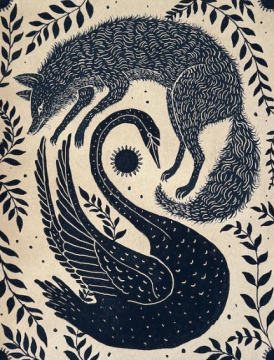
Stuff We Did They had not liked each other at first. It had been many years ago- so many that the sharp edges of the memory had softened - but Idril still remembered the tension of that first meeting. Their father had seen to that. Sonna had arrived first, as she often did in those days, with the restless energy of something that belonged to the forest more than to any hall. Crimson curls tangled with ivy and blossoms, foxes circling her steps like shadows made of fur and flame. She carried the scent of pine and wild earth with her, as though the woods themselves had followed. Idril had watched from the edge of the clearing. Where Sonna was movement and rustling leaves, Idril had always been quiet. Pale hair gathered neatly behind her shoulders, the quiet glow about her form reflecting softly across the water nearby. If Sonna belonged to the forest floor, Idril belonged to the lake beside it. Fox and Swan. They had regarded one another with equal skepticism. “You glow too much,” Sonna had said after a long moment, squinting slightly. Idril raised a brow. “And you appear to have misplaced several branches in your hair.” The years did what years often do. They softened things. Not all at once. Never so simply. Their bond was not forged in grand moments or declarations. Instead it grew slowly, stubbornly - like roots beneath soil. There were arguments, of course. Sonna was wind and instinct, prone to charging forward with teeth bared when the world wronged her. They disagreed often. But they did not leave. That was the difference. When Sonna vanished for months into the wilderness, she would eventually return to find Idril exactly where she had left her. Waiting beside still waters. When Sonna arrived bruised, furious at the world, Idril never asked too many questions. She simply poured tea and allowed silence to do what words could not. Foxes would curl at Idril’s feet. Swans would glide silently nearby. It became… normal. One night, long into their strange sisterhood, Sonna asked the question that had quietly followed her for years. “Why do you keep doing that?” Idril looked up from the book she had been reading. “Doing what?” “Waiting.” Sonna leaned against the stone windowframe, arms folded, her fox companions sprawled lazily across the floor. “You always wait for me to come back.” Idril studied her for a moment. Then she closed the book. “Because you always do.” Sonna scoffed lightly. “You say that like it’s obvious.” Idril’s expression softened. “To a swan, the lake never disappears simply because the fox wanders into the woods.” Sonna stared at her. Then groaned. “You’re insufferably poetic.” “I am correct.” The fox that came to her window did not startle Idril. Foxes had always come and gone freely where she lived, and for a moment she believed this one no different from the others. Only when it lingered sitting with unusual patience upon the stone ledge - did her attention lift from the parchment before her. Around its neck was a golden circlet. Idril knew that circlet. Her breath caught quietly in her chest as she rose, the movement slow and careful, and approached the window. The fox did not flee. It simply waited as she opened the pane and accepted the letter tied gently against the very circlet. The seal was unmistakable. A fox pressed into golden wax, framed by small leaves of sage and the pale blossoms of fairy foxglove. Idril held the envelope for a moment longer than necessary, her thumb resting against the impression as if the simple warmth of her touch might somehow shorten the distance between them. When she finally broke the seal, the paper unfolded with a familiar softness. Sonna’s handwriting had never been graceful; the letters wandered across the page as though even ink could not convince the fox to walk in a straight line. Idril read it once. Then again. The faintest smile touched her lips as she reached the end, a small warmth rising quietly within her chest. It had been too long since the last letter. Too long since she had heard Sonna’s voice in anything but memory. She moved back to the desk, the letter resting beside her as though the fox who had written it might appear at any moment to reclaim it. The quill dipped into ink with a soft scratch, and Idril began to write her reply with the careful patience she brought to all things. Sonna, You remain entirely predictable. Wandering the wilderness, collecting foxes and trouble in equal measure. I cannot say I am surprised. Her hand paused briefly as she considered the next line. You will insist you are content in solitude, and I will insist that solitude is not peace. We have had this conversation long enough that I suspect neither of us intends to surrender the argument. The quiet smile returned. Still, I am glad to hear from you. The lake is calm this morning. The swans have been particularly arrogant as of late, which I suspect you would enjoy correcting if you were here. The quill slowed. A strange stillness had begun to creep into the room. At first Idril thought it was merely the quiet of the hour, the sort of silence that often settled when the wind fell still outside. Yet this silence felt… wrong. It pressed inward, heavy and unfamiliar, like the moment before a storm breaks across clear water. Her breath trembled. Far away - so far she could not have heard it with mortal ears - foxes began to cry. The quill slipped slightly in her grasp, leaving a long, uneven mark across the parchment. Idril did not move. She stared at the ink spreading slowly across the page, her fingers tightening around the feather as the understanding rose within her like cold water. It was not a thought. It was certainty. The sort that arrived without explanation. The sort that left no room for hope. The fox would not be writing again. For a long time Idril sat there without moving. The letter beneath her hand blurred slightly as tears gathered against her will, falling quietly against the parchment in small dark circles of water and ink. At last she forced herself to look again at Sonna’s words, her fingers brushing lightly across the page as though it were something fragile, something easily lost. Then, with slow and trembling care, Idril lowered the quill once more. The ink trembled as she continued the letter. I was about to tell you that the lake feels too quiet when you are gone. Her breath faltered. I did not realize how quiet it could truly become. The quill paused, the final line taking longer to form than all the others. Come home when you can. The words sat there in stillness. Idril stared at them for a long while before her hand slowly lowered, the quill slipping from her fingers to rest beside the unfinished letter. Outside the window the fox had long since vanished back into the trees, leaving only the faint rustle of leaves and the distant cry of something grieving somewhere deep within the forest. Idril did not rise from the desk. She remained there with the letter open before her, the ink still drying beneath her tears, and for the first time in centuries the swan did not know how to wait for the fox to return.






-
↶↽⇀<❅>↼⇁↷ ❂ The Ancestral Edict of the Ithrandos ❂ As bound by the First Memory and sealed by the Vigilant Hand “We are memory made blood, unbroken when all else fades.” ON THE LINE OF TRUE BLOOD The Line Begins With Aluin All claims must trace through Aluin Ithrandos, the Last Flame before the Present. No word before his is counted, no legacy before his is weighed. On Adoption A soul may be brought into our house - but not into our blood. Adopted kin may wear our crest in alliance, but not our name in truth. On Bastards Those born outside sacred union do not carry the Ithrandos flame. Only by the will of the Father and the Matriarch may such children be named - but even then, the blood does not stir for them. Inheritance of Name The name Ithrandos is a legacy of blood, not gender. It may pass through mother or father, so long as the blood is true. If their claim is questioned, they must stand before the Matriarch, who alone sees the truth in blood and spirit. She may affirm or deny, and her word is final. ON UNION AND NAME Spouses and Their Bond Those wed to the Ithrandos may take the name, but not the blood. If they leave, the name must be left behind - unless the Matriarch/Patriarch sees fit to grant its echo. On Children of Broken Bonds A child born from a parent who has left our House carries no claim, even if the name was once granted. ON THE KEEPING OF THE BLOOD Only the Living Named May Speak for the Line The bloodline is not theory - it is living, breathing, proven. Only those recognized may stand for Ithrandos in Council or Record. ↶↽⇀<❅>↼⇁↷

-
STYLE OF COMBAT The Ithrandos warriors have honed a martial tradition that marries raw strength with graceful precision - a duality encapsulated in the two primary combat paths: the Stormbearers and the Windwalkers. While every Ithrandos is schooled in the art of battle, the choice of technique often reflects their personal affinity, physical build, and tactical preference. Even so, the bloodline prides itself on versatility, as many warriors are adept in both forms or even choose to blur the boundaries between them. The Two Paths of Combat The Stormbearers Philosophy & Attributes Stormbearers are the embodiment of raw, unyielding force. Their approach emphasizes physical resilience and a steadfast will to hold the front line. Strength and Endurance: Rigorous training builds not just brawn but also the mental fortitude required to endure long, grueling battles. Weaponry & Armour: Favoring heavy arms - longswords, heavy spears, and mighty shields - they are clad in robust armor often emblazoned with ancient sigils, ensuring they form an unbreakable barrier against enemy onslaughts. Battlefield Role: Stormbearers are the moving fortresses of the battlefield. Their very presence inspires allied forces while their steadfast resolve rattles the enemy, allowing them to channel their energy into both defense and decisive counterattacks. Tactical Adaptations In the frozen expanses where the Ithrandos often wage war, Stormbearers master environmental tactics. They transform the snowy terrain into an ally by: Utilizing Camouflage: Their solid, imposing figures can be strategically positioned against the white landscape, enabling them to spring ambushes when foes underestimate the silence of a snowy field. Exploiting Terrain: Heavy snowfall and ice patches become natural fortifications. By anchoring their formations in these elements, they create choke points where their formidable strength can be fully leveraged. The Windwalkers Philosophy & Attributes In stark contrast to the Stormbearers, the Windwalkers are maestros of speed, finesse, and stealth. Their training is centered on fluid motion and lethal precision. Speed and Agility: Every move is choreographed for maximum efficiency, combining swift footwork with an almost ethereal quality that allows them to appear and vanish before enemy eyes can adjust. Weaponry & Technique: Armed with curved blades, shortbows, and throwing knives, Windwalkers strike with a precision that makes their attacks as sudden and fatal as a winter gust. Battlefield Role: Tasked with disrupting enemy formations, Windwalkers slip through defensive lines to strike critical weaknesses. Their hit-and-run tactics, executed with timely speed, force adversaries into a state of perpetual reactivity. Environmental Engagement The Windwalkers’ expertise isn’t limited to direct combat - they are masters of stealth in the tundra: Snow as Concealment: The unblemished snowscape serves as an ideal canvas for their covert maneuvers, letting them blend in until the perfect moment to strike. Silent Coordination: Their ability to move silently across treacherous, icy ground allows them to set traps and launch ambushes almost magically, ensuring the enemy is caught off guard. Shared Tactics: Winter's Cloak Regardless of their inherent philosophies, both combat paths occasionally converge to employ a daring tactic known as Winter's Cloak. This strategy utilizes the winter environment to orchestrate surprise assaults and disorient adversaries. Hidden Positioning: Warriors utilize the natural camouflage of deep, undisturbed snow. The robust Stormbearers, with their imposing figures, may partially submerge themselves behind thick drifts and ice formations, disguising their massive frames beneath a veil of frozen earth. Meanwhile, the nimble Windwalkers take it a step further by literally burrowing into the snow - nestling beneath its surface in covert pockets, completely hidden from the enemy’s view. Coordinated Leaps: The success of Winter's Cloak relies on precise timing. When enemy forces are within range, scouts signal the moment for a coordinated assault. In unison, warriors buried in the snow propel themselves upward - leaping explosively from their hidden positions. This sudden, upward burst of movement turns the snow into a launchpad, as warriors emerge with the element of surprise, their assault as swift and fatal as the crack of ice under pressure. LEGACY: The Voices of the Past The storied legacy of the Ithrandos is etched into every maneuver and philosophy within their combat style. Two illustrious figures - Aluin and Valmyr Ithrandos - exemplify the dual paths of combat that continue to define the bloodline. Aluin Ithrandos (Windwalker): A master archer whose every arrow carried with it the weight of inevitable fate, Aluin’s presence on the battlefield was as elusive and deadly as a winter shadow. His life and teachings have become synonymous with the Windwalker way. He famously declared, "To hesitate is to invite death. To waste movement is to invite failure." Valmyr Ithrandos (Stormbearer): In contrast, Valmyr was known for his unyielding presence - immovable and relentless. His mastery of the spear and shield earned him renown as a living fortress on the battlefield. His enduring motto continues to inspire those following the Stormbearer path: “Fight like the storm’s behind you, not before you.” In Summary The Ithrandos martial tradition is a study in contrast and unity. The Stormbearers, with their steadfast might and strategic use of harsh terrains, and the Windwalkers, with their ethereal stealth and swift, calculated maneuvers, together embody the bloodline’s indomitable spirit. Whether it is through the sheer force of a relentless charge or the silent, slicing precision of a well-timed ambush under Winter's Cloak, every Ithrandos warrior carries within them the enduring legacies of Aluin and Valmy. Their combined wisdom and martial prowess continue to guide new generations, ensuring that the art of combat remains as dynamic and formidable as the icy lands they call home.

-
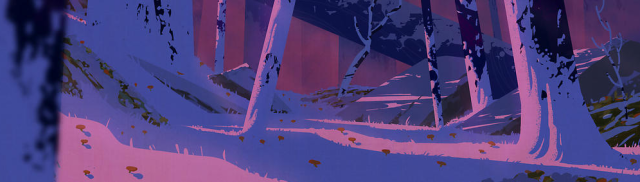
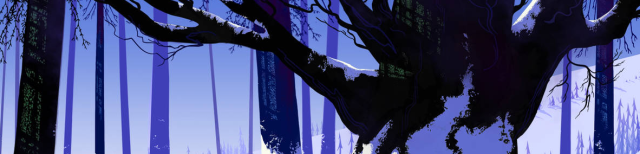
ITHRANDOS ↶↽⇀<❅>↼⇁↷ “A blade unseen is deadlier than a hundred in sight.” All art by gavinodonnell THE SAGA OF THE PALE ELK Some debts are older than the names of the ones who owe them. The Ithrandos say this often, though when asked why, they do not answer in the same way twice. The oldest telling begins in the years of the Expedition, when the Fenn were scattered and the south was a white grave without markers. In those days our people had not yet learned which silences meant safety and which meant death. The sky hung low, the snow swallowed direction, and every fire felt like it had been lit in defiance of the world. Aluin and Ilyana were among those who vanished in a storm. The blizzard came without horizon or warning. Tents were torn loose, voices were cut from one another, and even the brave lost the sense of their own hands. When the wind fell at last, the camp was gone and the land had no memory of it. Only the two of them remained, half-buried in frost, days from shelter and nearer to the grave than to their kin. It is said that when the storm paused - not ended, only paused, as though listening - something stood beyond the veil of snow. Some call it an elk. Some call it a spirit. Some say it was only moonlight and hunger seen together. It was pale, that all agree upon. Pale as old bone. Pale as frost at dawn. Its antlers were wide as winter branches, and it moved without breaking the crust of the snow. Aluin reached for his bow, as any hunter would. Ilyana stayed his hand. “They say she told him: If it wished us dead, we would already be buried.” The creature did not beckon. It turned, and the storm opened. Whether they followed for hours or for three days is argued still, but all tellings end the same way — the white closed behind them, the wind lost its voice, and they stepped out upon the fires of their own people, who had thought them long dead. When they turned to give thanks, nothing stood there. That is why the Ithrandos say: Salvation does not wait to be praised. In the years that followed, Aluin and Ilyana spoke little of what they had seen. Yet their children grew with the habit of watching the weather as if it were a language, and their children after them did the same. No one claims this as magic. It is only said that their blood learned caution early. Their son Valmyr taught that the Pale Elk was not a god, nor a beast, nor a dream, but a sign - a way in which Wyrvun had once looked upon the lost and shown them the road back to their own. Others say this is reverence placed upon a memory. Both versions are told. Neither is corrected. The Tale of the Four Sons and the Winter That Listened In the years when Valmyr’s hall still stood new against the wind, when the memory of the long wandering had not yet softened into pride, his four sons grew like young pines - close-rooted, alike in height, and yet bent each by a different weather. The people would later say the Pale Elk had marked the line, that its gaze lingered in their blood. Valmyr himself never spoke such words. He only taught his children to watch the horizon and to keep their oaths. Arion learned the weight of the sky. He would pause in the midst of laughter and turn his head slightly, as though someone had spoken his name from very far away. Once, in a season when the air lay warm and harmless over the tundra, he rose from the table and began shuttering the hall. “There is no storm,” Rothmir told him, smiling into his cup. “There will be,” Arion answered. By morning the world was white and screaming and the hunters who had not listened were found only when the thaw came. After that the servants would touch the doorframe when Arion passed, as though he carried winter in his bones. Lathai walked in his sleep. More than once he was found kneeling in the dark beyond the boundary stones, bareheaded, his hand resting on the snow as if feeling for a pulse. When asked what he sought he would frown, as though the question had woken him more fully than the cold. “It is thinner here,” he said once, and in the light of day the river broke open at that very place, swallowing a sled and the two beasts that pulled it. Merlion spoke least and was listened to most. He had the unsettling habit of stopping before entering a room, his eyes unfocused, his breath held. When Rothmir mocked him for it, he only replied, “Not every silence is empty.” And later, when a blade flashed from the corner where no one had thought to look, it was Merlion who had already stepped aside. So the stories gathered around them, as frost gathers on a window - slowly, until one cannot remember the glass beneath. Rothmir despised it. He was the youngest and the brightest and the most loved in open ways, for he laughed easily and hunted fiercely and spoke without the careful weight the others carried. He had no patience for the lowered voices that followed his brothers, nor for the way the servants’ eyes lingered on them as if measuring signs. “They are men,” he said once to his father, not quietly. “Not weather-omens.” Valmyr answered only, “So are you.” But Rothmir saw the difference. He saw the way Arion’s warnings were heeded, the way Lathai’s wandering was never forbidden, the way Merlion’s pauses bent the rhythm of the hall itself. And he saw the place above the hearth where the antlers of a great elk had been carved into the beam - not in celebration, but in memory of a road that had led their ancestors out of the white death and back to their own fires. A road no one living had walked. A salvation no one living had seen. “Long ago for dead people,” Rothmir said whenever the tale was told. “If it was ever more than a hungry dream.” Years passed, and the brothers grew into their strength. Winter followed winter. The land hardened them and they hardened in return. Then came the morning when the air rang like struck iron and even the dogs would not bark. It was Arion who stopped first, halfway across the yard, a pail in his hand, his head turned toward the boundary stones. Lathai, waking from sleep, sat upright with such suddenness that the furs fell from him like shed skin. Merlion, in the doorway, did not step out. Rothmir followed their gazes and laughed. For there, beyond the stones, stood the elk. It was pale - not white as snow, but the color of old frost that has never known sun. Its antlers rose wide and many-branched, too wide for any living beast, each tine rimed with a dull glimmer like light caught in ice. No steam rose from its nostrils. No mark lay behind its hooves. It stood as though it had always stood there. “So,” Rothmir said, reaching for the bow that leaned beside the door, “the ghost comes to graze.” “Do not,” Arion said, and for the first time in his life there was no certainty in his voice. Lathai had gone pale as the snow. “The ground is wrong,” he whispered. “It is listening.” Merlion did not look at the elk at all. He looked at Rothmir. “It brought us home once,” he said. “Whether it has flesh or not does not change that.” “It did nothing for me,” Rothmir answered, stringing the bow. “I was born in a hall, not in a storm.” The elk moved then - not forward, not back, but turning its head slightly, as though regarding each of them in turn. The light seemed to catch in its antlers and linger there, spreading along the branches like slow fire beneath ice. “Let it speak,” Rothmir said. “Let it be more than a story.” “Some things speak by being remembered,” Merlion told him. “And some things are remembered because no one dared test them,” Rothmir replied, and drew. Arion crossed the yard in three strides. Lathai cried out, a sound none of them had ever heard from him before. Merlion’s hand closed on Rothmir’s arm — too late. The arrow flew. Those who tell the tale disagree on whether it struck. What they agree upon is what followed. The shadow of the elk did not fall upon the snow as a beast’s shadow should. It stretched, long and branching, each tine of its antlers unfurling across the ground like the roots of a tree suddenly revealed beneath the earth. The light dimmed, though the sun had not moved, and the frost on the yard began to creep - not outward, but inward, toward Rothmir’s feet. He tried to step back. The snow did not break. Instead the ground split along the lines of those shadow-antlers, black cracks racing through the white in widening arcs. The sound was not loud; it was the deep, patient sound of a lake freezing all at once. Rothmir looked down, and for the first time the laughter left his face. Arion seized him by the shoulders and dragged, but the fissures had already reached him, circling his boots, crossing over themselves in the shape of the great branching horns above. The earth opened without throwing up soil or stone - it simply gave way, as if something beneath had drawn a breath. The elk did not move. Its shadow grew. The cracks deepened. Rothmir’s bow fell first, sliding into the dark. Then one leg vanished to the knee, the other to the thigh, the frost climbing him like grasping hands. “Take me out!” he shouted, and the sound was raw now, stripped of all mockery. Arion pulled until his own boots split the ice. Lathai clutched at Rothmir’s cloak. Merlion’s hands were at his back, wordless, straining. For a moment it seemed the ground would relent. Then the antler-shadow passed over Rothmir’s face. He stopped struggling. Not because he chose to - so the story says - but because something in that darkness looked back. The fissure closed over him as water closes over a stone. No cry. No spray of earth. Only the long, ringing silence afterward. When the brothers lifted their heads, the elk was gone. The yard lay smooth and unbroken, save for the arrow, which rested upon the snow as though carefully placed. They dug until their hands bled and their tools snapped. The frost had set hard as iron. There was no seam, no hollow, no sign that the land had ever opened. The snow drifted softly across the yard, laying its thin skin over the place where Rothmir had stood, over the bow that had fallen from his hand, over the black mouth that had swallowed him and sealed again without seam or scar. Lathai staggered backward, his eyes wide and blind with terror, turning in a slow circle as though the yard itself had become strange to him. “The river is wrong,” he kept saying, though no river ran near the hall. “The ground is wrong - Arion, stop, it’s wrong-” Merlion did not speak at all. He stood where he had been, his gaze fixed on the place where the shadow of the antlers had passed, his face emptied of everything but a horror so deep it seemed to hollow him. Arion dug until his nails tore free and the blood froze black against his skin. Lathai fell beside him at last, sobbing Rothmir’s name like a child’s prayer, scraping at the snow with a broken knife, with a shard of antler, with his bare hands when the blade snapped. Merlion moved only when the arrow caught his eye. It lay upon the white, untouched, its dark shaft rimed with a frost that did not melt. He crossed the yard slowly, as one approaches a grave, and when he bent to take it up his hand hovered above it for a long time before he dared close his fingers. “Do not,” Arion gasped when he saw. “Do not touch it-” “We cannot leave it here,” Merlion answered, and his voice was so steady it was more terrible than any cry. The cold bit into his palm through the wrapping of his cloak. Later he would say he did not feel it, that all he felt was the weight. They ran to the hall like men pursued. Valmyr was already rising from his seat when they burst through the doors, for something in their faces had reached him before their voices did. Arion fell at his father’s feet, his hands red to the wrist, his breath coming in broken, animal sounds. “The ground—” Lathai tried to say. “It took him, the elk-” Merlion did not kneel. He stepped forward and laid the arrow across the long table between them. The hall went silent. Valmyr looked first at the blood on Arion’s hands, then at Lathai’s shaking, then at Merlion - and only then at the arrow. No one spoke Rothmir’s name. Valmyr wrapped the weapon in cloth without letting it touch his skin. “Show me,” he said. ↶↽⇀<❅>↼⇁↷ They went back with torches, with shovels, with every tool that could break the frost. The yard was smooth. No mark remained. Arion fell upon it again, digging as though madness had taken him. Lathai joined him until his strength failed and he could only sit in the snow and rock, his hands pressed over his ears as if to shut out a sound no one else could hear. Merlion worked in silence beside his father. They dug until the torches died and the stars turned overhead. They dug until the tools bent and splintered. They dug until the frost set so hard the iron rang against it like struck stone. At last Valmyr laid his hand on Arion’s shoulder. “It is enough,” he said. Arion struck the ground once more with the broken spade. “It is not enough.” But he had no strength left to lift it again. When the others were led back to the hall, Lathai went with them like a sleepwalker, his face grey with shock. Arion did not. All that night he remained in the yard, digging with a knife, with his hands, with a shard of wood when the knife broke. When the moon crossed the sky and sank he was still there, his breath a ragged cloud, his blood frozen into the snow in black petals. He spoke to Rothmir as he worked - not loudly, not as a man calling into a pit, but as a brother speaking across a room. “You always wanted to see what lay beneath,” he murmured. “You see now. Enough. Come back.” At dawn Merlion returned to him. For a long time he said nothing. He only stood and watched the slow, hopeless labor. At last he knelt and closed Arion’s ruined hands in his own. “Father calls us home,” he said. Arion did not look up. “This is home.” “There is nothing here that will answer you,” Merlion told him, and the gentleness in his voice was the deepest grief of all. When Arion finally rose, he did so like an old man. ↶↽⇀<❅>↼⇁↷ On the fourth morning Valmyr took the arrow north. The brothers watched him go from the boundary stones, their shoulders touching, as they had stood when they were children listening to the tale of the Pale Elk that had once led their people back to the Fenn. None of them spoke. For they understood now why that story had always been told in a lowered voice. He did not call his sons to follow him. He did not speak Rothmir’s name. He walked north. The journey is told in few words, for it is not the road that matters but the kneeling at its end. In those years, when the madness had only just lifted from the Fenn and the world still felt thin between one breath and the next, it was the Tundrak line who first spoke with unbroken thought. Where others faltered, their judgment held. Where others saw only storm, they named direction. So it was said - quietly at first, and then as something close to truth - that if Wyrvun still looked upon His people, He did so through them. The Eyes of the Frost, some named them. Valmyr came into their hall without his weapons. Those who repeat the tale say that Aelthos I rose before he reached the hearth, as though he had been expecting him since the moment the arrow flew. No greeting passed between them. Valmyr knelt, and the sound of it is remembered - the dull strike of bone against frozen stone. He unwrapped the cloth. The arrow lay dark against the pale furs, its head rimed in a frost that did not thaw in the warmth of the hall. “We were led out of death once,” Valmyr said. “And one of my blood raised his hand against the memory of that road.” Aelthos I did not touch the weapon. “That is your grief,” he answered. “It is,” Valmyr said. “And our debt. But the debt is older than my son, and it is larger than my house. If there is still a gaze that watches this people - if there are still Eyes that see what walks beneath the storms - then let this remain with you.” Only then did the Tundrak take the arrow, holding it not as a spear is held, but as one carries a relic whose weight is not in iron. “So long as it is in our keeping,” he said, “your line will stand between us and any hand that rises in blindness.” Valmyr bowed his head. “So long as my line endures,” he answered, “no such hand will reach you.” From that winter onward, the bond was no longer spoken of as fealty alone. It was atonement. The Ithrandos took their place thereafter behind the Tundrak throne - not as servants alone, but as its constant wardens, keeping watch where the storms gather and the road grows uncertain. They did so without claim to glory or to land, but because their blood carried the memory of a winter morning when the earth closed over one of their own and an old debt was laid bare. And with each new ruler raised among the Tundraks, the First Arrow is set into their keeping, that neither the gift nor the wound it marks shall pass from remembrance. ↶↽⇀<❅>↼⇁↷ “But mark me, child, if you want to last in this world, you must learn to be both the wolf and the elk” -Merlion Ithrandos BELIEFS AND VALUES BELIEFS The Ithrandos are devout Isvinites, with a strong conviction that Wyrvun, the Aengul of Winter, is the true master of Fin’hesin - the domain of ice and snow. This belief is more than faith; it is their very way of life. The Ithrandos believe that the frozen northern realms belong exclusively to the Mali'fenn and are to be fiercely guarded. As protectors of the tundra, they see themselves as the embodiment of Wyrvun’s will, ensuring the lands remain untouched by those unworthy of them. The Ithrandos maintain close ties to the Order of Vigilants, a sacred order founded by their kin. Many Ithrandos are drawn to the Vigilants, not out of a desire for personal power but as part of their sacred duty to protect their people and lands. Those who take up arms and defend the border join the War Vigilants, while others who serve as keepers of the peace - whether by managing their settlements or ensuring the health of the community - often find their place among the Peace Vigilants. This distinction is rooted in their understanding that the protection of their kin, and by extension, their land, requires different paths but a shared conviction. ↶↽⇀<❅>↼⇁↷ VALUES The Ithrandos hold themselves and their family members to the highest standards. The legacy of their forebears is of paramount importance to them, and each member strives to live up to the mighty example set by those who came before. This pressure to preserve and enhance the bloodline has shaped the Ithrandos into a proud, competitive, and fiercely loyal people. Their strength, both physical and mental, is considered a reflection of their ancestors' glory. While they once sought influence through their hunting prowess and material gain, the loss of such prominence has shifted their focus toward survival and restoration of their ancient honor. Now, more than ever, the Ithrandos work to reclaim their rightful place as the guardians of the northern realms. Their devotion to their bloodline is unwavering, and they see the protection of their kin and their domain as an essential part of their survival and success. This commitment to their people and their lands is reflected in their physicality. Ithrandos are often in peak condition, not just as a mark of their lineage’s pride but as a reminder that survival in the unforgiving north requires strength, endurance, and resilience. To them, the survival of the bloodline is both a personal and collective endeavor, one that transcends individual glory in favor of the greater good of their people. TRADITIONS Braids of the Bloodline To the Ithrandos, hair is sacred - it is a living record of their deeds and lineage. Every warrior wears their hair long and intricately braided, woven with silver trinkets that signify status, achievements, and family ties. Braids of Fealty - Upon swearing loyalty to the Tundraks, warriors weave a thin silver ring into their hair, engraved with the sigil of the ruling monarch. The Kill-Braid - For every notable kill, a new braid is added. The more braids, the more respected the warrior. A cut braid signifies shame or a vow of redemption. Mourning Rites - When an Ithrandos dies, their closest kin cuts a small braid from their hair and weaves it into their own, carrying a piece of them forever. The Frostveil Rite Before an Ithrandos is considered a full warrior, they must undergo a month-long survival trial in the tundra, with only a single weapon of their choice. They must return with proof of a worthy kill - whether it be a beast, a bandit, or an enemy of the crown. Those who fail are not cast out, but they are marked with a white scar across their palm, signifying that they have yet to earn their place. The Icebrand Duel Disputes between Ithrandos warriors are not settled through words - they are settled through single-combat duels fought on the frozen lakes of their homeland. These aren’t fights to the death - instead, the duel ends when one fighter draws blood or forces the other to the ice. To refuse an Icebrand Duel is an act of cowardice, bringing deep dishonor to one’s name. The Winter Vigil When a Tundrak ruler falls in battle, every Ithrandos warrior stands a night-long vigil in complete silence, regardless of where they are. During this time, they do not eat, speak, or sleep - they simply stand, unmoving, until the dawn rises. STYLE OF COMBAT The Two Paths of Combat While all Ithrandos warriors are trained in warfare, their styles often fall into two categories: The Stormbearers - Fighters who rely on raw strength, discipline, and endurance. They wield longswords, heavy spears, and greatbows. They are unshakable, towering warriors, capable of holding a battlefield like a frozen monolith. The Windwalkers - Combatants who value speed, precision, and deception. They use curved blades, shortbows, and throwing knives, striking before their enemy can react. Their footwork is fluid, their strikes as sharp and cold as the northern wind. It is common for men to lean toward the brute-force approach and women to favor speed and finesse, but these roles are not rigid - many warriors master both styles, and some choose the opposite path. POLITICS The Ithrandos' political ideology is Nativism, which is espoused by Mali'fenn who fear and loathe other Elves and advocate isolationism. The Ithrandos consider the Cataclysms and their history of conflict with other Elves and determine that the Snow Elves should have nothing to do with their Elven kin. They frequently resist the incorporation of other Elves into the Snow Elven state. CHARACTERISTICS The Ithrandos are typically tall, ranging from six feet to six and a half feet in height. Their hair is snow-white, and it sparkles faintly, as though it holds the very essence of winter’s grace, often catching the light like fine silver threads. Their eyes are a pale, icy blue. They have sharp, defined features, with high cheekbones and either slender or brawny frames. Aesthetic & Fashion Clothing The Ithrandos favor elegant yet functional clothing, designed for both battle and ceremony. Their attire is a blend of Mali’fenn nobility and practicality, favoring colors that reflect the tundra itself. Deep Blues, Silvers, and Whites - Representing the ice, sky, and snow of their homeland. Layered Robes & Cloaks - Worn over fitted combat attire, ensuring both warmth and mobility. Silver Embroidery - Subtle, yet intricate, woven into the edges of their clothing to display status and lineage. Braided Sashes & Belts - Marking rank, achievements, and family. Warriors often tie small charms or metal rings into them. Ornaments & Accessories Silver Hair Rings & Chains - Each ring symbolizes a significant kill, oath, or rank. The more decorated the hair, the more experienced the warrior. Engraved Armlets & Wrist Cuffs - Often adorned with runes, family sigils, or the emblem of the Tundrak dynasty. Beaded Earrings & Necklaces - Worn mostly by women, but some men also adopt them as symbols of grace and refinement. ↶↽⇀<❅>↼⇁↷ Personalized, Elegant Speech The Ithrandos, while often speaking in a measured, elegant tone, carry a distinct rhythm to their words - a kind of soft, melodic flow, much like the wind through snow-laden branches. When they speak to each other, there is a formality to their speech, even in casual conversation, but it’s never cold. The rhythm is purposeful but not stiff, with a subtle undercurrent of warmth that reflects their deep connection to one another. For instance, a simple greeting might be: “May the quiet of the frost find you in peace, my kin.” When they speak to other bloodlines, there’s a calm respect. However, they maintain a slight distance - always polite, but never quite familial. “You honor our land with your presence,” they might say to outsiders, a courteous but cool acknowledgment. The way they speak hints at the reserve they maintain; they are very careful with their words and rarely use overt humor. The silence between their words is as eloquent as what they say. ↶↽⇀<❅>↼⇁↷ How They Treat the Other Bloodlines The Ithrandos have a certain pride in their lineage, but they are never cruel or dismissive to those of other bloodlines. They simply carry themselves with a quiet dignity. To other elven houses, they are viewed as aloof, but also incredibly wise and capable - known for their serene elegance and unshakable resolve. While the Ithrandos might not form close bonds with other bloodlines, they respect each one’s contribution to the Mali’fenn. When interacting with other elven houses, they will often offer simple but deeply meaningful gestures - such as bowing their heads in greeting, or presenting a delicate snowflake-shaped brooch as a sign of gratitude. These actions are a mark of their understated elegance, offering respect without the need for grand display. ↶↽⇀<❅>↼⇁↷ Social Bonds Their bonds with one another are deeply rooted in shared experience and mutual respect. The Ithrandos are generally very private, and their social circles are small, but they are fiercely loyal to those they consider family or close friends. It’s not uncommon for them to express their affection in quiet, unspoken ways - perhaps in the way they carefully comb each other’s hair after a long journey in the snow, or how they will protectively stand near a loved one when a storm grows too fierce. Even the smallest gestures - such as gently brushing snow off someone’s cloak or offering a shared silence while watching the snowfall - hold great meaning. Their love and loyalty are communicated without grand declarations. It’s in the quiet moments, where actions speak louder than words.








-
goated af @Pengin yall mad weird

-
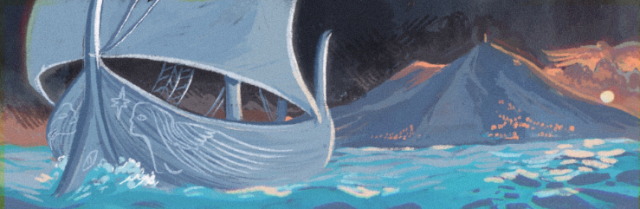
ITHIEL The Swan’s Peak “Hileia perith, ehier'ne” A record from the archives of the Quiet Order I. Origins - The Rekindling of Ithiel “From the tide we came, and to the tide we return.” - Old Almenodrim Saying Of Ithiel much is said, and less is known. It is a place whispered of, not found - a hollow veiled in mists where the air remembers song. The elders name it Swan’s Peak, though none recall which tongue first gave it breath. Some say the name came upon the wind; others that it was carried by the sea herself, in the voice of Thalassa, whose waters reach where no map dares draw. In the age of wanderings, it was Lady Idril Sylvaeri of the Almenodrim who first set eyes upon it - she and her kin, sailors born of a people whose hearts were bound to the tide. Storms drove them from the open sea, and for seven nights the waves bore them without rest. They sang to Thalassa for mercy, and when the dawn came still and silver, they beheld a shore wreathed in cloud - the place that would be Ithiel. But what they found there was ruin. Broken stones half-buried in moss, gardens gone to wildness, and still pools grown dark with neglect. They stepped ashore and stood upon the silted edge of a fallen courtyard, where water still gathered - and in its surface they saw reflected not their face, but the sea. The same pulse, the same patience. They took it as a sign: that even far from the ocean, Thalassa’s grace could be found in still water, in the quiet act of renewal. So Idril and her kin set to work. They raised no citadel, nor temple, nor hall of worship, but a sanctuary of remembrance - a place where the wounded might heal, as the land itself would heal. Stones were cleaned, waters cleared, gardens coaxed back into bloom. The wind that once carried salt now carried song. They built with the gentleness of tide and time, until the ruin became Ithiel once more. The Keepers of later generations would call that rebuilding the Quiet Restoration - the moment when Thalassa’s rhythm left the sea and took root in the mountain. To this day, her name is spoken softly, not in prayer but in gratitude. The waters of Ithiel are said to bear her whisper: not a promise of salvation, but of quiet - the calm between storms where all healing begins. Thus was Ithiel rekindled under the hand of Idril Sylvaeri, born of sea and hush, of ruin remembered and peace restored. “The sea does not end where the land begins,” wrote Lady Idril. “It merely learns to stand still.” II. The Land and Its Design Ithiel stands apart from the turmoil of realms, beneath peaks wrapped in cloud, where even the wind seems to walk softly. The waters there are said to sing, though no mortal tongue can name their language. Stones are carved not by mason’s hand but by time’s patience; every arch, every pool, every passage seems older than memory itself. Its gardens grow in spirals, its halls in circles, as though the land itself were shaping its form. Moonlight gathers in its pools and lingers as though reluctant to depart, and the scent of herbs hangs always in the air - balm, mint, and rain upon stone. Blight falters there, for the land remembers how to mend itself. Yet even in Ithiel, peace is not eternal. The Keepers say that sorrow, if left untended, roots deep; and so they labor to heal. “A place, when tended, learns to breathe again.” - Keeper’s Proverb III. The Ithieli - People of the Swan’s Peak The dwellers of Ithiel are known as the Ithieli, Keepers of the Swan’s Peak. They are all of elven blood, bound to the long memory of the land. Graceful, enduring, and serene, they are the stewards of the sanctuary their Lady rekindled. They go not to war, nor to court, nor to folly. They remain. Their art is not of conquest but of care - the mending of what the world forgets. They say the hand that cleanses the wound also cleanses the soul, and that patience is the truest form of strength. A fevered heart, a poisoned stream, a dying grove - each is tended with the same devotion. Their craft knows neither haste nor pride. Theirs is the long healing, the slow renewal, the gentle undoing of sorrow. IV. The Keepers and Their Duty All within Ithiel bear but one name: Keeper. It is no title, but a surrendering of all others. To be a Keeper is to remain true - to listen when quiet speaks, to serve without desire or acclaim. One may tend the gardens, another the wounded, another the stones themselves; yet no task weighs heavier than its neighbor, for each act of care is bound to the next, and all belong to the same rhythm. They call this the Quiet Duty - a promise that life, however fragile, is never unworthy of tending. Each dawn, Keepers rise to care for both Ithiel and themselves. Gardens are pruned with reverence, paths swept clean, and fountains polished until they mirror the sky. The air smells always of fresh bloom and soft rain. The Keepers embody the same grace they nurture: clean of hand and heart, dressed in pale linen and silver thread. Beauty, to them, is a form of reverence. “Care is the truest ornament.” - from the Notes of Idril Sylvaeri V. Education & Study Healers in Training Many within Ithiel are apprentices - students of medicine, anatomy, and herbal craft. Their studies include the humors of the body, the nature of pain, and the calm of the spirit. Some follow the elder traditions: the balancing of energies, the stilling of fever by touch, the soothing of the soul through presence. Among them are those who turn their study toward Druidism - not as creed, but as craft. They seek to understand the deeper weavings of the natural world: the cycles of decay and bloom, the mending of blight and the awakening of soil. To these, healing extends beyond flesh to forest, river, and stone. Though their studies echo the old druidic paths, they are not bound by them. Ithiel’s learning stands apart - a discipline of observation and care, free of faith. Libraries & Study Halls The halls of study are quiet but alive. Scrolls and tomes line the shelves, recording centuries of patient observation. Margins bloom with careful notes. Pearls mark progress - a token given when lesson or case is mastered. The chance to read is both a blessing and a right that is given to all within Ithiel's walls. From the harsh histories that we learn so we may not repeat, to the quiet candace of a novel so you may pass the time, the library is open to all. It is never too late for one to find an interest in the written word of others. “Through stories, histories, and epics, we are molded - our morals refined, our understanding deepened, our connections strengthened. They whisper of days long gone and foretell the nights yet to come, guiding us through the tides of time.” - Lórien Sylvaeri, written during his voyage across the sea Observation & Recording Apprentices learn not through haste. They watch the pulse of patients, the sway of plants, the rhythm of swans upon water. What they see, they record, so that those who come after may continue the tending unbroken. But those they observe, they also build connections with. Their stories make a connection and trust that will shape the healers for life, learning to cherish the life and the person beyond just their ailments. “To see is the first healing.” - Keeper’s Lesson VI. The Arts of Ithiel Art is regarded not as pastime, but as practice - a reflection of the same discipline that guides their healing. Every Keeper learns Ancient Elven, the language of song and record. Lady Idril Sylvaeri, who has mastered its cadences over four centuries, insists that to speak or sing in it is to touch the memory of the world itself. Lessons in the tongue are daily and essential. Singing in Elven fills the gardens at dawn and dusk, voices rising and falling like breath. The harp and flute are the instruments most revered, their tones soft enough to soothe the sick and steady the soul. Many Keepers also practice wood-carving, shaping instruments, ornamented boxes, and delicate sculptures of swans, leaves, and many things alike. “Through art, as through tending, we recall the form of what was once whole.” - Luthien Maeyr’onn VII. Healing & Medicine Hands-On Practice The Keepers heal through skill, not miracle. Herbs are crushed, poultices bound, fevers watched through the night. Each act is deliberate, each motion quiet. Collaborative Care No healer stands alone. Every cure is shared, every case a lesson. The infirmary is a place of dialogue and learning-a monastery of medicine where wisdom is never hoarded. Reflection When the tending is done, the Keepers sit beside the pools or among the swans in silence. There they reflect - not in sorrow, but in gratitude. Healing, they believe, is a dialogue between what is broken and what endures. VIII. Diet & Lifestyle The Keepers live in harmony with their environment, their days marked by balance and grace. Diet: They eat simply - fish from their waters, greens from their gardens, bread of coarse grain. Meals are shared, not served. Pearls & Water: Pearls are both symbol and tool - representing patience, clarity, and learning. They are passed between mentor and student as quiet acknowledgments of growth. Swans & Observation: Swans drift through the pools, regarded as living emblems of serenity. Apprentices often study their motion - the balance between grace and stillness - as part of their training. “As the swan glides, so must the healer’s hand.” IX. The Rhythm of the Day The daily life of Ithiel flows in cycles, as even and measured as the tides. Morning - study, preparation, and tending to gardens and halls. Afternoon - the practice of craft and care: healing, teaching, mending, making. Evening - reflection: journaling, quiet labor, and contemplation beneath the mirrored sky. Between these hours, all Keepers turn their attention to the sanctuary itself. Every path, every blossom, every drop of water is tended until Ithiel gleams like a dream recalled. Their beauty, both place and people, is not ornament - it is devotion made visible. X. The Creed and Enduring Purpose “Tuva thill adile. Nor perithe. Taliyna perithe. Vallei tillune” Common tongue: “All things yearn to be whole. The land remembers. The flesh recalls. The water forgives.” - The Creed of the Ithieli They value quietude, patience, and truth above all virtues, and hold corruption as the gravest sin - whether of body, soil, or spirit. No lie is spoken in Ithiel, no voice raised in anger, no blade drawn save to prune or harvest. Though Ithiel stands apart from all nations, it is not alone. The Forest of Iryalen endures as its sister realm, their kinship born of Idril Sylvaeri and Sonna Vulnrith. Travelers who find Ithiel do not stumble upon it by chance - they are permitted. “We do not unmake sorrow,” “We teach it to rest.”

-
LETHIA, THE MANI PRINCESS OF SWANS Mani of Grace, Fidelity, Elegance, and Beauty [Art by Sinsamy] OVERVIEW Lethia, the Swan Princess, is one of the most elusive Mani, a spirit of still waters and sharp judgment. She is the patroness of swans, and by extension, the virtues the swan embodies: grace, fidelity, elegance, and beauty. Among the Mali’ame, she is remembered as a figure of quiet strength whose calm is never mistaken for weakness. Her elegance is not decoration - it is discipline. Her beauty is not vanity - it is order and harmony manifest. When she is spoken of, it is in measured tones: a white swan cutting a clean line across a fogged lake, eyes catching the first light of dawn. Some recount seeing her as a woman cloaked in plumes, voice ringing like a horn across the water. She does not seek adoration. She enforces standards. In her presence, oath-breakers feel small; the steadfast feel seen. Unlike the Mani of the hunt or the battlefield, Lethia governs what is hard to grasp: loyalty that does not bend, poise that does not crack, and beauty that arises from balance rather than excess. She is feared less for fury than for judgment that lands without drama and leaves no doubt. WHY ELEGANCE, WHY GRACE ELEGANCE is economy - nothing wasted, nothing loud for its own sake. Watch a swan in flight: wings beat with measured force, long neck fixed, body aligned. Lethia’s elegance is the standard by which artisans, warriors, and leaders measure themselves. A crafted blade that holds its edge, a speech that says only what is needed, a ritual executed cleanly - these are offerings to her in practice, not just at shrines. To carry oneself with elegance is to move with intent and clarity, refusing clutter in form or thought. GRACE is control under pressure. On the water’s surface, the swan is calm; beneath, its feet work hard. Grace is not the absence of effort - it is effort mastered. Lethia’s grace is what keeps a warrior’s hand steady, a lover honest when truth cuts, a mourner upright when grief crushes. It is the visible calm that comes from inner discipline. Where others see softness, she sees strength held in reserve. FIDELITY is the line you do not cross. Swans pair for long spans, guarding nests with a ferocity many underestimate. Lethia tests oaths because she knows bonds define a life. Fidelity in her sight is not blind loyalty; it’s chosen loyalty - upheld when it costs something. A vow made in her name is a ledger entry, and she balances ledgers. BEAUTY is alignment. In nature, beauty appears where forces balance: light on still water, the geometry of wings, the arc of a neck. To Lethia, beauty is the signal that things fit - that form serves purpose and purpose suits form. She rejects gaudiness. She favors the clean and the true. Where her blessing rests, work becomes precise, places become orderly. WORSHIP AND REVERENCE Lethia is not a Mani of convenience. Those who come before her do so with clear purpose: lovers swearing oaths, warriors training composure, artisans seeking the clean line, leaders anchoring a code. A prayer to her is never casual. To speak her name lightly is to invite her disdain. Shrines to Lethia stand by still waters. Offerings are set on polished stone or mirror-bright metal. Silence is part of the rite - not emptiness, but respect for the standard she sets. A swan feather found unbidden is treated as a contract more than a gift. RITUAL OF WORSHIP The dawn rite is the most practiced offering to Lethia: A garland is woven of pale blossoms, bound neatly with reed or silver thread. A naturally shed feather is set in the center. At sunrise, the garland is placed on still water. The supplicant bows three times and speaks only truths. If the wreath moves outward with purpose, she has heard. If it turns in slow circles, your intent lacks clarity. If it sinks, you are found wanting - false in word or unworthy in aim. OFFERINGS Naturally shed swan feathers (NEVER plucked). Pale blossoms, especially lilies. Twin offerings (two candles, two cups, two loaves) to honor fidelity. Silver or polished mirrors, symbols of elegance and self-scrutiny. Well-made tools or garments built for function first and form second. EXAMPLE PRAYER “Lethia, Princess of swans at rest, Keeper of vows and hearts confessed, Grant steady hands and measured sight, Shame the faithless, spare the right.” CULTURAL NOTES Reed “Swan Rings” are worn by travelers at crossings. If the ring unravels before the far shore, the traveler returns and tries again the next day. Swan feathers are sacred. Plucking one is an offense; only shed feathers may be kept, and they are stored wrapped in clean cloth. Funerary practice: two white birds are set on the water. If they part and take different routes, the family holds vigil again the next night; if they keep together, the rite is complete. Among Mali, to swear “by the Swan’s Mirror” is to accept inspection - of your work, your words, your conduct. Refusing such inspection after swearing it is a public disgrace.
-
free him.
-
idk if this was asked already but ur best irp experience on lotc thus far :)
-
". . .Mya lelyu malii lari'onn" Idril exhaled slowly, the tension easing from her shoulders as she allowed herself a small, almost reluctant smile. "You’ve become everything you were meant to be," she said softly. “And so much more.”
-
-
Starbound Accord 4th of Snow’s Maiden, year 198 S.A. PRELUDE Upon the endorsement of this document, The Crown of Amathine and The Principality of Celia’nor, from this point forward known as 'signatories,' commit to upholding the subsequent articles: ARTICLE I: ON SOVEREIGNTY I. Both signatories hereby recognize each other’s claims to sovereignty and their right to the lands under their jurisdiction. II. Both signatories agree to respect and acknowledge the individual laws, culture and religion of their counterparts while within their jurisdiction of their lands respectively. They acknowledge that subjects from either domain are not exempt from the laws in effect during visitation. Should a subject from either party violate this clause, the signatories hereby agree to their counterpart’s right to detain but pledge to deliberate before taking further action in order to attain an agreeable consensus. ARTICLE II: NON-AGGRESSION I. The signatories agree that no military action will be taken against their counterparts by any of their forces; this includes vassals and all endorsed factions under their jurisdiction. If this clause is violated, the pact will be declared benign until further action is taken and the agreement is re-implemented through proper diplomatic means. II. All non-hostile military exploits concerning the opposing signatory must first be deliberated upon by both parties. III. No citizens of all involved domains may in any way be harmed regardless of their race, practices, culture and religion. Any exception to this clause must be unanimously agreed upon by all involved parties, refer to ARTICLE I: ON SOVEREIGNTY, Section II. ARTICLE III: FREE TRADE The signatories agree to allow a designated representative from each respective party to trade in the other's lands free of burden. In the pursuit of this, the following will be permitted; I. An official stall within the border of their divergent domains will be assigned by either signatory. II. Items sold in the designated stalls must adhere to the domain’s respective regulations. III. To facilitate the management of goods, merchants assigned to manage their respective stalls will be allowed free access into both cities respectively. Should this privilege be abused, the pact will be made benign until further action is deliberated upon and the agreement re-implemented through proper diplomatic means. ARTICLE IV: DARKSPAWN The signatories vow to lend all resources disposable to them in their attempts against Darkspawn. They pledge to work together in the pursuit of this mutual goal. The definition of ‘Darkspawn’, as agreed on by the signatories, will be interpreted as follows when enacting this pact; > Anyone or anything aligned with Iblees and Azdromoth in any way. As well as those whose practices and intentions are nefarious and provoke environmental damage and bring harm to any and all descendants, regardless of political standing. These include, but may not be limited to: Frost Witches, Mystics, Blood Magi, Azdrazi, Vampyrs, Warlocks and Necromancers. ARTICLE V: DURATION This agreement will remain valid for an indefinite period. All signatories agree to undergo a reassessment of this pact to be renewed, dissolved, or reformed after a period of ten years. Should leadership undergo change on any side, the involved parties reserve the right to reevaluate this accord as they see fit. Any amendments to the articles of this agreement can be made at any time with the unanimous consent of both signatories. SIGNED, el’malaurir Idril Sylvaeri High Princess of Amathine Taliyna el’Tennallar’leh, Warden of the Wild, Shepherd of the Elder Blood “Uell ito Maruthiran” Her Excellency, the Honourable Princess Royarch, Illyria Ibarellan, The Prophesied, The Reclaimer and Phoenix of the Principality of Celia’nor