Jump to content

The Clan Ithelanen


Rig

Recommended Posts

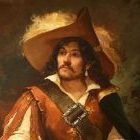
bagely_by_amaryia-dc0jab9.png

Acquired by Bagley from Numirya.


Introduction


Ithelanen is an ancient bloodline; one steeped in mystery, irrelevance and altogether little known to their agrarian cousins who chose to settle Malinor in the days of Aegis. Maintaining their proud nomadic traditions, they can trace their lineage back to the days of yore when Malin and his people walked the forests of an infant world. From the mouth of a clansman of the Ithelanen, they are likely to say that their blood are the only ones who haven’t betrayed the roots of the Elven peoples, keeping true to a philosophy and lifestyle they refer to as the Vir Ame’lanen in their corrupted dialect of the ancient tongue, the Way of the Forest. Their history is little known even to themselves, for most of their knowledge and tradition was lost to a period known to them as the Kinstrife. With exodus forced by the scourging of Axios, the Ithelanen have been thrust from their isolation out of necessity and into a world dominated by strange elves foreign in every aspect. While generally disinclined to abandon the old way, some among their number have readily integrated into elven society, sacrificing their nomadic roots in so doing. On the other hand, many cling fiercely to what remains of their past, staunchly traditionalist in the face of ever-changing times.


History


(Do keep in mind that the information found in this section is largely unattainable in-character and is only meant to shed light on how this bloodline came to be.)


Millenia past, Ithel’an and his siblings did battle beneath the banner of Malin. Leal servants of the first-born, they were seasoned warriors and huntsmen all, living a nomadic existence until the coming of the deceiver. When the Archdaemon was cast from the waking world by Aeriel and his curse laid upon the elven people, Ithel’an grew bitter. Reluctantly, he and his clansmen joined under Malin during the founding of the first kingdom, but their discontent came to surface in time. They came to loathe Malin and all for which he stood, besmirching his name in quiet gatherings, though never so brazen to openly speak against the King of the Elves. Inevitably, Ithel’an chose exodus over servility and led his people from Malin’s Kingdom. They retreated into the deep woods of Axios to resume a nomadic existence, never lingering in one place as they traversed the forests by horse and wagon as they had before the great war.


After several hundred years in isolation, Ithel’an finally gave himself up in offering to nature and so his people were without a guiding hand. It was in the primordial forests of Axios that they would remain, turning recluse as they reverted to savagery during the era of Kinstrife. Ithel’an’s sons, Din’an and Har’el, fought against one another for control of the clan. Three hundred years of bloodshed brought their people low until Har’el’s son, Linnarel, emerged the vanquisher and slew Din’an, solidifying his rule over the people.


This victory was won at a great cost, however, for many of the elders were slain during the strife and left the clan without the wisdom of their forebears. Har’els descendents never truly recovered from the events that preceded their rule and in their victory Din’an’s sons remained bitter in their contempt for the slaying of their father. Without the teachings of the ancestors, the savagery of the Kinstrife became ingrained within their society, and while violence on such a scale would never again come to pass, they had become a fierce people void of the compassion taught by Malin. Har’el’s grandsons succumb in time to Iblees’ curse and withered away into nothing, paving the way for the blood of Din’an to rule over the people once more.


Superstition became commonplace among the Ithelanen and what little was preserved of their history was amended to suit the needs of Din’an’s line. Har’el became a reviled figure, said to have taken spirits to bed and become mad in his thirst for power, whilst Din’an became the martyred hero, first to fall before the wicked designs of his sibling. Linnarel’s descendants were stricken from all record and what could be recalled from the days of the Kinstrife became so muddied in the revisions that it became more a thing of legend than truthful history. In this time, the Ithelanen turned away from the teachings of the Aspects and chose instead to directly exalt the embodiments of their barbarity - Morea and Moccus, the Princes of Wolves and of Boars, respectively.


History became a fable, the truth became as myth and so the Ithelanen dwelt in their ignorance for centuries to come, until the arrival of the descendants to the Isles of Axios. At first, it was only the occasional intrusion into the ancient hunting grounds of their clan. Then settlements were given life along the borders, and soon enough, the ax was taken to their holy places, clearing land to till and feed the bellies of their people. Where those who came before might have been eager to take up spear and bow, to drive the invaders back, Dinlaselan decreed that his tribe simply retreat deeper into the forests, that no confrontation would be permitted. And so they did, living as they had until the taint of Mordskov began to corrupt the land and render their lifestyle unsustainable. The Ithelanen chose migration over oblivion and crossed the sea to Atlas. For the first time in millennia, they now live among their kin as sons of Malin, however reluctant, awaiting the decision of their chieftain as to whether or not the schism might finally be mended, or if they will return to their age-old lifestyle among the forests of the world.


Traditions

The Ithelanen adhere to a strict code of conduct known to them as the Vir Ame’lanen - a direct translation being the way of the forest. Its mandate is simple;


Revere the Gods in all things.

Act intemperance and with restraint.

Debt of blood must always be paid for in blood.

Beware temptation for it assumes many forms.


Beyond these four tenets, it is all-encompassing. The traditions of the Ithelanen, be it their religious rites, the tattoos they proudly bear or the nomadic way of life they have for millennia followed are all considered to be apart of the Vir Ame’lanen and for an elf to walk the path, they must stay true to the customs of their forebears.


Esalathe'lan

Similar to the Wood Elven practice of ilmyumier, or seed markings, the Ithelanen tattoo their bodies in a myriad of patterns. Known to their clan as Esalathe’lan, or funeral writing, the markings are unlike that of ilmyumier in that they do not represent affiliation to a bloodline, but instead hold a much darker connotation. Whenever a member of the Ithelanen passes into the next life, all living clansmen add on to their own markings as a symbolic form of mourning. This, however, extends to notable elves of the Clan who lived prior such as the likes of Din’an, and so their tattoos are perhaps the most outlandish among the Elven people - patterns of blue and gray that wrap across their entire bodies, unique to each person with the more senior clansmen bearing fuller and more elaborate designs.
 

Religion


While the founders of the clan were traditionally Aspectist in almost every respect, their scions diverged slightly. The Ithelanen do, loosely, exalt the aspects - however, their praise is given more directly to the Mani, Morea, and Moccus, for they represent the Hunter and the Warrior. To this end, the Ithelanen give up offerings of the hunt to Morea and hold in high regard the wolf in their symbolism, alongside keeping hounds as their pets - that they might look to these companions as protectors as they to Morea. To Moccus, the Ithelanen offer praise less directly than one might to Morea. Their offerings are those slain in battle, and to the Prince of Boars, a clansman will often dedicate the still-beating heart of a fallen combatant in hopes of catching his eye and earning his strength.
 

Physical Characteristics

The Ithelanen are fairly homogeneous in terms of appearance. Generally speaking, they stand around 5’9” to 6’4” with women being on the shorter end of that spectrum, though outliers exist. They can be picked apart from their fellow woods elves by the color of their skin, being fairly pale by comparison to their swarthy cousins, alongside silver eyes and black hair all born of Din’an’s line possess. Another distinguishing factor is the Esalathe’lan - a practice similar to that of ilmyumier. While varying in design from person to person, they are always done with a blueish-gray ink.


How To Join

You can join by connecting with a Clan Father in-character at Gladewynn. If you have questions please contact HeathensHammer, YES_MAN_ or ClockworkElves!


Written by Bagley (ClockworkElves); posted here for the sake of documentation and garnering interest. 


Link to post
Share on other sites

This was a nice read! 

Link to post
Share on other sites

Hey I think Bagley wrote this. You can't just plagiarize his stuff without his permission, you should probably take this down.


very excellent writing though

Link to post
Share on other sites

Guest
16 minutes ago, TorkoalTom said:

Quite a nice piece, well done Eli!


T'was Bagley

Link to post
Share on other sites

the music fit this perfectly

Link to post
Share on other sites

Moved to The Great Library. It shall be sorted into the appropriate category shortly.


If you feel this is a mistake, please contact myself or any FM and we'll restore it. 

Link to post
Share on other sites

Archived

This topic is now archived and is closed to further replies.

  • Recently Browsing   0 members

    No registered users viewing this page.


×
×
  • Create New...