M1919
-
Posts
75 -
Joined
Content Type
Profiles
Personas
Wiki
Rules
War
Systems
Safety
Player Conduct
Roleplay Leadership Guidelines
- Roleplay Leadership Guidelines
- Roleplay Leadership Guidelines Comments
- Roleplay Leadership Guidelines Reviews
Forums
Everything posted by M1919
-
They went in at the run, a ragged wave of warriors storming towards the flimsy bulwarks before the gates. The order to advance had come as a hand on his pauldron—his master, seizing him, shoving him forward with sudden, living force. That, more than any trumpet, had been the true signal: life back in the Emperor's eye, a hard, bright smile that wanted to win. Corswain had dragged his own men onward in turn. Fanaticism was a flame that needed very little to catch. Havoc soon deteriorated into a savage, running melee in the smoke and howling, tunneled filth. Bodies crashed into bodies, blades swung and smashed, armor cracked and whined. An Imperial sapper, so covered in blood that his surcoat made him look as though he were born in it, ploughed through the chaos, taking heads and arms like a man diligent farmhand. Lucis, the Hospitaller thought. Fervent bleatings and zealous desires for a last stand might have brought out the dwarven spirit, one would think. Corswain was not so ignorant as to disregard the lore of hard-bitten heroes and doomed last stands. No beast backed against the wall is ever without its talons and claws. But he is led by the Emperor, who is shrouded by his Imperial knights, and even in sickness, Hadrian is far more than most men. The filth he is fighting is half-starved, and far, far less. A dwarven crossbowman appears on a ledge just metres above Corswain, the strings of his weapon whirring as it angles down to splash the Hospitaller off the artificial wall. Corswain thrusts upwards with a fiery arc of his longsword. Clean and true, the weapon punches through an overhanging lip of rock and impales the half-man leaning over it. Blood showered from his punctured breast, and more seeped from the ragged tunnel made from where it opened into the other side. The flaming blade had ruptured the poor soul’s lungs, cooking them inside bone and muscle. When Corswain ripped the weapon free, the front of the dwarf’s abdomen came with it in a wet tear, red and grey flecks spattering the advancing Dragon Knight. As the burning, incomplete body plunged past him, Corswain climbed over and met the next enemy whose axe rang against his shield. The metal barked a shrill note as the edge dragged across it, and Corswain’s riposte sent the dwarf recoiling, disappearing into the blizzard of rushing bodies. On the ground level now, he finally saw the garish heart of it all. It was a messy tide, embellished by the jostling, incoherent mass of dwarfs, a few fatherless elves, and the remnants of uruks surging like spiders eager to be crushed. A portcullis, just yards away from the Dragon Knight, buckled and writhed under the pounding of his master’s vanguard. The battlements behind dripped the spent and the stumbling, and the triumphant stamped them down into the conquered rockwork without so much as a glance. Half-men shrieked in the grey and brown pall of smoke, torsos spinning from their own legs. They died quickly, awkwardly, and Corswain could not even summon pure hatred for them—only disappointment, tinged with a quiet, simmering irritation at them, at the day, and at himself for ever believing this would be anything more than another messy, forgettable killing field. It was not the victory he had dreamed of. He had expected more from them. He went to the field prepared to face legends, to meet the kin of the once-king he had slain. Instead, there was not even a shadow of ancestral favor. A Hyspian soldier, of all things, had chased the monarch of these stunted souls along his own lines, and the dwarf had only fled. This was their king—the one who had demanded the Emperor’s abdication and sworn his people would stand firm and hold. The same who had thrown in with Druscans and other run-of-the-mill carrion, whose greatest claims to glory lay in murdering children or dying badly and often at the sword. The disgrace of it all was almost an insult to the dead he already carried. And, in minutes, it was finished. By the end of the madness, he was simply standing there, his hand closed around a small ring while he searched the crowd. He had brought it with him, this little thing, and it was meant to serve a purpose for him. A celebration, a claim made to decorate an already decorated moment in time. Around him, the physicians and camp-followers moved through the conquered halls, turning bodies with boots or the tips of spears, marking those who still twitched and those who did not. Flies had already found the blood, a dark, humming halo gathering over the worst of it. The air stank of rotten mulch, hot oil, and the sharp, metallic breath of opened bodies. Corswain grew distant, seeking out only one in particular. That afternoon, the knight ducked through into his tent and let the canvas fall shut behind him, muting the camp's ambience to a low, cloth-dulled rumble. The air inside was cold, and still smelled of the alchemistry that he had burned before heading out. He unbuckled his sword belt sluggishly, feeling the drag of dried blood on cracked leather, and laid the sheathed weapon across the small campaign table. Fingers closed tight, dragging against the palm of his hands before opening back once more. For a time, Corswain simply stared at the guard and the bronze embellishments on the kharajyr hide that sheathed its lethal edge. The dull metal wore a thin skin of reflected flame, candlelight stuttering over every nick and scratch. Tomorrow, he would have the blade broken and smelted down for a new set of horseshoes and hang the hilt above his hearth. A relic of service that perhaps his future children could fuss over. Sinking onto the low stool by his desk, Corswain unlaced his gauntlets and set them aside, his palms still tingling from the remembered blows. Time thinned and slipped; seconds bled into minutes as he drifted somewhere outside the present, his thoughts scorched white by the memory of soulfire bursting again and again across his vision. Each flare had been observed so clearly amid the toiling chaos, coagulating for a heartbeat in that aetheric firelight before it was flung upward to the skies or hurled down into whatever hells waited beneath. That chapter was closed now, the page turned with a final, immemorable snap. He leaned forward and pressed his hands into his brow, fingers digging into a headache that felt ready to split his cursed skull. The uneasy thought came again, quiet and insistent—that it was not just his enemies, but the whole world that was smaller and cheaper than the ignorant imaginations that had once made him dream. “My lord?” An utterance echoed in the knight’s ears, low and careful. The soft slap of canvas had not broken the trance’s hold, but someone’s voice had, and Corswain blinked his stinging eye to bring Lucis into focus, framed in the dying candlelight like a half-formed ghost at the threshold. Behind him, the horizon bled out in strips of amber, wine-red, and tired blue. “... they salted pork for dinner.”
-
Sigismund sees Typhus first. He shouts a warning that the world is too loud to hear.
From his place at the edge of Gateway Cliff, Sigismund sees the swarming enemy numbers far below part to allow their lord’s advance. Drawn in some hellish chariot and flanked by his retinue of champions, Typhus hastens along the base of the pass to lead his men in the final assault. War-horns boom. The Death Guard in the clifftop vanguard redouble their efforts. Their lord approaches. They will clear a path for him.
Sigismund yells his warning again. But the champion in him sees a new opportunity — the chance to close, face to face, with the enemy lord. This was impossible before, but now Typhus openly presents himself. He is coming within reach, and Sigismund’s black sword is waiting for him.
Sigismund shouts to rally those few of his Seconds still nearby. With their support, he can hold the cliff and make ready.
Perhaps, he thinks, we can drive a way down the ridge, through the flanking line of assault, and meet him on the way up. Typhus will have to abandon that damn chariot and advance in a narrow file with his retinue. The cliffs are too—
The war-horns boom again. Bone trumpets blast the air. Sigismund gazes in horror, his plans disintegrating before they are even fully formed. He sees his enemy properly now. He sees what is coming.
Typhus, lord of the enemy host, carrion chieftain, rises from the murk of the pass. He has not abandoned his chariot at all. He ascends from the pitch-black depths of the gorge as though the darkness below is exhuming him, and lifting him into the winter light. He does not scale the sheer cliff like his swarming men — he rides the air itself, a daemon-deity of extinction borne aloft by the fly-specked murk and noxious vapour. His ascent is stately and majestic. He stands on his chariot of wet bone, the open clam shell of a giant ribcage. Every inch of that bone is scrimshaw-etched with the letters and characters of Death’s alphabet: requiem odes and funerary prayers from the books of the dead held sacred by a thousand civilisations that are themselves long perished from the world. Only their words remain, notched into the bones — hymns that worship Death and acknowledge its inescapable triumph over life. The bones are singing, an eerie witch-blood song that skirls in the freezing air.
Typhus is a behemoth, his bulk increased by fluted cancerous plate, by filth-matted spikes, and by the vast fly-swarm — a living cloak that breathes and plumes from the black-bone chimneys and seeping orifices of his hunched shell-back. He is flanked by macabre champions who make Skulidas Gehrerg seem but a minor impediment. They ride on the skirts of the chariot around him, beneath flapping, cracking banners of human skin. They are all skull-masked, their war plate anointed with white bone-ash and symbols of mortality writ in tomb-dust. Their weapons are drawn ready — embalming knives and mortuary hammers, dissection blades and necropsy chisels, the copper adzes to open the mouth, the excerebration hooks to empty the skull. They are his priesthood, come to officiate the exequies of the First Legion and its allies.
His creaking chariot is drawn upwards by moaning Neverborn of plague and decay. They are his mourners, come to bear his skeletal chariot up the cliff like some rotting gift to the mountain. They are gnarled, contorted things, buckled by carcinoma and neoplasmic cyst, and veiled with soil-stained winding sheets that trail and billow in the wind. They are yoked to the foul chariot by rusted chains, and their broken fingernails claw at the dirty air to find purchase in it to drag the dead-cart ever upwards. Red sprite lightning, baleful and luminous, drifts and sparks in the foul air around the slow cortege.
Typhus brings the howl of the storm with him, for it is his own utterance.
- Abnett, Dan. The End and the Death: Volume III. The Black Library, 2024.
-
-1 There's no reason to penalize the character(s) who put in the effort to prepare properly and use the material intelligently against eldritch beasts of the night. The Moroi are already significantly empowered—as they should be—and this material exists precisely to give an informed, well-equipped huntsman a fighting chance. Given that, it's reasonable to suggest that a single impact lowers hunger by one tier, with subsequent impacts stacking, which could be something that helps clarify the current vagueness complained about by all parties regarding the lore. And as Tentoa said above, if a vampire ends up taking three separate wounds from three distinct weapons or pieces of blisterbark ammunition, that's precisely the kind of scenario where they should suffer the full consequences of their opponent's preparation. That said, nothing stops most of them from simply cutting their losses and attempting to flee into the sunset after the first hit.
-
-
.thumb.jpeg.7a2a5c6fda5bc3b4e960a8645bb0ab98.jpeg)
-
-
@RezRatKeiaglad you liked it. I found it randomly about ten years ago, still listen to it actively to this day. Got some others if you'd like me to share, just shoot me a dm on Disc
-
-
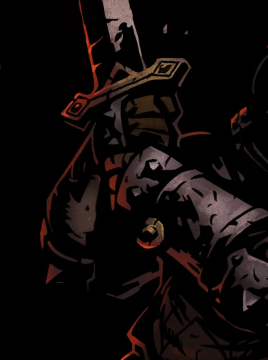
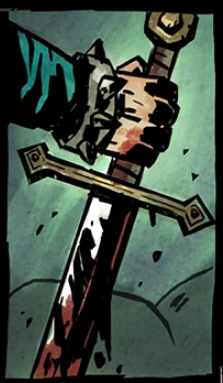
Blood Upon The Stalks [ x ] It is a time of legend. Or so it will be. It is not yet perceived as this, but it will inevitably become a mythical period for many souls plagued by this broad campaign of war. In the dim roar of his forge west of Rittersberg, amid the lingering scent of wheatfields, the blacksmith—callused hands scarred by a thousand heats—plied his craft for the Grand Knight. Two hundred and four years before, the smith’s forebears had served on the farmsteads of Acre, in the fields just north of the kingdom’s capital. In time, they journeyed to the mounds of Urguan to learn a new trade, studying under the scrutiny of a gold‑haired halfman until they became skilled artisans. Their legacy included the arming of farmers, mercenaries, lords, and the mustered hosts of Lodenlanders under three dukes and two Captain‑Generals. Four wars would see their craft employed. Now, here was the fifth. Through the ages, their craft was refined, each generation mastering and passing on the secrets of the last. One such heir worked now, forging for the Dragon Knights so that His Imperial Majesty’s left arm would be well armed and well equipped. He hammered a blade from castle‑forged steel, its edge honed to split silk or sever limbs with equal ease. Yet this was no mere butcher’s tool; gold wire twisted into a hilt shaped like a roaring lion’s maw, its ruby eyes catching the firelight like embers of promised glory. Every part of the fuller and quillon gleamed with the engraved runes taught all those centuries ago, meant to dazzle at courtly feasts as fiercely as they would drink blood on the field. He gifted it to the old warrior, who tested it with sweeping arcs and thrusts. One downward parry here, another curved riposte against the settling shadows of a life long abandoned, until he finished with a singular, murderous hack and heard the wind shrieking as if wounded by each slice. Satisfied, the Grand Knight nodded, hefting its flawless weight and settling it into the sheath sewn from a Kharajyr’s hide. “It will gleam in triumph, or lie bloodied among the wheat,” It is not then, it is now. In the golden expanse of wheatfields west of Rittersberg, Gror Ireheart squared his stout frame against the towering squire. Short and barrel-chested, his gray beard braided with iron rings, the dwarf gripped a rune-etched axe that gleamed like molten spite under the high sun. "Come on, ye lanky pup!" Gror bellowed, eyes blazing beneath bushy brows, the air thick with the earthy tang of crushed loam and ripe grain swaying heavy-scented in the breeze. Corswain advanced with his trained poise—his plate mail clanking amid the rustle of stalks brushing steel like whispering silk. Fresh from the skirmish which interrupted his Crown Prince’s bachelor party, the bastard attempted to strike, lunging with a thrust meant to skewer. Gror slips aside, his axe rising in a sharp arc, the blade striking the squire’s helm with a scream of metal. Sparks fly. Blood beads along the rim of the gilt-trimmed visor, the scent of iron mixing with crushed wheat and the far-off smell of cattle. The dwarf pressed his fury, ramming a shoulder into the squire's knee amid furrows soft with fertile mud that sucked at boots like greedy earth spirits, but Corswain—dazed yet unyielding—recovered with desperate grace. As Gror sprang up for another blow, the squire parried wildly, his blade carving air, whining into the grasshoppers' chirr. He moved before he thought, he twisted his bejeweled blade before— Before the carnivorous thing found its mark. Something caught his eye, and in that instinct, Arn's training had taken over, forcing his hobbling frame to make a trained pivot. Corswain drove the steel through the dwarf's guard, piercing Gror's braided beard and burrowing deep into his chest. The rune-axe clattered free into sun-warmed earth as Gror gasped, amber eyes widening in stunned ire, before he crumpled among the golden stalks, their honeyed rustle a mournful dirge. Corswain wrenched the blade free, planting its point in the soil; dark earth clung to the wolf-marked steel, thirstily swallowing the dwarf's blood. Gror coughed through splitting wounds, fingers clawing dirt toward his fallen axe—a last defiance in his steel-gray, wiry mane wild as mountain frost, amber eyes flickering like trapped sunlight in autumn ale, locking onto the squire's in silent plea. Even a bastard recognized that warrior's reach; though ringing ears caught only a gravelly mumble, the meaning still pierced through. With solemn grace, Corswain gripped the haft with a bloodied gauntlet, guiding it into the dwarf's grasp. Gror clutched it feebly, lifting the rune-etched head to rest upon his heaving chest. Corswain staggered back, panting, helm scarred and split ajar. He wiped blood from his brow, savoring the taste of victory with that agonizing thunder of his head, before he almost barely missed the time where the dwarf's gray braids stilled forever. It was here that he died. It was here, amidst the trampled wheat and fading sun, Corswain collapsed to his knees, then slumped into the furrows, consciousness slipping away. His final thoughts that evening drifted to verdant shades shimmering like lost promises and to the warm, delicate scent that haunted his every quiet hour. It is a time of loss. In the aftermath, as twilight bled crimson across the wheatfields west of Rittersberg, the warrior-priest felt the weight settle in his lungs, the air heavy with crushed stalks' honeyed dust and the coppery ghost of spilled blood. The chaplain’s blood had coagulated where the flesh and muscle were torn, and his sprains had woken him up into a shivering hurdle. There was a chilled bite of anguish taking hold of him, and for what must have been half of a minute, the aspirant squirmed as the flame of his senses reignited. Almost vomiting out of impulse, Corswain’s scarred helm pressed cold against sweat-slick temples, ash-blonde hair matted beneath, as he stammered awake right next to Gror's shrouded form: earth caking the dwarf's steel-gray braids, golden chaff clinging like mournful laurels. His eyes were still angled off at that hill. With a wounded reverence, he oversaw the cart's slow creak southward to Urguan, alone as he pulled the cart along the highway. Crunching stray stalks under hoof, the exhalation of one steed and one man's mumblings brought thin trails of fog into the chill dusk—every yard gained an unspoken longing for verdant warmth. Through mountain passes where wind howled and stalking vultures lamented, Corswain ferried the corpse on. The guard of the Midden blade at his hip pulsed with captured sunset, her gleam only dulled by kingly vitae, and the hilt's ruby eyes dimmed as if weeping. Regret's bitter gall mingled with grim respect in his blue eyes—Gror's amber gaze had pierced him still, unblinking defiance now stilled. Nights by crackling campfires mirrored the blade's ripple patterns in sap-popped embers; days under slate skies carried the faint aromas from distant pastures. At Urguan's iron gates, thunderous forges boomed like ancestral hearts, molten spite thick as grief. Ireheart kin amassed—the brow knit, the beards shifting with each murmur, amber eyes hollowed caverns of loss—clad in soot-black leathers amid hammer-song and coal reek. The chaplain dismounted, knees sinking into chilled stone, and proffered the cart to those who would take it. There, still clutched to Gror's chest, was his rune-axe, its head faintly warm from Gror's death-grip. Corswain had much time to mull over what words he would say. His brooding offered no answers and gifted him no comfort. He was a bastard, and he was an enemy of this land by the commands given from the Master of Mankind. What offerings could he make when he delivered the cold body of an old soul such as this to the hearth of his people? "He died warrior-king," his lips moved before he realized this, his voice but a hymn frayed by sorrow, "axe clutched, ire unquenched. Bear him to ancestors with pride and honor." Extended from him would be the weapon which slew the old king, the Midden steel sheathed in its Kharajyr hide. A bearded elder clasped it wordlessly, rough hands brushing the squire’s gauntlet; one grave nod sealed blood-debt's fragile truce, leaving the chaplain hollow amid the mountain's roar. He returned to the gates of Rittersberg and fell from his horse. OOC: Shoutout to @Pancakehz In an era where Minecraft rivalries tend to spew more venom than narrative, he is a good example to follow, and I say this with genuine humility that it is something to appreciate. Learning about his character's lore only after the fact of our duel probably made me reconsider the exploits that some of my own friends and even I have accomplished. 662 years is a long time to live, and Gror Ireheart is undoubtedly up there on a mantle of reverence. We'll see how long Corswain carries this memory on for. Both of our posts are up for interpretation as to what happened for either of our personas, but the body of Gror, his belongings, and the very sword that took his life were delivered to his clan. Check out his thread here: God bless.


-
Doing this will only cull the weaker warriors, because violence of action will always outpace the snarkiness of the pen. Do not become a warrior if you are unwilling to wield the sword or face it swung against you. Do not become a holy warrior if you are unprepared to be challenged by the righteous. plz refer to what Zhulik and others have said already; they put it elegantly.
-
Name: Corswain VOCATION: Priest TRIBE / CULTURE: Trost BIRTH YEAR: Unknown ORDINATION DATE: Winter of 2059 ORDINATOR: Magister Nerium CURRENT DIOCES: Apostolic See of Lemonshire Assignment: Chaplain OOC: USERNAME: M1919 DISCORD: herkulean
-
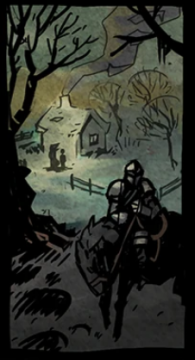
MC Name: M1919 Discord: herkulean Image: Description of Image: Corswain's hunt of the Lycan, painted by Lady Solene Dimensions: 2x2
-
The throne before us was fashioned of carved bronze and Terran marble, that blue-veined stone rarer than an honest man in the Nine Legions. Its high back and broad arms were flanked by stands of braziers and ascending candles, painting the white rock amber and casting flickering shadows across the dark warrior seated there.
Many legionaries and humans alike have mistaken Abaddon for his father, Horus. There was no way that this warrior could be mistaken for his primarch liege. His armour was black, as was ours. The ceramite layers were rimmed in gold, as were ours. It is said that our armour is black to obfuscate our past colours, and this is true, but I saw the very same mournful and hopeful defiance in the wargear of the warrior before me. The stain of failure clung to him as it clung to us, and rather than drape himself in funereal black out of a need for revenge, he had darkened his armour as a statement of atonement and redemption.
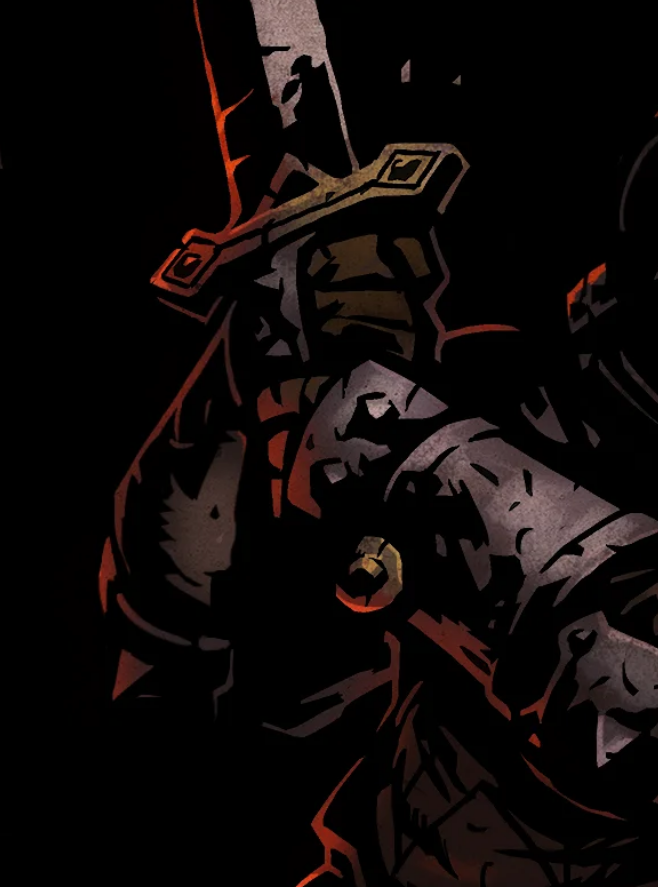
He reclined like an idle king, too stalwart to slouch, too alert to be resting, his hand on the hilt of a black sword. Every one of us knew that blade’s legend. Many of us had lost brothers to its killing edge. Their blood had soaked into its black steel, running across the inscription marking its length. The oculus image was too flawed to read the words but I knew what they would say if the view resolved: Imperator Rex. The blade was forged to honour the Emperor, the king of kings, the Master of Mankind.
The warrior’s hair was cropped close and whitened by time. A short beard framed the thin, scarred line of his mouth. Age had weathered his skin and frosted his hair, but his shoulders were unbowed, and no oculus distortion could hide the icy fury in his eyes. Vindication burned in that gaze. He had waited for us here, down the many decades, and he had been right to wait.
He was us, through a lens of loyal zeal, through a mirror of indignant righteousness. I would have known this even before I tasted his knight’s brainflesh months before. I would have known it the second my eyes fell upon him, this ancient knight-king, enthroned on white stone and leaning upon a sword that had reaped an untellable number of lives during our doomed rebellion.
Abaddon was standing, staring, his glyphed teeth showing through parted lips. He was as awed as the rest of us. Knowing what was waiting once we broke free was one thing, but witnessing it with our own eyes was quite another. A smile dawned across his features, and his warp-lit eyes gleamed.
‘Only you, Sigismund,’ he said to the knight-king, ‘would pursue a grudge to the very borders of hell. That’s a hatred so pure, I can’t help but admire it.’
The ancient knight rose, raising the blade in a warrior’s salute,one I recognised from fighting alongside the Imperial Fists in brighter, better days. He kissed the hilt, then pressed his forehead to the cold blade.
‘I suffer not the unclean to live.’
Abaddon’s grin deepened. ‘Blood of the Gods, it is good to see you again, Sigismund.’
-
GM, here is the wordsmith post. oblivion remaster is good if you have not played it already Thanks to the folks who stood up for me as well while I was handling some srs sturfs with da fam ahem. The words here are generally directed toward those it concerns, given that the original poster stated she does not want to give time to LotC. That is fine, and it should be respected. But when you throw a rock at a window, expect the person inside to feel at least somewhat irritated, even if you wanted to dash off swiftly. I have largely refrained from commenting much because, for the last couple of weeks, I have been managing personal matters or just finding the reach and words of others comedic, but this is the last straw. To be equated with a domestic abuser is, quite frankly, disingenuous and offensive; for also apparently being labeled and equated similarly as being a murderer by members of your community, merely a few weeks prior, was equally reprehensible. The efforts to manipulate the tragic elements are acknowledged; however, the apparent disregard for ethical standards is disappointing. I do not harbor hatred toward you; it is not my nature to hate anyone. I bear no animosity toward you despite your constant insults and belittling remarks. Even amid your falsehoods and your group's efforts to twist the truth, I still do not harbor any ill will toward you. Although there were some humorous moments, the excessive insults were annoying. My disappointment does not mean I hate you. I do not enjoy making anyone feel small and irrelevant, and I derive no joy from putting someone down. If someone has said awful things to you or anybody, it was not because I had encouraged that, and I do not endorse it. I was not absurdly hostile or egregiously rude during the raid, and I reassured many others who were present that they could log out without worrying about consequences. Making a remark about someone who constantly egged on OOC and emoted hilarious anime-style actions, and using a raid ladder after previously being informed it was allowed in similar situations to escape a gate trap is one thing; however, resorting to insults and fabricating absurd allegations or comparisons about players is another. Please don't take this as a dismissal of the gravity of something that seemed genuine to me, and do not fall victim to the notion that you are being harassed for wanting to nation lead. Despite the criticisms, I am unconvinced that anyone in the Norn community actively celebrated your departure from the server. Then again, I'm not around too often to unveil every bit and piece of would-be silliness. Nevertheless, I do not know most of you; my interactions have primarily been with a few players targeting us, including those who later founded Vansk, since the early days of the Norns. At that time, and even just a couple of months ago, it was heavily leeching off your OOC aims to try and deter the Norn culture from ever assimilating within Norland itself. Our personas, at least from what I can recall, have done nothing to oppose your characters on the server until the Kingsmoot transpired. Yes, even when you were actively making jabs in VC about Veletz's nonsense. It did not matter because it was trivial and childish. There is a misconstrued belief from you, or someone around you, that you are the ones who have been under threat since the day that my friends and I said, "Vikings? Why not?" It has not been, and we have not actively sought to attack you. Notably, a considerable contingent of the Norns' First Blood was returning to the nation or community they had been part of years prior. As frustrating as your group had been to deal with, we shrugged it off for well over a year. Most of the differences were ignored, and we let it be. After all, entering someone's house and telling them to rearrange the furniture in their living room is rude. The only conflict with your community stemmed from the development's IRP. I'll sort out a few small sections here: The settling & arrival of the Norns: The Kingsmoot: What has fallen before Vansk IRP results from the threats, the attacks, and what characters observe as a lack of integrity that various figures within Norland saw and decided to act upon. Nobody has been coaxed into acting out because of X or because of what Y said to Z. It has nothing to do with you guys OOC, and I cannot for the life of me recall hearing Elrith or Milen join a VC and say, "Great googly moogly, we're finally rid of these guys. Let's go raid them and drive them off the server." The only person we have observed encouraging players to leave LotC has been _PR0FIT ( 1 ) ( 2 ). We have not denied a positive interaction with anyone nor endeavored to make prisoners miserable for the few we've had. I have personally tried to get people available who would be interested in doing some prisoner RP, and even treat injuries of other players, to make IRP more than: *swings my sword at you and steals everything that you have. Two members of the community can attest to this because we've only ever taken those two prisoners before. Instead, others with whom I have actively interacted and I have sat idly and observed the lashings and persistent melodramatics of what my initial conversation with simpleglitchbro strongly discouraged when it first began to turn into a snowball. Unfortunately, the discussion did not work out. Again, your departure is not something to celebrate, and I am sorry that you feel it must be one way or the other. Do I blame everyone in Vansk for what they said about me and others? Absolutely not. I do not think anyone else does either, and no one would be denied the chance to return to Norland IRP or OOC. However, I do fault people for enabling the nonsense to start and spread from one person to another, and I will pray for you all later today. May you be successful in your life's endeavors. God bless you all. this is specifically for @_Elrith_ also check out this baller cinematic made by a helldiver player
.thumb.jpeg.7a2a5c6fda5bc3b4e960a8645bb0ab98.jpeg)




.thumb.gif.f709f772262c3d118a3976046301432e.gif)
.thumb.gif.3ddfee3f9fcd803397e521b564ab6122.gif)