Jump to content

[✗] [Addition - Void Magic] Casting Technique - Void Ecriture

 Share


Animael

Recommended Posts


Casting Technique: Void Ecriture

Introduction

Designed as both a method of teaching magic in a structured fashion, and as a more controlled and standardised method of casting arcane magics utilising the essence of the void, Void Ecriture is a technique that looks and feels a lot like runic magic in a very loose manner. Unlike where a mage might uncontrollably summon their will to project and fling forwards a fireball, a practitioner of Void Ecriture casting instead uses verbal and physical components to increase its efficiency, versatility and safety.


Because of the verbal and physical components of this training type, a mage cannot benefit from it should they be missing their limbs and tongue. At least one free hand (or an arcane focus) and the ability to speak is required in order to cast the spell arrays utilised by the mage to bring about their magic upon the mundane plane.


This is a purely optional casting technique that grants rigidity and structure to magic whilst providing minor variations to how spells are cast as a result.


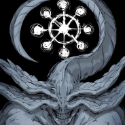
AD_4nXdFjWNzIYynVVAk4KigcK5Dqmy3xmkWo0P4ZcQdVzOWDX-vrJ8B-FaUdnwo3GFzLXaArIHeFMPbXbsqtmaUBxiarIUx_BvbbZqtnZJZWY6E8f_29TCfXbUVvTiJ18v1-rMmuYClPPuPSbVskK5tlefq3hs?key=tx0BZWL7AxMciMBXV3xkMg

Redlines

  • To begin learning this style of magic use, the user must be taught a void MA by a teacher with a valid TA, who also has learned the entirety of this training technique from their own teacher.
  • Focus Crystals must be consumed each elven week. Should longer than an elven week go by, then the effects of this casting technique will be non-existent until rectified.


Definitions:

Backlash - The void mage suffers pain or disorientation enough to disconnect a mage with a void focus. Upon facing backlash, a void mage may face lasting damage for an elven day (you can roll a d20, with a dc of 10). On failing, the mage is assaulted with dissonant whispers.

Dissonant Whispers - The void encroaches upon the mage. Their glyphic foundation is strained, its protective abilities frayed as a result. The mage may hear distracting whispers from beyond the veil, dark chaotic ideas and images flickering through their mind. The mental afflictions that the void has imbued unto them may become more exaggerated and shadows may appear to elongate or move around them, as though they've become the target of something incomprehensible. If one is experiencing dissonant whispers, then they are more susceptible to Voidal Horrors and other such heinous things that lurk in the veil, where void meets creation.


Tier 1 & Foundation:

This stage lasts as long as the magic the teacher is teaching does for Tier 1. Known as the First Circle stage, this stage is where the student is first guided through the process of Imbuing a glyphic foundation upon themselves. Perhaps due to the limited capacity of a descendent soul or body, only five glyphic foundations can be imbued onto any one person at any given time. It is possible to fracture one and imbue another, but with that act, all knowledge of the magic is stripped from ones being, requiring them to relearn it from scratch should they change their minds.


The process of Imbuing a Glyphic Foundation is done through the act of meditating by a Voidal Obelisk after fully acquainting ones self with tomes on the magic type that is to form the basis of the foundation. For example, a student seeking to learn fire magic and create a Glyphic Foundation for Fire Evocation would meditate via an Obelisk after reading and studying tomes on Fire Evocation.


During the meditation process the student must consume crushed Focus Crystal powder/liquid. Maintaining a connection throughout. The teacher is then required to assist the student in forming the intricate Glyphic Foundation, by helping to guide the mana of the student with their own. Holding hands or otherwise making physical contact, the teacher pushes their mana into the student and wills it to take the shape of the Glyphic pattern, usually on either the chest or forearms. The purpose of this foundation is to provide a protective bedrock for Spell Arrays to be conjured from, minimising corruption and improving efficiency.


Upon the completion of this imbuement ritual, the student when connecting to the void will have this Glyphic pattern glow in the colour of their aura upon their skin or hovering slightly away from them as though drawn into the air.


Now that the student has reached this point, it is possible for them to begin learning the first circle incantations. These are verbal components that will be recited in almost all spells cast by the mage from this point onwards, with the mage utilising first circle incantations as the foundation of their spells just as the accompanying glyphs suggest.

First Circle - Verbal Components:

First Circle verbal components are spoken on the first emote of casting a specific spell after connecting. (In the case of a Cast/Connect they're included in the cast emote). Technically speaking, verbal components can be altered to reflect other languages or different variations of similar words. What is important is the casters understanding of the language, or at least what is meant to come about as a result of chanting the incantation.


Spoiler

Single/Self Void-Anchor; “Kae seth-lin ito ker-onn asimulum”

This incantation is utilised in order to reduce the risk of backlash to the caster should their spell be interrupted. If the caster targets another living entity with an anchor and are interrupted then they will face backlash.

Single Void-Anchor; “Oem seth-lin ito ker-onn asimulum”

This incantation is utilised in order to reduce the risk of backlash to the caster if they have a single target that doesn't include themselves. If the caster targets themselves or multiple other targets with an anchor and are interrupted then they will face backlash.

Multiple Void-Anchors; “Iylanh-onn seth-lin ito ker-onn asimulum”

This incantation is utilised in order to reduce the risk of backlash to the caster if they have multiple targets and/or including themselves. If the caster has only one anchor then they will still face backlash if interrupted.

Environmental Void-Anchor; “Lye seth-lin ito ker-onn asimulum”

This incantation is utilised in order to reduce the risk of backlash to the caster and the environment should their spell be interrupted. By utilising this variation, the void essence corrupting the mundane plane is vastly decreased/nullified and doesn't corrupt nearby Fauna & Flora. Should this incantation be used and the Spellcaster is interrupted mid spell, then the caster is likely to receive considerable backlash.

First Circle Spell Array - Physical Components

Equally important to casting a spell using this method of casting are the physical components, namely, spell arrays. A spell array is a series of sigils that form one or multiple glyphic circles that modulate to a fine point exactly how much power is being funneled into a spell. More specifically, it modules the maximum mana that can be implemented, and thus the maximum amount of void essence. 


The first circle spell array equates to the lowest amount of mana that is funneled into a spell. This circle is uniquely useful for practicing magic as it allows students to practice their spells on one another in duels or spars without serious risk of damage.


Spells downcast with only a first circle spell array (for example casting a T5 spell with only a single circle spell array), will not have any of their effect meaningfully applied. For example, if the spell causes blinding, then at most it will cause irritation of the eyes. If the spell would cause second degree burns, then at most the spell instead causes reddening of the skin akin to a sunburn, etcetera. A Tier 1 spell naturally has only a First Circle Spell Array, and cannot be downcast. Spells that are downcast to Tier 1 with a First Circle Spell Array use the same amount of mana as a Tier 1. This circle of sigils contributing to the spell array ensures not only that no additional mana is wasted, but also serves to assist in protecting the caster from their own connection to the void to a limited degree.

Spell Casting at Tier 1

Second, third and fourth circle verbal components may not yet be learned at this point in time, but fortunately this does not vastly inhibit spell casting. Spells are cast normally utilising what verbal and physical components are required and known, providing the spell stability and efficiency.


The mage first must connect to the void, letting their glyphic foundation imbuement be projected either upon their body or slightly away from it. Drawing upon their mana with their will, they must force it to flow through their glyphic foundation before drawing out lines of mana into the shape of the spell array’s circles, depending on their spell of choice. Once the array is complete, void essence is flooded through the glyphic foundation and spell array whilst their incantation guides their intent. The effect of their spell taking place upon reality.

Learning a Spell

The process for learning a spell is one requiring a keen mind and memory. The practitioner must study the incantation associated with the spell, committing it to memory. They must be capable of pronouncing it perfectly even when faced with distraction. Whilst speaking the incantation, the student must draw out their spell array, mirroring the glyphic foundation that they imbued upon their body first that is associated with the magic type that they are using.

For example, the mage when casting an earth spell must draw out the glyphic foundation that they imbued upon themselves for their learning of earth magic, utilising either their hand or an arcane focus. Upon doing so, they must then fill the foundation with an overlay of sigils specific to the intricacies of the spell they wish to cast. The spell array, for a spell that conjures a pebble, would be different but ‘similar’ to a spell that conjures a rock. The mage draws out this spell array with strings of their mana, willed into the world and kept there within their line of sight. Once the array has formed, their connection to the void suffuses the array, moderated by it.


The higher the tier of spell, the more circles must be formed (unless downcast to a tier 1 equivalent for training purposes). This means that the student must draw and maintain multiple spell array circles, whilst speaking their incantation to cast their spell - in addition to understanding the mechanics of the spell, how to use it, in what situations it is useful and more. As such, learning magic can be a time consuming and difficult task for all but the most intelligent.


Tier 2:

This stage lasts as long as the magic the teacher is teaching does for Tier 2. Known as the second circle stage of the Void Ecriture technique, a second glyphic circle is created and overlaid atop the first. Technically speaking, verbal components can be altered to reflect other languages or different variations of similar words. What is important is the casters understanding of the language, or at least what is meant to come about as a result of chanting the incantation.

Second Circle - Verbal Components

Second Circle verbal components are spoken on the first emote of casting a specific spell after connecting, after the first circle verbal components. (In the case of a Cast/Connect they're included in the cast emote).

Spoiler

Low Range; “ana kulin’ito”

All anchors created are within five metres. Of the mage. If the spell is interrupted and their anchors are outside of this range then the mage will face backlash.


Medium Range; “ana telu’ito”

All anchors created are within ten metres of the mage. If the spell is interrupted and their anchors are outside of this range then the mage will face backlash.


Long Range; “ana telu’itone”

All anchors created are outside ten metres of the mage. If the spell is interrupted and their anchors are outside of this range then the mage will face backlash. 


Second Circle Spell Array - Physical Components 

A second circle is applied to Tier 2 spells. Spells cannot be downcast to a Second Circle Spell Array. The caster draws out the sigils for a second circle as they cast, using their free hand or an arcane focus. This circle of sigils contributing to the spell array ensures not only that no additional mana is wasted, but also serves to assist in protecting the caster from their own connection to the void to a limited degree.


Spell Casting at Tier 2

Third and fourth circle verbal components are not yet learned at this point in time, but fortunately this does not vastly inhibit spell casting. Spells are cast normally utilising what verbal and physical components are required, providing the spell stability and efficiency.


The mage first must connect to the void, letting their glyphic foundation imbuement be projected either upon their body or slightly away from it. Drawing upon their mana with their will, they must force it to flow through their glyphic foundation before drawing out lines of mana into the shape of the spell array’s circles, depending on their spell of choice. Once the array is complete, void essence is flooded through the glyphic foundation and spell array whilst their incantation guides their intent. The effect of their spell taking place upon reality.


Tier 3:

This stage lasts as long as the magic the teacher is teaching does for Tier 3.

Third Circle - Verbal Components;

Third Circle verbal components are spoken on the first emote of casting a specific spell after connecting, after the Second Circle verbal components. (In the case of a Cast/Connect they're included in the cast emote). Technically speaking, verbal components can be altered to reflect other languages or different variations of similar words. What is important is the casters understanding of the language, or at least what is meant to come about as a result of chanting the incantation.


Spoiler

Offensive Spell; “maehr lom’ailer-llythal”

For spells behind which the intent is to be offensive. Spells that are not explicitly offensive, cast using this verbal component will cause backlash if interrupted. This is largely intent based, meaning that it depends if the intent behind the spell is to act offensively or not.


Defensive Spell; “maehr lom’ailer-evaral”

For spells behind which the intent is to be defensive. Spells that are not explicitly defensive, cast using this verbal component will cause backlash if interrupted. This is largely intent based, meaning that it depends if the intent behind the spell is to act defensively or not.


Utility Spell; “maehr fer’ailer”

For spells behind which the intent is to be utility based, neither explicitly offensive nor defensive. Spells cast using this verbal component will cause backlash if interrupted, if the spell is offensive or defensive in nature. This is largely intent based, meaning that it depends if the intent behind the spell is to act for a miscellaneous non offensive or defensive Spell.


Third Circle Spell Array - Physical Components 

A third circle is applied to Tier 3 spells. Spells cannot be downcast to a Third Circle Spell Array. The caster draws out the sigils for a third circle as they cast, using their free hand or an arcane focus. This circle of sigils contributing to the spell array ensures not only that no additional mana is wasted, but also serves to assist in protecting the caster from their own connection to the void to a limited degree.


Spell Casting at Tier 3

Fourth circle verbal components are not yet learned at this point in time, but fortunately this does not vastly inhibit spell casting. Spells are cast normally utilising what verbal and physical components are required and known so far, providing the spell stability and efficiency.


The mage first must connect to the void, letting their glyphic foundation imbuement be projected either upon their body or slightly away from it. Drawing upon their mana with their will, they must force it to flow through their glyphic foundation before drawing out lines of mana into the shape of the spell array’s circles, depending on their spell of choice. Once the array is complete, void essence is flooded through the glyphic foundation and spell array whilst their incantation guides their intent. The effect of their spell taking place upon reality.


Tier 4:

This stage lasts as long as the magic the teacher is teaching does for Tier 4.

Fourth Circle - Verbal Components;

Fourth Circle verbal components are spoken on the final emote of casting a specific spell after connecting. (In the case of a Cast/Connect they're included in the cast emote). This is typically always spoken on the cast emote of a spell unless there is no modifier included. Technically speaking, verbal components can be altered to reflect other languages or different variations of similar words. What is important is the casters understanding of the language, or at least what is meant to come about as a result of chanting the incantation.


Spoiler

Modifier: Refraction; “iller ilumehya anuh’maehrailer narn”

This modifier is used primarily for projectile based spells fired from an anchor point. By casting them with this modifier, the spell bounces off of a point between the mage and the target to strike it's intended target. Both the target and the point that the Refraction point must be visible to the mage.


Redlines:

  • Only works on projectile-like spells that are not maintained longer than a single turn.
  • The caster must see the target and their projectile at all points. This cannot be used to go around walls/entities obscuring the target.


Modifier: Diffraction; “iller ilumehya lom fitali’maehrailer”

This modifier is used in order to minorly shift the anchor point of a spell by one metre in any direction upon casting the spell. An anchor points edges bleed out to the side, causing the spell to be enacted from the new point at the very last moment.


Redlines:

  • The caster must see the original anchor point and the new anchor point at all times whilst casting this spell.


Modifier: Refractive Delay; “iller ilumehya ilu cinh tenna kaliri”

This modifier is used in order to delay the casting of a spell by a few seconds. (One emote). The target of the spell must be visible on the turn that this spell would normally be actived, and remain visible on the following emote when it is truly cast. The mage however can begin casting a new spell or conduct a different action upon the turn this spell is cast. (Unless it requires concentration/upkeep).


Redlines:

  • The caster must be capable of seeing their anchor point or target at all times whilst casting this spell and for the emote following this spell.
  • If blinded or disconnected before this spell can be cast, the spell is ‘interrupted’ and will not enact.


Modifier: Refractive Index; “iller ilumehya iller fiilum, iller khelehya iller fikhel”

This modifier is used to confuse enemies. The spell cast shifts slightly in spectrum, displaying attributes of a type of magic different to the one being cast. For example, if a mage were casting the spell Pebble, they could use the modifier Refractive Index, to make it look like three tiny balls of fire were conjured instead. However, the spell will always function exactly like the original, with the Refraction being entirely aesthetic.


Redlines:

  • The caster casts the spell using all the same rules and redlines of the original spell. The only thing that changes is the aesthetic.
  • Applying aesthetics like fire to a spell will not cause it to cause burning damage, etcetera or anything outside of what the spell would normally accomplish.


Modifier: Planned Error; “iller ilum fer’lent”

This modifier is used to make a spell extra secure to reduce the risk of backlash entirely. If the mage makes a mistake in one area of their incantation, this modifier ensures that they will not face backlash.


Redlines:

  • This prevents the caster receiving backlash if a single part of their incantation is wrong when they are interrupted. If the caster has gotten two or more parts of their incantation wrong, then they may still face backlash when interrupted.


Fourth Circle Spell Array - Physical Components 

A fourth circle is applied to Tier 4 spells. Spells cannot be downcast to a Fourth Circle Spell Array. The caster draws out the sigils for a fourth circle as they cast, using their free hand or an arcane focus. This circle of sigils contributing to the spell array ensures not only that no additional mana is wasted, but also serves to assist in protecting the caster from their own connection to the void to a limited degree.


Tier 5

Fifth Circle Spell Array - Physical Components 

A fifth circle is applied to Tier 5 spells. The caster draws out the sigils for a fifth circle as they cast, using their free hand or an arcane focus. This circle of sigils contributing to the spell array ensures not only that no additional mana is wasted, but also serves to assist in protecting the caster from their own connection to the void to a limited degree.


Casting

In order to cast a spell using this casting technique, the mage must utilise verbal components (incantation), and physical components (spell arrays), in order to compose it. The mage first must connect to the void, letting their glyphic foundation imbuement be projected either upon their body or slightly away from it. Drawing upon their mana with their will, they must force it to flow through their glyphic foundation before drawing out lines of mana into the shape of the spell array’s circles, depending on their spell of choice. Once the array is complete, void essence is flooded through the glyphic foundation and spell array whilst their incantation guides their intent. The effect of their spell taking place upon reality.


Spell (1 Emote):

Spoiler

Connect/Cast - 1st, 2nd, 3rd, 4th (optional) Circle Incantations, Spell Array (1st)


Example:

  1. Galadriel connects to the void, her aura of gold erupting around herself. As she flicks forth her hand, a spiralling circlet of sigils sprawl out before her digits to form a single spell array circle. “Oem sethlin ito keronn asimulum, ana telu’ito, maehr lom’ailer-llythal! Iller ilumehya anuh’maehrailer narn!” Upon the completion of her incantation her spell array glows and three pebbles are conjured forth, bouncing off of the training room wall to ricochet up towards the training dummies chest at medium range!


Spell (2 Emote):

Spoiler

Connect - N/A

Cast - 1st, 2nd, 3rd, 4th (optional) Circle Incantations, Spell Array Formation


Example:

  1. Galadriel connects to the void, her aura of gold erupting around herself.
  2. Drawing forth two circles of sigils with her arcane focus she begins to chant. “Kae seth-lin ito ker-onn asimulum, ana kulin’ito, maehr lom’ailer-evaral!” She skipped the modifier portion of her incantation, brisk stepping forwards five metres. Streaks of light left in her wake, signifying the path she took.


Spell (3 Emote):

Spoiler

Connect - N/A

Charge - 1st, 2nd, 3rd Circle Incantations, Spell Array Drawing

Cast - 4th Circle Incantation (Optional), Spell Array Formation


Example:

  1. Galadriel connects to the void, her aura of gold erupting around herself.
  2. She began to mutter under her breath, chanting an incantation all the whilst drawing out sigilry with her hand. A circle beginning to form in the air and hover in place within her sight. A shimmering distortion formed on the ground a few meters ahead of her by the feet of a dummy, sandy particles flickering about its base. “Lye seth-lin ito ker-onn asimulum, ana telu’ito, maehr lom’ailer-llythal!”
  3. Her spell array congeals, forming in completion. “Iller ilumehya lom fitali’maehrailer!” At the very last moment the anchor point shifted a meter to the right of where it had been formed. A torrent of sand, focused on that point billowed up and around the area in a 3m radius.


Link to post
Share on other sites

I don't think anything is stopping someone from casting with tells or sigils (I'm mostly certain there is a mage doing it currently), but this just seems overly complex/confusing - there's no time for the tier progression beyond the teacher going "I said so" (This could be 10 seconds or 10 weeks), and it's the elven language, why? No reason it cant be any spoken language, unless the deeplore says the Void speaks elven only.


The whole thing just feels incredibly complex as a attempt to justify the buffing modifiers at the end of the spell, of which feel better suited for a Spellforge or just not being a thing. It's a neat concept but this feels too complex to really do anything meaningful

Link to post
Share on other sites

Cool but-

do we need, or even want this?

Feels like bloat for the sake of bloat

Link to post
Share on other sites

Seems like a cool concept, but I don't think this is entirely needed and is a tad bloaty. 

Link to post
Share on other sites

8 hours ago, PrimnyaQuorum said:

I don't think anything is stopping someone from casting with tells or sigils (I'm mostly certain there is a mage doing it currently), but this just seems overly complex/confusing - there's no time for the tier progression beyond the teacher going "I said so" (This could be 10 seconds or 10 weeks), and it's the elven language, why? No reason it cant be any spoken language, unless the deeplore says the Void speaks elven only.


The whole thing just feels incredibly complex as a attempt to justify the buffing modifiers at the end of the spell, of which feel better suited for a Spellforge or just not being a thing. It's a neat concept but this feels too complex to really do anything meaningful


This. You don't need lore to do this. We're not going to blacklist you for flavoring your void RP so long you're not cheesing things.


Please for the love of everything holy just have fun on the server.

Link to post
Share on other sites

This lore has been denied. You will be sent a forum PM regarding the reasons for denial within the next 24 hours.


An ancient old document but you can do this with Tattoos and just speaking our spells when you cast. The flavor is yours to create, but we are not going to implement an entirely new way of casting voidal magic esp because if we have to omni people for teaching, we'd rather it be consistent.

Link to post
Share on other sites

Guest
This topic is now closed to further replies.
 Share

  • Recently Browsing   0 members

    No registered users viewing this page.


×
×
  • Create New...