Javert
-
Posts
1426 -
Joined
-
Last visited
Content Type
Profiles
Personas
Wiki
Rules
War
Systems
Safety
Player Conduct
Roleplay Leadership Guidelines
- Roleplay Leadership Guidelines
- Roleplay Leadership Guidelines Comments
- Roleplay Leadership Guidelines Reviews
Forums
Everything posted by Javert
-
MOBILIZE, MOBILIZE, MOBILIZE TO ALL CITIZENS OF THE HORDE, I have been made aware of grievous news. Today, when many Urukhim and other races that have become citizens were carrying out their duties to the Horde, a raiding party of 2,200 Imperial Knights fell upon the capital, Ghorazad. The slaughter was great - Unarmed citizens were butchered where they stood, others bound and captured. My daughter, Ilza’Mak, a girl of 6, was taken into Imperial custody. She was beaten, blindfolded, and forced to endure the jeerings of Imperial lapdogs. Then, she and her fellow Kub companion were forced to walk on their own two feet the entire path back to the Horde. These atrocities, perpetrated by the self-righteous Empire, have shown them for what they are - bloodthirsty egomaniacs. I will not accept such a crime against my people, Urukhim or otherwise, lying down. I issue the following commands to all citizens and tribes beneath the banners of the Horde: Equip every able-bodied warrior aged 18+ with war-gear, including Daemonsteel and Iron. Mobilize your levies and adhere to the commands of the sitting Targoth, Klog’Akaal. Kill any Imperial soldier, knight, or otherwise armed Imperial which enters Horde lands. Reinforce existing fortifications. Such shall be reviewed by Targoth Klog’Akaal and other defense specialists. Defend every inch of Horde territory & resist Imperial armies with all due ferocity. Redirect unarmed Imperials away from Horde lands should they enter. Do not slay the innocent or the unarmed. This shall be a time for all of the Horde to band together. We shall protect our sovereignty, our home, and our people from any further incursions. As for you Imperials who read this missive - You have attacked us unprepared, but we will not idle. Stay out of the Badlands or we will make you pay for every inch of land you take with an equivalent litre of blood. Torosh’Mak, Rex of the Horde, Chieftain of Clan Mak, Warlord of Lurakhan and Makh-Morok, the Demonslayer, the Fire-walker


-
THE FATE OF BRECCI TO ALL CITIZENS OF THE HORDE, With the House of Basileus no longer remaining within the Horde, nor expressing a desire to remain as rulers of the city, it has come upon the shoulders of the ruling council to decide upon its next course of action. After hours of discussion and debate, the decision was made on the next course of action for this city of humanity in the south. First, it is hereby decreed that the city formerly known as Brecci shall no longer bear its former name. Instead, the city shall now bear the name of “Perduran”. The title to accompany the city shall henceforth be referred to as the DUCHY OF PERDURAN. Second, it is hereby decreed that a Knight of Beleth by the name of SER AEDRIC shall be granted the title of DUKE OF PERDURAN. Furthermore, SER AEDRIC shall henceforth take the surname of GRISBLOOD, founding the ruling HOUSE GRISBLOOD. This title shall pass to the legal heirs belonging to this new Noble House. Third, SER AEDRIC GRISBLOOD shall henceforth be acknowledged as a peer among the FEDERATION OF BELETH, which itself remains a vassal and tributary of the HORDE OF MANY TRIBES, afforded the same rights as his fellow Belethian peers. Torosh’Mak, Rex of the Horde, Chieftain of Clan Mak, Warlord of Lurakhan and Makh-Morok, the Demonslayer, the Fire-walker


-
ON THE STATUS OF THE CITY OF BRECCI TO ALL CITIZENS OF THE HORDE, The House of Basileus has abandoned its oaths to the Horde and its position within the Belethian Federation. However, instead of choosing to incite further conflict over this issue, we of the Horde instead breathe a sigh of relief as this matter is finally brought to a close. Therefore, the Horde of Many Tribes decrees the following; The Horde of Many Tribes formally recognizes the dissolution of the Grand Duchy of Lotharia, and bears no intention of bestowing this title upon any new lineage. The City of Brecci, former capital of Lotharia, shall be placed beneath the jurisdiction of the former Lotharian Regency Council, who shall be tasked with raising up a new Lord of their ranks. The City of Brecci shall be renamed, which shall be a name chosen by the abovementioned Regency Council. The title of Diarch of Beleth in the West shall remain in abeyance, with a new candidate to be selected by the Rex of the Horde or, alternatively, to be dissolved pending discussion amongst the Horde Council. The lands encompassing the once-Grand Duchy of Lotharia shall be re-incorporated into a new Duchy-Tier title, whose name shall be decided by the Regency Council. The Krughai garrison, led by Warlord Maukurz’Akaal, shall remain in-place. Torosh’Mak, Rex of the Horde, Chieftain of Clan Mak, Warlord of Lurakhan and Makh-Morok, the Demonslayer, the Fire-walker
-
"Eh, good riddance. Dat savez me a trip tu da Pontiff tu verify Lotharia'z dissolution." Spoke the Rex of the Horde, who actually wasn't too mad about this. Matter of fact, he wasn't mad at all. "Dey've done my job fur me."
-
"Hrmh." Hummed the Rex as he read over the paper, proceeding to go forth to retrieve his axe. "Sons, rally to me." Bid he.
-
TO THE FALSE PRINCE SALATIEL BE STILL YOUR LYING TONGUE, I know naught what wits you claim to possess, nor do I care for the tauntings you have made upon my people. Your witless words weigh as heavy on my mind as a leaf upon the back of a dragon. Your admission to these attacks upon Lotharia is laughable. This is not some great conquest of yours, but acts of cowardice which were easily undone by my own Shamans. Perhaps you and your faux powers are not as strong as you claim, if necessity dictates attacks in secret away from the righteous eyes of those who would surely bring about your death. Your care for my vassal’s politics is inconsequential to me, but I do thank you for one thing - making yourself known to me, so I can kill you myself. If you are so powerful as to curse Lotharia when the city sleeps, then surely you can muster your foul-smelling ill-conceived army to meet mine upon the field of battle? Or does your blackened soul know only to talk when blades are drawn? Either way, it matters little, for the might of the Horde will soon bear down upon you. If my Shamans could repair your misgivings with ease, I wonder how long it will take for them to dismantle you piece-by-piece. Either way, I WILL KILL YOU. Torosh’Mak, Rex of the Horde, Chieftain of Clan Mak, Warlord of Lurakhan and Makh-Morok, the Demonslayer, the Fire-walker


-
ON THE STATUS OF IPANEMA TO ALL CITIZENS OF THE HORDE, Yesterday at the bi-yearly Hordeklamor, the fate of the Golden State of Ipanema was called into question. The Heir-Prince Ulisses de Alencar had been given the task of restoring the city’s activity without the assistance of titles or outside aid. It pleases me to announce that the Heir-Prince Ulisses and the people of Ipanema have satisfied the Horde’s expectations. Therefore, I as Rex of the Horde decree the following: The Golden State of Ipanema shall be demoted from an Archduchy to a Duchy, to reflect upon the nature of the settlement. Ulisses de Alencar shall be fully instated as Duke of Ipanema, being forever known as Ulisses I. Keshig Grubfoot’Mak is hereby relieved of his title of Warlord of Ipanema, and the Krughai garrison of Ipanema shall return to Ghorazad. The title of Diarch of Beleth in the East shall remain in abeyance. Torosh’Mak, Rex of the Horde, Chieftain of Clan Mak, Warlord of Lurakhan and Makh-Morok, the Demonslayer, the Fire-walker


-
Shoutout to anyone who has ADHD or Depression. You're loved, you've got this
-
-
The Bloodstone Pact Lûp Krug ûgh Urguan Lûp Ilzgûlz With the signing of this pact, the Grand Kingdom of Urguan and the Horde of Many Tribes, now referred to as signatories when mentioned together, agree to these terms: On Peace The signatories agree to maintain good relations and promote the values of honor and peace amongst themselves. In the event rogue members of either party attempt to break the peace, the victim realm may defend itself and enact punishment in its own lands without the retaliation of the aggressor realm. On Trade The signatories agree to the freedom of movement of their merchants into each other’s capital and vassal states. The signatories agree to a single stall, free of tax, in both the Market of Ghorza’s chosen and the Kal’Baraz market.. The signatories agree to the Golden Valley Roads agreement upon its publication. On Shamanism and Golemancy The terms of the Lone Mountain Act are agreed upon by the new Rex of the Horde : golemancy is banned in the honorbound lands and the teachings and practice of shamanism in the lands of the Grand Kingdom, save for the few who have been blessed by the Motsham of the Horde. SIGNED, Torosh’Mak, Rex of the Horde, Chieftain of Clan Mak, Warlord of Ghorazad, Thralgar, Lurakhan, and Makh-Morok, the Demonslayer, the Flame-Walker Ulfar Kazzarathsson of the Elder Clan Starbreaker ᚢᛚᚠᚨᚱ ᚲᚨᛉᛉᚨᚱᚨᚦᛊᛊᛟᚾ ᛖᚱᛟᚾ ᛞᚨ ᚷᛟᚱᛗ×ᛞᚹᛖᛞᚢᛚ ᚲᚨᛉᚨᛗᚨᚱ ᚲᛟᚱᚾᚨᛉᚲᚨᚱᚢᛗᛗ The Grand King of the Grand Kingdom of Urguan ᛞᚨ ᚲᚨᚦᚨᛁᚲ ᚦᚱᚢᛗᛗᚨᛉ ᛖᚱᛟᚾ ᛞᚨ ᚲᚨᚦᚨᛁᚲ ᚦᚱᚢᛗᛗᚨᛉ×ᚨᚾᚲᛟᚱ ᛖᚱᛟᚾ ᚢᚱᚷᚢᚨᚾ Thane of the Elder Clan Starbreaker ᛏᚺᚨᚾᛖ ᛖᚱᛟᚾ ᛞᚨ ᚷᛟᚱᛗ×ᛞᚹᛖᛞᚢᛚ ᚲᚨᛉᚨᛗᚨᚱ ᚲᛟᚱᚾᚨᛉᚲᚨᚱᚢᛗᛗ Kahl of Kaz’ad Nolvaraz ᚲᚨᚺᛚ ᛖᚱᛟᚾ ᚲᚨᛉ’ᚨᛞ ᚾᛟᛚᚢᚨᚱᚨᛉ High Lord Golemancer ᚨᛉ ᚱᛁᚲ ᚷᛟᛚᛖᛗᚨᚾᚲᛖᚱ Godfather of the DON ᚲᚨ×ᚨᛉ×ᚢᛁᛊᛁᚾᛞ ᛖᚱᛟᚾ ᛞᚨ ᛞᛟᚾ


-
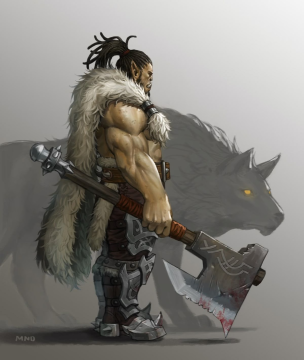
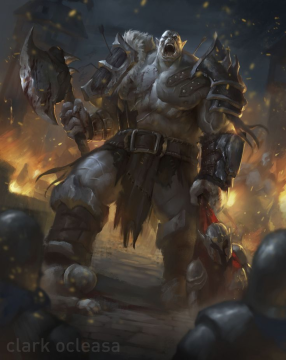
DISCLAIMER: THE FROST ORCS OF CLAN MAK THE FROST ORCS HAVE EXISTED FOR CENTURIES. Yet much knowledge of the old ways of life of this subculture of Urukhim has been long lost or forgotten. The Thaug’Maugrim, once the chief tribe of Frost Orcs, has largely fizzled out of existence. The only ones who remain faithful to some semblance of this old way of life is the Clan of Mak, as well as other remnant Thaug’Maugrim who remain largely isolated. However, under the leadership of Torosh’Mak, founder of Clan Mak and son of the Warlord Grugmak, Frost Orc culture slowly but surely finds itself being revitalized with the birth of new members and the adoption of Clanless Urukhim. APPEARANCE & COMMON THEMES Though officially known as Frost Orcs or Frost Urukhim, these Orcs also have been called “Jotunn” (Frost Giant) by some northern clansmen that have encountered these people. Sometimes, a Frost Orc will intentionally identify as a “Jotunn”, though this is a case-by-case basis. Despite this epithet, Frost Orcs are not exclusively Uruks, but also Goblins and Ologs as well. SKIN TONE Most Frost Orcs who are born into this culture are born with either pale white, light blue, or dark blue skin tones. Those who are adopted into the culture will often have a variety of skin colors, though the majority of the blood-descendant Frost Orcs will have the aforementioned skin tones. HAIR COLOR & STYLING Hair colors are almost always black, though some Frost Orcs have a tendency to either shave their hair as a sign of maturity and strength, or braid the top of their hair and allow it to grow long while shaving the sides for the same reason. Beards are, amongst male Frost Urukhim, much more common as it provides an additional layer of warmth in the harsh environment from where they originate. Sometimes, a Frost Orc will dye their hair to symbolize a specific point in their life - Blue for strength, Dark Red for wisdom, and Dark Green for connection to the Spirits, most often donned by the culture’s Shamans. CLOTHING Clothes are always from an animal that has been hunted. Adult Frost Orcs will often hunt animals not just for their meat, but for the hide they provide. As a result, pelts are the most frequent clothes found upon a Frost Orc. Due to the cold weather they reside in, armor is not as frequent as it is prone to damage in the winter snows and is difficult to maintain. Furthermore, although Frost Orcs will wear pelts to keep out much of the cold, many will leave parts of their upper body intentionally exposed to prove their strength to their peers, with their mass of muscles often providing some natural body heat. Wolf or Bear pelts will often be used as capes, with other assorted animals making up the rest of the items of clothing. TATTOOS & WARPAINT Upon being adopted into the culture or coming of age, an Orc will don tattoos of cultural significance on their arms while placing warpaint upon their face. Usually these will be symbols of the clan to which they belong, achievements they have accomplished, or other personally-significant things. The most common color for these tattoos and for warpaint is red, though for Orcs with different skin colors, other colors are frequently chosen. TRADITIONS, CUSTOMS, & DOCTRINES Much like any other culture, clan, or institution among the Urukhim, the Frost Orcs & Clan Mak participate in many distinct yet likewise similar traditions as other Orcs do. Some are alien to the more urban Orcs of the south, while others are quite familiar. SCARIFICATION While not scarification in the sense that a Frost Orc will intentionally scar themselves, Frost Orc scarification instead refers to the custom that a Frost Orc will never hide a scar. No matter how mundane or epic the tale of how the scar was achieved, it is considered dishonorable and shameful for a Frost Orc to hide a scar beneath makeup or unnecessary clothing. They furthermore reject the use of replacement limbs that would make it seem as if the limb had never been lost, instead preferring replacements which will be rather obvious about their inorganic origin. KRUG’S RESISTANCE This particular doctrine refers to Krug’s resistance against the influence of the Archdaemon Iblees (Also referred to as “The Great Liespeaker”). In essence, it is a doctrine that forbids any Frost Orc from ever negotiating with any manner of Darkspawn, regardless of that Darkspawn’s creed or origin. Krug did not compromise with Iblees and his Fel forces, so neither shall the Frost Orcs. To negotiate or compromise with the creatures of the Fel (Fel being another word for Evil or Dark) is to disgrace oneself for all eternity, and to deny oneself entry into Stargush’Stroh and a place among the Spirits. To embrace the dark nature of these beings and become one is to cast your soul into permanent damnation, adrift in the void forever upon your death. COMING OF AGE Coming of age is an important moment in a Frost Orc’s life. It is cause for celebration, as young life amongst the Frost Orcs is especially valued, many infants and children perish to the harsh weather. Yet still, a young Frost Orc must truly prove themselves if they are to be accepted as an adult and given their customary tattoos and warpaint. This is where the Hunt comes in, where a young Frost Orc must venture out into the woods where they must both tame a war mount (Often a Wooly Rhino), and hunt a Bear. The larger the Bear the greater the renown. While hunting a Black Bear is acceptable, taking down a Brown or even Polar Bear will cement an Orc’s status among their Clan and Tribe. THAUG’MAUGRIM REBIRTH Similar to a baptism, a Thaug’Maugrim Rebirth (A name taken from the tribe of which it originated) occurs after a newly matured Frost Orc or an adopted Orc has completed their trial of taming a Wooly Rhino and slaying a Bear. The Frost Orc and the Clan/Tribe Chieftain or Shaman will make a pilgrimage to the frozen shores of the far north, wherein the new Frost Orc will be cast into the water and expected to hold their breath while the Shaman or Chieftain performs a ritual on the shore. If they can hold their breath, they are fully accepted into the Clan and given their tattoos. If they fail, then they become food for fish. SUFFER NAUGHT THE INVADER This doctrine is shaped by the Frost Orc’s lifestyle. They are a semi-nomadic people, traveling to allow their animals to graze during the summer when the snow is lighter then returning to a central location when the winter is harshest to hunker down. As a result, the Frost Orcs are fiercely territorial against non-Frost Orcs, even if those they are being hostile towards are other Orc Clans or Tribes. Any who intentionally damage the land within which they roam, or who settle too close to their herding grounds, are often met with fierce hostility. This will often continue until the destruction is lifted or those who have trespassed are driven away. THE SPIRITS & SHAMANISM Much like the other Clans and Tribes of Orcs, the Frost Orcs and Clan Mak worship the mighty Spirits - Ancestral, Elemental, and Immortal. Their culture is likewise religiously led by Shamans who commune with the spirits and lead the Frost Urukhim in religious ceremonies. However, the Frost Orcs have a habit of following their own Lesser spirits rather than pacting with Greater spirits that dominate the majority of Orcish culture. ALTARS Much like the main branches of Shamanism, Altars are frequently constructed by the Frost Orcs upon which they leave their offerings and pray before. Altars are usually simplistic in design, as the Frost Orcs prefer to leave the surrounding area as untouched as possible. SHAMANS Though similar in ability to main-branch Shamans, the difference often arises in attitude and attire. Frost Orc Shamans will almost always wear masks which cover their face, only ever removing it in the comfort of their own homes. So too will they frequently adorn the bones of animals or any descendant unlucky enough to fall victim to an enraged Frost Orc. During a ritual a Shaman will often begin to dance, allowing themselves to feel enraptured by their Spirit’s presence whether real or imagined. RITUALS Rituals are always conducted either by a Clan/Tribe Chieftain or a Shaman, sometimes multiple. Loud chanting is commonplace, even if the intent is not to directly summon a Spirit. Dancing is frequent among these rituals and is often initiated by the host with the rest of the participants gradually joining in as the fervor builds. Offerings are given before or after a ritual, with each Spirit having their own preferred offering. SPIRITS There are a few spirits that the Frost Orcs follow and pay homage to. One in particular, worshipped by the Clan of Mak, is a Spirit known as Makhrug. This spirit takes the form of a great Frost Orc with a long black beard and braided hair. Known as the Lesser of Winter and Snow, the Frost Orcs will often pray to this Spirit in order to earn favorable weather when traveling or to curse an enemy army’s path with a blizzard. Offerings of bones or cooked food are considered satisfactory in regards to worship of Makhrug. SPIRIT WARS As is common between followers of radically different Spirits, those who worship the Frost Orc Spirits often find themselves in conflict with those who worship a Spirit that is ideologically opposed to their own. If a Frost Orc Shaman can rally the support of a Chieftain or a large enough band of Frost Orcs, they will sometimes declare a Spirit War against the worshippers of a Spirit that opposes their own. These can frequently escalate into mass sheddings of blood, with the conflict usually only subsiding if one side is dead or a peace deal is made. Such conflicts are usually seen as “Holy” by the Frost Orcs, but are not a common occurrence.


-
TO BARROWLORD SZARDIEL WAAAAAGH! BEHOLD, FOUL DEMON, The Horde has no patience for Demonspawn in our lands, whether they are of the Black Church, a Barrowlord, or whatever else they may be. Your attempted infiltration of our Horde is over. The Sons of Krug and our vassals shall bring the full wrath of the Spirits down upon you and wherever you and your misbegotten kind may dwell. You had thought that by cutting off my hand that it would serve as a warning, a symbol of fear. Instead, I wear my scar as a badge of honor to have defied the likes of you just the same as my ancestor Krug did. Come and fight in the light of the sun, Demon, if you have any honor in your rotten mind. Bring your legions to die before the righteous blades of the Horde. Consider this in full effect to be a Declaration of Wagh. I will give you a warning now; If you do not surrender yourself for permanent execution, then my armies will decimate yours and I will personally take whatever remains of your head. Either way, YOU WILL NOT SURVIVE. Torosh’Mak, Rex of the Horde, Chieftain of Clan Mak, Warlord of Lurakhan and Makh-Morok, the Demonslayer, the Fire-walker


-
OH YEAH WE ARE SO BACK QALASHEEN BROS
-
Murad Ibn Amin Al-Assad wept for hours upon hours in his mother's arms post-labor, unaware of what greatness he would strive to achieve in his life.
-
What will it be, High Elf? Will you take the Caurost-pill, or the roadman pill?
-
THE CLEANSING OF IPANEMA TO ALL CITIZENS OF THE HORDE, It is no secret to the citizens of Ipanema and the wider Horde that the city had grown to bear a significant Darkspawn issue that lingered for much of the reign of the late Antonio I. Yet now, with Ipanema under Krughai occupation, the citizens of Ipanema have sought to redeem themselves in the eyes of both Horde Law and the Spirits. Prince Osiris de Alencar, younger brother of Crown-Prince Ulisses de Alencar, had made us aware of a crypt beneath one of Ipanema’s manors that had been the home to a coven of Vampyres. Knowing that such an infestation could not stand, it was ordered by my hand that it should be the people of Ipanema who take responsibility for ridding this plague upon their lands. And so the Twin Princes Ulisses and Osiris gathered together their people of Ipanema, forming a crowd of roughly 1,000 Ipanemans watched by 300 Krughai. Without hesitation or complaint, the Ipaneman Princes cast the wretched house ablaze, burning it into naught but ash and cinders. The loyalty of these Ipaneman citizens today proves that despite the mistakes of the past, the Archduchy is not beyond redemption. Its people long for a path of virtue and goodness, now led by righteous hands. At this time, the missive regarding the Governance of Ipanema is to remain in place until further notice is given. Torosh’Mak, Rex of the Horde, Chieftain of Clan Mak, Warlord of Lurakhan and Makh-Morok, the Demonslayer, the Fire-walker


-
THE TRIBUTARY SYSTEM TO ALL TRIBES OF THE HORDE, In this era of reconstruction and reform, where the vast amount of wealth that has been amassed over the span of decades is no longer at our disposal, it is of the utmost importance that all tribes within the Horde contribute to the greater realm to ensure that it will possess the resources necessary to defend the tribes in times of war. To this end, the Horde declares the following: In the seven cactus-days following this declaration, the Rex and the chieftain of each tribe must agree upon an amount of resources that will be set aside at tribute at regular intervals. Every fourteen cactus-days, the Rex shall call upon the many tribes and their chieftains to gather at the Klamor and present their tribute. The tribute demanded from each tribe shall not be modified without first consulting its chieftain. Chieftains who fail to negotiate their tribute with the Rex, and chieftains who fail to present their tribute within the required timeframe, shall be removed from the council and stripped of their chieftain status. In cases of extenuating circumstances where a chieftain fails to pay tribute for reasons beyond their control, the Rex may choose to grant them leniency under the condition that the missing tribute be paid to the Rex at a later time. Torosh’Mak, Rex of the Horde, Chieftain of Clan Mak, Warlord of Lurakhan and Makh-Morok, the Demonslayer, the Fire-walker Yuan-Changbi, Chieftain of the Hou-Ren, Sovereign of the Beastfolk Protectorate, the Messenger of Hou-Shen


-
THE GOVERNANCE OF IPANEMA TO ALL CITIZENS OF THE HORDE, Today, I have been made aware of the passing of one Antonio I de Alencar, Archduke of Ipanema and a Diarch of the Belethian Federation. Antonio was a valiant leader, serving the Horde and his people faithfully throughout his life. Alas, the loss of such a leader has doubtless sent shockwaves throughout the Golden State of Ipanema. To prevent any further chaos, and especially with the onset of brutal Darkspawn incursions, it is my prerogative as Rex of the Horde to declare the following; The title of Archduke of Ipanema is held in abeyance, to only be returned to the rightful heirs of Ipanema once stability has been restored. The title of Diarch of Beleth in Ipanema is held in abeyance, to only be returned to the rightful heirs of Ipanema once stability has been restored. The Heir-Presumptive of Ipanema, Ulisses de Alencar, is summoned to speak in-person with the Rex of the Horde to discuss the peaceful transition of power. A garrison of 500 Krughai under the command of Grizh’Guard Grubfoot’Mak shall be established within Ipanema to keep order. Grubfoot’Mak shall take the temporary title of “Warlord of Ipanema”. Mandatory darkspawn testing in Ipanema shall be enforced tenfold. All military forces within Ipanema shall stand down immediately. These declarations are to remain in place until the peaceful transition of power within Ipanema is complete. After such time, all the aforementioned declarations shall become null and void. Torosh’Mak, Rex of the Horde, Chieftain of Clan Mak, Warlord of Lurakhan and Makh-Morok, the Demonslayer, the Fire-walker


-
If you have a pvp video from Aevos, please send it either to my discord (ragnarakajavvy) or here in the comments. It doesn't matter if it's an edited one or a 2 hour long unedited film. I'm bored and want to look back on the conflicts of last map.





.thumb.jpeg.7a2a5c6fda5bc3b4e960a8645bb0ab98.jpeg)