Deets
-
Posts
110 -
Joined
-
Last visited
Content Type
Profiles
Personas
Wiki
Rules
War
Systems
Safety
Player Conduct
Roleplay Leadership Guidelines
- Roleplay Leadership Guidelines
- Roleplay Leadership Guidelines Comments
- Roleplay Leadership Guidelines Reviews
Forums
Everything posted by Deets
-
[!] A weathered document was delivered into the city of Riviènse, backdated two years prior. From wherever it was sent, its delivery had taken some time, yet its authenticity was true. The Passing of Autumn “The Commonwealth is a land of rebirth and renewal. It has come a long way since the desperate days of Vissingren Castle, yet still, we must toil to see its dream come to fruition. I pray for strength for what lays ahead.” Musings from the journal of the Archduke Joseph I, circa 200 A.R.P Issued and averred by His Highnesses Atstana de Regne Petrère 223 ✠════════════════⊱⟡⊰════════════════✠ THIRTY-THREE YEARS AGO, amidst the Great Exodus from Aevos did I take the mantle of Archduke of the Commonwealth of the Petra from my lord father. In the years preceding, the Commonwealth was scattered, made exiles by Orsathiael’s capture of Vallagne. In our Eastern Cantons, Vissingren Castle was besieged as the forces of the Mountain pushed eastward, threatening to subsume what remained of the Pétrine Meadowlands. Yet we endured, every assault repulsed, every small victory saw us closer to the reclamation of our home. In those days, I oft found myself confiding in Duke Thomas von Theonus. The turmoil seemed unending, the challenge we faced insurmountable. Duke Thomas offered sage counsel, that so long as we yet stood together as Pétrines, the Dream of Furnestock endured and hope was not yet lost. He proved correct, in the years since I have thought of our conversations frequently. The Commonwealth’s founding was little different two centuries ago, Paul Salvian arose to the challenge and forged the Commonwealth through steel. I thought its reclamation would prove little different, and in many ways it was not. Slowly did we push westward, first past the confines of Osmont and into the Canton of Solland. At Faubourg the gravity of these tidings finally made itself known. From the hamlet could I see Vallagne, occupied for half a decade, yet its walls still stood in defiance of the Mountain’s taint. It was here that our future would be determined as the host within the city had sallied forth to halt our advance. At Faubourg I took command of the Petrine Laurel under Sir Artair von Theonus and the Company of the Silver Spears, a hard-fought battle and the final step before the Reclamation of Vallagne could occur. It saddens me to this day to think of the fate of many of those knights I fought alongside in my youth. Vallagne. A glorious series of days those were, when the banners of the Commonwealth, in tandem with those of then-Númendil stormed through the streets and vanquished the influence of Orsathiael from the city. The great scattering of the Pétrine people was at its end. From the Eastern Cantons, Cartref Mor, Grense and beyond did the slow, yet steady return of our people commence. Many of our finest were present that day, Sir Arth von Theonus, my sworn-shield, Petyr Valkonen who proved himself a brave man amidst the turmoil of the streets, Caz Reinhold who in spite of his earnest nature always proved amongst the most fierce and loyal Pétrines I have had the honor to lead. Even with our home reclaimed, the coming years did not see an end to the turmoil. Across the River Petra in the Canton of Ladyr forfeited amidst the Peace of Nóruiel did the newest challenge emerge. To this day, I do not think I can say I have ever found myself opposite the field of finer soldiers than those of the Druscan Archduchy. To those familiar with I, it is not infrequently that I have bemoaned the carnage seen at the Fields of Westmark in the many years since. Had it not been for the brave men in my retinue that day, the Commonwealth would instead have been ruled by my sister, Maude Eliona. Sir Dietrich and Étienne I have forever owed my life to since for their actions that day. I don’t believe either host expected to encounter one another in such force as they did nearby that unnamed farmstead. As we dismounted, it became evident the Druscan infantry was having the better of the fighting, and soon we faced ruin in the center. Sordid, I can only say I am glad that our cavalry wheeled about and returned in time to rout the Druscan center that day. ✠════════════════⊱⟡⊰════════════════✠ The Great Exodus from Aevos proved perhaps the most stressful period of my reign. It was amidst the preparations to depart the continent that my father named me Archduke in 190 A.R.P. I had taken men to war in the past, though this proved far simpler in truth. In war, you know what you must do, the premise remains simple, the goals unchanged. The reckoning is simple and the aims are clear. To plan the journey of an entire people into waters unknown, such weighed heavily upon me. Were it not for Magdalena, the fleet may have simply floundered in the waters beyond what had once been Whitespire. The delays upon that isle afforded much time to think, much time to reflect upon what I wished for the Commonwealth when we arrived upon Azuras. Together, she and I spent much time, as we did in our youth, planning for what was to come. Riviènse, the Jewel of the Land of Autumn. It did not commence as such, admittedly. The boom in population proved both a blessing, and a curse at times. By his own admission once, the reign of my father had been conducted with too light of a touch. The authority of the Throne of Saint Emma waned in those early days as the uphill battle to restore order to a people used to excessive freedoms commenced. When I think upon my years as Archduke since landfall, I am drawn to what my father said within his own writ of abdication. “I have known moments of joy, of pride and of sorrow. I have always tried to act for the good of our people, though I am not blind to the fact that my choices have, at times, caused pain. Such is the weight of rule, and it has been a heavy current to bear.” Archduke Therin I, 190 A.R.P My own sentiments are similar as I have often shared with confidants such as a man who came to be an unlikely and steadfast friend to me, Jarad Mah’nel. I have been the most conservative and traditional of Pétrine rulers since perhaps Paul Salvian. In an odd dichotomy, I have also been the least traditional in the sense of the policies I pursued. The city was rid of many of its magi, for good reason too. From would-be assassins to attempts at secret voidal projects in the basements of some denizens. A far cry from my great-grandmother and her efforts in the creation of the ill-fated Hokhmat. While steadfast in my beliefs, I am not blind that my actions came at the cost of the uprooting of many, and the loss of lives for some. Some I shan't apologize for, those who attacked my children, or sought to conspire with the daemonic to overthrow the existing order, would-be assassins and brigands in our woods. It cannot be said, beyond perhaps one, that I did not offer a chance at clemency. As Prince Vârdamir may attest from our many conversations, I had tried to turn the Land of Autumn into one guided by the principles of Saints Rhosyn & Emma. Clemency, redemption and virtue, I have found these traits to be found often amidst the Pétrine people. I have seen the redemption of those who have committed past wrongs, I have seen clemency and kindness offered to those we once called our foes. Does evil not prevail when we simply allow its existence as fact? Inaction is the death of what is good and what is right. Yet I will not diminish what has been achieved. The Commonwealth has become a center of arts in the west of Azuras. Within the Court of Autumn, we have seen playwrights, artists, scholars and socialites prosper and play host to many events in our lands, promoting the culture of the Commonwealth to those of Idunia and those abroad in the wider Empire. In the years since landfall it has become a home to many, oft requiring the discussion of the expansion of its walls to house those who wished to make its confines their home. Within the High Kingdom, we have found ourselves prosperous, expanding our lands both east and west into fertile land which the houses of the realm continue to settle. I have put my house in order, I have put my Commonwealth in order. The authority of the Throne of Saint Emma over the lands it rules has been restored. At every turn we have driven the ill from our ranks and brought the land back into the grace of the Faith, so that we might tread a path worthy of those who hold both Saint Emma and Saint Rhosyn in such high esteem within our hearts. It has come at a price, yet the rot I found in my lands when I came to sit the throne all these years ago has been largely expelled. I will not delude myself into the belief that I have rid it wholly, for no land may claim such. Evil foments in the hearts of man, yet I know that never again shall the Commonwealth find itself amidst the grip of such rot, of sloth nor of complacency anew. All of this, my own efforts, and those of the Commonwealth could not have been achieved without the unwavering efforts and support of the River Council. For every oddity and incident faced by myself, it was not without the counsel and support of leal councillors who have kept the Commonwealth functioning. I have naught but the highest of praise for they, for without them, I fear the realm would have come undone years ago. I know my son who shall reign as Archduke now shall benefit from their continued wisdom and support. What I had envisioned for this Commonwealth in some measure has come to fruition, it has prospered within the High Kingdom of Idunia, working alongside the Tar and the wider realm to construct a future within Azuras. We have rid many ills from the Commonwealth, its institutions remain intact, the Pétrine culture yet stands as its own unique fixture within the High Kingdom, and there is peace in the Meadows and Riverlands. From the Autumn Hills in our East, shared now with our friends in the Duchy of Adria, as far west as Nydia’s Crossing and the River Gemmeres in our West, the banner of the Commonwealth endures. If nothing else might be said of my time as Archduke, it is this: The River Endures. ✠════════════════⊱⟡⊰════════════════✠ Thus, in the year 222 A.R.P I, Prince Joseph Antonius Aurèle Temesch of the Petra, Archduke of the Petran Commonwealth and Prince of Riviènse pass forth the titles of Archduke of the Petran Commonwealth, Prince of Riviènse and all associated titles of the Throne of Saint Emma to my son, Prince Alberic Étienne Temesch of the Petra, Count of Valfleur. Henceforth, he shall be known as Alberic Étienne, Archduke of the Commonwealth of the Petra O S A I N T E R È G N E P E T R È R E ✠════════════════⊱⟡⊰════════════════✠






-
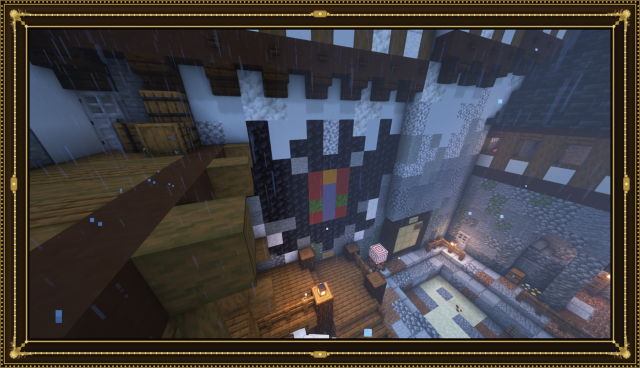
The Levyman’s Oath “The Knighthood does not stand alone. Their honor is upheld by a host of men and women who form the Order’s true strength in war. The levy, the Men-at-Arms and the Sergeants. The professional soldiery who march beneath the banner of the Commonwealth.” The Ordre du Petrine Laurel, 200 A.R.P Issued and averred by Their Highnesses & Atstana de Regne Petrère 221 BESIDE EVERY KNIGHT ATOP THEIR STEED, are an equal number of leal men-at-arms. For generations, from the time of the ill-fated Ausecan Corps, to the City Watch of Vallagne and the Riverguard of old, aside the knight, the pride of this Commonwealth are those men-at-arms who must be lauded in equal measure. For many years they have worn the livery and fought in the name of this Commonwealth. In no smaller measure do the men-at-arms of the Petrine Laurel hold to the Four Chivalries and the Seven Mercies by which the Knights of the Laurel abide. Thus, it is high time that their traditions, however informal in the past, be made official and known. For as the Maître-Sergent Pierre de Châtillon wrote of its reformation, the men-at-arms of the Commonwealth are the backbone of its military. Under past reigns, the idea of an oath for the levy had been a practice dating back to the Riverguard of Générale Godric von Theonus, circa 82 A.R.P. Though not pledged to the Laurel directly as squires or knights-errant, these men yet sought to hold themselves to the same ideals and standard as was expected of the Knighthood. Through valour they too would prove themselves as capable and steadfast as the River Petra. The Coat of Arms of the Riverguard. The first recorded practice of informal oathing in the later iterations of the Pétrine military comes in scattered fragments. Largely passed down through oral tradition, from grizzled sergeant to the younger men-at-arms, the practice had seen a decline amidst the Great Exodus from the continent of Aevos, though in honor of its spirit, it is worth detailing its origins. While the Ordre of the Petrine Laurel has been the mainstay of the Pétrine military for over a century, dating back to its reformation under Queen Catherine I of the Petra, the non-knightly component of the Pétrine has underground reform throughout each reign following her own. Under the command of the first Prince of Abrana, the House of the Petra employed a small professional corps of men-at-arms to bolster the City Watch of Vallagne. The duties of this unit often included the garrisoning of the palace complex in the heart of Vallagne. Tight-knit in nature, these men developed the tradition which would later come to be the basis for the practices yet performed.Though it never attained more than a few hundred fighting men, the ethos and essence of the Ausecan Corps became what would come to be the later informal practices of future Pétrine oaths and tradition amongst the levies and men-at-arms of the Pétrine militaries. Nearby the River Petra of Aevos, Sarsen had been sourced amidst the construction of the city nestled on the clifftop above. The palatial district itself was largely constructed of this stone when it was rebuilt by Queen Catherine. Within these new stones, the men of the Ausecan Corps began the practice of scrawling their name within the rocks which comprised the confines of their barracks. The practice was a celebration, done when a man was inducted into the corps, completing their training and officially becoming a household retainer in service to the corps. It is said that afterwards, a white stone was given to the man who scrawled their name into the stone to be kept as a reminder of both his duty, and the camaraderie and shared purpose he held with his fellow Ausecans. Similarly, in the case of desertion or breach of the oath, the stone of an Ausecan would be dipped in tar, rendering it blackened. A symbolic, yet visible, reminder of their failing to their fellow soldiers. From this simple practice did a more elaborate form of ritual emerge, coming to incorporate an oath similar to the one taken below in its spirit and pride. It is from this practice of the Ausecan Corps and the past oath of the Riverguard that much of the Levyman’s Oath is derived, some practices removed and some enshrined in recent years by the Knight-Captain, Sir Therin. The words of this oath themselves are taken from the spirit of a past figure of Petrine military history, Générale Godric von Theonus of the Riverguard. ✠════════════════⊱⟡⊰════════════════✠ The wall upon which the name of an oathed Levyman is inscribed within the Red Bastion of Riviènse, alongside an artistic interpretation of the oathing ceremony itself. ✠════════════════⊱⟡⊰════════════════✠ The process of the oath remains largely unchanged as it did amidst its informal practice of the past. Its greatest change is that it is now administered by a Maître-Sergeant of the Ordre or its Knight-Captain. Each Levyman inducted into the Ordre is expected to swear to uphold the Levyman’s Oath, as each squire and Knight of the Ordre is expected in turn to swear to the Four Chivalries and Seven Mercies. The prospective Levyman shall come to kneel upon one knee before the mural and stones, repeating the oath below as instructed by the Knight-Captain or Maître-Sergeant. The process is slow, methodical. Each sentence spoken with reverence and a clear sense of the commitment that is to be made by the oath-taker. It is an oath taken for life, it is an oath which commits oneself to excellence and valour in the Lands of Autumn. For two centuries has the Commonwealth stood, shielded by steadfast knights and men-at-arms, whose role is no-less important than that of the Petrine Laurel. ✠════════════════⊱⟡⊰════════════════✠ ✠════════════════⊱⟡⊰════════════════✠ In honor of the prior traditions, the practice of placing one’s name continues as the culmination of swearing the Levyman’s Oath. After having sworn to the oath, the Knight-Captain or Maître-Sergeant shall invite the now-oathed Levyman to place their name upon the wall, joining their own to the many who had sworn the oath before them. A sense of pride and gravity oft befalls the oathtaker as they come to see the many who they shall now serve alongside, and those who have sworn themselves in years past. ✠════════════════⊱⟡⊰════════════════✠ Fear shall not govern my heart. In the face of adversity, I shall stand resolute, demonstrating unwavering courage and bravery both in battle and in life. I shall conduct myself with unyielding integrity, refraining from deceit, and treachery. My word is my bond, and my actions shall reflect my spirit and soul. My commitment to my sacred duty shall be unwavering. I shall defend the House of the Petra, and this Commonwealth, even should that come at the cost of my life. May GOD above bear witness to this sacred oath, and may he grant me strength and courage to fulfill my duty until my last breath. May Saint Emma guide my blade, for I shall stand resolute in the face of adversity, undaunted by the perils that may challenge my duty. So swear I, in the presence of my comrades and the divine providence that watches over our noble land. ✠════════════════⊱⟡⊰════════════════✠ O S A I N T E R È G N E P E T R È R E HIS HIGHNESS, Joseph Antonius Aurèle, Archduke of the Petran Commonwealth, Prince of Riviènse, Duke of Seviel, Marquis de Val d’Estenou, Count of Moere, Neraquelles, Temesch, Torm Marian, and Vallagne, Viscount of Mies, Baron of Eagles Peak, Garmont, Hrenthorne, and Resmore, Protector of the Meadows. HER HIGHNESS, Magdalena Anastasya, Archduchess of the Petran Commonwealth, Princess of Riviènse, Duchess of Seviel, Marquise de Val d’Estenou, Countess of Moere, Neraquelles, Temesch, Torm Marian, and Vallagne, Viscountess of Mies, Baroness of Eagles Peak, Garmont, Hrenthorne, and Resmore, Protector of the Meadows, Lady Emissary of the Salvian Bureau & Dame of the Petrine Laurel.







-
The current Archduke of the Petra scanned the contents of the play with a mirthful laugh as he read through the acts, dramatized as they were. His copy was thereafter offered to his aunt, the Grand Chamberlain Mattea as he asked, "A play worth sponsoring in your theater, non?" @tilly
-
ON THE DEGENERATE DAEMON “And you shall take them carefully, and shall not become a creature of worldly indulgence as the beasts of the earth.” Virtue 3:8 Issued and averred by His Highness Atstana de Regne Petrère 216 DEGENERACY, a plight found too oft amidst this Commonwealth when I took the mantle of Archduke twenty-five years ago. I am appalled to have learned in recent days of the degeneracy of the one known as DAEMON VALKONEN, who has defiled the Neras Aldtree of Riviènse through his abhorrent and degenerate act of marriage to not one, but two atronachs. Witnessed by several citizens of the city and promptly reported to Cardinal Godfrey. In tandem with this egregious and unholy act, he has seen fit to break his oath to the Order of the Petrine Laurel, having deserted his post in the same month as this despicable act. Per Archducal decree and consultation with His Eminence, Godfrey Cardinal St. Tylos, DAEMON THE DEGENERATE is sentenced to death within the Petran Commonwealth ARTICLE VI - OF CRIMES AGAINST GOD: IV. CROSS BREEDING Daemon Valkonen, as attested to by several witnesses, wed himself to two beings of a magical nature. Marriage beyond one’s descendant race is forbidden and punishable by the Third Catherinian Code. ARTICLE III - OF CRIMES AGAINST THE PETRA: I. TREASON Through his open declaration of his desertion from the Levy of the Order of the Petrine Laurel, Daemon Valkonen did willingly and openly commit treason against the Petran Commonwealth. Amidst the ongoing war, the former levyman abandoned his comrades and Commonwealth both. There shall be no clemency for deserters and those who would profane the sacred act of marriage. If encountered by any member of the Petrine Laurel, he is to be put to death on the spot. Any who would seek to shelter or aid him in evading justice for these acts shall be dealt with accordingly by the Catherinian Code. The atronachs too, if encountered, shall meet the same fate as he. ✠════════════════⊱⟡⊰════════════════✠ O S A I N T E R È G N E P E T R È R E HIS HIGHNESS, Joseph Antonius Aurèle, Archduke of the Petran Commonwealth, Prince of Riviènse, Duke of Seviel, Marquis de Val d’Estenou, Count of Moere, Neraquelles, Temesch, Torm Marian, and Vallagne, Viscount of Mies, Baron of Eagles Peak, Garmont, Hrenthorne, and Resmore, Protector of the Meadows. HIS EMINENCE, Godfrey Cardinal St. Tylos, Vice-Chancellor of the Church of the True Faith.





-
LETTERS PATENT FOR THE MARGRAVATE OF ABHMÒINE “Built on foundations of academic pursuit, political integrity, and militant honor, members of the House of Reinhold tend to value curiosity and sharp-mindedness in all things” - HOUSE OF REINHOLD | CENTENNIAL ARCHIVE, 195 A.R.P Issued and averred by Their Highnesses & Atstana de Regne Petrère 210 The House of Reinhold is counted amongst the oldest and most leal houses of the Petran Commonwealth, from its ranks have come many knights, scholars, and statesmen who have shaped the Commonwealth as a whole. Since the reign of Queen Catherine I, the House of Reinhold has proven steadfast in their resolve, unwavering in their devotion, and dutiful in their conduct. For over a century, through peace and through war, the House of Reinhold have shaped the future of the Petran Commonwealth through their virtue and ability. Among the banners of the Petran Commonwealth, the Reinholds have shaped the future of the Petran Commonwealth through their virtue and ability. Since landfall has been made upon Azuras, their presence has helped shape the Petran Commonwealth to reach the prosperity it enjoys at present. Thus in recognition of this, and the many services rendered in decades past to the Commonwealth, the House of Reinhold is henceforth elevated to the standing of a Margravial Family. So-named as: MARGRAVES OF ABHMÒINE COUNTESS AMELIA REINHOLD is henceforth named as MARGRAVINE OF ABHMÒINE in recognition of the unwavering presence and constant service of the House of Reinhold. Per the Second Catherinian Code, the Margravial House of Reinhold shall hold the privileges and rights as afforded within Article II alongside the increased responsibilities which comes with such standing within the Petran Commonwealth. The title shall be hereditary, passed henceforth to her heirs save only by the will of the Crown or forfeiture through crimes through or the neglect of fealty. With this elevation, the House of Reinhold takes upon the responsibilities and expectations of a high-ranking peer of the Commonwealth, to uphold its values and uplift their fellow citizens from all walks of life. They shall respect the sanctity of the Commonwealth’s laws, and play a diligent role in leading its future. ✠════════════════⊱⟡⊰════════════════✠ O S A I N T E R È G N E P E T R È R E HIS HIGHNESS, Joseph Antonius Aurèle, Archduke of the Petran Commonwealth, Prince of Riviènse, Duke of Seviel, Marquis de Val d’Estenou, Count of Moere, Neraquelles, Temesch, Torm Marian, and Vallagne, Viscount of Mies, Baron of Eagles Peak, Garmont, Hrenthorne, and Resmore, Protector of the Meadows. HER HIGHNESS, Magdalena Anastasya, Archduchess of the Petran Commonwealth, Princess of Riviènse, Duchess of Seviel, Marquise de Val d’Estenou, Countess of Moere, Neraquelles, Temesch, Torm Marian, and Vallagne, Viscountess of Mies, Baroness of Eagles Peak, Garmont, Hrenthorne, and Resmore, Protector of the Meadows, Lady Emissary of the Salvian Bureau & Dame of the Petrine Laurel.





-
THE FELDKIRCH EDICT “I offer the following as ways forwards, what you pick is your own doing.” Sir Aimo of Astor, Knight Commander of the Petrine Laurel, 106 A.R.P Issued and averred by Their Highnesses & Atstana de Regne Petrère 210 Since a century prior had the House Stafyr been a Peer of the Petran Commonwealth, though as the ebb and flow of a river changes with the season, so too at times must the houses which dwell within the Meadows and Rivers seek to follow its course where it may go. Following extensive talks between the former Viscount and the Archduchess Magdalena, it was made clear that a path forward together was to prove nigh impossible. Attempts made to reconcile mutual grievances proved largely unfruitful, and thus it was deemed necessary that the future of the House Stafyr laid not within the Petran Commonwealth by the patriarch of the house. Thereby as of the promulgation of this missive throughout the Riverlands and High Kingdom of Idunia, the following is decreed: ON THE STATUS OF FALKENSTEIN AND FELDKIRCH The House of Stafyr is hereby stripped of its status as Peers of the Realm, its titles returned to the Throne of Saint Emma and placed into abeyance as of this writ. Those titles placed into abeyance consisting of both the Viscounty of Falkenstein and the Barony of Feldkirch, granted in years past for services rendered throughout many years of service to the Commonwealth. Additionally, the House Stafyr is released of their oath of fealty to the Petran Commonwealth, free to make a future elsewhere within the lands of humanity of their choosing. Henceforth, the House Stafyr shall be allocated two years time as of this missive to depart from their manor within the City of Riviènse. During this period of transition, they shall be freed of the burden of taxation in thanks for past services rendered within the Commonwealth. Should this prove inadequate alongside the time since the meeting in question, their patriarch or a chosen representative bearing his seal may seek an audience to discuss an adequate period of time agreeable to both parties alongside any additional provisions deemed necessary. O S A I N T E R È G N E P E T R È R E HIS HIGHNESS, Joseph Antonius Aurèle, Archduke of the Petran Commonwealth, Prince of Riviènse, Duke of Seviel, Marquis de Val d’Estenou, Count of Moere, Neraquelles, Temesch, Torm Marian, and Vallagne, Viscount of Mies, Baron of Eagles Peak, Garmont, Hrenthorne, and Resmore, Protector of the Meadows. HER HIGHNESS, Magdalena Anastasya, Archduchess of the Petran Commonwealth, Princess of Riviènse, Duchess of Seviel, Marquise de Val d’Estenou, Countess of Moere, Neraquelles, Temesch, Torm Marian, and Vallagne, Viscountess of Mies, Baroness of Eagles Peak, Garmont, Hrenthorne, and Resmore, Protector of the Meadows, Lady Emissary of the Salvian Bureau & Dame of the Petrine Laurel.





-
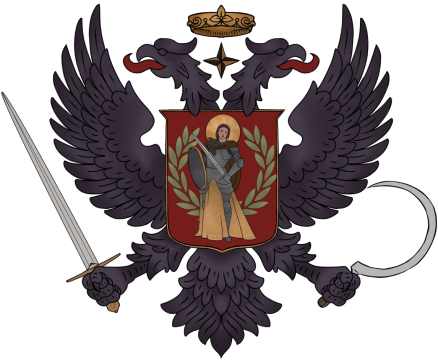
THE SALVIAN BUREAU OF PETRA “With their return, did our heart’s deepest joy, and our yet hardest labours, begin in earnest.” Dame Amélie Auclair, 135 A.R.P Issued and averred by Their Highnesses & Atstana de Regne Petrère 203 DISESTABLISHED DURING THE TENURE OF THE DAME-CHANCELLOR AUCLAIR, the Salvian Bureau once served as the diplomatic corps of the Petran Commonwealth. As the bustle of the High Kingdom of Idunia continues, it has been made increasingly clear to both the Archduke & Archduchess that there is a need for diplomats within the Petran Commonwealth once more. Limited in their scope compared to the original Salvian Bureau, it is the intent of the Garmont Throne to restore this branch of the River Council to aid in the affairs of diplomacy within the High Kingdom of Idunia. With news of this having been declared in the Archducal Court of 198 A.R.P, with the promulgation of this missive, let it be known to those Pétrines skilled in the oratory arts, apt with their penmanship and calm of mind that there is a place amidst this reformed bureau for they. ON THE ROLE OF THE BUREAU The Salvian Bureau is henceforth tasked with acting on behalf of the Garmont Throne in matters of internal diplomacy within the Petran Commonwealth and the High Kingdom of Idunia. The Salvian Bureau shall act in the manner in which they are tasked, ranging from the duties of preparing preliminary agreements such as trade with other vassals of the High Kingdom, or fostering goodwill through promoting cooperation in shared endeavours of the realm. Secondary duties of the Salvian Bureau are varied, as its Emissaries are entrusted with performing and acting in the name of the Garmont Throne and River Council in matters of lesser import. ON THE STRUCTURE OF THE SALVIAN BUREAU Lady Emissary of the Salvian Bureau - Archduchess Magdalena I of the Petra Headed by the Lord or Lady Emissary, below they are the Emissaries, who are entrusted with carrying out the directives delivered unto them by the Lord Emissary. The Lord Emissary in turns is tasked with matters by the Archduke of the Petra by way of the bi-yearly convening of the River Council within the Palais Madelaine of Riviènse. Emissary of the Salvian Bureau An Emissary of the Salvian Bureau acts on behalf of the Lord Emissary, convening with the Lord Emissary to deliver the progress of their tasks, whatever they may be. The specific duties of each individual Emissary shall vary as the needs posited upon the Bureau shall vary with time. Largely, however, an Emissary may expect to be engaged largely in the fostering of goodwill with the neighboring holdings of the High Kingdom on behalf of the Garmont Throne. The size of the Salvian Bureau shall be maintained at a half-dozen or so in size, though may grow or shrink upon the demand and discretion of the Lord Emissary. Given the additional duties of the Bureau, such may be subject to change amidst times of great need, or times or lesser activity in the sphere of their duties. ADDITIONAL DUTIES OF THE SALVIAN BUREAU An Emissary of the Salvian Bureau may also be expected to perform secondary duties in the relaying and handling of low-level work for the River Council. Given the volume of inquiries presented to both they and the Garmont Throne of the Petra, an Emissary may be entrusted to act on behalf of the Commonwealth in smaller matters. Such may include the relaying of information, contacting parties involved within matters of the Petran Commonwealth and otherwise acting on behalf of the Archduke and the River Council if required in matters deemed not especially urgent as to require the direct input and action of the crown and its agents. When not fostering goodwill within the wider realm, this shall likely prove the bulk of any Emissary’s duties. Experience as a Salvian Emissary may prove vital for any seeking election to the Office of the Chancellery as this shall provide an Emissary a measure of experience in the day-to-day affairs of the Pétrine state. A host of experience may be accrued through the varied situations one may be presented with. Additionally, Emissaries of the Salvian Bureau are expected to uphold the Catherinian Code and the Four Chivalries by which the Petran Commonwealth abides. Failure to do so throughout the course of their role may result in their removal from the Salvian Bureau. ON JOINING THE SALVIAN BUREAU An aspiring Emissary must be of the age of eighteen at minimum, a resident of a Pétrine holding, and of good standing within the Law and the Faith. In addition to this, a prospective Emissary must undergo a process of interview with the Lord Emissary in which their qualities shall be assessed and their aptitude measured. Wards or former wards of the River Court, shall be looked upon favourably in the process of recruitment, as shall those of established Pétrine houses. S I G N E D, HIS HIGHNESS, Joseph Antonius Aurèle, Archduke of the Petran Commonwealth, Prince of Riviènse, Duke of Seviel, Marquis de Val d’Estenou, Count of Moere, Neraquelles, Temesch, Torm Marian, and Vallagne, Viscount of Mies, Baron of Eagles Peak, Garmont, Hrenthorne, and Resmore, Protector of the Meadows. HER HIGHNESS, Magdalena Anastasya, Archduchess of the Petran Commonwealth, Princess of Riviènse, Duchess of Seviel, Marquise de Val d’Estenou, Countess of Moere, Neraquelles, Temesch, Torm Marian, and Vallagne, Viscountess of Mies, Baroness of Eagles Peak, Garmont, Hrenthorne, and Resmore, Protector of the Meadows, Lady Emissary of the Salvian Bureau & Dame of the Petrine Laurel.



-
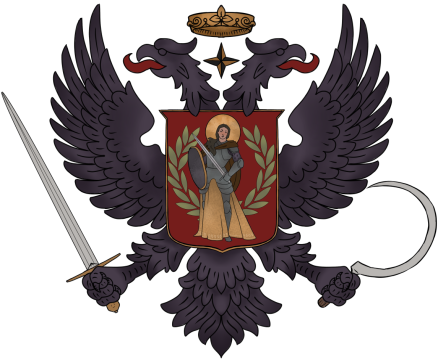
"Our southern cousins yet abide by the Chivalries." The Pétrine Archduke of the House Temesch of the Petra murmured with approval after having read the missive, a soft smile coming to rest upon his features. "Valour, duty, and loyalty to God and Country." Joseph I recited of these tenets to his eldest son, a boy no older than six@BoyWonderr. His own thoughts drifted to the meeting within the halls of Kazan, a question now answered in his mind which had lingered in its aftermath. "Perhaps we ought to write them a letter?" Joseph mused as he offered the missive in turn to the Archduchess Magdalena @Phersades
-
THE QUARTER OF HELWYR Issued and averred by His Grace Joseph I Atstana de Regne Petrère 198 For decades within the Commonwealth, the Order of Helwyr have sought to combat the forces of the malign. Dedicating themselves as an order of warriors with the purpose of purging the dark wherever it might be found, the Order of Helwyr aided in the maintenance of security within the Petran Commonwealth through cooperation with past monarchs and institutions within the Petra. This arrangement stood until the Great Exodus from the continent of Aevos, though the bond shared did not fray amidst this journey and the search for a new continent to settle. With the establishment of the City of Riviènse and the wider settling of the Pétrine people in these new lands, it has been decided between the Garmont Throne and the Order of Helwyr to renew these bonds with a spirit of cooperation, continuing this tradition of a shared struggle against the forces of the dark. Therefore, it is decreed within this document the terms by which this expanded and renewed cooperation shall take form, providing the bedrock upon which continued friendship may prevail to the betterment of the Petran Commonwealth. ARTICLE I - COOPERATION AGAINST THE DARK I. The Order of Helwyr shall work in tandem with the military of the Petran Commonwealth to root out the malign within the borders of the Commonwealth. II. The Order of Helwyr shall, with adequate evidence and forewarning to the Archduke or the Chancellor of Petra, be allowed to undertake actions in this capacity of their own accord within the Petran Commonwealth. Accordingly, the Order of Helwyr in this capacity is entitled to lawfully utilize the necessary force to achieve these aims in this pursuit. III. Joint training between the Order of Helwyr and Order of the Petrine Laurel shall be held and organized on a regular basis to promote coordination and experience to both institutions in this task. IV. The Order of Helwyr, while cooperating directly with the Order of the Petrine Laurel shall adhere to the command of the Knight Commander or his designated officers, though shall reserve the right to act independently, or deny an order should they find it in violation of the Laws of the Helwyr, as set forth by the missive The Helwyr of Tal’andria, 232 S.A. I. Should the Helwyr find themselves denying their involvement in an order issued by the Knight Commander of his designated officers, they shall not obstruct its enactment either. V. The Order of Helwyr and Petran Commonwealth shall in tandem maintain a registry in the form of written records of darkspawn activity, and evidence pertaining to this. This information shall be shared freely between both parties, as well as the relevant authorities of the High Kingdom of Idunia upon request. VI. Although the Order of Helwyr operates in a number of realms beyond that of the Petran Commonwealth and its liege lords in the High Kingdom of Idunia, given the centralized infrastructure the order is to maintain in Petra, should investigations into citizens beyond the Petran Commonwealth occur, the Order of Helwyr shall provide notice to the Archduke of the Petran Commonwealth so that the relevant authorities may be informed of the order’s intentions in their lands. ARTICLE II - ESTABLISHMENT OF THE HELWYR QUARTER I. In addition to increased cooperation with the military of the Petran Commonwealth, the Order of Helwyr shall be afforded space within the City of Riviènse within which they are entitled to the construction of a fortified quarter within which to operate the infrastructure of their order. II. The Order of Helwyr shall be afforded the right to maintain fortifications within this quarter, upon the condition that the officers of the Order of the Petrine Laurel shall be provided keys to the main fortifications of the quarter. I. Main fortifications include the gatehouse and locked doors of outer fortifications of the quarter. This does not include keys into the direct guild space itself. III. The Order of Helwyr are exempted from the Petrine Housing Code amended into the Catherinian Code in regards to the construction of basements within their quarter, provided they remain within the allocated space. IV. Given the nature and size of the Order of Helwyr, the quarter which they inhabit shall be exempted from direct taxation by the Garmont Throne in accordance with the articles of incorporation of the Free City of Chambery. I. Should the Order of Helwyr enact Article II, Section V, the status of taxation shall be revisited should the order seek to occupy land outside of the City of Riviènse. V. Should the Helwyr Quarter within the City of Riviènse prove to be no longer desirable to the Order of Helwyr, they are afforded the right to relocation in the hinterlands of the Commonwealth, pending discussion with the Archduke of the Petran Commonwealth and the confirmation of a location within which to re-establish a guild headquarters. ARTICLE III - ON PREVENTING THE VOID I. Beyond the primary aim of curtailing any rise or influence of the dark within the Petran Commonwealth, the Order of Helwyr and the Garmont Throne shall coordinate with one another to prevent the unnecessary and dangerous usage of magicks within the Petran Commonwealth. II. The Order of Helwyr shall, with adequate evidence and forewarning to the Archduke or the Lord Chancellor of Petra, be allowed to undertake actions in this capacity of their own accord within the Petran Commonwealth. Accordingly, the Order of Helwyr in this capacity is entitled to lawfully utilize the necessary force to achieve these aims in this pursuit. I. Should the Order of Helwyr find no representative of the Garmont Throne present, they shall be allowed to act with the assurance that the matter shall be brought forth with all haste to the Garmont Throne. Should evidence be deemed inadequate, the Order of Helwyr shall reverse these actions to the fullest extent possible. III. The Order of Helwyr, while cooperating directly with the Order of the Petrine Laurel shall adhere to the command of the Knight Commander or his designated officers, though shall reserve the right to act independently, or deny an order should they find it in violation of the Laws of the Helwyr, as set forth by the missive The Helwyr of Tal’andria, 232 S.A. ARTICLE IV - ON DURATION AND AMENDMENTS I. Upon the promulgation of this agreement, the terms shall remain in effect until such a time both signatories see fit for the dissolution of the agreed upon terms. II. Should either signatory seek to amend the provisions of this agreement, they are entitled to seek to do so through re-convening to amend the terms through civil discussion. S I G N E D, HIS GRACE, Joseph Antonius Aurèle, Archduke of the Petran Commonwealth, Duke of Seviel, Marquis de Riviènse & Val d’Estenou, Count of Moere, Neraquelles, Temesch, Torm Marian, and Vallagne, Viscount of Mies, Baron of Eagles Peak, Garmont, Hrenthorne, and Resmore, Protector of the Meadows. HER GRACE, Magdalena Anastasya, Archduchess of the Petran Commonwealth, Duchess of Seviel, Marquise de Riviènse & Val d’Estenou, Countess of Moere, Neraquelles, Temesch, Torm Marian, and Vallagne, Viscountess of Mies, Baroness of Eagles Peak, Garmont, Hrenthorne, and Resmore, Protector of the Meadows & Dame of the Petrine Laurel. Lothric Vihai’lyu, Grandmaster of the Order of Helwyr. Irulan Amethil, Master Alcemydd of the Order of Helwyr. Adonael Amethil, Master Ailer of the Order of Helwyr. HIS GRACE, Sir Therin of the Petra, Knight Commander of the Petrine Laurel & Archduke-Emeritus of the Petra.


-
THE CHAMBERY-RIVIÈNSE INTEGRATION CHARTER Issued and averred by His Grace Joseph I Atstana de Regne Petrère 198 SINCE THE FIRST DAYS OF AEVOS, The Free Port of Chambery has been an integral part of the Commonwealth of the Petra. Originally founded to host the revered and historic Northern Geographic Society, it has since sprawled and grown into a metropolis in its own right, largely thanks to its unique guild laws and the lively organizations which those laws attract. There is no doubt that Chambery has given great support to its sister-city of Vallagne over the years, and indeed to the Commonwealth as a whole. It is in these most recent decades that Chambery has seen difficult times when it comes to its own government, with a lack of stewards and council members to keep the city functioning, and much of its day-to-day necessities being run by a single woman. Out of concern for this state of affairs, Chambery’s mayor and the Archduke came together to discuss the city’s future. From this meeting, an answer which solved all presented problems became quickly clear to both parties. In order to ensure the continued success and growth of Chambery’s people, Chambery shall henceforth become a District of Riviènse. With this, it will gain access to the wide network of Riviènse’s stewards to help manage its properties, the Commonwealth’s treasury to finance any needed renovations, and will be invited into greater collaboration with the rest of the Commonwealth’s people. It shall no longer owe vassal taxes to the Archduchy, and shall altogether continue to function as it has for the past several years, but with heightened support for its future success. In turn, the City of Riviènse will adapt much of Chambery’s previous laws regarding guilds, including tax exemptions on all qualified guild halls. Chambery’s guilds will be able enjoy the same freedoms as they previously held, and new guilds will be welcomed to take their place freely in any part of the capital. Revisited in the year 198 A.R.P, the treaty first discussed by Archduke Therin I and the Portmeister Viny'Ox O'Nico has been agreed upon anew, and is promulgated henceforth. ARTICLE I - THE INTEGRATION OF CHAMBERY I. The previous Charter of the Free Port of Chambery shall be dissolved. II. The Free Port of Chambery shall henceforth be known as the District of Chambery, primary home of Riviènse’s artisans and cultural institutions. III. The Northern Geographic Society Museum shall be preserved in its current state as an untaxed cultural and academic institution, and shall continue to operate as usual under the oversight of its President. IV. All edicts and ordinances previously passed by Chambery’s local government will be rendered null and void, as it will fall under the law and ordinances of Riviènse from this point forth. V. The District of Chambery shall work closely with the River Court to bolster and support each other, sharing resources to collectively enhance Petran culture. VI. The District of Chambery shall no longer be required to pay vassal taxes to the Treasury. I. All homes and shops within the District of Chambery will instead be taxed directly by the Treasury. II. Stewards of Riviènse will gain the ability to sell homes within the District of Chambery. III. All guild halls currently residing within the District of Chambery with a tax-exempt status will be permitted to remain so. VII. The Office of the Treasury shall assist the District of Chambery in paying for any renovations and remodels it requires. ARTICLE II - THE ESTABLISHMENT OF THE POSITION OF PORTMEISTER I. The Portmeister (Or Portmeistera) shall serve as the civil representative of the District of Chambery, within the office of the Mayor of Riviènse. II.The Portmeister shall represent the District of Chambery within the Garmont Assembly. III. The Portmeister shall serve as the Head Steward of the District of Chambery. IV. The Portmeister may act as liaison for guilds and cultural institutions within the City of Riviènse when requested to, and will serve as a general supervisor of guild activity alongside the Mayor of Riviènse. V. Upon the establishment of the Merchant’s Guild, the Portmeister will have a key role in managing the city’s varied businesses. VI. The Portmeister shall facilitate the docking of ships at Riviènse’s ports, passing on information of ships requesting dock to the Grand Treasurer and negotiating docking fees. VII. The term of a Portmeister shall last for fifteen years. VIII. Upon the abdication or removal of the Portmeister, or the natural end of their term, a standard election shall be held to determine the next Portmeister. If the election is for any reason unable to be held, the Mayor of Riviènse may appoint a new Portmeister. ARTICLE III - THE GUILD LAW OF RIVIÈNSE I. Guilds which settle within the City of Riviènse may apply for a tax exemption upon their guild hall. II.New guilds shall undergo a trial period of at least three years, in which they must display regular business or meetings, economic or cultural contributions, and at least three active members. After passing the trial period, a tax exemption shall be issued. III. Tax exemptions may be revoked if the guild displays a lack of any meetings, business, or active members for over four consecutive years. IV. Tax exemptions only apply for guild halls within the City of Riviènse and its existing properties. Any guild wishing to construct a hall or keep outside of Riviènse shall be taxed, unless negotiated under special circumstances with the Grand Treasurer. S I G N E D, HIS GRACE, Joseph Antonius Aurèle, Archduke of the Petran Commonwealth, Duke of Seviel, Marquis de Riviènse & Val d’Estenou, Count of Moere, Neraquelles, Temesch, Torm Marian, and Vallagne, Viscount of Mies, Baron of Eagles Peak, Garmont, Hrenthorne, and Resmore, Protector of the Meadows. MADAME, Viny'Ox o'Nico, Burgemeistra-Emeritus, Portmeistera of the Cultural District of Chambery, Head of House Nico, Little Catknight of the Rosé. THEIR EXCELLENCY, Cameron Harper Reinhold, Grand Treasurer of the Petra.



-
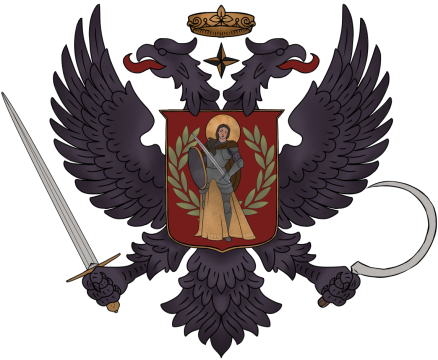
AN AUTUMN’S BLESSING Issued and averred by Their Graces & Atstana de Regne Petrère 198 “ For I have placed into your heart a wealth of virtue, and I have created for you a garden of abundance.” Virtue 2:7 ONCE MORE BELLS RANG OUT FROM WITHIN THE PALAIS MADELAINE, announcing the birth of the second child of the Archducal family. A daughter has been born to the House of the Petra bearing the name EUGÉNIE CECILE TEMESCH OF THE PETRA. @Moenah Like her brother before her, with thanks to God, the girl was born without complications and both mother and infant are in good health. It is a most joyous blessing bestowed upon the Archduke and Archduchess to see their family grow so swiftly. A sign of prospering times, as are seen at current within the Commonwealth. The girl bears the middle name Cecile in honour of her aunt, Lady Milena Cecilya Valkonen, the elder sister of Archduchess Magdalena. In accordance with Pétrine tradition, Eugénie Cecile is named as the COUNTESS OF CLERMONT. Last held by the Princess Rowena of the Petra, it is hoped that the young Eugénie shall come to hold the same chivalrous qualities of the Third Knight Commander of the Reformed Petrine Laurel who valiantly devoted her life in service to the Petran Commonwealth. S I G N E D, HIS GRACE, Joseph Antonius Aurèle, Archduke of the Petran Commonwealth, Duke of Seviel, Marquis de Riviènse & Val d’Estenou, Count of Moere, Neraquelles, Temesch, Torm Marian, and Vallagne, Viscount of Mies, Baron of Eagles Peak, Garmont, Hrenthorne, and Resmore, Protector of the Meadows. HER GRACE, Magdalena Anastasya, Archduchess of the Petran Commonwealth, Duchess of Seviel, Marquise de Riviènse & Val d’Estenou, Countess of Moere, Neraquelles, Temesch, Torm Marian, and Vallagne, Viscountess of Mies, Baroness of Eagles Peak, Garmont, Hrenthorne, and Resmore, Protector of the Meadows & Dame of the Petrine Laurel.






-
The Archduke Joseph beamed as he gazed upon his son for perhaps the hundredth time in a day, thanking God for the blessing and the health of both little Albéric and Magdalena both. "I could not ever be more proud than I am now." He mused to Magdalena, now recovered as of the time of the missive being promulgated into the Commonwealth and wider High Kingdom of Idunia. He did also confirm to his leal personal guard, Etienne, that the boy was given the middle name for he. In thanks for the man's service in saving his life in years past. @Phersades@Monster_Duck
-
Amidst the planning of the Great Exodus from Aevos, the newfound Archduke Joseph took pause to read over the missive. Though it had been announced a month prior amidst a court held within the reclaimed City of Vallagne, the news yet unsettled he to some degree. Much of his life had been spent in preparation to assume the mantle of his birth, though to realize it now within the aftermath of the defeat of Orsathiael would remain as a lingering sense of anxiety. He had much to live up to, and he could only hope that in time he would do so. His gaze fell upon one sentence in particular, such being uttered to his wife the Archduchess Magdalena. "The River endures."
-
Joseph of Valfleur sat within the clinic of Vallagne as the missive made its way across the confines of the River Petra. Though injured in the fighting before the gates of Númendil, he lifted his spirits in telling the story of chasing the fleeing host as far as the woodland below the Principality of Tir-Glas.
-
His Sideburns Did Not Stop The Blast (PK Post)
Deets replied to MasonMcBadbat's topic in Duchy of Vohenheim
The streets of Numenost bustled in the aftermath of the expedition to the desert. The wounded were swiftly carried to the clinic, or tended to where they could be. Those who yet remained in good health murmuring amongst themselves in search of answers in regards to what they had just faced in the streets of the Ghost Lake. Joseph of Valfleur could only think of how he might honor the sacrifice of the late Aber. Contemplative silence overtook him as he found a small outcrop of rocks to ponder. He resolved only to fight on. There would be more days, and they would be present to fight, thanks to Aber. -
Sir Clemens received news of Ser Andrei's passing shortly after departing the confines of the Monastery of Saint Rhosyn. He had not been the closest of friends with his Haeseni counterpart, though he had always held him in high esteem when they had had the privilege to work alongside one another. "I will pray for your family, Andrei." Clemens resolved before lighting the candles before the altar contained within. Another friend had perished, and he found more often he shared his dreams with ghosts.
-
Upon the hillocks dotting the outskirts of Vissingren Castle now rested the body of what once had been the man known as Abern of Vissingren, though he had been born as Dietmar von Theonus. As a young man he had fought upon the roads in the name of the Aaunish King during Heinrik's Rebellion, learning then firsthand the brutality of war and its costs. Swift on his steed, and with the songs of Waldenia of old in his heart, he had fought his first of many losing battles. In time, he had fathered four sons, none of whom had outlived him. The first had been slain by the House of Stassion during the opening days of the War of the Covenant, forever known as a Martyr of the Commonwealth. The second had died in his arms within the Franklands, a soldier in the expedition sent by the Waldenic Diet to make safe the Langkette for the Reinmaren. In time, with fewer faces he recognized, he had come to take a new name, Abern of Vissingren. Perhaps to forget what had once been, for he yet stood. Thus when missives came pouring forth about the intent of the Holy League to march upon Vissingren Castle, he resolved to stay. Orders had been given to evacuate, though the aged stone walls were all he had left in his mind. Little else reminded he of the life he had lived, and he would not abandon it in the faces of the Hells themselves. He would join his beloved Anneliese and his sons in the Skies, should the threat be true, for he was one of the few remaining men of House Theonus who had been born upon the path. He would not die old in his bed. He had seen the scouts nearing, each time holding a javelin aloft in preparation for the fight to come. Yet each time they withdrew, and for a brief moment, he felt hope. Though such was shattered as the army of assembled men of Grense, Numendil, Urguan, Krugistan and others of the Holy League came crashing through the woods from the north. Then rode forth Tiberias of the Midlands, addressing the small garrison of House Theonus and a contingent of allied soldiers from Hyspia. Surrendered was offered, for he called those present brave for standing in the face of the thousands now assembled beyond the walls of the castle. Dietmar's javelin was hurled in reply, for he would not surrender his home, however futile his own efforts may be in preventing its storming. With an answer given it began, the gatehouse was stormed in a matter of moments by a force far larger than the those holding it, and the defense, however brave, was condemned to its fate. Men now scaled the walls and clambered over one another into the courtyard below the main hall. Dietmar now faced Hadrian of the House van Aert upon the walls of Vissingren. Courteously, he was offered the chance to surrender. Though once more, he refused. "It is my home. Would you not do the same were it yours?" The words came with no malice toward Hadrian. The brief duel began in earnest, he had little chance, old as he was, against the Midlander below he upon the battlements. It was a fight decisively not in his favor and his blow was deflected with little difficulty. Fighting across the castle by then had begun to wane, those not slain were captured or in the process of attempting to flee. A second man entered the duel, shoving Dietmar from the battlements of Vissingren. Distracted and old he stood no chance against two fighters half his age who with their combined efforts sent him falling from the walls towards the hills below. Thus fell Dietmar, son of Adalric, within the Black Hills of the Petra.
-
Sir Clemens had always known the now Bishop of Casica to be a reasonable man, one devoted wholly to the Church throughout his lifetime in spite of what the Bishop had seen as increasing wrongs within the institution. At the onset of the ongoing war, he had confided in Bishop Godfrey his own fears, for he trusted in his heart that his childhood friend would know whether his worries were real. That he had published such a document reaffirmed in the Chancellor's mind that he had spoken to the right man and that the cause of the Petran Commonwealth was just, one to be seen through until peace could come.
-
“ ” A house of intrepid Waldenian adventurers, merchants, knights, and statesmen of the Petran Commonwealth. Originally soldiers of fortune in service to foreign monarchs, the history of the Haus von Theonus is one of loss, rebirth and renewal. Contained within this document is an in-depth, although by no means wholly complete chronicling of the family, including its history to the present day. It is a house forged by the sum total of the efforts of its members. At current a proud ducal house which lives upon the eastern frontier of the Petran Commonwealth, overlooking the River Constanz. I. History II. Culture III. Values IV. Traditions I. Almaris The Haus von Theonus was founded by Dietrich von Theonus, in the year 1796, the first year of the Second Age. While the rest of his family had perished during the conflict which had plagued the Kingdom of Haense, Dietrich had survived. Shedding his family’s traditional life as farmers, the young Dietrich had resolved to never be as helpless as he’d once been as a child. Through this determination, and a chance encounter in a roadside tavern, the Icathian Company was founded. Its history and that of the Haus von Theonus are intertwined. At first rejected as soldiers of fortune by the then Haeseni Marshal, the first iteration of the company sought their fortunes elsewhere. Finding a warm welcome in the icy northern realm of Norland. The tenure of Dietrich as patriarch, and as one of the Lord Commanders of the Icathian Company was quite brief. Missing his homeland, the then middle-aged Dietrich passed off the mantle of the house and the title of one of the two Lord Commanders to his teenage son, Alric von Theonus. Word occasionally reached the Nordling realm of an aged sellsword residing in the rose covered lands of Reinmar, who often spent his days beneath a tree overlooking the Haeseni countryside. Though relatively brief, the tenure of Dietrich von Theonus saw the Icathian Company expand as far afield as the Jade State of Yong Ping, playing a role in the realm’s emergence into its own from Talon’s Port. Most importantly defending the Jade State from the Metinian Company during a bout of hostilities within the district. Mercantile ventures were as well undertaken during the time of Dietrich, with the family operating enterprises in the cities of Varhelm, Karosgrad, Yong Ping, and Urguan for a time. Under the Ruric Kings, Halvar and his son King Sven II, the Haus von Theonus were loyal soldiers of fortune, fighting faithfully as the vanguard in many battles that shaped the future of the house. In return, the then patriarch of the family, Alric von Theonus was afforded the right to build a keep overlooking the maple forest to the kingdom’s eastern border, the seat of Hjoldenskarven. The Icathian Company and the Haus von Theonus resided within this fortress until the year 32 S.A, the death of Sven II. During this time, the Icathian Company and by extension the Haus von Theonus participated in the Tenth Nordling War, acting as a trusted king's guard to Sven II throughout the conflict. A painting depicting the Icathian Company defending King Sven II at the Battle of Outer Arentania, 25 S.A. In the aftermath of the defeat in the war, the Icathian Company remained within the Kingdom of Norland, albeit greatly diminished by losses suffered in the war. Soon after the death of Sven II, who was as a brother to Alric, the Icathian Company and the fortunes of the house began to decline. Forever changed by the death of Sven, Alric allowed both his house, and the Icathian Company to fall into decline. The number of contracts the company took on as both mercenaries and a merchant trading company declined. With this being the case, many members of the company began to slowly depart, seeking out their fortunes on their own and becoming the first of the Theonus Partisans, a lasting trend to this day. By the birth of the third patriarch, Karl von Theonus, the company had all but collapsed, as had the fortunes of the Haus von Theonus. The keep of Hjoldenskarven had fallen into decline and had been abandoned many years before his birth. His father Alric had remained so distraught following the Tenth Nordling War, and the death of Sven II almost forty years later, that out of guilt he suddenly left all his worldly possessions to his own teenage son. Soon after, much as his own father had, Alric disappeared from the world. Shortly thereafter the death of the second patriarch occurred, the man finding his death in the same cave that his long lost friend Sven II had perished all those years ago. Travelling about with a small number of the Icathian remnant, Karl began the cycle anew, taking on the same profession as his predecessors, albeit without the title of Lord Commander of the Icathian Company, this now lost to time. Though it is said that the other first Lord Commander, Ves of Yondor still travels about the continent of Almaris, and now Aevos. His mind forever lost to madness after a century spent upon the open road. At the onset of a bout of hostilities occurring across Almaris, Karl suggested to his companions, including the ancient soldier Gansk Lamar, that they seek work in Haense. Having remembered the bond his father had once had with the then Duke of Reinmar, Friedrich Barclay, decades ago. The young man set out with a bar of gold stamped with the Barclay sigil, intent to make his fortune. Finding employment then as a household guard in the Reinmaren Retinue of Princess Johanna I of Sutica, the then Duchess and successor of Friedrich who had given Karl’s father the gold. Karl then soon became a close friend and confidant of the Princess of Sutica during her reign. It is said that one cannot carry the burden of family alone, and this is certainly true as well of Haus von Theonus. During this time, Karl met Annette von Audrick, who would prove pivotal to the history of the renewed house. Within the town of Rozenfeld, it was she who taught the young man of his heritage, and of the culture which he was parted from in his youth. In time, the two wed, and their shared ambitions grew. On the prompting of Annette, the Haus von Theonus sought, and were granted a seat within the Waldenic Diet of Lord Vandalore Ottomar von Alstreim, first known as the Electorate of Theonus, later the Electorate of Einmont, Marignan, and at current Vohenheim. Additionally, for a time Annette von Theonus ran for political office in Haense, becoming a Royal Alderwoman of the Haeseni capital of Karosgrad. The original coat of arms of the House von Theonus during the life of Karl & Annette von Theonus. Although no longer its official coat of arms, it is used internally in informal documents and the like. The importance of Annette to the history of the Haus von Theonus must not be understated. It was her support which inspired Karl to soar to new heights alongside her, and was not without sacrifice. In pursuit of this ambition, Annette vacated her role as Alderwoman as the family found itself settling within the lands of the Reinmaren. Where Karl went, it was not without the undying support of Annette, who throughout her life was the other driving force of the family in all aspects. Without her, there would be no house, nor story. In battle too Annette went, wielding a warhammer forged by Karl which she carried proudly, proving herself as a brave and capable shieldmaiden in many battles that would break those of weaker wills. The strength of Annette was such that during the Carrion Prince’s siege of Karosgrad, she captured a banner of the ill-fated prince, which is displayed within the treasure room of Vissingren Castle, before returning unharmed to tend to the wounds of her husband Karl. Many values, beliefs, and aspects of the familial culture are attributed to Annette, including the first ceremonies of Maibaum, the relearning and embracement of the Waldenian language and culture, and the maintenance of a vast library in the familial seat. An aged Karl von Theonus remarked once to his faithful companion and mentor Gansk Lamar, “Without Annette, I would still be that boy who wished to play at war and reclaim what my father lost, unknowing that such would prove to be my own downfall. It is because of her that I have learned there is more, far more than I could have known all those years ago.” A portrait of Viscountess Annette von Theonus in the Rose Fields of Reinmar. In the year 117 S.A, the Haus von Theonus was elevated to Lordship and nobility under the then Duke of Minitz, Brandt Barclay, taking the title of Einmont. Einmont thus became the first title held by the house, becoming the namesake of their Electoral Seat within the Waldenic Diet until its eventual replacement with Marignan and then Vohenheim in the following decades, a title originating from the Commonwealth of the Petra and Heartlander Confederation respectively. Since the collapse of the Heartlander Confederation, the familial electoral seat of the Waldenic Diet has remained the Electorate of Vohenheim. For over two decades, under the leadership of patriarch Ser Karl von Theonus & matriarch Annette von Theonus, the House of Theonus resided within the lands of the Reinmaren, serving as loyal officials, soldiers, and advisors to the House of Barclay von Minitz. In this capacity, the family participated in Heinrik’s Rebellion, remaining loyal and fighting for the royalist cause in support of the reigning House of Alstion. Many of the men and women who would come to define the house during the twentieth century were forged in the crucible of war, most notably a young Theoderic von Theonus. Several members of the house, including Theoderic & Dietmar of Einmont, partook in the skirmishes which occurred within the countryside, seeing some success in their combined efforts with Haeseni volunteers supporting the royalist cause. A painting of an ambush by Royalist forces during Heinrik’s Rebellion, including a young Theoderic von Theonus in the bottom rightmost corner. Beyond conflict and strife, contributions made by the family included a motion to the Waldenic Diet to found the Waldenic Library, housed within the city of Neu Brandthof. Penned by Lord Karl and Lady Annette, the library soon began to house numerous books by Waldenians authors, or pertaining to Waldenian culture, such as the Vander Tales. Annette became its first Curator, encouraging the denizens of Minitz to express themselves through literary arts, finding some successful through the collection of the poetry of Pious Pongles and the author Ulrich von Minitz. In the aftermath of the rebellion, little changed in the day to day life for the house. Having not possessed lands beyond the confines of the city of Neu Brandthof, little changed beyond the blood that had been shed in the battles of Velec, Rolly’s Hill, and The Two Churches. As time went on, however, several members of the house expressed increasing difficulty with life within Reinmar. Many found it difficult to commit themselves to aspects of the Reinmaren culture, opting instead to retain an identity more reminiscent of that of their Waldeno-Haeseni ancestors. Although this soon became a secondary concern as it became evident that a rising threat now loomed large over Almaris, the Mori’Quessir. The now Lord Regent of Minitz, Ser Karl von Theonus, spearheaded efforts within the Grand Principality against the encroaching Mori. For a time, efforts to defend against this rising threat were successful, seeing the repulsion of an incursion of Mori scouts upon the roofs of Neu Brandhoft and the successful slaying of a Dreadknight in a cave on the outskirts of Valfleur. As the Mori continued their advance across all of Almaris, the Haus von Theonus was a participant in the failed Siege of Fenn by a combined host of Descendant forces which sought to counterattack and seize the initiative from the Mori. With the failed siege scattering the united host, the remaining men of Einmont, alongside Reinmaren contingents who had participated soon returned to Neu Brandthof, preparing the city for a siege. Ultimately, the seat of the Grand Principality met the same fate as all other holds across Almaris. The family was among those who fled the city during its fall to the Mori’Quessir, finding themselves encamped alongside the Reinmaren in the ruins of Savoy. II. Aevos In the year 136 S.A, the house was released of their fealty to the Grand Principality of Reinmar. Owing to finding difficulty in shedding their original culture, and ways of life from Haense in favour of Reinmaren the expected customs and culture that continued service would entail, the Haus von Theonus found itself able once more to decide the direction of its future following the signing of the Eberwald Accord, which amicably dissolved its vassalage to the Princes of Minitz. In the following years, several members of the family sought to establish themselves elsewhere across the continent in search of a new home, in which their original culture and ways of life might thrive. The Commonwealth of the Petra soon proved itself to be this sanctuary for the house. Comprising at the time a number of Auvergnian houses, with large populations of both Waldenians and assorted Highlanders, it was within this land that the family came to settle anew. Originally residing in several houses and buildings within the City of Vallagne, it was not long before the Haus von Theonus came to the attention of Arch-Duchess Renilde I. Within five years, Karl von Theonus was given the title of Vavasour, non-hereditary nobility within the Commonwealth which signified that the Garmont Throne had a keen interest in the progress of the house. In the year 139 S.A, the Haus von Theonus was elevated to the Barony of Marignan, under Baron Karl & Baroness Annette von Theonus. With this elevation, the aged couple soon began to draw plans for the construction of a familial seat within the borderlands of the Commonwealth, having been landed within the Mardonlands to the eastern extremity of the realm. It was in this borderland as marcher lords that the family planted roots and established themselves wholly. With the construction of Vissingren Castle, the Mardonlands soon became a hub of mining and commerce within the Commonwealth. The Coat of Arms of the Barony of Marignan. From the Black Hills, so named for the smoke from the forges of Vissingren Foundry, did a new chapter of the family’s history begin. A new generation of ambitious Theonus soon found themselves engrossed in the affairs of the Commonwealth, coming to hold a slew of roles within its apparatus which would see them shape the realm for half a century. These ambitious family members, amongst them the Heir to Marignan, Godric, Thérèse, the siblings Theoric & Sigismund, as well as Artel & Calla established norms and precedents which to this day continue within the Petran Commonwealth. Institutions of the Commonwealth such as the River Guard were revitalised by members of the Haus von Theonus, with Marshall Godric von Theonus revitalising the army to a size of near two thousand men under arms within the Royal City of Vallagne. Throughout his tenure, the Red Cloaks of the Guard were a common sight upon the roads of the realm. Beyond such, several members of the family undertook the revival of the Stewardry apparatus of the Commonwealth, with Thérèse assuming the role of Commissaire at age 18, with the aid of Artel von Theonus as a steward of the realm. Throughout her tenure, new ledgers were issued and reforms enacted which aided in improving the efficiency of the Garmont’s Bureaucracy, a skill which would later prove pivotal in her promotion to Vice-Chancellor of the Commonwealth, and later rise to the Chancellorship. As would come to be a common feature of the family, banking and commerce was another area in which the first generation of Petrine Theonus excelled. The brothers Sigismund & Theoderic oversaw the reformation of the Petran Treasury, including the discovery and subsequent recovery of funds stolen by the former treasurer, the Count of Azor. Management of coin came natural to the duo, and would see what was in jest termed a Golden Age for the Petran Treasury. Beyond reformations, Baron Karl & Lady Calla von Theonus established through a Bill of the Garmont the Vallagne Medical Society, which continues to serve as the primary repository of medical knowledge, and medical professionals within the Commonwealth. Under the leadership of Head Physician Calla, medical knowledge was disseminated throughout the realm, saving countless lives over the years through her tireless efforts. For these combined efforts, the Commonwealth first elevated the Haus von Theonus to the rank of Viscounty, then Margravate, bestowing such upon the second Viscount of Marignan, Godric von Theonus in the year 151 S.A. By this time, it had become evident that Haus von Theonus had fully established new roots within the Commonwealth, becoming part of its ever-expanding tapestry of history. Outside the confines of the Commonwealth, the Haus von Theonus was as well present. Most notably in aiding their former liege lords in the Principality of Minitz in their continued struggle to tame the Franklands from its original inhabitants. At the behest of the Waldenic Diet, Haus von Theonus answered the call and repeatedly sent men on expeditions to aid the Reinmaren in pacifying their newfound home. These efforts culminated in aiding the Reinmaren defeat a Frankish assault upon the seat of the Prince of Minitz which occurred during a session of the Waldenic Diet. It was an attack of Theonus partisans led by Sir Artel von Theonus that captured the Frankish lieutenant known only as “The Hawk” in a daring descent down the side of a mountain, resulting in the storming of the Frankish bastion The Hawk had been operating from within. A testament to the skill at arms of the family, the daring assault resulted in a resounding victory which weakened the overall Frankish strength in the region. Though such an assault was not without its losses, seeing the death of Khorm von Theonus during the fight. The height of Theonus involvement within the Commonwealth’s governance occurred shortly after the death of Crown Princess Winifred of the Petra & Crown Prince Adrian Sarkozic. The national tragedy left Queen Renilde I with a young heiress in Princess Catherine Arabella of the Petra, and a long regency ahead should the Queen abdicate after over half a century upon the Garmont Throne. It was during this time of peril for the Commonwealth that Sir Konstantin von Theonus, a promising knight and son of Margrave Godric I, was asked to hold the Chancellorship of the Commonwealth, with his sister Thérèse as the Vice-Chancellor. Although never having expected to hold the role, Sir Konstantin devoted himself to the Chancellorship, enacting a number of decrees such as the Solland Settlement Act, and mandatory Aurum testing upon the Commonwealth’s nobility during a time of increased darkspawn presence and activity. Sir Konstantin was elevated to the role of Guardian of the Commonwealth during the Regency of Queen Catherine I, acting as regent to his goddaughter in a time of need for the Commonwealth. Such came at a time of great strife, as the clouds of war stirred across the Heartlands of Aevos. Throughout the end of the reign of Queen Renilde, tensions with the Commonwealth’s ally, the League of Veletz, saw a number of affronts which proved pivotal in the Commonwealth’s decision to realign against those who held dominion over the Midlands. Among these included the near death of Prince Alberic du Lac, uncle to Queen Catherine. Knowing that should he be overbearing, Sir Konstantin included the young Queen in the decisions of state, so that she might better understand the mantle she was to hold when she was older. Subsequently, it was a joint decision between the two to join the forces of the Covenant of Five, declaring war against their former ally the League of Veletz. A portrait of Sir Konstantin von Theonus, Lord of Bingleburg & Regina von Theonus, Lady of Bingleburg. Throughout the early years of the war, Sir Konstantin & Lady Thérèse oversaw the day to day affairs of the war and wider realm, having a capable bureaucracy and state apparatus largely staffed and reformed by their kin. The Haus von Theonus contributed greatly to the Petrine war efforts, supplying many hundreds of steeds to the cavalry forces of the Commonwealth, in tandem with both hundreds of soldiers of the Black Hills, and immense material contributions to forge both suits of plate and blades for those men and women of the realm who partook in the campaigns against the Anathema throughout the War of the Covenant. Sir Konstantin proved himself to be a capable commander, and formidable cavalryman, often leading from the front amidst the massive melees of both infantry and cavalry which defined the war. Thérèse proved a cool, and capable politician within the homefront of the Commonwealth, providing strong leadership in the face of the adversities faced by the realm throughout the conflict, which would in part be the reason for her attaining honorary Damehood within the Petrine Laurel many years later in recognition for her immense contributions to the Commonwealth. At the Battle of Whitespire, Sir Konstantin led the partisans of Haus Theonus, some five hundred strong in the fierce street fighting which proved to be the opening act of the wider War of the Covenant. From Whitespire at the outset of the war to the final Battle of Easworth forest, the banners of Haus von Theonus marched alongside the Garmont Throne, through the thick of the fighting. Most recognizable were the steel-clad warhorses of Mardonlander stock in many of the vanguards of the Covenant host. The Mardonlanders of Haus Theonus often found themselves at the forefront alongside their allies, fighting bravely and earning their reputation within the Commonwealth. Many Theonus partook in the conflict, with several members of the family earning knighthoods upon the field for their valour, such as Sir Artel von Theonus, knighted for valour at the Battle of Whitespire. The war, however, was not without its tragedies. In the same battle in which Sir Artel earned his spurs, Countess Isavella Jazloviecki (née Theonus) was slain defending her adopted kingdom from the treasonous forces of the Black Prince of Stassion. As the sole daughter of the first Viscount of Marignan, such weighed heavy on the aged Karl’s mind, some saying it was a loss he never truly recovered from. Moreover, Ghorm von Theonus, a partisan and cousin to Margrave Godric I was dishonourably captured, and executed by the Principality of Stassion, decried in Queen Catherine I’s missive A Man For A Hand. Sir Konstantin von Theonus leading the Mardonlander vanguard at the Siege of Fredericksburg, 163 S.A. Perhaps the most enduring tale of the Haus von Theonus from the War of the Covenant is of Sigismund’s Sacrifice. Uncle to Queen Catherine, Sigismund found himself as one of few men-at-arms in the retinue of the Little Queen during a daring raid upon the Royal City of Vallagne. The vast majority of the realm’s swords were in the field on campaign, leaving only a skeleton force to hold the Petran capital from any foe. Taking advantage of such, a much larger force numbering in the hundreds scaled the city’s wall with minimal resistance on account of the speed and determination of the assault. Knowing that the Queen’s party held little chance of escape with the current turn of events that day, Sigismund volunteered to remain behind to draw the attention of the raiding party. Tales told by the citizenry of Vallagne speak of how in his final moments, Sigismund stood surrounded by a party of mounted Burgundian soldiers, defiantly facing them in spite of the overwhelming odds. Sigismund knew there would be no escape, yet still he valiantly sacrificed his life so that others, including Queen Catherine might escape the onslaught. For this, Queen Catherine I posthumously elevated Sigismund as Sir Sigismund the Defiant, Knight of the Petrine Laurel. His sacrifice embodied what it meant to be a Knight of the Laurel, and of the Knightly Republic, and thus serves as a continued lesson told both within the Haus von Theonus, as well as the wider Commonwealth. An artist’s portrayal of the death of Sigismund von Theonus, posthumously named “Sir Sigismund the Defiant” for his sacrificial final stand in Vallagne, 161 S.A. At the conclusion of the War of the Covenant, the forces of Haus Theonus demobilised and returned home to the Black Hills, recovering after many years of war. Many hundreds of the Mardonlands had been slain in the numerous campaigns to destroy the League, and thus a time of recovery was in order. Financially, the house sought out a number of commercial opportunities. In the construction of the City of Kretzen in the newly independent Principality of Reinmar, the family found an opportunity in lending coin to aid in the construction efforts of the new home of their distant kin. From this came an expansion in shops, and mercantile activities to a level seen prior to the continent spanning conflict of years prior. The official portrait of Chancellor Thérèse Amorie von Theonus, 159 S.A. Most important in this wider effort was the ascension of Thérèse von Theonus to the Chancellery of the Commonwealth. Having served as Vice-Chancellor to the previous two holders of the position, Sir Konstantin von Theonus & Nicolas Wittenbach. Under Chancellor Thérèse, the Commonwealth began to revitalise itself after a decade of war. Having succeeded her brother near the conclusion of the war a new government was established, staffed by a new generation with the ambitious Thérèse at its head. Among her efforts include efforts to further include the nobility of the Commonwealth in the affairs of the state, in the hopes that their further involvement would prove beneficial to the reconstruction of the realm. In these efforts, the Lady Chancellor proved herself a capable and experienced executive, having honed her skills over decades in the Petrine state apparatus. Through the steady hand of Chancellor Thérèse, the Commonwealth was revitalised within five years of the conclusion of the War of the Covenant. During her tenure, the Lady Chancellor was unique in that little, if any political crises marred the domestic progress of her reforms. Some amongst the family call her the most successful Chancellor of the Commonwealth for her achievements in this regard. Though her brother had seen the realm through the majority of the war as Guardian of the Commonwealth, such had come at a steep cost to the domestic affairs, which was swiftly and effectively rectified by Chancellor Thérèse. It was thus an immense blow to the wider Haus von Theonus when suddenly the Lady Chancellor was forced to vacate her position as Queen Catherine I sought to reform the process of the Chancellery, turning such into an elective position by the subjects of the realm. Such proved to be a source of some strain with the Garmont Throne in the following years, as a series of successive chancellors saw lesser success in the pursuit of their agendas, and a general quiet in the development of the realm. During these years as well, another member of the Haus von Theonus rose to prominence. Sir Theoderic von Theonus was elected to the position of the Knight Commander of the Petrine Laurel after the political scandals which saw the resignation of its first Knight Commander, Sir Aimo of Astor, the Baron of Fir’steinn. Sir Theoderic oversaw the enlargement of the Laurel in the years following the War of the Covenant, as well as the retirement of several of its founding members and most experienced knights. In this task, Knight Commander Theoderic oversaw the recapture of several locations within the Commonwealth’s hinterlands which had slipped from the authority of the Garmont Throne throughout the war. Notable among these was the recapturing of Witt’s End, the former seat of the Barons of Wittenbach. The keep had been infested by a band of cyclops, and necessitated a prolonged storming to clear the foe from the confines of the aged keep. It was through the determined and resolute leadership that this process was undertaken, with minimal casualties for the Commonwealth. As the reign of Queen Catherine I continued, the Haus von Theonus joined the merged realms of the Commonwealth of the Petra and the Apostolic Kingdom of Aaun into the Heartlander Confederation. In this process, the family, in thanks for two generations of devoted and untiring service was promoted, receiving the title of the Duchy of Vohenheim, which would come to serve as the main familial title, replacing that of Marignan from within the Commonwealth. Thus, in near three generations time, the once Barons of Marignan had become the Dukes of Vohenheim, overlooking the region of the Mardonlands from their castle within the Black Hills. The Coat of Arms of the Duchy of Vohenheim. Within the Heartlander Confederation, the family soon looked inward as their primary focus. A new generation was born, requiring great effort to raise and teach both the familial values those before them held, as well as what it meant to be Petran, Waldenian and of the Heartlands. In this capacity, Duke Aurel von Theonus devoted himself to the newly established Legion of Saint Godwin, the military which would come to play a decisive role in the short history of the Heartlander Confederation. Whilst three knights of the newly established Order of St. Peter, led by the Petrine princess Dame Rowena of the Petra came from the house. This was not to last long, however, as the irreconcilable differences between the Petran and Aaunish people came to a head during the Valentius Crisis. The Haus von Theonus and their allies in the House of Astor played pivotal roles in both discovering, informing, and preparing the Commonwealth during the events that would become known as the Struggle for the Heartlands. It was Sir Konstantin von Theonus who discovered the Aaunish plot to make war upon Lurin through an unsanctioned military expedition, having been asked to support the ploy alongside the Heiress of Astor at a ball held in Rikardsburg by Haus von Augusten, another Waldenian noble family of the Commonwealth. Fearing that Prince John Valentius sought to blackmail and force the hand of the young Queen Adalia through backroom politicking with the Heartlander noble houses, Sir Konstantin swiftly informed both his nephew, the Duke of Vohenheim and the Baron of Astor of the unfolding plot. From these two houses did the nucleus of Petran activity emerge, swiftly forming a unified face in tandem with much of the Petran nobility against the would-be plotters. Armed with the knowledge provided by Sir Konstantin, the Duke of Vohenheim met with the Count of Enswerp, famously stating of his support for Queen Adalia, “She will know we support her when we stand by her side, not across her at the table.” It was evident then to the Duke that the Confederation as a whole was nestled upon the brink, and the events which came thereafter only proved his sentiment correct. Tensions continued to escalate as several Aaunish houses publicly supported or participated in the egregious crimes of the Marna Brigade against the Petran populace, most infamously the burning of the royal academy at Courteis Hale, resulting in several deaths to the smoke and flames. In spite of this, the Haus von Theonus remained loyal and steadfast to the Garmont Throne, with Duke Aurel von Theonus coming to serve as one of two regents, alongside the Princess Dame Rowena of the Petra, through the course of the struggle. In this capacity, Duke Aurel proved to be as uncompromising and able, similar to his mother Thérèse during her tenure within the Petran Chancellery. Through his actions, the Commonwealth was able to accrue support from a number of its allies, and present a unified face against both the Marna Brigade, and the House of Alstion, which refused to honour the original exit clause written within the agreement to merge the two realms. The Struggle for the Heartlands reached its climax at the Battle of Enswerp, in which Duke Aurel in tandem with the Baron of Fir’steinn led a thousand men into the County of Enswerp to capture what Petrans refer to as The King for a Day, Paul Moere, the disgraced and disowned son of Queen Renilde I. Having attempted to usurp the throne with the support of the Marna Brigade, Duke Aurel knew that this threat necessitated action, for inaction would only allow the rot of the pretender to fester in the already chaotic Heartlands. Having rallied fourteen hundred men within Vissingren Castle, Duke Aurel first sent an Astoran by the name of Laena to scout Enswerp and return, with the Astoran finding that Paul Moere was present and guarded only by a handful of knights loyal to the pretender cause. However, with the ongoing flames of war in the realm, four hundred men had been sent elsewhere prior to the march upon Enswerp, leaving four hundred partisans and men-at-arms of Haus Theonus, two hundred Astoran warriors, two hundred loyalist Petran Knights and Legionaries of Saint Godwin, and two hundred mercenary outriders under the command of the soldier of fortune Asbjorn Carthaig to march across the River Constanz. Finding Paul Moere protected by only a small retinue of knights, the Loyalists surrounded and attempted to apprehend the pretender, only to be met by a force equaling their own from within Enswerp as the nearby city of Whitespire’s bell was rung, alerting the dormant forces of the Petran crossing. In the chaotic battle that ensued, the Loyalist forces cut a bloody swathe through the garrison of Enswerp, The Marna Brigade, and the pretender’s knightly retinue. Duke Aurel sounded the charge, and thus the Battle of Enswerp commenced. Tales told amidst the halls of Vissingren thereafter told of how Sir Konstantin cut down three of the pretender’s knights in the fray, and of how partisan Aber MitKase crushed a small Enswerp soldier beneath his frame falling from the knight’s horse. In the span of moments, the fearsome fighting had abated, leaving near a thousand dead in the streets of Enswerp, two thirds comprising the garrison which had sought to protect the pretender. Paul Moere was captured and ransomed to the Duke for a thousand mina, and subsequently escorted to Vallagne to receive justice from the Commonwealth he had sought to steal. With political support for the maintenance of the Heartlander Confederation through force waning internationally, Duke Aurel and Dame Rowena saw the successful separation of the Commonwealth from the Confederation. As was the case in the aftermath of the War of the Covenant, the Haus von Theonus once more returned to the Black Hills. Thus, the most recent history of the house remains the same as its early history upon Aevos. Although no longer actively serving in the governance of the realm, Theonus remain a loyal vassal to the House of the Petra, ready to answer the call when needed. Most significantly this has seen forces of Theonus partisans joining Robertine Crusaders on campaign in the Robertine Crusade, such as the Siege of Silasia Palace, the Siege of Barnsley, and the Battles of Driftwood Hollow & Port Cormath. Attire Owing to the original founders of the family itself having spent the majority of their time in the Kingdom of Haense, the attire of the Theonus reflects this to a degree, blending Waldeno-Haenseni and Petrine fashion. Many Theonus may often be found in attire containing more fanciful elements. Cloaks embroidered in gold and fanciful patterns, livery collars and other jewellery are a common sight amongst those of the blood. Often, these elements contain the colours of their heraldry, those being dark blue, and the gold of the sun. Patterns such as the sun are occasionally featured prominently, given the words of the house. Owing to the martial traditions of the family, it is not uncommon for the plate armour worn in battle to at times be used as attire beyond the walls of Vissingren Castle. “Unwavering Under the Sun” A reference back to generations ago when the von Theonus men fought under the banner of the Icathian Company in the frigid north of Almaris as mercenaries to the Ruric Kings. The sun has at times featured prominently in the culture of the family. Heraldic attire, jewellery, and accessories to arms are commonplace to members of the house. In battle, these same trends are the norm. Adorning plate armour of castle-forged steel and weapons displaying their heraldry, the vibrant colours of the Theonus are difficult to miss on the field of battle. Atop steeds bred in the Mardonlands of the Commonwealth of the Petra, the cavalry fielded by the family has rode amongst the vanguard of their respective lieges in several conflicts. The armour of a member of Haus von Theonus. Often fighting in the vanguard of the Commonwealth’s forces, heavy plate armour is a necessity for its survivability. Its style is Johannian Plate, influenced by Princess Johanna of Reinmar. Outside of battle, it is not uncommon for the attire of a member of the family to bear some elements of utility for war. Padded tunic and decorated gambeson is not an uncommon sight. Generalised, the attire of a member of Haus von Theonus is most commonly pragmatic, with stylistic influences of the individual. Some members have in the past opted for designs which display wealth, most famously Sir Konstantin von Theonus, whose personal fortune contributed greatly to the family’s fortune throughout his lifetime. A member, confidant, or those employed by the family may at times be identified by a rondel dagger attached to their belt. In a tradition dating back to Viscount Karl I, it became commonplace for each member of the family to possess a dagger engraved with the original sigil of the family. Such symbolises their belonging, as well as serving as a stark reminder of their duty and obligation to the family. An example of the rondel dagger carried by a member of Haus von Theonus. Within the Mardonlands, the culture remains heavily Waldenian with a handful of characteristics of the Commonwealth present. The strong martial traditions of the Astorans has left their mark, namely in the manner of training of members of Haus Theonus in arms. Originally comprising much of the ranks of the partisans of the family, the Astorans came into their own within the Commonwealth, proving steadfast allies to the house in what has unofficially been called The Eternal Alliance, the friendship shared over the course of generations of hardship of the two families. From the Duchy of Reinmar to the brief Heartlander Confederation, the two families have maintained close cooperation and friendship. The regimen of Frey Fit, the traditional martial rearing of the Astorans is at times utilised in the training of Theonus youth. Comprising arduous and intensive training of one’s stamina and physical endurance, such has proved fruitful in producing many men and women who would later serve in the Petrine Laurel, or the reformed Swords of Saint Emma. Additionally, with the marriage of Duke Aurel I ‘the Bold’ von Theonus to Lady Delphine Auclair, some Auvergnian influence has manifested itself within the family, notably in the naming convention of the newest generation. It is not uncommon for members of the main line to possess a middle name of Auvergnian influence in honour of the Duchess. A Culture of Adventure, Martial Skill and Fortune Seeking A painting of a Theonus adventurer upon the roads of Aevos. Owing to a history of both mercantile and militaristic ventures, a strong emphasis of wandering one’s own path permeates the childhood of a son or daughter of the Theonus family. Most commonly this has taken the form of adventuring across the continent in a number of capacities. To seek one’s fortune in some capacity is a hallmark of one coming of age, demonstrating the wit and ability of a Theonus. The most successful branches of the family beyond the main line have been built by enterprising sons and daughters who sought their fortunes across the continent. The lines of Sir Artel, Sir Theoderic and the postumous Sir Sigismund are prominent examples of such, both built by the two upon a lifetime of service at arms for both the former Duchy of Minitz, Petran Commonwealth and the later Heartlander Confederation. Whilst the descendants of Sir Sigismund found themselves embracing the Auvergnian culture of the Pétrine Meadowlands, becoming known as the de Châtillon. Fortune in the literal sense as well is not an uncommon pursuit within the familial, with some members of the house being known for their propensity for trade and economic endeavours, their fortunes often aiding the wider ventures undertaken by the family. The propensity for such is so strong that one Theonus was once referred to as “the richest man he knew” by Saint Caius I in a letter. A byproduct of these values is a strong tendency for many Theonus to train their skill at arms, and hone such over a lifetime of experiences. From the Icathian Company of old to present, many Theonus have taken pride in their skill at arms, often taking martial roles wherever they may find themselves. Such is formalised at current through the position of Master-at-Arms within Vissingren Castle. This position has at times been held by a member of the family whose job it has been to provide martial instruction to the scions of the family. Though most frequently it has been held by those from beyond the family who possess a great skill at arms. Among these have been Sir Frey of Astor and Marcel Galken, who are to thank for the martial tutelage of many Theonus of recent generations. It is no mere luck that many Theonus often find themselves under arms within the armies of the realm, such as the River Guard, the Ausecan Corps and the Swords of Saint Emma. Of note as well is the strong knightly tradition that has emerged in tandem with a strong martial spirit. Many Theonus have found themselves earning their spurs in chivalric orders, proving a badge of honour and prestige for the house. Among these members of the haus are included: Sir Karl 'the Eagle' von Theonus, knighted in the then Duchy of Minitz as a Ritter of the Order of St. Tylos. Sir Artel 'the Flamebringer' von Theonus, knighted for valour at the Battle of Whitespire during the War of the Covenant. Sir Theoderic 'the Resilient' von Theonus, knighted for saving Princess Catherine Arabella of the Petra from the clutches of the Dead Men. Sir Konstantin 'the Dauntless' von Theonus, knighted for saving Princess Catherine Arabella of the Petra from the clutches of the Dead Men. Dame Thérèse von Theonus, knighted for enduring service to the Commonwealth of the Petra over the course of four decades. Sir Sigismund 'the Defiant' von Theonus, knighted posthumously for sacrificing his life to buy time for Queen Catherine I of the Petra to escape an attack upon Vallagne during the War of the Covenant. Sir Artair 'the Flameborn' von Theonus, knighted for saving the life of Queen Adalia I of the Petra from the clutches of an undead assailant in the streets of Vallagne. Sir Clemens 'the Bold' von Theonus, knighted for valour during the Robertine Crusade in tandem with efforts to secure the Petran Commonwealth from threats that emerged during the Robertine Crusade. Physical Features Within the main line of the house, the most common features are dark brown hair, albeit it is not unheard of for Theonus to have black hair as well. Most prevalent amongst the main line of the house are eyes the colour of cognac, a gene passed down from the renewed house’s founder, Karl von Theonus. It is often jested that a Theonus will have “Karl’s Eyes and Annette’s Hair”, indicating the influence of the two founders even generations after their own passing. Albeit this has seemingly begun to wane as time passes, with the hair colour of many of the newest generation of Theonus possessing much lighter hair. Owing to the adoption of several Icathians into the Haus von Theonus during the time of Alric von Theonus, the appearance of the other familial lines has often varied. Within the Artemisian Line, it is most common for a Theonus to be born with red hair and a pale complexion, though black hair is equally as common given the roots of this line in the half Li-Ren Jia von Theonus, born to a Waldenian father of the Icathian Company, and a Li-Ren mother of the Jade State of Yong Ping. Several sketches of men of the Haus von Theonus. Other more distant lines of the family have possessed characteristics common to other families of similar stock. Brown and blonde hair is most commonly found. Although varying in shade, darker hair of the latter is more common. Blonde hair, however, is more prevalent in the line of Bingleburg, due to greater marriage ties with House Barclay in past decades. This has manifested more commonly in the women of the family, with the first Lady of Bingleburg being a noteworthy example of this appearance. Sketches of Annette, Thérèse & Regina von Theonus. In terms of stature, there is nothing too distinct of note when examining a Theonus. Regarding this, perhaps the most noticeable feature of a member of the family is that they likely shall possess a well-maintained figure. Owing to the emphasis on physical activities, ranging from equestrian pursuits, to smithing, to swordplay, it is not uncommon for a member of the family to maintain a somewhat leaner, if muscled figure. Most commonly Theonus tends to stand several inches above five and a half feet, rarely exceeding six feet in recent generations. Horsemanship & Skill at Arms A painting of Margrave Godric I ‘the Daring’ von Theonus leading mounted Theonus partisans on patrol. Owing to the extensive trade caravans and mercantile ventures of the house, much attention is afforded to the maintenance of large stables of Mardonlander steeds. Steeds from the lands of the house are a hardy breed, intended for both the din of battle, and the exhausting journeys across the roads of the continent. The Theonus family take pride in their horsemanship, and have in the past used this knowledge to great effect, namely during the Aevos Coalition War. Throughout the conflict, most of the steeds taken into the battlefields of the Hippo’s Gorge, & Easworth Forest by the forces of the Petran Commonwealth came from the Mardonlands, donated to the war effort by the family. In the years since, Easworth Forest the sight of Mardonlander steeds patrolling the Black Hills beyond the confines of Vissingren Castle are a common sight. Upon the roads of the Commonwealth, the sight of a blue cloak bearing the sun & eagle of Haus Theonus are an ever-present sign of this emphasis on horsemanship. This in recent years has earned the men-at-arms of the family the unofficial name of “Blue Cloaks”, given its recognizable nature. The distinctive blue cloak from which the name “Blue Cloaks” is derived. As a child, around the ages of eight to ten, a member of Haus Theonus is taught how to care for and ride a steed of the Mardonlands. The rugged terrain surrounding Vissingren Castle has often necessitated a proficiency in horsemanship, its difficult terrain serving as both a natural defence against intrusions and an obstacle to travel. The horses of the Mardonlands themselves have become larger, and possess stronger hindquarters than their counterparts in the Petran Meadowlands due to their adaptation to the steep hills in which they reside. It is not uncommon for young Theonus to possess an aptitude with the finely bred stallions which are stabled within the castle. Such was noted as one feature of the family during the Royal Tour of Alba of Queen Hedwig to the Duchy of Vohenheim. In tandem with this emphasis on equestrian skill, there is a great deal of pride put forth in the martial skills of those of the family. Given the past histories of sellswords, adventurers and knights from their ranks, such a continued tradition has become ingrained as a fact of life for the new generations of the family. Swordplay is introduced at the time as one begins to learn how to ride and tend to a steed of the Mardonlands, often under the tutelage of various Masters-at-Arms of Vissingren Castle. Many young Theonus become squires, and later knights within the Petran Commonwealth. From their ranks have been some of the finest knights of the Commonwealth in recent generations. Most notably Sir Theoderic & Sir Konstantin, who were among the Founding Four of the reformed Petrine Laurel during the end of Queen Renilde’s reign and the subsequent rule of her granddaughter, Queen Catherine. Other notable examples of Theonus at arms include the tales of Sir Artel & Sir Sigismund. Both attained knighthood within the Laurel during the War of the Covenant for valour upon its various battlefields. Life upon the periphery of the Commonwealth’s borders has necessitated such a continued emphasis on skill at arms. In recent decades it has not been uncommon for such to be tested upon the roads which lead beyond into the heartlands of the Petra. From the rescue of Queen Catherine from the forces of Deadmund and his Dead Men, to several repelled assault upon the walls of Vissingren Castle, life on the extremity of Petran society has ensured that the Haus von Theonus continues to remain unwavering, serving the Commonwealth as its eastmost bastion. Industriousness Beyond merchants, wanderers, fortune seekers, and knights, it is quite common for a Theonus to take interest in a specific craft and seek to master it. Smithing is especially prized given the location of the familial seat of Vissingren Castle, which rests atop a mine rich in Daemite Crystals. In recent years, some have taken to the alchemical arts as well, crafting potions to arm the partisans who take up arms in the name of the family, or to be sold in markets across the continent. Icathian Company potions have been sold in markets for decades, and serve a dual purpose as well in the kit of many partisans who take up arms in the name of the family. Craft is one way in which a Theonus takes pride in the work they do, rendering service in the way they know best. This sense of communal aid, and kindred spirit ties each member together, no matter where they might find themselves. This is seen most prevalently in the role of the Forgemaster of Vissingren, a title first held by Sir Artel von Theonus. Overseeing the Vissingren Foundry, one of the major forges of the Petran Commonwealth, the Forgemaster’s role within the family has served to teach many young Theonus the craft of smithing metals, both common and rare. Through this shared knowledge and craft, a bond is forged in the flame of the foundry which strengthens the ties of a Theonus to both their kin and their home in the Black Hills. Through the reformed Icathian Company, serving as the familial merchant arm, craft and trade amongst the family has flourished. Stores operated by the family may commonly be found across numerous realms. At times, branches of the Icathian Company have been as far afield as the Kingdom of Haense, the Exilic Kingdom of Númendil and the Sovreignty of Hyspia. In tandem with other common pursuits of the family, this trifecta has manifested into a strong tradition of trade and craftsmanship within the family. Literature A painting depicting an older Viscountess Annette von Theonus and her extensive library within Vissingren Castle. In large part due to the first Viscountess of Marignan, Annette von Theonus (1857-1961), the collection of literature which the house possesses has grown in recent decades. As the founder of the Waldenic Library, Annette was passionate about collecting and storing books within the familial seat, being noted as spending much of her time as a caretaker for the extensive tomes in her later years. Due to her actions, a trend has occurred in the members of the family who came after her which has seen a fostering of this continued drive to collect and preserve literature in addition to the emergence of authors in their own right from within the house. Notable among these figures has been Sir Konstantin von Theonus, the grandson of Annette. The most noteworthy of these texts in recent history has been the Survey of the Petran Commonwealth, written by the knight after an extensive study of the land the Theonus have made their home. The penchant for literature has at times been undertaken by retainers of the family, most notably in the form of the Waldenian poet, Pious Pongles. Beyond writing literature, the collection of tomes of interest is often undertaken. Going hand in hand with other facets of the familial culture, most notably in adventuring and fortune seeking, it came naturally that many Theonus have continued to keep an eye ready to collect noteworthy tomes. Ranging from alchemical treatises to literature by Waldenian authors, the extensive library within Vissingren Castle has fostered a sense of intellectual pursuits by many members of the family. Music A depiction of Viscountess Annette von Theonus’ prized lyre. Another value attributed to the influence of Viscountess Annette von Theonus is a passion for music. During her lifetime, the halls of Vissingren were often flooded with songs from her lyre and piano, providing comfort to all within the seat who were graced by her playing. In recent generations, a few have taken up the music Annette left behind, bringing graceful music back to the halls of Vissengren. Most commonly this has taken the form of the piano, though the incorporation of the lyre is yet as common. Most often accompanying verses sung over drinks, or played at dinner to offer a soothing ambiance to the affair. The Oath of the Red Sun An artist’s rendition of a member of Haus von Theonus preparing to swear the Oath of the Red Sun before battle. Harkening back to the days when the men of the house were soldiers of fortune in the far north, this oath is often performed before battle. The head of the house will don the old armour of the Icathian Company, and lead the armed forces of the family through a quick prayer of sorts. Their chosen second will in both hands carry the Banner of Icathia, the one surviving sigil of those hallowed men. Those present, be they of relation to the head, or partisans in their employ, bar the head and their second will kneel. Their attention is fixed upon the house head as they fall silent. The house head will then retrieve a bowl containing red paint, created of pigments and minerals alongside soot from the mines beneath Vissingren Castle. Next the house head will dip his fingers in and draw upon his forehead a Red Sun. The symbolism of this is to represent the coming battle, and the willingness of those present to tread the path as those of the company once did. They will then go to each member assembled and individually do the same, drawing upon their foreheads a Red Sun. Each soldier will in turn kiss the banner before a speech by the head which is as follows: Maibaum A sketch of the dancing festivities that occur during Maibaum. As the flowers begin to blossom in spring, it comes time for Theonus to celebrate! The men of the family will go out into the forest and find the tallest tree. They chop down the tree, keeping the trunk as flat as possible. The men then strip the tree of its branches and leaves. This is so it can be made like a large pole. The Matriarch will then bless the pole before it is to be stood up again. She will decorate the top of the tree with the Theonus sigil and put the ribbon crown on the pole. The men find a clearing and dig a hole deep enough for the pole to stand on its own and secure it. The following day, the men and women go to the pole and dance under it. They grab the ribbons and braid them and unbraid them. In the end, the ribbons will be braided together to the base of the pole, showing the connection between the many in the Haus von Theonus. The Council of Branches Although the mainline descended from Karl von Theonus is the undisputed senior line of the family, there exists little friction amongst many of the family over the titles and lands which they hold. Each line is given a voice within the internal politics of the family, and decisions are often made by consensus and council of representatives of the Theoderian, Artemisian, Bingleburg and Sigismundian lines of the family. All members of age within the family are encouraged to voice their opinions, for it is remembered amongst the Theonus that the efforts of all are responsible for what they have achieved, not the actions of one ancestor long ago. Having originally practised adoption from amongst the Waldenians of the Icathian Company, this tradition has lived on through this egalitarian spirit amongst the branches of the house. In the days of old the Lord Commanders held their own courts amongst the company, and thus in spirit such a tradition continues anew now within the council system present in the familial organisation. Oftentimes these matters are of great import, such as going to war alongside their liege lords of the House of the Petra, or to deal with matters that may threaten the family as a whole. Ultimate decision making is done by the familial head, though such is rare without the input and consent of the wider family. The Banner of Icathia The Heir of Icathia The Fists of Thunder The Oath of Icathia The Lyre of the Red Sun Duchy of Vohenheim The primary title of the house, the Duchy of Vohenheim’s was granted to the family during the merger of the Commonwealth of the Petra and the Apostolic Kingdom of Aaun into the Heartlander Confederation. Maintained since the Confederation’s tumultuous end, Vohenheim has thus far represented the culmination of the ambitions and efforts of the family. Utilising similar symbolism to other titles held by the family, the coat of arms of the duchy possesses great meaning to the family. From the golden roses which represent the origin of its first landed patriarch and matriarch, and the red border to represent the colours of Petra, a member of the family may look upon its design and feel a swell of pride within their chest. Margravate of Marignan Formerly the main title of the house, the coat of arms of the Margravate of Marignan is rich in symbolism to the house. Most significantly is the white eagle at its centre, representing the Waldenian roots of the family and a reference of the original coat of arms used prior to the family’s ennoblement within the Commonwealth. The hills behind are a direct reference to the Black Hills of the Mardonlands, wherein the family has resided for over half a century as its warden, harvesting the precious Daemite Crystals held within. The red sun beyond is symbolic of the ancient banner of the Icathian Company, representing the roots of the family as Waldenian sellswords in service to the Ruric Kings of Norland. Despite the century which has spanned since, the family has endeavoured to honour their origins through memory. County of Sigiswald The County of Sigiswald is named for the sacrifice of Sir Sigismund the Defiant. It is named for Sir Sigismund von Theonus, and thus its coat of arms is representative of this origin. The mace upon its bottom symbolises the man himself, being the preferred weapon of the renowned knight of the Haus von Theonus. The drops of blood in the right corner of the heraldry are symbolic of his sacrifice and martyrdom for the Petran Commonwealth during the War of the Covenant. In which Sir Sigismund was posthumously knighted for sacrificing his life to buy time for the escape of Queen Catherine I from the city of Vallagne during a raid by forces loyal to the League of Veletz. Viscounty of Karlstadt The Viscounty of Karlstadt bears the name of the first Viscount of Marignan, and thus its coat of arms is representative of his origins. Bearing heraldry from the birth family of Viscountess Annette, the Haus von Audrick, the coat of arms thus is intended to honour her, and her family, without whom the modern house would not stand. The deer upon the bottom half is in direct reference to the coat of arms of the Haus von Audrick. Whilst the roses atop bear a pink colour in reference to the favourite colour of Viscount Annette, they also symbolise the town of Rozenfeld upon Almaris in which the two met and were married. The black background exists as the sole influence of the first Viscount, a stark reference to his past as one of the last of the Icathian Company of old, and the significance of the shift away from this legacy towards something made anew during his lifetime. Barony of Raustyn The Barony of Raustyn is a title granted to the heir of the family, the tradition beginning under the reign of Duke Aurel I ‘the Bold’. It is granted to bestow a sense of responsibility upon the familial heir, and to teach them of the responsibilities they shall one day bear. Its design is simple by design, intended to represent the first step taken by the one who shall one day reign over the Duchy of Vohenheim, and Haus von Theonus. Lordship of Vissingren Castle The heraldry of Vissingren Castle is simple, yet meaningful. The castle upon the shield represents the seat of the Haus von Theonus within the Black Hills. The large bastion projects the authority of the family, and wider Commonwealth over the periphery of the territory comprising the eastern border of the realm. The black background is representative of the eponymous Black Hills of Petra, a source of major mining industry within the Commonwealth. Lordship of Bingleburg The titular Lordship of Bingleburg was granted to Sir Konstantin von Theonus by Queen Catherine I as a reward for his tireless service as Guardian of the Commonwealth during her minority.. The arms of Bingleburg are a reference to an insult levied upon the house by Frederick Aurelian of Stassion. Having admitted to murdering Ghorm von Theonus in a missive published days before the Battle of Whitespire, the former King of Oren stated that the family “bred like rabbits”. Thus, Sir Konstantin resolved to make his sigil that of the rabbit in the coming war. The banner of Bingleburg was flown among the Covenant host that stormed Fredericksburg, serving as a stark reminder that the family would not allow such heinous crimes to go unpunished. Bingleburg as well serves as the sole feudal title not held by the main line of Haus von Theonus, passing through the junior line of Sir Konstantin. Thus Bingleburg exists as the sole claim to a cadet branch of the family at present. I. Dietrich von Theonus , Born 1770s - d. Unknown II. Alric von Theonus, c. 1830 - d. 1860s III. Viscount Karl Dietrich ‘the Great’ von Theonus & Viscountess Annette Therese ‘the Great’ von Audrick, 1857 - d. 1961 IV. Margrave Godric Ludwig ‘the Daring’ von Theonus, 1891 - Present & Margravine-Consort Johanna Barclay b. Unknown d. Unknown V. Duke Aurel Louis ‘the Bold’ von Theonus, 1939 - Present & Duchess Delphine Auclair 1940 - 2002 VI. Duke Thomas Neil von Theonus, 1980 - Present & Duchess Ivy Galken 1979 - Present
-
Sir Clemens sat atop his steed in the aftermath of the battle in Solland. "The command of God is justice, and the unjust are punished." He repeated to himself from the Scroll of Auspice. Such had been the prayer upon his lips entering the fray, and it rang true in its aftermath. Yet still, the words of the boy echoed in his mind. "Where were you?" Each word stung far greater than any injury inflicted by the warped steel which the undead had wielded. For it provided a stark reminder that the countryside of the Commonwealth was only as safe as its Swords were vigilant, and in this they had failed that day. He knew the sentiment well, for it rang true when he had returned from the East many years ago. From brigands and highwaymen to the undead and their vile necromancer lords, the Commonwealth would need to grow stronger under the King's banner, and her Swords make ready to meet the new tribulations head-on.
-
As the two entered the afterlife and embraced friend and family alike, the long-dead Viscount of Marignan felt himself looking upon the two for a long moment. Artel, the wayward son, though a son nonetheless. Such a state he held in common with himself, for both had walked the path of life and endured its many tribulations and had become far different men than they once had been. Often times in life he had seen himself in the actions of the Flamebringer. Ultimately, he was proud of who Artel had become. Once a boy deposited unto his doorstep, he had in time embodied the values of duty, loyalty, and sacrifice. Though he regretted in his later years that he had not come to know Eloise as well, he held great admiration for her, for he knew much of what Artel had become was through her efforts as well.
-
Sir Clemens received word of the news upon entering Vallagne. Its streets filled with candles, prayer and mourning for the deceased Queen Adalia. Within the walls of the Icathian Company warehouse did Clemens grieve for a time, tears flowing from his eyes at the loss the Commonwealth felt. For he felt great sorrow at the loss of the Queen whom he had considered a friend and mentor. He had worked by her side for much of his short life, and thus he resolved to continue his work. To honor both Adalia, and her son Therin. There was much yet to be done, and he would not dare to dishonor the Queen with sloth on his part even in times such as these.
-
Konstantin, the father of Annette, stared at his wife Regina as this was said. "It has been forty years." He responded simply, knowing that she would never let the embarrassment of that moment go, even unto their graves. Nonetheless, he felt immense pride upon reading the missive. He swiftly began preparations for the event in question.
-
The aged Waldenian knight Sir Konstantin stood within the square of Vallagne, having aided in the apprehension of the would-be usurper from Enswerp. Watching as the crowd of Petrans meted out their justice upon the man, he knew then that the decision of the Astorans, Theonus, and hired swords had been right. "No half measures, Sir Aimo." (@ColdestPepsi) He said to his old comrade, a line often repeated in years past.
-
The life of August of Abrana had been thus far intertwined with that of the now deceased Catherine. He often remembered their excursions as children, and the fears the young heir-apparent had voiced at the mantle she was to assume in time. Time passed, his own amongst the free companies which roamed about the continent, whilst Catherine had prepared herself to rule the then Commonwealth. Upon his return years later, the two's bond had been rekindled, and his life intertwined with her own anew. The two had never been the most conventional of royals, though such never bothered August. Above all, he had come to love Catherine for the unrelenting duty and sacrifice she had shown to their homeland. Any with a will weaker than her own would have faltered, sending the realm once more into the chaos and violence which followed. Anyone weaker would have faltered with the challenge that laid ahead. Not Catherine, however. She had been the realm's steward for near three decades, and in that time seen it reach new heights, ones hard-fought that would not be lost. As he stood before the Garmont Throne, Catherine's body lifeless before the host of Heartlanders who had fought as her side, many for decades, he knew then that life would go on. If only because of what Catherine had done, all of it. She had been what the Petra had needed, and she had given her all for its continued success. He would not let her life's work to go waste. "Your work will not be undone, Catherine. These lands shall prosper anew through the rule of Adalia, that I promise you."