_crop.jpg.d87e64162b6b3ed9c44d6b758a78f70e.jpg)

Josif
-
Posts
145 -
Joined
-
Last visited
Reputation
544 Legendary

.thumb.gif.f363e1e24ec35c023d600bb13f6d2f03.gif)




Recent Profile Visitors
6289 profile views


-

-
Finally !!! It only took almost a year !!!
-
An epiphyte scans over a letter he’d been given. He’d seen many like it, yet this one seemed to hit a little harder this time.
-
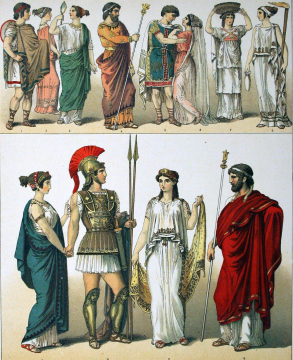
The Grecíens (Gree-shun) An Introduction The Grecíen culture is one built on unity, respect, and a deep connection to the living world around them. From difficult beginnings in a simple cave, to the city they’ve since called home, the Grecíens value equality and kindness above all else, believing that everyone, despite one’s shortcomings, deserves kindness. Their way of life is closely tied to their gods, each of whom represent major aspects of the world, their mindsets and actions guiding their beliefs. Nature is sacred, and the Grecíens see themselves as its caretakers, honoring all parts of the world, as it is the world that keeps them fed, and alive. Through their traditions, their creativity, and their sense of community, the Grecíens strive to preserve the values of their founders, while embracing a future where harmony and balance remain at the heart of everything they do. The History The origins of the Grecíens are steeped in simplicity, yet woven with the threads of fate and perseverance. During the dark ages of the world, when the land was a tapestry of cities, towns, and kingdoms vying for dominance, yet another civilization was poised to rise from the coldest and most unforgiving of winters. Amidst this era of turbulence, a man, accompanied by his wife and sons, journeyed across the vast, desolate plains of their continent. They sought not wealth nor fame, but merely a place to call home, where life could once again take root. These plains were inhospitable—land where survival was dictated by the scarcity of food, the sting of relentless winds, and the chill of the earth beneath their feet. Shelter was elusive, and the charity of strangers even more so. And yet, despite the desolation, they pressed on, driven by a hope that somewhere, they would find a sanctuary to rebuild their lives. Their perseverance bore fruit when, amid the endless expanse of snow-clad wilderness, they encountered a miracle: a still-running stream, cutting its path through the frozen landscape. It was an anomaly, for in the heart of such a merciless winter, the waters of the world had long since turned to ice. Intrigued by this mysterious river of life, they followed it upstream, passing through a verdant forest untouched by the bitter cold. Trees hung heavy with ripe fruit, and the air buzzed with the presence of wildlife. Yet even as this land promised sustenance and safety, the family continued their journey, drawn by something deeper. Their trek finally led them to the towering slopes of a great mountain. The stream, as though guided by some celestial hand, flowed from its heights, ascending far beyond what their eyes could see, disappearing into the veil of clouds that shrouded the peak. At the mountain’s base, they stumbled upon a cave, concealed by cascading vines that bore strange, glowing berries, their light casting a soft, ethereal glow. Within the cavern's dark embrace, they discovered carvings and paintings, relics of a time long past, untouched by the ravages of the present. These ancient writings spoke of gods, beings of immense power who once ruled over the land in an era now forgotten. This hidden trove of knowledge fascinated the family, and it was here, at the foot of this sacred mountain, that they chose to make their new home. Over the following weeks, their strength grew, nourished by the land’s abundance and the wisdom contained within the cave’s ancient script. They came to understand the secrets of the past, and with this knowledge, they would reshape their future. As the seasons passed, they began to build, raising a magnificent dwelling from the mountain’s gleaming white stone. Yet, as their efforts grew, so did their impact on the land. The animals that once roamed in abundance began to dwindle, and the vibrant greenery began to wither. Fearful of the possibility that their new sanctuary might suffer the same fate as the lands they had fled, the family turned to the mountain for guidance. With ingenuity and labour, in an act labelled “The Great Restoration”, they constructed towering aqueducts of stone, channels that carried the mountain’s life-giving waters to the forests and valleys below, replenishing the earth and renewing the land’s vitality. It was after the completion of these aqueducts that others began to arrive, drawn by the prosperity and peace that now defined the region. They, too, settled, building homes and joining the family in this newfound paradise. Thus, the seeds of the Grecíen people were sown, and from those humble beginnings, the town of Grecía was born, soon to blossom into a thriving city, destined to stand the test of time. Language The language of the Grecíens is a strange one, not many know the origins of it, as the language itself was derived from carvings and drawings of the Grecíen caves. A few common terms, heard from the Grecíens are as follows: Hello - Yassou Goodbye - Kherete Yes - Ne No - Ohi Thank You - Efkharisto Society & Behavior Respect & Acceptance The Grecíen people live by a strict code of non-discrimination, a principle deeply rooted in their early history. During the founding days of their culture, the Grecíens faced a harsh reality where cold and hunger were universal struggles. These shared hardships fostered a sense of unity and understanding among the people. To discriminate or exclude others now, despite the relative prosperity they have built, is seen as a betrayal of their ancestors' values and struggles. This moral foundation ensures that all individuals, regardless of their background or status, are treated with respect and equality. Acceptance is a cornerstone of Grecíen society, extending to religion, beliefs, sexuality, and race. The Grecíens embrace diversity as a strength, believing that differences contribute to the richness of their culture. However, there are exceptions to this open-mindedness: darkspawn, dark mages and anything of that nature are excluded due to the threat they pose to the world. This boundary is seen not as prejudice, but as a necessary safeguard for the well-being of the people. Nature & Sustainability Respect and kindness toward nature are fundamental to Grecíen life, as the people recognize that their very survival depends on the land and its resources. Nature is not seen merely as a tool but as a figure they stand with, and the Grecíens strive to live in harmony with it. Hunting and farming are done sustainably, and it is considered a grave offense to exploit or harm the environment unnecessarily. Xenia - Hospitality The principle of xenia, or hospitality, is a vital part of Grecíen social life. The Grecíens believe in fostering a strong sense of community, where helping a neighbor or a stranger in need is not just a kindness but a duty. Whether providing shelter, food, or emotional support, a Grecíen will go out of their way to assist others, upholding the values of generosity and care. Leadership Within the structured and carefully balanced hierarchy of Grecíen leadership, there exist several titles that represent the pillars of governance. These roles are vital to the maintenance of order and the smooth functioning of society. Although only a select few can hold these titles, each one comes with immense responsibility, and the individuals who bear them are revered for their wisdom, dedication, and service to the people. The titles are as follows: The Archon The Archon is the foremost figure in Grecíen society, standing at the peak of the social and political hierarchy. This position is not merely a title but a role of great significance and power. The Archon is entrusted with the sacred duty of leading the Grecíen people, guiding them in times of peace and crisis alike. As the chief authority in the land, the Archon plays a central role in diplomacy, forging alliances with neighbouring territories, and making crucial decisions that shape the future of Grecía. Moreover, the Archon holds the power to designate titles and distribute land, ensuring that resources are allocated fairly and efficiently across the populus. The nobility, too, falls under the Archon's purview, with the Archon responsible for keeping track of noble lineages and maintaining the honour and integrity of the people. In addition to these duties, the Archon serves as the highest executor of laws, overseeing the enforcement of justice and presiding over the assemblies where important decisions are made. Finally, the Archon holds a ceremonial role, presiding over significant rituals and rites of passage, including the offering of titles, grand celebrations, as well as funerals. The Strategos The title of Strategos is a position of immense trust, chosen by the will of the people through a process that takes place once every few decades or so. Unlike hereditary titles or appointments made by the Archon, the Strategos is selected based on merit, valour, and the approval of the citizens. The Strategos’ primary responsibility is to lead the people’s army of Grecía, ensuring the security and defence of the realm. In times of peace, the Strategos oversees the training of Grecíen citizens in combat and defence. Every able-bodied individual is expected to receive instruction in the art of warfare, not for conquest, but for the protection of their land and loved ones. The Strategos ensures that the people remain ever-prepared, instilling in them the values of courage, discipline, and unity. However, should war arise, it is the Strategos who will rally the army, leading them into battle and devising strategies to secure victory and maintain peace. The Proxenos The Proxenos serves as the head diplomat of the Grecíen people, a position that requires not only political acumen but also a deep understanding of human nature and the art of negotiation. The Proxenos is tasked with engaging in talks with other nations and groups, always with the intent of building and maintaining positive, peaceful relations. It is through the Proxenos that the Grecíen people reach out to the world beyond their borders, forming alliances, establishing trade agreements, and fostering cultural exchanges. In times of conflict, the Proxenos, alongside the Archon, plays a crucial role in leading peace talks and negotiations, seeking to end disputes through diplomacy rather than violence. The Proxenos embodies the Grecíen ideals of fairness, cooperation, and the pursuit of lasting harmony, ensuring that the people are represented on the political stage with dignity and wisdom. The Perioeci The Perioeci is a figure of immense importance in the daily life of Grecíen society, serving as the leader of the workforce and overseeing the many tasks that sustain the community. The Perioeci is responsible for agriculture, ensuring that the fertile lands of Grecía are cultivated to provide ample food for the people. This includes the careful management of crops, the rotation of the fields, and the maintenance of sustainability practices that ensure long-term productivity. In addition to agricultural duties, the Perioeci is also in charge of architecture and construction, leading the grand projects that define Grecíen civilization. Whether it’s the building of public works, homes, temples, or monuments, the Perioeci ensures that every structure is both functional and a testament to the society’s artistic and engineering prowess. Weapon forging also falls under the Perioeci’s domain, a craft that is often done in collaboration with the people’s army. The creation of weapons is not for conquest but for the defence of their way of life, and the Perioeci ensures that the Grecíens are always prepared for any eventuality. Physical Traits & Clothing The people of Grecía are known for their distinct physical traits that reflect their deep connection to the natural world they hold so dear. It’s common to see Grecíens with tanned skin, gained from their lives under the sun - it’s quite rare to see a Grecíen with pale skin. Hair colour varies incredibly. Brown, blonde, and white are the most common to see, with other colours usually coming from families that have joined later on in history. Eyes come in rich, unique colours such as deep green, dark purple, or an earthy brown. Clothing When it comes to clothing, Grecíens prefer materials that are light and soft to accommodate the warm climate. Their garments, known as himations, are crafted from breathable, flowing fabrics that allow freedom of movement. The primary colour of Grecíen attire is white, symbolising unity. White is seen as a common base colour, representing the shared heritage of the Grecíen people, and serves as a blank canvas for the addition of colours that display one’s personal beliefs and values. The secondary clothing colours vary according to the god each individual worships, making religion a visible and integral part of everyday life. Those who follow the Aurien incorporate deep reds and bright yellows into their attire, symbolising the warmth, and unbridled power of the sun. These vibrant hues stand out and bring a sense of radiance to the wearer. For those who revere Thaloris, blue and black tones are favoured, representing the depth of the ocean, and the domain of death over which Thaloris governs. Followers of Tera adorn themselves in green and brown hues, blending harmoniously with the colours of the earth. Through these choices, each Grecíen carries a piece of their devotion to their respective god. Sashes and robes must always be tied on the right side, this practice is thought to honour the gods, as tying on the left side is believed to risk inviting their judgement or disfavour. The right side is viewed as a place of divine approval, symbolising the proper alignment of body and spirit with the heavens. This is also why all Grecíen children are taught to wield their right as their dominant hand. Tattoos Tattoos hold deep cultural significance for the Grecíens, serving as both a personal and spiritual rite of passage. At the age of 15, every Grecíen receives a tattoo on their upper back, dedicated to the god they worship and their devotion to the divine. These intricate tattoos often depict sacred symbols, myths, or imagery associated with their chosen deity, marking the wearer as a faithful servant of the gods and a full member of the community. Religion The Grecíen pantheon is built upon the worship of three central gods, each embodying a unique and essential aspect of life. These deities are deeply woven into the fabric of Grecíen culture, as their teaching and beliefs were all derived from the original cave, shaping everything from daily rituals to their worldview. Aurien, the God of the Sun, Sky, Poets, and Creation, is seen as the bringer of inspiration and the source of all life. The sun’s warm light is considered Aurien’s divine gift, providing energy to sustain the world and illuminate the land. As the patron of poets, Aurien is closely associated with creativity and the arts; most inventors, writers, and adventurers focus their beliefs on Aurien. Worshippers of Aurien often look to him as the creator of not only the physical world but also the intangible—ideas, dreams, and the spark of imagination. His influence is celebrated at dawn, a time of renewal when his power is believed to be at its peak. Thaloris, the God of the Sea, Storms, Labour, and Death, embodies the duality of life’s challenges and inevitabilities. The sea and storms are seen as reflections of Thaloris’ unpredictable nature—sometimes calm and nourishing, other times fierce and destructive. He is revered as a guide for those who toil, particularly in physically demanding or dangerous occupations, such as fishing and construction. Thaloris’ connection to death is not seen as something to fear but as a natural transition, making him a figure of both respect and somber reverence. Rituals honoring Thaloris often take place at the water’s edge, where worshippers seek his blessing for safe travels and bountiful harvests from the sea. Tera, the Goddess of the Land, Caves, Agriculture, and Life, represents stability, growth, and the nurturing aspects of existence. As the patron of agriculture, Tera is credited with the fertility of the land, ensuring that crops grow and that the people are fed. Her connection to caves and underground spaces is particularly significant, as caves are considered sacred—linked to the founding Grecíen family and serving as a symbol of protection and discovery. Tera’s association with life is holistic, extending to the cycles of nature and the vitality of all living beings. She is honored through festivals of planting and harvest, as well as quiet meditations within caves. The Sanctity of Caves and Streams Both caves and streams are regarded as sacred spaces, integral to Grecíen spirituality. Caves are viewed as the dwellings of ancient spirits and places where the gods’ presence is most strongly felt. Streams and rivers, on the other hand, are thought to carry the lifeblood of the earth, connecting the land to the divine. Special rituals, prayers, and offerings are performed near these sacred sites, acknowledging their significance and requesting the gods’ continued favor. Offerings Grecíens show gratitude and seek blessings by offering a portion of each meal to their respective god. This small but significant gesture expresses their respect to their divine, inviting favour and ensuring that the gods remain nourished by the people’s gratitude.


-
chat, ive been working on a culture for the past few months and im getting real close to being able to post the finished product. im looking for people to help me get it started by engaging with the culture, and maybe even help me get a place to base it (settlement, vassal, etc.) shoot me a dm on discord if you're interested (@josifi) i also want someone to give it a proof read before i post it, so i know if i should edit, add, or remove anything
-
@Kaiser Apologies for the late reply, got busy. But this wasn't a proposal, this was just me sharing my opinions on the plugin. I'm not asking for it to be unimplemented, just that it would benefit everyone if it were re-worked.
-
Helpful solutions, Bonito, and I've already spoken to Greehn over private messages about his reply and my response, so, errm, yah.
-
@Greehn Firstly, one sentence responses to issues aren't what we need, it's solutions that we need. Just saying "Oh just do this ???????" doesn't help. Secondly, Aether pets are are still a thing, they were never removed. If you want to solve that issue, remove the need for feeding them alltogether, it'd make it much easier. Lastly, it doesn't matter that cooked fish are equal to bread or baked potatoes, as someone who spent most of their time on Almaris fishing, fish became an unlimited and easy-to-access food source.
-
Hello Lord of the Craft community, you may know me, you may not. For those that do, you propbably know already that I absolutely LOVE minecraft fishing, it is one of my favourite time wasters and I feel (especially in my case) brings people together to just goof off and catch fish. HOWEVER! For a while now, I've found that the fishing plugin that was introduced on August 13th 2023 by Adelemphii (absolutely no hate or anything towards them at all) has sort of.. deminished, this feeling in a few ways, ways that may not be big issues, but are impactful in other ways. Below, in their own seperate sections I will be listing some of my own issues I have found while engaging with this plugin, once again, any opinions of mine I state I do not mean to offend or insult Adelemphii and their plugin in anyway, these are simply OPINIONS, I know what some of you are like so.. just putting it there. Storage During the first few days of the plugin, me and my friends spent hours grinding it out, trying to catch one of each item, and it wasn't until we filled our seventh double chest with soggy atlas' and blueshell crabs, that we realised "Oh shit! We've filled our entire storage with.. basically unusable items.", and for us, this was a problem! Storage has also been (for me atleast) a sizeable worry, we all have our chest monsters full of building materials, roleplay items, and personal trinkets, and we'd just filled ours with FISH. Aether Pets As I, and many other Aether VIPs have noticed, some of the more popular Aether pets (e.g. axolotl, polar bear) use fish as a food source. The fishing plugin does give you the required items, but due to them being editted items, they are unusable, therefore making the Aether pets themselves unusable. We spend our money to achieve this rank (yes I know it was a lot we get it), and we want to be able to utilise it to it's full potentional. Food In a similar situation to the Aether pets, fishing is/was one of the largest sources of food for our players; it was easy to get, it filled a decent amount of your hunger bar, and it was unlimited. With how the fishing plugin currently works, you cannot stack the fishing drops, this makes catching and cooking COMPLETELY impractical, and extremely slow. For now, I will be leaving it at this, I don't want to drone on about how I'm not the biggest fan of Hooked as a plugin, however I will say this. Fishing is an relatively important part of minecraft as a whole, and the plugin making it reduce to almost completely remove the purpose behind it, makes it inherently flawed. It needs a rework. Josif, out.
-
"You will find peace not by trying to escape your problems, but by confronting them courageously." - J. Donald Walters It was a beautiful day for it, the sky was clear and the sun sat perfectly centred in the blue expanse. Cassien prepared his lunch, a small bag of cashews, and a thermos of black coffee, his favourites. He'd stuff them into his pockets and search around for his medicine, opening drawers and cabinets, only to find the empty container. Perhaps he could pick up more in Lurin, that medicine was the only thing really keeping him breathing now-a-days. A creaking in his home alerted him, only to realise it was likely Aleksey, the poltergeist of his own making. He hadn't the heart to do what needed to be done, the sight of his former partner hurt, far too much to bare. Before leaving the house, he ascended the stairs and stopped outside a particular room, one that a close friend of his, Asteria had been staying it, and only recently move out of. He missed her company, he missed her, so he made a daily ritual to come stand outside the empty bedroom and knock on the door, uttering a "I'll be back soon Az, goin' for a walk." before stepping away. On his way out the front door, he looked to his right, at table surrounded by empty chairs. The spot reminded him of Ellie, one who he'd spent a good majority of his recent days with, he wished he could see her again but she had disappeared not too long ago, a thought that pained him so. A sigh escaped the sickly man as he continued on, treking across the bountiful fields of Dunwen and over the arches towards Lurin. He'd stop under a tree to catch a breath, breathing was difficult nowadays, his infection had developed rapidly and his lung ached with each hoarse exhale. He wondered if Einhard was home, perhaps he'd go visit after getting his medicine. The rest of the walk to Lurin was a slow one, each step began to feel more and more difficult, like walking through knee-high water. That's when it happened, a sharp pain across Cassien's chest, causing him to collapse to the ground in agony. He'd begin a coughing fit, something he'd grown used to over the last few years, though.. this one was worse, the worst it had been up to this point. If he could make it to the city, maybe, maybe he would be okay? If only that was the case. Moments passed in a blur, he couldn't remember what happened, Cassien found himself in a bed within the Lurin clinic coughing and wheezing out, he couldn't breathe. On one side, holding onto his hand was Einhard, looking more worried then he'd ever seen. On the other, Asteria, her eyes full of tears. He'd wondered when this day would come, thought long and hard about how this would go down. The plan was to leave, find some far off place and die alone and at peace, but he didn't mind this. As he lay there, his mind wandered, to a face of someone he wished were there, Irena. It had been a few days since he'd last saw her, and he regretted lying to her about his diagnosis, maybe if he'd told her, she would be here. That was all in the past now, this was the now, and it was ending. Before he closed his eyes, before he took that long peaceful sleep, he spoke one last sentence. "Don't forget me.."
-
Cassien reads over the letter in horror, a hand clutched over his chest, his other shakily holding the piece of paper, "****.. no- DAMN IT!" The elf roars, sending a chair flying across his study. His hand would find its way back to his chest again, over his heart, Why did it hurt so much? Cassien leans against the wall, sliding down it to sit on the floor. He was alone.
-
Alejandro, a brother in arms, and a friend to Carlos, raises a glass to the Salazar. "You are gone too soon, my friend.."
-
Name: Cassien Carina Ethnic Background/Ancestry: Amathine Faith or Creed: N/A Criminal History: N/A What would you consider yourself?: Settler