.jpg.3538185eb84dc83173aea16e81d67ddd.jpg)

NovumChase
-
Posts
63 -
Joined
-
Last visited
Content Type
Profiles
Personas
Wiki
Rules
War
Systems
Safety
Player Conduct
Roleplay Leadership Guidelines
- Roleplay Leadership Guidelines
- Roleplay Leadership Guidelines Comments
- Roleplay Leadership Guidelines Reviews
Forums
Everything posted by NovumChase
-
lady truthful LADY TRUTHFUL | Try Harder
NovumChase replied to LADY TRUTHFUL's topic in Empire of Man
On his morning walk to Castle Glasgon, a pamphlet is thrust into the hands of Rothwin Aldor by a scurrying child. Discreetly tucked into his layers of finely woven wool, it is received by the elder Aldor with the wry smile of guaranteed gossip. As the papers are unfolded in his office an hour later, the expression draws into one of sure amusement—and then of a pinch of indignation. “Unruly?” -
Rothwin Aldor grimaces at Ledicort’s death-notice, filing it dutifully away with other genealogical material. Little by little, the senior generation was ebbing. Of Ledicort, he would write among his journal-entries of 2077: … After the closing of the House of Burgesses (which is called the “Burgherraad”), I spoke with members of the House, and others … but after all this, I was startled to see Ledicort de Senna enter the chamber-room, and I was amazed by his antiquity. I think I have only ever seen one or two men as aged as he, and he was, I regret to report, disoriented and seeming in the twilight of life. It was regrettable, although unsurprising, to see the later notice of his passing. Still, I am sobered by this passage; few men represented so long a leap in family history as did Ledicort de Senna. In all my youth, I sighted Senna children in the schools, and in the training-yards, and in the public places, and I have felt his influence, though indirectly, more than many men of his generation. It is doubtless that my children and grandchildren will be fascinated that I sighted him at all.
-
Rothwin Aldor frustratedly struggles to set up his Alba Eats account, needing to consult Ithmere for guidance.
-
lady truthful LADY TRUTHFUL | One for The Fans
NovumChase replied to LADY TRUTHFUL's topic in Videos
Scandalous! -
for Imperial Senator of Alba “We shall never be greater than the deeds that we do.” Swithun Aldor • • • Friends and countrymen! Once more, the Empire has set forth a call for a national legislature. Hence, it is once more my honor to submit my candidacy to represent our good Archduchy and our collective interests in Rittersburg, that we may be better heard there and the prosperity of our land and people more staunchly defended. My friends and neighbors will recall that, in the Witenmot of years past, in spite of the heavy pace and dullness of that particular body within the framework of Imperial law, I represented the borough of Leever in St. Godwinsburg as a Folkman in the Imperial Witenmot, where it is known that I opposed a national law for the drinking age and advanced subsidies for the good physicians of our realm. Since then, as a token of faith and service, the good Archduke of Alba has entrusted me with the titular Lordship of Aldor, and with the court station of Master of Pedigrees. It would be my honor to again take up the mantle of Alba before the Emperor in Alba and, in my capacity as a member of the Chamber of Plebeians, defend the interests of the common class. The plans and principles I would take to the Senate would be as follows: • As with my Folkmanship, prevention of the growth of over-government. As the Empire now spans the New World, it would be unbecoming for it to tighten its home grip. It is my belief that government is at its sharpest and most effectual when it is localized. The use of a national Imperial government ought to only be used for a few purposes, which will follow: • The proliferation of education. The recent inauguration of the People’s University of Venerable Dame Catherine and the reforms at the Prince’s Institute demonstrate to even the most disengaged observers that the age of enlightenment has come. The spread thereof through the Imperial heartlands, and the availability of its fruits to the Archduchy of Alba, are at the fore of my mind. • The institution of a more comprehensive Imperial census involving trained enumerators, to ensure that current and future generations might know, in full scope, the populace of our Empire. • Investigation into the plausibility of an Imperial genealogical association, which might formalize the study of family history and enshrine all souls, living and dead, into the sight of History, particularly as pertains to those souls claimed by the late war. • Inquiry into the reconstitution of the Imperial College of Medicine, that it may be rendered more effective, as it formerly was before the recent loosening of the standards of medical practice. • The erection of monuments to memorialize the fallen of the late war, and whose construction might employ and enrich the common masons, craftsmen, and other artisans. My sincere hope is that this program might prove agreeable to the Archduchy of Alba. Inquiries, suggestions, and critiques may be mailed to #6 in the Borough of Leever, St. Godwinsburg. If you are convinced thereof, you are cordially and gratefully invited to vote for Rothwin Aldor in the coming Imperial senatorial elections. • • • In thanks and love for my country, Rothwin Aldor.


-
✠ Discord & IGN Usernames: novumchase (Discord), NovumChase (IGN) ✠ Full Legal Name: Rothwin Aldor ✠ Age (Must be over 18): 40 ✠ Political Affiliation (If none, then write INDEPENDENT): INDEPENDENT ✠ Running for Which Seat (Senator of X): Senator of Alba ✠ Residence (Must be within constituency): Deveroad VI, Leever, St. Godwinsburg ✠ Provide a brief account (100-300 words) of your standing, trade, or service to your community, by which you claim fitness to represent them in the Senate: I was elected Folkman of Leever, my native ward in St. Godwinsburg, at the age of eighteen years, and therein served in the Imperial Witenmot for the full term of eight years. During that time, and in spite of the dullness and sloth of that body, I opposed at every turn the encroachment of over-government. I gave no consent unto a national law for the national drinking age and advanced subsidies to the good physicians of the Imperial College of Medicine. In the years since, I have received the trust and gracious patronage of the noblest Archduke of Alba as his Master of Pedigrees and have been elevated to the archducal House of Lords, bearing the titular and gentle style of Lord of House Aldor. It would be a singular honor to continue in this course of service in representation of the Archduchy of Alba in Rittersburg. I would add hereunto that I have ever been a steadfast friend to the Prince’s Institution, and am myself both a father and the head of the Aldor kindred: two considerations which, to those who hold those matters dear, may well assure them of my constant care for the maintenance of learning and family life, both in Alba and beyond. My full campaign declaration is entitled The Plebeians’ Friend.
-
What’s the story behind your username? And is there anywhere specific where you find your character/narrative inspiration? Has been great getting to know you through NGS RP!
-
ON THE DEMISE OF LORD FOLTEST RUDOLPH HELVETS, 2073
NovumChase replied to MunaZaldrizoti's topic in Archduchy of Alba
Sunbeams, full and bright, stream in on the study of the staid-faced Master of Pedigrees—now orderly and regimented after his health returned to him. They do nothing to cure his frown as he amends his genealogy of the Helvets family in answer to the news. After a moment, though, Rothwin Aldor squints and reëxamines the thoroughly annotated page. “A succession most interesting.” -
In a dimly lit study overgrown with heaps of papers and unfinished work, a sigh of relief escapes the Master of Pedigrees as he reviews the latest proclamation. A shaft of sunlight seems to peek in upon the pale face of Rothwin Aldor at that very moment—the pairing was a success. Perhaps soon enough he would summon the will to leave that room into the open air once more, drawn by the nuptial festivities.
-
The words of the late Sir join a heap of piling correspondence, missives, and mail-ordered books now cluttering the many surfaces of Rothwin Aldor’s bedroom, writing-room, and lounge. Long taken by illness, the scrivener takes many weeks to finally arrive at the letter. As he unfolds it at his desk, his face falls. His travels seeking the Lady Diane, the sick months that followed his return, and the business of his family’s elevation to the Alban gentry had led him to delay—and then further delay—his meetings with the von Augusten. Time, in its mercilessness, had punished that decision. His thoughts on the matter were written down and eventually bound up in a compilation of journal-entries of 2069. For days I was troubled by my inaction on the matter of Konstantin von Augusten, and I was tormented one night by a frightful dream in which I was not permitted to breathe until I met with him—which, of course, he being dead, I could not accomplish. But after a week I came to a conclusion which was helpful to my heart’s ease: that I, by showing any interest whatsoever in the man’s stories, encouraged him to pen his account of that terrible conflict, and in doing so have aided in preserving his historical perspective, invaluable as it is. When all this business of war has passed, I hope that I might someday include it in my own writings, but will be gladdened if any hand, even if it be not my own, makes use of his words.
-
A Ship Guided by Dawn: The Wedding of d'Artois and Aldor
NovumChase replied to Kabaffahp's topic in Archduchy of Alba
“Fortuitous and loving,” Rothwin Aldor murmurs, filing away the invitation on a meticulously organized shelf. “Historians will commend this one.” -
A year prior, Rothwin Aldor, clad in thick fur travelling garb, lounges on a haphazard wooden stool under an eave, the forests of Valwyck sprawling out before him. A small table bedecked with tools and oddities separates him from a similar man on an equally similar seat—a likeness of Rothwin, but wizening, with dimmed, cloudy eyes and hair that, while just as wavy, is a blond-gray fading into white. “And yet, Father, while it would rend my very heart if the illness does claim her,” he murmurs, his elder nodding in listening all the while, “one must… wonder, at the least, what would become of her if she lives. I fear wyrd will be hard in either case.” Rothswith, now climbing through his sixties, can only scoff in bemusement at the junior Rothwin. “Yes… what a ‘hard wyrd’ for her to live, and for the two of you to be happy.” He barks a laugh. “Do you so swiftly dismiss the gift of life, child?” “Never,” Rothwin answers patiently, bearing only a fraction of his indignation outwardly. “But she is dead to the world, at present. What will be her fate if she wakes? Years will have stolen the fire from her personal relations, from her knowledge of the world. She was such an eager explorer…” “Selfish boy—just as your grandfather was.” The tone of the elder Aldor no longer pretends to be paternal, sharpening into an arrow-like acuity. “Where would we be, if I delivered unto your mother the same impatience you would now espouse? I see it—you wish to move on… inflict your fancies elsewhere. But what would it make you?” Rothwin’s jaw tenses—as does the whole of him. He lounges no longer, instead abandoning the chair to depart bitterly into the ramshackle cabin. No answer awaited him there.
-
A HISTORIOGRAPHICAL EVALUATION OF THE LIVES AND CHARACTERS OF COMPOSED BY MEANS OF WRITTEN AND SPOKEN ACCOUNTS OF THE LATE PRINCES OF ALSTION •─────────────────•𖥠•─────────────────• •─────────────────•𖥠•─────────────────• W R I T T E N B Y R O T H W I N A L D O R P U B L I S H E D B Y T H E N O R T H E R N G E O G R A P H I C A L S O C I E T Y O N T H E 9 T H O F O W Y N ’ S L I G H T , 2 0 5 9 •─────────────────•𖥠•─────────────────• I WAS BORN IN THE waning days of the lordship of the beloved Archduke Edward I and Archduchess Cecily of Alba—the Princes Edward and Cecily—to whom much praise is lofted. As their rulership was confined to the rosy days of my childhood, and as I witnessed the ascent of Edward II as Archduke in the footsteps of his father, I naturally sought, as I came into the fruits of adulthood, to make an honest evaluation of the predecessor to our good Archduke Edward II. It was happy that, at such time, I sought entrance into the Northern Geographical Society, and it was asked of me that I write, as a demonstration of my commitment to good scholarship, reckonings of a historical person while in the employ of two discrete methods, spoken and written historical research. It was happier still that, soon after, I chanced upon the convivial Henri Charles Halcourt, then heir to the Barony of Artois, whose memory of the Archduke Edward’s reign was the first tool with which I attempted to apprehend the lives of Edward and Cecily. It is here that I begin the history of the Princes; it shall be made up first of a history of the Princes as known through oral history, and then a history of the two as gathered from the writs and works of the time. This work would not have been possible without the enduring scholastic patronage of the esteemed Archduke Edward and Archduchess Jane of Alba and the staff of Castle Glasgon, nor could it have matured without the guidance of Dame Manon von Volkrich, who, as President of the Society, illuminated this work’s path to completion. I must lastly thank my kindred for their enduring support, most particularly my good sister Roswyn Aldor, who, in the hermitage that this work demanded of me, has honorably fulfilled the public duties of our House. THE FIRST ENDEAVOR IN THIS work is to tell a full historical account of the Princes Edward and Cecily through what is spoken of them, as I have ascertained it through oral interviews, conversation, and what I heard of the Princes as I grew. These spoken words include a few well-known factual particulars of the lives of the Princes, qualitative statements about their characters and accomplishments, and meditations on their combined legacy. I shall hence tell, and thereafter evaluate, the history of the Princes as it has come to me through the spoken word. Prince Edward Caius and Princess Cecily Amelia were born in the late days of the 20th century, both bearing the name of Alstion, that most noble Horenic house which emerged from the dissolution of the House of Horen after the War of Two Emperors. Edward was son to Leufroy Guy Alstion, son of Robert Owyn, son of Emil Caius, second son of Charles I, first king of restored Aaun. Cecily was Edward’s third cousin through Charles I’s eldest son James; both Princes were scions of the Alstion legacy but of disparate limbs of the House, which, in their youth, needed to reckon with the dissolution of the Apostolic Kingdom of Aaun, the domain of their fore-elders. These facts are in common fluency and are not, to my knowledge, disputed. When I moved beyond the details of their childhood and set myself to asking rememberers about the Princes’ subsequent rule and accomplishments, I was dealt a dazzling array of grandly given answers. As it is the duty of the historian to read against history—that is, to read the history of each remembered event as if it is a distortion of the truth, and determine the degree of that distortion in order to more fully get to the root of the matter—my wits bade me to skepticism at first. The Lord Henri Halcourt accredited the Princes with “the restoration of the Alstion line and the diasporic people of Aaun.” Could this charmingly simple assertion have been true? Contrary to the skepticism which assailed me, I believe, through investigation, that the Princes are indeed, more or less, the grand figures responsible for the accomplishments widely attributed to them. As I proceeded through oral interview, there was a dearth of negative testimonials, but, more than this, all seemed to share a coherent and continuous view of the course of their reigns, which I will proceed in relating below. After the end of the Apostolic Kingdom of Aaun, it was under the vigorous pursuit of restoration of Edward I that the Duchy of Alba was formed to succeed it. He and the good Cecily Alstion married; Cecily, being of an elder line, represented a uniquely senior claim to the succession of House Alstion, and a coupling of Edward and Cecily together was a match Alstion-blooded enough to earn the undisputed trust and respect of the now-scattered Aaunic people. Intriguingly, the two ruled in tandem and were quickly distinguished in service to the Empire. Edward I was appointed Lord Chamberlain and, some years later, Cecily was named Arbiter Draconis, a steward of Horenic genealogy in direct service to the Emperor. The tandem rule was one element of the Princes’ rule that I had chosen to read against in particular, as some rememberers attributed Alba’s prestige and accomplishments during this period solely to Edward. However, I could not find anything substantial to indicate that this was anything more than a male bias, as none would take the expected step to speak of Cecily as meek or unindustrious. It was in tandem rule that, after decades at the head of the Duchy of Alba—elevated to an Archduchy during their reign—the two, GOD rest their souls, met their untimely deaths at sea during the flight from Aevos. So too did I try to read against their characters, and I had, here, more success. “… he was a man of low tempers, typically well-mannered but nay one of the Aldersberg sort,” replied Henri on matters of Edward’s personage. “He was certainly known for his baldness in later years,” he admitted in good humor, “but a respectable man through and through.” It struck me at once that a man who could be known for something as trivial as his hairless head could not have been some great tyrant—perhaps, indeed, this speaks to the “low tempers” that were said to constitute him. However, I needed to more thoroughly wonder at the truth of Edward’s low tempers as Henri told of the attempted assassinations of the Archduke during his reign. I pondered within how it was that a man regarded as a great restorer and who met with such opposition could have indeed been so personally mild. I am more inclined, instead, to believe that the baldness was an attribute used to make light of a character who was, in fact, a most serious and driven man who, by that nature, made enemies. The character of Cecily was, too, of sincere interest to me. In both quiet murmurings and public proclamations, she has always been given as the equal and coordinate of Edward—in not only title, but in status and influence, too—which is, as readers of history will well understand, an uncommon placement for a woman. Wondering at this placement, there would seem to me two explanations for this: firstly, that her birth in the elder Alstion line made her innate part in restoring the dynasty great by nature; and—or—her temperament was indomitable, and she, using devices of stubbornness and personal character, drove her way to equality with her husband by strength of personage. I am inclined to believe that it was an alliance of these two things which secured her status for her, for many historical persons have had one or the other and been unable to establish similar stations for themselves. The combined legacy of the Princes Edward and Cecily is most often spoken of as a renaissance of the Alstion line and all who belong to it. This is where what is spoken of the past meets with the present, for the Archduchy of Alba, as it stands, is a shining vassal of the Empire of Man indeed—productive, populous, and respected. It is the current standing of the Archduchy, and the ease with which the good heir to the Princes—Archduke Edward II—was accepted by his people, that inclines me to my fair and commendatory assessment of the Princes, even in my attempt to read against all of the praise popularly lofted upon them. THE SECOND ENDEAVOR HERE IS to lay out a discrete history of the Princes by means of written texts pertinent to their lives and deeds, followed by a short analysis. This method of historical compilation proved more immediately fruitful in producing exact details of the Princes’ lives, though a fuller meditation on the differences between the spoken and written histories will be given in the subsequent part. The long history of the House of Alstion has, to my knowledge, been given no better exploration than A Study into the Patriarchs of Horen and Alstion (1859), compiled by Maxim of the Attenlund, William Alstion, and Jurgen Barclay. It was into this most ancient and noble lineage that Prince Edward Caius Alstion was born on the 10th of Godfrey’s Triumph, 1979, and Princess Cecily Amelia Alstion on the 5th of Owyn’s Flame, 1982. This was in the days of Aevos, when Charles II Alstion—father to Cecily and the later King Godwin II, and second cousin once removed to Edward—ruled the Apostolic Kingdom of Aaun from Whitespire. The childhoods of Edward and Cecily were marked by the disastrous Ravenmirian–Aaunic War of 1989–1990, the concluding compact of which, the Treaty of Minas Aranath, immediately saw Charles’s abdication to a pontifical regency and the cessation of much land to the Church of the Canon. The War would later doom Aaun to full destruction, as the Church regency over Godwin II Alstion culminated in his abdication to his brother, Mark Anthony, whereupon disputation of the throne grew too great and the Kingdom fell into disarray and dissolution. The Godwinites were scattered upon every road, and the once-reigning Alstions were left to ponder what to make of the future of the Aaunic diaspora. It was out of this void that Edward and Cecily struck decisively upward. Edward’s return to the Lowlands at the turn of the millenium coincided with the establishment of the Duchy of Alba under the good Edward and Cecily’s domain. They presented an Alba of peace, work, and Aaunic revival, rebuking war and inviting all humans to settle within the Duchy. For their successes, Edward was elevated to Lord Chamberlain in 2025, and then to Archduke, together with Cecily, in 2032. For her own merits, Cecily was appointed the first Arbiter Draconis, a proxy of the Emperor in the Draconis-Atrium, a gathering of Horenic-Imperial blood-descendants. In this upward direction, free of the strife of war and the talons of disorder, the Princes went their way through Aevos and, after half a century of rule, toward the New World. It was in this fateful journey that, sailing aboard the Anna Lorena, they met their deaths as the vessel crashed upon the rocks of Prince’s Rest on the shores of the New World, in 2051. They left behind decades of peaceable and respected rule that brought the Alstion line back to strength and standing and built an Archduchy which stands now at the fore of the Empire of Man. I am able to make one special addition to this section with thanks to the Lord Archduke and Lady Archduchess, and to the staff of Castle Glasgon, who allowed me to review the private correspondences of the late Princes. Within them, I found peers of the realm writing to the Alstion dynasty in peace and hope, anticipating, it seems, the gentle nature of the Princes. “The time is nigh for a greater unity amongst our peoples,” agrees Henrik I, Princeps of Ivöria, in one correspondence. Another writ, this one from the young Tiberias I, then Duke of Burgundy, speaks of a shared interest of the two to “ease tensions between our respective realms”, writing with anticipation of visiting Alba. The correspondences would go, in the view of this author, to support the public image of the Princes as peaceable and sensible rulers. Estimating the characters of the Princes from the written histories must be, by necessity, an act of inference, helped by the materials we can access. We must envision Edward a judicious but ambitious character, a friend to peace but also an avid restorer of Aaun’s legacy. Cecily needs be seen a woman of uncommon drive, whose involvement in the Horenic bloodline must be viewed as a token of a character with no fear of involving herself in the highest powers among Men. I ADMIT THAT, BEFORE I undertook to write the histories of the Princes as they appear in speech and in the written word, I had imagined the differences between the two would be noticeable, but not great. Invariably, the spoken histories would bear upon the Princes’ characters, and the written ones would shed more light upon the exact facts of history. I am, however, astouded at the sheer gulf between the two histories. Not only could virtually no few qualitative statements about the Princes be made from the written histories—aside, of course, from inference—but entire historical events were contained in each history that were wholly absent from the other. The writings of the Princes’ time mention no assassination attempt, and fewer than ever live to recall the war between Ravenmire and Aaun. Both methods, in their own ways, managed to surprise me. I expected to need to peel away decades of bias from spoken history, only to find that it reflected reality with reasonable faith; likewise, I expected written history to provide a fuller picture when, indeed, it has given only a different one, just with more exact details. Let this be a testament, to myself more than anyone, that any history must be written with an apt respect for methodology and the limitations of the tools used to compile that history. The written sources give us a more apparently concrete path to the truth, more easily traced, while the spoken sources give a beautiful impression of the true; the two ways must be metered carefully, for they are complementary and—in many cases, I do not doubt—contradictory. •─────────────────•𖥠•─────────────────• Mister ROTHWIN ALDOR, AUTHOR @NovumChase Master of Pedigrees of Alba, Folkman of Leever, Junior Member of the Northern Geographical Society Her Ladyship, DAME MANON YVAINE VON VOLKRICH, SUPERVISOR @esotericas Dame of Arts, Lady of Deguise, Baroness of Guise and Distrugestadt, President of the Northern Geographical Society P U B L I S H E D U N D E R T H E A U T H O R I T Y O F T H E N G S “ A D T E R R A S N O V A S ” THE VIEWS AND INFORMATION CONTAINED WITHIN THIS DOCUMENT ARE THE SOLE RESPONSIBILITY OF ITS AUTHOR(S). THE NORTHERN GEOGRAPHICAL SOCIETY IS NOT RESPONSIBLE OR LIABLE FOR ANY CONTENTS. •─────────────────•𖥠•─────────────────•


-
IMPERIAL PROCLAIMATION | THE INSTITUTE CONVENTION
NovumChase replied to TheIchorDruid's topic in Privy Publications
Rothwin reads along, nodding his approval; he freezes, though, when he comes to the end of the office-roll. “Am I indeed so wan?” He fixes an unsatisfied eye on the portrait for a while before he can at last return to reading. -
Rothwin Aldor’s face twists as a young Devereux brings him the news in St. Godwinsburg. In the late hours of that evening, he gazes vacantly into the stones of his town-home’s rear wall, envisioning the scene; he shakes his head very slowly. “Lorena—,” the young scrivener begins, as if to summon her from the vision and thence to safety—but, upon realizing that he has spoken out loud, he says no more, glancing to the stairs to ensure his muttering went unheard by his siblings. Rothwin heaves a deep sigh, setting back to work on a stack of genealogical treatises.
-
THE WITENMOT | First Composition Candidate Applications
NovumChase replied to cadazio's topic in Imperial Lex & Senate
✠ Full Legal Name: Rothwin Aldor ✠ Age (Must be over 18): 19 ✠ Running for Which Seat (Bergman/Folkman of X): Folkman of Leever ✠ Residence (Must be within constituency): III Deveroad, Leever, St. Godwinsburg ✠ Are you in good standing with the Empire and Church? (Yes/No): Yes ✠ Provide a brief account (100-200 words) of your standing, trade, or service to your community, by which you claim fitness to represent them in the Witenmot: By the gift of God, I am a scrivener now serving as Master of Pedigrees in the archducal court, producing histories and genealogies on behalf of His Royal Highness, Archduke Edward II. It is in this work that I have come to know the blood-lines of both the peerage and of the smallfolk, and of the history and discipline of governance. Perhaps more fittingly still, I serve as the comital librarian in Trier, seeing to the literary stores and scholastic work of the good House Devereux, who oversee the borough of Leever and who have given sanction to my candidacy. It is my belief that these lettered pursuits, grounded in the borough of my residency, endow me with the pen-hand to represent the needs of my neighbors and fellow-burghers with due respect for their governing House. -
✺─────────────────⚜─────────────────✺ Whenever any little thing might grow or thrive, it is always by the help of some greater thing. For a shrub to green and grow, the vault of the sky must open to water it. For a blade to be smithed and perfected, a man of no small skill must watch over it and care for it. So it is with myself and with this work. This history could not have flown from my hand were it not for the patience, patronage, and scholarly inclinations of the Right Honorable Countess Constance Maeve Devereux, who commissioned this work. Many thanks are due to her and to House Devereux, risen again. As follows is a reckoning of the history of House Devereux, as compiled from the sources available to me in public knowledge-houses. It is an extension, commissioned by the Countess, of a shorter work that I had authored of my own accord out of academic interest. Being that the House was so inextricably tethered to Curon in all of its forms, some particulars of the history of Curon have been included. As a primary end, however, it will trace the lineage of the Devereux family from its inception to its modern purview. 1640 – 1661 The Devereuxs derive, at root, from that most ancient and noble Staunton family, whose history cannot be belabored here much further than their scions who founded the House of Devereux. The origin of the Devereux family is with the children of King Tobias I Staunton of Courland, whose son Joseph disbanded Courland with the aspiration of forming the “Principality of Evreux” under the Sixth Empire, envisioning a future lineage of “d’Evreux” men to govern it. This was not to be so, for the Principality was destroyed during the Santegian Rebellion a short few years later, but Charles Staunton—Tobias’s third-born son and thence Joseph’s younger brother—adopted the “Devereux” name when his niece, Queen Charlotte of Courland, disbanded an attempted revival of the Courlandic Kingdom in 1639. It was at their recently reconquered city of Aleksandria, named for the Courlandic King Alexander I and viewed by Charles as “his city by blood and right of inheritance”, that Charles in 1640 declared the Duchy of Curon under this new Devereux dynasty. He espoused the regnal name Karl I Frederick and swore, as would his descendants, to uphold Canonist doctrine as ruler. Warm to brotherhood and the entertainment of other men’s persuasions, he convened a ‘Witenagemot’—that is, a moot of wise men—of Jarrack Draskovits, William Falkenrath, Frederick von Cròe, and Arstan av Tosali. First conceived as a county in the Vailorian duchy of Courland, Curon became a titular duchy bestowed upon the heir to the Kingdom of Courland. When Charlotte Staunton disbanded the Kingdom of Courland, her uncle and nearest male relative, Karl Devereux, claimed the title Duke of Curon. Duke Karl then led an incursion in Santegian territory, claiming Aleksandria as his capital. [The Sovereign Duchy of Curon] Karl’s death in the ensuing years saw his son, Alfred I Cyril, crowned as Duke of Curon in the Devereux’s new seat of Cyrilsburg in the realm of Atlas. In 1655, Alfred disavowed Curon’s confederation with Haense and Santegia against Renatus-Marna, opting instead to align with Renatus the following year; this would be the first in many affinities between the Devereuxs and the Renatians and later Orenians. Alfred’s reign was not to last, however, as he perished in an ambush of undead while on a hunt. His wife, a woman of peasant birth called Linette Eliza Devereux, would go on to declare herself Princess-Regent. Her tenure at the head of House Devereux and of Curon was a divisive one, both among her contemporaries and subsequent scholars. She was swift to reshape the royal household, reform the system of succession to allow for queen-monarchs, and rebuild the Curonian peerage to include her supporters. Abdicating in favor of her son, Wilhelm, was not enough to ease the enmity of her detractors, and Curon’s erstwhile allies conquered the Duchy in 1661 and deposed the Devereuxs. 1681 – 1711 It came to pass, however, that Wilhelm Devereux, that most tenacious son of Linette whom later writers would entitle “Wilhelm the Worthy”, was not content to permit the Devereux family to slip into obscurity. His life was to be transformative. Though now landless, he entered the service of the Empire of Man, wherein he distinguished himself and earned knighthood. He founded, in 1681, the Order of (the) Ursus, intent on preserving Curon’s legacy. In the subsequent Battle of Red Snow and the contemporary war on the Rivians broadly, he earned even greater renown. In 1683, Emperor Aurelius I officially returned the Devereuxs to power as Counts of Cyrilsburg. That year, Wilhelm, now Wilhelm I Devereux, established the Cyrillian Council to oversee the County’s lands—an evolution of the earlier Witenagemot and an institution that would see use extend through the reigns of several Devereux rulers. During this period, he oversaw the return of his house to a place of respect and prestige. In 1688, he married Evelyn Falkenrath; in 1690, he was elevated to Duke; in 1693, he established Canonism as Curon’s state religion, but permitted other forms of worship “behind closed doors”. This two-spiritedness of piety and tolerance earned Wilhelm I acclaim both in his time and afterward. He was well-known for his belief in the uniqueness of Curonian culture and Curonian virtue, both of which he devoutly patronized. Wilhelm’s avowedly peaceable orientation was both praised and maligned by his contemporaries, though none could question his shrewdness in times of war. He hoped to reconcile with the rival Carrions of Adria, authoring a letter entreating them to peace, but—when their obstinacy engendered the Gentleman’s War of 1700, Wilhelm triumphed even then, receiving a highly favorable peace treaty. The early eighteenth century could indeed be called the golden age of the House of Devereux, for it was in this time that it achieved its period of greatest influence in the Empire. The Curonian Princess Anabel married the Imperial heir Romulus Horen, her childhood friend; Wilhelm was appointed Arch-Chancellor of the Empire in 1709; and Adria was dismantled and largely apportioned to the Devereux’s Suffolk vassals in 1711. Now embedded in the Imperial royal family, Anabel Devereux-Horen founded the Curonian Royal Academy. It was at this apex of cultural and political success that Wilhelm abdicated in favor of his son, Jarrack, in 1711. Those avid readers of history might note that this year, 1711, is only a short few away from a period of great tumult. . . . There have been many hurdles—many have sought to break my vigor, to shatter my spirit. Yet along the way, we created something of worth. Through the cold winters and sunny springs of our homeland, a people rose up. Curon, the rumbling bear that it is, was born anew. I battled, I bled, I clawed the country from ashes to steel, and so it stands, a testament to my labor. But it was not just my own labor. Curonia would not be the Kingdom it is without the strength of its people—a people I have had the honor of leading. My reign has spanned over the course of nearly four decades and two continents. Through all the duress, we stood tall. We lived with honor. We ruled with grace. And now we have come to a point where that can only grow–a point where we can pass that strength onto posterity. [Passing of the Crown, Rising of the Tides] Before any discussion of this tumult—the War of Two Emperors—is had, a brief disquisition on the character of the Devereux family and of its subject Curon is warranted. It has always been that, in times of great crisis, wise Devereuxs have outshone their lesser kinsmen. In the conflict to follow, the most noble Anabel Devereux-Horen will represent those wise Devereuxs. It is most easy, however, to look upon the worst of a family and assume that they describe the most basic character of the whole group. I will leave it to the reader whether to subscribe to this interpretation; the contemporaries of the Devereuxs certainly did. In each conflict, the Devereuxs’ critics would invariably point to the worst of the Devereuxs and assert them to represent the House’s true will, before calling them turncoats and traitors when the will of the unenlightened is outshone by more illuminated kin. For many decades, Curon and the Devereuxs were defamed in this way. 1715 – 1717 The disillusionment borne by Haense and Adria against the Empire of Man came to a head in 1715; the Empire espoused the name “Renatus” as a reflection of this fragmentation. At this point, the Devereuxs were officially led by the young prince Alfred II Edgar Devereux (hereafter known as Edgar), though under a regency headed by the late Wilhelm’s second son (and hence the now-abdicated Jarrack’s younger brother) Ecbert Devereux. Despite the long and fruitful history between Curon and Renatus, the unenlightened Ecbert—acting in the stead of the true heir of the House of Devereux—sided with these discontented groups and their claimant to the Imperial throne, Joseph I Marna. The Renatian Emperor, Godfrey III, officially stripped Ecbert and young Edgar of Curon; Ecbert disowned Anabel in response. So began the War of Two Emperors. . . . Accordingly, with this grace of GOD and the counsel of Our court, We do enfeoff ANABEL HOREN-DEVEREUX to the KINGDOM OF CURON as Queen, a role they and their legitimate issue shall hold in trust to Our throne for the duration of their loyal service. They are enjoined to maintain the law of Our realm, to abide peacefully by Our rule, and to rise to Our defense when necessary. [The Traitor and the Queen] The uncrafty Ecbert was doomed to failure by his opposition to the older and nobler Anabel, a truer Devereux, and GOD made this manifest in his death at the Skirmish of Leuven in 1716. The subsequent regent, Ser Charles Montagne, made sure to fast reconcile with Anabel and the Renatian throne, and an independent Curon with Imperial sanction was established in 1717. Curon hence resumed its trusty partnership with Renatus and commenced war on the Marnantine rebels, though Ursula Devereux, a daughter of Wilhelm I, criticized Montagne for involving himself in the war at all. Montagne guided the Devereux ship steadily, though, establishing a number of non-aggression pacts until the eventual coronation of Pierce I Devereux, brother to the late young Edgar, as King of Curon. 1720 – 1737 As with his grandfather Wilhelm I, Pierce I Devereux took up the mantle of a reformer. Beginning in 1720, he officially rescinded Anabel’s disownment, called for a Witenagemot, revitalized the Order of Ursus as the Royal Chivalric Order of Ursus, and—in a landmark 1721 act—altogether reorganized the Kingdom of Curon to dismantle defunct titles and clarify the peerage. He recognized the Houses of Falkenrath, de Alba, Draskovits, and Halcourt as House Devereux’s most ancient supporters, and Silversteed, Ironwood, and Ragnarson as proven ones. Hoping to mend fractured post-Imperial politics, Pierce convened the First Summit of Avalain between himself, the Principality of Ves, and Renatus (now reorganized as the Holy Orenian Empire) in 1722. Ultimately, the three states, as well as the Archduchy of Suffonia (of the Suffolks, the Devereux’s former vassals) and Duchy of Cresonia, signed the Pax Orenia, or Peace Among Men. The Kingdom of Curonia is among the most vast and diverse realms of Arcas. Since arriving on Arcas, the Bear’s domain has continued to expand, including more titles, territories, and peoples. Over the past decade, the kingdom has experienced two regencies, and four kings. His Majesty, Pierce I Devereux, elected by the wisdom of the council, crowned under the light of GOD, and guided by the paragons and virtues, determines that it is necessary to reconstruct the feudal order of the Kingdom of Curonia. . . . [The Curonian Reconstruction Act of 1721] During Pierce’s reign, Curon faithfully aided its allies in the realm of Men, summoning a War Witan as war with the dwarves loomed and another in 1732 against voidal threats. Domestically, he revived the Cyrillian Council, established a system of courtiers, and again slimmed down Curonian peerage. Matrimony made a great many allies for Curon; Princess Ester Rose Devereux was betrothed to the Haeseni prince Vladrick Hieromar Barbanov-Alimar and Pierce himself wedded Julia Staunton, a scion of that most noble family whence his own came. As the 1730-decade waxed on, the vassals of Curon could only see in Pierce Devereux a reformer akin to his grandfather Wilhelm and great-grandfather Karl. Pierce’s final project was a nobly conceived mutual humanitarian agreement with Haense and Suffonia; however, his falling ill in the summer of 1737 led to the project’s tragic mishandling by the subsequent regency, inviting political consequences from which the Kingdom of Curon would never recover. 1740 – 1763 The Kingdom of Curon without a Devereux at its head was damned to self-ruination. When the Orenian Solicitor-General inquired as to Oren’s exclusion from the mutual humanitarian agreement (and subsequent free-trade body called “NAFTA”), the Curonian regent—Angelo de Alba—not only failed to persuade the Oren government of the use of the organization, but penned an outrageous letter in 1740 accusing the Empire’s officials of being “corrupt and avaricious”. Along with Morsgrad, Rubern, and Suffonia, de Alba joined in asserting independence from Oren as an Alliance of Independent States (AIS) in 1741, commencing the so-called Rubern War. It was here, though, that the light of the wise Devereuxs shone in—Ester Devereux, she who was married to the Prince Barbanov-Alimar, penned a letter scathing de Alba and his decisions. As de Alba’s authority collapsed, the Empire moved in to depose him and replace him with Ester as Governess-General of the Kingdom of Curon that same year. In the eighteenth-century decline of House Devereux and the Kingdom of Curon, no figure afforded so much hope and vicarious resilience to the Devereux vassals and Curonian people as did Ester Rose Devereux. For the short while before her tragic slaying, she seemed to represent the possibility of a future wherein the Devereuxs would resume their honored standing as rulers of Curon in perpetuity. She at once convened a council to assist her rule, later reviving the Cyrillian Council and appointing a cabinet, reestablishing the Royal Army of Curon and supporting Princess Elizabeth I Marie Devereux’s creation of the Curonian Museum of Art and History. After her husband, Vladrick Hieromar (or Richard I Henry), attempted to murder her, the Church formally dissolved their marriage, and Ester stood alone at the helm of Curon and House Devereux. All of this transpired before the year 1741 had concluded. Ester had seen her ancestral seat decisively reoriented to her will from the beginning—reunification with the Empire in opposition to the AIS rebels. Alas, Devereux prosperity was not to last. When she resigned in 1745 in favor of Wilhelm Edward II Devereux—perhaps wary of the fate of Linette Devereux, the last woman to ambitiously reform Curon—she was assassinated by agents of Godric, Duke of Morsgrad, for her reclamation of Curon from the AIS-aligned Angelo de Alba. Ester was aged only thirty-five. Her resolve and accomplishments, even in a short lifespan marked by turbulence, earned her a place in the Northern Geographical Society’s Notable Women of Human History. Ester Rose Devereux, the Princess Royal of Curonia, Princess consort of Rubern, and the Governor General of Curonia, was a martyr and voice of her people during the beginning years of the Rubern War. Her life transpired over that of war and betrayal from those closest to her, and resilience through hardship. [Notable Women of Human History] Wilhelm II matched the vigor of neither his namesake nor his predecessor, and though he reorganized the Curonian government in 1747, his attempt to legally declare dead all Devereuxs but for a small few was confronted by the Canonist Church. Wilhelm soon resigned, to be replaced by Sylvester VI Gabriel Halcourt, a lineal descendant of the original Duchy of Curon’s first Chancellor. This ultimate deposition of the Devereuxs sounded the death knell for Curon, which was effectively disbanded by Emperor Peter III, with the assent of Governor-General Halcourt, in 1763 on allegations of cultural and economic collapse, despite the passionate opposition of Wilhelm II, who had by then become a Bishop. The Devereuxs thence scattered; Frederick Devereux, a grandson of Wilhelm I by his youngest son Edward, found sympathy at the Haeseni court and was made the Count of Ostov there, though no recovery of the glories of Wilhelm I or Pierce I could be imagined. Court stipends and a narrow agricultural rent roll from the County of Ostov no doubt kept Frederick afloat for a short while, but the carrying costs of a comital household were undoubtedly too much and the Devereuxs descended into obscurity and financial ruin. Family artifacts, including jewels and manuscripts, evaporated, taken as collateral or sold to sustain the surviving Devereuxs. Only the blood and the cultural memory of the Devereuxs persisted—Anabel Devereux-Horen was fictionalized in the theater-play The War of the Two Emperors some years on, for example—but the subsequent centuries saw the Devereuxs known only to historians. 1763 – 2003 The abandonment of the Devereuxs and Curon generally by the Empire and Governor-General Sylvester VI Halcourt, as well as the turmoil of the subsequent flight by the Descendants to Almaris, made dreams of a Devereux restoration—such as that achieved by Wilhelm I Devereux—distant and nearly inconceivable. However, the Devereuxs never quite vanished from popular consciousness. They appeared, for instance, in Volume III and several later volumes of The Historia Pertinaxi. Still, the debasement foisted upon the Devereuxs by the whims of history was no easily healed wound; Devereux genealogies maintain names from the more than two centuries of familial slumber that followed the fall of Curon, but with few accomplishments to ascribe to them. 2003 – Constance Maeve Devereux was born into this great familial slumber just after the turn of this—the twenty-first—century. Constance’s mother was a roving woman of ignoble birth, and her father, Richard Devereux, had no fraction of the wealth and prestige of his birthright. In fact, it was only after Constance was orphaned and had moved from her first settled home in Ravenmire to Petra that a Lord of Brasca revealed to her the truth of her ancient family name. Constance’s spirit, already entrepreneurial, was enlivened by the revelation that she—her father’s only child and the only known lineal heir to the Devereux family—represented the whole fate of this ancient dynasty. The distilleries and realm-spanning trade she engineered in Petra of her own industriousness testified well to Constance Devereux’s merit and godly workfulness, but it was her marriage to Duke Frederick Marna, born of love and affection, that marked the restoration of the Devereux name to a respected peerage. This did not temper her zeal for hard work—indeed, it only greatened it. Constance soon assumed the title Lady of Revelry as a master of social events, and it was here, working with distinction for the common good of the Kingdom of Burgundy, that the reawakening of House Devereux was at last realized by GOD and Man. On the 18th of Sigismund’s End, 2036, Princes Cecily and Edward of Alstion and Aanen did establish the County of Trier under Constance Devereux. Two hundred and eighty-four years of effective feudal landlessness in the main Devereux lineage had intervened between the resignation of Wilhelm II Devereux as Governor-General of Curon in 1752 and these letters patent, much longer than the twenty-two years that passed before Wilhelm I Devereux was able to return the Devereuxs to the peerage as Counts of Cyrilsburg after their unseating as Princes of Curon in 1661. The spiritual force of this century’s Devereux revival was such that Duke Frederick Marna espoused the Devereux name three years after Lady Constance was accorded the County of Trier. The years have been momentous indeed. The Countess has, as a portentous token of the rebirth of her grand family, welcomed a multitude of hale and spirited children in her marriage. She has likewise begun teaching at the Prince’s Institution and made cognizance of Devereux history and customs a primary concern. It is amid this most wondrous return to the GOD-spirit of history that the Countess commissioned this very work, inviting wider study and awareness of the history of the Devereuxs, their ancient Curonian holdings, and their modern stead in the Archduchy of Alba. As we lay our eyes now upon this new realm, we see the open fields and sheltered forests where descendants may recall these things for all time. In the name of GOD, so mote it be! ✺─────────────────⚜─────────────────✺ ROTHWIN ALDOR DCXXIV Tiberian, MMLI Aurelian


-
The Commencement of the Second Trimester
NovumChase replied to Kabaffahp's topic in The Prince's Institution
A smile slowly takes to the face of Rothwin Aldor. A new way to productively dispense with a flock of younger siblings has fortuitously presented itself! -
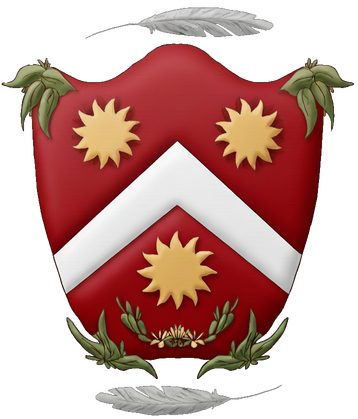
[!] A small, tidy book lies among the pedigrees of the minor families of Man. [[Listen here, read by the author.]] ✧⦅☀⦆━━━━━━━━☉━━━━━━━━⦅☀⦆✧ Glad tidings and the peace of GOD to all! I must first disclaim that I write this history not to unduly aggrandize the lineage which gave me life—for, indeed, it has known its share of penury and deprivation—but to illuminate, however dimly, this Aldor or Ealdor family, which has been found in the four centuries preceding this one and remains extant yet. No yearhundred has proceeded since the seventeenth without an Aldor making his mark, great or small, on its face. I am glad of this, and of my forebears, but if this work has been peddled or promoted to you by some chapman, you have been swindled. It is, and should be no more than, a modest reckoning of a humble lineage in that short-lived race called Man. Though the blood which now courses through each Aldor proceeds, praise be to GOD, from the First-among-Men, the name appended to this especial family was accorded on the 17th of Tobias’s Bounty, 1679. It was in that fruitful month that the august Rhys var Ruthern (1621–1704, @Imperium), Count of Metterden and later Duke of Vidaus, established our most prized and noble ancestor, Swithun Aldor, Scribe of Haense (SWIÐUN EALDOR, 1642–1736), as patriarch of a vassal family of House Ruthern. Swithun was born with only one name, as were his merchant parents. The surname was a choosing from the Father Tongue (discussed later in this text) and from its estimable word ealdor—that is, “elder”. Aldor has been its rendering in Common in both Swithun’s time and the years since, though Ealdor sees some use in family documents and traditional signatures. The blood-standing of the Aldors, whether it be among the smallfolk or among the noble peerage, is unclear to many. Swithun’s 1734 will extends his “ennobelishment” to his son, Romund Aldor, and Swithun evidently considered the 1679 act of vassalization to be equivalent to ennoblement. Irene C. Sarkozy’s (@Eryane) nineteenth-century biography of Swithun actually claims that he denied official inclusion in the peerage—even at King Sigmar’s insistence—but his espousal of a surname at that time, and the unlikeliness of Swithun contradicting the King’s will, makes matters ever murkier. Rhys’s death in the flight to Arcas did not help to clarify the matter. Swithun was certainly entrusted with great power over the Haeseni peerage, and in 1707 stripped House Ludovar of their princely title of Ulgaard and their comital title of Monstadt, removing the latter to House Amador. It seems safer, however—in my judgement—to presume that Swithun spoke of nobility of character rather than in the word’s strictest sense. He was never, to my knowledge, truly titled anything but “Lord”, earned through his work. If it should be that some future sovereign should extend ennoblement to the Aldor family, that may prove sufficient clarification of the issue. Until such time, I instead regard the Aldor family as being distinguished members of the urban gentry. It was Swithun’s achievements in that class which earned the Aldor kin the attention and trust of the peerage of the Kingdom of Hanseti-Ruska. First the Quartermaster of the Ruthern Levy for nine years, Swithun’s practical stewardship invited his appointment as a Regency Councilor of the Kingdom in 1668. It was in that capacity that he began a long friendship as the confidante and advisor to the future King Sigmar I and Queen Sophia; subsequently, he was also a formal mentor to Elizaveta vas Ruthern (1665–1707, @TheIchorDruid), the future Queen-Consort. After the cessation of the regency, Swithun was the Kingdom’s Royal Scribe for twenty-two years, and for the last years of his life (though sources disagree as to the exact year of his appointment) he held the post of High Justiciar of Haense. Ser Viktor Kortrevich’s reckoning of the High Justiciars of Haense in 1870 notes Swithun’s successful and lasting tenure, and that “the gavel of Justiciar Swithun Aldor, carried only by the High Justiciar” remained a fixture of the office long after his death. Swithun even, in old age, served in the Kingdom’s military as it struggled in vain during the War of Two Emperors; he was retired by a recently inaugurated regent in 1720, shortly after which Haense’s war effort collapsed. Disillusioned with the royal establishment in his elder days, Swithun is said to have spent his final years arranging his estate and writing pensively on theology, language, and statecraft. The success of our Oldest Headfather, that most industrious Swithun, styled “one of the finest writers humanity has ever seen” in Ve Edlervik, has not yet been surpassed by his progeny. Still, it is fit to give short sketches of those Aldors who have lived since, as their accomplishments must be reckoned somewhere. Aldfrith Aldor (@eagle964) EALDFRIÐ EALDOR 1645–1704 Swithun’s younger brother, Aldfrith, resided next to him in Markev. He was a printer of royal imagery and created posters in support of the Haeseni crown; these were approved of and displayed by the King and his family. Aldfrith presumably died in the flight from Atlas, a source of great grief for his kin. Aldfrith had distinguished himself in the Haeseni army of those days and was so virtuously committed to his work and service that he took no wife and hence fathered no children. Romund Aldor the Younger (@NovumChase) HROÐMUND II. EALDOR 1790–1834 Romund (or, as we might distinguish him, Romund the Younger) was a great-great-great-grandson of Swithun by Swithun’s only child, also named Romund (the Elder). After Haense’s inclusion in the Holy Orenian Empire during Arcas, the Aldor family had made their homes in Imperial cities and served the Empire and Man with distinction. In 1809, he participated in the rescue of Maisie d’Arkent with three others. Endorsed by the Josephite Union, Romund ran unsuccessfully for legislative office in Providence in 1810 before falling into obscurity. He died in 1834, before he could witness the 1840 marriage of his son Roward Aldor to Bérénice Devereux, whose great-great-grandfather—Pierce I Devereux—was the last King of Curon as well as a first cousin to two Emperors and an Empress-Consort. Romund’s eldest son, Winmund Aldor (1813–1899), married Alfeva Harth in a love marriage, and the two together continued the elder line of Aldors, of which I myself am part. Aithwin Aldor (@NovumChase) IEÐEWINE EALDOR 1928–2047 Aithwin was the great9-grandson of Swithun and a great-great-grandson of Romund the Younger by his mother, Aithfertha. I did not know him personally, though I have acquainted myself with him through manuscripts from his estate brought to me by a trusted friend. As both of Aithwin’s parents had returned to mononymy, he alone adopted the surname of that remote ancestor, Swithun, in his pursuit of the arts. He went to Valdev to accomplish this—together with his paternal cousin Godwin Almireson, later Godwin Maiheiuh (GODWINE ÆÐELMÆRSUNU, @AuJy), and his maternal cousin Mayer Bergwald (MÆRE BURGWEALD, @eagle964)—and there became a royal scribe in the court of Queen Amaya of Venzia. Aithwin’s six sisters and four brothers continued to live in his family’s village, freshly settled after the flight from Almaris. His love for and subsequent marriage to one Naya Barakat (1927–1978, @ProcaPro) later drew him elsewhere, however—first to Balian and then to Kaethul—and her adoption into the prestigious Qalasheen al-Jabir family led him to occasionally style himself Aithwin al-Jabir Aldor. Aithwin adopted a son, Fynlo al-Jabir Aldor (FINNLOG EALDOR, @ProcaPro), but Aithwin apparently kept few ties with the young adopted Aldor. His letters seem to indicate that he reconciled with “Fynn” in old age, however, and the two apparently went to battle Orsathiael in the twilight days of Aevos (Aithwin then being one hundred and eighteen years old and, no doubt, quite stiff and frail). My grasp is weak on that which has been variously called the Father Tongue, Olden Speech, Old Churlish, and the Leed by my forefathers. I am far from fluency in it, but far too from total ignorance. This elder language is the source of all of our Aldor names, strange though they sound, from time immemorial. Swiðun, known to us all as Swithun, comes from the hearty Olden swið, which denotes strength. My name, Hroðwine—rendered an easier Rothwin in public Common—is built from hroð, “fame”, and wine, “friend”, thus meaning “friend to fame”. All of these ancient “Olden” words, with which I can construct only childlike sentences and which I know mostly from the names of my foregoers, must be from some early Jorenic tongue, and yet I remain ignorant of it. Manuscripts which have come down to some Aldors explain to us the roots and stems in this most esoteric form of Common, though we Aldors use it mostly for naming and other ceremonial deeds. Our very surname, as I have afore noted, was pulled from this speech-way, wherein it is more exactly Ealdor—that is, “elder”. Swithun’s choice of meaning is unexplained. Our choice to derive our names—Hroðwine (Rothwin), Ieðewine (Aithwin), Godwine (Godwin), Hroðmund (Romund), Swiðun (Swithun), Swiðwulf (Swithulf)—from the Father Tongue is of no particular spiritual importance. So far as I can tell, it has never afforded any of us any advantage. It is merely, as far as I understand it, an expression of familial identity. Its original speakers and purpose are now lost to us. I am, however, personally fond of it, and should hope to see it continue. One particularly old tradition, occasionally still seen now, is the derivation of a child’s name from an element of the parent’s name, such as Swithun from Swithulf—the so-called “name-gift”. With various frequency throughout the history of the Aldors, Olden names, whether in their common or ancient forms, have been given to friends and retainers, and most especially blood-brothers and -sisters. What is called Aldor House-Law is really a sheaf of spoken rules and virtues impressed on each young Aldor. It has not, to my knowledge, been put to paper until now. It is a set of four good rights, to my knowledge: guest-right, moot-right, war-right, and blood-right. Guest-right is the oldest and surest: that bread and salt, once gifted by the host, bind guest and guest-taker to peace beneath one roof. No man may thence draw steel thereunder. Moot-right is our custom of speaking together: that each may have his say in turn, high or low, with plain speech, hearkening more than haranguing, to the end of a common rede. War-right is our going forth to battle and our coming home therefrom with a clean soul. No wanton spoil is taken, and all are spared who earnestly cast down their blades. Blood-right is the keeping of kin and the mending of hurt. We are to care for our widows and wards as evenly as we would ourselves, and may take on blood-brothers and blood-sisters. These are our tenets as they have come to me, though I, living only now and not with long elven-sight, cannot speak to their antiquity. They have, as I said, not yet been written. They do not wholly encompass our customs, of course, which are varied and intriguing—a writ I have from Aithwin Aldor writes romantically of his own placing of the tip of an ashen spear into a fire before the Battle of Breakwater Keep, marked by the phrase “let not the ash forsake the ash”, an act so singular and ritualistic I can only conclude that it is some manner of family tradition, though I have not yet witnessed it myself. The ritual of blood-brotherhood and -sisterhood is also unknown to me. Romund the Younger called it a “union of spears”, suggesting that palms are cut and joined below crossed spears. More plentiful than all rituals are the many sayings that come down to us from old writings, most to do with our symbols (on which there is more to come)—sayings such as “sun on thy helm” to warriors who must away. Of our faith and god-beliefs, it can only be said that the Aldors have upheld the good tenets of our Canonist faith from the outset. One point here, because it is too lonesome to be put anywhere else, is on how the House Aldor might be arranged in hierarchy. I include this only because Swithun Aldor, in his elder years, seemed to consider it possible that he would be landed after his dismissal as Lord Justiciar, and so laid out how the Aldors might organize their land and retainers accordingly. We are privileged to still maintain a small house-staff in this day, comprising a governess for the youth and some few bannermen. Swithun, however, dubiously ennobled as I have previously belabored, envisaged an expanded system of lordship over whatever demesne the family might eventually possess. This was, as we know well now, a hope the elder justiciar had that was not met, but the imagining of it seemed to inspire great passion in him. He devised a ‘Lordsmote’ comprising the head of the family together with the heads of any vassal-kindreds, whatever churchman serves Aldor lands, a Lord Knight (marshal), a Lord Reeve (justiciar), a Lord of the Beech (house scribe), and a Lord of the House (chamberlain). Esteemed and accomplished retainers were to be titled Thane, and might choose one from among their own to sit at the Lordsmote. The thought of it is enough to excite an enthusiastic dreamer, but no Aldor-Lordsmote has ever convened. Our shield, printed at the beginning of this work, is a red one with a white chevron. Three suns appear, two and one, and are known to us as the Thrisun. They embody the parhelion that Lord Swithun Aldor wrote hung over the gates of Markev as he returned to Haense to accept Demetrius var Ruthern’s summons for him as Lord Justiciar on the 15th of Horen’s Calling, 1703. Aside from the Thrisun, other symbols have been handed to us by our history. Romund Aldor the Younger is supposed to have preferred quills and gavels in evocation of good Swithun, and so our shield is today accompanied by bleached goose-feathers. So too is the beech tree most dear to us, and so its leaves and flowers appear on our shield, for the word beech is akin to book, as our ancestors first used that good tree’s bark to write and read. As far as vocations are concerned, a fine crop can be seen in the history of the Aldors. Our kindred has brought forth scribes and judges, indeed, but so too clerks, bookkeepers, printers, and teachers. Some among these have even taken to great martial feats, as Swithun himself slew a chimæra in 1672 at the battle at the Cathedral of St. Karl that claimed the life of High Pontiff Jude I. We should hope that future Aldorings might, too, prove themselves fine sword-siblings, and, more than this, grow their talents and professions even further beyond those lettered pursuits we have so far chased. As far as I can reckon, I and my siblings are of the eldest line of living trueborn Aldors who still bear the name and can trace themselves lineally to Swithun himself. It was this truth, revealed to me by my most beloved and virtuous father Rothswith Aldor (HROÐSWIÐ EALDOR), which inspired my interest in the history of my name. My scribal work now presently concerns history generally, and I have been privileged to discuss also the history of grander and more historic houses, but I cannot forswear my own blood and thus feel that I must lay it out for all descendants and kinsmen to look upon. I shall hence make a lineal outline of my genealogy as far as I know it. My father, Rothswith (born 2000), is the son of Radwarda (1971), begotten by Roward (1950), begotten by Helmward (1924), begotten by Rohelma (1905), begotten by Furnelm (1881), begotten by Roferth (1844), begotten by Winmund (1813), begotten by Romund (1790), begotten by Roswith (1753), begotten by Rowarda (1733), begotten by Rowall (1707), begotten by Romund, who was begotten by Swithun and Aoife Aldor in 1683. This is by absolute primogeniture. Swithun, no doubt inspired by the merit of his pupil, Queen-Consort Elizaveta vas Ruthern, chose in his 1734 will to “extend ennobelishment in name and duty to [his] son Romund and his issue, male and female alike, by primogeniture absolute”. I was the first to note the sometimes older ages of some mothers and fathers in this pedigree, but have earnestly researched their genealogies and have not found that any elder branches survive with the name Aldor. I henceforth claim, with the assent of my father, that he and I stand now at the head of the Aldor family, for whatever this may be worth to future researchers. Other surnames which appear in my historical pedigree are Bielka, Bukovsko, Fairclough, Harth, Markevska, Rezanov, Uhrmacher, and Valmont on my father’s side, and Holvech, Hramov, Seehafer, and Vesnik on my mother’s. My trueborn siblings, as I know them, are Roswyn (ROSEWYNN, @0mnip0tent), Edith (EADGYÐ, @cercysurge), Romund (HROÐMUND, @m9r9h), and Merith (MÆRGYÐ, @floridianrebel05). My good brother Romund was given a most esteemed name-gift, and is the fourth man in the family—the third in his own direct lineage—to bear the name. This work was compiled, and these very words now written, as we rest for a time upon the Isles of Kalldur. This flight, weary and tragic though it is, has caused a great pooling together of our race and afforded me the opportunity to meet with kinsmen and friends from across the world. This work would not have been possible without their contributions. It would not have been possible, either, were it not for the hope and excitement swelling in my chest for the world that lies ahead. It is my hope that in whatever golden fields we find, the Aldors might there build a new chapter to surpass all others in their history. It is told among my kinsmen that, as our ships embarked, there came a clear-weather parhelion on the starboard sky, and some said the Thrisun had found us upon the waters. I can only surmise that the lands whither we now sail will be most auspicious, and I look ever forward to marking them with the hope for goodness and justice imbued in me by my forebears. ✧⦅☀⦆━━━━━━━━☉━━━━━━━━⦅☀⦆✧ ROTHWIN ALDOR MMXLVIII


-
Enwrapped in crisp winter air on a balcony in Grense, Rothwin Aldor shakes his head as his eyes cross the final lines, clearly already hungry for the next volume. “Masterfully written.”
-
Sunbeams spear in through the slender gap left by closed shutters. Dust suspended in them floats idly over snow-white hair and a hand, stone-hard with age, that unfolds the letter addressed to Aithwin. In eyes faded with age, something swells. A hoarse sigh escapes him. His head lowers.
-
Aithwin Al-Jabir Aldor sat hunched at the end of an otherwise vacant bed, staring at the giggling, toddling boy on the wooden floor before him. He lived in a house occupied, but empty. Weeks before, his growing love for the child could have overbrimmed; now, eyes blankly upon little Fynn, it was as if someone robbed all notions of love from his chest. Aithwin had fast become an unsouled man: a man whose lifeless gaze was not fit for fatherhood. And yet, there was something—deep within him, beyond his conscious perception—that continued to stir. Even after this greatest robbery, this theft of his vitality, something fought still for air. Tired, sunken eyes showed forth a flicker, and a small smile flashed across his features as the boy excitedly toyed with a very familiar stuffed elephant—but the smile vanished as quickly as it came, and it would soon again be buried, not to be seen for some time again. That was now the way of things. An oppressive, hateful mountain of grief, rage and denial had fallen crushingly upon any capacity within Aithwin for joy. Clawing out of it was a distant dream. Even Naya's sincerest words could not break his indignance, and each time his eyes set themselves upon a star, he quietly swore to himself that he would see her again. He would. There could be no doubt. No matter how many dimensions he had to crawl through, emaciated and burning, he would find her. For now, though, there were matters at hand. Little Fynlo dy Eayst, as he had begun to call the boy—that is, Fynlo of the moon, and Fynn in brief—could not grow up without knowing of his Ummi. Aithwin would live for that fact, and that fact alone if need be. Perhaps it was this which sparked him to smile in spite of the bleakness. In truth, Aithwin may never know; any manner of happiness now felt unnatural, to be sure. But something warred, pushed, and struggled ever upward, urging him to follow Naya's advice and to live in spite of her death. Maybe it was some splinter of Naya herself. In time, he would be wise to cleave forever to it.
-
Still sore from the fight, Aithwin Aldor reads the poem fondly. “An auspicious day.”
-
Aithwin Aldor reads of the news in the lamplit, snow-beaten streets of Valdev. As his eyes trace over its final lines, he nods in solemn agreement. “Veletz shall reap what it has so terribly sown.”
-
Dwelling far in the skies above, Swithun is honored to have been included in such a many-splendored history!