


Kitomine
-
Posts
210 -
Joined
-
Last visited
Content Type
Profiles
Personas
Wiki
Rules
War
Systems
Safety
Player Conduct
Roleplay Leadership Guidelines
- Roleplay Leadership Guidelines
- Roleplay Leadership Guidelines Comments
- Roleplay Leadership Guidelines Reviews
Forums
Everything posted by Kitomine
-
what character arc was your favorite? like magic, community, and characterization?
-
The Miss Delilah gripped the missive between two hands, her complexion going a bright red in a combination of embarrassment and rage. Her hands crumbled it up into a ball, a string of curse words echoing beneath her breath.
-
Delilah stood next to Joan as Constance asked what was going on, handing her the missive she gave Joan a sympathetic glance. "Poor Joan.." She thought to herself.
-
Delilah begins preparing her favorite dress for the ball! "Oh.. I can't dance.." She confessed to her cousin. "Can you?" - "Lets ask Tantine, maybe she'll know!"
-
Delilah read the missive with a tilt of her head, making a mental note to meet the person who drew it!
-
The founder, the once Princess Charlotte of Marsana, found herself basking in the Ba’as sun. Deep into her mind where the memories lay, she remembered BEElian with great fondness. If she were to hear of its revival, it’d make the old bitter woman quite happy.
-
Mochou continues her lonely trek through the realm, the only one left behind.
-
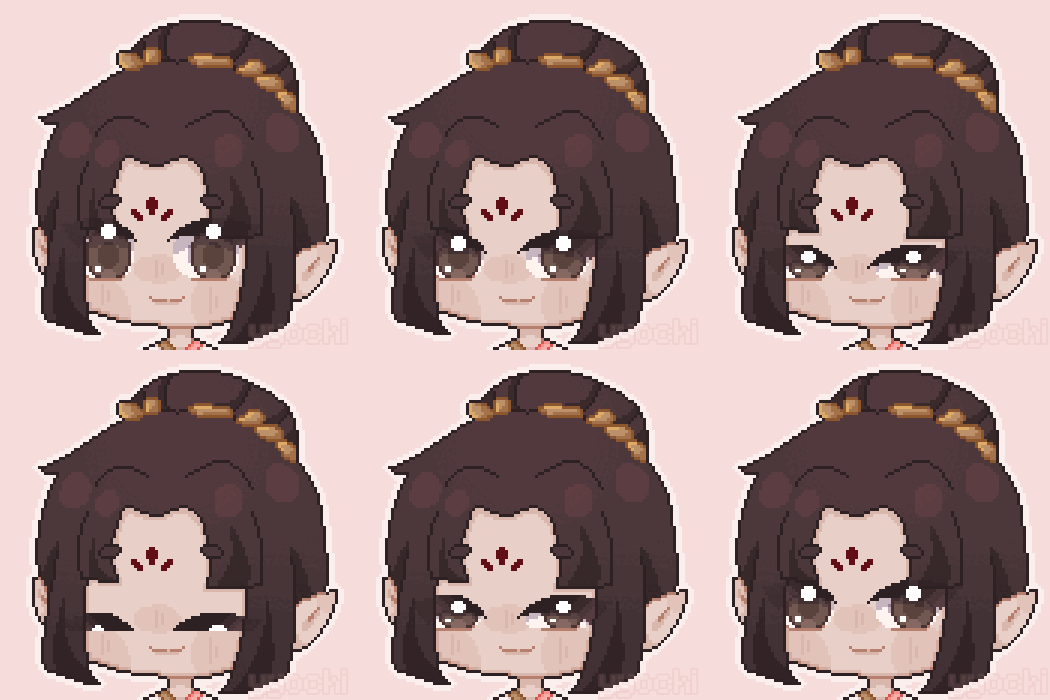
-= Lorraine Training Schedule, 2024-09-09. =-
Kitomine replied to shortchangehero's topic in Human Realms & Culture
The Dowager Duchess Sophia will watch from the sidelines, instead training in secret.. -
The Dowager Duchess, Princess Sophia, adds the missive to her collection with a simple nod of approval.
-
Lady Mochou continues her search for food and shelter within the rift, ‘blissfully’ unaware of the turbulence within the mortal realm.
-
[Magic Lore] Canonism Magic - Nuclear Warfare
Kitomine replied to Pallodium's topic in Creative Writing
I can hear you giggling while you wrote this. -
[!] A painting of the now missing Koe of Jun Lei Within the rift of The Dhurmyc Parasite, Mochou and several others found themselves face to face with a beast unlike anything the mortal realm had produced. The beast had multiple long legs, each encased in a rock-like armor that rendered their swords useless. As they struggled to fight, two of the allies were flung aside, each with a shattered arm. Despite their relentless efforts, the group suffered more injuries—two lost their arms entirely, others had multiple shattered limbs, and countless ribs were bruised from the attacks of the wretched beast. But, even with their injuries, the group continued fighting. Soon, it became clear that blunt weapons would do the most damage, the party now opting to use such and discarding their swords. The rock casing finally cracked, revealing decayed, yet somewhat mortal flesh beneath. One, two, three, hit after hit, the beastly monster was struck down. It dissipated into a cloud of dark smoke, leaving behind a disgusting corpse and a pulsating, purple heart. ───────────────────── ꕤ ───────────────────── Mochou moved forth to touch the heart, her left arm throbbing from the shattered humerus. She plucked it from its corpse, inspecting it as her war axe hit the ground. Her left arm bore no more strength, the adrenaline of the battle finally coming to a close. That purple heart began to swirl and swirl, beating faster and faster. Until that glowing swirling aura began to form into something physical. Another rift. Mochou found herself transfixed by the opening of such, taking her back to the one that opened inside the tea house. But unlike last time, she did not get a choice. A blinding flash of light ruptured from the melancholic heart. It was as if Mochou was no more; she was whisked elsewhere, within the vast, warped, and brought elsewhere. One thing was certainly clear, she was no longer with the others. She was gone. ───────────────────── ꕤ ───────────────────── This is all public knowledge! Anyone who reads this can know Mochou is gone and missing. ───────────────────── ꕤ ─────────────────────
-
+1 FINALLY blood magic gets a buff
-
The Trade Agreement between Nevalehen and The Jun Lei Village VOL I Published by The Jun Lei Village and Nevalehen On the Year of The Wonk, 194 S.A. On this day, the places of Nevalehen and Jun Lei, seek to open trade between their people in efforts to help one another’s economies and strengthen their bond. ───────────────────── ꕤ ───────────────────── Table of Contents 1. JUN LEI’S OFFERINGS 1.1 What Jun Lei is Trading 2. NEVALEHEN’S OFFERINGS 2.1 What Nevalehen is Trading 3. TERMS AND AGREEMENTS 3.1 What is Legally Expected of Each Settlement [!] A painting of Mushrooms and Oyashimen Barberry The Jun Lei Village wishes to offer up the following items in lieu of what has been discussed by the signatories of the document: Fine teas of various flavours, including Black, White, Green, Oolong and Jasmine. These shall be dried and prepared so that the people of Nevalehan may use these at any time for their taverns and teahouses. Various fabrics of different origins, including Silk, Cotton and Wool. Half of these shall be left unaltered and unformed so that they may be made into whatever clothing that the people of Nevalehan wish to make. The other half shall be dyed with the dyes sent by Nevalehan and returned with vibrant hues. All forms of rice grain in their dried state, enough to feed the population of Nevalehan. Nevalehen wishes to offer up the following items in lieu of what has been discussed by the signatories of the document: Various cuts of meat from different animals prepared so that they will not perish during travel and after, so that they may be cooked and eaten within a reasonable time of them being received by the Jun Lei Village. In addition the pelts from these animals shall also be offered up for the creation of furnishings. Weapons and raw material form of both Ironwood and Softwood shall be produced to arm the people of the Jun Lei Village so that they may be fully equipped for situations of combat and tournaments. Natural dyes of differing colours made from flowers and minerals that offer vibrant hues shall be offered so that the Jun Lei Village may colour their fabrics and materials. The signatories agree that in the exchange both parties will produce reasonable amounts of each item yearly and should an issue arise that prevents one party from being able to produce their yearly amount, it will be brought up for discussion by both parties to be resolved. This agreement shall be in effect for ten years but may be renewed when the time comes. ───────────────────── ꕤ ───────────────────── Let this trade agreement be a sign of lasting bond between the two communities. ───────────────────── ꕤ ───────────────────── Signed, Her Ladyship, Mochou High Elder and Koe of The Jùn Lèi Village Her Ladyship, Nemea Ke Kai’len International Delegate of Nevalehen
-
MC Name: Kit0Phobia Discord: otik Image: Description of Image: A painting of the lost Shoya of Jun Lei Dimensions: 1x2
-
I want it to grow and become something bigger than when I started it. Obviously keep the same chinese aesthetic, duh. But I want it to remain a chill, down to earth, relaxing area. Farming villages for the win
-
Anything is possible LOVE YOU TOO RHETT <33 WE NEED TO HAVE TEA BEFORE I LEAVE hamburger, I dislike pork and hotdogs typically have pork in them
-
I have been on lotc for 6 years now, joining August 3rd 2018. I joined at the wee age of 12 (rule breaker!) and have been here to the age of 18. I joined in middle school, I am now going to college. That's such a crazy thing to think about. I don't really have much to say regarding my time here, I have spent too much of it that's for sure. But to those that have stuck around to see me to this point, you do mean the world to me. (High_Fire and TurboDog I am looking at you. I have known you two for SO long..) Within the last year I have accomplished so much. I did so much on Julietta, then played an Aaun Princess, and finally now I am reviving the Li-Ren. I am happy this is where my lotc days have led to, I love my little community so much. You have made this final 8 months really memorable. (Plut0Phobia, RogueChaotic, Roller_TS, Pallodium, Master_Monkey1, Foxxy_11, Homo_Saxual, Rhettthecoldone, Cherub_Blues, and so so so many others. Love you <3) But I am not going anywhere! Just on hiatus B) I will still be active on discord and within Jun Lei. I'm just going to be really really busy. SO! AS IS TRADITION!! ASK ME ANYTHING AND I SHALL ANSWER!
-
The Language of the Yutiao Gang Li-Ren VOL III Published by The Grand Secretariat On the Year of The Pigman, 188 S.A. The Li-Ren culture re-emerges on the mainland after well over a century has passed since the fall of Yong Ping on the old continent. However, to any observant scholar of Li-Ren culture, they will note a variety of changes in the culture, most particularly the language. This is not a matter of widespread change but a matter of immigration and the movement of the Li-Ren people over the last one hundred years. Whereas the old culture of Li-Ren found in the Jade State of Yong Ping were from the land of Ai-Zho, having fled the oppressive regime led by the Li Dynasty to live in Almaris, the new wave of Li-Ren influence upon the mainland are from the land of Yutiao Gang. A simple overview of this matter is that the Li-Ren of Yutiao Gang were not fleeing an oppressive regime but a people of sailors and merchants who set about discovering a new world. The Li-Ren of Yutiao Gang were apart from those of Ai-Zho for so long that they formed their own language and culture, and now that they are the majority of the Li-Ren influence of Aevos, said differences will be more common to see. The first, and most important change for the people of Aevos to understand is the language, of which shall be explained and written out here. ───────────────────── ꕤ ───────────────────── Table of contents 1.Greetings 2.Common Words and Phrases 3. Family 4. People 5. Curse Words and Insults 6. Numbers 7. Dates and Times 8. Honourifics Yutiao Gang Li-Wen is so far from the language of Ai-Zho Li-Wen, that it is often considered its own language and not a dialect of Li-Wen. The former can be considered more modern Li-Wen whereas the latter is better described as traditional. As such the Jun-Lei Cultural Association has decided to offer up the following list of words and phrases to the people of Aevos to help understand the Li-Wen language in a simple manner. GREETINGS ENGLISH LI-WEN LI-ZI Hello (informal) hai / halou 嗨 / 哈喽 Hello (used for strangers or very formal) nihao / ninhao (formal, used for teachers) 你好 / 您好 Good Morning (semi-formal) zaoshang hao 早上好 Good Morning (informal) zao or zao a 早 / 早啊 Good Afternoon xiawu hao 下午好 Good Evening wanshang hao 晚上好 Good Night wanan 晚安 Goodbye zaijian 再见 YES AND NO There are no direct translations for “yes” or “no,” as similar terms are used in select contexts TERMS EXAMPLES LI-WEN LI-ZI Shi - I am. / It is. Bushi - I am not / It is not. Confirms something is true/false. Q: Are you from Jun Lei? A: Yes, I am. B: No, I am not. Q: Ni laizi Jun Lei ma? A: Shi. B: Bushi. Q: 你来自菌类吗? A: 是。 B: 不是。 Dui - Correct / right. Budui - Incorrect / not right. Expresses agreement/disagreement. Q: I think flowers are beautiful. A: Yes, I agree. B: No, I disagree. Q: Wo juede hua hen mei. A: Dui. B: Budui. Q: 我觉得花很美. A: 对 B: 不对 Keyi - May / Can Bu keyi - May not / cannot Indicates permission. Q: May I take pictures here? A: Yes, you can! B: No, you cannot. Q: Zheli keyi paizhao ma? A: Keyi! B: Bu keyi. Q: 这里可以拍照吗? A: 可以! B: 不可以. Meiyou - Don’t have / Have not [done something] Also used to politely deflect compliments. Q: Do you have money? A: I do not have money. Q: Have you eaten? A: I haven’t eaten. Q: Ni you qian ma? A: Wo meiyou qian. Q: Ni chile ma? A: Wo hai meiyou chi. Q:你有钱吗? A: 我没有钱。 Q: 你吃了吗? A: 我还没有吃. COMMON WORDS AND PHRASES ENGLISH LI-WEN LI-ZI Thank you xiexie (thank you) duoxie (many thanks) 谢谢 多谢 You’re welcome bu keqi (no need to be polite) buyong xie (no need to thank [me]!) 不客气 不用谢 Pretty/Handsome piaoliang (pretty) / shuai (handsome) mei (pretty for humans or objects/art) 漂亮 / 帅 美 Delicious VERY Delicious hao chi / meiwei hao chi jile! / hao chi juele 好吃 / 美味 好吃极了! / 好吃绝了! Multi-use exclamation aiya 哎呀 I’m Sorry bu haoyisi (less formal, can also be ‘excuse me’) duibuqi (used only when done something wrong) 不好意思 对不起 I don’t know wo bu zhidao 我不知道 Do you speak Li-Wen? ni hui jiang liwen ma? 你会讲李文吗? I do not speak Li-Wen wo bu hui liwen 我不会李文 Not bad! bucuo 不错 Particle for yes/no questions (add to end of sentence) ma? 吗? FAMILY ENGLISH LI-WEN LI-ZI Mother mama 妈妈 Father baba 爸爸 Grandma nainai 奶奶 Grandpa yeye 爷爷 Older sister jiejie 姐姐 Younger sister meimei 妹妹 Older brother gege 哥哥 Younger brother didi 弟弟 Daughter nüer 女儿 Son erzi 儿子 PEOPLE ENGLISH LI-WEN LI-ZI Foreigner(s) laowai (slang) 老外 Human / Humans renlei 人类 Elf / Elves jingling 精灵 High-Elf / High-Elves gaodeng jingling 高等精灵 Wood Elf / Wood Elves mu jingling 木精灵 Dark Elf / Dark Elves hei’an jinling 黑暗精灵 Dwarf / Dwarves airen 矮人 Orc / Orcs banshouren 半兽人 Halfling banshenren 半身人 Musin laoshuren 老鼠人 Kharajyr baoren 豹人 CURSE WORDS AND INSULTS ENGLISH LI-WEN LI-ZI Fool (lighthearted) “silly melon” shagua 傻瓜 “Little Devil” (For children) xiao gui 小鬼 Idiot (negative) “stupid egg” bendan 笨蛋 Jackass chun lu 蠢驴 Suck up paimapi 拍马屁 **** cao 肏 (sometimes 操) White Foreigner(s) (Chiefly High-Elves) guilao (derogatory for ‘westerner’) 鬼佬 “**** your ancestors to the eighteenth generation” cao ni zuzong shiba dai ni zuzong shiba dai 操你祖宗十八代 NUMBERS ENGLISH LI-WEN LI-ZI Zero ling 零 One yi 一 Two er 二 Three san 三 Four si 四 Five wu 五 Six liu 六 Seven qi 七 Eight ba 八 Nine jiu 九 Ten shi 十 Multiples of ten ex. twenty #shi ershi # 十 二十 One hundred yi bai 一百 DATES & TIMES ENGLISH LI-WEN LI-ZI Year nian 年 Month yue 月 Week xingqi 星期 Day ri 日 Yesterday zuotian 昨天 Today jintian 今天 Tomorrow mingtian 明天 HONORIFICS Honorifics typically follow a surname. They are not used as rigidly as in other Eastern cultures. ENGLISH LI-WEN LI-ZI EXAMPLES Lord (title) -gong -公 “Lord Jiang” jiang-gong / 蒋公 Mister -xiansheng -先生 “Mister Jiang” jiang-xiansheng / 蒋先生 Miss -nüshi -女士 “Miss Chen” chen-nüshi / 陈女士 Teacher -laoshi -老师 “Teacher Meng” meng-laoshi / 孟老师 Professor -jiaoshou -教授 “Professor Wang” wang-jiaoshou / 王教授 School Head -xiaozhang -校长 “Headmaster Xu” xu-xiaozhang / 徐校长 Doctor (informal) Doctor (formal) -dafu -yisheng -大夫 -医生 “Doctor Song” song-dafu / 宋大夫 song-yisheng / 宋医生 Master (of martial arts, of a craft, etc) -shifu -师傅 “Master Li” li-shifu / 李师傅 MARKET TERMS ENGLISH LI-WEN LI-ZI Money qian 钱 Minas yuan kuai (colloquial) 元 块 Cups (measuring word) bei 杯 Bottles (measuring word) ping 瓶 How much is [item]? [item/amount of item] duoshao qian? [item] 多少钱? Example: How much are three cups of tea? San bei cha doushao qian? 三杯茶多少钱? [Item] is [cost]. [item + cost] kuai [item + cost]块 Example: The bread is five minas. mianbao wu kuai. 面包五块 Can it be cheaper? (Bargaining) neng pianyi dian ma? 能便宜点吗? ───────────────────── ꕤ ───────────────────── It is the hope of the Jun Lei Village council that this missive shall help those who wish to understand both the culture and workings of Li-Ren culture. If you have any questions upon Li-Ren culture, please simply come to the Jun Lei Village and ask, we shall be more than happy to discuss culture with you. Zaijian! ───────────────────── ꕤ ───────────────────── Signed, Her Ladyship, Mochou High Elder and Koe Shoya of Jùn Lèi Her Excellency, Kato Hanako The Lady Beauty His Lordship, Jiang Chenyun The Lord Liushang
-
The Foods of Jùn Lèi VOL II Published by The Grand Secretariat On the Year of The Dragaar, 190 S.A. Jùn Lèi is renowned for its diverse culinary delights and dietary traditions. This informative book will guide you on your next visit to a tea house or in preparing delicious meals at home! ───────────────────── ꕤ ───────────────────── Table of contents 1. Daylong Duck 2. Boiled Chicken Fruit 3. Gold Coin Beef 4. Candied and Biting Pork 5. Wontons [!] A stall serving Li-Ren street food. Li-Ren culture boasts a wide array of dishes for everyone to enjoy. With centuries of history shaping its culinary landscape and new dishes being created every day, Li-Ren cuisine beautifully balances tradition and innovation. Each meal offers a taste of the past while embracing the flavors of the present, ensuring a dining experience that is both timeless and fresh. Daylong Duck is a dish consisting of a duck specially bred for consumers. Slaughtered 65 days after hatching, this dish afterwards is cooked in a closed oven to give it a crispy skin. The dish is meant to be carved of most of its meat leaving little left, with the main attraction being a layer of thin, crispy skin that is eaten with whatever the consumer wants or is given, common sides to accompany this dish are cucumbers and spring onions. Inside the duck can be a variety of different things typically depending on the cook. From pickled radishes to just nothing. Jīròu shuǐguǒ, roughly translates to, Boiled Chicken Fruit, is a strange dish that mixes the flavors of chicken and sweet melons into one on the fork. It starts by boiling a pot of water until it can be classified as a rolling boil (large and plentiful bubbling. Constant steam). And put pieces of chicken meat in to boil. While it boils take a honeydew melon and carve it into any kind of design you wish. Set the melons on a plate, it will act as another plate of sorts for the chicken. When the chicken has finished boiling as can be seen by its white coloration. Cut it into pieces or stringy strips and top it on the melon used as a base. Add whatever toppings to it to make the meal more enjoyable for the consumer’s palate. Gold Coin Beef is a luxurious dish featuring thin slices of beef that total up to a pound of meat in total. Start by cutting a piece of beef. Marinate beef with the following ingredients. Sugar, salt, sesame oil and wine for at least 4 hours. Marinate overnight for the best results. Put along the edge of a plate with the middle of the plate being available for a centerpiece of your choosing. This classic household recipe is just as classic comfort food in Li Ren culture. It starts off with pork shoulder being cut into one inch cubes or however close the chef can be with this measurement. Next in a medium sized bowl place these pieces and cover them with soy sauce, salt, sugar, green onions, and a single unit of egg white. Stir these well. Heat a quart of cooking oil in a saucepan. While waiting for this, cover your marinated chicken pieces in cornstarch. When your oil is hot, scrape the contents of the bowl into the pan and cook for about ten minutes in which it will evenly brown. Carefully take out the food and set aside somewhere for it to cool and dry. Finally delivered on an available plate or bowl, this dish goes well if mixed with another such as being atop rice. A recipe with a rich cultural history and even richer taste. Start off by creating the filling. Do this by combining ground pork, mushrooms, soy sauce, chopped green onions, corn starch, and seasonings. Next take spoonful's and place them in the wonton wrapping (will be covered in the next paragraph) and fold them. Afterwards place them in hot oil and cook until they turn crispy with a golden brown outside to show for it. For Wonton wrappers you only need four ingredients and they must be made first so you can even have wontons to begin with. The ingredients are; one egg, ⅓ cup of water (if it is still too dry, more can be added until you are satisfied), flour, and a pinch of salt. Beat the egg, then add the water. Combine flour and salt in a bowl, create a well in the center, and pour in the egg mixture. Mix well, increasing the water if the mixture is too dry, until a pliable dough has formed. Knead dough until elastic, cut dough into two balls. Let rest under a damp cloth for 10 minutes. Cut each ball into four equal pieces and roll the pieces into 10 squares ───────────────────── ꕤ ───────────────────── For the Li People, food is an art form, much like their tea. Each dish requires many hours to create, with a great deal of care and attention to detail. This meticulous process ensures that every meal is a masterpiece, reflecting the rich cultural heritage and culinary traditions of the Li People. ───────────────────── ꕤ ───────────────────── Signed, Her Ladyship, Mochou High Elder and Shoya of Jùn Lèi Her Excellency, Kato Hanako The Lady Beauty
-
That night, Shoya Mochou set up a memorial for the now deceased Shugo. She hasn't felt a death this hard in many decades. Each candle was lit with care, and that night, she mourned like a true broken soul.
-
The first Tea Ceremony of Jùn Lèi [!] Event Published by The Grand Secretariat On the Year of The Pigman, 188 S.A. You are cordially invited to partake in a traditional tea ceremony, an event that celebrates our rich heritage and fosters unity within our community. Join us as we embrace the tranquility and elegance of this ancient practice, guided by the esteemed members of the Grand Secretariat. Let us come together to honor our customs, enjoy the finest teas, and share in the harmony that defines our beloved village. ───────────────────── ꕤ ───────────────────── [OOC] Date: Sunday, July 14th Time: 3pm EST Location: The Jùn Lèi Tea House (-2194 / 1914) Welcome and Opening Remarks Warm greetings by The Lady Beauty and High Elder Introduction to the significance of the tea ceremony by the High Elder Tea Preparation Demonstration Detailed demonstration of traditional tea preparation techniques. Explanation of different types of tea and their cultural meanings. First Serving Guests are served the first infusion of tea. Time to savor the aroma and flavor, followed by a guided tasting. Cultural Performance Traditional music and dance performance reflecting the village’s heritage. Second Serving and Interactive Session Second infusion of tea served. Guests are invited to participate in a Q&A session with court officials. Closing Ceremony Final remarks and expression of gratitude by The Lady Beauty and High Elder Distribution of small tokens of appreciation to all attendees. Social Hour Informal mingling and discussion among guests. Light refreshments and additional tea available. The Esteemed Villagers of Jùn Lèi The Shugo Kato and Sakura-Gakure Citizens Shoya Bor’Ak Khan and the Citizens of Mugmar’s Circle The Rah’tuma and City of Ka-Tau Citizens His Lordship, Atticus Reinold and his family The Valiant Seekers Guild Miss Iyera Mister Sakuta Miss Yu-han Miss Akiyo Sawayama Miss Rebekah Miss Rosalyn Miss Kitaena ───────────────────── ꕤ ───────────────────── We look forward to sharing this special occasion with you and celebrating our cherished traditions together. ───────────────────── ꕤ ───────────────────── Signed, Her Ladyship, Mochou High Elder and Shoya of Jùn Lèi Her Excellency, Kato Hanako The Lady Beauty
-
A Guide to Li-Ren Tea Ceremonies VOL I Published by The Grand Secretariat On the Year of The Pigman, 188 S.A. Tea has been grown, consumed, and traded by the Li-Ren for thousands of years. In fact, the Li-Ren people are the original producers of tea and are renowned for their skills in cultivating and crafting tea. While traditions vary across provinces, tea drinking is an integral part of all Li-Ren culture. Tea is prepared and consumed on several special occasions. For instance, tea is served at weddings and during visits to tea houses on holidays. Additionally, tea is enjoyed to celebrate family gatherings and meetups, such as when a child leaves home. ───────────────────── ꕤ ───────────────────── Table of contents 1. The Meanings of Tea 2. The Types of Tea 3. How to prepare for a Tea Ceremony [!] A group of Li-Ren women preparing for a tea ceremony. Tea holds a rich tapestry of meanings across various cultures, particularly among the Li-Ren. Each type of tea and the way it is prepared and consumed can symbolise different sentiments, traditions, and moments in life. Each type of tea and the context in which it is enjoyed reflect the values and traditions of the Li-Ren people, making tea not just a beverage, but a profound cultural symbol. Green Tea Symbolizing purity and health, green tea is often associated with new beginnings and fresh starts. It is commonly served to guests as a gesture of hospitality and respect. In Li-Ren culture, offering green tea can signify a wish for long life and prosperity. Black Tea Known for its robust flavor, black tea represents strength and endurance. It is typically consumed during significant life events, such as weddings and important meetings, symbolizing the strong bonds and serious commitments being formed. White Tea The delicate nature of white tea signifies innocence and purity. It is often associated with youthful energy and new ventures. Drinking white tea can be seen as a way to celebrate new opportunities and to cleanse the mind and spirit. Oolong Tea This tea, which falls between green and black tea in terms of oxidation, represents balance and harmony. It is commonly enjoyed during peaceful family gatherings and is believed to promote mental clarity and emotional stability. Pu-erh Tea Known for its aged and fermented quality, Pu-erh tea symbolizes wisdom and maturity. It is often reserved for special occasions and is considered a tea of deep reflection and meditation. Drinking Pu-erh tea is seen as a way to connect with the past and gain insight for the future. Herbal Teas Though not true teas, herbal infusions hold their own significance. Chamomile tea, for example, symbolizes relaxation and is often consumed to promote calm and restful sleep. Ginger tea, on the other hand, represents warmth and healing, commonly used for its medicinal properties. The Li-Ren tea ceremony, known as Gongfu Cha (功夫茶), is a time-honored tradition that emphasizes skill, precision, and mindfulness in the preparation and serving of tea. This elegant ritual transforms tea drinking into an art form, fostering a sense of tranquility and reverence for both the process and the beverage itself. To begin, the proper materials are essential for conducting a Li-Ren tea ceremony. These include a small teapot, typically made of Yixing clay or a Gaiwan (a lidded bowl), small tea cups, a tea tray with a draining system, a tea pitcher (also known as a fairness cup), a tea strainer, a tea scoop, a tea towel, tea tongs, and a kettle for boiling water. Each tool plays a crucial role in ensuring the ceremony proceeds smoothly and gracefully. The ceremony starts with preparing the space. The tea tray is set up, and all the tools are arranged neatly, creating a calm and peaceful environment. Fresh water is then boiled in the kettle, with the temperature tailored to the type of tea being used. For instance, green tea requires lower temperatures, while black tea necessitates higher heat. Once the water is ready, the next step involves warming the teaware. Hot water is poured into the teapot or Gaiwan and the tea cups, which are then emptied after a few seconds. This step helps maintain the correct temperature during brewing, ensuring the tea's flavors are fully developed. The tea is then measured using a tea scoop, with about 1 to 2 teaspoons of leaves typically used for a small teapot. The leaves are placed into the teapot or Gaiwan, and hot water is poured over them, then immediately discarded. This initial infusion, known as "washing the tea," awakens the leaves and removes any impurities. Brewing the tea involves pouring hot water over the rinsed leaves, filling the teapot or Gaiwan. The tea is left to steep for the appropriate amount of time, usually between 10 to 30 seconds for the first brew, depending on the type of tea. Subsequent brews may require slightly longer steeping times to extract more flavor. Once the tea is brewed, it is poured into a tea pitcher through a tea strainer to catch any loose leaves. The tea is then distributed evenly into the small tea cups. Serving the tea involves holding the cup with both hands as a sign of respect and presenting it to the guests. Participants are encouraged to take a moment to appreciate the tea's aroma before sipping it. High-quality teas can be infused multiple times, with each infusion revealing different nuances in flavor. Adjusting the steeping time slightly longer for each subsequent infusion ensures the optimal extraction of the tea's essence. The ceremony concludes by cleaning and drying the teaware, expressing gratitude to the guests, and enjoying the remaining time together in a relaxed manner. The focus throughout the ceremony is on the process, allowing participants to take their time and savor each step. Appreciating the color, aroma, and taste of the tea with each infusion deepens the connection to the experience. ───────────────────── ꕤ ───────────────────── The variety of teas—each with its unique symbolism and significance—adds depth to the Li-Ren tea ceremony, Gongfu Cha. This ritual, emphasizing mindfulness and precision, elevates tea drinking into an art form, fostering a profound appreciation for the flavors and traditions of Li-Ren tea culture. Whether celebrating new beginnings with green tea or reflecting with aged Pu-erh, the ceremony transforms a simple beverage into a rich, meditative experience. ───────────────────── ꕤ ───────────────────── Signed, Her Ladyship, Mochou High Elder and Shoya of Jùn Lèi Her Excellency, Kato Hanako The Lady Beauty
-
Princess Charlotte, the twin of the deceased man, stood before her handmaid with the missive in hand. She’d simply utter the words “Y have a twin borsa?”
-
court recruitment The Grand Secretariat | EST. 188 S.A.
Kitomine posted a topic in The Junmura Village
The Mógū Temple’s Court VOL Intro Published by The Grand Secretariat Established in the year of The Pigman, 188 S.A. The Grand Secretariat is a cherished institution within the village, akin to a queen's court, located within the purple and teal temple at the entrance to the village. While the Grand Secretariat holds no governmental power, it preserves the village's identity and cultural traditions, fostering unity and pride among the villagers. Inside, the ladies and lords uphold customs and oversee ceremonies, ensuring that the village’s rich heritage is meticulously observed and celebrated. ───────────────────── ꕤ ───────────────────── Table of Contents 1. POSITIONS Roles and Responsibilities within the Grand Secretariat 2. EXPECTATIONS Dedication, Tradition, and Excellence [!] A painting of Court Ladies playing with a Temple Pet. Members of the Grand Secretariat are expected to participate in and oversee various ceremonial duties, including the meticulous organization of festivals and cultural events. Their roles require a deep understanding of the village’s customs and a commitment to ensuring these traditions are passed down through generations. Each member, through their actions and presence, contributes to fostering unity and pride among the villagers, making the Grand Secretariat a symbol of the village's enduring spirit and cultural continuity. The Lady Beauty | Kato Hanako The leader of the Grand Secretariat, known as The Lady Beauty, is a figure of immense respect and grace, embodying the village’s cultural heritage and traditions. Renowned for her wisdom and poise, The Lady Beauty is the guardian of the village’s customs and the central figure in managing the court's operations. Her role is comprehensive and demanding, ensuring the meticulous organization and oversight of all court activities. She manages the entire court, overseeing the court ladies and lords, ensuring their roles and responsibilities are clearly defined and executed with precision. Her leadership ensures that the Grand Secretariat operates smoothly and efficiently, with each member contributing to the preservation of the village’s rich heritage. Courtiers of the Court Under the purview of the Lady Beauty are several subsidiary courtiers, each entrusted with specialized tasks and roles within the grand court. These courtiers contribute to the seamless operation of the court, ensuring that every aspect of village tradition and cultural heritage is meticulously preserved and celebrated. Madam of Rites | Faebella Reinold The Madame of Rites is the esteemed overseer of all ceremonies and rituals within the Grand Secretariat. Renowned for her deep knowledge of the village’s religious practices and cultural traditions, she leads and coordinates every ceremonial event with precision and reverence. Her responsibilities include planning and executing festivals, tea ceremonies, religious observances, and other significant rituals, ensuring they are conducted authentically and honorably. The Madame of Rites is a pillar of the village’s spiritual life, guiding the community in preserving its rich heritage and fostering a deep sense of cultural pride. Lady Liushang | VACANT The Lady Liushang, also known as the Mistress of the Wardrobe, is the esteemed guardian of the Grand Secretariat’s attire and presentation. Renowned for her exquisite taste and meticulous attention to detail, she oversees the selection, maintenance, and preparation of ceremonial garments and accessories. Her responsibilities include ensuring that each piece of attire reflects the village’s rich heritage and craftsmanship, particularly for festivals, rituals, and other significant events. The Lady Liushang plays a crucial role in preserving the visual splendor and cultural integrity of the court, making her a vital figure in the village’s enduring traditions. Lady Shangshu | Zid Al'ha The Lady Shangshu, also known as the Court Historian, is the revered custodian of the Grand Secretariat’s vast collection of documents and books. She manages the village library with meticulous care, ensuring that every historical record, manuscript, and scroll is preserved and accessible. Renowned for her extensive knowledge and scholarly dedication, The Lady Shangshu oversees the documentation of the village’s history, traditions, and cultural heritage. Her role is crucial in educating and informing the court and the village, making her an indispensable guardian of the community’s collective memory and intellectual legacy. Lady of Unions | Kato Hanako The Lady of Unions is the esteemed matchmaker within the Grand Secretariat, renowned for her skill in fostering harmonious relationships and alliances. Known for her empathy and insight into human nature, she plays a pivotal role in arranging marriages and uniting families within the village. With a deep understanding of traditional values and social dynamics, the Lady of Unions carefully considers compatibility and mutual respect in her matchmaking endeavors. Her role extends beyond mere introductions, as she delicately navigates the complexities of interpersonal relationships, ensuring that each union strengthens the fabric of the community and upholds its cultural traditions. Ladies-in-Waiting The ladies-in-waiting of the Grand Secretariat are key members, known for their grace and dedication to upholding village traditions. They assist in ceremonies, including tea rituals and festivals, ensuring each event reflects the village's cultural heritage. Beyond duties, they serve as trusted companions, embodying values of respect and loyalty, maintaining the court's dignified atmosphere and preserving its cultural legacy. The expectations of the court are meticulously defined to ensure the preservation and celebration of the village's rich cultural heritage. At its heart are the esteemed ladies-in-waiting, whose grace and attentiveness exemplify the court's dedication to tradition. They assist in organizing and participating in ceremonial duties, from elaborate tea ceremonies to the orchestration of festivals and cultural events. Their role demands a profound understanding of protocol and a commitment to upholding the court's values with poise and elegance. Alongside the ladies-in-waiting are the dedicated servants, who play a crucial role in maintaining the court's impeccable standards. They attend to the practical needs of the court, ensuring that every detail, from the cleanliness of the temple to the preparation of ceremonial attire, is executed flawlessly. Their behind-the-scenes contributions are essential in creating an environment where tradition and ceremony can flourish. At the helm of the court are the court officials, each entrusted with specific responsibilities that uphold the village's customs and administrative functions. ───────────────────── ꕤ ───────────────────── If any of the positions above interest you, please contact Lady Kato Hanako (phoebe202) or Lady Mochou (Kitomine/Kit0phobia). ───────────────────── ꕤ ───────────────────── Signed, Her Ladyship, Mochou High Elder and Shoya of Jùn Lèi Her Excellency, Kato Hanako The Lady Beauty and Lady of Unions
