indiana105
-
Posts
354 -
Joined
Reputation
5126 Rep Farm Business Owner



.thumb.gif.c18a06456d65189a0aafcdfa71c07fee.gif)


Recent Profile Visitors
11642 profile views



-
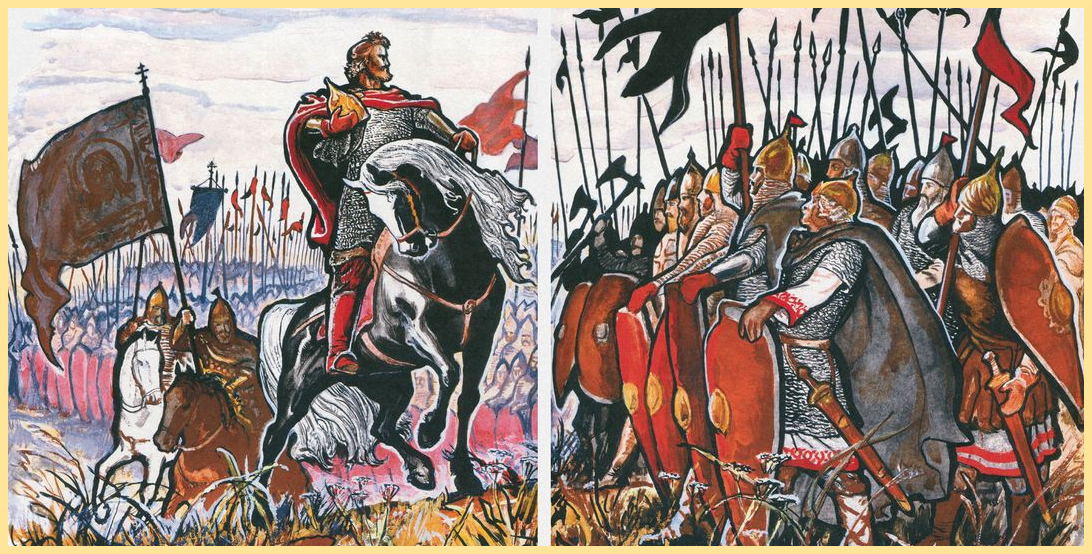
VE OSOBAZ I EDEL WEO BUREYATY THE BUREVIY HOST “And the king replied, ‘Did God not grant us respite from the toils of the earth? For a drop from the waters of Gamesh is worth more than a thousand worlds, and more precious than all the treasures of a royal hall. Remember your prayers, Elreden, and remember the pearl hidden within the flesh of your heart; do not rebuke Goodness but that which is opposed to Goodness.’” The Confessions of Elreden (5:35-37) IT HAS BEEN OVER HALF A CENTURY SINCE THE CAPITULATION OF THE HOUSE OF BARBANOV, AND THE GREAT HUMILIATION OF THE RAEVIR. Many thousands of our people died beneath the banner of the King Who Fled, and many more followed their lords into the lands of the Nordling tribes. Here, they eagerly abandoned their ways for foreign customs and strange gods, intermarrying and assimilating into this savage horde of apostate wastrels. The few Raevir who remained loyal to the old ways were not immune to the upheaval of the post-Haeseni order. Dejected warriors fled south seeking fertile lands, forming loose hosts of cossacks and plying their swords as meagre trade. For those lords of the old kingdom who sought to persist; Burgundy standards have long since replaced banners of black and gold. These lords of the Edelmark steward their lands most warily in relative isolation, venturing south only to meet their duty to the Imperial state. In the north, they have kept the peace and their Prince in Black. Yet this peace has bred complacency along the frontier, where gates are unmanned and ramparts unguarded. Strange, foul creatures pass unabated from the Nordling wastes in the early hours of the morn, creeping through the wood and preying upon the common man. When the Harrenite High Priest called for a Crusade against these daemons, the men of Galahar, Ruthern, and Radovanic made for the staging grounds in Valmont. In the southern camps, we patriarchs of these three Houses of Raev swore a pact upon our shared blood; to unite our hosts beyond the end of this campaign, and with the Emperor’s blessing, to one day settle the north beyond the great wall of Kvasz. We shall gather our banners in these northern valleys, at the place where the waters of Gamesh flow freely. This is to be our first Radduma, and it shall elect the first Hetman of our Bureviy. May the Prophet grant him sight. GODANI JEST WIELKI, HIS LORDSHIP, Franz Galahar, Baron of Ghaestenwald, Lord of Vrazdov, Boyar of the Radduma SER Justinyn var Ruthern, Knight of Valmont, Boyar of the Radduma Vilem Radovanic, Boyar of the Radduma On this month of, JOMA AG UMUND, 632 EHR SIGMUNDA. THE LAW OF JAN JEREMI In the first warrior bands of St. Karl of Petrus, soldiers were kept by their zeal for the faith and personal loyalty to their lords. A righteous conquest of the wildling and pagan tribes was led under his banner, most notably driving out the halfmen from a northern stronghold through great wit, later consecrated under the name of Siegrad. His principles and actions closely resembled the ancient code and duties of Bl. Jan Jeremi, who some seven hundred years earlier led his own cossack warband to drive out pagans in the Northern Crusades, and they adopted these for themselves. These laws, formed by the harsh realities of the ancient Raev, are known still by many as the Jeremic Liberties. To this law all of the Bureviy Host swears, and those of the Host are endowed with these liberties in turn. THE JEREMIC LIBERTIES I. To each freeman is his own life, to take it is to be a thief, II. To each freeman is his own time, to take it is to be a slaver, III. To each freeman is his own sword, to take it is to blind him, IV. To each freeman is his own wife, to take it is to injure him, V. To each freeman is his own farm, to take it is to make him no man. THE RADDUMA All authority in the Host is derived from the Radduma, the great assembly of the Bureviy Raev. It is by their will that the Hetman serves, and it is by their word that all matters are settled. There are a limited set of roles within the Radduma, each given varying respects and subject to the will of the Boyars and Hetman both. The customs that govern the ministrations and running of the Radduma are as follows: ELECTORS OF THE RADDUMA I. The Hetman; the leader of the greater host, and representative of the will of the Boyars. i. Elected for life by unanimous vote of the Boyars. II. The Boyars; landed lords and patriarchs of the Great Houses. i. Hereditary, inherited by the household’s tradition. ii. Irrevocable, destroyed only upon the extinction of the House. III. The Vasrans; heads of streltzy families, common men of great influence. i. Hereditary, inherited by the household’s tradition. ii. Created by unanimous vote of the Boyars. iii. Revocable by majority vote of the Radduma. IV. The Kaplan; a prominent theologian of Jorenus. i. Appointed by the body of the Jorenic clergy, as they see fit. V. The Tarcharman; wise counsel, appointed by the Hetman on matters of their expertise. i. Temporary, granted per session of the Radduma at the behest of the Hetman. ELIGIBILITY I. Only those of the Host may sit the Radduma. i. One is only considered to be ‘of the Host’ if they are both: i.i. Raev by blood, or by acknowledgement of the Radduma. i.ii. A tenant of a Vasran, Boyar, Hetman, etc. II. Only those who accept the totality of the revelation of Godanistan and His Four Prophets may sit the Radduma. III. Only those of sound mind and body may sit the Radduma. i. The mental capacity of a Vasran, Kaplan, or Tarcharman may be brought into question by a simple majority of the Radduma. A test of wit shall be administered by the Hetman, with failure resulting in: i.i. Defenestration. i.ii. Gibbeting. i.iii. Knee-capping. i.iv. Drowning. i.v. Mutilation. i.vi. Immuration. … As deemed appropriate by simple majority of the Boyars. IV. No blooded descendant of the King Who Fled may sit the Radduma, under any circumstances. ALLOCATION OF VOTES I. Two votes for the Hetman. i. Any votes gained from other seats held by the Hetman shall be considered forfeit. ii. In the event of a tie, the Hetman shall decide the outcome of the vote. II. Two votes to the Boyars. III. One vote to the Vasrans. VI. One vote for the Kaplan. V. One vote for the Tarcharman. i. May be annulled by unanimous vote of the Boyars. THE HETMAN The Hetman is the head of the Bureviy Host, and is elected for life by unanimous vote of the Boyars. They serve as the liaison to the Imperial State in the south, representing the will of the Radduma and the greater Host. They are permitted to retain six companions, the Druzhina, sworn to them by the blood-oath of Privorska, who answer solely to the Hetman and carry out their will. The Boyars as well must swear the Privorska upon their affirmation, and are obligated to heed the Hetman’s summons with the full force of their banners. The Boyars maintain supremacy in their own lands should they hold any, though the Hetman is endowed with the power to enforce the universal Law of Jan Jeremi throughout the whole of the Host. As well, the Hetman maintains the right to punish oathbreakers, though may elect to forgo their first rights of punishment to the aggrieved party. In addition to these military and political functions, the Hetmanate is a position of great ceremonial importance to the Bureviy. The Hetman reserves the right to speak first at all gatherings of the Burivey, and serves as officiant for all major events. They select the names of those newly Raev, elevated by the Radduma, and decide the epithets and honours given to the worthy. THE BOYAR HOUSES THE HOUSE OF GALAHAR The House of Galahar was split from the House of Barbanov-Bihar in 577 E.S. by Prince Josef of Haense, the second son of King Ivan VIII and Queen Nataliya I. After the collapse of the Dual-Kingdom and the flight of Joren and his court to Norland, Josef refused to abandon his holdings. Instead, he consolidated them into the Barony of Ghaenstenwald, the title of his Lady Mother, and swore himself and his new House to the King of Burgundy, Tiberias. His descendants briefly served as wardens of the ruined Haeseni capital of Valdev, though since the destruction of Aevos, the House of Galahar has largely withdrawn to its tower of Vrazdov in the northern marches. Their lords are not often seen in the south, save for mercantile expeditions on behalf of the Second Son Trading Company, or to fulfil compulsory duties owed to the Imperial State. Instead, they have taken to hoarding wealth and knowledge in their hold, priding themselves as preservers of the old ways. Among the Bureviy, it is rumoured that the line of Galahar is plagued by the “Sight of Maenvistiyaeo,” granting them knowledge of events that have yet come to pass. This affliction is said to often manifest itself as sporadic and painful episodes of seizure or delusion. The sight was first observed in Franz Leopold of the House of Morovar, the first Orazvi van Maenvestiyaeo, or Oracle. Queen Nataliya was claimed to be sired by Franz at the age of one-hundred and fifty, and her descendants, the Prince Josef and his son Aleksandr, were named Orazvi van Maenvestiyaeo in their own right. THE HOUSE OF RUTHERN The House of Ruthern is one of the oldest and most storied families in the entirety of Imperial History. Originating as a bastard cadet branch of the House of Carrion through Boris I, King of Raev’s bastard son, Ruther ‘Bonebreaker’ Barrow. The House of Ruthern originally rose to prominence under Exalted Sigismund and the succeeding Carrion monarchs. Their first most notable member was Ailred Ruthern, Marshal of the Decterum, one of the chief members of the Franciscan Massacre in 9 E.S.. After the creation of the duchy of Haense, they remained as stalwart players in politics throughout its history from 89 E.S., onwards. They were often great leaders of men, both on and off the battlefield, as Lord Palatines of Hanseti-Ruska and also as its Marshals leading great victories such as the Greyspine Rebellion, in which they overthrew the Courland Occupation of Hanseti-Ruska, in and also throughout the domination of Hanseti-Ruska during the Interregnum years of the Empire. Known for their hot tempers and being quick to draw steel, House Ruthern have often been the enforcers of a King’s will, with a Ruthern often at the head of a shieldwall or carrying the flank of a battle. For a Ruthern, a hammer is an extension of their arm, and they have often been found to challenge and kill both the enemy and even their own brothers in duels to the death. THE HOUSE OF RADOVANIC The House of Radovanic is relatively young in comparison to the other founding Boyar lineages. It draws its origin and name from Radovan, a mercenary who operated in the north of Almarisian Hanseti-Ruska. The first notable member was Emeric Radovanic, a bannerman and knight who served multiple lieges in his time. Over the centuries, they have served many lords as knights and retainers, and even risen to such prestigious offices as the Lord Palatine’s. Culturally, they are Drazdany, a splinter group who became culturally isolated from the greater Raev community centuries prior, speaking an archaic and strange Raevir tongue and practicing odd tribal traditions. They venerate their apocryphal ancestor and founder ‘Drazdan’ and their promised land by a river named the same, and utilise running water in many of their cultural practices and rituals. Though historically isolationist, they have a great affinity for horse-riding and horse-rearing, which they have since impressed upon the rest of the Host. This isolation left their community largely insulated from the collapse of Haense; it did not do the same against the devastating plague that followed years after, forcing the remaining tribesmen into nomadic life. Radovanics are the most notable of the Drazdany after their exodus, and ply their trade as earnest labourers, errant knights, and mercenaries. TRADITIONS OF THE BUREVIY HOST PROPHET SIGISMUND Exalted Sigismund, born Sigmund Carrion, is the fourth and final Prophet of the Canonist faith. He was born into the Raevir nobility as Sigmund Carrion, son of Duke Boris Carrion. His deeds in life, as chronicled by St. Bogdan, fulfilled the final prophecy of the Book of Sealing as revealed to Exalted Godfrey. In his last days, a vision of the end of times was revealed to the Prophet. It is said he dictated this vision from his deathbed entirely in Flexio, a language unknown to him, before his soul ascended to the Sixth Sky in the year 1447 A.H., which marks the beginning of the dating system known as Ehr Sigmunda. The status of Sigismund as the final Exalted, and canonicity of the Scroll of Auspice were largely unquestioned for the centuries following the ascension of the Prophet. The modern denial of his ascension only rose to prominence following the death of Saint Pontiff Caius I, and the subsequent wars waged upon Hanseti-Ruska. Barbanov Kings had come to frequently cite their direct descent from the Prophet as justification for the rule over the Highlands, and the Dual-Kingdom was colloquially known as the “Kingdom of Sigismund.” In the years following the fall of Hanseti-Ruska, the Canonist faith has been largely dismantled and supplanted by the “Temple of the True Faith,” a denialist rite based on Owynist traditions. The last Patriarch of Jorenus, the leader of the largest branch of what has come to be known as “Sigmundic Canonism,” was murdered in 595 E.S., and the Patriarchate itself was dissolved soon after. Sigmundic priests were defrocked, and attempts were made by the more radical High Priests of the Temple to deny rites to Canonist believers. This persecution has only strengthened the resolve of the Raevir, who largely refuse to abandon their ancestral faith, and continue to practice the Jorenic Rite of Sigmundic Canonism. They proudly display icons of the Prophet in public places, and preach the Auspice to any who would listen. Among the warriors of the Bureviy, many have taken to painting images of the Prophet on their shields and carving ornate litanies into their sabres. MAAN Among the Bureviy, a name holds great weight. A man may have many names, some unflattering, given to reflect his deeds in life, or the manner of his death. Among some groups of the Bureviy, children are given simple “milk names,” used from the time of their birth until the day of their baptism, upon which they are granted their true name. It is thought that this custom originated either in the camps of the Drazdan or the southern cossacks, as a way to prevent a mother from growing too attached to her sickly children. This honour is rarely extended to foreigners, who may be baptized in the old rites and granted a Raevir name upon completing a great service for the Bureviy. Such a man ceases to be a foreigner, and is considered by the Host to be equal to those of Raevir blood. GOSTWICZ The guest right is a sacred tradition, held commonly by those of Highlander blood. When a guest, whether of common or noble birth, partakes in a meal or drink under the roof of a host, the Gostwicz is invoked. An unspoken oath is formed between the two parties, where no harm shall be done at a meeting assured by guest right. For the host, it is akin to taking the guest into their household, and the guest is expected to not act hastily nor come to violence in turn. For one to keep a weapon on their person is to deny guest right, and to break the oath once it is promised is among the gravest of dishonours. Whilst practiced broadly by Raevir of all stature, it is particularly common to see the Gostwicz between feuding houses, or at meetings of great import. Before the guest departs, it is customary for them to offer their host a gift in return for the food and lodging provided. PRIVORSKA Many would-be princes have sought out the scattered Raevir, demanding oaths of fealty by right of some ancestral claim to Hanseti or Ruska. These beggars in black and gold have been laughed out of many halls and tents, and their efforts have soured many on the thought of ever kissing the knee of another man again. In place of these feudal oaths, the Bureviy have embraced the Privorska, a personal blood oath sworn between individuals. A Privorska may be sworn for any number of reasons. Most commonly, they are sworn between lord and bannerman, prospective allies, lovers, or to resolve disputes between feuding parties. In any case, the ritual is the same; men gather witnesses, and draw deep cuts along their palms with a blade. An oath between two men is formed by clasping hands, and mingling blood directly, while an oath sworn amongst a group is sealing by dripping blood into a shared vessel. A man who betrays his brothers in blood, who are bound to him by Privorska, is no longer Raev. All the Bureviy are compelled to refuse him hospitality, and those he betrayed are expected to take his head. KYELDEROV It is the bane of any free peoples to be held in bondage, as the Raevir know all too well. Just as breaking an oath is an unthinkable dishonour, so too is the practice of leaving a debt unpaid. For a man of the Bureviy, a debt is not necessarily a sum of coin, as is common in the southland, but is often some personal favour owed to another. Most are loath to keep such favours looming overhead, and it is viewed as a moral pursuit to always close one’s debts as soon as possible. A man may resolve an outstanding favour by volunteering his labour for a period of time, going out of his way to assist in a matter, or providing his sword in the defense of his debtor. To the Raevir of the Host, the most common Kyelderov is incurred upon marriage. The lesser party is obligated to pay a debt of coin, or service, to the family of their partner. This debt may be relieved only by the express permission of the patriarch of said family. VENTAL Since their bloody beginnings in the Huns-Waldorf of ancient times, and throughout the ages as frontiersmen beneath the Dual-Kingdom and this new Empire, the Raevir have always held martial ability in the highest regard. Great emphasis is placed on one’s bloodline, and honouring the prowess of warriors past. The fear of failing to live up to the deeds of their predecessors will often drive the Raevir of the Bureviy into unwinnable fights to defend their blood’s honour. Defeat is preferable to cowardice, and the act of refusing to defend oneself is widely reviled. Those who make a habit of shying away from honourable combat are often publicly broken, and pelted with stones and raw root vegetables. VELSTANZ The practice of fastidious record-keeping is an ancient one for the Bureviy. Since there have reigned Raev lords, there has been an innumerable sum of coin and resources poured into the sponsorship of both institutions and the scholars to maintain them. This respect for those skilled with the quill draws from the common veneration of St. Bogdan, companion of the final Prophet who dedicated his life to chronicling the life of the Prince in Black. Adoration of the written word has only been strengthened in the aftermath of the fall of Haense, which resulted in the loss of one of the greatest collections of the written word known to Man. This tragic loss has spurred the Raev of the Host to seek out the remaining works for their preservation. One organisation birthed from such a desire is the Friends of St. Bogdan, otherwise known in the south as the Theodosian Society.
-
Username: indiana105 Character Name: Franz Galahar, Baron of Ghaestenwald Affiliation: Empire of Man Desired Rank: Vanguard Which games will you be attending?: The Battle of Eldmyr, The Siege of Totenpflaz
-
i like haelun'or :^)
-

i am an affluent dark iron dwarf master smith, looking to host urguani refugee families in these dark times.
must be willing to run eversong woods/voidstorm mining routes at least 8 hrs/day
-
bogdan hate is crazy.
-
was it worth it urguan
-
“Go back to Krugmar” said a human man.
-
Jan Radovanic hopes the virgin who griefed his Sigismund sign is next. He knew who he was.
-
maybe he wasn't that bad. #BRINGBACKJOSH
-
maybe he wasn't that bad. #BRINGBACKJOSH
-
do it fart? @Greehn
-
hey guys i don't really understand how the solution to people complaining about transparency was removing the only two people who actively engage w/ the community. i like most of u guys but this wasn't a good move! the people who are left are either pretty green or inactive/hard to reach most of the time (respectfully) kinda seems like you're just removing people who i'd see disagreeing in moderation chat or complaining about how things were dysfunctional it would be pretty sad if there was actually politicking going on. what is there to hold onto aside from being the guy who owns the notion or schedules discord meetings lol remember that ur 'job' is to keep bad people off a minecraft server and make sure people are having fun
-

i said the r word in t his one but u delete my zomboid server comment. good thing u got rid of half the team ur really keeping the server safe
-
u can get unbanned for anything as long as ur not a pedophile or a boat glitcher
-
An old northman took up his sword, and a lordling was sent riding south.