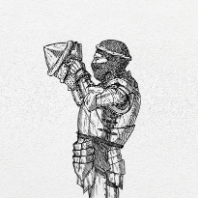
Deets 1130 Popular Post Share Posted February 16, 2025 “ ” A house of intrepid Waldenian adventurers, merchants, knights, and statesmen of the Petran Commonwealth. Originally soldiers of fortune in service to foreign monarchs, the history of the Haus von Theonus is one of loss, rebirth and renewal. Contained within this document is an in-depth, although by no means wholly complete chronicling of the family, including its history to the present day. It is a house forged by the sum total of the efforts of its members. At current a proud ducal house which lives upon the eastern frontier of the Petran Commonwealth, overlooking the River Constanz. I. History Spoiler I. History in Almaris. II. History in Aevos. II. Culture Spoiler I. Familial Culture & Attire II. Appearance III. Values Spoiler I. Horsemanship & Skill at Arms II. Industriousness III. Literature IV. Music IV. Traditions Spoiler I. The Oath of the Red Sun II. Maibaum III. The Council of Branches V. Heirlooms VI. Familial Titles VII. Familial Heads I. Almaris The Haus von Theonus was founded by Dietrich von Theonus, in the year 1796, the first year of the Second Age. While the rest of his family had perished during the conflict which had plagued the Kingdom of Haense, Dietrich had survived. Shedding his family’s traditional life as farmers, the young Dietrich had resolved to never be as helpless as he’d once been as a child. Through this determination, and a chance encounter in a roadside tavern, the Icathian Company was founded. Its history and that of the Haus von Theonus are intertwined. At first rejected as soldiers of fortune by the then Haeseni Marshal, the first iteration of the company sought their fortunes elsewhere. Finding a warm welcome in the icy northern realm of Norland. The tenure of Dietrich as patriarch, and as one of the Lord Commanders of the Icathian Company was quite brief. Missing his homeland, the then middle-aged Dietrich passed off the mantle of the house and the title of one of the two Lord Commanders to his teenage son, Alric von Theonus. Word occasionally reached the Nordling realm of an aged sellsword residing in the rose covered lands of Reinmar, who often spent his days beneath a tree overlooking the Haeseni countryside. Though relatively brief, the tenure of Dietrich von Theonus saw the Icathian Company expand as far afield as the Jade State of Yong Ping, playing a role in the realm’s emergence into its own from Talon’s Port. Most importantly defending the Jade State from the Metinian Company during a bout of hostilities within the district. Mercantile ventures were as well undertaken during the time of Dietrich, with the family operating enterprises in the cities of Varhelm, Karosgrad, Yong Ping, and Urguan for a time. Under the Ruric Kings, Halvar and his son King Sven II, the Haus von Theonus were loyal soldiers of fortune, fighting faithfully as the vanguard in many battles that shaped the future of the house. In return, the then patriarch of the family, Alric von Theonus was afforded the right to build a keep overlooking the maple forest to the kingdom’s eastern border, the seat of Hjoldenskarven. The Icathian Company and the Haus von Theonus resided within this fortress until the year 32 S.A, the death of Sven II. During this time, the Icathian Company and by extension the Haus von Theonus participated in the Tenth Nordling War, acting as a trusted king's guard to Sven II throughout the conflict. A painting depicting the Icathian Company defending King Sven II at the Battle of Outer Arentania, 25 S.A. In the aftermath of the defeat in the war, the Icathian Company remained within the Kingdom of Norland, albeit greatly diminished by losses suffered in the war. Soon after the death of Sven II, who was as a brother to Alric, the Icathian Company and the fortunes of the house began to decline. Forever changed by the death of Sven, Alric allowed both his house, and the Icathian Company to fall into decline. The number of contracts the company took on as both mercenaries and a merchant trading company declined. With this being the case, many members of the company began to slowly depart, seeking out their fortunes on their own and becoming the first of the Theonus Partisans, a lasting trend to this day. By the birth of the third patriarch, Karl von Theonus, the company had all but collapsed, as had the fortunes of the Haus von Theonus. The keep of Hjoldenskarven had fallen into decline and had been abandoned many years before his birth. His father Alric had remained so distraught following the Tenth Nordling War, and the death of Sven II almost forty years later, that out of guilt he suddenly left all his worldly possessions to his own teenage son. Soon after, much as his own father had, Alric disappeared from the world. Shortly thereafter the death of the second patriarch occurred, the man finding his death in the same cave that his long lost friend Sven II had perished all those years ago. Travelling about with a small number of the Icathian remnant, Karl began the cycle anew, taking on the same profession as his predecessors, albeit without the title of Lord Commander of the Icathian Company, this now lost to time. Though it is said that the other first Lord Commander, Ves of Yondor still travels about the continent of Almaris, and now Aevos. His mind forever lost to madness after a century spent upon the open road. At the onset of a bout of hostilities occurring across Almaris, Karl suggested to his companions, including the ancient soldier Gansk Lamar, that they seek work in Haense. Having remembered the bond his father had once had with the then Duke of Reinmar, Friedrich Barclay, decades ago. The young man set out with a bar of gold stamped with the Barclay sigil, intent to make his fortune. Finding employment then as a household guard in the Reinmaren Retinue of Princess Johanna I of Sutica, the then Duchess and successor of Friedrich who had given Karl’s father the gold. Karl then soon became a close friend and confidant of the Princess of Sutica during her reign. It is said that one cannot carry the burden of family alone, and this is certainly true as well of Haus von Theonus. During this time, Karl met Annette von Audrick, who would prove pivotal to the history of the renewed house. Within the town of Rozenfeld, it was she who taught the young man of his heritage, and of the culture which he was parted from in his youth. In time, the two wed, and their shared ambitions grew. On the prompting of Annette, the Haus von Theonus sought, and were granted a seat within the Waldenic Diet of Lord Vandalore Ottomar von Alstreim, first known as the Electorate of Theonus, later the Electorate of Einmont, Marignan, and at current Vohenheim. Additionally, for a time Annette von Theonus ran for political office in Haense, becoming a Royal Alderwoman of the Haeseni capital of Karosgrad. The original coat of arms of the House von Theonus during the life of Karl & Annette von Theonus. Although no longer its official coat of arms, it is used internally in informal documents and the like. The importance of Annette to the history of the Haus von Theonus must not be understated. It was her support which inspired Karl to soar to new heights alongside her, and was not without sacrifice. In pursuit of this ambition, Annette vacated her role as Alderwoman as the family found itself settling within the lands of the Reinmaren. Where Karl went, it was not without the undying support of Annette, who throughout her life was the other driving force of the family in all aspects. Without her, there would be no house, nor story. In battle too Annette went, wielding a warhammer forged by Karl which she carried proudly, proving herself as a brave and capable shieldmaiden in many battles that would break those of weaker wills. The strength of Annette was such that during the Carrion Prince’s siege of Karosgrad, she captured a banner of the ill-fated prince, which is displayed within the treasure room of Vissingren Castle, before returning unharmed to tend to the wounds of her husband Karl. Many values, beliefs, and aspects of the familial culture are attributed to Annette, including the first ceremonies of Maibaum, the relearning and embracement of the Waldenian language and culture, and the maintenance of a vast library in the familial seat. An aged Karl von Theonus remarked once to his faithful companion and mentor Gansk Lamar, “Without Annette, I would still be that boy who wished to play at war and reclaim what my father lost, unknowing that such would prove to be my own downfall. It is because of her that I have learned there is more, far more than I could have known all those years ago.” A portrait of Viscountess Annette von Theonus in the Rose Fields of Reinmar. In the year 117 S.A, the Haus von Theonus was elevated to Lordship and nobility under the then Duke of Minitz, Brandt Barclay, taking the title of Einmont. Einmont thus became the first title held by the house, becoming the namesake of their Electoral Seat within the Waldenic Diet until its eventual replacement with Marignan and then Vohenheim in the following decades, a title originating from the Commonwealth of the Petra and Heartlander Confederation respectively. Since the collapse of the Heartlander Confederation, the familial electoral seat of the Waldenic Diet has remained the Electorate of Vohenheim. For over two decades, under the leadership of patriarch Ser Karl von Theonus & matriarch Annette von Theonus, the House of Theonus resided within the lands of the Reinmaren, serving as loyal officials, soldiers, and advisors to the House of Barclay von Minitz. In this capacity, the family participated in Heinrik’s Rebellion, remaining loyal and fighting for the royalist cause in support of the reigning House of Alstion. Many of the men and women who would come to define the house during the twentieth century were forged in the crucible of war, most notably a young Theoderic von Theonus. Several members of the house, including Theoderic & Dietmar of Einmont, partook in the skirmishes which occurred within the countryside, seeing some success in their combined efforts with Haeseni volunteers supporting the royalist cause. A painting of an ambush by Royalist forces during Heinrik’s Rebellion, including a young Theoderic von Theonus in the bottom rightmost corner. Beyond conflict and strife, contributions made by the family included a motion to the Waldenic Diet to found the Waldenic Library, housed within the city of Neu Brandthof. Penned by Lord Karl and Lady Annette, the library soon began to house numerous books by Waldenians authors, or pertaining to Waldenian culture, such as the Vander Tales. Annette became its first Curator, encouraging the denizens of Minitz to express themselves through literary arts, finding some successful through the collection of the poetry of Pious Pongles and the author Ulrich von Minitz. In the aftermath of the rebellion, little changed in the day to day life for the house. Having not possessed lands beyond the confines of the city of Neu Brandthof, little changed beyond the blood that had been shed in the battles of Velec, Rolly’s Hill, and The Two Churches. As time went on, however, several members of the house expressed increasing difficulty with life within Reinmar. Many found it difficult to commit themselves to aspects of the Reinmaren culture, opting instead to retain an identity more reminiscent of that of their Waldeno-Haeseni ancestors. Although this soon became a secondary concern as it became evident that a rising threat now loomed large over Almaris, the Mori’Quessir. The now Lord Regent of Minitz, Ser Karl von Theonus, spearheaded efforts within the Grand Principality against the encroaching Mori. For a time, efforts to defend against this rising threat were successful, seeing the repulsion of an incursion of Mori scouts upon the roofs of Neu Brandhoft and the successful slaying of a Dreadknight in a cave on the outskirts of Valfleur. As the Mori continued their advance across all of Almaris, the Haus von Theonus was a participant in the failed Siege of Fenn by a combined host of Descendant forces which sought to counterattack and seize the initiative from the Mori. With the failed siege scattering the united host, the remaining men of Einmont, alongside Reinmaren contingents who had participated soon returned to Neu Brandthof, preparing the city for a siege. Ultimately, the seat of the Grand Principality met the same fate as all other holds across Almaris. The family was among those who fled the city during its fall to the Mori’Quessir, finding themselves encamped alongside the Reinmaren in the ruins of Savoy. II. Aevos In the year 136 S.A, the house was released of their fealty to the Grand Principality of Reinmar. Owing to finding difficulty in shedding their original culture, and ways of life from Haense in favour of Reinmaren the expected customs and culture that continued service would entail, the Haus von Theonus found itself able once more to decide the direction of its future following the signing of the Eberwald Accord, which amicably dissolved its vassalage to the Princes of Minitz. In the following years, several members of the family sought to establish themselves elsewhere across the continent in search of a new home, in which their original culture and ways of life might thrive. The Commonwealth of the Petra soon proved itself to be this sanctuary for the house. Comprising at the time a number of Auvergnian houses, with large populations of both Waldenians and assorted Highlanders, it was within this land that the family came to settle anew. Originally residing in several houses and buildings within the City of Vallagne, it was not long before the Haus von Theonus came to the attention of Arch-Duchess Renilde I. Within five years, Karl von Theonus was given the title of Vavasour, non-hereditary nobility within the Commonwealth which signified that the Garmont Throne had a keen interest in the progress of the house. In the year 139 S.A, the Haus von Theonus was elevated to the Barony of Marignan, under Baron Karl & Baroness Annette von Theonus. With this elevation, the aged couple soon began to draw plans for the construction of a familial seat within the borderlands of the Commonwealth, having been landed within the Mardonlands to the eastern extremity of the realm. It was in this borderland as marcher lords that the family planted roots and established themselves wholly. With the construction of Vissingren Castle, the Mardonlands soon became a hub of mining and commerce within the Commonwealth. The Coat of Arms of the Barony of Marignan. From the Black Hills, so named for the smoke from the forges of Vissingren Foundry, did a new chapter of the family’s history begin. A new generation of ambitious Theonus soon found themselves engrossed in the affairs of the Commonwealth, coming to hold a slew of roles within its apparatus which would see them shape the realm for half a century. These ambitious family members, amongst them the Heir to Marignan, Godric, Thérèse, the siblings Theoric & Sigismund, as well as Artel & Calla established norms and precedents which to this day continue within the Petran Commonwealth. Institutions of the Commonwealth such as the River Guard were revitalised by members of the Haus von Theonus, with Marshall Godric von Theonus revitalising the army to a size of near two thousand men under arms within the Royal City of Vallagne. Throughout his tenure, the Red Cloaks of the Guard were a common sight upon the roads of the realm. Beyond such, several members of the family undertook the revival of the Stewardry apparatus of the Commonwealth, with Thérèse assuming the role of Commissaire at age 18, with the aid of Artel von Theonus as a steward of the realm. Throughout her tenure, new ledgers were issued and reforms enacted which aided in improving the efficiency of the Garmont’s Bureaucracy, a skill which would later prove pivotal in her promotion to Vice-Chancellor of the Commonwealth, and later rise to the Chancellorship. As would come to be a common feature of the family, banking and commerce was another area in which the first generation of Petrine Theonus excelled. The brothers Sigismund & Theoderic oversaw the reformation of the Petran Treasury, including the discovery and subsequent recovery of funds stolen by the former treasurer, the Count of Azor. Management of coin came natural to the duo, and would see what was in jest termed a Golden Age for the Petran Treasury. Beyond reformations, Baron Karl & Lady Calla von Theonus established through a Bill of the Garmont the Vallagne Medical Society, which continues to serve as the primary repository of medical knowledge, and medical professionals within the Commonwealth. Under the leadership of Head Physician Calla, medical knowledge was disseminated throughout the realm, saving countless lives over the years through her tireless efforts. For these combined efforts, the Commonwealth first elevated the Haus von Theonus to the rank of Viscounty, then Margravate, bestowing such upon the second Viscount of Marignan, Godric von Theonus in the year 151 S.A. By this time, it had become evident that Haus von Theonus had fully established new roots within the Commonwealth, becoming part of its ever-expanding tapestry of history. Outside the confines of the Commonwealth, the Haus von Theonus was as well present. Most notably in aiding their former liege lords in the Principality of Minitz in their continued struggle to tame the Franklands from its original inhabitants. At the behest of the Waldenic Diet, Haus von Theonus answered the call and repeatedly sent men on expeditions to aid the Reinmaren in pacifying their newfound home. These efforts culminated in aiding the Reinmaren defeat a Frankish assault upon the seat of the Prince of Minitz which occurred during a session of the Waldenic Diet. It was an attack of Theonus partisans led by Sir Artel von Theonus that captured the Frankish lieutenant known only as “The Hawk” in a daring descent down the side of a mountain, resulting in the storming of the Frankish bastion The Hawk had been operating from within. A testament to the skill at arms of the family, the daring assault resulted in a resounding victory which weakened the overall Frankish strength in the region. Though such an assault was not without its losses, seeing the death of Khorm von Theonus during the fight. The height of Theonus involvement within the Commonwealth’s governance occurred shortly after the death of Crown Princess Winifred of the Petra & Crown Prince Adrian Sarkozic. The national tragedy left Queen Renilde I with a young heiress in Princess Catherine Arabella of the Petra, and a long regency ahead should the Queen abdicate after over half a century upon the Garmont Throne. It was during this time of peril for the Commonwealth that Sir Konstantin von Theonus, a promising knight and son of Margrave Godric I, was asked to hold the Chancellorship of the Commonwealth, with his sister Thérèse as the Vice-Chancellor. Although never having expected to hold the role, Sir Konstantin devoted himself to the Chancellorship, enacting a number of decrees such as the Solland Settlement Act, and mandatory Aurum testing upon the Commonwealth’s nobility during a time of increased darkspawn presence and activity. Sir Konstantin was elevated to the role of Guardian of the Commonwealth during the Regency of Queen Catherine I, acting as regent to his goddaughter in a time of need for the Commonwealth. Such came at a time of great strife, as the clouds of war stirred across the Heartlands of Aevos. Throughout the end of the reign of Queen Renilde, tensions with the Commonwealth’s ally, the League of Veletz, saw a number of affronts which proved pivotal in the Commonwealth’s decision to realign against those who held dominion over the Midlands. Among these included the near death of Prince Alberic du Lac, uncle to Queen Catherine. Knowing that should he be overbearing, Sir Konstantin included the young Queen in the decisions of state, so that she might better understand the mantle she was to hold when she was older. Subsequently, it was a joint decision between the two to join the forces of the Covenant of Five, declaring war against their former ally the League of Veletz. A portrait of Sir Konstantin von Theonus, Lord of Bingleburg & Regina von Theonus, Lady of Bingleburg. Throughout the early years of the war, Sir Konstantin & Lady Thérèse oversaw the day to day affairs of the war and wider realm, having a capable bureaucracy and state apparatus largely staffed and reformed by their kin. The Haus von Theonus contributed greatly to the Petrine war efforts, supplying many hundreds of steeds to the cavalry forces of the Commonwealth, in tandem with both hundreds of soldiers of the Black Hills, and immense material contributions to forge both suits of plate and blades for those men and women of the realm who partook in the campaigns against the Anathema throughout the War of the Covenant. Sir Konstantin proved himself to be a capable commander, and formidable cavalryman, often leading from the front amidst the massive melees of both infantry and cavalry which defined the war. Thérèse proved a cool, and capable politician within the homefront of the Commonwealth, providing strong leadership in the face of the adversities faced by the realm throughout the conflict, which would in part be the reason for her attaining honorary Damehood within the Petrine Laurel many years later in recognition for her immense contributions to the Commonwealth. At the Battle of Whitespire, Sir Konstantin led the partisans of Haus Theonus, some five hundred strong in the fierce street fighting which proved to be the opening act of the wider War of the Covenant. From Whitespire at the outset of the war to the final Battle of Easworth forest, the banners of Haus von Theonus marched alongside the Garmont Throne, through the thick of the fighting. Most recognizable were the steel-clad warhorses of Mardonlander stock in many of the vanguards of the Covenant host. The Mardonlanders of Haus Theonus often found themselves at the forefront alongside their allies, fighting bravely and earning their reputation within the Commonwealth. Many Theonus partook in the conflict, with several members of the family earning knighthoods upon the field for their valour, such as Sir Artel von Theonus, knighted for valour at the Battle of Whitespire. The war, however, was not without its tragedies. In the same battle in which Sir Artel earned his spurs, Countess Isavella Jazloviecki (née Theonus) was slain defending her adopted kingdom from the treasonous forces of the Black Prince of Stassion. As the sole daughter of the first Viscount of Marignan, such weighed heavy on the aged Karl’s mind, some saying it was a loss he never truly recovered from. Moreover, Ghorm von Theonus, a partisan and cousin to Margrave Godric I was dishonourably captured, and executed by the Principality of Stassion, decried in Queen Catherine I’s missive A Man For A Hand. Sir Konstantin von Theonus leading the Mardonlander vanguard at the Siege of Fredericksburg, 163 S.A. Perhaps the most enduring tale of the Haus von Theonus from the War of the Covenant is of Sigismund’s Sacrifice. Uncle to Queen Catherine, Sigismund found himself as one of few men-at-arms in the retinue of the Little Queen during a daring raid upon the Royal City of Vallagne. The vast majority of the realm’s swords were in the field on campaign, leaving only a skeleton force to hold the Petran capital from any foe. Taking advantage of such, a much larger force numbering in the hundreds scaled the city’s wall with minimal resistance on account of the speed and determination of the assault. Knowing that the Queen’s party held little chance of escape with the current turn of events that day, Sigismund volunteered to remain behind to draw the attention of the raiding party. Tales told by the citizenry of Vallagne speak of how in his final moments, Sigismund stood surrounded by a party of mounted Burgundian soldiers, defiantly facing them in spite of the overwhelming odds. Sigismund knew there would be no escape, yet still he valiantly sacrificed his life so that others, including Queen Catherine might escape the onslaught. For this, Queen Catherine I posthumously elevated Sigismund as Sir Sigismund the Defiant, Knight of the Petrine Laurel. His sacrifice embodied what it meant to be a Knight of the Laurel, and of the Knightly Republic, and thus serves as a continued lesson told both within the Haus von Theonus, as well as the wider Commonwealth. An artist’s portrayal of the death of Sigismund von Theonus, posthumously named “Sir Sigismund the Defiant” for his sacrificial final stand in Vallagne, 161 S.A. At the conclusion of the War of the Covenant, the forces of Haus Theonus demobilised and returned home to the Black Hills, recovering after many years of war. Many hundreds of the Mardonlands had been slain in the numerous campaigns to destroy the League, and thus a time of recovery was in order. Financially, the house sought out a number of commercial opportunities. In the construction of the City of Kretzen in the newly independent Principality of Reinmar, the family found an opportunity in lending coin to aid in the construction efforts of the new home of their distant kin. From this came an expansion in shops, and mercantile activities to a level seen prior to the continent spanning conflict of years prior. The official portrait of Chancellor Thérèse Amorie von Theonus, 159 S.A. Most important in this wider effort was the ascension of Thérèse von Theonus to the Chancellery of the Commonwealth. Having served as Vice-Chancellor to the previous two holders of the position, Sir Konstantin von Theonus & Nicolas Wittenbach. Under Chancellor Thérèse, the Commonwealth began to revitalise itself after a decade of war. Having succeeded her brother near the conclusion of the war a new government was established, staffed by a new generation with the ambitious Thérèse at its head. Among her efforts include efforts to further include the nobility of the Commonwealth in the affairs of the state, in the hopes that their further involvement would prove beneficial to the reconstruction of the realm. In these efforts, the Lady Chancellor proved herself a capable and experienced executive, having honed her skills over decades in the Petrine state apparatus. Through the steady hand of Chancellor Thérèse, the Commonwealth was revitalised within five years of the conclusion of the War of the Covenant. During her tenure, the Lady Chancellor was unique in that little, if any political crises marred the domestic progress of her reforms. Some amongst the family call her the most successful Chancellor of the Commonwealth for her achievements in this regard. Though her brother had seen the realm through the majority of the war as Guardian of the Commonwealth, such had come at a steep cost to the domestic affairs, which was swiftly and effectively rectified by Chancellor Thérèse. It was thus an immense blow to the wider Haus von Theonus when suddenly the Lady Chancellor was forced to vacate her position as Queen Catherine I sought to reform the process of the Chancellery, turning such into an elective position by the subjects of the realm. Such proved to be a source of some strain with the Garmont Throne in the following years, as a series of successive chancellors saw lesser success in the pursuit of their agendas, and a general quiet in the development of the realm. During these years as well, another member of the Haus von Theonus rose to prominence. Sir Theoderic von Theonus was elected to the position of the Knight Commander of the Petrine Laurel after the political scandals which saw the resignation of its first Knight Commander, Sir Aimo of Astor, the Baron of Fir’steinn. Sir Theoderic oversaw the enlargement of the Laurel in the years following the War of the Covenant, as well as the retirement of several of its founding members and most experienced knights. In this task, Knight Commander Theoderic oversaw the recapture of several locations within the Commonwealth’s hinterlands which had slipped from the authority of the Garmont Throne throughout the war. Notable among these was the recapturing of Witt’s End, the former seat of the Barons of Wittenbach. The keep had been infested by a band of cyclops, and necessitated a prolonged storming to clear the foe from the confines of the aged keep. It was through the determined and resolute leadership that this process was undertaken, with minimal casualties for the Commonwealth. As the reign of Queen Catherine I continued, the Haus von Theonus joined the merged realms of the Commonwealth of the Petra and the Apostolic Kingdom of Aaun into the Heartlander Confederation. In this process, the family, in thanks for two generations of devoted and untiring service was promoted, receiving the title of the Duchy of Vohenheim, which would come to serve as the main familial title, replacing that of Marignan from within the Commonwealth. Thus, in near three generations time, the once Barons of Marignan had become the Dukes of Vohenheim, overlooking the region of the Mardonlands from their castle within the Black Hills. The Coat of Arms of the Duchy of Vohenheim. Within the Heartlander Confederation, the family soon looked inward as their primary focus. A new generation was born, requiring great effort to raise and teach both the familial values those before them held, as well as what it meant to be Petran, Waldenian and of the Heartlands. In this capacity, Duke Aurel von Theonus devoted himself to the newly established Legion of Saint Godwin, the military which would come to play a decisive role in the short history of the Heartlander Confederation. Whilst three knights of the newly established Order of St. Peter, led by the Petrine princess Dame Rowena of the Petra came from the house. This was not to last long, however, as the irreconcilable differences between the Petran and Aaunish people came to a head during the Valentius Crisis. The Haus von Theonus and their allies in the House of Astor played pivotal roles in both discovering, informing, and preparing the Commonwealth during the events that would become known as the Struggle for the Heartlands. It was Sir Konstantin von Theonus who discovered the Aaunish plot to make war upon Lurin through an unsanctioned military expedition, having been asked to support the ploy alongside the Heiress of Astor at a ball held in Rikardsburg by Haus von Augusten, another Waldenian noble family of the Commonwealth. Fearing that Prince John Valentius sought to blackmail and force the hand of the young Queen Adalia through backroom politicking with the Heartlander noble houses, Sir Konstantin swiftly informed both his nephew, the Duke of Vohenheim and the Baron of Astor of the unfolding plot. From these two houses did the nucleus of Petran activity emerge, swiftly forming a unified face in tandem with much of the Petran nobility against the would-be plotters. Armed with the knowledge provided by Sir Konstantin, the Duke of Vohenheim met with the Count of Enswerp, famously stating of his support for Queen Adalia, “She will know we support her when we stand by her side, not across her at the table.” It was evident then to the Duke that the Confederation as a whole was nestled upon the brink, and the events which came thereafter only proved his sentiment correct. Tensions continued to escalate as several Aaunish houses publicly supported or participated in the egregious crimes of the Marna Brigade against the Petran populace, most infamously the burning of the royal academy at Courteis Hale, resulting in several deaths to the smoke and flames. In spite of this, the Haus von Theonus remained loyal and steadfast to the Garmont Throne, with Duke Aurel von Theonus coming to serve as one of two regents, alongside the Princess Dame Rowena of the Petra, through the course of the struggle. In this capacity, Duke Aurel proved to be as uncompromising and able, similar to his mother Thérèse during her tenure within the Petran Chancellery. Through his actions, the Commonwealth was able to accrue support from a number of its allies, and present a unified face against both the Marna Brigade, and the House of Alstion, which refused to honour the original exit clause written within the agreement to merge the two realms. The Struggle for the Heartlands reached its climax at the Battle of Enswerp, in which Duke Aurel in tandem with the Baron of Fir’steinn led a thousand men into the County of Enswerp to capture what Petrans refer to as The King for a Day, Paul Moere, the disgraced and disowned son of Queen Renilde I. Having attempted to usurp the throne with the support of the Marna Brigade, Duke Aurel knew that this threat necessitated action, for inaction would only allow the rot of the pretender to fester in the already chaotic Heartlands. Having rallied fourteen hundred men within Vissingren Castle, Duke Aurel first sent an Astoran by the name of Laena to scout Enswerp and return, with the Astoran finding that Paul Moere was present and guarded only by a handful of knights loyal to the pretender cause. However, with the ongoing flames of war in the realm, four hundred men had been sent elsewhere prior to the march upon Enswerp, leaving four hundred partisans and men-at-arms of Haus Theonus, two hundred Astoran warriors, two hundred loyalist Petran Knights and Legionaries of Saint Godwin, and two hundred mercenary outriders under the command of the soldier of fortune Asbjorn Carthaig to march across the River Constanz. Finding Paul Moere protected by only a small retinue of knights, the Loyalists surrounded and attempted to apprehend the pretender, only to be met by a force equaling their own from within Enswerp as the nearby city of Whitespire’s bell was rung, alerting the dormant forces of the Petran crossing. In the chaotic battle that ensued, the Loyalist forces cut a bloody swathe through the garrison of Enswerp, The Marna Brigade, and the pretender’s knightly retinue. Duke Aurel sounded the charge, and thus the Battle of Enswerp commenced. Tales told amidst the halls of Vissingren thereafter told of how Sir Konstantin cut down three of the pretender’s knights in the fray, and of how partisan Aber MitKase crushed a small Enswerp soldier beneath his frame falling from the knight’s horse. In the span of moments, the fearsome fighting had abated, leaving near a thousand dead in the streets of Enswerp, two thirds comprising the garrison which had sought to protect the pretender. Paul Moere was captured and ransomed to the Duke for a thousand mina, and subsequently escorted to Vallagne to receive justice from the Commonwealth he had sought to steal. With political support for the maintenance of the Heartlander Confederation through force waning internationally, Duke Aurel and Dame Rowena saw the successful separation of the Commonwealth from the Confederation. As was the case in the aftermath of the War of the Covenant, the Haus von Theonus once more returned to the Black Hills. Thus, the most recent history of the house remains the same as its early history upon Aevos. Although no longer actively serving in the governance of the realm, Theonus remain a loyal vassal to the House of the Petra, ready to answer the call when needed. Most significantly this has seen forces of Theonus partisans joining Robertine Crusaders on campaign in the Robertine Crusade, such as the Siege of Silasia Palace, the Siege of Barnsley, and the Battles of Driftwood Hollow & Port Cormath. Attire Owing to the original founders of the family itself having spent the majority of their time in the Kingdom of Haense, the attire of the Theonus reflects this to a degree, blending Waldeno-Haenseni and Petrine fashion. Many Theonus may often be found in attire containing more fanciful elements. Cloaks embroidered in gold and fanciful patterns, livery collars and other jewellery are a common sight amongst those of the blood. Often, these elements contain the colours of their heraldry, those being dark blue, and the gold of the sun. Patterns such as the sun are occasionally featured prominently, given the words of the house. Owing to the martial traditions of the family, it is not uncommon for the plate armour worn in battle to at times be used as attire beyond the walls of Vissingren Castle. “Unwavering Under the Sun” A reference back to generations ago when the von Theonus men fought under the banner of the Icathian Company in the frigid north of Almaris as mercenaries to the Ruric Kings. The sun has at times featured prominently in the culture of the family. Heraldic attire, jewellery, and accessories to arms are commonplace to members of the house. In battle, these same trends are the norm. Adorning plate armour of castle-forged steel and weapons displaying their heraldry, the vibrant colours of the Theonus are difficult to miss on the field of battle. Atop steeds bred in the Mardonlands of the Commonwealth of the Petra, the cavalry fielded by the family has rode amongst the vanguard of their respective lieges in several conflicts. The armour of a member of Haus von Theonus. Often fighting in the vanguard of the Commonwealth’s forces, heavy plate armour is a necessity for its survivability. Its style is Johannian Plate, influenced by Princess Johanna of Reinmar. Spoiler @Zaerie Outside of battle, it is not uncommon for the attire of a member of the family to bear some elements of utility for war. Padded tunic and decorated gambeson is not an uncommon sight. Generalised, the attire of a member of Haus von Theonus is most commonly pragmatic, with stylistic influences of the individual. Some members have in the past opted for designs which display wealth, most famously Sir Konstantin von Theonus, whose personal fortune contributed greatly to the family’s fortune throughout his lifetime. A member, confidant, or those employed by the family may at times be identified by a rondel dagger attached to their belt. In a tradition dating back to Viscount Karl I, it became commonplace for each member of the family to possess a dagger engraved with the original sigil of the family. Such symbolises their belonging, as well as serving as a stark reminder of their duty and obligation to the family. An example of the rondel dagger carried by a member of Haus von Theonus. Within the Mardonlands, the culture remains heavily Waldenian with a handful of characteristics of the Commonwealth present. The strong martial traditions of the Astorans has left their mark, namely in the manner of training of members of Haus Theonus in arms. Originally comprising much of the ranks of the partisans of the family, the Astorans came into their own within the Commonwealth, proving steadfast allies to the house in what has unofficially been called The Eternal Alliance, the friendship shared over the course of generations of hardship of the two families. From the Duchy of Reinmar to the brief Heartlander Confederation, the two families have maintained close cooperation and friendship. The regimen of Frey Fit, the traditional martial rearing of the Astorans is at times utilised in the training of Theonus youth. Comprising arduous and intensive training of one’s stamina and physical endurance, such has proved fruitful in producing many men and women who would later serve in the Petrine Laurel, or the reformed Swords of Saint Emma. Additionally, with the marriage of Duke Aurel I ‘the Bold’ von Theonus to Lady Delphine Auclair, some Auvergnian influence has manifested itself within the family, notably in the naming convention of the newest generation. It is not uncommon for members of the main line to possess a middle name of Auvergnian influence in honour of the Duchess. A Culture of Adventure, Martial Skill and Fortune Seeking A painting of a Theonus adventurer upon the roads of Aevos. Owing to a history of both mercantile and militaristic ventures, a strong emphasis of wandering one’s own path permeates the childhood of a son or daughter of the Theonus family. Most commonly this has taken the form of adventuring across the continent in a number of capacities. To seek one’s fortune in some capacity is a hallmark of one coming of age, demonstrating the wit and ability of a Theonus. The most successful branches of the family beyond the main line have been built by enterprising sons and daughters who sought their fortunes across the continent. The lines of Sir Artel, Sir Theoderic and the postumous Sir Sigismund are prominent examples of such, both built by the two upon a lifetime of service at arms for both the former Duchy of Minitz, Petran Commonwealth and the later Heartlander Confederation. Whilst the descendants of Sir Sigismund found themselves embracing the Auvergnian culture of the Pétrine Meadowlands, becoming known as the de Châtillon. Fortune in the literal sense as well is not an uncommon pursuit within the familial, with some members of the house being known for their propensity for trade and economic endeavours, their fortunes often aiding the wider ventures undertaken by the family. The propensity for such is so strong that one Theonus was once referred to as “the richest man he knew” by Saint Caius I in a letter. A byproduct of these values is a strong tendency for many Theonus to train their skill at arms, and hone such over a lifetime of experiences. From the Icathian Company of old to present, many Theonus have taken pride in their skill at arms, often taking martial roles wherever they may find themselves. Such is formalised at current through the position of Master-at-Arms within Vissingren Castle. This position has at times been held by a member of the family whose job it has been to provide martial instruction to the scions of the family. Though most frequently it has been held by those from beyond the family who possess a great skill at arms. Among these have been Sir Frey of Astor and Marcel Galken, who are to thank for the martial tutelage of many Theonus of recent generations. It is no mere luck that many Theonus often find themselves under arms within the armies of the realm, such as the River Guard, the Ausecan Corps and the Swords of Saint Emma. Of note as well is the strong knightly tradition that has emerged in tandem with a strong martial spirit. Many Theonus have found themselves earning their spurs in chivalric orders, proving a badge of honour and prestige for the house. Among these members of the haus are included: Sir Karl 'the Eagle' von Theonus, knighted in the then Duchy of Minitz as a Ritter of the Order of St. Tylos. Sir Artel 'the Flamebringer' von Theonus, knighted for valour at the Battle of Whitespire during the War of the Covenant. Sir Theoderic 'the Resilient' von Theonus, knighted for saving Princess Catherine Arabella of the Petra from the clutches of the Dead Men. Sir Konstantin 'the Dauntless' von Theonus, knighted for saving Princess Catherine Arabella of the Petra from the clutches of the Dead Men. Dame Thérèse von Theonus, knighted for enduring service to the Commonwealth of the Petra over the course of four decades. Sir Sigismund 'the Defiant' von Theonus, knighted posthumously for sacrificing his life to buy time for Queen Catherine I of the Petra to escape an attack upon Vallagne during the War of the Covenant. Sir Artair 'the Flameborn' von Theonus, knighted for saving the life of Queen Adalia I of the Petra from the clutches of an undead assailant in the streets of Vallagne. Sir Clemens 'the Bold' von Theonus, knighted for valour during the Robertine Crusade in tandem with efforts to secure the Petran Commonwealth from threats that emerged during the Robertine Crusade. Physical Features Within the main line of the house, the most common features are dark brown hair, albeit it is not unheard of for Theonus to have black hair as well. Most prevalent amongst the main line of the house are eyes the colour of cognac, a gene passed down from the renewed house’s founder, Karl von Theonus. It is often jested that a Theonus will have “Karl’s Eyes and Annette’s Hair”, indicating the influence of the two founders even generations after their own passing. Albeit this has seemingly begun to wane as time passes, with the hair colour of many of the newest generation of Theonus possessing much lighter hair. Owing to the adoption of several Icathians into the Haus von Theonus during the time of Alric von Theonus, the appearance of the other familial lines has often varied. Within the Artemisian Line, it is most common for a Theonus to be born with red hair and a pale complexion, though black hair is equally as common given the roots of this line in the half Li-Ren Jia von Theonus, born to a Waldenian father of the Icathian Company, and a Li-Ren mother of the Jade State of Yong Ping. Several sketches of men of the Haus von Theonus. Other more distant lines of the family have possessed characteristics common to other families of similar stock. Brown and blonde hair is most commonly found. Although varying in shade, darker hair of the latter is more common. Blonde hair, however, is more prevalent in the line of Bingleburg, due to greater marriage ties with House Barclay in past decades. This has manifested more commonly in the women of the family, with the first Lady of Bingleburg being a noteworthy example of this appearance. Sketches of Annette, Thérèse & Regina von Theonus. In terms of stature, there is nothing too distinct of note when examining a Theonus. Regarding this, perhaps the most noticeable feature of a member of the family is that they likely shall possess a well-maintained figure. Owing to the emphasis on physical activities, ranging from equestrian pursuits, to smithing, to swordplay, it is not uncommon for a member of the family to maintain a somewhat leaner, if muscled figure. Most commonly Theonus tends to stand several inches above five and a half feet, rarely exceeding six feet in recent generations. Horsemanship & Skill at Arms A painting of Margrave Godric I ‘the Daring’ von Theonus leading mounted Theonus partisans on patrol. Owing to the extensive trade caravans and mercantile ventures of the house, much attention is afforded to the maintenance of large stables of Mardonlander steeds. Steeds from the lands of the house are a hardy breed, intended for both the din of battle, and the exhausting journeys across the roads of the continent. The Theonus family take pride in their horsemanship, and have in the past used this knowledge to great effect, namely during the Aevos Coalition War. Throughout the conflict, most of the steeds taken into the battlefields of the Hippo’s Gorge, & Easworth Forest by the forces of the Petran Commonwealth came from the Mardonlands, donated to the war effort by the family. In the years since, Easworth Forest the sight of Mardonlander steeds patrolling the Black Hills beyond the confines of Vissingren Castle are a common sight. Upon the roads of the Commonwealth, the sight of a blue cloak bearing the sun & eagle of Haus Theonus are an ever-present sign of this emphasis on horsemanship. This in recent years has earned the men-at-arms of the family the unofficial name of “Blue Cloaks”, given its recognizable nature. The distinctive blue cloak from which the name “Blue Cloaks” is derived. As a child, around the ages of eight to ten, a member of Haus Theonus is taught how to care for and ride a steed of the Mardonlands. The rugged terrain surrounding Vissingren Castle has often necessitated a proficiency in horsemanship, its difficult terrain serving as both a natural defence against intrusions and an obstacle to travel. The horses of the Mardonlands themselves have become larger, and possess stronger hindquarters than their counterparts in the Petran Meadowlands due to their adaptation to the steep hills in which they reside. It is not uncommon for young Theonus to possess an aptitude with the finely bred stallions which are stabled within the castle. Such was noted as one feature of the family during the Royal Tour of Alba of Queen Hedwig to the Duchy of Vohenheim. In tandem with this emphasis on equestrian skill, there is a great deal of pride put forth in the martial skills of those of the family. Given the past histories of sellswords, adventurers and knights from their ranks, such a continued tradition has become ingrained as a fact of life for the new generations of the family. Swordplay is introduced at the time as one begins to learn how to ride and tend to a steed of the Mardonlands, often under the tutelage of various Masters-at-Arms of Vissingren Castle. Many young Theonus become squires, and later knights within the Petran Commonwealth. From their ranks have been some of the finest knights of the Commonwealth in recent generations. Most notably Sir Theoderic & Sir Konstantin, who were among the Founding Four of the reformed Petrine Laurel during the end of Queen Renilde’s reign and the subsequent rule of her granddaughter, Queen Catherine. Other notable examples of Theonus at arms include the tales of Sir Artel & Sir Sigismund. Both attained knighthood within the Laurel during the War of the Covenant for valour upon its various battlefields. Life upon the periphery of the Commonwealth’s borders has necessitated such a continued emphasis on skill at arms. In recent decades it has not been uncommon for such to be tested upon the roads which lead beyond into the heartlands of the Petra. From the rescue of Queen Catherine from the forces of Deadmund and his Dead Men, to several repelled assault upon the walls of Vissingren Castle, life on the extremity of Petran society has ensured that the Haus von Theonus continues to remain unwavering, serving the Commonwealth as its eastmost bastion. Industriousness Beyond merchants, wanderers, fortune seekers, and knights, it is quite common for a Theonus to take interest in a specific craft and seek to master it. Smithing is especially prized given the location of the familial seat of Vissingren Castle, which rests atop a mine rich in Daemite Crystals. In recent years, some have taken to the alchemical arts as well, crafting potions to arm the partisans who take up arms in the name of the family, or to be sold in markets across the continent. Icathian Company potions have been sold in markets for decades, and serve a dual purpose as well in the kit of many partisans who take up arms in the name of the family. Craft is one way in which a Theonus takes pride in the work they do, rendering service in the way they know best. This sense of communal aid, and kindred spirit ties each member together, no matter where they might find themselves. This is seen most prevalently in the role of the Forgemaster of Vissingren, a title first held by Sir Artel von Theonus. Overseeing the Vissingren Foundry, one of the major forges of the Petran Commonwealth, the Forgemaster’s role within the family has served to teach many young Theonus the craft of smithing metals, both common and rare. Through this shared knowledge and craft, a bond is forged in the flame of the foundry which strengthens the ties of a Theonus to both their kin and their home in the Black Hills. Through the reformed Icathian Company, serving as the familial merchant arm, craft and trade amongst the family has flourished. Stores operated by the family may commonly be found across numerous realms. At times, branches of the Icathian Company have been as far afield as the Kingdom of Haense, the Exilic Kingdom of Númendil and the Sovreignty of Hyspia. In tandem with other common pursuits of the family, this trifecta has manifested into a strong tradition of trade and craftsmanship within the family. Literature A painting depicting an older Viscountess Annette von Theonus and her extensive library within Vissingren Castle. In large part due to the first Viscountess of Marignan, Annette von Theonus (1857-1961), the collection of literature which the house possesses has grown in recent decades. As the founder of the Waldenic Library, Annette was passionate about collecting and storing books within the familial seat, being noted as spending much of her time as a caretaker for the extensive tomes in her later years. Due to her actions, a trend has occurred in the members of the family who came after her which has seen a fostering of this continued drive to collect and preserve literature in addition to the emergence of authors in their own right from within the house. Notable among these figures has been Sir Konstantin von Theonus, the grandson of Annette. The most noteworthy of these texts in recent history has been the Survey of the Petran Commonwealth, written by the knight after an extensive study of the land the Theonus have made their home. The penchant for literature has at times been undertaken by retainers of the family, most notably in the form of the Waldenian poet, Pious Pongles. Beyond writing literature, the collection of tomes of interest is often undertaken. Going hand in hand with other facets of the familial culture, most notably in adventuring and fortune seeking, it came naturally that many Theonus have continued to keep an eye ready to collect noteworthy tomes. Ranging from alchemical treatises to literature by Waldenian authors, the extensive library within Vissingren Castle has fostered a sense of intellectual pursuits by many members of the family. Music A depiction of Viscountess Annette von Theonus’ prized lyre. Another value attributed to the influence of Viscountess Annette von Theonus is a passion for music. During her lifetime, the halls of Vissingren were often flooded with songs from her lyre and piano, providing comfort to all within the seat who were graced by her playing. In recent generations, a few have taken up the music Annette left behind, bringing graceful music back to the halls of Vissengren. Most commonly this has taken the form of the piano, though the incorporation of the lyre is yet as common. Most often accompanying verses sung over drinks, or played at dinner to offer a soothing ambiance to the affair. The Oath of the Red Sun An artist’s rendition of a member of Haus von Theonus preparing to swear the Oath of the Red Sun before battle. Harkening back to the days when the men of the house were soldiers of fortune in the far north, this oath is often performed before battle. The head of the house will don the old armour of the Icathian Company, and lead the armed forces of the family through a quick prayer of sorts. Their chosen second will in both hands carry the Banner of Icathia, the one surviving sigil of those hallowed men. Those present, be they of relation to the head, or partisans in their employ, bar the head and their second will kneel. Their attention is fixed upon the house head as they fall silent. The house head will then retrieve a bowl containing red paint, created of pigments and minerals alongside soot from the mines beneath Vissingren Castle. Next the house head will dip his fingers in and draw upon his forehead a Red Sun. The symbolism of this is to represent the coming battle, and the willingness of those present to tread the path as those of the company once did. They will then go to each member assembled and individually do the same, drawing upon their foreheads a Red Sun. Each soldier will in turn kiss the banner before a speech by the head which is as follows: Spoiler “Blessed is your task this day. The Red Sun shall not set upon you, the blood of my blood.” “You are of the lines of Dietrich the Bold, Frederick the Wise, Traxus the Fierce and Tremerus the Golden. Your forefathers smile upon you this day, for you find honour upon the field of battle. As your fathers did before you and your sons and daughters will after you.” “Such is our way, for the blood of Icathia runs through your veins. You are Heirs of Icathia, upon your shoulders are the legacies of those brave men.” Upon the conclusion of the speech, those present will rise to their feet, prepared for battle with an invigorated spirit and newfound bravery. This tradition is one of several which draws its roots directly from the early tradition of the family, and is a legacy many are proud to maintain. Maibaum A sketch of the dancing festivities that occur during Maibaum. As the flowers begin to blossom in spring, it comes time for Theonus to celebrate! The men of the family will go out into the forest and find the tallest tree. They chop down the tree, keeping the trunk as flat as possible. The men then strip the tree of its branches and leaves. This is so it can be made like a large pole. The Matriarch will then bless the pole before it is to be stood up again. She will decorate the top of the tree with the Theonus sigil and put the ribbon crown on the pole. The men find a clearing and dig a hole deep enough for the pole to stand on its own and secure it. The following day, the men and women go to the pole and dance under it. They grab the ribbons and braid them and unbraid them. In the end, the ribbons will be braided together to the base of the pole, showing the connection between the many in the Haus von Theonus. The Council of Branches Although the mainline descended from Karl von Theonus is the undisputed senior line of the family, there exists little friction amongst many of the family over the titles and lands which they hold. Each line is given a voice within the internal politics of the family, and decisions are often made by consensus and council of representatives of the Theoderian, Artemisian, Bingleburg and Sigismundian lines of the family. All members of age within the family are encouraged to voice their opinions, for it is remembered amongst the Theonus that the efforts of all are responsible for what they have achieved, not the actions of one ancestor long ago. Having originally practised adoption from amongst the Waldenians of the Icathian Company, this tradition has lived on through this egalitarian spirit amongst the branches of the house. In the days of old the Lord Commanders held their own courts amongst the company, and thus in spirit such a tradition continues anew now within the council system present in the familial organisation. Oftentimes these matters are of great import, such as going to war alongside their liege lords of the House of the Petra, or to deal with matters that may threaten the family as a whole. Ultimate decision making is done by the familial head, though such is rare without the input and consent of the wider family. The Banner of Icathia Spoiler This relic of the von Theonus family's history stretches back over a hundred and twenty years, to the reigns of Kings Halvar and Sven II of Norland. Originally farmers from the outskirts of New Reza, the Waldenic Diaspora found the family settled within Norland for a time, serving as household troops for the royal family. The banner itself is the one surviving relic from this era, recovered by Karl von Theonus as a young man in a cache outside of the family’s former seat of Hjoldenskarven. Although tattered and worn from age, it is one of the few things which connects the family to their past. Emblazoned upon the cloth is the sigil of the Icathian Company, two white ravens circling a red sun upon a field of black. The elements of this sigil all have symbolism, which has been passed down from generation to generation. The red sun at the centre represents war, battle and conflict. The two birds circling it represent the two Lord Commanders of the now defunct Icathian Company of mercenaries. Whilst the field of black behind these elements represented the world. It was a fine balance the men of the company needed to dance, ensuring that they themselves did not stray too close to the sun. For to stray too close to the sun was to burn. The Heir of Icathia Spoiler The Heir of Icathia was first wielded by Viscount Karl von Theonus, the sword itself symbolising the authority of the familial head. The blade itself is an illustrious arming sword forged of Star Steel, ornately decorated with detailings of Mage Gold and the heraldry of the historic Icathian Company. It was forged in the town of Rozenfeld by the mage Lucius Avila, and customised to suit the background and history of its first wielder. Despite the beauty of the weapon, it has been wielded in battle traditionally by the familial head of Haus von Theonus. The blade itself has remained as beautiful as the day it was forged many decades ago, and has been the pride of many members of Haus von Theonus. It serves as a unifying symbol of the many branches of the family. The Fists of Thunder Spoiler Twin single-handed warhammers forged of High-Density Boomsteel by the smith Sir Artel von Theonus serve as the most recent artefacts of the Haus von Theonus. Unlike other traditional items which are passed down hereditarily, the Fists of Thunder are bequeathed only to those of the house who proved themselves to be fighters of renown in their own right. First wielded by Sir Konstantin von Theonus, known as ‘The Dauntless’ and Siegward von Theonus, the duo proved to be some of the best fighters the family produced in a generation. Recognizing the potency of these weapons, it was suggested and agreed that these would not become heirlooms to be passed unto their children, but to be used in the wider interest of the family. It has not been uncommon for the weapons to remain unclaimed, for it is a decision made amongst the branches of the house that determines the legitimacy of a respective Theonus intending to wield either of these warhammers. Unlike the Heir of Icathia, these warhammers are not decorated with any fanciful patterns of designs, further signifying their role. They are weapons of war, in appearance and function. The Oath of Icathia Spoiler While the sword symbolises the authority of the familial head over those who would bear the name Theonus, the Oath of Icathia symbolises the ruler of the lands of the Black Hills of the Mardonlands. Such is the name given to the circlet adorned in ceremony by the Dukes of Vohenheim of the Haus von Theonus. Forged of Daemonsteel, which the Black Hills are rich in the crystals utilised in its creation, it is a simple yet elegant piece of metalworking. Upon its front is engraved the original sigil of the house, while along its length is decorated with symbolism important to the family. Inlaid within are sapphires which glow lightly, having been treated alchemically by its creator to possess said qualities. Most unique is the alchemical process which has been performed along the length of the circlet, which gives the metal the quality of being warm to the touch as small molten rivers run through the length of the circlet. The Lyre of the Red Sun Spoiler The Lyre of the Red Sun is the lyre played by the first Viscount of Marignan, Annette von Theonus. A passionate musician, ranging from the piano to the lyre, the lyre she played holds weight to the musicians within the family. Though many Theonus are known to have sung the songs of the old Icathian Company, few have possessed the same degree of talent as the lyre’s original owner. As such, the lyre is not necessarily handed down to one specific member of the family, but serves similar to the Heir of Icathia as an item which cements the unity and bond of the wider family. Duchy of Vohenheim The primary title of the house, the Duchy of Vohenheim’s was granted to the family during the merger of the Commonwealth of the Petra and the Apostolic Kingdom of Aaun into the Heartlander Confederation. Maintained since the Confederation’s tumultuous end, Vohenheim has thus far represented the culmination of the ambitions and efforts of the family. Utilising similar symbolism to other titles held by the family, the coat of arms of the duchy possesses great meaning to the family. From the golden roses which represent the origin of its first landed patriarch and matriarch, and the red border to represent the colours of Petra, a member of the family may look upon its design and feel a swell of pride within their chest. Margravate of Marignan Formerly the main title of the house, the coat of arms of the Margravate of Marignan is rich in symbolism to the house. Most significantly is the white eagle at its centre, representing the Waldenian roots of the family and a reference of the original coat of arms used prior to the family’s ennoblement within the Commonwealth. The hills behind are a direct reference to the Black Hills of the Mardonlands, wherein the family has resided for over half a century as its warden, harvesting the precious Daemite Crystals held within. The red sun beyond is symbolic of the ancient banner of the Icathian Company, representing the roots of the family as Waldenian sellswords in service to the Ruric Kings of Norland. Despite the century which has spanned since, the family has endeavoured to honour their origins through memory. County of Sigiswald The County of Sigiswald is named for the sacrifice of Sir Sigismund the Defiant. It is named for Sir Sigismund von Theonus, and thus its coat of arms is representative of this origin. The mace upon its bottom symbolises the man himself, being the preferred weapon of the renowned knight of the Haus von Theonus. The drops of blood in the right corner of the heraldry are symbolic of his sacrifice and martyrdom for the Petran Commonwealth during the War of the Covenant. In which Sir Sigismund was posthumously knighted for sacrificing his life to buy time for the escape of Queen Catherine I from the city of Vallagne during a raid by forces loyal to the League of Veletz. Viscounty of Karlstadt The Viscounty of Karlstadt bears the name of the first Viscount of Marignan, and thus its coat of arms is representative of his origins. Bearing heraldry from the birth family of Viscountess Annette, the Haus von Audrick, the coat of arms thus is intended to honour her, and her family, without whom the modern house would not stand. The deer upon the bottom half is in direct reference to the coat of arms of the Haus von Audrick. Whilst the roses atop bear a pink colour in reference to the favourite colour of Viscount Annette, they also symbolise the town of Rozenfeld upon Almaris in which the two met and were married. The black background exists as the sole influence of the first Viscount, a stark reference to his past as one of the last of the Icathian Company of old, and the significance of the shift away from this legacy towards something made anew during his lifetime. Barony of Raustyn The Barony of Raustyn is a title granted to the heir of the family, the tradition beginning under the reign of Duke Aurel I ‘the Bold’. It is granted to bestow a sense of responsibility upon the familial heir, and to teach them of the responsibilities they shall one day bear. Its design is simple by design, intended to represent the first step taken by the one who shall one day reign over the Duchy of Vohenheim, and Haus von Theonus. Lordship of Vissingren Castle The heraldry of Vissingren Castle is simple, yet meaningful. The castle upon the shield represents the seat of the Haus von Theonus within the Black Hills. The large bastion projects the authority of the family, and wider Commonwealth over the periphery of the territory comprising the eastern border of the realm. The black background is representative of the eponymous Black Hills of Petra, a source of major mining industry within the Commonwealth. Lordship of Bingleburg The titular Lordship of Bingleburg was granted to Sir Konstantin von Theonus by Queen Catherine I as a reward for his tireless service as Guardian of the Commonwealth during her minority.. The arms of Bingleburg are a reference to an insult levied upon the house by Frederick Aurelian of Stassion. Having admitted to murdering Ghorm von Theonus in a missive published days before the Battle of Whitespire, the former King of Oren stated that the family “bred like rabbits”. Thus, Sir Konstantin resolved to make his sigil that of the rabbit in the coming war. The banner of Bingleburg was flown among the Covenant host that stormed Fredericksburg, serving as a stark reminder that the family would not allow such heinous crimes to go unpunished. Bingleburg as well serves as the sole feudal title not held by the main line of Haus von Theonus, passing through the junior line of Sir Konstantin. Thus Bingleburg exists as the sole claim to a cadet branch of the family at present. I. Dietrich von Theonus , Born 1770s - d. Unknown II. Alric von Theonus, c. 1830 - d. 1860s III. Viscount Karl Dietrich ‘the Great’ von Theonus & Viscountess Annette Therese ‘the Great’ von Audrick, 1857 - d. 1961 IV. Margrave Godric Ludwig ‘the Daring’ von Theonus, 1891 - Present & Margravine-Consort Johanna Barclay b. Unknown d. Unknown V. Duke Aurel Louis ‘the Bold’ von Theonus, 1939 - Present & Duchess Delphine Auclair 1940 - 2002 VI. Duke Thomas Neil von Theonus, 1980 - Present & Duchess Ivy Galken 1979 - Present Spoiler This has been a piece of writing I've been doing on and off for the better part of a year and a half now, probably closer to two with a lot of help from others (a lot of stop and go). Be it in contributing directly to the writing, or feedback and suggestions, allowing me to use their character art, etc. I think it's in a place to accurately reflect the history of the Theonus Family on LOTC and the narrative journey they've gone through thus far. Thus, there are a lot of people to credit for aiding in this piece, it is the largest document I've written by far for LOTC. It goes without saying, I owe a huge thank you to everyone who has thus far played a character and been a part of the still continuing narrative that is being built. There are far too many to @ without missing a few who rightfully deserve it, so I'll put a blanket thank you to everyone who has been involved over the last few years! A massive thanks especially goes to @TaytoTot as without her, there would not be so long a story to write for this post, nor would it be as interesting or storied I think. Thank you for being present for it all, from the RP to correcting bits of the post, formatting, header art, and much more. Couldn't have done it without ya :) In terms of credit on the document itself, this was collaboration of many people. Writing - @Deets, @TaytoTot, @carebear, @Destructokeith, @Tremerus Coat of Arms - Original Coat of Arms, Marignan Coat of Arms @ColdPepsi, All Other Coat of Arms @Petsch2k Character Art Owners - @TaytoTot Review - @Tremerus, @Destructokeith, @carebear, @Petsch2k, @TaytoTot, @MrGarden Wax Seal - Gift from @beetle, created by @CombatRolePlay 37 Link to post Share on other sites More sharing options...
Petsch2k 1851 Share Posted February 16, 2025 Jörg smiled upon the grand history of his house. He felt immense pride. "Unwavering under the Sun!" 8 Link to post Share on other sites More sharing options...
Destructokeith 1142 Share Posted February 16, 2025 "Unwavering under the sun!" Call the countless Bluecloaks of the mighty Haus 6 Link to post Share on other sites More sharing options...
MrGarden 295 Share Posted February 16, 2025 *Sir Thomas von Theonus nodded seeing the family history* "UNWAVERING UNDER THE SUN!" *He screams at the top of his tower* 7 Link to post Share on other sites More sharing options...
Hom 1988 Share Posted February 16, 2025 “UNWAVERING UNDER THE SUN” Cheers an aging member of the Artemisian line, from somewhere in retirement. Spoiler it goes without saying how INCREDIBLY written this post is, you have completely outdone yourself and the neat formatting makes it a wonderful and seamless read 7 Link to post Share on other sites More sharing options...
mothsthetic 2250 Share Posted February 16, 2025 Sitting by the fireside with his now teenaged granddaughter, an old Knight and friend of the Haus smiles as he closes his book, looking to the young woman proudly. “Y’know, yer ma’s a T’eonus. I’ll have t’ tell ye abou’ her family more. Ye’ll ne’er mee’ one more loyal t’an a T’eonus. Ne’er.” Spoiler @Dramatude 7 Link to post Share on other sites More sharing options...
MasonMcBadbat 296 Share Posted February 16, 2025 Aber MitKäse walks a road just beneath the keep of Hohenheim. He's joined by a merchant from lands yonder, happy to receive an escort and willing to pass the time with stories of this place. "Y'know I've seen a royal house 'er two in my day-" Aber continued to ramble. "But that there-" He points to the keep above, where a blue banner blazoned with a white hawk waves. "That's a family." 7 Link to post Share on other sites More sharing options...
beetle 3315 Share Posted February 17, 2025 Marisol beams with pride. Spoiler i commissioned the wax seal from @CombatRolePlay ! he deserves the credit more than i do 5 Link to post Share on other sites More sharing options...







.thumb.png.4e5370fc69f142d96a905e477cd5dd97.png)





Recommended Posts