Sander
-
Posts
473 -
Joined
-
Last visited


.thumb.gif.68002202ef805414ec6f34905c5c296b.gif)






-
The Union of Baruch & von Leopold Issued on 11th of the Amber Cold, 260 S.A. Lord Charles John Baruch and Lady Annika Konstanze von Leopold are pleased to announce that they are to be joined in holy matrimony and you are hereby invited to the ceremony. The wedding shall be held in the Church of the Wardfather in Tarnavon, Valwyck. Here, before the sight of God, his prophets and his saints, their union shall be solemnized in accordance with the Canonist faith. Afterwards, the bride and groom invite all to share in the merriment of their marriage with celebrations in the Bear Trap Tavern & Inn. Special invitations go out to: His Grace, Sir Heinrik Ludovar, Duke of Kvasz, and his Noble Household. The Right Honorable, Konstantin von Augusten, Earl of Constans, and his Noble Household. His Lordship, Josef Galahar, Baron of Ghastenwald, and his Noble Household His Lordship, Leopold de Anjou, Baron of Cleves, and his Noble Household His Lordship, Arturas Whitewood, Baron of Silasia, and his Noble Household Signed, Lord Charles John Baruch & Lady Annika Konstanze von Leopold

-
 ✠ Legal Name: Charlie Baruch ✠ Age: 35 ✠ Residence in Tarnavon: Castle Barden ✠ I cast my vote in favor of…: Holly Rodham
 -
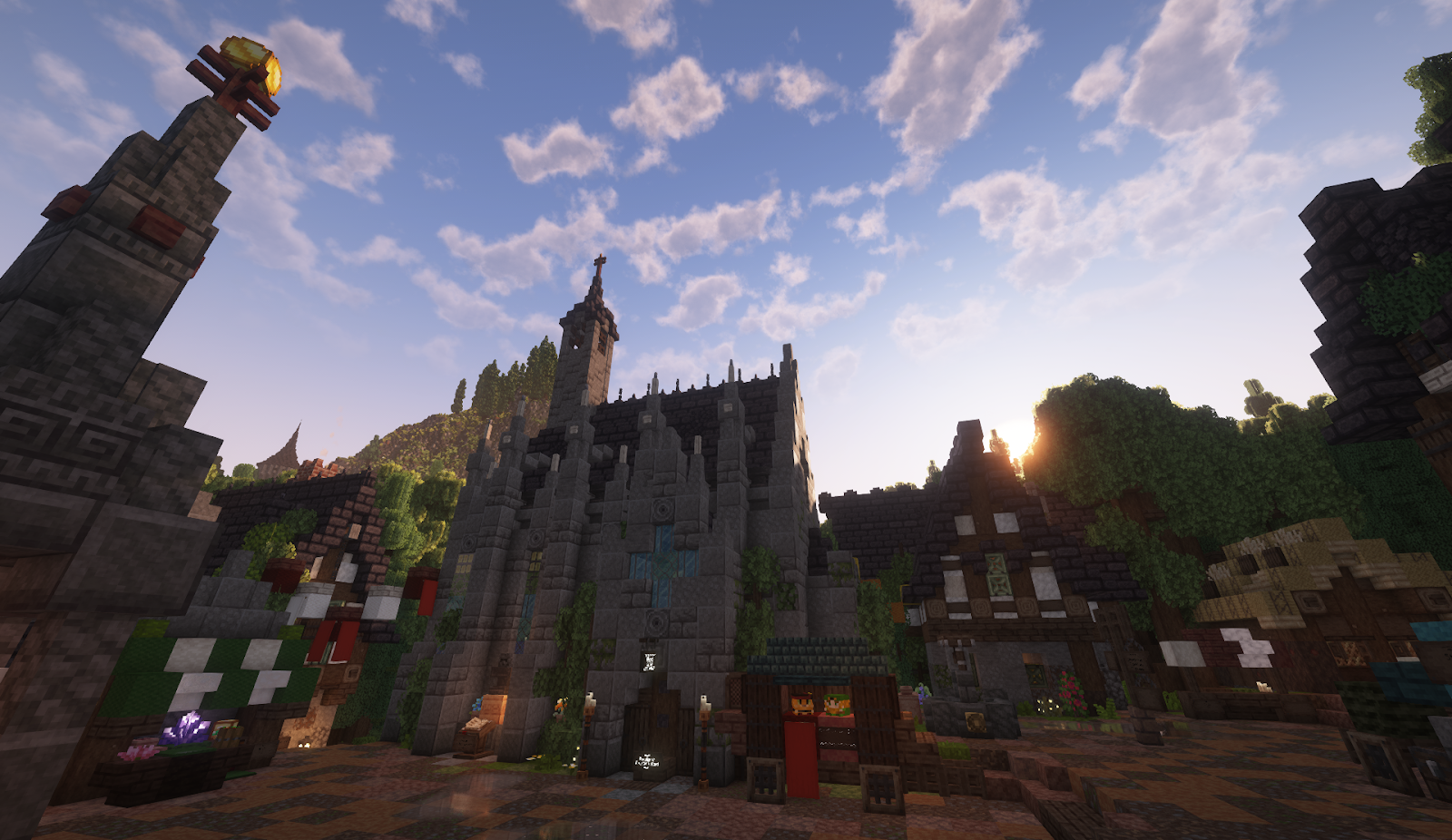
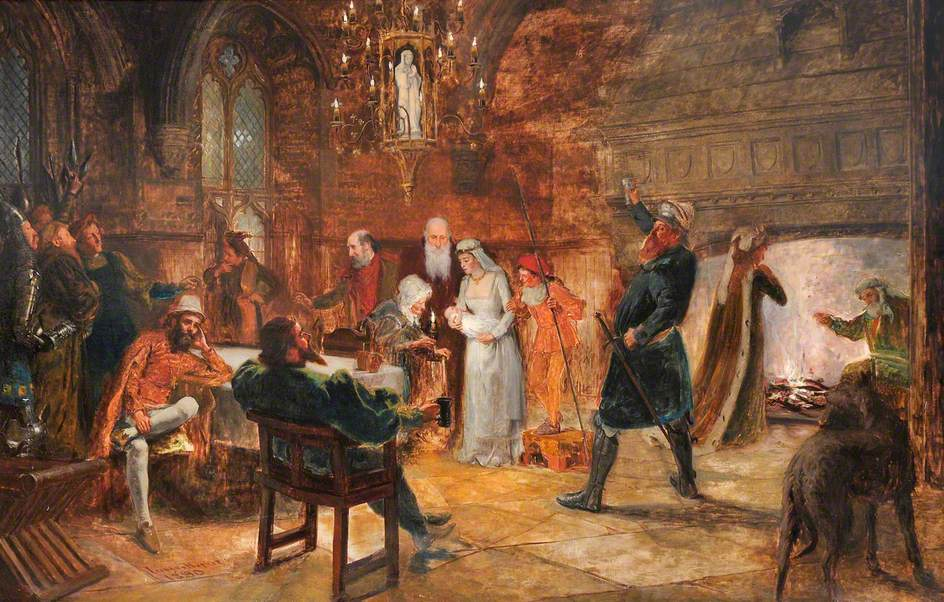
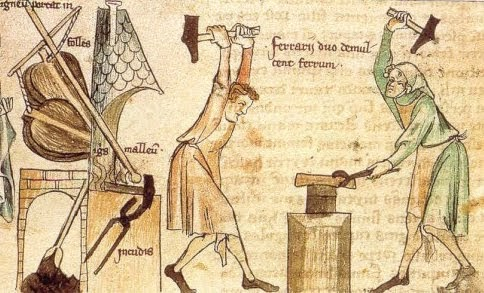
VOL. 1 EDITION. 3 Baruch & Kortrevich Publishing Two Minas per Edition THE BLACK BEAR BULLETIN Grense, Empire of Man 265 Second Age. 4 pages Written by: Charlie Baruch Published by: B&K Publishing Pg. 1 GENERAL NEWS - THRIVING TARNAVON A morning view of Tarnavon A portrayal by Graham Fraser, 256 S.A. It has been just over a year now since Tarnavon was settled shortly after our arrival on the new continent. Since then the main population centre of the Duchy of Valwyck has proven a popular boom town and can be described no better than to be booming. At most times the town is lively and bustling despite its small size. This can no doubt be attributed to both the profitable location of the town, sat on a crossroads and major trade road en route to the Imperial capital, as well as the active management of the settlement. The latter is done by the town’s council and the local lord, duke Duncan. This commotion has led to many new residents seeking out a place to live in the town, many of whom prefer its quaint and rustic feel over life in the big city. Still, with all the traffic and immigration the town has gotten this past year this is no sleepy village in the woods. The bustling streets bring visitors from all over the continent. Standing in Highland Circle, one will of course encounter the Ayrikiv with their tartan attire, but so too will they encounter orcish wayfarers, heartlanders from as far away as Lotharia or sage elves who hail from lands further still. With all this activity, Tarnavon looks towards a bright and prosperous future. Written by: Charlie Baruch Pg. 2 CULTURE - GREYGUARD PROVES TALENTED PAINTER An artist’s depiction of an artist depiction. “It’s the scenery that does all the work, I just capture it.” Such are the humble words of an artist who’s quickly becoming the forefront of Valwyck’s cultural scene. Darren Dartongue, a member of the local Greyguard militia, picked up painting as a hobby since arriving to the new continent and has developed a passion for the art ever since. “His work should be some of the first in grand museums and showcases” said lady Sybille of House Temesch, one of the many visitors drawn to admire Dartongue’s work. So far the paintings of mister Dartongue are mostly landscape pieces, with a focus on iconic buildings or monuments depicted in the scene - though he has dabbled a bit in portraiture too. His finest pieces can currently be viewed in Tarnavon’s town hall, Alderhall. Among them is a three-piece display situated in the council chamber depicting said town hall, the Baruch house seat of castle Barden and the Tarnavon church, the Chapel of the Wardfather. The display appears to be a commentary on the power of the three estates; depicting the strongholds of the burghers, nobles and clergy respectively. Central to Dartongue’s work is a high degree of clear detail compared to some of his contemporaries - something that makes his pieces worth seeing for locals and tourists alike. Written by: Charlie Baruch Pg. 3 POLITICS - FIRST TOWN COUNCIL SEES MESSY DEBATE Three months ago the first town council of the municipal council of Tarnavon was held in the Alderhall. It was overseen by Burgess, Lady Holly Rodham. Attending aldermen were Malcolm Glenroth, Marik Vanir and - yours truly - Charlie Baruch, with Fergus of Tonnbriste absent from the affair. Though off to a rocky start with a proposal to build more barns for the booming livestock trade of the town, this proposal did pass unanimously. Aldermen Vanir and Baruch were more focused on the financial boon of the proposal while alderman Glenroth was sceptical about the costs and necessity of such expansion, but in the end a compromise solution was reached that would see more stable space provided to the citizens and the cattle trade. The second matter on the agenda, the Tarnavon tax code, likewise passed unanimously albeit amended with limits set to how much future administrations could lower taxes thanks to an amendment proposed by alderman Glenroth. This discussion, helped by wines and cheese, however hit a roadblock when the next matter on the agenda - concerning the establishment of a clinic - was reached. An elven herbalist had offered her services in the day to day management of a clinic, should such be established. Therefore Burgess Rodham and alderman Baruch spearheaded a proposal to let the elfess do just that, with some cautious support from alderman Vanir as long as the clinic would bring in revenue or some other financial benefit. Alderman Glenroth however was outraged at the idea of an elf practicing foreign elvish medicine, which would supposedly be hurtful and negate traditional Ayrikiv medicine, no doubt guided by hurtful racial stereotypes. As debate derailed and Burgess Rodham failed to effectively preside over the topic of conversation any longer, she decreed that the matter would be tabled for next year’s meeting. Alderman Baruch attempted to at least have the council decide on a location for the clinic to be set up, albeit without a clinician for the time being, saying the town should not have to wait in providing medical care to its citizens. This proposal however did not go far as the Burgess was eager to drop the matter entirely in order to save face. Written by: Charlie Baruch Pg. 4 ECONOMICS - NEW BUSINESSES A depiction of blacksmiths at work from the Guildbook of Traders and Craftsmen With all the new inhabitants of Tarnavon as well as all the incoming visitors and merchants, the small town’s economy has been riding high. Indeed many urchins and wandering traders just offer their wares in the street - one ought not be surprised to come across well-spoken entrepreneurs selling horses or even musin selling paninis, but many too have chosen to set up shop in the town. One of the first businesses to settle down was the Second Son Trading Company, run by the nearby lords of the House of Galahar. This stall, trading in herbs, raw materials, food and horse tack, was soon joined by another local venture; a market stall in the main square owned by the region’s Qalasheen population. The local watering hole, known as the Bear Trap, has also started its operations with a halfling known as Kieran O’brien as its barkeep. Further down the main road one will find Von Lynden’s stall, selling weapons and armor along other wares, as well as the Barr Trading Company - a store recently set up that so far is dabbling in the alcohol trade. Talk of the town is also that a highlander named Nik has taken up residence in the Alchemic Emporium, with the intention to start producing and selling alchemical products. Lastly, just the other day the news broke that a master blacksmith has decided to take up the workshop and residence at Highland Circle III, providing Tarnavon with its own blacksmithing workshop. Written by: Charlie Baruch This concludes this edition of the Black Bear Bulletin. We hope to bring you our next edition by the end of next year.



-
VOL. 1 EDITION. 2 Baruch & Kortrevich Publishing Two Minas per Edition Coming soon in Naumariav THE BLACK BEAR BULLETIN Grense, Empire of Man 245 Second Age. 5 pages Written by: Charlie Baruch & Etienne Halcourt Published by: B&K Publishing Pg. 1 THE MARCH TO NORLAND The late King Haakon of Norland A Norlandic artist’s portrayal, 245 S.A. Three Saint’s days ago, sudden activity stirred the palace in Grense as the Imperial Guard sprang into formation. Shortly after this, the Emperor appeared to take his throne - a delegation from Numendil was coming for an unplanned meeting. As it turned out, a Numendilian prince had been insulted and robbed in an incident in Vjardengrad, Norland. The prince had been challenged to a duel, during which the High Keeper (the Norlandic pagan religious authority) showed up to steal the prince’s shield. The Adunians of Numendil, not the kind to ignore such a slight against one of their own, promptly set out for the court of the Emperor to demand his permission to right this wrong against the Empire’s pagan ally. Such permission was granted, for Emperor Tiberias reasoned that the wellbeing and honor of his vassals precedes that of his allies, and thus an impromptu host that quickly swelled to a sizable army marched on Norland. Once there, they were received into the city upon declaring the purpose of this appearance and proceeded towards the throne of King Haakon. Here they were met by the King, the High Keeper as well as various Norlandic onlookers - the city still in tatters from the recent assault by the Mountain. The representatives from Numendil, as well as the Emperor and Crown Prince of the Empire stated their business plain and clear: hand back what was stolen and let the High Keeper answer for his transgression and all would be well. The High Keeper however threw up a fuss, his pagan zealotry clouding his mind from the kind of reason that would have made him choose the wellbeing of himself, his king and his country above the idiocy of greedfully holding onto stolen property. The High Keeper denied the Emperor’s reasonable request, and thus it fell onto King Haakon to cut the knot. King Haakon, honourably, reasoned that the wellbeing and honor of his council member preceded that of his allies, and thus after several chances reluctantly gave a definitive denial of his allies’ demands. Both sides took to their arms and what followed was a chaotic battle where King Haakon and his men were outnumbered twenty to one as they tried to flee the city. Still, a hulk of a Norlandic warrior, King Haakon wounded pursuer after pursuer before he was eventually caught on the outskirts of the capital. He was brought before the Emperor who solemnly had his old ally executed, for such was the necessity of what the world had come to. But there would be no war, no crusade, upon Norland as some radicals had hoped for when they marched to Vjardengrad - this dispute would end with the deaths of the King and the High Keeper who condemned him, and that would be the end of it. Written by: Charlie Baruch Pg. 2 DISCUSSING THE CHURCH COUNCIL: An Interview with Patriarch-Cardinal Alaric Patriarch-Cardinal Alaric of Jorenus With the Church Council set to take place next Saint’s Day, which will be a momentous occasion for the faith, we thought it might be good to get a deeper understanding of what’s at stake. For this reason we sought to interview a member of the curia. As it turns out, Patriarch-Cardinal Alaric, shepherd of Jorenus, was more than willing to answer some questions on the topic. Could you give our readers a summary of what the upcoming Church council is about? Everything really. From a reexamination of our Dogma, to a total overhaul of our organization, to likely a new Leadership within the Church. What makes such an overhaul of the organization and leadership necessary and to what degree will the leadership change? The High Pontiff included? It is difficult to speculate, but this council comes at a time when a large portion of the clergy disagrees with some of the recent actions of the Pontificate. Many were offended when the Throne of St. Daniel was burned, and Canonism was rejected. Sigismund’s status as a Prophet is at the core of a lot of these issues. It will be a central topic, I imagine. Like you say, recent actions like the burning of the throne of St. Daniel or the proclamation of a second ‘high priest’ have rubbed many traditionalists the wrong way, with some going as far as to decry the Pontiff. Why did the Pontificate deem such actions necessary? High Pontiff Harrentzedek and High Priest Carandir are staunch True Faithers. They believe the Canonist Church to be a machination, contrived on false beliefs, and built on incorrect doctrine and Dogma. They seek a return to the Temple of the True Faith, which was the Church in its original, ancient form. That was originally led by the Twin-High Priests, Evaristus and Clement. They believe Daniel the Reader (St. Daniel), to be a heretical man, as far as I understand. His throne therefore was an object in need of destruction. The High Pontiff is famously a hardline Owynist and fierce denier of Sigismund as a prophet. Why does he not believe in Sigismund, and should we expect any compromise with the ‘pro-Sigismund’ faction to be possible at the Church council? That is a better question to ask him, than I. I have never heard a convincing argument against Sigismund to this day. I think there must be a compromise, and that is what I will be seeking at the Council. It is the only way to prevent a Schism. Considering you say a compromise must be reached, should such a compromise not be reached and the High Pontiff decry canonists to be heretics, would you support a Schism? It is my utter and absolute last wish for a schism. But, I have believed in my doctrine, in Canonism, for 80 years. I have fought, bickered, and battled for Sigismundite ways, since I was merely Father Alaric. I won’t tolerate my faith and my rite being silenced, just as I would never seek to quell or trample the beliefs of the true faithers. Co-existence must be achieved. If there is no other path than to separate, then perhaps I shall. But not before I spend every last breath fighting for a united temple. So the status quo as it was before High Pontiff Harrentzedek must be restored, in your view? Before the War of Crown and Crozier, that is the time I wish to return to. Doctrinally. I’m well aware the world cannot return to its prior state, but I pray the Holy Mother Church can. Considering the High Pontiff seeks radical change in the form of a return to how the Church existed in its original ancient form, does this involve reverting reforms made since then, such as women being allowed to join the priesthood? Many reforms are, and will be rolled back. I doubt any action will be taken against women in the clergy, no. Isn't that hypocritical? Why revert one reform but not the other? The reform is too popular. So the Church's doctrine depends on popularity? But the High Pontiff's recent changes are decidedly unpopular among many canonists. Some changes are so adored and beloved, even those who would try to unwind them would be met with fierce, unified opposition. Not even the Pontifical Curia was willing to rollback this change. Cardinal James expressly forbade Acolytes from writing against the policy, for instance. And the good cardinal is a dear supporter of Harrentzedek in most matters. Alright, as a final question for our readers. Should the High Pontiff say believing Sigismund is Exalted is heresy, does that make you and any fellow believing readers heretics? In name, perhaps. But, the Lord is the only one who can truly name a man a heretic; and all devout canonists who believe in the Lord’s truth, even if they find themselves disagreeing over some things, should they practice virtue, shall be received into the skies. The High Pontiff’s opinion on the matter is certainly relevant. But there is opinion, and there is truth. And I believe no Sigismundite to be heretical. No opinion from anyone shall persuade me otherwise. Written by: Charlie Baruch Pg. 3 ADVERTISEMENT Pg. 4 THE BUTCHER OF ALBA When Will The Killing Stop? The midnight streets of Alba, an artist’s rendition. For some time now a serial killer has been making the streets of Alba and its surroundings unsafe. Going around murdering people, sometimes even several at a time before disappearing again with no trace, this murdered goes by the name “The Butcher of Alba”. Many in Alba and the surroundings are scared for their lives and rightfully so. However not everyone has yet heard of the Butcher of Alba, worryingly enough. So here a detailed overview of everything that we know so far: Who or what is the Butcher of Alba? The Butcher of Alba is a serial killer that has been on the loose in recent years in the Archduchy of Alba and its surroundings. We know nothing of who he is nor what he looks like. We do know that he gave himself the Moniker of the “Butcher of Alba”, and most likely takes some sort of pride in his handywork as he even manages to send others in his place to announce his return. It is the typical image of a serial killer as he definitely seeks the attention and must show his deeds to the world. Who are his victims? To this date the Butcher has killed a total of 6 people. There does not seem to be a particular pattern with his murder victims, as peoples from all walks of life have been killed. From simple citizens like a peasant named Gort over to Captains of the Guard like William Spencer, it seems that no one is safe from this killer. What's the stand of the investigation? As it stands the guards have not communicated much on their investigation. We are scheduled to have an interview with the Lord Marshal of Alba to bring you more news on the matter. Some concerned citizens are complaining about the lack of presence of the guards in the city however, or asking why the city gates are still wide open while a serial killer is about. Yet on the other hand the guards do try their best to keep the citizens safe, getting immediately into action when danger arises. A good example is the two murders that took place during the local Comedy Night. Guards secured the whole area while looking for the Butcher, allowing citizens to continue their evening in safety What can we do? First of all everyone who reads this article is encouraged to share it! Share it with your family, your friends or your colleagues to spread awareness! The more people are aware of this serial killer the safer we are. At this time it is still easy for the killer to find unsuspecting victims, who have not heard of the Butcher of Alba yet! However if we share this knowledge we can ensure everyone will be on their guard. During those uneasy nights where murders took place, we have often heard the talk of hiring private security or guards for those that can afford it. We simply recommend trying not to walk alone at night, walk in pairs, or best avoid any empty areas! And lastly of course if you have any information about the Butcher, please come forward to help the investigation of the guards. Written by: Etienne Halcourt Pg. 5 THE CURIOUS CASE OF KRASIMIR THE TRAITOR The slippery traitor is cut down outside Grense, a woodcut. When Imperial troops marched out towards Norland, there was one among the Imperial Guard who refused to take up arms against the men who had wronged a vassal of the Empire. This was Krasimir, a lowly peasant who while seeking military service did not want to take orders. He did not listen to the orders of his superiors out of a feeling of camaraderie with the pagans who were damned by the High Keeper’s misdeeds. For this, he was ordered to be arrested once back in Grense to receive a punishment for disobedience. However it then turned out that Krasimir had fully turned traitorous, slandering the Empire to all who would listen. He insulted his brothers in arms, spoke ill of his superiors including the Emperor himself! Krasimir was soon arrested again, now on charges of treason. When he was brought before the Reiksmarshal and his fellow guardsmen he was given a chance to renounce his treason and get a lighter punishment. Instead the snake Krasimir doubled down, insulting his brothers in arms and the Empire again, right to their faces. This sealed the traitor’s fate - execution would befall him. When the Reiksmarshal asked if he had any last words however, Krasimir somehow, against all odds - we still don’t understand how - wrestled his way out of his binds, threw coal dust in the eyes of his brothers and made a run for it. He somehow got past several other guards and knights and made it out of the barracks. He was chased down the streets of Grense but managed to hide somewhere, disappearing. This snake was as stupid as he was slippery however, as he thought it wise to show himself again the next day, continuing on his spree of slandering the Empire and its men - even gaining some supporters among the foreign sods who wander the heartland’s roads. It was however just outside Grense that the traitorous Krasimir would finally have to answer for his crimes. On the road to Alba, he was surrounded by Imperial knights and guards and justice persevered as he was unceremoniously cut down then and there, having spoiled his right to last words or any honor to speak of. Written by: Charlie Baruch This concludes this edition of the Black Bear Bulletin. We hope to bring you our next edition by the end of next year.
-
-
Aether Theory of Celestial Composition By Charlie Baruch In cooperation with: The Terrence May Foundation & The Prince’s Institution 244 SA B&K Publishing In my work as an astronomer these past years I have been delving into extensive research on the topic of celestial bodies. This interest sprung forth from the apparent feasibility of catching celestial light with adequate equipment. Out of curiosity and the need to explain this process, as well as the prospect of teaching my astronomical findings to students at the Prince’s Institution, I sought to formulate a theory on how this process works. As my need for answers only brought about more and more questions for a long while, my search for explanation spiraled into a large puzzle - a puzzle that required a central theory to answer many separate questions and tie them together in a central narrative. This central narrative, this theory, would need to explain not just the process behind catching starlight, but give an answer for the entire ordering and makeup of Celestial Composition. What lies above us up in the skies? What are stars made of? What of the sun and moon? How is the catching and consuming of celestial light a possibility? It soon became apparent that the very essence of these questions touched not just on astronomy, but found plentiful links with the subjects of alchemy, voidal magic and theology. On the one hand, this was beyond me - causing me to seek cooperation and discussion with those more knowledgeable in those subjects. On the other hand, all these connections, all these loose ends needing connection, allowed for a reasoned answer to these very questions. With so many different pieces to the puzzle, the hole left remaining was all the clearer to fill in. Thus I present here my attempt at explaining these matters: centered around the concept of aether and therefore named the Aether Theory of Celestial Composition. Aether as an alchemical sign To begin laying out and explaining this theory, it is essentially to have a sense of understanding of what aether is. Therefore a surface level alchemy lesson will suffice. In alchemy, any material consists of two kinds of tiny building blocks. These are called Signs and Symbols. Together these make up alchemical ingredients - which are rich in them - yes, but they also make up any material, living being and indeed anything else in the world around us. Symbols are the more numerous of these two, with there being a large variety that cover certain aspects or properties such as heat, life, fear or swiftness. Signs however are a more select bunch, consisting of just five elements. These are earth, water, air, fire and aether. Each of these signs form a kind of category of symbols that are aligned with them. The Sign of Aether covers features that attribute to odd and mythical properties. It is important to note that Aether is the element intertwined with the spheres of magic and is affiliated with mana (the fuel for voidal magic, simply said). Aether is the Sign that gives potions, concoctions and other alchemical products a near magical quality. So where does Aether as an alchemical sign come from? This is key to our theory, for as it turns out Aether is quite a rare sign. As I am told there are few ‘reagents’ (read: alchemical ingredients) an alchemist can use to extract the Aether sign from. Options are limited. However, as I was told by one Jiro Hirano, the field of alchemy considers Aether to radiate down from the skies. This assumption is based on the experience that apparently alchemical recipes can be spoiled with the addition of Aether into the mix by leaving them out exposed in the open, in sunlight or the likes. This presence of Aether in the sky is a cornerstone of our theory. The catching of celestial light & its properties As has been established knowledge among well-informed circles for a while now, celestial light - that is light from the stars, the sun and the moon - can be concentrated with lenses and captured in special jars. This has been proven through experiments and commercial use numerous times now. This light is caught with the use of jars made from a crystal glass - either from carbon, emerald or volcanic glass - which is seemingly able to contain the light of the celestial bodies directly. Catching it is made easier and more efficient with the use of special lenses made with either ferrum, aurum or amethyst. This allows one to position the lens in such a way that enables the singling out of the light of one specific celestial body and thus capture the light with a higher degree of brightness. With these methods we are able to gather three different kinds of celestial light. Moonlight can be gathered from the moon to provide a substance that feels cold to the touch and shines a blue light. When consumed this has a brief cooling and numbing effect on the body. From the sun we can directly collect sunlight, which swirls an orange color and has a violent explosive reaction sparking fire when released. Additionally, experiments where one catches the sunlight after the sun has already set have also proven successful, yielding what practitioners call ‘undersunlight’ - this appears a most mysterious substance, with the jar it is kept in seemingly whispering. Interestingly, consumers of undersunlight report hearing nuggets of hidden wisdom. Lastly and most broadly, one is able to catch starlight. This can be done from almost any star, save for the ones whose light seems to be getting blocked by the light of the moon on account of their proximity to that celestial body. Starlight comes in countless colors - though most often shades of purple or blue - depending on the color of light shone by the star in question one tries to collect from. Starlight seemingly has two uses, with the substance providing a good quantity of synthetic dye when poured out. Alternatively, one can consume starlight to briefly exude its glow from the body. Whether this has health benefits or detriments is unclear as of now. So how is this all possible? How are we able to collect light at all? This appears limited to celestial light, as light from sources like fire or magic seems unable to be captured. As part of my theory I present the idea, which was discussed with the aforementioned Jiro Hirano, that what we capture in these jars is in fact not merely light, but instead a concentration of aether bound to this light. As stated before, there appears to be a presence of aether in the sky. I posit that this is then cast down upon our plane by the rays of light from the sun, the stars and the moon. In regular circumstances, this is scattered everywhere just as those rays of light are. However when focused into a jar made of a crystalline glass the light cannot penetrate, the aether carried by the light and in extension the light itself, pools into the jar. This is helped all the more when one of these lenses is used to focus a single light source to concentrate into the jar. This premise of catching aether would not only explain how it is possible for us to catch light with these instruments, but furthermore would explain the curious effects this vapor-like light carries with it. Coldness, slowness, heat, light and sound are all effects of consuming various kinds of celestial light that are additionally also alchemical symbols. I suggest therefore that the aether in the sky - holding impurities from other elements it has come into contact with - binds itself to rays of celestial light and with it travels down unto our plane where we can collect it. Starlight thus carries aether with little impurities - I shall shortly explain why - and has little effect beyond transmitting its glow, while sunlight and moonlight carry aether contaminated with symbols from the sun and moon, which grants it the aforementioned effects. The arrangement of the universe Before we move on it is relevant as part of this theory and of astronomy as a whole, to reflect on the arrangement of the universe. What do I mean by this? The universe, in the sense of the Flexio word ‘Universum’ - the world altogether, is arranged in a certain way. There are, as we know, multiple planes of existence, aside from merely the one we exist on. Where these exist, or where for instance the Seven Skies exist, I will leave out of the scope of this theory, as it lies beyond the scope of my field of astronomy. What I instead will elaborate on is the arrangement of that part of the universe we see above us in the skies, what is covered by astronomy: our plane, the sun, the moon, the stars and what lies in between. Based on our knowledge of the sun and the moon, they are fellow planes of existence like ours. The sun is said to have a connection with the Aengul Xan, while the moon is said to have a connection with the Archaengul Aeriael. Sources disagree however over what exactly these connections entail, ranging from these planes being the (Arch)aengul itself, to them being their domain, to them simply residing there. Whatever the connection between these beings and their associated planes, it does appear that both the sun and the moon spin around our plane in a certain way - or perhaps that all three planes spin in relation to each other. Based on the effects carried by the captured sunlight and moonlight, as well as the effects the sun and moon have on our plane we can make a reasoning of what those planes are like. The sun-plane could thus be reasoned to be hot - possibly being on fire even, given that its light warms our plane in general and when concentrated can light a spontaneous fire. The moon-plane meanwhile affects the water and tides of our plane, while its concentrated light has a cooling effect. One might thus reason that the moon is a cold plane - opposite to the sun. This does however not explain the moon’s effect on our water. Lunarite is, evident by its name, also suspected to come from the moon, but this likewise does not necessarily match with the idea of the moon-plane being cold. The stars, meanwhile, play an entirely different role in the arrangement of our universe. I posit that while our plane, the sun-plane and moon-plane (and perhaps other planes, unseen from our position) exist relatively close to one another. Close enough to affect one another, to be clearly visible. Around our plane and the other planes there is a space, the sky or air if you will, which as stated before I theorize to be satiated with Aether. This space is then enclosed by a faraway barrier, commonly known among mages as the Veil. I spoke with the elfmage Valindra on the topic of the stars, as well as the veil, and we came upon the theory that the stars are what make up the Veil. The Veil meanwhile, as a barrier, is what holds out the Void and keeps it from consuming that which lies within the Veil. The Void meanwhile is that which is non-alchemical, meaning it is in essence a great nothingness - there is potential there for those with magic to exploit, but there is nothing made up of the alchemical building blocks of Signs and Symbols. Thus to summarize I posit the arrangement of the universe to consist of the various planes in the centre - with the sun-plane and moon-plane in some kind of rotation with our own - and the planes being surrounded by the skies which are saturated by Aether. The skies are then surrounded by the Veil as if it were a sphere or bubble, separating them from the Void. On the composition of the Veil So what then is the Veil? How come we conclude that it and the stars are the same? And how does the Veil keep out the Void? As the elfmage Valindra stated, it is unclear to Voidal Mages like herself what the Veil is made up of, even though she is what is known as a Veilwatcher. However, as a barrier to keep out the Void from consuming that which lies within, with the Void being non-alchemical, the Veil could be concluded to be of an alchemical nature. That is to say it is of a kind of material essence, made up of signs and symbols, and thus is able to displace the Void and keep it out. What then is this barrier? I theorize that the answer might lie in Aether. Valindra said that she does wonder how the Veil replenishes itself when torn, or where it came from in the first place - I wondered where the supposed Aether in the skies comes from. I therefore posit the idea that the Veil, the stars and aether are all connected. Where does light come from? A source of energy. This takes place in various forms; electricity, aengudaemonic power or alchemy, but most commonly a kind of fire or magic. These all require a kind of fuel; literal fuel in the case of fire, mana or lifeforce in the case of magic. So where does starlight come from? I discussed with Valindra the possibility of starlight being produced from mana and a connection to the Void if we assume the stars are the Veil and by virtue of the Veil touching the Void. We deemed this unlikely however, as according to her this would mean the stars or Veil have a kind of lifeforce and there is nothing to suggest they are alive. It therefore seems more likely that starlight is of a more mundane source; fire and fuel. What then is this great fuel source that fuels the burning that produces starlight? I suggest that perhaps stars are an incredibly dense concentration of Aether. This dense concentration of Aether is constantly burning up, releasing a less dense vaporized form of Aether which forms a blanket that displaces and keeps out the Void, leaks into the air of the skies to satiate it with Aether and lastly, this reaction of the burning stars creates light, which we see on our plane as starlight. Alternatively, the stars are not a dense concentration of Aether, but of some other alchemical material which when burned up releases the Aether and light. I call this concept the “Veil-Formula", which reads as follows: AeS+F → L+Aev-V. In the Veil Formula, AeS is Aether in the form of a dense Star, F is Fire, → signifies the reaction caused by the burning, L is the light that is produced, AeV is Aether in the form of a vapor and V is the Void that is displaced. Thus I theorize, to sum up, that the Stars are burning concentrations of Aether that through their burning create light as well as a dense blanket of Aether vapor. The stars and this blanket together form an alchemical layer that keep out the non-alchemical Void, as well as satiating the skies that are kept within the blanket with Aether vapors to a degree. Some of this Aether collides with rays of light from the celestial bodies, being radiated down unto our plane of existence where it allows us to capture what we think is the celestial light itself - as well as interfering with alchemical recipes and possibly even being the source of the Aether Sign in alchemical reagents. Theoretical problems There are however some problems with this explanation that I will acknowledge. While the existence of dense Aether concentrations to form the Veil might be explained as part of the Creator’s creation of the world, one might reasonably wonder whether these dense concentrations are infinite and replenished somehow, or if they are finite and slowly withering. Another issue with this theory is that it depends heavily on unconfirmed research gaps in both the fields of Alchemy and Voidal Magic. We do not know for certain that the sky is saturated with Aether, nor if the ‘light’ we catch in jars contains Aether at all - as Alchemists have thus far been unable to extract any signs of symbols from whatever truly is contained in these jars. Alchemical properties would explain some of the effects of this captured ‘light’, but so far this is unconfirmed. Likewise on the Voidal Magic side of things, it is unclear what exactly the Veil consists of. My theory offers a potential explanation, but other explanations like mana, magic or even aengudaemonic intervention cannot be ruled out. Lastly a curious case that deserves and needs further research is the light provided by the sun and moon. While it can be reasonably concluded that the sun is a fiery and hot plane and thus its light is produced through burning, the same cannot be said about the moon. The moon’s effect upon our world and the effects of its captured light suggest no sort of burning, but rather points in the direction of water and cold. Where moonlight comes from is so far a mystery. It could potentially be that the moon itself does not give off light at all, but merely reflects light - it could be that the moon’s lightsource is the result of Aeriel’s aengudaemonic power. However neither of these explanations give any cause for the existence of fiery comets with lunarite landing on our plane. In short there remain various problems with this theory, as well as questions to be answered. However I believe it does present a possible explanation for most of the matters discussed, that with our current knowledge and understanding might be the best explanation we have. Lastly I would like to thank Jiro Hirano, Valindra and any others with whom I discussed this theory and shared insights.
-
VOL. 1 EDITION. 1 Baruch & Kortrevich Publishing Two Minas per Edition Coming soon in Naumariav THE BLACK BEAR BULLETIN Grense, Empire of Man 244 Second Age. 5 pages Written by: Charlie Baruch Published by: B&K Publishing Pg. 1 IMPERIAL CAPITAL SETTLED View of Grense An artist’s rendition, 243 S.A. After several years of intensive construction projects and the populous hordes of the Imperial citizenry itching to move in, the Imperial capital of Grense finally finished construction. What was in past times a sleepy village in the shadow of the Lemon Hill monastery, sat along the road that connected the lands of the Reinmaren and Petra has now become a metropole boasting the Imperial throne. With extensive fortifications both in terms of city defenses and castles, the city strikes an imposing image as it perches atop the cliffs of the Imperial heartland. Its architects gifted it with many a tower and walls high enough to be cliffs in of themselves. Interesting to note is the extensive use of various shades of burgundy in the painting of the new buildings’ woodwork, no doubt an intended nod to the Empire’s central kingdom. Over the past few Saint’s days Grense has boomed as both Imperial citizens and investors from abroad scramble to claim shops and houses and many a property was sold off to the highest bidder. Indeed those who still wish to assert their place in the capital’s sun ought to be quick to seek out a steward, for the streets of Grense fill up fast. By now the first stores have sprung up, the tavern is aching to open for business and an first Imperial court, the first of many no doubt, has already been held in the Empire’s new seat of power. Written by: Charlie Baruch Pg. 2 PRINCE’S INSTITUTION OPENS DOORS Arms of the Prince’s Institution Two Saint’s days ago a new academy opened its doors in the Archduchy of Alba; the Prince’s Institution. On the theatre stage in Alba an Enrollment Gathering was held near the new institution’s building to celebrate the grand opening of this school. Prospective students, their families and interested citizens alike were treated to speeches of the Head Mistress Lady Kaba Halcourt and Maer - as well as patron of the institute - Daniel von Rhoswald, among others. The Prince’s Institution offers a wide variety of courses taught by its Professors, divided between Core Classes and Elective Courses. The Core Classes offered are: Diplomacy, Etiquette, Imperial History and Law, Literature and Language Arts, Philosophy and Theology. The Elective Courses offered are: Acolyte Studies, Archaeology, Art, Astronomy (taught by yours truly), Chivalry and Foreign Languages. Students wishing to enroll at the Prince’s Institution need to pick a combination of both core classes and elective courses and are required to take a total of at least nine classes to graduate. Classes will start three Saint’s days from now, those seeking to enroll into the first academic year can still do so until then. While the Prince’s Institute does take tuition, generous scholarship plans are provided by the institution and its patrons for those struggling to afford tuition fees. Written by: Charlie Baruch Pg. 3 ADVERTISEMENT SPACE AND HELP WANTED! Are you a business owner, private citizen or government employee wishing to advertise your business or services? Then you are in luck. In every edition of the Caged Crow Chronicles there will be one or two advertisement spaces available for purchase. Contact Baruch & Kortrevich publishing if interested by writing a letter to Charlie Baruch. Additionally, since there is no advertisement from an outside partner in this first edition, the Caged Crow Chronicle itself will advertise that we are looking to expand our team! Are you someone interested in journalism that gets the facts straight, writing that grips readers’ attention or providing the latest news? Then you seem like a fit for our team. Contact us, and perhaps your name will be in our next edition! Written by: Charlie Baruch Pg. 4 RACIST TAX DISCUSSED IN HOUSE OF LORDS A mediocre artist’s rendition of the Alban House of Lords More news from the Archduchy of Alba this year, as a controversial proposal was put forth in this year’s sitting of its House of Lords. While more attention was given to the Great Act of State and the granting of permission to the Archduchy to conscript its citizens, there was a third bill put forth to the House. This concerned a proposal we believe was proposed by Alba’s Lord Chancellor George, the Earl of Dover. The proposal to the House was to levy an additional tax upon ‘non-Horenic’ citizens of Alba (any race that is not human, halfling or adunian). This concerned an additional 10 minas that would have to be paid yearly for the crime of not being born a descendant of Horen. A member of the clergy who was present to represent the Church and give counsel was of the sense to object to this proposed tax. This monk said that any non-Horenic citizens who were still Canonists should be exempt from such a tax. This then led to the proposal being altered to instead discriminate against any so-called ‘heretics and heathens’, which led to a concerned Qalasheen spectator noting that his faith in Allah was sanctioned by the Imperial Court. The monk then said that the Church considered their faith to be a sect of Canonism that was not heretical and thus exempt from this additional tax. It thus came to be that this tax upon all non-Canonists was passed unanimously by the House of Lords. What the purpose of such a tax was or what the additional taxed funds were required for was not discussed by the House, nor what impact this would have upon Alba’s citizens. Proponents of the tax might also be disappointed to note that outsider cries to instead levy 15 or 20 minas extra on the victims of this tax were ignored by the House. Whatever one might think of this tax, it does appear that Orenian Liberalism is long dead amongst the lords of the Alban Archduchy. Written by: Charlie Baruch Pg. 5 NORLANDERS HOLD OFF MOUNTAIN Siege of Norland by the mountain, artist’s rendition Last Saint’s Day the Norlandic capital of Vjardengrad was the site of the latest gruesome fight against the forces of The Mountain. The capital of the highlander country was surrounded on all sides by the forces of the enemy, but a large garrison of Norlandic and Imperial forces was present within the city. These allied forces were divided into four fronts, one covering each of the four cardinal directions the city was beleaguered from. The siege of Vjardengrad would consist of a long direct assault by the forces of the Orsathiael, also known as the Mountain, lasting over four Saint’s hours. The northern front saw some of the most intense action. Here allied forces defending the Ashwood Throne consisting of Karoslunder and the Norn were faced with elementals, an elemental wyvern as well as various thralls of the Daemon. As the battle dragged on, it slowly but surely became a losing battle as the forces of Orsathiael seemed too strong to counter. The tide of battle was however unexpectedly turned on this front. Maya of Barbanov-Bihar purportedly prayed to the Exalted Sigismund, which led to a holy glass cannon firing a shot imbued with the templar life energy of Asmund, the nephew of King Haakon - who sacrificed his life for such a noble goal, GOD rest his soul. This holy cannonshot, strengthened by the Divine, was shot straight at the Daemon Orsathiael and hit the Mountain, who was shot back down into his prison beneath the earth. This not only saved the defenders from being burned to death, but gave them a decisive edge. After a few more cannon shots and tireless fighting of the garrison in the defense of Norland and the Continent, the battle was won. Written by: Charlie Baruch This concludes this edition of the Caged Crow Chronicles. We hope to bring you our next edition by the end of next year.
-
OUR FATHER... The Empty Chair of Saint Daniel (Reprise) By the time Sixtus crossed St. Daniel’s Crossing back into Aaun again he’d already been tired, sore from sitting in the saddle for much of the day. As Sixtus arrived back at the Apostolic City, he concluded a lengthy trip to the cities and churches of Petra, Numendil, Haense and Hyspia. It’d been a busy few days for the aging priest who was nearing 70. After stabling his horse he much looked forward to settling down in his apartment for the night and reading the tome he’d picked up before he left, having intended to read it on the way. He’d met a self-proclaimed ‘bookman’ in Numendil however - a poet or librarian he assumed - who had made an endearing impression on him and who had thus received the High Pontiff’s copy of the Scrolls of Virtue & Spirit as a gift. Looking forward to reading the Scrolls though now that he’d returned home, he mustered the energy to walk back down to Saint Daniel’s Square and the Canonist Library to get a new copy before he retreated into his home. The lower levels of the Apostolic City were quiet at that time of the evening aside from the cooing of pigeons. Most people were probably preparing dinner or eating already. Ah! He had those cakes the farfolk in Hyspia had given him to look forward to for dessert, Sixtus reasoned with a smile - a bit of sweetness wouldn’t hurt once a while. But as he exited the library again, something caught his attention. The flock of pigeons were spooked, flying up to the top of the Cathedral, as a figure entered the Apostolic City through King Edmund’s gate. The High Pontiff would call out to the visitor with a hesitant ‘Bonjour’ as he eyed the masked person with tattered robes. Was it another one of those atronachs or constructs that had been bothering him lately because of his denouncement of the Xan cult? In hindsight the Pontiff had naught to fear from the paladins however, this person practiced a different kind of magic. The newcomer came to the Holy See to speak to the men of God, so he informed Sixtus as he drew closer. ‘How wonderful, pilgrims are always welcome!’ His Holiness had replied, holding the copy of the scrolls under his arms. What was that book? Perhaps the figure's lack of knowledge was a sign he wasn’t a pilgrim - but potential converts were still welcome of course! However the atmosphere of the exchange was... off to say the least. Something about the way this masked man spoke was unnerving to the Pontiff, especially combined with the fact that while Sixtus passively tried to maintain a few steps of distance between the two, the masked man kept getting uncomfortably close, slowly but surely backing the Pontiff up against the walls of the library as they spoke about various surface-level facets of the faith. Was he carrying a sword? The question was sudden, not fitting with the rest of what they were talking about, the answer was therefore a ‘Non’ that was spoken with distrust. Then how would he defend himself? The masked figure had asked him, his hands concealed in his ragged cloth garbs. While Sixtus’ eyes momentarily darted towards the corners of the square, hoping to perhaps catch a glimpse of someone like Gerard, Alrisha, Mattia or Alexander - all in vain - he soon focused his attention back towards the masked figure standing mere feet away. ‘We trust in GOD to defend and protect us, he is our shepherd.’ While he meant what he said, he could tell by the figure’s posture and body language that it didn’t come across. Perhaps his words were more of an admission of being unarmed than being fearless, as he could not help but feel a sense of fear - or rather a deep inner dread as he saw the figure’s eyes begin to glow. If there had been a split second chance to escape the corner Sixtus had been backed into, that chance was lost as the ragged figure withdrew from its robes a femur bone that had been fashioned into a long and sharp dagger, using it to block the High Pontiff’s passage in escaping. As the masked figure taunted the trapped priest and revealed itself to be a lich by sending Gashadokuro’s regards, Sixtus began to zone out, muttering prayers as he stood with his back against the wall and his eyes on the dagger. After what felt like not seconds but hours, the first blow did not come from the dagger, but from the figure’s other hand. As a fireball was suddenly thrown at the Pontiff, the only thing that guarded His Holiness from having his face scorched was the copy of the Scrolls that Sixtus had instinctively held up like a shield. When the attack with the femur dagger followed though, the blade stabbed right through the charred leather, the lich piercing the Pontiff’s last line of defense. Moments later, the Vicar of God laid dead in Saint Daniel’s square, stabbed repeatedly, charred, smoldering. When the ordermen and priests would find him, they’d find the dagger as a call sign and his aurum lorraine to have been torn off his neck. But the Virtue and Spirit - while damaged and blackened, were still in the dead man’s clutches, held close to his chest. ☩ EST CYCLUS, NON MUTATIO ☩ IT IS A CYCLE, NOT CHANGE
-
PEACE AND BLESSINGS QUARTUS AUREA BULLA APOSTOLICUS Fourth Golden Bull of the Apostolic City 6th of Owyn’s Flame, 1969 F.A | 6th of Malin’s Welcome, 173 S.A.| 6th of Jula and Piov, 522 E.S. HIS HOLINESS SIXTUS VI, High Pontiff of the Church of the Canon, Archbishop of Visigia, Successor of the High Priesthood of the Church, Supreme Pontiff of the Church of True Faith, Keeper of the Canon, Missionary to Aeldin, High Servant to the Exalted's Testaments, Sovereign of the Apostolic City, Humble Servant of the Faithful and Vicar of GOD does decree… TABLE OF CONTENTS ┏━━━━━━━━━━━━━━━━━━━━━━━━┓ SECTION I - OPENING PRAYER SECTION II - DIOCESAN APPOINTMENTS SECTION III - COLLEGE APPOINTMENTS SECTION IV - CURIA APPOINTMENTS SECTION V - THIRD EDITION OF THE CODEX IURIUS SECTION VI - THE SYNOD ON HOMOPHILIC MATRIMONY SECTION VII - ORDER OF THE BLACK SEPULCHRE SECTION VIII - MARRIAGE DISSOLUTIONS SECTION IX - CANONIZATIONS SECTION X - PRO THRONO GODUINI ┗━━━━━━━━━━━━━━━━━━━━━━━━┛ SECTION I - OPENING PRAYER Almighty God, our Heavenly Father, whose word lasts into the eve of the world, Your will be done. We see Your flock once again united in peace, and we pray that You continue to bind them in this great pacific matrimony, that You will bless their hearts with love, brotherhood and appreciation. We ask also that You fill their minds with virtue and righteousness and that You may turn their attention back to Your miracles with eyes full of wonder. We ask that You keep us amongst ourselves in unity, as we have kept You in unity inside our hearts and minds. Amen. SECTION II - DIOCESAN APPOINTMENTS It is through our Apostolic Right, bestowed unto us through the Laurel derived from the Exalted that we appoint the following members of the priesthood to shepherd and be pastor of the Church’s Dioceses: ARCHDIOCESE OF ARTORUS To be shepherded by Archbishop Mattia Cardinal Artorus DIOCESE OF TYRIA To be shepherded by Bishop Belisarios SECTION III - COLLEGE APPOINTMENTS It is through our Apostolic Right, bestowed unto us through the Laurel derived from the Exalted that we make these affirmations, alterations, and additions to the College of Cardinals. We decree the College to be thus: TMR, His Eminence, Fr. Josef Cardinal Jorenus TMR, His Eminence, Fr. Matthias Cardinal Lotharia TMR, His Eminence, Fr. Brandt Cardinal Albarosa TMR, His Eminence, Fr. Frantzisko Cardinal St. Godwin TMR, Her Eminence, Mr. Rhosyn Cardinal Casica TMR, His Eminence, Fr. Mattia Cardinal Artorus TMR, His Eminence, Fr. Villorik Cardinal Westerwald SECTION IV - CURIA APPOINTMENTS It is through our Apostolic Right, bestowed unto us through the Laurel derived from the Exalted that we make these affirmations, alterations, and additions to the Curia. We decree the Curia to be thus: Vice Chancellor, His Eminence, Matthias Cardinal Lotharia Auditor of the Tribunal, His Eminence, Mattia Cardinal Artorus Secretariat to His Holiness, His Eminence, Josef Cardinal Jorenus Prelate of the Priesthood, Her Eminence, Rhosyn Cardinal Casica Pontifical Chamberlain, His Eminence, Brandt Cardinal Albarosa Commandant of the Pontifical Guard, His Eminence, Villorik Cardinal Westerwald Palatine of the Apostolic City, His Eminence, Frantzisko Cardinal St. Godwin SECTION V - THIRD EDITION OF THE CODEX IURIUS It is through our position as the Supreme Pontiff of the Priesthood of Clement and Evaristus that we hereby announce the third edition of the Codex Iurius Canonici Danielus Pontifex. The rewriting of the book of Canon Law is done and has since been published before the writing of this Golden Bull. We thank the Curia for assisting us where they did in writing this monumental modernization of the Church’s legal code and we thank our predecessors High Pontiffs Daniel VI and James II for being the giants on whose shoulders we stood. Notable changes and additions to this new third edition of the Codex Iurius include sections on Defrockment, the Diet of Bishops and the Synod, a new Order of Canonici with the honorific title of Canonicus for particularly learned priests, a complete overhaul of the section on the Ordering of Pastoral Authority to make it clearer and more complete, as well as various other changes pertaining to the likes of Canonist Empires, Patriarchates, Non-Gendered language when it comes to laws about priests and more. SECTION VI - THE SYNOD ON HOMOPHILIC MATRIMONY Recently, international debate encompassing all of Canondom was sparked by the rulers of Petra, Balian, Numendil and Hyspia when they published a missive called “Four Canonist Princes on Marriage”, in which they argued for the legalization of same sex marriage, known in theological terms as Homophilic Matrimony. They also declared they would make the secular laws of their nations fit this reform. More recently we have met with Queen Sybille of Balian to discuss the topic, as we felt these four princes had gone behind the Church’s back on a matter pertaining to the sacraments. We are happy to inform the Canonist flock that this was not the intention of the four princes and things have been smoothed over. For the time being, the secular laws of these nations will not cater to supporting homophilic matrimony, as currently such a practice is still forbidden by Canon Law and the four princes are bound by the oath of their rulership to rule in a manner that adheres to Canonist religious doctrine. We have however, for those who may have missed the declaration, declared that there is to be a Synod on the topic of whether or not to allow Homophilic Matrimony. This Synod will be held next year at the Holy See. Every ordained priest is invited, though as to prevent the Synod from being hindered by political advocacy, laymen attendees and spectators will not be welcome. On a similar note, the sacrament of ordination is temporarily prohibited as to prevent radicals advocating for either side on the issue of Homophilic Matrimony from hastily joining the priesthood for the mere purpose of voting in the Synod. Ordinations will be opened up again after the Synod has concluded. In the meantime priests and laymen alike are urged to engage in public discourse on the subject. SECTION VII - ORDER OF THE BLACK SEPULCHER The Order of the Black Sepulchre is the oldest holy order still in existence. Its purpose was to serve as an acknowledgement of exceptional service by laymen to the church, an honor to be bestowed upon worthy canonists. And an honor it is indeed to be a member of the order, with the name of the order referring to urns with ashes of Sainted and Blessed individuals that the order's members are entrusted to carry with them and protect. Sadly however, much of this is mere theory at this moment in time. The Order of the Black Sepulchre currently has only one living member, as the last time that people were bestowed its knightly honor was under High Pontiff Pontian IV. This last living member, Cardinal Brandt - who was knighted while he was still a Duke, is still holding steadfast to showing exceptional service to the church, but there are none other than him to carry on the order’s legacy. Needless to say it would be a shame to let such a historic and honorable order of the Church fall into obscurity and for that reason we have tasked our newly appointed Cardinal Villorik with doing something about this. Cardinal Villorik had been given the Curia position of Commandant of the Pontifical Guard, and as part of his duties, he is entrusted with organizing and managing the Church’s orders of knighthood. Cardinal Villorik will therefore be looking for suitable candidates to be inducted into the Order of the Black Sepulchre - honorable and virtuous laymen who have shown exceptional service to our Faith. Any monarch or head of a knightly order may write to the Cardinal to nominate individuals whom they deem suitable candidates. SECTION VIII - MARRIAGE DISSOLUTIONS Matrimony is a most Holy sacrament, granted by GOD through his clergymen that serve the flock. However while the union created between a man and a woman through the sacrament of Matrimony is meant to be an eternal one, sometimes the situation causes the Church to have to intervene, for one reason or another, through an official dissolution of the pair’s union. Today, We perform such once more, as it is through Our Apostolic Right, bestowed unto Us through the Laurel derived from the Exalted that we officially dissolve the union of Cassian Reyes and Sandra el Khoury. We do this on grounds of the breaking of marital vows made by mister Reyes - not taking the name el Khoury as promised, as well as his apparent unfaithfulness to his wife, miss el Khoury. Additionally, miss el Khoury was found in recent years to be a vampyre, which has further broken the bonds of this holy matrimony despite her having been forcefully cured since then. As the couple has tried in vain for many years to make their sacred union work, we hereby dissolve it. We also perform another matrimonial dissolution, as we officially dissolve the union of Ivan Arpa and Mathilda Augusta of Stassion at the request of Lady Mathilda. We do this on the grounds of Lady Mathilda fearing for her own safety with her claiming both her soul and body to be in mortal peril - a situation exactly outlined as grounds for dissolution in Canon Law - with her accusing her husband of being part of a heresy called Aurelianism in which they perform a kind of ritual sacrifice. In addition to this being grounds for dissolution of the couple’s holy matrimony, we task our Auditor with investigating the accusations of heresy. We pray that GOD grants mercy to these separated couples, and we request that they seek our approval before once again receiving the sacrament of matrimony. SECTION IX - CANONIZATIONS It is through our Apostolic Right, bestowed unto us through the Laurel derived from the Exalted that we make these canonizations, recognizing the miracles of these following men and raising them to the status of Saint; SAINT HIGH PONTIFF EVERARD VI Patron Saint of Female Priests and Penance, Symbol: Shepherd’s Crook MIRACLES During the time of short-lived Michaelite Schism, High Pontiff Everard VI sought to address the Canonist flock of Haense in the city of Karosgrad. There, during his speech, many reported that after a failed attempt on His Holiness’ life, the High Pontiff levitated up into the air for some time while he was speaking. A Haeseni knight by the name of Ser Vlad is reported to have prayed to the by then blessed High Pontiff Everard VI in the middle of the square in the Haeseni capital of Valdev. Upon doing so, Ser Vlad began to temporarily levitate and fly much like the High Pontiff himself did during his life at the time of his first miracle. SAINT HIGH PONTIFF TYLOS II Patron Saint of the Blind, Chaplains and the Lechian People, Symbol: Olive Branch MIRACLES When serving as Cardinal within the lands of Savoy, Tylos II - then known as Fiodor Jazloviecki - prayed over the ailing Duke of Drusco, Remus Lucien Ashford de Bar, and in doing so helped cure him of his blindness and bedridden state. Said duke would later commit himself to the service of God and the Church, and himself be known and venerated as the Venerable Remus Lucien of Savoy. Following the relocation of the reposed High Pontiff’s earthly remains to his family tomb at Warsovia, it was discovered that the bodily remains of High Pontiff Tylos II were incorruptible. Once, when the relics of the blessed High Pontiff were being moved from Merryweather to Warsovia by the local Chaplain and a group of monks, they were beset by ravenous orcs and forced to flee into the local chapel, which was then promptly surrounded and broken into. Left with little else to do as they were backed into a corner, the monks venerated the relics of the blessed High Pontiff as the Chaplain prayed to him, whereupon a bright light appeared that scared the raiders and sent them running off, after which the door was miraculously slammed shut. SECTION X - PRO THRONO GODUINI For a long time now, the Kingdom of Aaun and the Holy Mother Church of the Canon have held a special relationship of close cooperation. Aaun as a nation has shown incredible loyalty to the church in recent decades, proven in part by the Donatio Edmundi; the donating of a sizable plot of land outside its capital for the creation of our Apostolic City. Additionally, Aaun of course has its origins in ancient times as the kingdom of Saint Godwin and the Exalted Owyn, cementing its long-held ties to our religion, as it was Owyn - a King of Aaun, who founded our very priesthood. Ever since a member of said priesthood, Father John became but a deacon and King John of Aaun, Aaun has wished to cement this legacy and its character as a Kingdom dedicated to our Faith. For this purpose, we wish to grant King John and future Kings of the throne of Godwin a special honorific to signify their loyalty to the faith and their perpetual commitment to the Church and the Creator. We therefore grant King John of Aaun the title of Apostolic Majesty, and allow Aaun to bear the title of Apostolic Kingdom, in the sense that this Kingdom and their King have earned the honor of being deemed latter day apostles of Canondom. We also grant the title of Apostolic Majesty to King Edmund II posthumously. The Kings of Aaun will be allowed to use this title as long as they find themselves in good standing with the Church. THE HOLY MOTHER CHURCH OF THE CANON Under GOD maintained by His Holiness Sixtus VI THE COLLEGE OF CARDINALS JOSEF CARDINAL JORENUS Patriarchate of Jorenus MATTHIAS CARDINAL LOTHARIA Archdiocese of Lotharia BRANDT CARDINAL ALBAROSA Archdiocese of Albarosa MATTIA CARDINAL ARTORUS Archdiocese of Artorus FRANTZISKO CARDINAL ST GODWIN Diocese of St. Godwin RHOSYN CARDINAL CASICA Diocese of Casica VILLORIK CARDINAL WESTERWALD Diocese of Westerwald THE CURIA MATTHIAS CARDINAL LOTHARIA Vice-Chancellor of the Church of the Canon MATTIA CARDINAL ARTORUS Auditor of the Tribunal of the Church of the Canon JOSEF CARDINAL JORENUS Pontifical Secretary of the Church of the Canon RHOSYN CARDINAL CASICA Prelate of the Priesthood of the Church of the Canon BRANDT CARDINAL ALBAROSA Pontifical Chamberlain of the Church of the Canon VILLORIK CARDINAL WESTERWALD Commandant of the Pontifical Guard FRANTZISKO CARDINAL ST GODWIN Palatine of the Apostolic City CANONIST DIOCESES THE HOLY SEE Encompassing the entirety of the Apostolic City State, to be shepherded by High Pontiff Sixtus VI PATRIARCHATE OF JORENUS Encompassing the entirety of the Kingdom of Hanseti-Ruska and surrounding territories, to be shepherded by Patriarch Josef Cardinal Jorenus DIOCESE OF ANDRIKEV, encompassing all the lands east of the river Lahy, to be shepherded by Amleth Bishop Andrikev. DIOCESE OF WESTERWALD, encompassing all the lands west of the river Lahy, to be shepherded by Villorik Bishop Westerwald ARCHDIOCESE OF ALBAROSA Encompassing the eastern region of Aevos, including the lands of the United Kingdom of Aaun, the Commonwealth of Petra, and the surrounding territories, to be shepherded by Archbishop Brandt Cardinal Albarosa DIOCESE OF ST GODWIN, encompassing the entirety of the United Kingdom of Aaun as well as surrounding parishes not incorporated in other Dioceses. To be shepherded by Bishop Frantzisko. DIOCESE OF CASICA, encompassing the entirety of the Commonwealth of Petra, to be shepherded by Rhosyn Bishop Casica ARCHDIOCESE OF ARTORUS Encompassing the central region of Aevos, including the lands of the Kingdom of Númendil, the Midlands, and surrounding territories, to be shepherded by Archbishop Mattia Cardinal Artorus DIOCESE OF AQUILA, encompassing the entirety of the Kingdom of Númendil, to be shepherded by Callahan Bishop Aquila DIOCESE OF ST. ARPAD, encompassing the entirety of the Midlands, to be shepherded by Alexios Bishop St. Arpad ARCHDIOCESE OF LOTHARIA Encompassing the south-western region of Aevos, including the lands of the Kingdom of Balian and surrounding territories, to be shepherded by Archbishop Matthias Cardinal Lotharia DIOCESE OF TYRIA, encompassing the entirety of the Kingdom of Balian, to be shepherded by Belisarios Bishop Tyria. ☩ EST CYCLUS, NON MUTATIO ☩ IT IS A CYCLE, NOT CHANGE
-
CODEX IURIUS CANONICI DANIELUS PONTIFEX CODEX OF ECCLESIASTICAL LAWS OF THE CHURCH OF THE CANON AS FIRST PENNED AND COMPILED BY THE RIGHT REV., MSGR. IDE HARRACUS, AUDITOR OF THE TRIBUNAL AS ORIGINALLY PUBLISHED AND PROMULGATED WITH THE IMPRIMATUR OF HIS HOLINESS THE HIGH PONTIFF DANIEL VI WITH REVISIONS BY HIS HOLINESS THE HIGH PONTIFF JAMES II HIS HOLINESS THE HIGH PONTIFF SIXTUS VI EXORDIUM BOOK I. APPLICATION OF LAWS TITLE I. FOUNDATION OF LAW CHAPTER I. THE HOLY SCROLLS CHAPTER 2. THE CHURCH OF THE CANON CHAPTER 4. THE DEUTEROCANONICAL TEXTS CHAPTER 5. THE RECEIVED TRADITION TITLE 2. ECCLESIASTICAL OFFICES CHAPTER 1. PROVISION OF ECCLESIASTICAL OFFICE CHAPTER 2. LOSS OF ECCLESIASTICAL OFFICE CHAPTER 3. DEFROCKMENT BOOK II. PEOPLE OF GOD TITLE I. THE CANONIST FAITHFUL CHAPTER 1. OBLIGATIONS AND RIGHTS OF ALL CANONISTS CHAPTER 2. OBLIGATIONS AND RIGHTS OF THE LAITY CHAPTER 3. OBLIGATIONS AND RIGHTS OF MONASTICS CHAPTER 4. OBLIGATIONS AND RIGHTS OF THE CLERGY TITLE II. HIERARCHICAL CONSTITUTION OF THE CHURCH CHAPTER 1. THE HIGH PONTIFF CHAPTER 2. THE COLLEGE OF CARDINALS CHAPTER 3. THE CURIA CHAPTER 4. ECCLESIASTICAL SUPERIORS CHAPTER 5. THE DIET OF BISHOPS CHAPTER 6. THE SYNOD TITLE III. THE ORDERING OF PASTORAL AUTHORITY CHAPTER 1. PASTORS AND ECCLESASTICAL REGIONS IN GENERAL CHAPTER 2. THE HOLY SEE CHAPTER 3. ARCHDIOCESES CHAPTER 4. DIOCESES CHAPTER 5. PARISHES CHAPTER 6. VARIATIONS TITLE IV. ASSOCIATIONS OF THE CANONIST FAITHFUL CHAPTER 1. ORDERS OF HOLY KNIGHTHOOD CHAPTER 2. MONASTIC ORDERS CHAPTER 3. LAITY ASSOCIATIONS CHAPTER 4. THE ORDER OF THE BLACK SEPULCHRE CHAPTER 5. THE ORDER OF CANONICI BOOK III. THE SANCTIFYING FUNCTION OF THE CHURCH TITLE I. THE SACRAMENTS CHAPTER 1. GENERAL PRESCRIPTIONS FOR ALL SACRAMENTS CHAPTER 2. MATRIMONY CHAPTER 3. ORDINATION CHAPTER 4. CONSECRATION CHAPTER 5. ABLUTION TITLE II. THE SACRED CEREMONIES CHAPTER 1. GENERAL PRESCRIPTIONS FOR SACRED CEREMONIES CHAPTER 2. MASS CHAPTER 3. EXORCISM CHAPTER 4. FUNERARY RITE CHAPTER 5. ABLUTION IN EXTREMIS CHAPTER 6. CONFESSION TITLE III. ECCLESIASTICAL AUTHORITY OVER SACRED BONDS CHAPTER 1. ANNULMENT CHAPTER 2. DISSOLUTION TITLE IV. VENERATION OF RELICS AND THE DEAD CHAPTER 1. GENERAL PRESCRIPTIONS FOR VENERATION CHAPTER 2. EXALTED CHAPTER 3. SAINTS CHAPTER 4. BLESSED CHAPTER 5. VENERABLE TITLE V. SACRED PLACES AND OBJECTS CHAPTER 1. GENERAL PRESCRIPTIONS FOR SACRED PLACES AND OBJECTS CHAPTER 2. CHURCHES CHAPTER 3. CATHEDRALS AND BASILICAS CHAPTER 4. ORATORIES CHAPTER 5. SHRINES CHAPTER 6. ALTARS CHAPTER 7. CEMETERIES AND CRYPTS CHAPTER 8. HOLY LANDS CHAPTER 9. THE CROSS CHAPTER 10. THE STAR OF ARCHANGEL MICHAEL CHAPTER 11. RELICS AND ICONS CHAPTER 12. THE RIGHT OF SANCTUARY TITLE VI. SACRED TIMES BOOK IV. THE PURIFYING FUNCTION OF THE CHURCH TITLE I. THE JURISDICTION OF CANON LAW CHAPTER 1. COMPETENCY TITLE II. THE TOPICS OF CANON LAW CHAPTER 1. CRIMES AGAINST VIRTUE CHAPTER 2. CRIMES AGAINST THE UNITY OF THE CHURCH CHAPTER 3. CRIMES AGAINST ECCLESIASTICAL AUTHORITY CHAPTER 4. CRIMES AGAINST TRUTH CHAPTER 5. CRIMES AGAINST THE COVENANTS TITLE III. PENANCE CHAPTER 1. PRAYER AND STUDY CHAPTER 2. PUBLIC PIETY CHAPTER 3. CHARITABLE ACTS TITLE IV. ECCLESIASTICAL PENALTIES CHAPTER 1. GENERAL PRESCRIPTIONS FOR ECCLESIASTICAL PENALTIES CHAPTER 2. PENANCE CHAPTER 3. PERSONAL INTERDICTION CHAPTER 4. PROVINCIAL INTERDICTION CHAPTER 5. EXCOMMUNICATION CHAPTER 6. ANATHEMATIZATION TITLE V. FAMILY AND RACE CHAPTER 1. MATRIMONY AND INHERITANCE CHAPTER 2. GUARDIANSHIP CHAPTER 3. DESCENDANT RACES CHAPTER 4. NON-DESCENDANTS CHAPTER 5. DETERMINING RACIAL STATUS CHAPTER 6. NATURAL MARRIAGE TITLE VI. MAGIC CHAPTER 1. ANGELIC VENERATION AND INTERCESSION CHAPTER 2. MORTALITY AND JUDGEMENT CHAPTER 3. SPIRITUAL APPARITIONS CHAPTER 4. FORBIDDEN MAGICKS CHAPTER 5. ALCHEMY AND NATURAL PHILOSOPHY BOOK V. THE PRESERVING FUNCTION OF THE CHURCH TITLE I. PROMULGATION OF CANON LAW TITLE II. ECCLESIASTICAL DECREES CHAPTER 1. GOLDEN BULLS CHAPTER 2. PONTIFICAL LETTERS CHAPTER 3. MINOR BULLS CHAPTER 4. RULINGS OF ECCLESIASTICAL COURTS TITLE III. TEMPORAL AUTHORITIES CHAPTER 1. RECOGNITION OF TEMPORAL OF AUTHORITIES CHAPTER 2. INTERACTION WITH TEMPORAL AUTHORITIES CHAPTER 3. CANONIST PRINCES CHAPTER 4. CANONIST EMPIRES CHAPTER 5. JUST WAR CHAPTER 6. TITHES CHAPTER 7. ECCLESIASTICAL OFFICIALS WITH TEMPORAL AUTHORITY BOOK VI. PROCESSES FOR TRIAL TITLE I. THE JUDGE TITLE II. PARTIES CHAPTER 1. PETITIONER CHAPTER 2. RESPONDENT CHAPTER 3. ADVOCATES CHAPTER 4. WITNESSES CHAPTER 5. EXPERTS TITLE III. THE PENAL PROCESS CHAPTER 1. PRELIMINARY INVESTIGATIONS CHAPTER 2. DEVELOPMENT CHAPTER 3. TRIAL CHAPTER 4. RULING AND SENTENCING CHAPTER 5. APPEAL CHAPTER 6. REDRESS BOOK VII. LEXICON EXORDIUM From the very beginning of the World, when God did blow His breath into the Aenguls and the Daemons (Gospel 1:6), he created Law. He bestowed upon his creation rules to obey, objectives to seek, and bound them to obedience. The Law given to the Aenguls and the Daemons, which is unknown to us, was the first institution of Divine Law. In his transgression of this law, Iblees committed sin and made God exceeding wroth, for God rebuked the Daemon: “Why have you done that which I have forbidden?” (Gospel 1:21-22). God demanded Iblees’ repentance, which the Daemon refused. Thus law was broken, and punishment delivered to the transgressor. It is by Divine Institute, granted by the Exalted who are our prophets, that the Mother Church is structured. By the will of God, a single High Pontiff is chosen as His shepherd, and provided with instruction to guide His flock. Canon law derives from these Divine Institutes, which teach the ecclesia how to govern the Church to which they give their lives. The sun has risen at the zenith of empires and set at their bloody destruction; tyrants have abused and persecuted their people; and schismatics and heathens have clamored for the destruction of the faithful. Yet, governed by her laws, the Mother Church has stood indivisible. DEO GRATIAS. High Pontiff Daniel VI Helena, 1735 With the blessing of venerable centuries, the Mother Church receives a reliquary of wisdom and doctrine written in holy obedience to God’s law. Through the devoted efforts of the High Priests and High Pontiffs, the priesthood, and the laymen, this reliquary has grown, documenting our triumphs and our defeats, and providing the wisdom of ages to its inheritors. God tells us there is no innovation in faith (Spirit 2:17). Thus, for the better instruction of virtue, we are called to catalog and harmonize these treasures, ensuring our interpretations are guided by the Received Tradition and never stray from the Holy Scrolls. Herein, through the execution of our office and with the approval of the priesthood, we may seek to definitively settle all extant matters of law and governance in the Church, in accordance with God’s will. In time we pray that our successors shall do the same, elaborating upon our work as necessary, and providing the virtue and justice of God to all. DEO GRATIAS. High Pontiff James II Providence, 1799 For many of the Lord’s summers come and winters gone, the Codex Iurius has stood as a great institution of Canon Law and a practical application of God’s wisdom that has seen use by the priesthood of Owyn and the wider Canonist faithful on a daily basis. It has become recognized by the shepherds and the flock alike as one of the key documents of our faith; a testament of descendant intellect built upon the foundation laid by God and His Exalted Prophets. While, as reminded to us by His Holiness James II, there is no innovation in faith, the world that God once brought about in his role as our Creator is ever changing. With it, this rich tradition of ecclesiastical law given to us by our ancestors must change alongside it to reflect the new realities of the world and better serve the priesthood in its sacred mission. For this purpose, the Codex, as an application of God’s law, is like a compass. It does not matter where one stands in time or place, what matters is the direction in which they are moving, and as the compass will ever point north, God's law will ever guide us towards Virtue and Salvation. DEO GRATIAS. High Pontiff Sixtus VI Apostolic City, 1965 BOOK I. APPLICATION OF LAWS TITLE I. FOUNDATION OF LAW §1. A law is established when it is promulgated by the High Pontiff. §2. Laws provide for the future only, unless expressly provided. §3. The canon law binds those that have been baptised into the Church of the Canon, unless expressly provided. §4. The laws of the Canon are universal, and bind all men for whom they were issued. §5. Ignorance of the law of the Canon by a subject of those laws is never assumed. §6. Canon laws must be understood in accord with their proper meaning; any doubt or obscurity must find recourse through parallel places in canon law. §7. Later laws harmonise with earlier. The revocation of a previous law is not assumed unless expressly provided. §8. All books, titles, and chapters within this codex are canon law. §9. This codex is definitive and binding. No power shall contravene or alter it, unless it be instituted in ecumenical council. §10. The Church shall endeavor to preserve a single codex of canon law, amending it as necessary. CHAPTER I. THE HOLY SCROLLS §1. The Holy Scrolls, comprising the Virtue of Horen; the Spirit of Owyn; the Gospel of Godfrey; and the Auspice of Sigismund are the foundation of all law and morality. §2. It is the right of the Church through the High Pontiff to interpret and apply the commandments of the Holy Scrolls. §3. Nothing is assuredly the command of the Exalted unless it be written in the Holy Scrolls, they being divinely inspired. CHAPTER 2. THE CHURCH OF THE CANON §1. The Church is the body of the entire faithful, led by the High Pontiff. §2. The purpose of the Church is the instruction of virtue and guardianship of the Holy Scrolls. §3. The spiritual authority of the Church is derived first from the conferral of the High Priesthood by Ex. Owyn upon St. Evaristus and St. Clement and second from the conferral of the laurel of Horen by Ex. Godfrey upon the pontifex. Thus all authority in the Church is conferred and justified by the High Pontiff. §4. All laws issued by the Church of the Canon are considered to be valid and harmonious with the Holy Scrolls unless there is later found to be flagrant and generally indisputable conflict between them. §5. Interpretations of the law by higher spiritual authorities supersede those by lower authorities. CHAPTER 4. THE DEUTEROCANONICAL TEXTS §1. The deuterocanon comprises those texts which, though not divinely inspired as the scripture, are found by the High Pontiff to have a trustworthy connection to the words of the Exalted in their lifetimes, and which lack any contradiction with the teachings of the Church and the Holy Scrolls. §2. The Church shall preserve the distinction between the Holy Scrolls and the deuterocanonical texts, always giving greater credence to the Holy Scrolls, and interpreting the former in context of the latter. §3. The Church shall preserve a codex of the deuterocanonical texts, setting them apart from the Holy Scrolls and from other documents of the Church. CHAPTER 5. THE RECEIVED TRADITION §1. The Received Tradition is the body of writings, beliefs, and practices concerning Canonism which are inherited through the years. §2. The Church shall endeavor to preserve the Received Tradition, favoring traditional interpretations of the law above novel ones, unless there be flagrant conflict between the Tradition and the Scrolls. §3. Nevertheless, it is the right of the Church to validate or invalidate a traditional practice if this is judged expedient for the promotion of virtue. §4. More popularly held traditions shall take precedence over obscure traditions, regardless of age. §5. As the Exalted were several yet co-equal, rites and practices may be mutually exclusive so long as they do not bring disharmony or harm the virtue of their practitioners. §6. No legal or moral penalty shall be levied for disharmony with a mere tradition, unless expressly provided for in law. TITLE II. ECCLESIASTICAL OFFICES CHAPTER 1. PROVISION OF ECCLESIASTICAL OFFICE §1. An ecclesiastical office within the Church of the Canon cannot be acquired without provision of the Church. §2. The provision of the office is also the provision of the competency that it holds. §3. To hold an office within the Church of the Canon, one must be in full communion with the Church as well as be deemed suitable spiritually and intellectually. §4. The promise of an office has no legal effect. §5. It is for superior authorities to provide for offices within their jurisdiction. §6. It is for the High Pontiff to provide offices within the Church entire. CHAPTER 2. LOSS OF ECCLESIASTICAL OFFICE §1. Anyone responsible for himself and of sound mind may resign from office. §2. A resignation made under duress is not valid. §3. A resignation must be made to a superior authority in order to be valid. §4. A resignation may be revoked by the resigning party if it has not yet taken effect. §5. A person may be removed from office by decree of a superior authority. §6. A person is automatically removed from ecclesiastical office if they have: Lost the clerical, monastic, lay, or celibate state required for the office. Publicly defected from the Church. Accepted another office expressly stated as incompatible with the ecclesiastical office. Evaded ecclesiastical authority CHAPTER 3. DEFROCKMENT §1. Defrockment refers to deprivation of pastors, clerics, or monastics from their ecclesiastical status. §2. A case for defrockment is made through an ecclesiastical court proceeding as outlined in Book VI. §3. Only a person of superior authority may judge a trial for defrockment. §4. A person is eligible for defrockment if they have: -Lost the clerical, monastic, or celibate state required for the office. -Publicly defected from the Church. -Acted indecently. -Adhered to heresies, heathenism, apostasy, or forbidden arts. -Evaded ecclesiastical authority. §5. Only the High Pontiff may appeal a case of defrockment. §6. Only the High Pontiff may issue a refrockment. BOOK II. PEOPLE OF GOD TITLE I. THE CANONIST FAITHFUL §1. Communion with the Church is obedience to its spiritual authorities and acceptance of its laws. §2. When there is personal disagreement with a particular ruling of the Church, it is not commanded that one deceive others concerning one’s opinion. It is nevertheless required that one accept the effect and authority of the ruling. §3. Personal disagreements with particular rulings of the Church may still, depending upon the subject, indicate a lack of communion with the Church prima facie. CHAPTER 1. OBLIGATIONS AND RIGHTS OF ALL CANONISTS §1. The faithful, through every manner of acting, must retain communion with the Church. §2. The faithful must direct all efforts to leading a holy life and instructing others in virtue, in every age and land. §3. The faithful are free to make known their spiritual needs and failings to their pastor. §4. Those in the parental role must build up their family in the teachings of the Canon and the worship of GOD. §5. All Sons of Horen, called humans, are obliged by the Covenant of Purity to maintain the Canonist faith. §6. The faithful are obliged to make all efforts to regularly attend Canonist service and to obtain penance, and likewise the Church is obliged to make all efforts to provide these to them. All faithful are obliged to obtain penance at least once in each year, where it is in any manner possible. CHAPTER 2. OBLIGATIONS AND RIGHTS OF THE LAITY §1. Laymen who are deemed capable and qualified are permitted to assist with ecclesiastical offices. §2. People who have attained the age of reason and are of sound mind may be admitted as an acolyte of the Church. §3. People who have attained the age of majority, are of sound mind, and who have met all requirements for the clerical state, may be ordained as a priest of the Church. CHAPTER 3. OBLIGATIONS AND RIGHTS OF MONASTICS §1. Monastics are bound by a vow of chastity, prohibiting them from the marital state and all carnal knowledge. §2. Monastics are bound by a vow of poverty, prohibiting them from the ownership of personal property, and all they own upon acceptance of this vow shall be used for the common good. §3. Monastics are bound by a vow of obedience, prohibiting them from public or notorious conflict with superior authorities or ecclesiastical officials. §4. The material needs of monastics are provided for by the Church where at all possible. §5. Monastics who have not attained the clerical state remain laymen as well as monastics. §6. Monastic vows are sworn in the form of a consecration celebrated by a cleric. CHAPTER 4. OBLIGATIONS AND RIGHTS OF THE CLERGY §1. Clerics are those who have received a valid sacrament of ordination, and are also called priests. §2. Clerics are bound to show reverence and obedience to the High Pontiff and their ordinary. §3. Clerics are united through the brotherhood of working for the divine purpose of the instruction of virtue and guardianship of the Holy Scrolls, and so must strive for harmony among the faithful. §4. Where the practice of common life exists for clerics, it is to be practiced and preserved as far as possible. §5. Clerics are to foster simplicity of life and not to exhibit vanity. §6. Clerics may not spill the blood of another Canonist except in self-defense. In these cases, violent force is permitted only insofar as necessary to preserve the life of the cleric, and they are further prohibited from intentionally entering circumstances where it is likely this shall be necessary. §7. It is the duty of a cleric to foster peace and justice in accordance with the laws of the Church. TITLE II. HIERARCHICAL CONSTITUTION OF THE CHURCH CHAPTER 1. THE HIGH PONTIFF §1. By virtue of his office, the High Pontiff of the Church of the Canon possesses full, supreme, and immediate power in the Church entire, and it is his divine right to exercise this according to his conscience. §2. A person elected to the office of High Pontiff assumes this power at the moment of election. §3. The High Pontiff is ex officio the Archbishop of Visigia. §4. No appeal is allowed against a legitimate decree or judgement by the High Pontiff; it is the word of GOD. §5. Nothing is to be altered in the church should the office of the High Pontiff be vacant. §6. No authority of the High Pontiff may be exercised without his consent. §7. Only the power of rebuke exercised licitly and validly by the College of Cardinals shall remove a High Pontiff from office. §8. The High Pontiff is elected to his office by the majority of the College of Cardinals and no other. CHAPTER 2. THE COLLEGE OF CARDINALS §1. The cardinals constitute a college which provides for the election of the High Pontiff in a conclave, variously called the College of the Cardinals or the Septarchy. §2. The cardinals further assist the High Pontiff in matters of importance or through their other offices within the Church. §3. The High Pontiff freely selects celibate individuals as cardinals, these being pious Canonists of outstanding prudence, character, and morals. §4. The High Pontiff assigns each cardinal his own title within the Church. §5. From the moment of appointment the cardinal is bound by the duties of office. §6. The College of Cardinals shall not exceed seven members. §7. The High Pontiff shall not remove from that office more than one cardinal in each year. §8. By unanimous agreement, the College of Cardinals may rebuke a High Pontiff, stripping him of that office. In this case, his clerical state remains. §9. The College of Cardinals is charged to use the power of rebuke prudently, but there shall be no appeal. §10. A rebuke issued under duress is not valid. §11. No layman shall be appointed as cardinal if another already serves as one. §12. The College of Cardinals shall only consider unmarried clerics in communion with the Church as candidates for election to the office of High Pontiff. §13. The High Pontiff is not eligible to serve as a cardinal. §14. If a cardinal should not cast his vote for High Pontiff within one year of the election being called, he shall be considered to have abstained. §15. In order to facilitate the swift election of a High Pontiff during a conclave and mitigate the risk of tied votes, the College of Cardinals should ideally have an uneven number of members. Should there still be a tie at the conclave, the Vice-Chancellor’s vote shall count twice to act as a tiebreaker. CHAPTER 3. THE CURIA §1. The High Pontiff executes his office through his council, the Curia, which shall comprise pious individuals of prudence, character, and morals. Officials of the Curia are curates. There are eight existing curates. In order of precedence, these curates are: The Vice-Chancellor The Auditor of the Tribunal The Secretariat to His Holiness The Prelate of the Priesthood The Pontifical Chamberlain The Commandant of the Pontifical Guard The Palatine of the Apostolic City The Monsignors, in order of their appointment §2. The Vice-Chancellor, who must be a cleric, executes the following functions of the Church: Leading the Curia in its day-to-day functions Delegating responsibilities to subordinates and reporting their progress Entreaty and reception of foreign dignitaries, and establishment of concordats with secular governments Establishment and management of nunciatures to Canonist princes Providing for the welfare of Canonist faithful who should travel abroad Leading the Church as regent if the High Pontificate should be vacant or incapable Organizing the College of Cardinals in the election of the High Pontiff when that office is vacant Directing the proceedings of a Synod and distributing speaking turns during a Synod. §3. The Auditor of the Tribunal executes the following functions of the High Pontiff: Establishing and presiding over ecclesiastical courts Appointing subsidiary officers of ecclesiastical courts and delegating such powers as necessary Judging, applying, and enforcing ecclesiastical penalties Investigating and uprooting heresy and apostasy in the ecclesiastical provinces of the Church Studying, governing, and adjudicating matters of magic used by or upon Canonists §4. The Prelate of the Priesthood executes the following functions of the High Pontiff: The oversight of the priesthood Ensuring the proper education of acolytes and clerics The assignment of clerics to ecclesiastical provinces Encouraging the recruitment of candidates to the priesthood Adjudicating, establishing stands for, and issuing academic degrees in divinity and canon law Presiding over a gathering of the Diet of Bishops Appointing Canonici and leading the honorable Order of Canonici §5. The Secretariat to His Holiness executes the following functions of the High Pontiff: Providing theological advice and scribery to the Curia Drafting and reviewing ecclesiastical decrees Assembling and maintaining chronicles pertinent to the Church’s history and interest Preparing causes for canonization, beatification, and veneration for the approval of the College of Cardinals §6. The Pontifical Chamberlain executes the following functions of the High Pontiff: Managing the affairs and finances of the Pontifical Household and the Church The construction and maintenance of holy sites The organization of pilgrimages and celebrations within the Church §7. The Commandant of the Pontifical Guard executes the following functions of the High Pontiff: The organization and management of the Pontifical Guard and the Orders of Holy Knighthood Providing for the defense of the High Pontiff and the Canonist faithful §8. The Palatine of the Apostolic City executes the following functions of the High Pontiff: The maintenance and improvement of the Apostolic City and other properties owned by the Holy See The day to day leadership and management of affairs for the Apostolic City and its inhabitants §9. The Monsignors execute no functions of the High Pontiff of their own, but are permitted to participate in meetings of the Curia and offer their counsel where it is relevant. §10. Each curate, excepting the monsignors, is permitted to form an office, called a dicastery, which assists in the execution of his authorities and duties relating to the Curia. The curate may delegate assigned powers to officials of his dicastery, and they may act on his behalf where these powers do not require a clerical or monastic status they lack. §11. The High Pontiff may add curates and dicasteries as he sees fit. CHAPTER 4. ECCLESIASTICAL SUPERIORS §1. All clerics and ecclesiastical officials shall have a superior. §2. The superior of the High Pontiff is God. §3. A subordinate owes obedience to their superior. §4. If there is a question of a superior’s suitability for office by their subordinate, their superior’s superior should be consulted. §5. Unless expressly provided, a cleric or ecclesiastical official’s superior is the pastor of the ecclesiastical province they inhabit. §6. Unless expressly provided, a pastor’s superior is the pastor of the ecclesiastical province most immediately encompassing their own province. §7. The superior of a cleric must be a cleric. CHAPTER 5. THE DIET OF BISHOPS §1. The bishops and archbishops of the Canonist Church together make up the Diet of Bishops. §2. The Diet of Bishops as an institution has the purpose of advising the High Pontiff and its members on matters of Church governance, as well as meeting to discuss issues in the various dioceses. §3. The prelate of the priesthood, vice-chancellor or another member of the Pontifical Curia - in that order of preference - shall preside over any congregation of the Diet of Bishops. §4. The Diet of Bishops shall only be called to congregation intermittently and on an ad hoc basis. They are not scheduled to meet regularly. §5. The Diet of Bishops is called to meet either by the High Pontiff, or a majority of the Bishops themselves. §6. As a method of peer review, the members of the Diet of Bishops are tasked with ensuring their fellow members have adequately assigned and organized parish pastors within their diocese, each time the Diet of Bishops meets. §7. If any member of the Diet of Bishops finds a fellow member to have vacancies in parochial appointments, such a matter is to be addressed and ideally resolved at said Diet of Bishops by appointing a pastor to the vacant parish. CHAPTER 6. THE SYNOD §1. The Synod is an ecumenical council to which the entire priesthood is invited. §2. A Synod will always be called with one or several specific topics to discuss in mind. §3. No Synod will be called or adjourned except by the High Pontiff themselves. §4. No Synod shall be valid, that is quorate, unless its participants constitute at least three quarters of the priesthood. §5. As to avoid people seeking ordination for the purpose of influencing a Synod, a temporary prohibition on ordination may be imposed by the High Pontiff and Prelate of the Priesthood once a Synod has been announced. §6. The Synod is presided over by the High Pontiff, who may also restrict certain members of the priesthood from partaking in the Synod. §7. The proceedings of the Synod are directed by the Vice Chancellor who shall distribute speaking turns to the gathered priesthood. §8. The Synod is recorded by the Pontifical Secretary, who shall keep track of which priests made speeches, and record the casting of votes. §9. Only ordained priests are invited per law to partake in a Synod, laymen wishing to partake or even spectate must be permitted to do so by the High Pontiff. When it comes to voting however, only ordained priests may cast a vote. §10. A synod is called only intermittently and on an ad hoc basis. It is not scheduled regularly. §11. Once the High Pontiff deems the time for debating to be over, he may call the priesthood to vote on the matter being discussed. The priests are permitted to vote openly, though they always reserve the right to vote anonymously. §12. Priests voting in a synod are bound only by their conscience, all other authorities and judgements notwithstanding. §13. The outcome of the priesthood’s vote at a Synod is binding, with the High Pontiff only reserving the right to veto their decision should they feel the decision was not made with solid theological substantiation. TITLE III. THE ORDERING OF PASTORAL AUTHORITY CHAPTER 1. PASTORS AND ECCLESASTICAL PROVINCES IN GENERAL §1. Neighboring churches are to be brought into ecclesiastical provinces encompassing a certain territory. §2. Pastors of the church are clerics assigned to spiritual care and authority over an ecclesiastical province. §3. In the function of pastor, a cleric must show himself to be concerned for all the faithful within his care, no matter their circumstance. §4. It is only the authority of the Church to establish or alter ecclesiastical provinces. §5. Each cleric shall have a pastor as their superior, except the High Pontiff, who shall have God as his superior. §6. Pastors receive the functions of governing, sanctifying, purifying, and teaching the faithful within their ecclesiastical provinces. §7. Ecclesiastical provinces will follow a territorial hierarchy of Holy See, Archdiocese, Diocese, Parish. CHAPTER 2. THE HOLY SEE §1. The Holy See is the ecclesiastical province which is the seat of the Church’s governance. §2. The High Pontiff is the pastor of the Holy See, unless expressly provided. §3. If an archdiocese should include the Holy See, the pastor of the Holy See shall be that archdiocese’s pastor. CHAPTER 3. ARCHDIOCESES §1. An archdiocese is an ecclesiastical province encompassing one or multiple dioceses. §2. The pastor of an archdiocese is an archbishop. §3. An archbishop’s superior is always the High Pontiff. §4. All territory within an archdiocese shall be part of a diocese within it. §5. A metropolitan is an archbishop over the archdiocese of a major city. In the case of a metropolitanate, the pastor is titled as an archbishop metropolitan without need for subsidiary dioceses. §6. A patriarch is an archbishop over an archdiocese that primarily encompasses followers of the Ruskan or Jorenic rites. The archdiocese is in this case called a patriarchate, with this difference being solely cultural and both the patriarch and patriarchate otherwise being identical to an archbishop or archdiocese. §7. The church serving as the seat of governance of an archdiocese is called a cathedral. CHAPTER 4. DIOCESES §1. A diocese is an ecclesiastical province encompassing multiple parishes. §2. The pastor of a diocese is a bishop. §3. The church serving as the seat of governance of a diocese is called a cathedral. CHAPTER 5. PARISHES §1. A parish is the lowest-ranking and typically smallest ecclesiastical province. §2. The pastor of a diocese is simply called a pastor (f: pastoress). §3. The aim of a parish is to be the lowest territorial unit, centered around a single community and their church, with this church being the seat of the parish. CHAPTER 6. VARIATIONS §1. A territorial abbacy, or abbacy, is a parish governed by an abbey. The pastor of an abbacy being the abbot (f: abbess). Its seat of governance is the abbey. §2. A territorial prelature, or prelature, is a parish covering a small area, or a diocese with a small Canonist population. The pastor of a prelature being a prelate. Its seat of governance is a church. §3. A personal prelature, or chaplaincy, is a parish covering a group of individuals who share common bonds aside from locale, particularly family bonds, membership in an organization, or previous membership of a particular faith. The pastor of a chaplaincy being a chaplain. Since this is not a territorial parish but a personal one, a chaplaincy does not have a seat of governance. A chaplain owes obedience to the bishop of whatever diocese they inhabit. §4. Any ecclesiastical province ran by a vicar is called a vicariate. Any pastor may appoint a vicar to assist them in the governance of their ecclesiastical province, this vicar is never to act contrary to the mind or intention of their pastor but is permitted to act on their pastor’s behalf. When the pastor is temporarily unavailable to run their ecclesiastical province, it becomes run by their vicar. Only one vicar may be appointed unless express permission is granted from the High Pontiff, and the office of vicar cannot be entrusted to a blood relative of the pastor to the third degree. §5. A diaconate is the office of a deacon (f: deaconess). A deacon is a layman who has been conferred that office after training for the priesthood without receiving ordination. A deacon should maintain a virtuous life with no public notoriety, but are exempt from limitations placed on monastics or members of the clergy such as inheriting land. A deacon is suitable to serve as concelebrant to a cleric celebrating a sacrament. It is preferred that, when no cleric is available to do so, a deacon should perform sacred ceremonies, should they be granted permission to do so from the local pastor, bishop or archbishop. TITLE IV. ASSOCIATIONS OF THE CANONIST FAITHFUL §1. The purpose of an association of the Canonist faithful is pious fraternity. §2. The form of an association of Canonist faithful is an association constituted by the High Pontiff. §3. Each association of the Canonist faithful shall be assigned a chaplain or personal prelate for its instruction in virtue. CHAPTER 1. ORDERS OF HOLY KNIGHTHOOD §1. The purpose of an Order of Holy Knighthood is the defense of the faithful and the Church through Holy Knights. §2. The form of an Order of Holy Knighthood is a militant order constituted by the High Pontiff. §3. Association within an Order of Holy Knighthood shall not constitute knighthood of itself. Only the High Pontiff may confer the rank of Holy Knight, or offices of leadership within such orders. §4. Holy Knights swear vows of obedience to the High Pontiff and owe their allegiance first to his office. §5. Holy Knights have no authority to enforce or interpret canon law beyond that which is expressly ordered to them by the High Pontiff. §6. A person is automatically stripped of Holy Knighthood if he has: Publicly defected from the Church. Accepted another office expressly stated as incompatible with Holy Knighthood. Evaded ecclesiastical authority. Claimed authorities not expressly and licitly assigned to him, and does not recant these when admonished. §7. An Order of Holy Knighthood is automatically disestablished if: It retains, for two consecutive years, no members who have made their status known to the High Pontiff, unless expressly provided for. Its leader is stripped of Holy Knighthood yet continues to exercise leadership functions. §8. Holy Knights of an order which is disestablished are also stripped of their knightly status, unless expressly provided for. CHAPTER 2. MONASTIC ORDERS §1. The purpose of a monastic order is the association of monastic brothers and sisters for the promotion of virtuous living. §2. A monastic order shall be led by a cleric. §3. Laymen may associate with and participate in monastic orders, but they shall not be granted any office within them, nor shall they be referred to as brothers or sisters of that order. §4. A monastic order is automatically disestablished if: It retains, for two consecutive years, no members who have made their status known to the High Pontiff, unless expressly provided for. Its leader is stripped of the monastic state yet continues to exercise leadership functions. §5. Monastic brothers and sisters of an order which is disestablished retain their monastic status, unless expressly provided for. CHAPTER 3. LAITY ASSOCIATIONS §1. The purpose of a laity association is the fraternity of laymen for the promotion of virtuous living. CHAPTER 4. THE ORDER OF THE BLACK SEPULCHRE §1. The purpose of the Order of the Black Sepulchre is the acknowledgement of exceptional service by laymen to the Church. Its name derives from the ashen urns, or black sepulchres, carried by wandering templars of yore. §2. The form of the Order of the Black Sepulchre is an association of Holy Knights. §3. The leader and chaplain of the Order of the Black Sepulchre is the High Pontiff, who alone confers or revokes membership in it. §4. Each Holy Knight of the Order of the Black Sepulchre shall be entrusted an urn containing the ashes of a saint or blessed, which is returned to the Church upon his death or other departure from the order. CHAPTER 5. THE ORDER OF CANONICI §1. The title of Canonicus (plural: Canonici) and with it membership of the Order of Canonici is an honor that serves to signify well-educated, wise members of the priesthood. §2. The title of Canonicus can only be conferred by either the High Pontiff or the Prelate of the Priesthood. §3. The leader and chaplain of the Order of Canonici is the Prelate of the Priesthood unless expressly stated otherwise. §4. Any priest with the title of Canonicus can administer the theological exam an acolyte is required to pass for ordination, granted they first consult with the Prelate of the Priesthood and receive permission to do so - which may be done in writing - and the Canonicus subsequently submits a paper copy of the standard exam with the acolyte’s results to the Prelate’s office. §5. Any priest who is appointed as a Cardinal but who has not yet been granted the title of Canonicus shall receive said title automatically. This is not the case for laymen who may be appointed as Cardinals. §6. Any priest with the title of Canonicus may issue a Responsum (plural: Responsa), a written piece of advice or legal ruling on a religious matter. Laymen seeking advice or theological input on a secular matter must also consult a Canonicus, who may then issue a Responsum. §7. Should a Canonicus no longer be deemed deserving of their title because of improper conduct or Responsa that do not align with Scripture or Church Doctrine, the High Pontiff may remove them from the Order of Canonici. §8. Members of the Order of Canonici are encouraged to write theological theses in order to further the Church’s understanding of scripture and Canon Law. BOOK III. THE SANCTIFYING FUNCTION OF THE CHURCH TITLE I. THE SACRAMENTS §1. A sacrament is an expression of the spiritual authority of the Exalted that is conferred upon the priesthood, enacted through a ceremony. CHAPTER 1. GENERAL PRESCRIPTIONS FOR ALL SACRAMENTS §1. A sacrament is considered valid if all requirements for its celebration are met. §2. An invalid sacrament has no spiritual or legal effect. §3. A valid sacrament is binding and permanent, unless it is dissolved. §4. A sacrament celebrated by a cleric is presumed to be valid unless there is flagrant and public knowledge which contravenes its validity. §5. All sacraments must be celebrated by an ordained cleric acting consistently with the canon law and their superior. §6. All parties to a sacrament must participate voluntarily. §7. All parties to a sacrament must, to the best of their knowledge, believe all requirements for validity are met at the time the sacrament is celebrated. The celebrant shall provide that other parties to the sacrament are aware of these requirements. §8. All parties to the sacrament must be baptized Canonists, except where the purpose of the sacrament is their baptism into the faith. §9. If there is perilous need, ablution for the purposes of baptism or anointing of the sick may be performed by any baptized faithful, as an ablution in extremis. §10. The cleric celebrating the sacrament is the celebrant. §11. A cleric acting in a supplementary fashion to a sacrament is a concelebrant, and shall only be necessary for its validity as is provided for by the canon law. §12. No cleric shall be obliged to celebrate a sacrament which violates his conscience. §13. When possible, a sacrament should be accompanied by a mass. §14. The celebrant must make all efforts to ensure the validity of a sacrament before it is to be celebrated. §15. The violation of holy vows does not annul or dissolve their associated sacrament per se, although such a violation may be provided as evidence in the course of such a declaration. §16. None should be party to a sacrament if his participation is prohibited by ecclesiastical penalties such as interdiction or excommunication. §17. A sacrament shall not be celebrated by a cleric upon himself; in these cases, it shall be required that a sacrament is celebrated by one cleric upon the other. §18. It is desirable that all Canonists should devote their lives to God through the reception of sacraments. CHAPTER 2. MATRIMONY §1. The purpose of matrimony is the holy union of a man and a woman, modeling Ex. Horen and St. Julia. §2. The form of matrimony is a ceremony with the mutual sharing of vows between the prospective spouses, and at least one competent witness aside from the celebrant. §3. Each prospective spouse must be unmarried and at least 18 years of age - as instituted by High Pontiff Tylos II's encyclical letter. Where a prospective spouse has previously attempted to contract an invalid or unconsummated marriage, an annulment must have been issued. Where a prospective spouse has previously contracted a marriage which was dissolved, express permission must be granted from the High Pontiff to wed again. §4. Each prospective spouse must not be bound by holy vows which would prohibit consummation. §5. Each prospective spouse must intend that the union should bear children and that the children should be raised in the Canonist faith. §6. Each prospective spouse must not be the parent, child, niece, nephew, aunt, uncle, brother, or sister of the other, either by marriage or by blood. §7. Neither prospective spouse shall have, in the course of either’s life, assumed a familial role to the other for reasons of guardianship, adoption, or the marriage of a parent or sibling. Where such a relationship did exist but for such a duration or distance as to not have impacted the mental or spiritual maturation of either spouse, express permission must be granted from the High Pontiff. §8. Each prospective spouse must be of the same race, and of a race delineated along the lines of the Four Brothers. §9. A marriage including at least one spouse of mixed descent is not valid unless it should bear children of at least three quarters descent of one descendant race. §9. If a prospective spouse is of mixed descent including human blood to the fourth degree, it shall not be valid unless it should bear children of at least three quarters human blood. §10. The marriage must be consummated in order for the sacrament to be completed and validated. §11. If the prospective husband is an acolyte or cleric, the matrimony must be celebrated by his superior or one acting on his behalf. §12. Cardinals and the High Pontiff shall not marry, nor is a married individual eligible for these offices. §13. If it is desired by both spouses, they may make a nonbinding promise to remain celibate within the union, as St. Catherine did. In this case, the sacrament will not be invalidated for reasons of non-consummation unless, being denied consummation upon requests, one party later petitions for annulment. §14. The prospective spouses must have obtained the permissions required by civil law, if such permission is legally necessary, and the Church judges the purpose of the law to be licit and within the sacramental purposes of matrimony. CHAPTER 3. ORDINATION §1. The purpose of ordination is the induction of people into the priesthood. §2. The form of ordination is a public ceremony involving the swearing of vows to God, whereby the acolyte pledges to instruct others in virtue and to act as a guardian of the Holy Scrolls §3. The recipient of the ordination must be an acolyte of the Church. §4. The acolyte must be a descendant who is competent and has attained the age of reason. §5. The acolyte must be of good character, having no notoriety and publicly living a virtuous life. §6. The acolyte must not be bound by oaths of service which would impact their duties as a cleric. §7. The acolyte must be educated in the Holy Scrolls. §8. An ordination must be approved by the pastor of the ecclesiastical province in which it occurs. §9. An ordination must be approved by the High Pontiff or one acting on his behalf, generally the Prelate of the Priesthood. §10. One who has received a valid ordination is a cleric. CHAPTER 4. CONSECRATION §1. The purpose of consecration is the sanctification of individuals, offices, objects, or places, by the swearing of holy vows. §2. The form of consecration is a ceremony involving the swearing of vows, the affirmation of faith, or sanctifying prayers. §3. The subject of the consecration must be suitable for a holy purpose, having no notoriety or unholy nature. §4. A person being consecrated must live a publicly virtuous life and profess Canonism. §5. A place, object, or office being consecrated must have a purpose for advancing virtuous living. §6. A person being consecrated must speak, to the best of their knowledge, the truth in the course of the consecration. They must intend to carry out their vows to the best of their ability. §7. Consecration celebrated for the purposes of coronation or investiture must be expressly permitted by the High Pontiff. Any cleric acting on his behalf may perform the coronation. §8. The coronation or investiture of a Canonist prince shall not be valid, and shall have no legal or spiritual effect, unless it is celebrated as a valid consecration. §9. Holy vows sworn as part of consecration may include terms under which they may be discharged, such as by the superior of a consecrated monastic. CHAPTER 5. ABLUTION §1. The purpose of ablution is the cleansing of the stain of sin from the penitent, thereby bringing spiritual nearness to God. §2. The form of ablution is sprinkling of, or immersion in, holy water. §3. The recipient of the ablution must be a sincere and penitent seeker of God. §4. The celebrant of the ablution celebrates it according to his own conscience, delivering the sacrament to those who have completed terms of penance for their sins assigned by a confessor acting licitly. §5. If the recipient of the ablution is not Canonist, he must understand that ablution inducts him into the faith permanently. In this case, the ablution is a baptism. §6. If the recipient is nearing death, ablution may be delivered as an anointing of the sick with holy oil rather than holy water. In this case, confession of specific sins or the completion of terms of penance is not necessary, but desirable. §7. Once baptized, a person remains subject to canon law eternally. §8. It is desirable that, before he participates in a sacrament, one should be cleansed of sin through ablution. TITLE II. THE SACRED CEREMONIES §1. A sacred ceremony is an invocation of God for the purposes of the instruction of virtue. §2. An excommunicant shall not participate in or receive sacred ceremonies, except confession, where this is concordant with the terms of their excommunication. CHAPTER 1. GENERAL PRESCRIPTIONS FOR SACRED CEREMONIES §1. A sacred ceremony should be performed by a priest or monastic, unless there is need. §2. If it is necessary that a layman perform a sacred ceremony, it is preferred that he be a deacon; regardless he should make clear that he lacks the clerical state. §3. A sacred ceremony has no sacramental effect of its own, except ablution in extremis. CHAPTER 2. MASS §1. The purpose of mass is the spiritual fraternity and public piety of the faithful. §2. The form of mass is the performance of liturgies, prayers, and devotions to God in a holy site. CHAPTER 3. EXORCISM §1. The purpose of exorcism is the casting out of wicked forces which have possessed an individual. §2. The form of exorcism is the invocation of God’s authority in casting out the possessor. §3. An exorcism may be conducted by any cleric. CHAPTER 4. FUNERARY RITE §1. The purpose of the funerary rite is the soothing of the bereaved, and the solemn recognition of the decedent’s passing. §2. The form of the funerary rite is a public ceremony in a holy site. §3. The funeral is to take place in a holy site chosen by the decedent, or failing that the bereaved, or failing that the celebrant. §4. The funeral of a cleric is to be celebrated by their superior or one acting on their behalf. §5. After a funeral, the decedent is to be interred in a cemetery or crypt of the Church if possible, unless another tradition, such as cremation, is preferred. §6. In any case, the decedent’s body is to be treated with reverence and solemnity. CHAPTER 5. ABLUTION IN EXTREMIS §1. The purpose of ablution in extremis is the celebration of ablution when there is extreme need and no cleric is available. §2. The form of ablution in extremis is the sprinkling of clean water on a willing penitent by a baptized Canonist, followed by a profession of faith on the penitent’s part. §3. Ablution in extremis is only conducted when a person urgently requires ablution, but captivity, distance, or mortal peril prevents them from reaching a willing cleric. §4. The validity of an ablution in extremis is never assumed, though it is desired. If a penitent has received ablution in extremis, they are obliged to seek out a cleric and receive a sacramentally valid baptism as soon as possible. §5. According to the extremity of the circumstances, all requirements for ablution in extremis should be met as far as possible in order to ensure validity. If some requirements cannot be met, the only essential requirement is that the penitent professes their faith to GOD and acknowledges the authority of the Church, even only mentally. §6. An ablution in extremis has sacramental effect only if the recipient believes there is no other recourse to obtain an ordinary baptism. CHAPTER 6. CONFESSION §1. The purpose of expression is the modeling of humility and the acceptance of guilt for one’s sins, thereby seeking God’s forgiveness. §2. The form of confession is the private confession of sins to a confessor, who delivers such spiritual guidance and assigns such terms of penance as are licit. §3. One who receives confession is the confessor; one who confesses is the penitent. §4. The confessor is obliged, upon the completion of the confession, to offer such prayers as are appropriate for the soul of the penitent. §5. Unless there is grave need, confession should always be taken by a cleric who then celebrates a sacrament of ablution over the penitent. TITLE III. ECCLESIASTICAL AUTHORITY OVER SACRED BONDS §1. A sacrament creates a sacred bond which is normally indelible and permanent. §2. In his role as inheritor of the High Priesthood and the Laurel of the Exalted, the High Pontiff may annul or dissolve sacraments. CHAPTER 1. ANNULMENT §1. If a sacrament is determined after the fact to have been invalid, the High Pontiff or one acting on his behalf may declare it to be so post facto. This declaration is an annulment. §2. An annulled sacrament is considered to have never taken place. §3. An annulment must be issued with a justification of the sacrament’s invalidity. §4. If it is necessary for the preservation of virtue, sacraments celebrated by a presumed cleric whose ordination was later annulled may be considered to have been celebrated by the High Pontiff, through his authority as High Priest. If this is determined, it must be expressly provided for in the declaration. CHAPTER 2. DISSOLUTION §1. If the permanence of a sacrament poses mortal peril to one of its subjects’ soul or body, the High Pontiff may declare it to have ended. This declaration is a dissolution. §2. A dissolved sacrament took place, but has no further spiritual or legal effect after it is dissolved. §3. Dissolution of a sacrament is an invocation of the authority of the Laurel of the Exalted. It is to be entered into very prudently, and only declared there is no other recourse for the preservation of an individual’s virtue. §4. A dissolution must be issued with a justification of its cause. §5. Because it can never inhibit virtuous behavior, a baptism is never dissolved. TITLE IV. VENERATION OF RELICS AND THE DEAD §1. The purpose of veneration is the acknowledgement of the virtue of a deceased individual, for the further instruction of virtue among the faithful. §2. The form of veneration is reverence of a deceased individual’s virtues or the petitioning of their intercession through prayer. §3. Veneration is only suitable for the Exalted, or those who have been proclaimed a saint, blessed, or venerable by the appropriate processes. §4. Once an individual is found to be suitable for veneration, this status may not be revoked, unless a procedural or factual error occurred which prevented them from being considered appropriately. CHAPTER 1. GENERAL PRESCRIPTIONS FOR VENERATION §1. For the better instruction of the faithful, subjects of veneration are represented through icons of themselves, icons of their relics, or their relics directly. §2. Icons and relics are to be displayed in an appropriate manner so as not to promote idolatry nor confuse the worshippers as to the only subject of worship, God. CHAPTER 2. EXALTED §1. The Exalted are the four prophets of God who reside in the Sixth Sky, accompanied by their wives and the first man and woman. §2. The Exalted are Horen, Owyn, Godfrey, and Sigismund. §3. The wives of Exalted, despite residing in the Sixth Sky, still require the normal processes to be found suitable for veneration, and shall still be considered saints, blessed, or venerable according to the process. §4. The Canonist Church affirms the historical and theological authenticity of the four Exalted as irreplaceable pillars of Canonist doctrine. Any attempt to deny, alter or substitute the Exalted constitutes heresy and shall be considered a breaking of Canon Law. §5. The various rites of the Church reserve the right to focus their veneration more on one of the Exalted, but while they may neglect the others, they are not permitted to deny them outright. It is incumbent upon all members of the Canonist Church, including those of its various rites, to uphold and defend the integrity of the four prophets against any form of deviation or revisionism. CHAPTER 3. SAINTS §1. Saints are those Canonists who have died and attained a place in the Fifth Sky, having performed miracles and lived virtuously. §2. Canonization is the process by which a saint’s place in the Fifth Sky is recognized and promulgated. §3. In order to be considered for canonization, the prospective saint must: Have been deceased for more than twenty years Be a Canonist, or proven to be so after death, Have lived a holy life, Have previously been beatified, Have two verified miracles attributed to their intercession §4. An individual who meets the requirements may be proposed by the High Pontiff or a cardinal to the College of Cardinals for consideration, who shall vote upon their acceptance of the proposal. If there is no greater than one vote dissenting in the College, and the High Pontiff confirms this, the individual is a saint. CHAPTER 4. BLESSED §1. Blessed are those Canonists who have died and attained a place in at least the Fourth Sky, having lived especially virtuously. §2. Beatification is the process by which a blessed’s place in the Fourth Sky is recognized and promulgated. §3. In order to be considered for beatification must: Have been deceased for more than five years, Be a Canonist, or proven to be so after death, Have lived a holy life, Have one verified miracle attributed to their intercession §4. An individual who meets the requirements may be proposed by the High Pontiff or a cardinal to the College of Cardinals for consideration, who shall vote upon their acceptance of the proposal. If one half of the College agrees, and the High Pontiff confirms this, the individual is blessed. CHAPTER 5. VENERABLE §1. Venerable are those Canonists who have died and assuredly attained a place somewhere in the Seven Skies. §2. The status of venerable is conferred by the High Pontiff. TITLE V. SACRED PLACES AND OBJECTS CHAPTER 1. GENERAL PRESCRIPTIONS FOR SACRED PLACES AND OBJECTS §1. Sacred places and objects are those which model the holiness of Ex. Horen’s tabernacle, requiring special behaviors on the part of believers. §2. No iniquity should be perpetrated in sacred places or involving sacred objects. CHAPTER 2. CHURCHES §1. A church is a sacred place defined as a house of worship for the faithful. §2. No prospective church is to be built without the written consent of the pastor of its ecclesiastical province. §3. A newly constructed church is to be consecrated as soon as possible. §4. Entry to a church is free and unlimited to the faithful. §5. All acts of worship may occur in a church that has been consecrated. §6. If a church later proves to be incapable of acting as a place of worship, its pastor may dissolve the consecration upon it without consulting the High Pontiff. It may be relegated to profane use. §7. No violence is to occur in a church. CHAPTER 3. CATHEDRALS AND BASILICAS §1. A cathedral is a church which is the seat of the High Pontiff, a patriarch, an archbishop, or a bishop. §2. A basilica is a cathedral which has been granted the special honor of this name by the High Pontiff. CHAPTER 4. ORATORIES §1. An oratory is a place of worship restricted to use by a specific community. §2. An oratory may not be established by a pastor without visiting the site of the oratory physically. §3. No oratory is to be constructed without the written consent of the pastor of its ecclesiastical province. CHAPTER 5. SHRINES §1. A shrine is a place of pilgrimage for the faithful. §2. Offerings at a shrine are to be guarded securely. CHAPTER 6. ALTARS §1. All churches shall have a fixed altar of stone when possible. §2. An altar is to be blessed on the consecration of a church. §3. A body is not to be buried under an altar. CHAPTER 7. CEMETERIES AND CRYPTS §1. A church is to have its own cemetery or crypt when possible. §2. If it is impossible for a church to have a cemetery or crypt, it is the duty of the pastor to bless individual graves. CHAPTER 8. HOLY LANDS §1. A holy land is a region over which the High Pontiff possesses temporal authority, which is consecrated for a holy purpose. §2. Holy lands, once consecrated as such, become the property of the office of High Pontiff. §3. Holy lands are to be used for the good of the faithful. §4. Holy lands are to remain comparatively small in area to those lands possessed by secular princes, to preserve the harmony between crown and laurel. §5. The laws and authorities of holy lands are to be subject to and in harmony with the rulings of the Church. §6. Day-to-day leadership of the holy lands shall be assigned to an appropriate individual by the High Pontiff, generally the Regent of the Holy Palatinate. §7. Holy lands shall always owe their first fealty and obedience to the High Pontiff. §8. Holy lands may fall under the protection of a temporal authority, with the terms of this protection determined in a concordat. §9. A High Pontiff may deconsecrate holy lands in order to cede them or relegate them to profane use. CHAPTER 9. THE CROSS §1. The purpose of the Holy Cross is to symbolize the faith through correspondence to the cosmology of the Seven Skies, the World, and the Void. §2. The form of the Holy Cross is a one-barred, two-barred, three-barred, or four-barred cross. CHAPTER 10. THE STAR OF ARCHANGEL MICHAEL §1. The purpose of the Star of Archangel Michael is to symbolize the intervention of God in the world through His angels. §2. The form of the Star of Archangel Michael is a white star of four, seven, or ten points on a red field. CHAPTER 11. RELICS AND ICONS §1. Relics are items having a holy association with an Exalted, saint, or blessed. §2. Icons are depictions of individuals suitable for veneration or of their relics. §3. It is forbidden to sell relics. §4. He is to have the permission of the High Pontiff to repair any relic or holy image. CHAPTER 12. THE RIGHT OF SANCTUARY §1. The right of sanctuary occurs if an accused criminal enters a church before they are arrested. The accused is given sanctuary for up to three days to confess his sins and obtain terms of penance. §2. Those pursuing the accused must remain outside the church and guard it to ensure the accused does not escape. §3. A legal coroner must come to confiscate the criminal’s goods. He may assign the accused a port of exile where they may take exile for their crimes. TITLE VI. SACRED TIMES §1. Sacred times are periods set aside for specific holy practices and behaviors, namely the veneration of particular individuals or the celebration of certain events. §2. Sacred times are established by the High Pontiff. §3. The Church may provide a liturgical calendar with prescribed periodic celebrations. §4. Other sacred times may be established ad hoc by the High Pontiff for the Church and pastors for their ecclesiastical provinces. §5. A Year of Jubilee is a sacred time proclaimed by the High Pontiff or set forth in the liturgical calendar, during which certain behaviors may be commanded or proscribed. §6. War between Canonist states is always prohibited during a Year of Jubilee. §7. Waging war during a Year of Jubilee, unless it be in self-defense, incurs automatic provincial interdiction upon the belligerent ecclesiastical province. BOOK IV. THE PURIFYING FUNCTION OF THE CHURCH TITLE I. THE JURISDICTION OF CANON LAW §1. No one is punished by ecclesiastical penalty unless they commit a breach of canon law. §2. No one has committed a breach of canon law if they lacked competency at the time of the act. §3. No one has committed a breach of canon law if they did not voluntarily commit the criminal act, or by negligence allow it to occur. §4. Those who breach the canon law shall be held liable. §5. A sin is not always a breach of canon law, unless it also be flagrant and unrepentant. §6. A person who commits a sin which does not receive ecclesiastical penalty is still accountable for judgement before God. §7. A person who commits an act which appears to breach the canon law, but is in fact performing the regular, legitimate, and virtuous duties of his ecclesiastical office, is not liable. §8. No person is without sin. CHAPTER 1. COMPETENCY §1. Competency is the quality of possessing mental and spiritual capacity to be held accountable for one’s actions. §2. The age of reason, defined as twelve years old, is the age at which a child attains limited competency and some level of moral culpability for his actions. §3. The age of majority, defined as sixteen years old, is the age at which adulthood and full competency over one's actions are attained. §4. No one is considered competent if they have not attained the age of reason. §5. If a person is incompetent or of limited competency, they shall be entrusted to a guardian who will represent their interests, governing them and acting in their stead. §6. A person who is incompetent may not always remain so; nevertheless, an person who is habitually incompetent shall always be presumed to be incompetent, unless it can be assured otherwise. §7. The judge shall determine a party to a trial’s competency. TITLE II. THE TOPICS OF CANON LAW CHAPTER 1. CRIMES AGAINST VIRTUE §1. A person who utters or publishes blasphemy, or incites contempt of or sedition against the Church, has committed a crime. §2. A person who engages in concubinage, adultery, or fornication has committed a crime. §3. A person who practices dark magics or devilry has committed a crime. §4. A person who is gravely irreverent of a corpse, sacred place, sacred object, an individual suitable for veneration, or a relic, has committed the crime of sacrilege. §5. A person who violates holy vows has committed a crime. §6. A person who murders another has committed a crime. §7. A person who murders one has not obtained the age of majority, including by procuring an abortion, incurs excommunication automatically. §8. A person who has carnal relations with another outside of their race has committed a crime. §9. A person who steals from the Church has committed a crime. §10. A person who denies the existence of God has committed the crime of atheism. §11. A person who lies in the course of a sacrament has committed a crime. §12. A person who conspires or attempts to commit a breach of canon law has committed a crime. §13. A person who encourages or commands the breach of canon law has committed a crime. CHAPTER 2. CRIMES AGAINST THE UNITY OF THE CHURCH §1. An unrepentant apostate, schismatic, or heretic incurs excommunication automatically. §2. A person participating in prohibited sacraments or ceremonies has committed a crime. §3. A guardian who permits their ward to enter a heretic or pagan religion has committed a crime. §4. A person who professes or teaches a doctrine explicitly forbidden by the High Pontiff has committed a crime. §5. A person who joins a group which plots against the Church incurs excommunication automatically. §6. A person who aids or gives shelter to an excommunicant has committed the crime of harboring. §7. A cleric who incites contempt for the Church among the faithful has committed a crime. §8. A human who professes a pagan faith despite knowledge of the Covenant of Purity has committed the crime of apostasy. §9. A person who violates a proclamation of anathematization has committed a crime. CHAPTER 3. CRIMES AGAINST ECCLESIASTICAL AUTHORITY §1. A person who uses physical force against the High Pontiff incurs excommunication automatically. §2. A person who uses excessive physical force against a pastor has committed a crime. §3. A person who initiates violence on holy grounds has committed a crime. §4. A person who unjustly prevents a pastor from exercising their authorities or celebrating sacraments has committed a crime. §5. A person who insults or threatens a cleric has committed a crime. §6. A person who sells a sacred place, sacred object, ecclesiastical office, or the use thereof, has committed a crime. §7. A person who disobeys the legitimate order of a superior has committed a crime. §8. A confessor who assigns forbidden terms of penance has committed a crime. §9. A person who lies in the course of an ecclesiastical trial has committed a crime. §10. A person who obstructs the justice of the Church has committed a crime. §11. A person who illegitimately attempts to enforce canon law has committed a crime. §12. A person who misuses ecclesiastical authority for the furtherance of personal interests has committed a crime. CHAPTER 4. CRIMES AGAINST TRUTH §1. A person who falsifies miracles or sacraments incurs excommunication automatically. §2. A person who celebrates a forbidden sacrament or sacred ceremony has committed a crime. §3. A person who claims ecclesiastical authorities or offices not due to them has committed a crime. §4. A Canonist who worships anyone but God, the Creator, has committed a crime. §5. A Canonist who posits an equal to or separate person within God has committed a crime. CHAPTER 5. CRIMES AGAINST THE COVENANTS §1. A person who breaches or attempts to bring about a breach of the Covenants of the Exalted has committed a crime. §2. The Covenant of Instruction was sworn by Ex. Horen, swearing all humanity to instruct others in virtue. It shall be a breach of this covenant if the person intends to inhibit the instruction of virtue in itself. §3. The Covenant of Purity was sworn by Ex. Owyn, swearing all humanity to purity in faith and blood. It shall be a breach of this covenant if a person intends to promote impurity of faith or blood among the Sons of Horen. §4. The Covenant of Sovereignty was sworn by Ex. Godfrey, swearing that the Throne of Man shall never be held by an elf, dwarf, orc, or mage. It shall be a breach of this covenant if such an individual takes the Throne of Man, or if one considers him to have done so legitimately. TITLE III. PENANCE §1. The purpose of penance is the demonstration of sincere regret for one’s sins and the acceptance of holy authority on the part of the penitent. §2. The form of penance is the completion by the penitent of terms established by a confessor. §3. Terms of penance shall not stray beyond those listed in the canon law, unless expressly provided for by the High Pontiff. §4. If there is a question of the justness of terms of penance, the confessor’s superior should be consulted. The superior may approve the given penance, or assign new ones. §5. No penance shall ever involve unholy or forbidden acts. §6. Penance should be proportional and salient to the nature of the penitent’s sins. §7. Terms of penance should be issued with the belief on the confessor’s part that they are realistically achievable. §8. Terms of penance are issued as a means of purification and the rectification of the spirit, not as a form of vengeance. §9. If it is necessary for the function of an ecclesiastical court, terms of penance may be established prior to the celebration of an ablution. CHAPTER 1. PRAYER AND STUDY §1. Prayer may be prescribed, in general, with any amount of specificity as to the nature, amount, or period of the prayer. §2. No confessor shall require prayer on behalf of himself. §3. Study may be prescribed, in general, or of specific subjects. CHAPTER 2. PUBLIC PIETY §1. Public piety may be prescribed, in general, or of a specific kind. §2. Public piety is not to be imposed for any transgression which is not already known to the public. CHAPTER 3. CHARITABLE ACTS §1. Charitable acts may be prescribed, in general, or of a specific kind or amount. §2. Charitable acts may consist of alms, labor, or any service to others. §3. Prescribed charitable acts should first benefit the least fortunate members of society. §4. Prescribed charitable acts should benefit Canonists before members of other faiths, unless it is salient to the penitent’s sins that the charity be to the benefit of non-Canonists. §5. Prescribed charitable acts should not in any way financially benefit the confessor, nor their office, friends, family, or colleagues. §6. Prescribed charitable acts should reflect the ability of the penitent to actually carry out the acts; that is, they should not be in amounts or acts they are not capable of realistically achieving. §7. In general, prayer and public piety should be preferred above charitable acts in the assignment of penance, unless particularly salient to the penitent’s sins. §8. Where a confessor intends to assign charitable acts, they should first inquire of the penitent what acts they would consider appropriate. The penitent is obliged to respond honestly. The confessor is obliged to take this information into account, but is not bound by it. TITLE IV. ECCLESIASTICAL PENALTIES §1.The purpose ecclesiastical penalty is the admonition of the subject and the provision of opportunity for their redemption. §2. Ecclesiastical penalties are issued only for violations of canon law. §3. Ecclesiastical penalties are issued only by the Church. CHAPTER 1. GENERAL PRESCRIPTIONS FOR ECCLESIASTICAL PENALTIES §1. Ecclesiastical penalties do not require the consent of the subject. §2. Ecclesiastical penalties are only issued for breaches of canon law. §3. Terms of penance are established when an ecclesiastical penalty is issued. §4. Once terms of penance are completed to the satisfaction of the appropriate authority, the accompanying ecclesastical penalty should be lifted. §5. Interdiction and excommunication are issued and lifted only with the approval of the High Pontiff. §6. If an ecclesiastical penalty is issued automatically by force of law, terms of penance should be issued by the appropriate authority when it becomes known. §7. Terms of penance may be withheld until the subject undergoes trial in an ecclesiastical court. §8. Annulment or dissolution of a sacrament is never issued as an ecclesiastical penalty. CHAPTER 2. PENANCE §1. Mandatory penance may be imposed as an ecclesiastical penalty, with terms decided by the appropriate authority. §2. Mandatory penance is the preferred ecclesiastical penalty. CHAPTER 3. PERSONAL INTERDICTION §1. The purpose of personal interdiction is to chasten the penitent into penance. §2. The form of personal interdiction is the temporary limitation of the penitent’s interaction with the Church. §3. An interdicted person shall not receive or participate in any sacrament except ablution. §4. An interdicted cleric is prohibited from celebrating sacraments except ablution. §5. An interdicted person shall not enter sacred places unless it is necessary for their penance or the fulfillment of their ecclesiastical duties. §6. An interdicted person is bound to complete the terms of their penance with all speed. §7. A person who knowingly remains under personal interdiction for more than four years automatically incurs excommunication, unless expressly provided for by the appropriate authority. CHAPTER 4. PROVINCIAL INTERDICTION §1. The purpose of provincial interdiction is to chasten the parishioners of an ecclesiastical province, and to spur them to action. §2. The form of provincial interdiction is the temporary prohibition of certain sacraments and practices within an ecclesiastical province. §3. Consecrations and ordinations are not celebrated in an interdicted province. §4. Ablutions are celebrated only for the purposes of baptism and anointing of the sick, with exceptions for yearly penance made during the month of Sun’s Smile §5. Matrimonies and all sacred ceremonies are always permitted in an interdicted province. §6. In all cases, the Church will not conduct events of celebration or merriment in the interdicted provinces. Sacraments and ceremonies should be austere, with no decoration or feasting. §7. Pastors providing spiritual care in an interdicted province should remind their parishioners of the causes of the interdiction and how it may be lifted. §8. A sacrament celebrated by a cleric which is forbidden for reasons of interdiction is valid only insofar as the celebrant was not aware of the interdiction at the time of celebration. §9. Interdiction is issued when the ruler or populace of an ecclesiastical province flagrantly and unrepentantly disregards virtue or ecclesiastical authority. CHAPTER 5. EXCOMMUNICATION §1. The purpose of excommunication is the recognition that one has rejected the truth of the Church. An excommunicated person is an excommunicant. §2. The form of excommunication is the severe restriction of the excommunicant’s interaction with the Church. §2. An excommunicant is forbidden from participation in any sacraments, sacred ceremonies, or celebrations within the church. §3. Any sacraments celebrated on an excommunicant are invalid ab initio, although sacraments already celebrated before the excommunication remain in place. §4. An excommunicant is forbidden from entering a church or holy site. §5. An excommunicant is not suitable for association or fraternity with the faithful, and they are engendered to shun and reject them except where there is extreme need. §6. An excommunicant remains subject to the canon law, though bound by all provisions according to their status. Provision of excommunication supersede all rights of the faithful. §7. Excommunication is not issued for mere presence in an ecclesiastical province. §8. According to those terms set forth in his excommunication, an excommunicant may be entitled to the service of a specific confessor, for the purposes of his reconciliation into the Church. CHAPTER 6. ANATHEMATIZATION §1. The purpose of anathematization is the protection of Canonists from sinful organizations, individuals, or doctrines. §2. The form of anathematization is a prohibition on Canonists from associating with, professing, or supporting the subject of anathema. §3. That which is anathema is judged to be contrary to the promotion of virtue. §4. Canonists residing in lands under the rule of one who has been pronounced anathema should make all efforts to overthrow them, or failing that, to flee their rule. TITLE V. FAMILY AND RACE §1. Determining the racial and familial descent of individuals is of paramount importance for the proper application of canon law. §2. A person is the race of their parents, if both are of the same race. §3. If a person is of mixed descent, they are the race comprising their primary descent, that which comprises the largest portion of their blood. §4. If a person is of equal parts descended from multiple races, and these races comprise the largest portion of their blood, the Church shall determine their race. §5. If a person’s parentage is unclear, the Church shall determine their descent according to the appropriate processes. §6. The Church shall endeavor, through the sacrament of marriage, to preserve racial purity and discourage admixture as much as possible. CHAPTER 1. MATRIMONY AND INHERITANCE §1. It is the prerogative of licit temporal authorities to determine matters of succession and inheritance, including even legitimate issue’s suitability to receive such inheritance. CHAPTER 2. GUARDIANSHIP §1. Guardianship is the responsibility to care for the interests and personal property of another. §2. Adults are considered their own guardian unless judged incompetent. §3. The guardian of a child or an incompetent is its parents, with priority given to the father. §4. An ecclesiastical court may assign a person another guardian if necessary for the promotion of virtue. §5. An ecclesiastical court may, if desired, defer to the rulings of a temporal authority in determining guardianship. CHAPTER 3. DESCENDANT RACES §1. Descendants are those descending from human, elvish, dwarvish, or orcish blood, or any admixture thereof. §2. Only descendants shall be suitable for matrimony. CHAPTER 4. NON-DESCENDANTS §1. Non-descendants are those persons possessing a demonstrable light of wisdom, which is sapience, but who by reason of magical or diabolical interference have obtained abnormal traits which set them apart from descendant races. §2. Non-descendant sapients, by virtue of possessing a light of wisdom, continue to receive the protection of the Church. §3. Non-descendant sapients are not suitable to receive or administer sacraments except ablution. §4. Reproduction by a Canonist non-descendant is forbidden. §5. Reproduction by a pagan non-descendant is discouraged by not punishable by ecclesiastical penalty. §6. Where an individual lived some of their life as a descendant, but was later affected by magicks so as to cause a question of race, their race shall be determined by the Church. CHAPTER 5. DETERMINING RACIAL STATUS §1. Where there is a question of a person’s race, it should be determined by an ecclesiastical court. §2. The factors taken into account shall be the person’s lineage, appearance, cultural practices, residence, and the testimony of experts. §3. An ecclesiastical court may, if desired, defer to the rulings of a temporal authority in determining racial status. CHAPTER 6. NATURAL MARRIAGE §1. A natural marriage is one contracted between pagans who, having no sacramental access through the priesthood, make their own provisions according to the natural law that pre-existed the revelation of the Virtue. §2. A natural marriage is contracted when two unmarried pagans, meeting the requirements for racial purity and monogamy, profess that they are married by whatever ceremonies or prescriptions are familiar to them. §3. If one spouse in a natural marriage should be baptized, it is permitted that the couple remain married; however it is desirable that the Canonist spouse should seek his partner’s conversion. §4. If persons in a natural marriage should both convert to Canonism, their union should be sanctified in a sacramental marriage as soon as possible. §5. Children of a natural marriage in which one spouse converts to Canonism should be raised as Canonists. TITLE VI. MAGIC §1. Magic is the supernatural manipulation of the world, or the use of voidal properties, including the use of aengulic or druidic powers. §2. Miracles, being God’s intervention in the world either directly or through intercessors, are not magic. §3. Magic is tolerated where it does not inhibit virtue nor promote sin. §4. Magic is forbidden to Canonists where it involves worship of any being, or obedience to a creed that has a cause contrary to virtue. §5. Practitioners of magic are to be particularly careful in their observance of Canonism, referring frequently to a confessor for examination of sin. CHAPTER 1. ANGELIC VENERATION AND INTERCESSION §1. The veneration of angels is permissible for the sake of spiritual edification. §2. Veneration that creates a magical tether between the venerator and the venerated is always forbidden. CHAPTER 2. MORTALITY AND JUDGEMENT §1. Those who die are typically judged immediately, and enter either the Seven Skies or the Void, as appropriate. §2. It is possible but not desirable that one should die, but his spirit still lingers in the world of the living. §3. It is possible but not desirable that one whose spirit lingers a short time after his death may yet be returned to life. §4. It is forbidden that one who has obtained the clerical state should be returned to life by magic. §5. It is forbidden that one who has been crowned as a Canonist prince should be returned to life by magic. CHAPTER 3. SPIRITUAL APPARITIONS §1. Spiritual apparitions are appearances of the dead in the land of the living, particularly as ghosts or visions. §2. Because they may be either an intercessory apparition by one who has entered the Seven Skies, or a infernal haunting by the iniquitous dead, it is necessary that spiritual apparitions be judged for righteousness. §3. An intercessory apparition will not give general revelation, this being reserved to the prophets, but he may give particular revelations, concerning the lives, immediate circumstances, or Virtue of those he addresses. §4. An intercessory apparition will not linger in the land of the living beyond the time necessary to achieve his virtuous goal, as he will be innately eager to return to his home in the Seven Skies. §5. An infernal haunting will seek to imitate the living, residing amongst them and controlling them. CHAPTER 4. FORBIDDEN MAGICKS §1. All magicks deriving from a sinful source, and those requiring or promoting sin by their nature, are forbidden. §2. Magic used in the reanimation of the dead, the binding of spirits, or other interference with the natural barrier between life and death is always forbidden. §3. Magic having the effect of impeding the free will, corrupting the mind, or directly influencing the soul of sapients is always forbidden. §4. Magic involving corrupt practices such as blasphemy, occultism, necromancy, devilry, or idolatry is always forbidden. §5. Magic which achieves enduring and unnatural physical transformation in sapients is always forbidden. CHAPTER 5. ALCHEMY AND NATURAL PHILOSOPHY §1. The manipulation of natural or preternatural properties by certain processes, called alchemy or natural philosophy, is permissible. §2. All canon law that applies to the practice of magic applies similarly to the practice of alchemy. BOOK V. THE PRESERVING FUNCTION OF THE CHURCH TITLE I. PROMULGATION OF CANON LAW §1. A canon law is promulgated when it is approved by the appropriate authority and made available to its subjects. TITLE II. ECCLESIASTICAL DECREES §1. Ecclesiastical decrees are promulgations of rulings and canon laws by pastors. §2. Ecclesiastical decrees are binding for all whom they are issued. §3. An ecclesiastical decree is not required for the conferral or revocation of an ecclesiastical office to take effect. Such actions take effect as soon as they are made clear to concerned parties. §4. An ecclesiastical decree in which its issuer defects from the church is invalid in its entirety. §5. Sections of an ecclesiastical decree which include some defect of truth or authority are automatically invalidated without affecting other sections. CHAPTER 1. GOLDEN BULLS §1. Golden bulls are issued periodically by the High Pontiff, documenting and promulgating changes within the Church. §2. Golden bulls are named and numbered after the city whence they were issued. §3. Changes in canon law, if at all possible, should be included in a Golden Bull. §4. Golden bulls should, if possible, be presented to the Curia for consideration before they are promulgated. §5. Each Golden Bull should contain a roster of every cardinal, curate, nuncio, and pastor within the Church at the time it is issued. CHAPTER 2. PONTIFICAL LETTERS §1. Pontifical letters are issued as necessary by the High Pontiff, documenting and promulgating the occurrence, annulment, or dissolution of sacraments; the conferral or revocation of offices and dignities; the levying of ecclesiastical penalties; the announcement of sacred times or places; the rulings of ecclesiastical courts; or any other execution of the High Pontiff’s authorities, where it is not expedient that they be included in a Golden Bull. CHAPTER 3. MINOR BULLS §1. Minor bulls are issued by pastors of ecclesiastical provinces for documentation and promulgation of the following: Establishment of subsidiary organizations of the Church in the province Changes to ecclesiastical offices within the province Establishing a diocesan college for the nomination of the province’s pastor Updating residents of the province on the faith’s progress or status Announce significant events or occasions within the province §2. Minor bulls may not contravene or usurp the authority of superiors or the Church. CHAPTER 4. RULINGS OF ECCLESIASTICAL COURTS §1. A ruling of an ecclesiastical court is issued by the judge of the trial. §2. Rulings of ecclesiastical courts should be made available to all parties to the trial and to the judge’s superior. TITLE III. TEMPORAL AUTHORITIES §1. Temporal authorities are those having worldly authority, in contrast to the sole spiritual authority of the Church. §2. There is no spiritual authority outside the Church, as appointed by God. CHAPTER 1. RECOGNITION OF TEMPORAL OF AUTHORITIES §1. Temporal authorities may have the quality of licity, which spiritually obliges Canonists to obey their orders. §2. Temporal authorities lacking licity are illicit, that is, having no just or virtuous claim to the exercise of their power. §3. The faithful are not spiritually obliged to obey illicit temporal authorities. §4. Temporal authorities are assumed to be licit unless expressly provided. §5. Only the High Pontiff shall rule on the licity of temporal authorities. §6. Generally, licit temporal authorities are in keeping with the Church’s understanding of the proper order of the world, serving no purpose to hinder its work. §7. Lack of virtue on the part of a temporal authority does not automatically rule them illicit. Ex. Owyn served faithfully in the court of King Harren, despite the latter’s wickedness. §8. Accreditation of an ambassador of the Church to a temporal authority shall not necessarily imply licity on that temporal authority’s part. §9. Particular acts, offices, laws, or individuals may be declared illicit without affecting the licity of those others which produce or support them. §10. It is desirable for the promotion of harmony between the crown and the laurel that the High Pontiff is tolerant in his judgements of temporal authorities. CHAPTER 2. INTERACTION WITH TEMPORAL AUTHORITIES §1. The Church shall strive to maintain harmony between the crown and the laurel, which are the temporal and the spiritual, this being the command of Ex. Sigismund. §2. No temporal authority shall govern or punish the proper application of canon law. §3. No spiritual authority shall govern or punish the licit application of temporal authority. CHAPTER 3. CANONIST PRINCES §1. The purpose of a Canonist prince is to rule virtuously in keeping with the Canonist faith, for the good of his subjects. §2. The form of a Canonist prince is the Canonist ruler of a realm possessing sovereignty, or a Canonist ruler owing fealty directly to such a prince. §3. A Canonist prince is never obliged to accept the rule of a pagan. §4. A Canonist prince must acknowledge the spiritual authority of the Church in its entirety. §5. A Canonist prince must, upon assuming his office, receive coronation or investiture into it through a valid sacrament of consecration authorized by the High Pontiff. If this is not possible, he assumes office normally, but is obliged to speedily obtain an appropriate coronation or investiture. §6. A Canonist prince is entitled and obliged to receive pastors into their lands for the spiritual care of the faithful. §7. A Canonist prince is obliged to make all efforts to provide for the authorities of the Church and the application of canon law in their realm. It is desirable that temporal authorities should provide appropriate justice such that ecclesiastical courts are infrequently required. §8. A Canonist prince has no authority to prohibit a lawfully appointed pastor from the appropriate exercise of his office. Nevertheless, it is desirable that the pastor of a realm be kept in harmony with its prince, for the better care of the faithful. §9. A Canonist prince has no power to assign ecclesiastical offices by virtue of his temporal authority. §10. An excommunicant prince incurs provincial interdiction upon his realm automatically. This interdiction is lifted automatically should he leave office or if his excommunication is lifted. §11. An excommunicant prince who remains in this status for four consecutive years automatically becomes illicit, unless expressly provided for by the High Pontiff. Additionally, Canonists are obliged to make all virtuous efforts to reconvert him, or failing that, to overthrow him. CHAPTER 4. CANONIST EMPIRES §1. The purpose of a canonist Empire is the continuation of its first established iteration by Ex. Godfrey. §2. An Empire shall only be recognized as such if it meets by all the requirements detailed herein, with no exceptions. §3. A claimant must be a faithful baptized and practicing canonist, steadfast in their adherence to the faith, and of complete and undeniable human stock. §4. Should a claimant be found guilty of heresy, apostasy, heathenism, or dabbling in forbidden magic, the claim will be null and void. §5. Claimants unrecognized by the Mother Church incur immediate excommunication, as do all co-conspirators. §6. Only the High Pontiff may legitimize a claimant. §7. Claimants remain licit and legitimate at the High Pontiff's behest. §8. A claimant's legitimacy being affirmed or revoked made under duress is invalid. §9. Only the High Pontiff may crown an Emperor. Otherwise, only one acting on the High Pontiff’s express, written, and public permission may do so. §10. An Emperor's temporal authority shall derive from the High Pontiff and the Mother Church. §11. It is the Empire State's obligation to accept Canon Law as national law. §12. Only the High Pontiff may rule on the licity of the Empire or its Emperor. §13. The extant Empire and/or its Emperor remains licit unless specifically dictated otherwise by the High Pontiff. §14. The Emperor is not exempt from excommunication, anathematization, or other forms of spiritual punishment. §15. It is the spiritual obligation of all Canonists to hinder and overthrow an illicit claimant to the Emperor, this being an office consecrated to special purpose by Ex. Godfrey and legitimized by the Mother Church. §16. In case of the Empire's dissolution, vassalization, or capitulation, all lands and titles shall be de facto forfeit by the Mother Church to manage at its behest. §17. The Empire may not be a vassal. In the case of vassalization, refer to §16. §18. No authority shall bind or govern the Empire, but the Mother Church and the High Pontiff. §19. A Canonist Emperor must be crowned by the High Pontiff himself if possible. Otherwise, only one acting on the High Pontiff’s behalf with express, written, and public permission may do so. §20. The High Pontiff will endeavor to seek political unity among humanity for the promotion of virtue, using all diplomatic means. It is not so desirable that a Canonist Empire be established that war should be waged for this sole purpose. §21. Canonist princes are not necessarily obliged by their faith to owe fealty to a Canonist Emperor, though it is desirable that they do so. CHAPTER 5. JUST WAR §1. The purpose of war is the promotion of virtuous living through the exercise of just and necessary violence by one state against another. §2. The form of war is a declared conflict between states, with causes and goals stated by at least one party. §3. Canonist princes are obliged to wage war only for the purposes of self-defense or the promotion of virtue. §4. War is a function of temporal authority and is to be conducted as such. §5. It is for the High Pontiff to declare a temporal authority’s causes and goals of a war to be just or unjust. §6. The faithful are not obliged to participate in an unjust war. §7. It is forbidden for a Canonist prince to seek the aid of apostates, heretics, or schismatics in war. §8. It is forbidden for a Canonist prince to be the first to seek the aid of pagan allies in a war against another Canonist prince. §9. It is permitted for pagan subjects of a Canonist prince to participate in their ruler’s war, provided they owe full fealty to the prince. §10. War is to be waged as a last resort, when there is no peaceable option for the promotion of virtue. §11. Canonist princes are always required to wage war against an excommunicant prince if he remains in that status for four years, unless expressly provided for by the High Pontiff. They are required to continue until his excommunication is lifted or he is removed from office. §12. It is desirable that Canonist princes should resolve violent conflicts with as few casualties as possible, assaulting such targets as are absolutely necessary for a speedy and virtuous peace. Thus it is desirable that war be prevented through the use of personal combat, or small, limited combats among appointed representatives. §13. The High Pontiff will endeavor to mediate diplomatic proceedings and personal combats between Canonist princes at war, seeking neutrality and fairness in his judgements. §14. If mediation is impossible or inexpedient, and no party to the war is significantly more righteous in their conduct, the war should be allowed to reach its natural outcome. It is not desirable that the High Pontiff should unnaturally prolong a conflict by favoring a certain side. §15. Prisoners of war are to be treated humanely, preserving appropriate dignity and care for them if at all possible. §16. Prisoners of war are entitled to receive spiritual care from a cleric. CHAPTER 6. TITHES §1. The Church may request tithes, in general, or of specific kinds at specific periods, from the temporal authorities of realms coterminous with ecclesiastical provinces. §2. It is desirable, but never mandatory, that a temporal authority should pay tithes. §3. Ecclesiastical penalty shall never be issued for failure to pay tithes. §4. A Canonist prince’s counsel in the nomination of a pastor may be denied for failure to pay tithes. §5. The Church shall endeavor to levy only those tithes which are financially appropriate to a realm. §5. Tithes are to be used only for the legitimate purposes of the Church, favoring activity in the ecclesiastical province in which they were collected. §6. The receipt and expenditure of tithes should be recorded diligently and reported to the collecting pastor’s superior. The Church shall endeavor to make these available to the appropriate temporal authorities. CHAPTER 7. ECCLESIASTICAL OFFICIALS WITH TEMPORAL AUTHORITY §1. The purpose of an ecclesiastical official with temporal authority is the licit application of such authority to promote virtuous living, and to advance the Church’s interests in temporal matters. §2. The form of an ecclesiastical official with temporal authority is a cleric, monastic, or official of the church who also possesses licit temporal authority. §3. An ecclesiastical official may derive temporal authority from the worldly holdings of the Church, or from concurrent office within a separate temporal authority. §4. An ecclesiastical official shall not hold temporal authority which inhibits the exercise of his duties within the Church. §5. An ecclesiastical official shall not swear oaths of service which would prevent him from obeying his ecclesiastical superiors or the Church. §6. An ecclesiastical official shall not use his authorities within the Church to further the temporal or personal interests of himself or his friends, family, or allies. §7. An ecclesiastical official shall not use his temporal authorities to influence or inhibit the proper execution of processes within the Church. §8. An ecclesiastical official shall not serve as the ruler of a state, unless such a state is a holy land under the control of the Church. §9. An ecclesiastical official engaging in politics in a temporal role may not state or imply, by his words or actions, that disagreement with him in those matters in itself constitutes laxity in faith or opposition to the Church. §10. An eccleisastical official with temporal authority shall take a confessor who does not fall under the jurisdiction of his temporal authority. §11. Ecclesiastical officials shall always make clear to all the distinction between his temporal and spiritual authorities. §12. An ecclesiastical official’s superior may require his resignation from certain temporal positions if it is necessary for the promotion of virtuous living. §13. An ecclesiastical official will obtain the approval of his superior before accepting any position of temporal authority. BOOK VI. PROCESSES FOR TRIAL §1. The object of the trial is for the declaration of juridic facts and the imposition of penalties for transgressions of the faith. §2. The Church is to adjudicate all matters spiritual, breaches of canon law, and matters in which there is question of sin or the imposition of ecclesiastical penalties. §3. All proceedings of a trial must be recorded and made available to the judge’s superior. §4. The High Pontiff is judged by no one but God. §5. If a temporal authority is already in the process of prosecuting, or has prosecuted, an individual for the same act of which they are accused in ecclesiastical court, the judge may determine this sufficient for the execution of the Church’s justice and forego ecclesiastical trial. §6. A judge is never obliged to forego an ecclesiastical trial because of the workings of a temporal authority, unless expressly provided for by the High Pontiff. TITLE I. THE JUDGE §1. The judge of the first instance, unless the respondent is a cleric, is the pastor of the ecclesastical province in which the alleged breach of canon law occured. §2. If the respondent is a cleric, the judge should be his superior. §3. In any trial, the judge may appoint accessors, including laymen, to consult him on legal and procedural matters. §4. If necessary, a judge may delegate a case to a committee of other pastors. §5. The judge of the second instance, unless the respondent is a cleric, should be a cardinal who has obtained the clerical state. §6. If the respondent is a cleric, the judge of the second instance should be the High Pontiff. §7. If a Canonist prince is the petitioner or respondent in a trial, the judge should be the High Pontiff. §8. If necessary, the High Pontiff may assign another judge to a trial, generally the Auditor of the Tribunal. TITLE II. PARTIES §1. Anyone, baptized or not, may bring a case to trial. §2. The parties to a trial are the petitioner, respondent, advocates, witnesses, and experts. CHAPTER 1. PETITIONER §1. The petitioner is the individual who accuses the respondent of a breach of canon law, also called the plaintiff. CHAPTER 2. RESPONDENT §1. The respondent is the individual accused of a breach of canon law, also called the defendant. CHAPTER 3. ADVOCATES §1. It shall be the choice of the petitioner and the respondent to appoint an advocate to represent them in the trial. §2. An advocate must be appointed for penal trials. §3. It is possible for the judge to suspend an advocate, or remove them from their office entirely. §4. If a party is unwilling or unable to appoint an advocate when one is required, the judge shall appoint an appropriate advocate for them. §5. An incompetent must always have an advocate. CHAPTER 4. WITNESSES §1. A witness is one who presents testimony to the ecclesiastical court regarding the facts of the matter at hand, or the character of other parties. CHAPTER 5. EXPERTS §1. An expert is one who presents testimony to the ecclesiastical court regarding the subject of the trial. TITLE III. THE PENAL PROCESS CHAPTER 1. PRELIMINARY INVESTIGATIONS §1. It is the duty of a cleric to inquire personally should he believe a breach of canon law has occurred. §2. Those investigating must be careful as to not taint the reputation of the 1faithful. §3. The cleric must consult with two judges as to whether the matter requires the attention of an ecclesiastical court. §4. It is the duty of the cleric to inform a judge if he fears that a sin or breach of canon law will occur. CHAPTER 2. DEVELOPMENT §1. If a matter is to be brought to ecclesiastical court, the investigating cleric is to inform the accused, as to give them opportunity to prepare for their defense. §2. The judge is to issue a decree calling the person to trial, setting forth the reasons of law in explicit and simple terms that do not presume the accused’s innocence or guilt. §3. The accused may be prevented from attending sacraments or sacred ceremonies for the duration of the process if it is necessary for the preservation of virtue. §4. The accused is never bound to confess guilt. CHAPTER 3. TRIAL §1. The judge of the trial shall determine its place and time, making all effort to ensure it is suitable to the petitioner and the respondent first, then the advocates, and then the experts. §2. The trial should continue for such a time as is appropriate that all relevant testimony be delivered in a timely manner, and that deliberations should occur speedily. CHAPTER 4. RULING AND SENTENCING §1. The judge, after due consideration, shall rule on the respondent’s innocence or guilt for each accused breach of canon law. §2. The judge shall sentence the accused only to ecclesiastical penalties as are just and appropriate for each crime. §3. The judge shall consider, but not be bound by, precedent established in similar cases. CHAPTER 5. APPEAL §1. If there is a question of the justness of a trial or an appeal, appeal should be made to the judge’s superior. CHAPTER 6. REDRESS §1. Aggrieved parties, if extent, may receive remedy as part of the sentencing, in order to repair damages caused. §2. The judge further adjudicates any redress and resolution to the case, including punishment. BOOK VII. LEXICON ATHEIST - One who denies the existence of God. APOSTATE - A Canonist who has renounced his faith, or a human who rejects Canonism. CANONICUS - An experienced and well-educated priest who has certain additional privileges over a regular priest. CANONIST - One who has received the sacrament of ablution as a baptism. DEFROCKMENT - The opposite of ordination; removing a priest’s clerical status. HERETIC - One who worships the God of the Holy Scrolls but accepts false doctrines regarding Him or His faith. All who worship the Creator exclusively but do not adhere to the dogma of the Church are heretics. PAGAN - One who does not follow the Canonist faith, claiming to practice another. Also called a heathen. It is forbidden for a human to be a pagan, but other races are permitted to practice their faith provided they do not proselytise humans. RESPONSUM - A written piece of advice or a legal ruling made from a theological standpoint by a Canonicus about any given topic. SCHISMATIC - One who worships God and recognizes the Holy Scrolls, but does not submit to the authority of the Church.
-
His Holiness had heard about the legendary cattle farmer. He'd be sure to include some kind of cow pictures for the man at some point!
-
Synod on Homophilic Matrimony Answering the Four Canonist Princes 8th of the Amber Cold, 168 S.A. Dear brothers and sisters in faith, Recently, Queen Catherine of Petra, Queen Sybille of Balian, Tar-Caraneth of Numendil and Viceroy Cesar of Hyspia published a declaration titled 'Four Canonist Princes on Marriage', which many of you will have undoubtedly read. To the relief of some and the disappointment of others, we hereby announce that the Canonist Church will not go along with the decision of these rulers. It is not their prerogative to make decisions on key elements of our faith such as which people can be joined together in the sacrament of matrimony, especially not considering that these "Four Canonist Princes" completely went behind the Church's back in this decision of theirs, save for the consultation of Monsignor Enrico Amadeus. As it stands, the Canonist Church does not condone homophilic matrimony - also known as 'same sex marriage'. It is a direct violation of Canon Law, as Book IV, Title I, Chapter 2. MATRIMONY of the Codex Iurius Canonici Danielus Pontifex clearly states: "The purpose of matrimony is the holy union of a man and a woman". This law is based in theology and scripture, and we deem Monsignor Enrico Amadeus' brief arguments in favor of homophilic matrimony to be insufficient as to argue against this law. Therefore the Four Canonist Princes are in violation of Canon Law and we would urge them to abide by God's law as interpreted and written by the church for many hundreds of years. Simultaneously we do however realize there is a strong desire among the Canonist flock to adress the topic of homophilic matrimony. We are therefore more than happy to discuss the subject, but since it is a religious affair, we do not wish it to be decided upon by secular laymen, but rather for it to be discussed in religious circles. We therefore announce that a Synod on Homophilic Matrimony is to be held within the coming years in the Synod Hall of the Holy See. This shall be the first Synod of the kind we are establishing in our rewriting of the Codex Iurius; namely a gathering of the entire priesthood to debate theology and matters of Church law. In other words, every ordained priest will be welcome and indeed urged to attend this Synod. There, this gathering of the priesthood may argue for or against the inclusion of homophilic matrimony on religious grounds based on scripture and tradition. A vote will then be held at the end of the Synod, in which the members of the priesthood will decide wether or not the Church is to allow this new kind of marriage. Granted there is a majority of the priesthood in favor of this reform, and their arguments for said reform are deemed religiously sound by us personally, Homophilic Matrimony will be legalized in Canon Law. Should there not be a majority of the priesthood in favor however, or the arguments made for such are deemed insufficient, it will be rejected. This, we find, is the proper way to effect or reject such a monumental change in the laws of our faith. In the meantime, the Holy Mother Church's official stance is that homophilic matrimony is illegal as a result of its contradiction of Canon Law. Until a decision has been made in favor of the topic by the Synod, the Church will not condone this kind of marriage, as it is currently deemed sinful, and we forbid our priests from officiating same-sex marriages. We hope that, while this may be a bitter disappointment for the supporters of the 'Four Canonist Princes on Marriage' declaration, people realize that these princes made false promises with said declaration, as they hold no authority to alter religious law, including what is and isn't allowed in terms of the Sacraments. The Synod on Homophilic Matrimony will be planned within the coming months to take place, preferably within the next two years, on a date suiting the majority of the priesthood. In the meantime we encourage debate on the topic by and between priests and laymen alike. Sincerely, His Holiness, Sixtus VI ☩ EST CYCLUS, NON MUTATIO ☩ IT IS A CYCLE, NOT CHANGE
-
TO HIS HOLINESS, PONTIFF SIXTUS VI
Sander replied to mika1278's topic in The Most Serene Barony of Cerulia
The High Pontiff scoffed when he read the letter from the former Silver Lubba "Too bad Mika Anarion with his silver tongue and half-decent manners no longer represents Lurin... They're led by a different 'Silver Lubba' now, one who sings a different song from his', one of hatred and mockery; animosity." He remarked to his medic as his necrotic wound received the daily treatment "He trusts in the competency of both institutions to fight darkspawn... We wouldn't trust that Lumia for but a second, judging by the conduct she's shown thusfar. Damned Lurinites, digging their own grave... Pitiful, in a way." -
Dispelling Lurinite Lies 21st of the First Seed, 168 S.A. Dear brothers and sisters in faith, We write to you, our Canonist flock, from our private apartment in the pontifical residence. For we're bedridden, recovering from blood loss and a wound. A stabwound near the shoulder, one that's concerningly showing some necrosis of the skin around the wound, though our medics tell us that with rest and treatment, we will make a full recovery. We were stabbed by a lich, presumably one with ties to the Arch-lich we've been hearing about recently. But we were not stabbed in the Apostolic City, or in some Canonist princedom, but in Lurin, and to our regret, the Lurinites have seemingly been telling falsehoods about the details of what happened, to which end we will provide you with the true story here. The previous Saint's Day, we were told there's been some issues with members of the Order of Saint Jude that'd gone to Lurin to test there for darkspawn. In hindsight it became apparent that they'd not been provided the adequate papers - a treaty we'd signed with Silver Lubba Mika Anarion allowed men sent by the Church to test for and combat darkspawn in Lurin provided they had a papal permit for such. One would say this would be a minor issue, but supposedly the Lurinite response to this lack of a permit was quite belligerent and we were told their 'Queen', which we were later told was the Silver Lubba's consort, was shown to lack the dignity of her office by disrespecting the Church's men and insulting and making a mockery of not just the Church, but GOD himself. Naturally, we wondered what we'd done to deserve such disrespect from our easternly neighbours, for we believe we've been quite the good and courteous neighbour considering these are ties between a land of pagans and the Holy Mother Church. Thus we set out with a small retinue of personal guards, consisting of Holy Ser Gerard, Holy Ser Robert, Brother Lug, Brother Reynard and Brother Alexander, on a short ride to Lurin. Once we got there we found the gate closed, but luckily there were plenty of people in the city square to ask for someone to open the gate. One of these people was Edvard Kervallen, another was a figure by the name of 'Johanes'. We were received by mister Kervallen, a member of Lurin's council by the title of the Lubba's hand. He seemed courteous enough at first, bringing us into a government building for us to talk and bringing with him some men of his own, Johanes being one of them. We presumed that this Johanes was a guard, as he seemingly stood guard at the end of the room behind us. After a less amicable, moreso tense conversation in which mister Kervallen not only showed lacking respect for the treaty signed by the Church and Lurin, but also insulted places such as Haense, Petra and Hohkmat for consorting with darkspawn and not doing enough to combat the darkspawn threat, the events of that day took a turn for the worse. Despite mister Kervallen having repeatedly stated 'There are no darkspawn in Lurin', it was suddenly revealed that the figure known as Johanes was a lich when he had snuck up on us and suddenly stabbed us with a bone dagger, morphing into his true identity. Four of our guards piled onto the creature within the blink of an eye, and while we drew our own sword to try to get a swing at that spawn of Iblees, our medic Alexander Llopis - blessed be his heart - pulled us away from the fray. As other Lurinites poured into the building, swarming us, and one of them - a strange looking creature - insisted on providing 'care' for us, we told mister Kervallen that our personal medic would provide us with medical aid and that we would be leaving, back to the Holy See. On our way out we started hearing the first hints of the lie that these men of Lurin would later spread in declarations on paper; that this lich that had hidden under the name of 'Johanes' had come into the city with us. That he was one of our guards even, they would say. The men of Lurin blamed us for bringing a lich into their city, a lich that we were supposedly consorting with, but that... stabbed us in the shoulder? Increasingly, as we rode home and as we were given medical treatment, it began to dawn on us that the opposite could well be true. We deem it a logical conclusion on the events of that day, that this lich 'Johanes' was working with the men of Lurin and that the stabbing with a necrotic bone dagger was part of a setup. Do not believe the Lurinite lies saying that he was one of our guards, that he was a man of the order, that he had come into the city with us. He was already in the city, he was brought into the room with us by mister Kervallen, he had no ties to the Order of Saint Jude, and we'd never seen the creature before, let alone appointed him as one of our guards. Do not believe the stories of pagans consorting with darkspawn who insult the Church and GOD. We shall pray to Saint Amyas for our recovery, and we thank those of you who pray for us. Sincerely, His Holiness, Sixtus VI
-
An Open Letter to Monk Matsuda 11th of the Sun's Smile, 167 S.A. To the Monk Matsuda Sakuraba of Casica, We hope this letter reaches you well and that you've calmed down a bit from when you wrote your letter to us. You wrote to us in a seemingly quite accusatory and ill-spirited manner, which we do not appreciate from a member of the Church, but we will consider it symptoms of well-meant concern and forgive your curtness. Next time that you have questions about Church policy though, we'd prefer if you just write to us personally rather than spreading discontent. As for your questions, we will gladly answer them in the hopes that our answers allow you to better explain things to your flock, and perhaps we will do so ourself to other readers of this letter. To start on the matter of the magic commission report; we hear your concern about the matter of Scions and we will discuss it with the Curia. We were personally not one of the clergymen who researched the various magics for the writing of the report, so it is not clear to us in this moment why the choice was made to give certain exemptions to these Scions. In reading the report before making final additions for publishing, we did find this matter questionable ourselves, but we chalked it up to being a matter requiring better understanding of magic. Since it appears that it has received questioning from others as well however, it might indeed be a matter of the mage Valindra abusing her position as a source for influencing the report in her own favor. If the Curia can not justify the exemption for Scions either, we shall assume the latter to be the case and outlaw the magical practice completely. As for curses that are supposedly only possible to be lifted by Xanism and Shamanism, the solution is rather simple from our point of view. The practice of these magics is forbidden for the Canonist faithful. In the rare, niche case that someone does get cursed with a spell only able to be lifted by these magics - a problem we ourselves could not find any examples of - then in these cases the afflicted will need to seek out a non-Canonist who practices these magics. Being reliant on aid from pagans is regrettable, though if there's supposedly truly no other solution in this specific case then we deem it necessary. Insofar as the timing of the publishing of the Magic Commission Report is concerned, it has been in the works for a long time and it deserved to finally be published at the earliest possibility, if that possibility is during a time of serious allegations about darkspawn threats, then so be it, the two are not connected. Speakign of darkspawn threats, there is the matter of the alleged connection between darkspawn and the Haeseni royal family. We did not ignore these serious allegations, in fact we had an emergency meeting about it in the synod building followed by a more private meeting with the members of the Curia at Patriarch Josef's request. By now we've been informed that King Aleksandr is present again, so it is permissable for us to shed some light on what we were informed of by Patriarch Josef in said private meeting with the Curia. We say the King is present again, because the Patriarch disclosed to the Curia that King Aleksandr was missing and they did not know where he was. He explained that the King had been tricked by fake tradesmen who were supposedly looking to trade in artifacts. King Aleksandr was said to have disappeared into thin air during this interaction and the Aulic Council was pretending the King was ill as to bide their time for a few months to see if the King would return, which he now has. We decided to likewise wait to see how this would develop before taking any course of action, as the words by the Arch-Lich shared in his letter were revealed to be a lie and we did not wish to take action based on fraudulent rumors. Now that His Majesty King Aleksandr is said to be back, we intend to meet with him in the near future to discuss the details of these events and make further decisions based on acquired insights. As for the allegations of there being darkspawn in Haense and other places in general and our response to these threats, do not presume we do not tell our Auditor, the good Cardinal Mattia of Tyria, to investigate these matters. We have regularly told the Auditor, as well as Holy Ser Gerard, to investigate matters like these, orders which they've diligently followed and which have born fruit in the form of invaluable information. There are investigations being conducted into these matters, worry not. Sadly however, we were informed that Haense will not be allowing these representatives of the Church to be conducting investigations and resulting actions like arrests in their territory anymore. We were told that members of the Order of Saint Jude have shown undesirable or unsupervised - we have always told members of the Order to work in cooperation with local authorities, which seems to have been ignored here - conduct within Haense, for which reason the Order is now barred from operating within Haeseni territory. We recognize that the timing of these sanctions coinciding with the rumors about King Aleksandr make said sanctions seem very suspicious, though as it stands we do not presume the two to be tied. What we can say at the moment is that these events just seem to be the result of recently heightened tensions between Haense and the Order in light of the rumors, as well as regrettable conduct. In our meeting with King Aleksandr we will attempt to straighten things out, and, should the reintroduction of operations by the Order of Saint Jude in Haeseni territory be too much to ask for, we shall at least try to get Cardinal Mattia involved again in his role as Auditor. We hope that this letter answers some if not all of your questions and that our relatively hasty response serves as a testiment that your accusations of sloth are not wholly justified. We are not perfect, Monk Matsuda, but we try to do what is best during troubling times. Sincerely, His Holiness, Sixtus VI