


JediMaestro
-
Posts
75 -
Joined
-
Last visited
Content Type
Profiles
Personas
Wiki
Rules
War
Systems
Safety
Player Conduct
Roleplay Leadership Guidelines
- Roleplay Leadership Guidelines
- Roleplay Leadership Guidelines Comments
- Roleplay Leadership Guidelines Reviews
Forums
Everything posted by JediMaestro
-
Solveig, upon coming across such a notice, starts making gentle enquiries around the Empire as to where she might find concerned citizen Rowan Miller. "I want to assuage his concerns regarding my dear Bron,"" she murmurs, tucking her hair back into her nun's cowl demurely. "Alternatively," she adds brightly, a certain fire glimmering in her eyes, "if he does not listen, I have five presents I should like to deliver to him personally and at as great a speed as possible!"
-
Wow, Dahlia is still around, that's crazy. I was just wondering the other day if she was still kicking.
-
I agree, not just from an activity perspective, but from an immersion perspective. You need the normal people going about their daily lives in order to act as spectators for shocking events happening in public, people to walk past as you patrol through the city, etc. It makes the world feel a lot more lived-in to have the steady base of people who are RPing more grounded and everyday activities.
-
Fascinating . . . so this is what it looks like when an illiterate person plays LotC. For real though, I'm not sure we've ever RP'd, but looking at your most recent posts, it's really cool to see how far you came since then! It's always neat to see the humble origins of now-well-respected players. Best of luck to wherever your future endeavors take you; I hope you will still have opportunity to use your great writing skills in other forms!
-
Sitting with her husband Bron at home, idly listening as he mentions the drama betwixt Church and State, all Solveig can hope is that the two organizations manage to completely blow each other up in the process.
-
Hey, there's a pretty cool existing nomad group you could integrate with; it's called the Praeterian Fleet ;)
-
"Will nobody have the courage to SPEAK?" The whole wretched ordeal would not leave Solveig's head. It was like being trapped in a small room with a days-old body, a pervasive, all-consuming stench that sickened her to her stomach, leaving her to heave the contents of her stomach out, only to be sickened all over again when drawing her next breath. Still the noises of the past day rang in her ears: the shouts of the confused and angry crowd, the grating voice of the demon Iudas, the rough orders of the thugs standing around her husband, her babies' cries, her own sobs, the scream that Bron let out when the blade pierced his arm . . . Solveig Skellig bent double in the small stool where she sat next to Bron's fitfully sleeping body, her arms reaching up to her hair, fingers lacing over her head to stop herself from pulling at the threads in sheer panic. It was dead of night in the clinic, the others long-gone, and still silence would not settle in around her. Still she was caught up in a cacophony of chaos, voices rising all around her, not only those she had heard today, but the voices that had whispered in her ear ever since the first time that her relationship with Bron had caused her husband trouble: You are the cause of all his trouble. Without you in his life, he would have his horns, his hand, his squireship, perhaps even his knighthood by now. You have brought him only pain and suffering. Iudas claimed that your husband tricked you into falling in love, but it is the other way around. He is under your spell, and he will suffer until someone breaks it. If only you had died that night long, long ago, perhaps your Bron would have been happy. I can picture it now: a world where Bron wears the shining armor of a knight, beaming at his family all around him, while the corpse of a young Norlandic girl rots under the fresh-fallen snow far away- Solveig refused to speak, to rebuke the voices, would not dare risk waking her husband, who so deserved his rest. Instead she stood abruptly, as if hoping that the noise roaring in her ears would become frightened and scamper away, would leave her in peace. Instead, as her body began to ache in memory of the long time spent standing, stumbling, clinging to Bron . . . in her silence, the memories only sharpened. And yet, she thought bitterly, though the awful noises of the day would give her no peace, the moment that haunted her most was when her husband was dragged out into the square like a dog while his friends and family mutely raised their hands at Iudas like a bevy of schoolchildren dutifully appealing to their teacher. Sascha, Mereid, Owin . . . none would speak out, protest the horrific treatment, unless first called upon by the wicked Wick. In that moment, dumbstruck by the power that the rulers of Idunia still allowed this monster to exert over the flock he so blatantly relished dismembering, Solveig had stared around at them all; in horror, asking: "Will nobody have the courage to speak?" There it was, at the crux of the matter, past the deafening noise of the public spectacle. There, in the heart of Idunia, an awful silence festered, growing more putrid by the second. Solveig remembered well the first confrontation with Iudas in front of the cathedral doors, after her and Bron's abortive flight from Idunia: when the rulers of Tir'Glas had bucked against the bishop's efforts, only to meekly bend the knee and allow the farce of 'penance' to continue unfettered. They had been silent then too, cowed as soon as their protests stood to put them into trouble. Iudas had been, and continued to be, anything but silent. He was a prattling and foul-mouthed creature draped in the finery of a holy man. That he should continue to hold sway over even a single person, much less an entire nation's church, was enough to condemn the very robes he delighted in wearing. And to think that Solveig should now be forced to drape herself in that same cloth . . . Solveig sat heavily once more. Twenty years of serving as a nun in service of the church she despised, who called it holy to mutilate and torment a good man trying to do the right thing. She clenched her fist in helpless anger, the nails re-lacerating the wounds only now barely beginning to heal. She relaxed her hand, lifting it to stare at it in defeat. Though she knew that she could have been demanded far worse in penance, Solveig wished desperately that that Magister had listened to her words, had been transfixed at the notion of spreading the pain he so loved to dole out, had taken her hand in place of Bron's. A tear squeezed out from one corner of her eye. Again that awful notion assaulted her, which had reared its ugly head only hours before: the thought that never again would her and Bron's fingers interlock, feel skin against skin and palm against palm. Of course he had his artificial hand . . . but though Solveig would never tell Bron this, it was not the same, made her shudder a bit every time the cold metal touched her bare skin. The sound of a murmuring baby roused her from her reverie, turning to see the two twins peacefully sleeping in a corner of the room, none the wiser for the terrible things that had happened before them today, from which Solveig had done her best to shield their eyes. Andor and Muriel . . . there they sat, her first-born children: now destined to be her only children. Perfectly safe, they snoozed on, rescued from Iudas' attempts to wrest them from her bosom and bind them to a life of service to the church. Remembering the worry that had consumed her and Bron leading to this moment, Solveig felt a trickle of relief run through her. Despite the horror and the blood, their children were safe, and thus their future was preserved. Looking down at Bron's sleeping form, which even now tossed and turned and let out small sounds of anguish, Solveig felt that same deep sense of love surge through her which had at many times propelled her into her husband's arms. Selfishly, even if it were true that she had caused every bad thing to happen to Bron, she would not change her first chance meeting with her beloved for the world - for he was her world. Solveig felt resolve begin to take shape in her. If Idunia was filled with dreadful silence, then she would speak out all the louder for it. She would laugh, she would sing, she would trade jokes with her husband and loudly proclaim her love for him, and she would do the same for her children - all at the top of her lungs and without fear. To live in fear was something she had always spoken against, and she knew that above all else, this is what Iudas desired of her and of Bron: to cower in fear, too afraid to live their own lives. It was the very plague that rotted at the heart of Idunia. But this plague would not touch her family, no matter how much it stank and spread its deplorable odor to their doorstep. On the bed of the Alduun clinic, stretched out next to her husband, Solveig Callaghan closed her eyes and, for one merciful moment or two--long enough for her to slip into the arms of sleep--she knew silence.
-
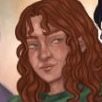
Imperial Rehabilitation Order || Crisis of Faith
JediMaestro replied to wolfdwg's topic in Order of the Red Dragon
The news inevitably reached Solveig, whether by letter from her concerned friends or offhandedly mentioned by visiting well-wishers. Either way, the news reached her and filled her with equal parts palpable relief and unease. ”Corruption breeds corruption,” she murmurs, looking down at her newborns, whose pure and simple existence proved beyond a shadow of a doubt that their father could not be as corrupt as imagined by the Church. “And yet,” she adds with a heavy sigh, “in this day and age, it seems corruption can only answer to corruption.” Though the ecumenical nature of the matter escapes Solveig’s grasp, the phrase ‘personal ambition’ stands out all-too-clearly to her. “The Emperor must have recognized in Iudas a hint of his own naked lust for power,” she muses. “What sad times we live in when we must rely on the ego of mad tyrants to inadvertently deliver any kind of justice.” Still, Solveig cannot help but smile at the thought of Iudas dragged in before an Imperial court. If anyone could not only pierce through Iudas’ simpering, two-faced act but also do something about it, it would be the Emperor himself. “As much as I would like to see him torched in the place where he has longed to torch my husband,” Solveig declares, “perhaps this experience will encourage him not to so brazenly pursue his own personal agendas and vendettas.” A mock-pious expression crosses her face: “I shall pray for his soul tonight,” she solemnly intones before turning back to talk and laugh with her family and friends. -
"Of all the many emotions that spun through Solveig's head, hope was by far the worst. Grief, guilt, and despair were old friends, ones she had weathered before and thought she might weather again or at least die trying. But hope - hope was new to her, and she could not bear the thought of it being dashed..." ------------------------------------------------------------------------------------------------------------------------------------------------------ Ash and smoke swirled around Solveig as she walked her usual path from shattered Alduun to blood-stained Tir'Glas. Night had fallen many hours ago, but there was no peace to be found where Solveig walked. Where once the Autumn Isle had greeted her in between, she now walked through a scorching hellscape. Bright orange winked all around her. No more was it a tunnel of fall-colored leaves but instead a roaring fire beside and above and all around her, her only safety the thin cobbled path stretching before her. Crinkly objects whisked past her, but they were not dried leaves borne on the breeze; they were crumbs of rubble born of the inferno, spat out blazing with heat that would surely sear and melt her skin should they find purchase there. White flakes drifted lazily around her, dusting the path before her and coating her arms and hair. Not snow, of course, but ash and the flaky remnants of what had once been human, the detritus of death. Past this monstrous landscape, through gouts of flame mounting overhead, Solveig could just catch a glimpse of a distant snow-capped city composed of contrasts: here a gothic tower; there a craggy fortification. Smoke billowed from every crenellated parapet, like a dragon’s flame breathed through its teeth. The fire roared again, and now even the trees became indistinct, an amalgamate of squat yellow deciduouses and pines looming all about her like great torches marking the way to some unholy ritual. Wind whined in Solveig's ears with the voices of a thousand screams. Indistinct as of yet. But with each step she took, the cacophony grew, and its voices became ever more familiar. On she trudged through the deepening slough of snow and ash. Beneath the murky grey mire, Solveig could feel that she trod on something dreadfully supple, a malleable mangle whose origin she dared not guess. The miasma of voices reached fever pitch as flaming trees closed in around her. All at once, she had reached a plateau, with not a tree in sight, save one. Silence reigned supreme. Ahead, an icy chasm stretched deeper than Solveig’s gaze could penetrate. But her eyes did not linger in its inky depths, for beyond that canyon, Solveig now saw the smoking city fully. Her home was engulfed in flame, every home she had ever lived in all at once: the village hut, the Norland capital, Numenost, Garenbrig, Duncoed, Tir’glas . . . even the mountain cabin from the isle between worlds. She opened her mouth to cry out, but silence lashed out like a tendril from the burning city. It plunged down her throat, suffocating all sound, as the city itself rushed closer with frightening speed until it stood all around her. There before her was the sole burning tree left from the earlier blaze. A massive deciduous tree spread its empty branches to the sky, burning and yet never burnt: the Ashwood tree. The familiar sight transfixed Solveig for just a moment before her attention was arrested by the man standing at its foot. “Papa?” The word escaped Solveig’s lips, mercifully unscathed, and she chased after it desperately, nearly tripping over her own feet in her haste until she fell at last with a disbelieving cry into the arms of her beaming father. Wrapping her arms around him tightly, she felt the old familiar shift of his muscles as his own arms tightened around her: the rough comfort of his well-worn tunic, the smell of fish and pinewood on him, the feel of his scruffy beard grazing against her hair as he kissed her head. His chest was warm against her cheek, Solveig’s first and most precious pillow. “My little firefly,” her father murmured, his voice just as gravelly and hoarse as she remembered. He had always been a man of few words, spending most of each day out fishing alone, breaking his silence for the first time each day only when his daughters came spilling out of the house to greet him when the sun was low. “I . . . I missed you,” she mumbled, suddenly shy. Her eyes screwed up. How long had it been since she had last seen him? Had it been a day, a week? Surely it could be no more than that, could it? Warmth seemed to spread from her father’s chest to his arms, wrapping her up like a hot blanket. “Aye, ye did, sunshine,” came a soft voice from behind Solveig, and Solveig turned slowly, comfortably, in her father’s arms. There stood her mama in her apron dusted with flour, hair tied up in a severe pony-tail, arms crossed. She wore the patient smile that always appeared on her face before a gentle rebuke, followed by a joke to break the tension and a big laugh. How long since she had last scolded Solveig? “Ye did miss us,” her mother gently admonished. “Far too late, too.” Her papa’s arms tightened further around her, now hot against her chest, and Solveig’s smile wilted slightly, “What do you mean, mama? I’m here now, aren’t I?” She looked up at the night sky, “Did I miss suppertime?” “Ye missed far more than that, me darling,” her mother said, shaking her head, and flames licked up at Solveig, sprouting just below her field of vision. She squeezed her eyes closed, flinching away from the heat, but her head jerked back into scalding heat. Her eyes popped open once more with a gasp, and she managed to glance down for just a moment in sheer confusion. Pure-white bone met her eyes, accompanied by an acrid, overpowering stench. Solveig gagged, doubling over, the movement breaking her father’s hold on her. She stumbled forward, nearly bowling over her mother. Straightening, she immediately turned back the other way and just as soon regretted it. The flames of the Ashwood tree had spread, creeping down the trunk and along its gnarled roots until it had reached her father. It had burnt his flesh away to nothing, a skeleton standing before her in unforgiving detail, his clothes smoking and tearing away at the seams. He stood there, smiling, or Solveig assumed the blank rictus of the skull whose eyes now bored into her must once have been her father’s sly grin. “You missed who we really are, my dear,” the thing that had once been her father said, its jaw working up and down, although no tongue could be seen inside, only inky blackness. Solveig let out a shriek as white-hot flame leapt from father to mother, consuming her. The town square sharpened, and memories flooded into her mind, populating the city around her. Norlandic guards lay on top of glassy-eyed children in bloody heaps. The air was thick with smoke and the stench of blood and decay. Lights bobbed up and down in surrounding alleys: the torches and lanterns of imperial soldiers hell-bent on destruction. All stood frozen in time, trapped in one singular moment--one dreadfully familiar to her. Solveig’s eyes widened, and as if in answer to her recognition, a general store formed around the trio, the fur-lined clothes on its shelves smoking, its rafters beginning to collapse from the flames. Against her will, Solveig slowly turned to peer out the window facing out onto the square. There, past the chaos of soldiers caught in the paroxysms of death, stood a girl. Her arms hung limply at her sides as she stared at the burning structure in stricken disbelief. The intense orange and red of the surrounding fire washed out her red hair, rendering it as pale as her fearful face. Though Solveig closed her eyes, the image did not disappear, as though it had been burned into her retinas. In reality, it had been burned into her memory that fateful day, forever flickering in the backdrop of her mind, no matter how much she might try to extinguish it. “We are grief.” The phrase had groaned itself out of the bony jaw of her father, who had come up just behind her, hand-in-hand with the skeletal remains of her mother. The initial shock of their gruesome transformation gone, Solveig felt her wits starting to coalesce. “You’re a dream, aren’t you?” she asked the pair sadly, unable to tear her eyes away from the girl in the square. “Grief. Guilt. Despair. Hope.” This time the words had come from her mother, listed out slowly as she used to do when reading a picture book to Solveig and her brother. Her mama continued, her voice resuming the gentle reproof from earlier: “Ye claimed that the first three ye had overcome, and that the fourth might prove your undoing, me lass. And yet this is not so, is it? Ye have never faced any of them, but only run away! From your problems, your past, your very self!” “Well, no more, girl,” her father rejoined sternly. “Today you meet your demons.” This last word was enunciated with unusual care, and the flames around appeared to brighten for a moment. “And you either face them or fall to them.” “I grieve you every moment of every day,” Solveig shot back, indignant. “My life is defined by your absence. I do not run away from my grief but must bear it constantly!” Her father advanced to stand alongside her, “You have spent your entire life running from us.” His arm shot out to point towards the forlorn girl outside. “That girl took one look at the flaming figures of her parents and ran out of the square, out of the city, out of the nation.” “As opposed to what?” Solveig returned hotly, “Plunging into the fire to die alongside you? What good would that have done anybody?” “None at all!” His voice softened, “But she did not stop running when she reached Idunia. She has not stopped running since. She tries desperately to find things to distract herself so that she does not have to come to terms with her own grief and find peace.” Solveig felt tears coming to her eyes, as much of anger as grief, “How? How am I meant to ever find peace in the fact that the final image of my parents that I see whenever I think of them is not your wonderful laugh, papa, or your smile, mama, but instead the two of you wrapped in flames and screaming in agony?” “By facing us now.” Her mother’s voice issued from behind her. “See the ash and the ruin. Ye are running to escape a fire that has long since been put out. Turn around and ye shall find only what fire leaves. Things to lay to rest and things to rebuild.” Slowly, Solveig turned from the scene in the square, shivering as her eyes once again met her father’s empty eye sockets before facing her mother. Just as her mama had said, there was no more fire. They stood in the burnt-out husk of the store, which stood as if left abandoned for decades. “See what rot ye have wrought,” her mother stated, spreading her arms to highlight both the wreck surrounding them and her own undead body. “Ye never returned to the Norland of your youth before traveling across the ocean, so here it has remained in your mind’s eye in all its ruin, never rebuilt.” “And we too have remained here,” Papa added, now coming alongside Mama and placing a skeletal arm around his wife, “Specters of your mind imprisoned here. Every time you have witnessed death, you have been brought back here, to the fire and the blood. Now that you see us true, you must lay us to rest and be no more haunted by what you think you see.” Despite Solveig’s desperate wish to the contrary, he was exactly right. The deaths of Zinzolin and Morwen had brought her right back to the same scene frozen in time that she now had just weathered, the same fire, the same snowfall. And each time, she had fled, whether lashing out in violence or literally running for the hills. This most recent flight had nearly ended in disaster for both her and Bron. Solveig took a long hard look at the pair standing before her. They were horrifying to look at, and yet the longer she looked at them, the more they once more resembled her long-lost parents. They did not regrow skin or hair, and yet they became more recognizable despite their cadaverous appearance. The way the taller skeleton stood, leaning in a lanky kind of way on her mama, who stood with her hands clasped in front of her . . . a posture that Solveig still unconsciously fell into when lost in thought, the result of years of admiring and seeking to mirror her mother. “Papa! Mama!” she cried and fell into their arms, tears spilling onto the blackened floor. They were cold to the touch, and yet the way her mother stroked her hair and her father pat her back could not have been more familiar. “How can I lay you to rest now, when I’ve only just found you again?” Solveig sobbed. She clung to her mother with the urgency of a lost child who has been found. “Are you a dream or are you real?” she began to babble. “You- you can visit again some other night when Bron is here with me, you can meet him, you-” “Child, child,” her mama said softly. “Ye know that is impossible. Our ashes drift upon the open sea ten thousand miles from here. Our spirits have gone where ye cannot yet follow. We are as ye remember us, both dream and reality. Ye must let the dead rest. Only then can ye dwell in the land of the living with your own family.” “Or what is left of it,” Solveig replied sadly. “Even my newfound family is joining you, one by one.” “And so they shall continue to do,” her mama replied. “But I speak of your family that is to come. If you carry us with you while you carry your child, ye shall collapse.” “Child?” Solveig breathed, but a large hand rested on her shoulder, one Solveig knew to be her father’s. “It is time,” he said. Slowly, Solveig became aware that the scene around them had once again changed. They stood on the docks at the edge of the ruined city. Wrecks of ships great and small dotted the harbor, but a single small boat loaded with tinder was moored carefully to the pier where they stood. Solveig frowned as her father handed her a bow and set a standing torch next to her. “I’ve only just put out the fire,” she protested. “Would you have me light another?” “Fire is sacred to we Norlanders . . . and has been for the Adunians as well,” he replied. “But we do not set our cities alight. It protects us, keeps us warm, keeps out the darkness. The fire you ran from, it was out of your control, rampant. By lighting this fire, you take control when next you witness death. By letting us go, you do not magically heal of the wounds that have been left in you. But when you begin to see fire all around you, it shall be the fire of renewal and rebirth that you light now, not the fire of destruction.” In a flash, the two were on board the rafts, and the rafts were halfway out to sea. Solveig’s grasp on the bow weakened. She had so many more questions, longed to tell her parents all about her Bron and how wonderful he was. “Shoot and strike true before it is too late,” her father called, standing in the boat with one foot up on the stern as he always did. “Remember that we are only grief,” her mother chimed in, seated comfortably amidships. “Ye still have guilt, despair, and hope to come this night. But as ye have faced us, so can ye face them. We love ye, Solveig!” Tears threatened to obscure Solveig’s vision, but she acted as instructed without thinking, just as she had been trained to do as a child, to obey her father without question. Raising the tip of a strung arrow to the flame, she let it begin to consume the wax that wreathed it. Drawing back the string, she lifted the bow towards the night sky before letting loose. Her eyes followed the arc of the arrow as it plummeted from the sky, landing amidst the dry tinder. Immediately the boat, now distant on the horizon, was set alight, and Solveig could just barely make out her father taking the hand of her mother before they disappeared from view, lying down together in their final voyage. All was still, and in that silence came dread. Solveig felt no sense of immediate peace or release. She came to no profound realization, did not gain a fresh new perspective. Instead, her mind dwelt on the embrace of her parents and how much she longed to be in their arms again. She sank to her knees once more, the bow clattering from her nerveless fingertips to the floor, and sobs began to choke her again. Was this some final taunt by a demon sent to haunt her? Had he played tricks on her mind, let her think she was on a journey of healing when all she had done was kill the last fragments of memory of her parents? ---------------------------------------------------------------------------------------------------------------------------- She awoke. Solveig lay in her bed in the Dunceod keep, the sheets knotted and twisted. Absolute stillness pervaded the room. It might have been before midnight, or it might have been deep into the night for all Solveig knew. She reached for Bron’s hand for comfort, knew the touch would not wake him. Her hand touched empty bed, and she turned, found herself completely alone. Disoriented, haunted by her dream, and despairing at its abrupt ending, the thought of going back to sleep chilled Solveig. She sat upright, swung her legs out of bed. Immediately nausea crept in, and she felt strangely heavy and fatigued. Water. Wincing as her feet touched the cold stone floor, Solveig made her way to the door, peered out into the dark corridor outside. This floor was completely empty, she knew; the nearest person living in the keep was one or two floors below. She would only need to make her way to the end of the hall, however, where the ice was kept. A distant bell chimed, accompanied by a short clicking sound, and Solveig froze in place. At the end of the hall, the door to the stairwell began to slowly creak open, and a voice drifted from somewhere out of sight. “Oh, butler!~” To be continued in Part 2 - Guilt . . .
-
-
With a Heavy Heart [Formal Resign]
JediMaestro replied to ChainedDragons's topic in High Kingdom of Idunia
Solveig sat next to Bron, watching him silently as he wrote his letters. A silent war raged within her; grief, relief, guilt, despair, and hope, all surged within her like waves. This day had been exhausting beyond words. Grief: Morwen's death had been so sudden, harsh, final. It echoed with the ones she had lost before . . . magnified the grief of that despite the years since she had lost her family. Solveig had thought she might die on the spot from grief when Morwen's body had toppled. In that moment, it seemed to her that the only reason she had been allowed to find new family was so that it too could be taken from her, and she had wished, just for a moment, to die and be spared any further pain. But that mad desire had ebbed, and now that same old grief, a constant companion of her youth, returned to dog her steps. It could never be away from her for long, it seemed. Relief: As Solveig's eyes lingered on the face she had come to love so, his expression so concentrated and determined, she once again felt immense relief at how the day had gone. She had resigned herself to being torn from him, forced to live as but one half of a person apart from the one she loved beyond life itself. And yet, at her moment of greatest despair when all seemed lost, he had relented, almost despite himself. Both of them, she felt, had come to realize how dependent they were on each other. They were indeed two halves of a whole, and seeing her love here now by her side, where she had been sure only hours ago that she would now be alone again . . . it was relief far beyond what she could ever express. Guilt: She had put her foot down, and for good reason. She could not have lived with herself had she not put forward the ultimatum. And yet guilt, unreasonable as it is, still gnawed at her, told her that Bron had destroyed his own life because of her and that she had abandoned the Callaghans. She fought these feelings at every turn, fought for her own self-worth, told herself that she and Bron would look back on this day with gladness . . . but for now the guilt ate at her without cease. Despair: Idunia had not hesitated a moment in killing one of their own. Solveig was consumed with dread at the thought of what they might do to Bron. They all respect him now . . . but it was clear they would instantly turn on one of their own without pity or remorse. Solveig was not a religious woman, had had that privilege stripped from her when tragedy struck early in life. But she hoped with all of her strength that, just once in their lives together, they might actually hit a bit of luck. Hope: Solveig's eyes shifted from where Bron sat bent in writing down to her own hand. Brass freshly glittered on one finger where before it had been bare, and that in itself still dizzied Solveig with intense joy just to think about. They were to be married . . . truly and finally. At last, they would have the chance to build a family, a home, a life together in all senses of the word. Of all the many emotions that spun through Sovleig's head, hope was by far the worst. Grief, guilt, and despair were old friends, ones she had weathered before and thought she might wither again or at least die trying. But hope - hope was new to her, and she could not bear the thought of it being dashed. Solveig leaned into Bron and closed her eyes. If only just once, just for now, just in this single moment, they were at peace together, with the hope of a future together glimmering on the horizon. Solveig swore to herself that she would etch every single second of this time in her memory and savor it for as long as she lived . . . -
Fall of Winter Brown leaves and snowflakes swirled around Solveig as she walked her usual path from gladed Tir’Glas to lofty Alduun. Her destination, as usual, was the Scholarium, whose austere spires she could even now catch the occasional glimpse of through the whispering trees. There she would assist in the great task of organizing, categorizing, and arranging Idunia’s great library of books, a task equal parts exciting and intimidating and one in which she had been engaged for some weeks now. Yet even this task, as much as Solveig had always dreamed of working in such an environment, had cast a strange kind of weight around her shoulders. For the past several months, she had sat down at her desk once her daily duties were completed and stared at a page of empty parchment. Her goal was simple: write a song for her fiancé, Bron, in honor of his upcoming birthday. He had written just such a song for her years ago, one she still took much comfort and delight in. How hard could it be, she had thought, to write a song of her own in praise of Bron, even if she were not half as artistic or poetic as her bardic husband? As it turned out, the task had proved nearly impossible. Had parchment not been so precious to her, she might have used up a hundred scraps writing and scratching out each half-baked idea. Somehow, each attempt was worse than the last, leaving her feeling like a child scrawling imbecilic love notes to their first crush. How could she possibly distill what Bron meant to her into something decipherable? Why did it feel like the empty paper mocked her the longer it remained blank? Why in the world was it so hard to think of rhymes??? In truth, the mountain of books surrounding Solveig had become more intimidating than exciting the instant she had set her sights on becoming a writer, rather than a reader. The tantalizing possibility of a thousand stories to read had transformed itself into the terror of a thousand poems written better than she could ever muster, a thousand stories cleverer than the ones she could ever hope to tell. The endless leaves of parchment all around her had seemed to cascade around her like the leaves that now rained down on her from rustling branches overhead. Solveig remembered the first time she had walked under these orange-and-yellow-speckled branches, when Azuras itself was still strange and new. She had wandered down the cobbled pathway, her arms laden with all her belongings, and yet they had seemed as light as a feather to her for the wonder of the colorful foliage all around her. Not because autumn was new to her; every harsh winter she had endured as a child in Aevosian Norland had been preceded by a disarmingly pleasant fall season. No, this land offered something far stranger: a land given the gift of perpetual autumn, blessed never to experience the suffocating heat of midsummer nor the bitter cold of midwinter. A clement summer here, a gentle winter there; seasons passed here in the Autumn Isle like the leaves that perpetually drifted down from rippling trees. The trees were what had fascinated Solveig the most, a forest continually on the verge of winter’s decay and yet never reaching the apogee, trees shedding their leaves day in and day out and yet never growing any deader. Indeed, here, countless leaves lay strewn across the densely forested island; Solveig had heard tell of remote ravines whose slopes could swallow a person whole, perhaps even crush them under the weight of a thousand consecutive autumns. There was something captivating about the island, a mystery seemingly inconsequential and yet portentous at the same time. Even on that first walk, she had felt hints of the strangeness of it all, like catching sight of a figure lurking behind a tree and finding it gone when next one blinks. But every year that came and went with not a green leaf nor a bare branch in sight, the mystery ate at her more and more, closing in around her like a creeping shadow lurking in the corner of a dark room, slowly taking shape as light fell on it . . . or as it drew nearer. Solveig shivered and roused herself, taking in a deep breath of the crisp air. It was a habit that was becoming unwelcomely common to her, thoughts swirling around her like so many leaves, before spiraling into a vortex that pulled her down into the dark places of her mind where she dared not stay. Try as she might to distract herself with one thing or another, she could not take two steps without a shadow flickering at the edge of her vision: the ghost of one loved and lost or the horned specter of an uncertain future. It angered Solveig terribly, this perpetual jumping at shadows. She thought of herself as practical, common sense, no-nonsense: the natural attributes of the eldest daughter . . . and the attributes ingrained by fire into the lone survivor. She held no quarter for idle talk or wishful thinking; those were the attributes of the coward, who scarcely realized he was alive until he was on his deathbed. And yet here she was, talking herself in circles, instead of seeing what was in front of her and doing something about it. As if on cue, another gust of wind kicked up, sending a flurry of snow flying into her face. She sputtered, blinking ice out of her lashes, before bursting into a laugh, one she could almost convince herself was born from child-like joy, rather than relief at having been pulled out of the vortex once more. If anything were to bring her back to her carefree childhood, it would be snow, her ever-present companion in days of yore. Solveig had to admit her highlander heart was instinctively buoyed at the sight of it. Winter brought back many pleasant memories, days spent at play under a cloudless sky and a chilly sun.. But a shadow haunted even the recollections of those halcyon days, the nagging reminder of the day when all of it ended, all at once, on one cold, cold night. Every year, she eagerly anticipated the arrival of winter, and yet when it arrived, it was like dust in her mouth. Though surrounded by perpetual autumn, Solveig found herself trapped in a world of eternal winter. But it was who she was, wasn’t she? The winter lily, soft as silk, hardy as thyme. A smile rose to Solveig’s lips as she hummed a bar or two of song, the song her dearest love had written for her, the song her Bron had sung to her. In an instant, the vortex inside her head waned, the leaves rustled with a cheerful gusto, and the snow danced merrily around her. It was as if she had only just blinked the ice from her eyes, was seeing the world properly once more. The winding path to Alduun took shape around her once more, its walls now looming large beyond the verge of the forest. Bron had always had a talent for that, for melting away the cold exterior she had once tried to hide behind, ever since that first fateful meeting when she and Zinzolin had run into him in the dusky streets of Numenost. He had been a stranger to her then, one decked in harsh-looking armor and with two great horns protruding from his helm. And yet even then, before she had ever looked upon his face, she had felt that there was something different about him, something kind and gentle, something that had compelled her to ask him for help: despite his intimidating appearance, despite her own attempts to close herself off, despite already having a job and a place to stay. Despite all of that, she had asked Bron for help. And he had rescued her, more truly and more utterly than either of them could ever have anticipated. Everything good and beautiful now in Solveig’s life, it could all be traced back to the day that Bron looked at a woman he had never met and, having absolutely nothing to gain from it, chose to help her. It was hardly the first time Solveig had had such a thought. Indeed, there had been days not too long ago when she could scarcely escape from it, when the realization that Bron defined her life made her question her own worth, made her wonder if she would still have an identity if Bron were to be taken away from her. But it was in that argument with Bron where she had let it all out—and even more so in the carefree day spent in each other’s company after that—where she had realized that Bron had not robbed her of her identity. He had given it back to her. The laughs she had shared playing with the Callaghan children, the tears she had dried from their faces, the quiet conversations, the pranks, every meaningful glance and loving word and tender kiss she had ever exchanged with Bron . . . they were all gifts from a future that had been burnt up before her eyes, the family she had thought she would never have again. If Solveig was the winter lily, then Bron was the first sign of spring. Solveig found herself standing before the open gates of Alduun. Morning had mellowed from a rather wan and washed-out-looking sunrise to a sprightly and sunny day. In Main Street, soldiers clanked unconcernedly through the snowy street, their snug woolly and armor-laden gambesons keeping them quite cozy even on this brisk winter day. Along the sidewalks, people bustled to and fro: citizens carefully navigating icy patches on morning errands or on their way to work, and sightseers clustered in groups, oohing and ahhing at the resplendent architecture all around them. Behind them, the Scholarium stretched to the sky, waiting for its wardens to enter in and resume the great task of making the library ready for the public. That spiked steeple had stoked only stress in Solveig’s spirits in the past few days. Now, as she looked at it, she felt confidence beginning to surge in her. The endless spiral of thoughts that had plagued her on this walk had not been a pointless excursion into misery nor a waste of energy, but instead the first spark of inspiration. The endless books piled around her would no longer feel like a sea of dead leaves threatening to swallow her whole; they were the branches that held a thousand buds ready to bloom into ideas galore. The blank page was no longer a terror, but a friend, for it would allow Solveig to sing to Bron all she had come to learn about herself and about him, and perhaps it would give him even a fraction of the same cheer his song had given to her. Solveig picked up her pace, her eyes lighting up with excitement. She had a poem to write. Blackthorn’s Bloom by the songstress, Bloom-Bird I walked a winter wasteland. So aimless did I rove, Bereft of kin—cold, starved, and thin, Until I found a grove. Its flowers bloomed despite the freeze; Its stem pierced through the snow: A hardy thing, a glimpse of spring With summer soon in tow. Its branches kept me warm each day; Its berries kept me fed. Though thorns could prick, each leaf and stick Were pillows for my bed. Its thorny thickets sheltered me From winter’s cold embrace. I surely would have perished Had not blackthorn kept me safe. But past its thorns, which some may hate, Its beauty has no peer. All day and night, its my delight To stay without a fear. Now summer too has come to roost, But in the twilight gloam, I no more rove outside this grove, For blackthorn’s now my home. Though winter shall come round again, O, let me ne’er depart! Where blackthorn blooms, in sun or gloom, There also blooms my heart.
-
FULL NAME: Ansgarde AGE: 18 RACE: Human (Heartlander) PRIOR EXPERIENCE, IF APPLICABLE: Building muscles at the wine press! METHOD OF CONTACT: (Discord name) JediMaestro
-
Redclyfian Treaty of Valfleur | 1922
JediMaestro replied to Chorale__'s topic in The Petran Government
"Thus begins a long and glorious reign as Redclyf is born anew," Isidore Mösu proclaims, surveying his copy of the document. He prepared quill and ink, carefully placing the treaty in the government library and returning to his seat. "As Chief Scribe, I shall surely mark the importance of this moment in The Histories of Redclyf." So saying, he bends over his desk and begins to write. -
THE BALLOT (MC Name: Revan2187) Name: Dromos Mandelos Hyptos Vote 1: Eistalyn Othelu'maehr Vote 2: Eistalyn Othelu'maehr
-
Anyone have any advice on creating/playing a villain? I wanna play a villain, but it seems like you kinda need stuff (e.g. magic, minions, and a pipe organ) to play a good one.
- Show previous comments 10 more
-

From personal experience, it's entirely possible to play a villainous character without having any kind of magic, power, ability, etc. All you need is a bit of cleverness and the ability to commit. I'm in agreement that you should avoid playing a character that's, as it's been put, "bad but not really". Anti-heroes are one of the biggest problems in the realm of 'evil' magics and CAs. If you want to play an evil character, be prepared to commit to actually commiting villanous acts, murder, betrayal, lying, etc. Even if it means doing so to characters belonging to your friends, or characters yours has built a relationship with. Also, importantly to me but not entirely necessary is to have some kind of motivation for being evil. The best villains in media are ones who have some kind of backstory or such that actually "justifies" (in their mind) their acts. I'd recommend steering clear of the cartoon villain aesthetic as well. Take your character seriously, and others will as well. If you want to discuss further, feel free to reach out to me on discord. bumblefina#0199 Best of luck in your roleplay.
-
.thumb.gif.4284906d3788a322c219fc4b2911a67d.gif)
-
-
Freyja Ragnarrssdottir Mösu for Senator Easing the Growing Pains of Balian Balian is no longer a young nation, and it is past time for it to be preoccupied with a young nation’s struggles. Too long have its citizens suffered under threat of banditry; too long have they lived in fear of darkspawn, vampyres, and other such bloodthirsty creatures living in their midst. Now is not the time for our Senators to content themselves with promising its citizens pastries and goodies. Balian is no more a tender yearling; it is a full-grown nation, and you must elect strong leaders who will ensure the safety of its citizens and the security of the realm. Look no further than Freyja Ragnarrssdottir Mösu, Baroness-Regent of Ciavola. Rising to power out of a family ravaged both by vampirism and by Balian’s inconsistent response to the threat of darkspawn, and being a devout Canonist herself, she vows to codify Balian’s stance towards spooks and to strictly enforce this new code. Just as spooks have torn apart her family, so Freyja will not let the same thing happen to her new family of Balian. She will work alongside Balian’s Inquisitors to make sure that no spooks can apply for citizenship within Balian’s walls. Neither will any spooks who are currently citizens be able to rest easy, growing fat and rich without fear of discovery. As Senator, with the help of Balian’s Royal Inquisition, Freyja will launch a city-wide Inquisition to root out the decay in our midst, so that one man need not mistrust his brother within the walls of Atrus. In this way, she will make sure that no child of Balian must lie awake in fear of monsters lurking in their midst. Coming from a line of belligerent warriors, Freyja also well understands the importance of defending Balian’s citizens from bandits and thieves. The camel caravans have made the road to Balian more secure, but danger still lurks between the Oasis and the Stairway to Heaven. Freyja will help to ensure that Balian soldiers regularly patrol the road to the Oasis, so that the citizenry of Balian may feel adequately protected by their rulers. She will also help to arm every head of household, so that the men and women of Balian may protect their own and become feared by every two-bit gang of ne’er-do-wells. In these ways, as Senator, Freyja Mösu will play an active role in the defense and security of the Kingdom of Balian. A woman of action, a fervent patriot, a devout Canonist, a capable leader, a mother and sister to every citizen of Balian: these are but a few descriptors of Freyja Ragnarssdottir Mösu. Vote for peace. Vote for safety. Vote for security. Vote for Freyja Mösu.
-
Freyja Ragnarrssdottir Mösu Easing the Growing Pains of Balian Balian is no longer a young nation, and it is past time that it be preoccupied with a young nation’s struggles. Too long have its citizens suffered under threat of banditry; too long have they lived in fear of darkspawn, vampyres, and other such bloodthirsty creatures living in their midst. Now is not the time for our Senators to content themselves with promising its citizens pastries and goodies. Balian is no more a tender yearling; it is a full-grown nation, and you must elect strong leaders who will ensure the safety of its citizens and the security of the realm. Look no further than Freyja Ragnarrssdottir Mösu, Baroness-Regent of Ciavola. Rising to power out of a family ravaged both by vampirism and by Balian’s inconsistent response to the threat of darkspawn, and being a devout Canonist herself, she vows to codify Balian’s stance towards spooks and to strictly enforce this new code. Just as spooks have torn apart her family, so Freyja will not let the same thing happen to her new family of Balian. She will work alongside Balian’s Inquisitors to make sure that no spooks can apply for citizenship within Balian’s walls. Neither will any spooks who are currently citizens be able to rest easy, growing fat and rich without fear of discovery. As Senator, with the help of Balian’s Royal Inquisition, Freyja will launch a city-wide Inquisition to root out the decay in our midst, so that one man need not mistrust his brother within the walls of Atrus. In this way, she will make sure that no child of Balian must lie awake in fear of monsters lurking in their midst. Coming from a line of belligerent warriors, Freyja also well understands the importance of defending Balian’s citizens from bandits and thieves. The camel caravans have made the road to Balian more secure, but danger still lurks between the Oasis and the Stairway to Heaven. Freyja will help to ensure that Balian soldiers regularly patrol the road to the Oasis, so that the citizenry of Balian may feel adequately protected by their rulers. She will also help to arm every head of household, so that the men and women of Balian may protect their own and become feared by every two-bit gang of ne’er-do-wells. In these ways, as Senator, Freyja Mösu will play an active role in the defense and security of the Kingdom of Balian. A woman of action, a fervent patriot, a devout Canonist, a capable leader, a mother and sister to every citizen of Balian: these are but a few descriptors of Freyja Ragnarssdottir Mösu. Vote for peace. Vote for safety. Vote for security. Vote for Freyja Mösu.
-
This is true and something I forgot about; I remember when I joined a couple years ago, it seemed like there was always a CT member online to answer my noob questions, even when I was playing in fairly inactive hours. The decline has been gradual enough that I didn't really notice, but the lack of CT guidance in-game is very obvious now. Also I had a really good Monk show me around and get me settled when I first joined, so I'm sad to hear that has gone downhill too.
-
I've always hated accent RP, even Haense accents, and blah is definitely the worst of the lot. The biggest reason, as others have mentioned, is the incredibly limited culture. Orcs were created by Tolkien to be intimidating grunts for the heroes to kill. Since then, that's what they've mostly been used for. Making a culture out of Villain Red-Shirts that isn't flat and two-dimensional is intrinsically going to be harder than for other races, and I don't get the impression that orc lore in LotC has succeeded there. To scratch my warrior itch, I recently joined the Bronze Band near Krugmar, and they really accomplish everything good about orcs without the bad, in my opinion (coming from someone who knows very little about LotC orcs, of course). It's a predominantly warrior culture but with much more fun prose and no accent RP. Bronze elves can be pig-headed and stubborn while still emoting interesting things and not devolving into "KRUG KRUG KRUG." I'd also echo what others have said about Krugmar isolationism. I really don't see orcs out and about (heck, I barely ever see them in Krugmar whenever I visit), and again that makes it incredibly limiting in terms of interesting RP. I've played for 2 or 3 years now and don't think I've ever interacted with an orc outside of Krugmar. Finally, the brutish pig-man aesthetic has just never been appealing to me, especially since again, even the simple design makes it had to differentiate one orc from another. Overall, I really don't know what they could do to be more appealing, and maybe it's better that they don't do anything and just market themselves to those who evidently like that kind of RP/vibe. After all, somebody has to be the smallest race. Some cities are bigger than others, and that doesn't mean there's anything wrong with the smaller ones; it just doesn't attract as big of a common denominator.
-
The official LotC YouTube channel description still says that the server is "set in the Isles of Axios," for god's sake! Easily agreed that LotC social media should be popping off. I've always said that FitMC would make a great LotC history video - if we could get a video of similar production quality recapping the history of various nations, I think it would attract a crowd. Don't have as much experience with TikTok, but yeah, surely you could attract a crowd there too.
-
SURNAME: Mösu FIRST NAME: Freyja ADDRESS OF RESIDENCE: Monterosa 3 FACTION(NOBILITY OR COMMONER): Nobility YEAR OF BIRTH: SA 70 Are you registered and eligible to vote? Yes ((MC NAME)): Revan2187
-
Freyja Ragnarssdottir Mösu watches the messengers depart from the Mösu residence, carrying stacks of edicts to deliver across Balian and beyond. She stands stock-still, a seamstress taking her measurements for today's upcoming "Eve of Love," where she will make her first debut as Regent of Ciavola. Freyja's blank expression conveys none of the inner satisfaction she feels within. Finally. The Barony has been in disarray for too long with her brother's untimely disappearance., and the Mösus have been too long concerned with family matters: the tragic death of the father, the recluse sister, and of course, the climactic death of Kol Mösu at the hands of his own brother. The seamstress departs, and Freyja wanders to a portrait of the Mösu clan. Her dark eyes linger on a portion of the canvas, torn out and ragged at the edges. "At last," she whispers in the empty living room, her voice soft but filled with steely determination, "At last your murderer is gone, dear brother. Now Ciavola may finally prosper." Turning away from the portrait abruptly, a smile reaches her mouth as the handmaiden bustles back into the room, revealing Freyja's beautiful dress for the Balian gala. The smile does not reach her eyes, however. Instead, the Regent's eyes burn with that fiery determination for which the Mösus are so well-known. At last there is a clear way forward. It is time for Ciavola to pursue greatness.


.thumb.gif.4284906d3788a322c219fc4b2911a67d.gif)