


Zarsies
-
Posts
2790 -
Joined
-
Last visited
Content Type
Profiles
Personas
Wiki
Rules
War
Systems
Safety
Player Conduct
Roleplay Leadership Guidelines
- Roleplay Leadership Guidelines
- Roleplay Leadership Guidelines Comments
- Roleplay Leadership Guidelines Reviews
Forums
Everything posted by Zarsies
-
You can stake me anytime!
-
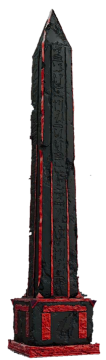
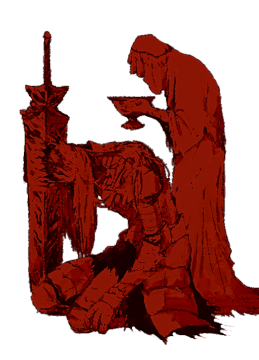
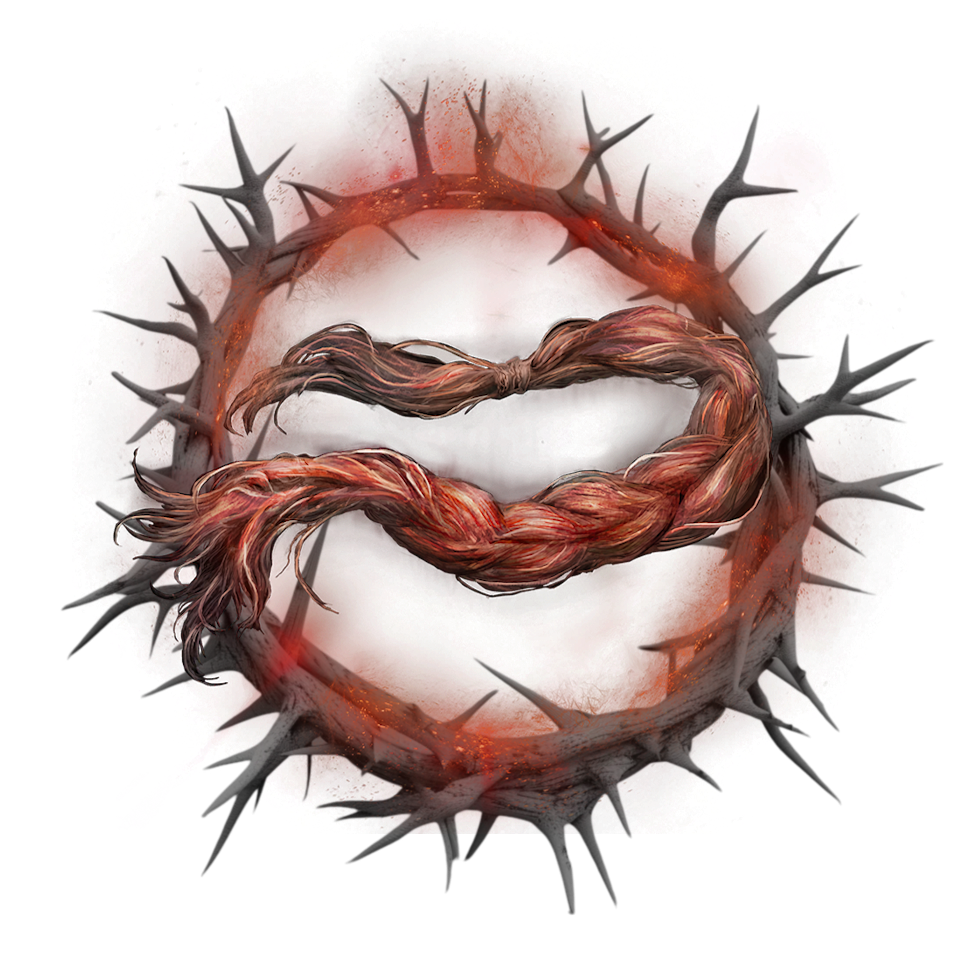
Preface: Iz-Miroz The Blood-Braids of Ramâsar Vazilat Iz-Miroz, an early ancestor. Origin In the distant northwest of Ramâsar hail the dark elven clan Szorâmor in a marshy wetland. They are an obelisk-worshipping people, farming stilt striders clutches and rice paddies, and mingle with disparate wood elven families in the bog’s twisting fringes. In the terraces along the land’s central volcanic range hail another dark elven clan, the ghrendal-riding Izenti, miners of gold, sulfur, obsidian, and redstone with militant affinities who fed much war in the south. Across four eras after their settling on Ramâsar these clans mingled on account of mutually beneficial beasts of burden; stilt striders can scale great inclines with ease and pull hefty loads while ghrendals make swift mounts for guards fiercer than most swamp monsters. The Szorâmor and Izenti clans converged over time, the craggy slopes and marshes between them yielding fertile territory to settle. This union of bloodlines produced a unique hereditary trait: ginger hair. By the Ramâsari Fourth Era towns like Kruhso and Ansârak were established by growing populations of these red-haired maehr. By the late Fifth Era populations of these ginger dark elves swelled following the prosperity regained after the ending of central Ramasar’s Gilead-Rh’thor war. In this resurgence came a reaching for identity and community which fueled an appetite for heritage and tradition. Not all families among the Szorâmor and Izenti elite were accepting of this integration, fearing these elves’ modernization from trade and travel, alongside their distinctive hair identifying them. While some dark elves with red hair can be found among the progenitor clans today despite this tension, the vast majority of the otherwise rejected maehr formed into a successor clan whose customs are informed by both houses. Such are the Iz-Miroz. Of the Ramasari dark elf clans, the Iz-Miroz are youngest and are thus belittled and dismissed by their elder kin, relegated to pastoral lives of farming, animal husbandry, and mineral processing in service roles beneath the Szorâmor and Izenti nobles who own their trades. As such Iz-Miroz maehr often travel to distant lands in search of greater opportunities and wealth leading to their arrival in Descendant circles, sometimes known there as Ramâsari blood-braids. Azyza Iz-Miroz, remembered as the Oracle of Kruhso. Appearance and Culture The Iz-Miroz are foremost known by their red locks and secondarily for their light eyes, ranging in all common dark elven features otherwise. Multiple influences may contribute to Iz-Miroz families’ fashion, livelihoods, and dispositions, and expectations and so any given Iz-Miroz may be shaped by a mix of these sources. Iz-Miroz with Szorâmor influences tend towards neutral attire of plant fibers, chitinous plates, and leathers with a stylistic emphasis on stitching and laces. They commonly fish for sport, have a keen mercantile sense, know practical medicine and the broad strokes of herbalism, are adept swimmers, play wind instruments sometimes made from giant insect sheds, and any dark elf of age knows how to ride and stable stilt striders. The Szorâmor keep a tradition of extensive outfitting of stilt striders, decorating them with giant chimes and bells paraded on holidays. These families often eat in groups, share their resources generously, honor their late pets akin to ancestors, and have obscure superstitions about celestial events, particularly red moons. Iz-Miroz with Izenti influences tend towards attire of reptile skins and leathers in dark shades adorned with claws, teeth, and feathers. Ash body and face paint, sometimes colored, is customary to signify their familial sub-sect while redstone tattoos are ritually applied to commemorate milestones, remember family lore, to confirm matters of faith, or even denote gang membership. Given their militant roots, they commonly enjoy games of dice and cards, rigorously teach discipline and chain-of-command, and are renowned for their raucous parties with contests of strength and choirs. The Izenti’s domestics hinge on mining precious and base metals as well as gems so families are rife with appraisers, jewelers, engravers, and all manner of smiths. These families stress honor and honesty so much they punish frauds and thieves with shunning, consider public displays of affection to be shameful, and dislike cold climates. Iz-Miroz with Gilead-Rh’thor War influences tend towards flowy clothing styles often dominated by reds, heavily use root and branch iconography for their embroidery, and shave their heads in part or whole; the most faithful go bald but keep a long back ponytail. These dark elves favor tattoos of written words, recording on their skin family or clan history, religious scripture, or poetry. As the most traveled, they tend to have diverse and rich food palates and are inclusive and hospitable to strangers. These Iz-Miroz occasionally harbor Xionist or Fifth Lord sympathies but more often cling to a disdain or suspicion of deific influences without the ideologies’ dark associations. Lastly, such a family may keep Yultharan honor culture, be controversially apologetic towards Mori’Quessir and other spurionblood from Xionist perspectives, and are fond of sailing, water sports, and sea rites given the normalization of Dresdrasil and thalassos confused with Velulaei and her holy waters. A priestess in her habit and her vigilant shadow. Naming Conventions The above influences also shaped the young clan’s personal names, finding root words and loan sounds from them. This includes Ancient Elvish from the Ramâsari wood elves, guttural consonants from the land’s desert-dwelling orcs, and sounds from Mihyaari and Rh’thoraen cultural nomenclature, extending to rare inclusions of Al’tahrn-Durngo roots due to the latter. Iz-Mirozi names are ungendered. Examples include: Andurrat Anix Artevel Avialir Idzazil Osava Oxatinat Ramdza Ramusarak Rivel Drezenvel Dzorrin Dzarzyz Khardza Khimirva Kholenvel Tavix Tiriladdom Torinox Zulvamir Gaddom Gilyonot Gix Matinat Miranzyz Mirvrazil Velzamvir Vidukin Vidrazil Traditions Azenav, a Ramâsari symbol of a thorned wreath and ruddied braid used during Vadhakun. Vadhakun: This prosperity-celebrating holiday is observed in summer (First Seed, Grand Harvest, and Sun’s Smile) at irregular intervals across years with occurrences so rare as much as a decade may pass between events. Celebrating Vadhakun necessitates the Iz-Miroz and other maehr possess a surplus in material goods and farm yields, specialized stables for their mounts, weavers and dyers to create parade dress, at least one appropriately cherished and revered priestess, and events signifying the prosperity being celebrated such as marriages and pregnancies, victories in combat, bountiful harvests, and priestess initiations and promotions. Thus Vadhakun may take a decade or longer before recurring so the dark elves may stockpile their materials and triumphs. Vadhakun begins with preparations the day before. Celebrants soak thorned vines in water to make them pliant before coiling them into wreaths as well as debarbing briars to string their pricks on necklaces, bracelets, and even skirts and veils. This practice symbolizes how they wear their tribulations and make beauty and music from the struggles that yielded them their prosperity. At the crack of dawn on the day of, celebrants come before a priestess whose blood has anointed a mix of clay and beetroot juice that is then applied to their hair. The mixture coats well and requires minimal working before one’s head is, until washed, a rich ruddy crimson-bronze. By bestowing even non-Iz-Miroz celebrants with the iconic blood braid of Ramâsar they are welcomed to the festivities as honorary family. As the hair-mask dries, celebrants partake in the morning feast, first of the day’s great events. This spread includes favorites of the groups’ elders such as stilt strider egg quiches, stuffed rice dough pastries, heavily spiced reptile jerkies, savory or sweet palm-sized pies, and stews rife with regional and rare vegetables and herbs. Music is played and celebrants are invited to dance before and after their meals. Concluding the morning feast transitions into a parade through the celebrants’ locale center, be it a square or mere road. The Vadhakun parade is the holiday’s most anticipated event for its performances. Elaborate familial dances are performed in festival attire and great bestial mounts are directed through their own fanciful movements akin to circus acts, judged as a competition for most jubilant and celebratory dancers - one mortal and one mount. The winning blood braid celebrant is crowned with an azenav and deemed Summer Sun, the holiday’s greatest honor to mark a living symbol of prosperity and joy, and proceeds from the parade’s finale with their accession to the holiday’s final enduring stage: the second feast. Vadhakun’s second feast is a smorgasbord of regional food and drink, an adventurous eater’s dream. Often incorporating local neighbors’ and allies’ tastes, the second feast symbolizes the fruits of unity and perseverance through the years’ challenges since the last holiday. Given its span, this feast includes foods celebrating every birth and death, every commitment to marriage or priestesshood, and general favorites of attendants. Here the Summer Sun presides over the feast and at its conclusion customarily thanks every attendant for their contributions, reserving the honor to then declare one dish and its cook the festival’s best. This then concludes the feast-proper, remaining open until emptied, and the night’s raucous party begins. Vadhakun is known to become a vivacious, rambunctious event thereafter where inebriants and noise dominate until every last soul succumbs to sleep. The Szorâamor depict Zanasath as basalt and ruby-granite. Obelisks and Pyramids: Szorâmor foundational myth tells of an obelisk so tall it stood upon the horizon and led the early elves to discover and settle Ramâsar. Upon this mysterious pillar were wisdoms and histories depicted in carvings and only on the rare red moon would its gleaming name appear: Zan Athlar, adapted as Zanasath. The interpretation of this prehistoric monolith’s faces and shape serve as religious and philosophical inspirations just as the southern peoples revere a prehistoric pyramid found in the desert, the wondrous Osavva, the site of what was Gilead and now Mihyaar. As such, anyone from Ramâsar may understand these symbols as well as wear them on their attire, decorate their homes, and be tattooed with them. “Feet to feet, forever linked. I bloody my braid, your true shade. Mail, inked. Without you, extinct. I am your shadow.” -The Vow of Scedlock Scedlock: A division of religious Szorâmor maehr founded the practice of scedlock in the boggy stretches of northwest Ramâsar with ancient orcish and wood elven influences centered on Zanasath. By the modern era this cult practice has become a societal norm among any dark elves in Ramâsar’s northern half, a model for monastic living. Scedlock is the confirmation ritual by which a priestess is officiated alongside her first dutiful guardian, a bound individual known as her shadow. These faithful dark elves believe Zanasath represents a divine union of two individuals. The obelisk itself is a definitively feminine and important divine aspect: a leader, a teacher, an archivist, and a precious relic which points the way. It communes with the heavens and touches the sun and moon, sees highest above all, and reaches the widest world. Therein, its shadow represents the consequential ungendered mortal effect. It is conversely silent, dutifully follows, and cannot exceed its source. This idealized union is between an aspiring priestess and any individual who would accept the vow to be her shadow, a lifelong commitment. In joining this dark elven clergy, priestesses commit themselves to following their divine purpose, the internal calling they feel towards a tenet of their priestesshood: to lead, to teach, or to archive. Priestesses take many walks of life and have little restrictions, taking their charge in innumerable contexts given the breadth of guiding, educating, and recording possible in one’s life. As the shadow’s obeisance confers lifelong legitimacy to their priestess and serve until their demise, should a shadow’s priestess perish the shadow is obliged to commit ritual suicide. Conversely, priestesses whose shadows perish are obliged to commit ritual hermitism and retreat to an established hermitage or create their own wherein they stay cloistered or until they take a new shadow, a reunion only possible during the jubilations of a Vadhakun.



-
This is fantastic! Thank you Smol and co!
-
None bear Her love greater than Man.
Glory. Calamity. Three wingspans.
Ruins of hellfire. Ruins of thannic ice.
Legendary greatness comes now: thrice.
Pitiful and powerful, supremacy is Horen’s,
In plentiful forts with pedigree in warrens.
Hark, humanity, fear not the angels’ coming
Duty is to record for generations’ thumbing. -
May anyone please send me a screenshot of the Ring of Mordring item description? SOMEONE (👀) borked some chests in storydepot so I need to remake it among other items. Thank you in advance! <3
-
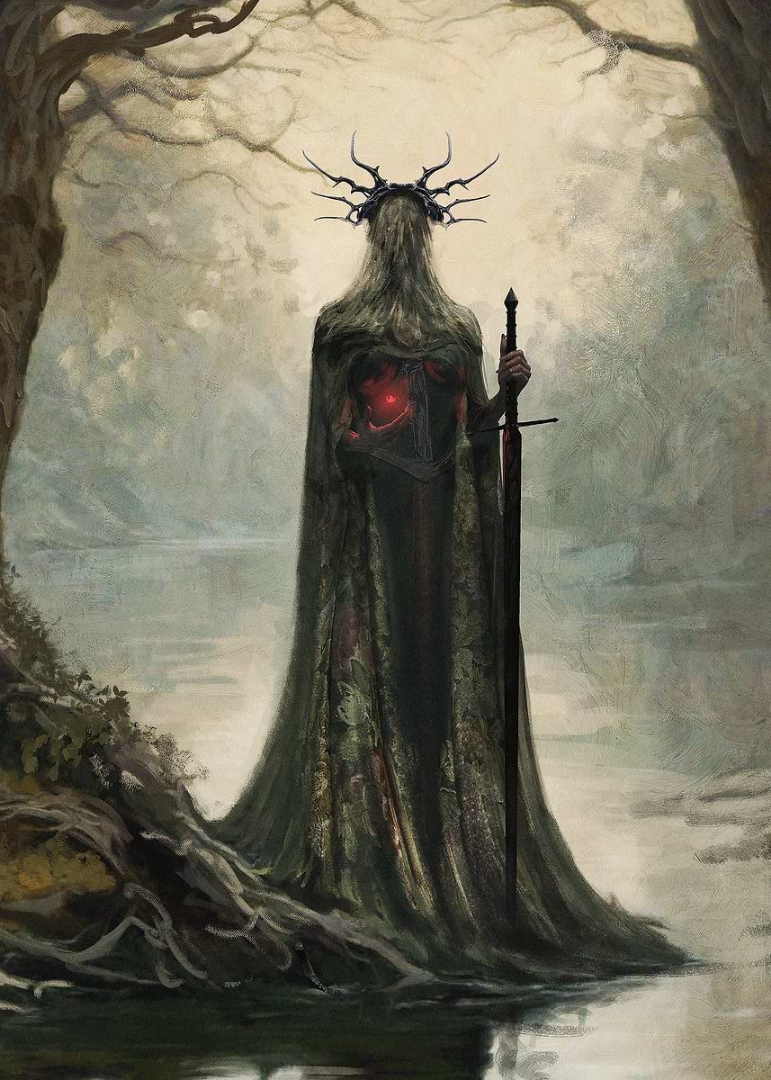
In the deepest pits of the earth an arid tomb hums with occult magic, its sandstone slabs ensorcelled to host its Fair Lady. The witch within broods, her flayed red face taut with stirring emotions as she reads back over the Tsutenkaku Report yet again and not only in a new century but now a new world. The copy levitates in the air as if held by dutiful servants and its pages scroll for her piercing lone eye to scrutinize every word. The immortal croons hoarsely, "Tsune... Juniper... Lothar. Nu-mi voi mai eșua din nou hotărârea," And her foul tongue wet her mangled rows of fangs. A new world, a new age, a new beginning. She cast the Tsutenkaku Report back to its shelf beside a copy of the Witch of Dobrov and flew to her obsidian scrying orb where distant visions might slake her appetite if briefly. Never again, she thought. Vengeance is mine.

-
This is a prophetic vision accessible to seers, naztherak, farseer shamans, vivification clairvoyants, mystics with hexing, palmreaders, and nephilim (et al.) per Prophecy lore. You slip into the snug dark of sleep or a hypnagogic trance and your mind’s eye drifts in and away to distant fathoms. This void is bespeckled with twinkling sands, the dim glow of stars, and their light is consumed as you plunge into a pit only to fly down and through webbing vapors. The darkness melts and air spins to turn and hide as dawn crests. Your vision becomes wreathed in the cotton strands of clouds and sunlight and you emerge from their delicate wrappings to go sailing skyward in a cushiony, rolling tunnel. Clouds gilded in rays aglitter. They roil as through their passage you glimpse the fragments and flashes of an omen. Rising from the amorphous clouds sings a harmonic choir of delicate, fluttering voices like a flight of birds who cry poetry. Their call is interspersed with shapes among the vapors as if between the curling lumps and shaded pockets the clouds folded to convey the voices’ rhymes. As the sleep or trance courses on it takes you skyward, bringing you ever closer to distant pearly gates yawning open to accept your shining soul. Clouds morph to depict a circle divided in half. One crumbles in the wind and blows towards you, scattering, while the remaining half darkens into a trembling storm. From the brewing navy shade gold still sparkles. “Blessed be, Her summons ring, rejoice! In Her embrace, find Her subtle voice, Singing in His silent material, Our loving Mother Ethereal. Her white messengers flock and nest, Black truths in talons, angel-possessed. The firmament opens at their holy toast, Emanations cast, a channeled heavenly host.” They melt to reform into an obscure feminine form whose face is a waterfall of roiling clouds. In one hand she lifts a hazy grail and in the other a crude imitation of a dagger. “Mother weeps to have and hold us. Savor Her sacred water. Halved thus; Red and stark blue, flowing through All, bird and bark, in fathoms strewn. Her months, colors, heavens, angels: seven. In convivial life and despair we leaven. Effervesce Father’s work, we His begotten, Anoint Mother’s dirk with what lessons are taught in." The shapes divide into a sprawling field of countless standing figures of amorphous qualities but cotton hue. “None bear Her love greater than Man. Glory. Calamity. Three wingspans. Ruins of hellfire. Ruins of thannic ice. Legendary greatness comes now: thrice. Pitiful and powerful, supremacy is Horen’s, In plentiful forts with pedigree in warrens. Hark, humanity, fear not the angels’ coming Duty is to record for generations’ thumbing.” The iconic swirl of a tornado then rakes through the scene and swallows the innumerable figures, feathers lost amid its winds as if it rent a flock to tufts. “Mortal make is imbalanced: Father’s hand. Hear Her cry in yours mid-reprimand; When the First Basin tips rivers run red. Dogs will fly as wings cull the ill-bred, Heavens’ storm roar clarion and choral. Noble hounds bow to shining laurels. Noblest among them, feathers opalesce, Fiery birds paradisal wane and incandesce." The storm passes with the likeness of a cloudy phoenix cresting at the termination of the tornado’s path and its wingspan melts to then form a winged figure wielding a headstone-like slab in each arm. “The Knowing Angel weighs wanting hearts with measured scales and star charts For faith is heavy against a feather. Truth or trick, she judges whether. Study her twin tablets of old and omen, Higher wisdoms and warnings for no men. Weep to swallow her mountainous truth, And reap a drink of the Fountain of Youth.” Their shape folds in on itself as wings swell, parting into many pairs all snowy and aglow with dawn. They dance in the unfelt wind. “Hark celestial signs of make heaven-sent, Two regalia discrete, two regalia evident. Messengers come on wings manifold, Wet crystal songbirds, voices marigold. Sacrosanct are an angel’s rare carat cries, With noblest true blood under mortal guise. Grieve His death. Richest lapis lazuli. Savor Her breath. Smoldering patchouli.” The limbs orientate inward to reform the tunnel you sail through, the overlap and shade of their feathers knitting to form a canopy of branches from which waterfalls of streaming billowy mounds spill. “Join in fellowship at the clerics’ manse Where buried leylines pool and dance. Earthly energies spun around horns, The Wicker Angel’s crown of thorns. Rejoice! To stout tensile heartstrings The heavenly host grafts its wings. Behold their miracle; sacred nature. Branches bawl. Hail Her prelature.” The sprawl of misty-leaved boughs shimmer and fleck before stitching together to flow up and around you to carry you like driftwood up towards the sparkling, blinding zenith looming above. “Join the river. Feel the currents. His and Her divine concurrence. For in the oasis of gules and azure An angel weeps diamonds and myrrh Blessing sips of stars, sacred medicine, Coalescing minds and slaking wisemen. Heed Her clerics and white witches To glean esoteric birthright riches. Basil soaked. Cinnamon smoked. Jasper broke. Truths uncloaked. Besom, boline, scourge, and cord; Wield the tools. Yield the reward.” The unseen choir sings the omen through a churning reversal and repetition, echoing on top of itself before - with dreamlike, timeless passage - the glow melts, the clouds fizzle, and the soft warmth of sunlight consumes all sensation. You lazily drift back to consciousness. The sunny kiss fades. Perhaps puzzled, perhaps inspired, the prophecy leaves you nonetheless witness to a glimpse of angelic occult knowledge.



-
My conclusion (not solution) is that I surrender and /d20 at any instance of PvP because gear is unattainable. :' ( **** my stupid vamp unlife
-
Dreaming of... Katsu... Kami-Katsu!
-
@HugoAnteroit‘s happening, prepare the meal
-

-
-
-
Somewhere in a breezy tree stand a blue monk ponders the wooden spoon around his neck.
-
In a harmonic cry a mournful elf recited, "Ullithir. Saraya. Tarem. Ilern. Galar." He blew out a flickering candle for each. "Kaldam. Arhyn. Imeran. Sov. Karim." He wet his forefingers and pinched their hot wicks, then washing the soot in an ironwood bowl. He invoked seven times, "Kae'leh sulier," and washed his tears away with the ash-tinged water of the bowl. In his retreat the monk stayed abreast of ripples and currents, an ever-watchful eye upon this new land and what turmoil and fruits it may yield. What sweet delight he sung with upon finding the Lye'naeran summons. Kismet, he thought, for his loneliness ached to be soothed by anything close to familial laughter, old songs, and sharp banter. Here, he concluded, was Acaelan's sign. Robe, donned. Baton, wielded. Future, West.
-
Off in distant fathoms within a crooked treehouse a wizened elf bowed his head in reverence before a smoldering candelabra, remembering friendly faces and the warmth of family. He offered up a cut half of bread and cracked it, uttering: "Kae'leh sulier ahernan, kae'leh sulier andria. Adont'ahern medi ay evarn'sae ahe'Malin'onn Lye'ehya karinto." He drew inward and recalled the faces and names of his irreplaceable family, thin rivulets of tears wetting his face and front. How painful, he thought, the trembling sorrows of having this world, but Acaelan gifted us provisional lives to savor it best. Blessed are we, he finished the thought. With a sweaty, shaken hand he wiped his face and blew out the candles, watching the smoke trail out the window of the breezy canopy with blurred eyes. Smiling.
-
"H̸r̷a̵'̴n̵u̴r̴ ̸d̸a̵k̸n̷a̶ ̴b̸r̵u̸b̶,̷ ̶p̷r̴a̵'̵s̴k̵a̷r̷ ̷b̵r̷u̶b̴ ̸G̸r̷u̵b̵-̷B̷u̶k̶k̵i̴t̷!̵"

-
“Usstan orn harventh ummo natha elggor ul'nusst ulu gulu'da Drazhana mal'rak.“ “I will cleave loose a dying squeal to haunt Drazhana forever.” Name of the Artefact: Ilharnorrs: Vharcanrul d’Sbattana Common: Revenger of Sbattana Effects of the Artefact: Vharcanrul is a blade haunted by its namesake, Sbattana the Stinger, who informs its powers and cause. She is a graven of vengeance obsessed with slaying the zentherak Draz-Kulzattar, the Biting Bat, her betrayer and murderer an era ago. Her potent spirit fuels those desperate or foolish enough to wield her revenger blade. Soon they learn the cost: she must feed. Whose misery will she drink? Sbattana as glimpsed by a haunted wielder: claw-crowned and veiled in a pall. Soul-Stinger By brandishing Vharcanrul and invoking Sbattana in [2] emotes the wielder will feel her cold presence as the blade wreathes in diaphanous teal ectoplasm. Emote example: Valor the Red brings his greatsword black as wrought iron to his sternum, both hands tight with strain and worry. He hoists the blade on high and bellows through the grates of his helm, “Arise, Sbattana!” Valor the Red’s blade drips with a glassy aquamarine glow until it envelops it whole. The subtle silhouette of a grim, spike-crowned figure hidden behind a translucent shroud looms behind him. Until disarmed or dismissed by the wielder, it interacts with the ethereal as if physical as well as plunging the blade into a victim jolts them with the hexed sting of her grief and deepens the longer it remains embedded: [1] emote: The victim feels constrainably nauseous and tingles with a sense of jarring betrayal and tears begin to well. Their movement speed is reduced by [1] block and their vision is blurred. [2] emotes: The victim begins to weep as they are taken with seething sorrow and can no longer speak coherently, only scream or cry. [3] emotes: The victim is overcome with crescendoing woe and crumples, becoming stunned for as long as Vharcanrul remains embedded in their wound. Acquire [1] Misery unit. Once Vharcanrul is embedded in a wound, the victim experiences fragmentary flashes of Sbattana’s tale. First they sense their heart racing as they see themself fleeing through a subterranean tunnel or may catch glimpses of crimson fire erupting as they look behind themself mid-run. The vision cuts to the victim wielding Vharcanrul and cutting through freshly-raised zombies they recognize as mangled friends while reeking brimstone smolders. Finally the vision has the victim kneeling in ashamed defeat before an amorphous horned figure silhouetted in red flame, wracked with the pain of betrayal that leaves them in stunned silence as long as Vharcanrul remains in them. Should a victim survive an encounter after being stabbed for [3] emotes they will come to be haunted by Sbattana, the graven appearing in their sleep and daydreams. This is left to the creative freedom of the ST who may use such a line of contact for associated events. This mark on the soul can be broken like any curse by a farseer shaman as well as erased by a mystic. Red lines: -Activating Soul-Stinger cannot be hidden, it is an obvious magical effect. In the 2 emotes to activate it the wielder cannot also attack, block, or dodge but may move. -While holding Vharcanrul in a victim’s wound the wielder cannot dodge, only block as feasible or attack by digging deeper and holding it in place; the victim, if not restrained or sufficiently challenged, can withdraw Vharcanrul in [1] emote. If the sword is dislodged from the wound its emote count is reset; if withdrawn after [2] emotes and then the victim is stabbed again, the counter begins at [1] rather than [2]. -The wielder cannot change the vision experienced by those they stab. It is also their responsibility to inform ST when a victim has been harvested for Misery as to alert them to who is haunted by the blade. Those haunted may only break away via farseer or mystic intervention. -Harvesting a unit of Misery must be screenshotted and sent to the handling ST for record keeping as well as to inform them who the victim player is so they may be haunted. Batbane Embodying the plain threat of the Revenger blade to Draz-Kulzattar, the first strike it lands upon a Drazhana-pacted naztherak or batlike inferis victim brings their own sin to the surface and triggers the Dread malice effect; the victim is seized by overwhelming fight-or-flight causing them to flee or seek safety, erupt into hurried violence, or even freeze in place. This lasts for [2] emotes after being hit during which the victim naztherak or inferis can only: sprint away, attack inaccurately, or block, decided by the victim’s player as to what is most appropriate for their character. This effect applies to any eligible character once per encounter By spending [3] Misery the wielder may summon Sbattana to bring hellbats low and in [2] emotes of raising the sword high and wreathing it in glassy ectoplasm they may send the graven flying like a banshee to spear and ground any flying Drazhana-pacted naztherak or batlike inferis, forcing them to crash like a meteorite. Red lines: -The batbane effect cannot be used as a detection method to identify disguised naztherak or zar’ei, only affecting their revealed forms, and attempting to use Vharcanrul as a testing method will be denied. -The dread malice effect only lasts for [2] emotes, never longer, and only triggers on the very first successful attack per legal victim per encounter. -The anti-flight feature of this spell requires ST permission to utilize as it would only be relevant in events. Fade Into Antiquity By spending [1] Misery the wielder of Vharcanrul may invite death with total stillness across [3] emotes to cloak themself in the invisible shroud of Sbattana’s battle-pall. While cloaked they are silent but movement yields a noticeable light distortion. This effect can be maintained for up to [10] emotes during which the wielder cannot attack, cast, dodge, block, or sprint; the invisibility may be ended when desired with [1] emote of transition in which they cannot prepare an attack, cast, dodge, or block. Red lines: -Activating Fade Into Antiquity cannot be performed alongside attacking, dodging, blocking, moving, or speaking and requires total stillness. Any such interruption, including if forced, breaks the activation and requires restarting. A point of Misery is only spent if successfully activated. Exiting invisibility incurs a [1] emote buffer in which the user cannot prepare to cast, attack, or defend, this emote serving as a stun if forcibly ended. -Phantoms and those with True Sight see through this ability. Seer’s Spot Energy, Kani’s Third Eye, alchemy’s heat lens, and similar effects can be used to detect an invisible wielder. -The handling ST should be contacted after using Fade Into Antiquity so the wielder’s units of Misery are accurately tracked. If a wielder is found to be hiding their use of this ability they may be punished for powergaming as well as lose ownership of the item. Artefact Redlines: -Equipping Vharcanrul requires OOC consent from the wielder as to permit the ST portraying Sbattana to, when they see fit, overpower the wielder and possess them when appropriate; the wielder of Vharcanrul is not its master. They must always engage with Sbattana and please her - fulfill her need for Misery and Draz-Kulzattar’s blood - lest she leverage her strength against them, turn the blade inward, and find herself a new wielder. -For mechanical purposes Vharcanrul is equivalent to a ferrum sword albeit is physically unbreakable on account of its enchantment. Explanation of the Effects: Any witness to Mori’Quessir societies, be they native, enslaved, or foes, quickly glean the venom of brutality coursing within and the heights of power which control them: egotism and suffocating shame, inescapable fears and obsessive prudence, and their thorned master above all: hate. Every web-choked tunnel plunging into the depths of Mori che'elen, outpost or citadel or temple, is haunted by the cries of their malice. The bleak crush of slain hope, the terror of sharp darkness, the harrowing sorrow of resisted ends: no other race has not only failed to sweeten life but elevated the heights of suffering and rejoiced. Blood trails may stain their hidden roads but raw agony paints every blunt cavern wall and it is this, hatred and misery, which lures nightmares of this world and beyond. It is this suffering which gave the slain swordswoman her grit to endure through death and cling to revenge. Now she comes to return the favor. ET Responsible for this Artefact: Zarsies


-
(orcs hmu!!! I would love to help!)
-
A priestess in orange frills fans herself amid the shade of a vine-choked trellis. She idly scratches her headband before indicating the missive and calling to an attendant, "Fetch'm."
-
LotC Daily Trivia: Who founded the Orcish clan Azog? 1 bonus point if you can explain why their previous clan was banished & 1 bonus point if you can name who banished them (MC or RP name).
- Show previous comments 3 more
-
 2 minutes ago, Zarsies said:
@Zolla_Damn, well done! I'll give you 2 points, 1 is still up for grabs on: who banished Tadok's previous clan.
ill steal it and say the obvious... the man the myth the legend mogroka

-
.thumb.jpeg.7a2a5c6fda5bc3b4e960a8645bb0ab98.jpeg)
-
-
LotC Daily Trivia: What Nexus profession allowed one to utilize a grappling hook mechanic?
-
LotC Daily Trivia: Name the first player blood mage (character name).
- Show previous comments 6 more
-
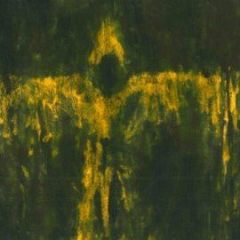
@Zarsies'Tzekallion-yathagale' AKA UNDERWATER NIGHTMARE / NIGHTMARE UNDERWATER THIS TOOK ME A WHILE TO FIND
-

-
-
LotC Daily Trivia: What lesser known 'deity' features in the Halfling faith alongside the Pumpkin Lord? Bonus point if you can name what the god's most devout disciples are called.
-
LotC Daily Trivia: Who were the very first Iblees Undead? Bonus point for their MC names, per name.
- Show previous comments 2 more
-
-
.thumb.png.c6be97ec5a2f30cf7e8d8f424bbeade5.png)
-
@christman2 points! Nicely done.
-
LotC Daily Trivia: In the old date system, in what year did the Wandering Wizard return to Asulon? Bonus point if you can state his temporary name change during this time.
- Show previous comments 2 more
-

-
-
@Songwitch Well done girly pop!
-
LotC Daily Trivia: In Kamism, which figure most closely resembles Dragur?
- Show previous comments 3 more
-
-
-
@FishyWell done!




.thumb.jpg.b4532571523968b4e3ffab54f21c13bf.jpg)
.thumb.jpeg.7a2a5c6fda5bc3b4e960a8645bb0ab98.jpeg)








.thumb.png.c6be97ec5a2f30cf7e8d8f424bbeade5.png)
