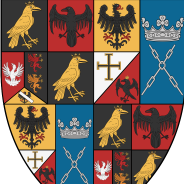
Kingdom of Hanseti-Ruska 3491 Popular Post Share Posted December 17, 2020 (edited) ((Credit to @yopplwasupxxx for the format)) “Fitsk dlum ze Birodal”Motto of the Office of the Lord Marshal‘To Fight for the Realm’ THE LORD MARSHALS OF HAENSE, LORD COMMANDERS OF THE CROWNEst. 131 E.S. | 1578 A.H. Or, A STUDY INTO THE LORD MARSHALS OF HAENSE BY SIR VIKTOR KORTREVICH& LADY MARGOT ROBERTSBaruch & Kortrevich Publishing --- The LORD MARSHAL (New Marian: HAUCKOMANDANT), or officially known as the LORD MARSHAL AND LORD COMMANDER OF THE CROWN, is the commanding member who holds the authority over the Kingdom’s military orders, second only to the Sovereign of Haense, and leads the realm as the of Head of Defense of the Haeseni realm. Historically, the Lord Marshal is entrusted in the safeguard of the Kingdom and the Sovereign's subjects. The most likely candidate for designation has typically been from Haense’s military order which hosts the Kingdom's soldiers. In most cases, those born of nobility have held the seat although there have been cases where members of the gentry have also held the seat. Historically, since the establishment of the position, most marshals are attributed with extensive military backgrounds prior to their ascension to Marshalship. The reconstruction and growth of the Kingdom’s military structure took place extensively from 298 E.S. to 329 E.S. under Lord Erwin Barclay’s tenure, which still sees present usage to the present day. There has been a trend since the first Lord Marshal where the vast majority of Lord Marshals have belonged to certain nobilital families, from Kovachev, Vanir, Othaman, Ruthern, Stafyr, Kortrevich to Barclay. As of 329 E.S., three officeholders have died in office (IV, IX and X), one removed from battle or injuries sustained in battle (VII), eight officeholders have been removed after resignation (III, VI, VIII, XI, XIV, XV, XVI and XVII), two under political obligations to the Crown (I and XII) and three by way of Crown removal (II, V and XIII). The office holder is distinguished by the blade of Saint Karl of Haense, carried only by the Lord Marshal, and traditionally holds symbolic command over military ceremonies. The reign of King Petyr I saw the creation of the office of the Lord Marshal which has since been occupied by fifteen different officeholders stretching across the reigns of seventeen Haeseni monarchs. Prior to such creation, the Sovereign of Haense held sole command over the Kingdom’s military orders; although at times such command was entrusted to a senior military officer. Notable office holders include Lord Jan Kovachev (I), Lord Rhys Ruthern (VIII), Lord Otto Kortrevich (XI), Lord Wilheim Barclay (XIII) and Lord Erwin Barclay (XIV). Seal of the Lord Marshal --- Synopsis of Haense’s Military Orders The Kingdom of Hanseti-Ruska has established seven military orders since the unification of the crowns of Hanseti and Ruska. Historically, the first military order established by the dual monarchy can be traced back to the year 131 E.S. under the reign of King Petyr I., this order was titled as the Order of the Golden Crow. Since the dissolvement of the Order of the Golden Crow by Lord Marshal Rhys var Ruthern and King Sigmar I in the year 223 E.S., the Highlandic state has seen the formation of six military institutions under the directive of six separate administrations; King Marus I, King Sigmar I, King Robert I, King Marus II, King Andrik III and King Sigmund II. Order of the Golden Crow, est. 126 E.S. (New Marian: Ordeno ag ve Aranyer Karos), or officially known as the Military Order of the Golden Crow, was founded by King Petyr I of Haense following the House of Barbanov’s inheritances of the Duchy of Carnatia. As a result, Duke Petyr; later known as King Petyr I, refounded the Order of the Golden Crow to stand again as the protectors of the Barbanov line and its subjects. The Order saw dissolution after twenty-eight years of existence following the establishment of the Order of the Royal Hansetic Army. (154 E.S.) Order of the Royal Hansetic Army, est. 154 E.S. (New Marian: Oredeno ag ve Royel Hanzetic Vojshka), or officially known as the Military Order of the Royal Hansetic Army, was founded by Lord Marshal Rory Othaman under the reign of King Marus I of Haense. Following the dissolution of the Order of the Golden Crow. (154 E.S.) The Order was structured into several regiments to optimize administration and lead troops into battle, more specifically to handle growing tensions with the House of Brawm. The Order saw dissolution following the establishment of the first iteration of the Brotherhood of Saint Karl. (223 E.S.) 1st Order of the Brotherhood of Saint Karl, est. 223 E.S. (New Marian: Wszyr Ordeno ag ve Hausarrandz ag Zaint Karl), or officially known as the First Military Order of the Brotherhood of Saint Karl, was founded by Lord Marshal Rhys var Ruthern under the reign of King Sigmar I of Haense following the dissolution of the Order of the Royal Hansetic Army (223 E.S.). After the decentralized tendencies that were brought by the previous military installment, by the will of the people, the Lord Marshal constructed the Kingdom’s first Brotherhood of Saint Karl. Following disorganization matured by then Lieutenant Sergei Stafyr, the Order saw dissolution following the resulted establishment of the first iteration of the Order of the Haeseni Royal Army. (244 E.S.) 1st Order of the Haeseni Royal Army, est. 244 E.S. (New Marian: Wszyr Ordeno ag ve Haenzi Royel Vojshka), or officially known as the First Military Order of the Haeseni Royal Army, was founded by Lord Marshal Henrik Kovachev under the reign of King Robert I of Haense following the dissolution of the Order of the Brotherhood of Saint Karl (244 E.S.). The Order was structured similarly to the Order of the Royal Hansetic Army without the addition of regimental structuring. Throughout its existence, the Army maintained King Robert I’s peaceful reign through till his death in the year 260 E.S. The Order saw dissolution following King Marus II’s ascension to the throne which by extension saw the establishment of the second iteration of the Haeseni Royal Army. (263 E.S.) 2nd Order of the Haeseni Royal Army, est. 263 E.S. (New Marian: Zwien Ordeno ag ve Haenzi Royel Vojskhka), or officially known as the Second Military Order of the Haeseni Royal Army, was founded by Lord Marshal Otto Kortrevich under the reign of King Marus II of Haense following the dissolution of the 1st Order of the Haeseni Royal Army (263 E.S.). The Order was structured near identically to its precursor with the addition of nobilital levies. Throughout the War of the Two Emperors, the military installment saw both successes and failures which prompted its inevitable dissolution and the establishment of the second iteration of the Brotherhood of Saint Karl. (278 E.S.) 2nd Order of the Brotherhood of Saint Karl, est. 278 E.S. (New Marian: Zwien Ordeno Hausarrandz ag Zaint Karl), or officially known as the Second Military Order of the Brotherhood of Saint Karl, was founded by Lord Marshal Otto Alimar under the reign of King Andrik III of Haense following the dissolution of the 2nd Order of the Haeseni Royal Army (278 E.S.). The Order returned to its initial iteration established by Lord Marshal Rhys var Ruthern fifty-five years ago. Which saw reintroduction to three chapters; Crow, Destrier, Black Cross. The Order inevitably saw dissolution following the Kingdom’s direction towards a more centralized militant body, in the year 317 E.S. The order was dissolved and the third iteration of the Order of the Haeseni Royal Army was established. (317 E.S.) 3rd Order of the Haeseni Royal Army, est. 317 E.S. (New Marian: Dres Ordeno ag ve Haenzi Royel Vojskhka), or officially known as the Second Military Order of the Brotherhood of Saint Karl, was founded by Lord Marshal Erwin Barclay under the reign of King Sigmund II of Haense following the dissolution of the 2nd Order of the Brotherhood of Saint Karl (317 E.S.). This Order has since existed through the reigns of both King Sigmund II and currently Josef I, since its establishment, it has been effective in the safeguard of the Haeseni demesne through conflicts with the Scyflings and the Inferi. The order was dissolved and the third iteration of the Order of the Brotherhood of Saint Karl was established following the resignation of Lord Marshal Friedrich Barclay and the appointment of Lord Marshal Ailred Ruthern (378 E.S.) 3rd Order of the Brotherhood of Saint Karl, est. 378 E.S. (New Marian: Dres Ordeno Hausarrandz ag Zaint Karl), or officially known as the Third Military Order of the Brotherhood of Saint Karl, was founded by Lord Marshal Ailred Ruthern under the reign of King Heinrik II of Haense following the dissolution of the 3rd Order of the Haeseni Royal Army (378 E.S.). The Order returned to its former iteration established by Lord Marshal Rhys var Ruthern one-hundred and fifty-five years ago. This iteration of the Brotherhood of Saint Karl, while youthful in its establishment, takes cues from past iterations and sufficiently resolves many flaws that existed in both the first and second iteration of the Brotherhood of Saint Karl. --- I HAUCKOMANDANTSer Osgod Colborn Sir Osgod Colborn131 E.S. - 135 E.S. | 1578 A.H. - 1582 A.H.@Birdman Monarch(s): Petyr I A renowned veteran of Johannian wars and most notably in the Riga War. He served in the Gold Corps and resided in the Duchy of Carnatia, serving alongside Duke Jan Kovachev and Petyr Barbanov, who later became the first king of Hanseti-Ruska. He was skilled in infantry and light cavalry, bringing to the field his knowledge of martial logistics in the critical periods of the 1500s. He also served in the Krajian Rebellion, commanding forces to repel the Anarchy Period under Emperor John II of Oren. He was later appointed the first Lord Marshal under King Petyr I and served to slowly reform the martial levies among the noble houses. --- II HAUCKOMANDANTHerzen Brynden Vanir, 2nd Margravir van VazilandLord Brandon Vanir, 2nd Margrave of Vasiland135 E.S. - 151 E.S. | 1582 A.H. - 1598 A.H.@Assassinofawsome Monarch(s): Andrik II, Marus I Brynden Vanir (Common: Brandon Vanir) was appointed by King Andrik II. Considered a favorite of Andrik, his appointment and competence was contested by his peers. After successfully rebuffing critics, Lord Vanir was instrumental in King Andrik’s Deep Cold Uprising in 139 being the only noble patriarch to declare support of the movement. Following the execution of King Andrik II by the Holy Orenian Empire, Brynden was castigated for mobilizing his levy. For his transgression, the Lord Vanir had his right hand removed, a symbolic gesture to punish his actions for raising arms against the Empire. He was subsequently removed from office by King Marus I after failing to fulfill royal reforms and for mismanagement of the war budget. --- III HAUCKOMANDANTRory Othaman, Arzbischop var JorenRory Othaman, Archbishop of Jorenus 151 E.S. - 157 E.S. | 1598 A.H. - 1604 A.H.@Eddywilson2 Monarch(s): Marus I Rory Othaman (Common: Roy Othaman) served as Lord Marshal following the sacking of the Margraviate of Vasiland. During his service, he was tasked with the command of the Haeseni Royal Army amidst the growing tensions of the House of Brawm and the increasing deterioration of diplomatic relations with the Kingdom of Courland. In 153, the Archbishop mobilized the army and marched with King Marus I toward Carnatia to suppress the short-lived Brawm revolt at the Siege of Houndsden. He continued to serve and is remembered for his support to declare war on the Kingdom of Courland in what became the Great Northern War. He was instrumental in the Battle of Elba and the Siege of Vasiland before resigning from his post following the surrender by King Marus I. Rory Othaman was subsequently elected High Pontiff, taking the name Owyn II. He utilized his position to critique the Kingdom of Courland and their schismatic relations. He died two years into his pontificate at the hands of undead outside of the City of Aleksandria. --- POSITION VACANT, 157 - 165 E.S. | 1604 - 1611 A.H. Marked by the government-in-exile due to the expulsion of the Haeseni following the defeat in the Great Northern War, no Lord Marshal was officially appointed until the restoration of the House of Barbanov after the victory at the Second Battle of the Rothswood. --- IV HAUCKOMANDANTSer Cullen ValerinSir Cullen Valerin 164 E.S. - 175 E.S. | 1611 A.H. - 1622 A.H.@blago Monarch(s): Stefan I Ser Cullen Valerin (Common: Sir Cullen Valerin) was a close confidant of King Stefan I and served as an important figure in the revitalization of the Haeseni forces following the restoration of the House of Barbanov. A frequent face in Alban, Ser Cullen was renowned for his equally amiable demeanor and martial ferocity in battle, winning various skirmishes in the service of the Kingdom of Haense and the Holy Orenian Empire. Ser Cullen presided over increased recruitment levels for the Haeseni royal forces, repelling incursions by pagan armies in the east, and his rapid fortification of Alban’s borders following the reconstruction of the Haense capital. --- V HAUCKOMANDANTHerzen Viktor Kovachev, 10th Herzen van KarnatiyaLord Victor Kovacs, 10th Duke of Carnatia 175 E.S. - 200 E.S. | 1622 A.H. - 1647 A.H.@Gilded Monarch(s): Stefan I, Otto I, Otto II, Otto III Vikor Kovachev (Common: Victor Kovacs) served as Lord Marshal under four kings, following a storied career of martial service within his family name. A legitimized son, Viktor Kovachev began his career as a knight in the Golden Gryphon in the service of King Marus I until his elevation to the highest ranks of the Haeseni military. His term was defined by many crises including the usurpation of the Sixth Empire, the rise of the Pertinaxi Empire, the War of the Beards, and the suppression of heathenry in the Third Crusade, and the increasing activity of banditry. Later in his career, he engaged in frequent clashes with the Aulic Government. Lord Viktor Kovachev grew unfavorably with the Crown, and after disagreeing toward military reforms promulgated by Prince Robert Sigismund’s Palatinial Government, Viktor was dismissed from his duties. --- VI HAUCKOMANDANTSer Geralt RauenSir Gerald Rough 200 E.S. - 208 E.S. | 1647 A.H. - 1655 A.H.@Pureimp10 Monarch(s): Otto III Biography: ‘Haeseni People; Geralt Rauen’ (236 E.S.) Ser Geralt Rauen (Common: Sir Gerald Rough) was a Haeseni knight and Lord Marshal during the entirety of the reign of King Otto III. His service was defined by the Czena Conflict between the Kingdom of Renatus-Marna and the entente between the Kingdom of Haense, Duchy of Curon, and the Kingdom of Santegia. He commanded various battles, collaborating closely with Czena allies. Geralt is remembered for his leadership during the Second Battle of Stallion’s Hill where the Czena forces won a decisive victory against the Renatian terrorists. After Otto III’s passing from the plague, he retired and began to explore the Yatl wastelands, conceiving many illegitimate children who created villages in his name. Some of his descendants followed in his path, notably the Marian knight Viktor Rauen. --- VII HAUCKOMANDANTAeternius van MetterdenHarren of Metterden 208 E.S. - 223 E.S. | 1655 A.H. - 1670 A.H.@seannie Monarch(s): Karl II Biography: ‘Historical Figure of the Year’ (319 E.S.) Aeternius (Common: Harren) served as Lord Marshal during the pivotal years following a contentious conflict during the Czena Conflict. Inheriting the military and diplomatic tensions between the Kingdom of Renatus-Marna and the Kingdom of Haense, Aeternius was tasked with mobilizing the Haeseni forces in the newly created United Southern Alliance composed Kingdom of Haense, Duchy of Curon, the Silver State of Haelun’or, the Snow Elves, and the Frostbeard Clan. --- VIII HAUCKOMANDANTHerzen Rhys var Ruthern, Herzen van VidausLord Reece Ruthern, Duke of Vidaus 223 E.S. - 240 E.S. | 1670 A.H. - 1687 A.H.@Imperium Monarch(s): Sigmar I, Robert I Biography: ‘The Life of Rhys Ruthern, Duke of Vidaus’ (346 E.S.) Rhys var Ruthern (Common: Reece Ruthern) served during the institution of the first Brotherhood of Saint Karl, a devotional army in the namesake of Saint Karl Barbanov. His term was marked as an important revitalization of the Haeseni martial sector. He became greatly involved during the southern invasions of the Vaeyl. The Brotherhood saw increasing levels of recruitment. By the late 1670s, he became subject to much scrutiny after reports by the Hansetian Republican Army exposed significant levels of demonic activity within the officer ranks of the Brotherhood. His cooperation with Lord Palatine Robert Sigismund in expelling the demons in the army allowed a return to normalcy. Lord Ruthern retired from military service and opted to enter a life of politics. After a short campaign for the Imperial Parliament, he succeeded Robert Sigismund as the leader of the Imperial Common Civic Party. --- IX HAUCKOMANDANTHerzen Henrik II Kovachev, 15th Herzen van KarnatiyaLord Henry Kovacs, 15th Duke of Carnatia 240 E.S. - 249 E.S. | 1687 A.H. - 1696 A.H.@Poor_Fellow Monarch(s): Robert I Henrik II Kovachev (Common: Henry Kovacs) served during the institution of the first Haeseni Royal Army. His service was defined by the Third Atlas Coalition War and the waning years of the Vaeyl War. He commanded various battles, collaborating closely with Imperial allies. Henrik is remembered for his leadership during the Siege of Kal’Tarak, where the Allied forces won a decisive victory against the Anti-Empire coalition. Lord Kovachev died at the hands of Vaeyl insurgents which led Lord Stafyr to succession of the vacant position. --- X HAUCKOMANDANTHerzen Sergei Stafyr, 2nd Bezkomit van GrauspinLord Sergius Stafyr, 2nd Viscount of Grauspin 249 E.S. - 259 E.S. | 1696 A.H. - 1706 A.H.@sandey0000 Monarch(s): Robert I Sergei Stafyr (Common: Sergius Stafyr) was a Haeseni lord and Lord Marshal under the reign of King Robert I. His term was marked as a significant decline of the Haeseni martial sector during the waning years of King Robert I’s reign. After succeeding Lord Henrik’s successful term, Lord Sergei unfortunately presided over decreased recruitment efforts for the Haeseni royal forces. Over time the Haeseni populace grew dissatisfied with Lord Stafyr’s lacking tenure as Lord Marshal, which shortly followed in his assassination by unknown assailants. --- XI HAUCKOMANDANTHerzen Otho Kortrevich, 1st Bossir van KoraviaLord Otto Kortrevic, 1st Baron of Koravia 259 E.S. - 277 E.S. | 1706 A.H. - 1724 A.H.@Quinn275 Monarch(s): Robert I, Marus II, Andrik III Biography: ‘The Life of Otto Kortrevich’ (331 E.S.) Otho Kortrevich (Common: Otto Kortrevic) was appointed by King Robert I. Regarded as a close confidant of Robert’s. Lord Kortrevich was instrumental during the War of the Two Emperors, seeing through the dissolution of the defunct first iteration of the Haeseni Royal Army and establishing the second iteration of the Haeseni Royal Army in its place. He victoriously commanded various battles, collaborating closely with Orenian forces; most notably his command at the Battle of Upper Rodenberg. During his administration, the Royal Army saw increasing levels of recruitment which aided in the further defense of the Kingdom. As a co-signer to the Treaty of Reza, he later helped transition the Kingdom of Hanseti-Ruska to a new militant administration. Through his directive, he designated Marian Knights, Ser Wilheim Barclay and Ser Thomas Raleigh to the posts of Commandant. After the years succeeding the war against the Imperium Renatum, Lord Otto aided in the later establishment of the second iteration of the Order of the Brotherhood of Saint Karl before willingly resigning as Lord Marshal. As a result he assumed the role of Commandant, and continued his service through to 299 E.S., formally retiring from military service at the age of sixty-eight. --- XII HAUCKOMANDANTPrinzen Otho Alimar, 3rd Hauchprinzen van MuldavPrince Otto Alimar, Grand Prince of Muldav 277 E.S. - 281 E.S. | 1724 A.H. - 1728 A.H.@Pureimp10 Monarch(s): Andrik III Biography: ‘The Life of Otto Alimar’ (318 E.S.) Otho Alimar (Common: Otto Alimar) was appointed by King Andrik III, following the resignation of Lord Otto Kortrevich. After the ravaging War of the Two Emperors, Prince Otto was tasked with the establishment of the second iteration of the Brotherhood of Saint Karl which saw the removal of nobilital levies from being raised and the return to the ways of old set by Rhys var Ruthern in the first iteration of the Brotherhood of Saint Karl. The Grand Prince of Muldav willingly resigned from the position which led to the transition of Wilheim Barclay to the position of Lord Marshal. --- XIII HAUCKOMANDANTHerzen Wilheim Barclay, 1st Bossir van FreisingLord William Barclay, 1st Baron of Freising 281 E.S. - 298 E.S. | 1728 A.H. - 1745 A.H.@MadOne Monarch(s): Andrik III Wilheim Barclay (Common: William Barclay) was a Haeseni knight, Haeseni lord and Lord Marshal under the reign of King Andrik III. He served during the institution of the second iteration of the Brotherhood of Saint Karl. His term was marked as an important continuation of the Haeseni martial sector throughout both The Three-Month War and The Troubles. He victoriously commanded various battles, collaborating closely with both the Kaedreni and Curonia; most notably his command at the Battle of Upper Rodenberg. During his administration, the Brotherhood continued to see increasing levels of recruitment which aided in the further defense of the Kingdom. Later in his career, he engaged in frequent clashes with the Aulic Government. Lord Barclay grew unfavorably with the Crown, and after disagreeing toward military reforms promulgated by Lord Markus Kortrevich’s Palatinial Government, Wilheim was dismissed from his duties and succeeded by his eldest son, Lieutenant Erwin Barclay. --- XIV HAUCKOMANDANTHerzen Erwin Barclay, 1st Herzen van ReinmarLord Erwin Barclay, 1st Duke of Reinmar 298 E.S. - 329 E.S. | 1745 A.H. - 1776 A.H.@Miniguy15736 Monarch(s): Andrik III, Andrik IV, Sigmund II Erwin Barclay (Common: Erwin Barclay) succeeded his father as Lord Marshal in a career spanning over three decades, the longest serving occupant to date. His term is marked by the reformation of the Second Brotherhood of Saint Karl into the Haeseni Royal Army, significant growth of the military recruitment levels, and the development of military training toward a national cultural standard of Haeseni militarism and Biharism. Lord Barclay led the military through many conflicts, commanding forces during the progression of the Rubern War, eventually aiding the annexation of the Ruberni land lost during the War of Two Emperors. During the interwar periods, Lord Barclay was instrumental in rebuffing highwaymen within the kingdom’s border with a robust plan of military fortifications and patrols. During the invasion of the Scyfling forces, Erwin presided over one of the deadliest conflicts in Haeseni history, suffering many losses as the progression of the Scyflings proceeded over eight years. Lord Barclay was honored for his service in the realm, being inducted into the first Class of 322 E.S. into the Order of Queen Maya and Lily, recognized as a Hauckossar for his services to the country by King Sigmund II. Highly regarded by his contemporaries in the Aulic Government and by his successors, Erwin is recognized as one of the most consequential figures on the life of Haeseni military history and culture. --- XV HAUCKOMANDANTHerzen Manfred Barclay, 2nd Herzen van ReinmarLord Manfred Barclay, 2nd Duke of Reinmar 329 E.S. - 358 E.S. | 1776 A.H. - 1805 A.H.@Coolcod77 Monarch(s): Josef I Manfred Barclay (Common: Manfred Barclay) succeeded his father as the Lord Marshal in a career spanning nearly three decades, the second-longest serving occupant to date. His term was marked as a continuation of the Haeseni martial sector throughout both the years following Haense’s breach into independence and the Inferi Invasion. He triumphantly commanded various battles, collaborating closely with both the Norlanders and the Urugani. During the latter half of his administration, the Royal Army saw increasing levels of recruitment which aided in the further defense of the Kingdom. Later in his career, Lord Barclay opted to resign from his post to allow for his eldest son, Friedrich Barclay to assume the mantle of Marshalship. Lord Barclay was honored for his service in the realm, being inducted into the fifth Class of 358 E.S. into the Order of Queen Maya and Lily, recognized as a Valtakossar for his services to the country by Prince-Regent Heinrik. --- XVI HAUCKOMANDANTHerzen Friedrich Barclay, 3rd Herzen van ReinmarLord Fredrick Barclay, 3rd Duke of Reinmar 358 E.S. - 378 E.S. | 1805 A.H. - 1825 A.H.@ColdestPepsi Monarch(s): Josef I, Heinrik II Friedrich Barclay (Common: Fredrick Barclay) succeeded his father as the Lord Marshal in a career spanning twenty-years. His portion of the Barclay Marshalship consisted of the continuation of the Haeseni martial sector throughout the waning years of King Josef’s reign and the blossoming of King Heinrik’s reign. As is the case with every Lord Marshal, conflict is bound to be inflicted upon the Hauckomandant (Common: Lord Marshal), the fourth Barclay Marshal was no exception to conflict. He fastidiously maintained order amongst the Haeseni Royal Army throughout the Red Diet, during all of King Heinrik II’s assasination attempts and the savage Rimetroll War, which lasted a number of years. All in all, throughout the two-decade long career of Friedrich Barclay as the sixteenth Lord Marshal of Haense, the Kingdom of Hanseti-Ruska remained safeguarded by the Haeseni Royal Army which was headed by the Ducal Barclay patriarch. In the latter part of his tenure, Marshal Barclay reformed the Haeseni Royal Army by installing the long-awaited troupe system. In addition to such reforms, he also aided in penning the reforms of the 3rd iteration of the Brotherhood of Saint Karl, which would see enactment under his successor Lord Marshal Ailred Ruthern. --- XVII HAUCKOMANDANTHerzen Ailred Ruthern, 7th Herzen van VidausLord Ailred Ruthern, 7th Duke of Vidaus 378 E.S. - 398 E.S. | 1825 A.H. - 1845 A.H.@biggestdon Monarch(s): Heinrik II, Sigmund III Biography in Progress. --- XVIII HAUCKOMANDANTHerzen Johann Barclay, 5th Herzen van ReinmarLord Johann Barclay, 5th Duke of Vidaus 398 E.S. - Present | 1845 A.H. - Present@Frymark Monarch(s): Sigmund III Current Incumbent. Spoiler Check out the wiki page!https://wiki.lordofthecraft.net/index.php?title=List_of_Haeseni_Lord_Marshals Edited February 17, 2022 by Kingdom of Haense 38 Link to post Share on other sites More sharing options...
HurferDurfer1 2979 Share Posted December 17, 2020 Mr Rat sends a letter to the writers "You didnt mention the part where the HRA murders innocents, biased media!" 2 Link to post Share on other sites More sharing options...
Andustar 4143 Share Posted December 17, 2020 (edited) His Grace, Viktor Kovachev would peer down from the Seven Skies, lofting a brow to the inaccurate telling of his tenure as Royal Marshal. He was certain to have died an elder, prior to the reign of Otto III, having already stepped down from the position willingly and without tension. Surely, there was another Marshal to have served between himself and Ser Geralt... Edited December 17, 2020 by Gilded 3 Link to post Share on other sites More sharing options...
Imperium 3495 Share Posted December 17, 2020 Rhys var Ruthern smiles down from the Seven Skies, "Those were the days." 1 Link to post Share on other sites More sharing options...
Security_ 2287 Share Posted December 17, 2020 Ludwig van Wick reads over the interesting history piece, sipping a warm glass of wickish coffee atop a snow-sunken cityscape, "Rhys var Ruthern, man was the best marshal we ever had. Wasn't afraid to get his hands dirty killing demons- unlike these modern Haensers, bah!" He spat out the drink, allowing it to land onto the streets atop peasantry below. 1 Link to post Share on other sites More sharing options...



.thumb.jpeg.7a2a5c6fda5bc3b4e960a8645bb0ab98.jpeg)
.thumb.gif.5a805d258de5309474a27096e6dd35c0.gif)

.thumb.png.4e5370fc69f142d96a905e477cd5dd97.png)




.thumb.gif.f363e1e24ec35c023d600bb13f6d2f03.gif)

.thumb.gif.c4804540109a430a35eb0021ce7df945.gif)

Recommended Posts