


Fid
-
Posts
581 -
Joined
Reputation
566 Legendary






Recent Profile Visitors
30208 profile views





-
Somewhere within the thriving city of Amaethea Belestram sits among old friends, and ruminates on the small man who has consistently invaded the land of the free Elves, so long and arduously in the making. He thinks of the traitorous Kairn the Usurper, and the old days of the Dominion during which his path to freedom was won, and lost, and won again amid the bloody conflicts stirred by Ithelanen greed and vainglory. But moreso, he thinks of the misled youth, attempting to frame their service to a falsehood with historical misconception. He sighs, looking into the fire. "My son... I served our Malinor, I knew our Malinor, and Malinor was dear to me. What you are pining for... that's no Malinor."
-
= The Crown of Elvenesse = The Government of the Realm of Elvenesse, sometimes known simply as “the Crown” or as “His/Her Majesty’s Government”, is a hereditary constitutional monarchy which employs a broad-form ministerial Council of Lords to administer the united lands of the Elder Folk. It may be considered a restoration of the rightful Sylvaeri Princeship of Old Malinor, but is perhaps better characterized as the successor of Aegrothond and Siramenor which preceded it. The realm can trace its establishment to the year 1685, when forces loyal to Belestram and his House of Sylvaen founded a government-in-exile upon the island of Aegrothond, and raised their banners in opposition to the Gladewynnite usurpation of the Dominion. Over time, despite cycles of great tragedy and tribulation, the nation grew and expanded its breadth with treaties such as the Compact of Lathadlen (1712) among others, cementing its legitimacy until it stood as the sole descendant-state of the fallen Princedom. Efforts to achieve the glories of the elder days were halting, until the return of the Matriarch Awaiti Sirame to the fold. Together with Sea Prince Feanor, she established a lasting partnership between the Almenodrim of Aegrothond and the Wood Elves of Siramenor- a partnership which would slowly lead to a truly reinstated unity among the Elven folk who had once inhabited Caras Eldar. As the Elven People look forward to a new dawn in a new land, they do so not as Aegrothond and Siramenor but as Elvenesse the Great, under a united and representative government. This united Government consists of several constituent parts, affixed with the Crown itself (the High Prince, his family and Guard), and including the bicameral Council, wherein sit the delegated Lords-Minister who oversee vital operations on behalf of the nation. = The Crown = The High Prince Feanor Flameborn, of the House of Sylvaen (wandiferous) The High Prince is Lord of the Citadel and bearer of the Crown of Malinor, the standing heir of Sylvaen Everflame. He maintains a ceremonial and legal status as leader of the united Realm of Elvenesse, and oversees the Council. The High Prince traces descent from Malin himself, through the line of his first son; as such, the position is hereditary (though tanistry is sometimes used to determine an heir, see below.) The Royal Family The Royal Family is the assembled menage of all Elves in the immediate kin of the High Prince. They serve primarily to support the High Prince in various matters and to act as the tanistry pool from whence a successor may be chosen should the need arise. Many of these Elves are extremely active in the Realm, holding prominent advisory positions. The Honour Guard Also called the Oathblades, the Honour Guard serve as the backbone of Almenodrim culture in Elvenesse, and as the personal guards of the Royal Family. Any aspiring Elf may apply to join this organization, though they must apprentice under an existing Oathblade first and be willing to undertake a binding blood-oath. The Honour Guard has a reputation as being the right hand of House Sylvaeri, sometimes partaking in secretive and/or dangerous projects directly on behalf of the Crown. They tend to serve as military auxiliaries in times of war, subservient to their peers in the Sentinels. = The Crown Council = The Lords Exarch The Exarchs are the lawspeakers and judicial authority in Elvenesse, serving in the capacity of judges and interpreters of the law. They primarily ensure that the Law is maintained to reflect the betterment of the Elven People, and that it is not flaunted within the bounds of the Elven Domain. Peacekeeping and conflict resolution are among their main duties, as is presiding over court-cases based on the Codex. Evar’tir, of the Family Oranor (Bhased) Cullas, of the House of Sylvaen (KaiserThoren) The Lord Diplomat The Lord Diplomat is charged with the maintenance of international relations and the outreach on behalf of the Realm of Elvenesse to potential allies and friends of the Elven people. They work via brief granted by the Crown itself and maintain a small team of Ambassadorial Staff in order to ensure an efficient discharge of their duties. Olorin, of the House Telemnar (GildedDuke) The Lord Marshal The paramount master of military forces in Elvendom, leader of the Sentinels and overall commander of the White Fleet as well as any other auxiliary units that come under the auspices of military action on behalf of the Crown. Sits at the head of a triumvirate of Officers who manage the rank and file of the Sentinels. Aesilnoth, of the Tundrak Bloodline (ABruhhMoment) = The Domestic Council = The Head Steward The Citizen’s Warden, also known as the Head Steward, is tasked with ensuring the smooth operation of the housing and upkeep of the population of Elvenesse. The assembled Stewardry consists of individual stewards operating within the guidelines provided to them by the Head Steward. Evar’lae, of the Family Amayril (Cmmder_Jester) The Faith The Green Faith of Elvenesse, and its united priesthood, is represented upon the Inner Council by an individual known as the High Priest of Elvenesse. The Faith is responsible for the spiritual health and education of the united Elven people, for the upkeep of shrines and for the holding of Aspectist Festivals within the bounds of the Elven Lands. Sonna (Junoix) The Father Circle As the official Druidic Circle of Elvenesse, the Father Circle enjoys a Grove and protected status under the auspices of the Crown. It is led by example in the form of four seasonal Raitheans, one of whom sits upon the Domestic Council as their representative and liaison to the Crown. Miven, of the Seed Caerme’onn (WestCarolina) = The Omentahu = In times of strife or deliberation, the Government may call together the Chieftans and Lords of the great Seeds and Houses of Elvenesse in a People’s Council, colloquially known as the “Omentahu” after the Ame ritual of the same purpose. This allows the People to have their say on an issue, and make an indicative vote on the issue in order that the Crown may more accurately gauge their will. By this mechanism more seats and positions may be added to the Council, changes can be made to the law, and broad issues may be laid to rest. This ritual is called and overseen by the erstwhile Matriarch of the Ame. Awaiti, of the Seed Sirame (Irrin)
-
#ballroomblitz2018
-
“Elvenesse prevails,” Belestram states.
-
i am also here now.
-
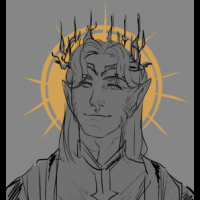 Belestram Sylvaeri, Founder Prince Emeritus of Elvenesse and Aegrothond, finishes reading the tome and sets it aside. His ancient gaze rizes to the blue horizon far beyond his seaward home, and bows his head. “May their names be unforgotten, may their beards grow ever-longer in the Halls of the Gods. We fought alongside them against the tyranny of Azwyrtrumm- would that we could do so again! Glory to the heroes!" Belestram Sylvaeri, Founder Prince Emeritus of Elvenesse and Aegrothond, finishes reading the tome and sets it aside. His ancient gaze rizes to the blue horizon far beyond his seaward home, and bows his head. “May their names be unforgotten, may their beards grow ever-longer in the Halls of the Gods. We fought alongside them against the tyranny of Azwyrtrumm- would that we could do so again! Glory to the heroes!"
 -
It’s fckin monkey time credit to leo and wan
-
Prince Emeritus Belestram nods to Dwalin, puffing contentedly on his pipe and enjoying the fruits of a long life well-lived. “They should extradite me, old friend- I’m so good at bingo, it’s criminal.”
-
-={=+=}=- The Wronged: Lodbairn Emberhorn and the Clan Goldhand The Assailant: The Hooved Beast of the Forest The Wrong: The Ignominious Death of Durlak Goldhand Terms of Settlement: The Destruction of the Beast, and the annihilation of its Den. -={=+=}=-
-
Belestram stumbles upon the writings in his search for tales of his grandfather, and is captivated.
-
“A good dwarf, and a sturdy ally to Aegrothond in all ways. We shall raise a cup of giselin to this one,” says Belestram and bows his head in respect. “May his beard grow ever longer.”
-
The Seaglass Marvels of Aegrothond Greater and Lesser Renarias Many distinct cultures upon the Continent maintain traditions of craft which exist solely for the purposes of aesthetic beauty, and the realms of Aegrothond are no exception. While the crafty among the Houses of the Elder Blood may be known primarily for their skill with the smith’s hammer, and in the realms of metallurgy and gemcraft, the greater collective has developed an art which is far less utilitarian in nature, and pleases the eye with its colourful fashions. This art is known as the Mode of Renarion, or renarias in common parlance, after the elf who first promoted its use and caused it to become a mainstay in the cultural fabric of the Elves who dwelt in Aegrothond. In those early days, the seafaring Houses came into common contact with the vibrant stones made smooth by the rolling of the interminable Sea- and it was not long before the aforementioned master of stonecraft began to fit them into various craftworks of his own hand. The decoration of weaponry and other personal effects came first- but ere long it became common for the Households of Aegrothond to inlay their door-frames with intricate designs of seastone and shells which told tales of the Great Sea and the deeds of their forebears. It would be many years before these miniature artworks began to spread into the realm of what a modern observer would consider a “true” mosaic, and due to the difficulty of transportation very few have survived from those elder days. The first among them were placed around oblique menhir, standing-stones which lend themselves poorly to ship travel. In more modern days, the larger mosaics are generally placed upon a flat surface and framed with traditional stonework and carving. Lesser Renarias- The Art of a Seaward People Despite their somewhat diminishing name, “Lesser Renarias” are far more diverse than their “Greater” cousin, and a far larger body of the former exist in the modern time due to their smaller size. In most simple terms, the phrase refers to the practice of fitting small seastones into designs upon weapons, jewelry, furniture, door-frames, and standing structures of importance. Sometimes, these designs are as simple as three stones in a line- but the more extensive among them tend to depict stories and moral fables derived from history. The practice of door-frame renarias are particularly common, with most family homes possessing these stony artworks across and around their central portals- it is believed that such a practice was originally intended to ward off evil sea-borne spirits, but in modern days it is more directly a representation of familial pride. Though the process of creating such designs is varied, the basic methods centrally involve an adhesive agent derived from beeswax. This agent is applied to the carved sockets of the stones, alongside a powder of seashells- together, these components ensure that the stones will not come loose in time. Of course, inlays which need to withstand greater torsion forces and wear will commonly instead be applied with smithing techniques- a fine example of this is the sword-hilts crafted in the Forges of Aegrothond, which are usually inlaid with crimson and golden stones. A common decoration employing renarias in modern days is the depiction of spirits of the ocean, who are myriad and go by many names. These minor deities, and others of a similar nature, are atimes conflated into the realm of the Sea Goddess, who is a religious staple of the Almenodrim. An eldritch figure, she wields a mighty trident capable of calling down thunder and a driftwood crown which allows her to control the Sea itself. While her religion has been lost to time in large part, his influence remains. Greater Renarias- The Mosaics of Aegrothond By far the most famous and acclaimed version of the renarias tradition are the vast mosaics compiled by the citizens of Aegrothond in order to depict the great events and historical deeds accomplished by those that dwell within the bounds of the realm of the Free Elves. Without exception these marvels take several months to complete, and as a result they hold a very special place in the society of the free Principality- and most Elves of Aegrothond who have any skill with craftwork tend to attempt at least one in their lifetime. Some grand examples at the current capital, Caras Sylvadrim, are as follows: Edrahil and the Dragon Depicting the epic combat of Edrahil against the Dragon Ankar, who preyed on the Folk of the Mountains and the Wood in Aegnor’s day. This mosaic was created by Lord Cullas Sylvaeri, inspired by the then-recently discovered third part of the Lay of Aegrothond. It employs red granite stones along with some sandstone and silica fragments, which create the illusion of flame from the dragon’s maw. It is located in the library of Maehr’evar. Illynora Sylvaeri Depicting the legendary healing abilities of the first Princess of Aegrothond in the modern day, Lady Illynora Sylvaeri. The mosaic was also created by Lord Cullas Sylvaeri, to honour the passing of the great healer and to ensure her likeness would inspire others to continue along her path. It is crafted from petty-jade stones and malachite, as well as shale. It is located in the Houses of Healing, in Aegrothond. Sylvaen the Everflame Depicting the forefather of the House Sylvaeri and the first leader of the Almenodrim, who is featured prominently in the beginning chapters of the Lay of Aegrothond. This mosaic was created by Prince Belestram Sylvaeri in the early days of Arcas, but lost until Cullas performed a curation of all of the mosaics and restored it. It is crafted of granite, sandstone, obsidian, gold and red silica, and is located in the upper portions of Aegrothond which are often shut to travelers. A Mural of Kaer’s Fleet Depicting the seafaring ships of Kaer, forefather of the Kaeronin House and descendant of Aearon who was a son of Malin. The mosaic was created by Feanor Kaeronin to honour the ancestor and to try his hand at the creation of one of these marvels, at which he of course succeeded. It is made of various stones, primarily chert and shale, and is located near the upper portions of Aegrothond. Hamatsa, Spirit of Mercy Depicting the mani-god Hamatsa, which is highly regarded among the Almenodrim and considered a guardian of sailors and shipwrights. The mosaic was created by Illynora Sylvaeri, when Aegrothond was first settled, and was wrought of blue seaglass and basalt fragments. It is located outside the citadel, in a small eastward-facing crevasse. The Battle of the Gorge Depicting three comrades in defense of Aegrothond- Cullas, Azdal, and Jorvin- in their fight against a demonic tiger. This mosaic depicts a rather recent event, which occurred in Arcas during the early reign of Feanor I Flameborne. Crafted by Cullas Sylvaeri, it is located near the storehouses, behind the Inn. [To Be Added To]
-
Belestram is seated above the bay of Aegrothond when the news of Elvira’s death reaches his ears, and for a long time he remains silent- his slender ironwood fingers tapping upon the carved armrest of his high seat. His grey eyes watch the white-capped swells in the Bight. and an odd expression stirs within them. Then, turning to his grandson Finwe, he says quietly: “Tell me, child... what do you know of the Ascended Order?”
-
A book sits on a pedestal in the library of Aegrothond, the home of the Lorekeeper Maehr’evar. It is emblazoned with the devices of Almenor, the seven stars of the Mariner and the Crown of Malin in silver inlay. One would note upon opening the tome that most of the pages remain blank, save for the very first few- evidently this is to be a work in progress, so that one might read the entire history of Aegrothond at some far date in the future. The pages read as follows: A Chronicle of Almenor, 1753 As Recorded by Belestram Sylvaeri, Prince Emeritus A Breath of Life, and Fair Skies upon the Horizon For many years the Crown and its representatives have remained silent in our isolated citadel of Almenor, for we are not a people easily inspired to advertise our presence, nor to seek glory in word rather than deed. Amid a tumultuous world prone to bouts of ceaseless conflict, it is often preferable to recede to quietude- especially for a dwelling-place which concerns itself primarily with the preservation of the history and moral integrity of Elvenesse. But it is a foolish thing, to look behind and not ahead- for the future grows closer with each passing sunset, and the forges and shipyards of the Almenodrim are never truly quiet. They labour, the smiths and Oathblades, sailors and shipwrights, so that Aegrothond is not consigned to the ignominious pages of perished history as many, even today, believe it has been. Our future is as bright as the crimson sunrise, and the secret fire which burns at the heart of our city is not so easily extinguished. It is therefore the desire of the House of Sylvaen to initiate a chronicle of history for the Isles, so that posterity may read them and know that the hands of the Almenodrim were not idle, but rather toiled and built a greater land for their heirs. It shall honour the labourers, the knights, and the Lords who make this citadel our home, and work every day to make it a better place. Those who have kept faith with the Sea Prince and the House of Sylvaen will be honoured greatly by future generations, for they have stood beside the Realm in a dark and unsteady time. From the ember you have held close to your heart, a great inferno shall be ignited- from the sacrifices you have made, of blood and sweat, you shall reap a thousand times the reward. The forges are lit. The fires are burning. Thusly speaks the Crown. Aegrothond Prevails. The Flame of Silma is Lit The Keeper of House Silma, which stems from the great Elvish hero Siol, has taken up his duties again in full- he has caused the beacon of Silma to be lit in Aegrothond once more. The Flame of Malin, as the House terms it, is a symbolic representation of their devotion to the King of All Elvenesse; a mark that the home in which it burns is a harbour for all Elves who wish to warm themselves by its light. They have taken residence near the Oathblade barracks, and intend to transform the old building into a Hearth and home for all Silma and wandering Elves. The Elder House, which was the second such House to join the great citadel of Aegrothond, is highly regarded among the citizens of the Isles of Almenor. Despite great odds and no small amount of danger to their own wellbeing, the family and its leadership joined the fight against the Usurper King from the Atlasian island. For this reason, they are given the rank of Great House in perpetuity and honoured with the title of Lord Keeper. Citizens of Aegrothond (and indeed all Elves of any nation) are encouraged to seek out the young Haust Silma, or the elder Elros Silma, for more information about the venerable and legendary House. It is understood that this is to be the beginning of a new era in the history of their family, one which has lain dormant for some years. Old Roots Give Rise to a New Vintage A new vineyard has been established upon the western horn of the bay, behind the great statue of Eleron Stormheart, and planted with a special batch of seeds from the forests of Old Malinor. Carried and preserved through the lands by members of the House Sylvaeri, they are believed to have been acquired from the vineyards of the Telrunya Family- a famous wine indeed. The Crown and its representatives now seek a capable and practiced winemaker to take up the formidable task of growing these vines to harvest and fermenting its fruit. The seeds were planted by Feanor Kaeronin, and the ground was blessed by the famous Druid Gi’garun, otherwise known as Brother Pine. The Druid was heard to say that he looked forward to tasting even a small part of home, and the sentiment is shared even by many Elves who never saw the trees of Malinor. An Order of Elves Among Men Reports have reached Aegrothond of a group of exiles and city-elves dwelling in the Orenian Capital of Helena. While information is fairly scarce, it is understood that the group claims to have a Malinic creed which does not conflict with the Tenets of Aegrothond, but the truth of this matter remains to be seen as only two Elves of this organization have found their way to our shores. The Seed Elverhilin is known to play a part in the leadership of the Order.
-
The Oathblades The Honour Guard of Aegrothond = A Brief History = The earliest definitive historical record of the Oathblades occurs in the last years of Eleron Sylvaeri, during the decay and dissolution of the venerable Princedom of Malinor. Led by the late Prince’s brother, Cyndaer, the last vestiges of the Lumidrim formed a small battalion in the interest of defending the Crown from the Conclave of Malin- a militarist cult under Darius Denurem and Kalameet Izalith. The company was therefore the first contemporary knightly order established in the Almenodrin tradition. It did not survive the Atheran schisms or Haelun’orian rule, and came to an ignominious end when Eleron was burned at the stake circa 1450. Both Cyndaer’s efforts and the modern Oathblade comradery were primarily based on the mythic Company of Edrahil, whose legendary exploits are told in the Lay of Aegrothond; in it, the legendary Lord gathers a host of Almenorean Elves to his banner and goes forth to slay a dragon. These knights, bearing the red pennants of Prince Aegnor and old Aegrothond, were gathered from Edrahil’s inner circle of friends and relations. Clad in rich armour, and girt around with enchantments and powerful natural magic, their exploits are known to most Almenodrin children. In simplest terms, therefore, the Oathblades are ennobled Elves who act as guards and companions for the Lords of the Almenodrim. Some through service become Lords themselves, while others take up positions of great honour in the governance of Aegrothond- in any case, they are held in high esteem by the Elves of the Isles. It is somewhat accurate to compare them to Mannish knights. It follows, therefore, that the Oathblades are not joined out-of-hand; unlike the militaries of other Elven nations, the Company does not endeavor to grow large in number by accepting copious amounts of raw recruits. More worth and interest is placed in the development of individual Oathblades than in the accession of new ones. Correspondingly, each individual possesses weaponry and training not held by most Elvish soldiers- of which more later. = Accession and Oathing = To become an Oathblade, one must understand the creed and tenets of Aegrothond as well as the history of Elvendom from the days of Malin to the present time. One must be able to ride on horseback and sail, as well as be proficient in the use of the spear and sword. The Oathblades fight monsters as often as they fight Descendants, and they must be prepared for these battles through knowledge of specialized techniques and equipment. The first step towards accession into the Oathblades is by locating one, for only by obtaining the nomination of an Oathblade can one be inducted into the order. Once such a bond is formed, the Elf is given the rank of Aspirant and accompanies the Oathblades in all that they do. Tasks and matters to attend are given out, and an Aspirant’s performance in these will decide how swiftly they are Oathed. Unlike many military organizations, the Oathblades consist of only two ranks- once an Aspirant is deemed worthy by the circle of existing knights, he or she is brought before the collective to speak in favour of their candidacy for accession. If the applicant is accepted, the Oathing process from which the order takes its name can begin. There is a great amount of secrecy surrounding the actual knighting of Oathblades, due to the small and insular nature of the organization. Blood plays a part, as does the eponymous Oath, which is sworn to Aegrothond and the Crown of Elvenesse. The words of the Oath are adapted from the old Almenodrin traditions preserved by the House of Sylvaen. “And Edrahil vowed then to Aegnor his brother, to fear neither death nor torture most cruel, in pursuit of the glory of ages. He swore to uphold his banner, and that of their father the Everflame, in contempt of strife and danger; these words he spoke, and many more, such that Aegnor the Prince of Aegrothond was moved to shed a tear. But Edrahil did not weep, for he knew that there was no fate greater or more virtuous, than death in the service of one’s family.” -Excerpt from the Tale of Aegnor, Lay of Aegrothond II. The vow of an Oathblade is considered to be valid until death, and those who break it in treason are held accountable. Unlike other criminals of Aegrothond, the knights are considered for purposes of punishment to be members and banner-bearers of the Princely House- they are therefore eligible to have their name cloven, which is a fate worse than death. = Marks of an Oathblade = The Oathblade’s primary non-combat badge of office is a bolt of crimson fabric, embroidered with the devices of the House of Sylvaen: the Seven Stars of the Mariner, placed in a semi-circle about the Crown of Malinor. This is worn traditionally as a sash upon the belt or across the shoulder, in times of peace or alternatively when armour would be unwieldy or inappropriate. It symbolizes loyalty foremost to Aegrothond, and is granted by the Princes upon Oathing. A second badge of office is one which the Oathblade typically assists in creating- namely, his weapon and armour. Due to the Almenodrin focus on smithing as a sacred art, the weapon of an Oathblade takes a great deal of time to make- of high-quality steel or other rich material, and carved with letters of power which elevate it far above a regular weapon. After the weapon is made and employed in the Oathing process, work begins on the knight’s armour, which can take many years. Each piece is forged of specialized material, and rendered to commemorate great deeds. By virtue of this and the often empowered nature of the armour, a veteran Oathblade’s kit tends to be near-priceless in value. As compiled by Oathblade Avaeramos Enrique and Prince Emeritus Belestram Sylvaeri. Circa 1753 = The Roster of the Oathed = Oathblade Avaeramos Enrique Oathblade Feanor Kaeronin Oathblade Elros Silma Oathblade Ali’ere Silma
